
 English
 Español
 中文
中文 हिन्दी
 Français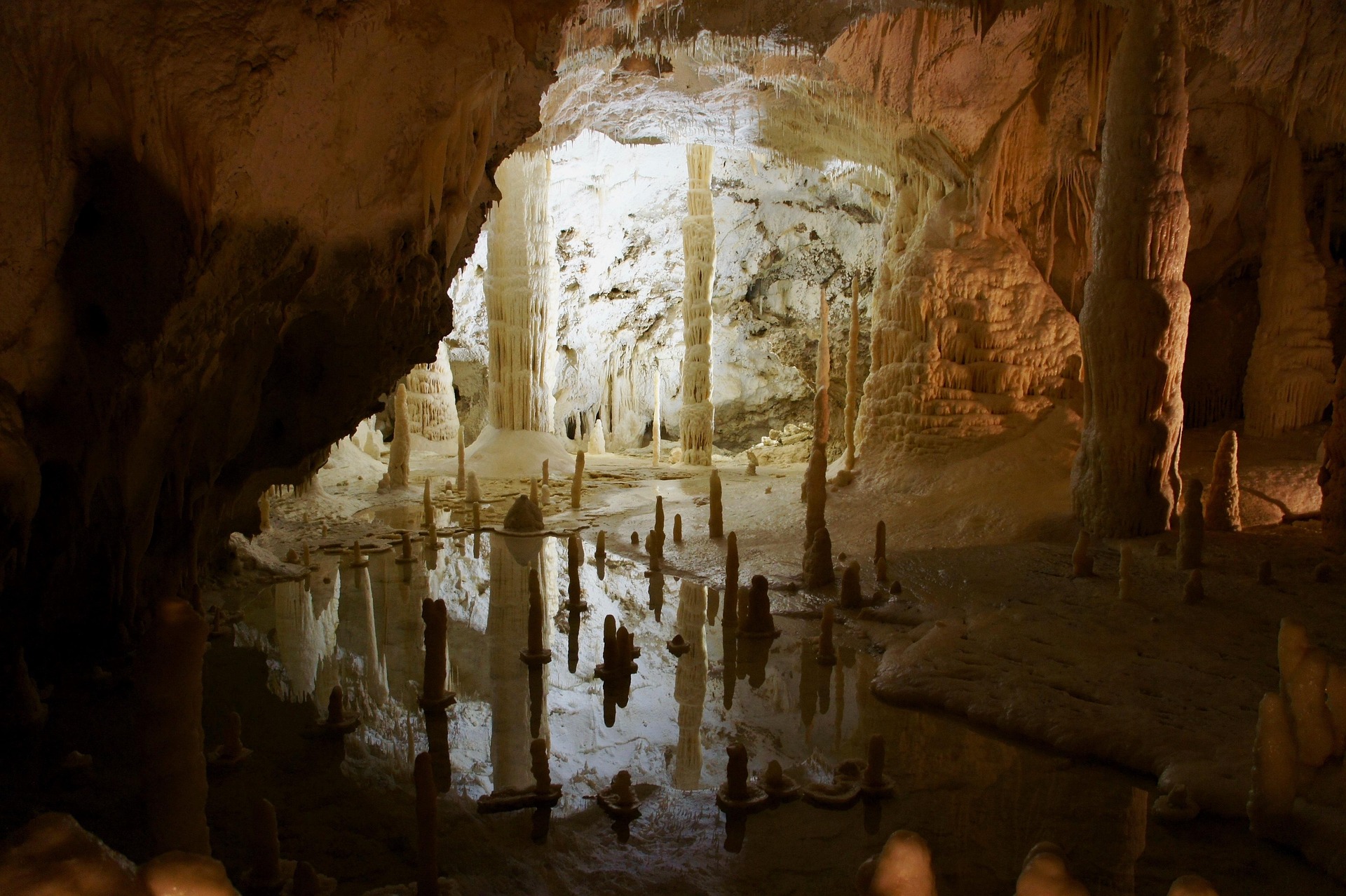
Caves and Underground Wonders of the World
comprehensive guide to the world's greatest cave systems underground rivers and subterranean wonders
Introduction: Into the Earth
Beneath the surface of every continent, hidden from sunlight and outside the normal rhythms of the human world, lies a realm of extraordinary complexity and beauty. Caves — natural underground voids large enough to accommodate a human body — represent one of the most diverse and least understood environments on Earth. They are carved by water, shaped by fire, sculpted by ice, and haunted by the ghosts of species that have never known the light of day. From the cathedral passages of Mammoth Cave in the United States to the jungle-roofed chambers of Hang Son Doong in Vietnam, from the frozen labyrinths beneath the Austrian Alps to the sacred grottos of ancient India, the underground world is a frontier that has fascinated explorers, scientists, artists, and spiritual seekers for as long as human beings have walked upon the surface of the planet.
Caves are not merely geological curiosities. They are archives. Their walls preserve paintings made by Paleolithic hunters thirty-six thousand years ago. Their floors hold the bones of extinct megafauna, the artifacts of vanished cultures, and the mineral records of ancient climates. Their waters carry entire ecosystems of organisms that have evolved over millions of years in absolute darkness, developing forms so alien to surface life that they once seemed like creatures from mythology. Their atmospheres, stable and unchanging across centuries, have sheltered human beings from persecution, cold, and war. The study of caves — speleology — sits at the intersection of geology, hydrology, biology, archaeology, climatology, and adventure in a way that few disciplines can match.
The science of speleology takes its name from the Greek spelaion, meaning cave, and logos, meaning study. Though human beings have explored caves for practical purposes — shelter, food storage, religious ritual, and mining — since prehistoric times, speleology as a formal discipline emerged only in the late nineteenth century. The French explorer Edouard-Alfred Martel is widely credited as the father of modern speleology, having descended dozens of caves across Europe in the 1880s and 1890s with scientific instruments and systematic intent. His investigations in the Causses region of southern France, in the Pyrenees, and eventually in caves across a dozen countries established the methods that speleologists still refine today. Since Martel's era, the science has grown enormously, encompassing cave diving, remote sensing, DNA analysis of cave organisms, and the use of lidar technology to produce three-dimensional maps of passages that would take centuries to survey by hand.
To understand why caves exist, one must understand how they form. Geologists recognize several distinct types of caves, each shaped by different processes and occurring in different rock types and landscapes. The most common and most extensive caves worldwide are solutional caves, also called karst caves, formed when slightly acidic water dissolves soluble rock over geological timescales. Rainwater absorbs carbon dioxide from the atmosphere and from soil, forming weak carbonic acid. As this water percolates down through fractures and bedding planes in limestone, dolomite, or marble, it slowly dissolves the calcium carbonate in the rock. Over thousands to millions of years, small seeps become trickles, trickles become streams, and streams carve passages of ever-increasing size. The landscape left behind — riddled with sinkholes, springs, disappearing streams, and cave entrances — is called karst terrain, a name derived from the Kras Plateau in Slovenia, where this type of landscape was first scientifically described. Approximately fifteen percent of the Earth's land surface is underlain by soluble rocks capable of forming karst, and virtually all of the world's longest and deepest cave systems occur within these rocks.
A second major type, lava tubes, forms through an entirely different mechanism. When basaltic lava flows rapidly down a slope, the outer surfaces of the flow cool and solidify while molten lava continues to move beneath. When the eruption feeding the flow ceases, the molten interior drains away, leaving behind a hollow tube. Lava tubes can be extraordinarily long — the Kazumura Cave on the island of Hawaii stretches more than sixty-five kilometers — and they form rapidly by geological standards, sometimes in a matter of days or weeks. Their walls are often smooth and glassy, and they frequently preserve features such as lava benches, stalactite-like lava drips, and the preserved marks of successive lava levels.
Sea caves form along coastlines where wave action exploits weaknesses in cliff faces, steadily hammering away at the rock until chambers and passages develop behind the cliff face. The Blue Grotto of Capri, Italy, is among the most celebrated examples, its brilliant azure light the result of sunlight entering through an underwater opening and refracting through the water. Fracture caves form in any hard rock where tectonic movements have opened joints or fault planes wide enough for human passage. Glacier caves and ice caves — distinct phenomena that are frequently confused — form either within glacial ice itself or within rock caves where water freezes and persists year-round because of the movement of cold air. The Eisriesenwelt in Austria and the ice caves of Iceland's Vatnajokull glacier represent two of the most spectacular examples of these frozen underworlds.
Continue reading with a membership
Every country, every topic, all activities & recipes
✓ Instant access on this device · ✓ No subscription
Sources: nps.gov, nps.gov, archeologie.culture.gouv.fr, worldhistory.org, whc.unesco.org, whc.unesco.org, eisriesenwelt.at, whc.unesco.org, nps.gov, worldrecordacademy.org, whc.unesco.org, whc.unesco.org, whc.unesco.org