
 English
 Español
 中文
中文 हिन्दी
 Français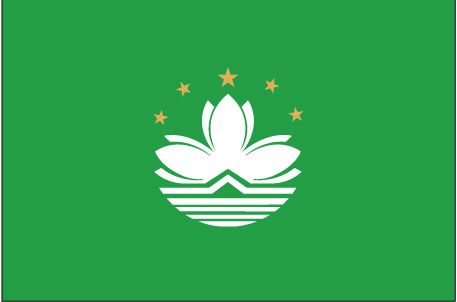
Macau
Aomen (Chinese); Macau (Portuguese)
Declare Your Relationship to Macau
CountryReports Community
- Studying2
- From Macau0
- Macau heritage1
- Visited0
- Want to visit2
Customs and Culture
Customs and Culture
Cultural Attributes
Macau's culture is one of the most distinctive in Asia, shaped by over 400 years of Portuguese colonial presence layered atop a deeply rooted Chinese identity. This blend has produced a society that is simultaneously Chinese and Lusophone, reflected in its architecture, cuisine, religion, language, and everyday customs. The official languages are Cantonese and Portuguese, though in practice the vast majority of residents speak Cantonese as their primary tongue. Mandarin has grown in everyday use due to close ties with mainland China, while English is commonly spoken in business and tourism. The co-existence of these languages is visible throughout the city on bilingual street signs and government documents. Religion in Macau is pluralistic. Buddhism and Taoism are practiced by the majority of the Chinese population, while Roman Catholicism carries a significant historical presence owing to Portuguese missionary activity. Temples and churches often stand within short walking distances of each other, and festivals from both traditions are publicly celebrated. The Feast of the Drunken Dragon, the Feast of Nezha, and the Procession of Our Lady of Fátima are among the notable annual events that illustrate this cultural coexistence. Macanese cuisine — known locally as Macanese food — is itself a cultural artifact, blending Portuguese, African, Indian, Malay, and Cantonese culinary influences. Dishes such as African chicken, minchi, and Portuguese egg tarts have evolved into defining elements of local identity. The historic centre of Macau was inscribed as a UNESCO World Heritage Site in 2005, recognizing 30 monuments and public spaces that demonstrate the convergence of Eastern and Western cultures. Structures such as the Ruins of St. Paul's, the A-Ma Temple, and Senado Square reflect this architectural hybridity. Family values rooted in Confucian tradition remain strong, emphasizing respect for elders and communal ties. At the same time, Macau's status as a major gaming and entertainment hub has introduced a cosmopolitan dimension that coexists alongside these traditional values, making its cultural identity both ancient and strikingly modern.

Gateway Between East and West
Get More Customs and Culture
2 more cultural topics for members
Social Customs & Etiquette · Dating Customs
Every country, every topic, all activities & recipes
✓ Instant access on this device · ✓ No subscription
Holidays
National Day
10/1Independence
Anniversary of the Founding of the People's Republic of China), 1 October (1949); 20 December 1999 is celebrated as Macau Special Administrative Region Establishment Day
What should I know about food in Macau?
Macanese cuisine is a cultural blend of Portuguese, African, Indian, Malay, and Cantonese influences, and eating local dishes is a great way to experience the culture.
Good to know
- Try African chicken, minchi, and Portuguese egg tarts, which are defining local dishes
- Macanese food reflects the city's mixed Portuguese and Chinese heritage
What are family values like in Macau?
Family values rooted in Confucian tradition remain strong, emphasizing respect for elders and communal ties.
Do
- Show respect for elders
What should I know before visiting Macau?
Macau blends over 400 years of Portuguese colonial presence with a deeply rooted Chinese identity, creating a culture that is both ancient and strikingly modern.
Good to know
- Cantonese is the primary language, but Portuguese is also official, Mandarin is growing, and English is common in business and tourism
- Bilingual street signs and government documents are found throughout the city
- Buddhism, Taoism, and Roman Catholicism all have a presence, with temples and churches often near each other
- Notable annual events include the Feast of the Drunken Dragon, the Feast of Nezha, and the Procession of Our Lady of Fátima
- Visit the UNESCO-listed historic centre, including the Ruins of St. Paul's, the A-Ma Temple, and Senado Square
Last updated: 2026-07-12 · Sources: CountryReports
Photos of Macau
Photos of Macau


Travel and Tourism
Travel and Tourism
- Travel Alert Status
- Level 3: Reconsider Travel
- Currency
- pataca (MOP)
- Airports
- 1
Read the full travel guide — health, safety, vaccinations, disease risk, sanitation, and transit details.
View full travel guideHistory
History
Historical Eras
Early Chinese Settlement
1152 – 1557
Macau was administered under Xiangshan County from 1152, though sparsely inhabited for generations. Refugees of the Southern Song Dynasty arrived in 1277, fleeing Mongol conquest, becoming the first recorded permanent inhabitants. Hoklo Boat people later recognized the area's commercial potential as a trading hub for China's southern provinces, laying the groundwork for Macau's future as a mercantile center.
Portuguese Settlement
1557 – 1849
Chinese authorities consented to a permanent Portuguese presence in 1557, though sovereignty remained contested. Portuguese merchants leveraged Macau as the primary entrepôt for China-Japan trade and as a vital waypoint on the Lisbon-to-Nagasaki route. A Portuguese municipal government functioned alongside continued Chinese tax collection, reflecting the territory's ambiguous dual-authority character throughout this period.
Colonial Assertion
1849 – 1887
Governor Ferreira do Amaral abolished Chinese customs collection in 1849, unilaterally declaring Macau's independence, provoking Chinese retaliation and his own assassination. Tensions culminated in the Protocol of Lisbon in 1887, by which the Manchu government formally recognized Portuguese perpetual occupation in exchange for a guarantee that Macau would never be ceded to a third party without China's consent.
Late Colonial Period
1887 – 1966
Under entrenched Portuguese colonial rule, Macau developed a distinct Luso-Chinese culture while remaining economically overshadowed by Hong Kong. The territory enjoyed an anomalous wartime prosperity during World War II as the sole neutral port in South China, though Japan established a virtual protectorate in 1943. The Communist victory in China in 1949 introduced new ideological pressures, with Beijing branding the 1887 Protocol an invalid unequal treaty.
Decolonization & Transition
1966 – 1999
Pro-communist riots in 1966 forced Lisbon into concessions and twice prompted Portugal to offer Macau's return to China, both times rebuffed by Beijing. Following Portugal's 1974 revolution and normalization of Sino-Portuguese relations in 1979, substantive handover negotiations began in 1985, yielding the 1987 Joint Declaration. Macau was formally transferred to the People's Republic as a Special Administrative Region on 20 December 1999.
SAR & Modern Macau
1999 – present
Operating under the "one country, two systems" framework guaranteed until 2049, Macau retains its own legal system, currency, and extensive autonomy in all matters except foreign affairs and defense. The liberalization of the gaming industry in the early 2000s, ending Stanley Ho's long-held monopoly, transformed Macau into the world's highest-grossing gambling hub and one of the wealthiest territories per capita globally.
Overview
Chinese records of Macau date back to the establishment in 1152 of
Every country, every topic, all activities & recipes
✓ Instant access on this device · ✓ No subscription
Timeline of Key Events
1557
The Portuguese settled in Macao.
The Portuguese settled in Macao, on the coast of southern China, and established trading factories.
1966
Lisbon offered to give the Macao colony back to China.
Lisbon offered to give the Macao colony back to China.
1974
Lisbon removed its troops and again offered to give the colony back to China.
Lisbon removed its troops and again offered to give the colony back to China.
1987
Portugal signed an agreement to return Macau to China in 1999.
Portugal signed an agreement to return Macau to China in 1999.
2001
In Macao the gambling franchise of tycoon Stanley Ho was scheduled to expire.
In Macao the gambling franchise of tycoon Stanley Ho was scheduled to expire. Half of the government revenue was derived from gambling. American firms soon stepped in to build new facilities.
Read the full history profile — narrative overview, defining eras, and the complete timeline in one place.
View expanded historyInteresting Facts
Interesting Facts
The most famous sight in Macau is probably the ruins of the Church of St Paul's, originally built in 1602 and rebuilt in 1835 after a disastrous typhoon.
It is believed that the name ‘Macau’ was derived from the A-Ma Temple, a place of worship that was build in 1448, with Matsu (the goddess of seafarers and fishermen) as its deity.
Macau is a highly humid region, with the humidity ranging anywhere between 75% and 90%.
The economy of Macau largely depends upon the revenue generated by tourism. Gambling is also a money-generating affair in the region.
See every fact — trivia, oddities, and curious tidbits gathered from across the country.
View all interesting factsGeography and Environment
Geography and Environment
- Terrain
- generally flat
- Climate
- subtropical; marine with cool winters, warm summers
- Natural Hazards
- typhoons
- Current Environmental Issues
- NA
Read the full geography and environment profile — terrain, climate, natural resources, hazards, land use, and international agreements.
View full geographyPeople & Demographics
People & Demographics
Religion
Languages Spoken
Portuguese, Chinese (Cantonese)
- Cantonese
- Portuguese
Population
- Population
- 682,800
- Nationality Noun
- Chinese
- Ethnic Groups
- Chinese 95%, Macanese (mixed Portuguese and Asian ancestry), Portuguese, other
Education
- Literacy Definition
- age 15 and over can read and write
Life Expectancy
- Life Expectancy at Birth
- Macau consistently ranks among the top territories in the world for life expectancy, reflecting its exceptional healthcare system, high standard of living, and strong public health infrastructure. As of the most recent available data, life expectancy at birth in Macau stands at approximately 85 years overall, with women typically living longer than men. Female life expectancy reaches around 87 to 88 years, while male life expectancy is approximately 82 to 83 years. These figures place Macau alongside Japan, Hong Kong, and Switzerland as one of the longest-lived populations on the planet. Several factors contribute to Macau's impressive longevity. The territory benefits from a highly developed public healthcare system that provides residents with access to quality medical services, including subsidized care at government hospitals and clinics. Macau's relatively small size and dense urban environment make healthcare facilities easily accessible to the vast majority of the population. Dietary habits also play a meaningful role. The local population traditionally follows a diet influenced by both Chinese and Portuguese culinary traditions, with an emphasis on fresh seafood, vegetables, and moderate portions — patterns that research broadly associates with cardiovascular health and longevity. Macau's high per capita income, driven largely by its gaming and tourism industries, supports robust social services, sanitation infrastructure, and nutrition across the population. Low rates of extreme poverty further reduce health disparities that often shorten life expectancy in less affluent regions. Infant and child mortality rates in Macau are also extremely low, which positively influences the overall life expectancy at birth calculation. The territory maintains strong maternal and child health programs that contribute to healthy outcomes from the earliest stages of life. While Macau faces challenges common to aging populations — including increasing demand for elder care services and a rising prevalence of non-communicable diseases such as diabetes and cardiovascular conditions — its life expectancy figures remain among the highest recorded globally and continue to trend upward over time.
- Infant Mortality Rate
- Macau boasts one of the lowest infant mortality rates in the world, reflecting the territory's advanced healthcare infrastructure, high standard of living, and comprehensive maternal and child health services. As of the most recent available data, Macau's infant mortality rate stands at approximately 1.5 to 2 deaths per 1,000 live births, placing it among a small group of territories and nations that have achieved near-minimal infant death rates globally. This remarkable achievement is the result of several converging factors. Macau maintains a well-funded public health system that provides accessible prenatal care, skilled attendance at births, and postnatal support for mothers and newborns. Nearly all births in Macau take place in modern medical facilities with trained healthcare professionals present, which dramatically reduces risks associated with complications during delivery. The territory's high per capita income also plays a significant role. Greater household wealth generally translates into better nutrition, improved living conditions, and greater access to medical care for both mothers and infants. Macau's low poverty rate and strong social welfare programs ensure that even lower-income residents have access to essential health services. Compared to global averages, Macau's infant mortality rate is strikingly low. The world average infant mortality rate hovers around 27 to 28 deaths per 1,000 live births, meaning Macau's rate is more than ten times lower than the global norm. Even when compared to other high-income economies in the Asia-Pacific region, Macau consistently ranks near the top in terms of newborn survival outcomes. Ongoing investments in neonatal intensive care, public health education, and disease prevention continue to support these low figures. Immunization coverage rates in Macau are high, further protecting infants from infectious diseases that remain leading causes of infant mortality in less-developed regions. The combination of excellent medical resources, economic stability, and strong public health governance has allowed Macau to sustain these impressive outcomes over many decades.
Read the full people and society profile — demographics, health, education, religion, languages, and notable people.
View full people and societyGovernment & Politics
Government & Politics
Country Identity
- Country Name
- Macau
- Full Country Name
- Macau Special Administrative Region
- Local - Long
- Aomen Tebie Xingzhengqu (Chinese); Regiao Administrativa Especial de Macau (Portuguese)
- Local - Short
- Aomen (Chinese); Macau (Portuguese)
Government Structure
- Government Type
- limited democracy
- Legal System
- based on Portuguese civil law system
- Executive Branch
- chief of state: President of China XI Jinping (since 14 March 2013) head of government: Chief Executive HO Iat-seng (since 20 December 2019) cabinet: Executive Council consists of government secretaries, legislators, and representatives from business, labor, and community sectors appointed by the Chief Executive elections: chief executive chosen by a 400-member Election Committee for up to two five-year terms; election last held 24 October 2019 (next to be held in 2024) election results: HO Iat-seng elected; received 392 votes out of 400 committee members, running unopposed
- Legislative Branch
- Unicameral Legislative Assembly (33 seats; 14 elected by popular vote, 12 by indirect vote, and 7 appointed by the chief executive; members serve four-year terms) Elections: last held on 12 September 2021 (next scheduled for September 2025) Election results: percent of vote by alliance — pro-establishment parties dominated, with the Union for Development, Union for Promoting Progress, and Macao-Guangdong Union among the leading groups; seats by political group — Union for Development 3, Union for Promoting Progress 2, Macao-Guangdong Union 2, Association of Synergy of Macao 1, New Hope 1, Civic Watch 1, Macau New Union 1, others 3; 12 seats filled by professional and business groups; seven members appointed by the chief executive
- Judicial Branch
- Court of Final Appeal in Macau Special Administrative Region
- Suffrage
- direct election 18 years of age, universal for permanent residents living in Macau for the past seven years; indirect election limited to organizations registered as ""corporate voters"" (257 are currently registered) and a 300-member Election Committee d
- Constitution
- Basic Law, approved in March 1993 by China's National People's Congress, is Macau's ""mini-constitution""
- Independence
- none (special administrative region of China)
- National Holiday
- National Day (Anniversary of the Founding of the People's Republic of China), 1 October (1949); note - 20 December 1999 is celebrated as Macau Special Administrative Region Establishment Day
Capital City
- Capital Name
- Macau
Military
Branches: no regular indigenous military forces
Embassy / Diplomatic Mission
U.S. Consulate General Hong Kong & Macau
26 Garden Road, Central, Hong Kong
Telephone: 852-2841-2211, 852-2841-2225, 852-2841-2323 (Direct lines to American Citizen Services during regular business hours)
Emergency after-hours telephone: 852-2841-9011
Facsimile: 852-2845-4845
Read the full government profile — flag symbolism, national anthem, and other national symbols.
View full government detailsEconomy
Economy
Macau boasts one of the wealthiest and most open economies in the world, with one of the highest GDP per capita figures globally.
Snapshot
- Currency Name and Code
- Macanese Pataca (MOP)
- GDP — official exchange rate
- $10,050,000,000 (USD)
- GDP Real Growth Rate
- 79.4%
Every country, every topic, all activities & recipes
✓ Instant access on this device · ✓ No subscription
News & Weather
News & Weather
Current Weather
Latest News
Scoot removes passenger from S’pore-bound flight in Macau over disruptive behaviour - Yahoo News Singapore
Yahoo News Singapore · 18h ago
Macao SAR marks National Day with flag-raising ceremony, reception - news.cgtn.com
news.cgtn.com · 11h ago
Macau’s Sept casino GGR follows downward trend, down 1.2pct y-o-y to US$2.2bln - GGRAsia
GGRAsia · 20h ago
KRC Eyes Full IGTC Season; Confirms Macau Return - Sportscar365
Sportscar365 · 2d ago
CEOs of Wynn and MGM claim little interest in Macau visitation figures as luxury market continues to define itself - Inside Asian Gaming
Inside Asian Gaming · 2d ago
Macau gaming revenue weakens in September (MLCO:NASDAQ) - Seeking Alpha
Seeking Alpha · 15h ago
China capital controls may weigh on Macau VIP sentiment: CreditSights - GGRAsia
GGRAsia · 2d ago
Macau GGR down 1.2% year-on-year to US$2.24 billion in September - CDC Gaming
CDC Gaming · 10h ago
News via Google News
Videos
Videos
1 curated YouTube videos.
Source: YouTube
Frequently Asked Questions
Frequently Asked Questions
What is the population of Macau?
What is the capital of Macau?
Where is Macau located?
What countries border Macau?
What religion is practiced in Macau?
What currency is used in Macau?
What languages are spoken in Macau?
What is Macau known for?
Last reviewed 2026