
 English
 Español
 中文
中文 हिन्दी
 Français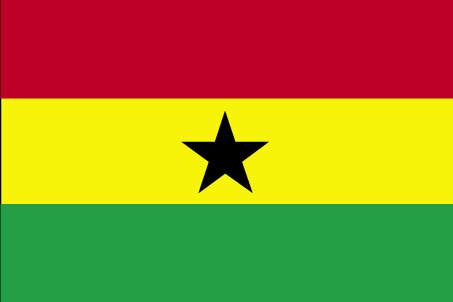
Ghana
Declare Your Relationship to Ghana
CountryReports Community
- Studying10
- From Ghana5
- Ghana heritage5
- Visited1
- Want to visit1
Customs and Culture
Customs and Culture
Cultural Attributes
Ghanaian's are a polite and open people. They live life at a relaxed pace. People are more important than schedules.

The Gold Coast Reborn
Get More Customs and Culture
6 more cultural topics for members
Social Customs & Etiquette · Diet · Family · Dating Customs · Recreation · Student Life
Every country, every topic, all activities & recipes
✓ Instant access on this device · ✓ No subscription
Holidays
Independence Day
3/6Independence Day
Christmas
12/25Christmas
Christmas dinner consists of fowl, pork, goat, or sheep along with rice, fufu(yam paste) fruits, and soup consisting of eggs and meat, okra or beans. Festivities continue for eight days with processions of street bands and dancers; groups of children carol from house to house and receive gifts from the residents. Families decorate a fruit tree with colored paper ornaments and folklore holds that Father Christmas emerges from the jungles with gifts for the children.
How do people greet each other in Ghana?
Greetings vary by ethnic group, but English greetings and handshakes are common, and it is important to greet someone before conversing.
Do
- Offer a handshake when greeting most people
- Begin with a greeting like "Good morning" or "Good afternoon" before talking
- Ask about the person's health, family welfare, and journey
- Use titles and family names for new acquaintances
Good to know
- Friends and family members often use given names
What are the dining customs in Ghana?
A bowl of water is provided to wash hands before and after the meal, and food is often formed into a ball with the right hand before eating.
Do
- Wash your hands in the bowl of water provided at the start and end of the meal
- Form food into a ball with your right hand before eating
Good to know
- Ghanaians enjoy hot and spicy food, and meals often come with a pepper sauce
- Popular dishes include fufu, ampesi, and palm or peanut oil soups
- Fish is the most common protein due to its low cost
What should I know about visiting a Ghanaian home?
Friends and relatives visit frequently without appointments, and hosts work hard to accommodate guests, nearly always serving drinks and refreshments.
Do
- Bring at least a small gift for the children
- Accept the drinks and refreshments offered
- Remove your shoes if the host prefers it
Don’t
- Don't refuse offers of drinks or refreshments, as it is impolite
Good to know
- Visiting is most popular on Sunday, and many people like to dress up
- Guests are usually accompanied to a bus, taxi, or given a ride home
How should I dress in Ghana?
Ghanaian dress is modest, neat, and generally conservative, with casual dress the rule for most occasions and formal attire required for formal events.
Do
- Wear a suit and tie or a dress for more formal occasions
- Dress modestly and neatly
Don’t
- Don't wear shorts as public attire
Good to know
- Western dress is normal in urban areas
- Officials often wear traditional kente cloth robes on ceremonial occasions
- Women often wear a long wraparound skirt, a separate top, and a head scarf
Which gestures are important in Ghana?
Being courteous is important, and the left hand should be avoided when gesturing or passing items.
Do
- Use your right hand or both hands to pass or receive items
- Cover your mouth when yawning or using a toothpick
Don’t
- Don't gesture with the left hand
- Don't point the sole of your foot at another person, especially among Muslims
- Don't place your feet on chairs, desks, or tables
Good to know
- Friends of the same sex holding hands while walking or talking signifies only friendship
What is family life like in Ghana?
Family structures vary by ethnic group, ranging from male-dominated to women-led, and respect for elderly members is very important.
Good to know
- The elderly hold great influence over family decisions
- Polygamy is practiced by some Ghanaians
- Funerals are very important, last three days, and take priority over everything else
What do people do for recreation in Ghana?
Football (soccer) is the most popular sport, while basketball and tennis are popular among the wealthy.
Good to know
- Football (soccer) is the most popular sport nationwide
Last updated: 2026-07-12 · Sources: CountryReports
Photos of Ghana
Photos of Ghana


Travel and Tourism
Travel and Tourism
- Travel Alert Status
- Level 2: Exercise Increased Caution
- Currency
- cedi (GHC)
- Time Difference
- UTC 0 (5 hours ahead of Washington, DC, during Standard Time)
- Climate
- Ghana's climate is tropical with temperatures between 21°C and 32°C (70°F and 90°F). Rainy seasons extend from April to July (heavy rains) and from September to November (light rains). Annual rainfall exceeds 200 centimeters on the coast, decreasing inland. Accra”™s annual rainfall averages about 76 centimeters, low for coastal West Africa. The southern part of the country is humid most of the year, but the north can be very dry. It is coolest from May until October. In December the harmattan, a dry dusty wind from the Sahara, covers the country, and lasts through February. The desert wind reduces humidity, and early mornings and nights are relatively cool. Visibility during the harmattan can be poor, as the air is filled with fine dust.
- Airports
- 12
Read the full travel guide — health, safety, vaccinations, disease risk, sanitation, and transit details.
View full travel guideRecipes
Recipes
Jollof Rice
Main Dish
Main Dish
Chicken Vegetable Soup
Main Dish
Jollof Rice
Main Dish
Smoked Fish Stew
Main Dish
Peanut Butter Soup
Main Dish
Hkatenkwan (Groundnut Stew)
Main Dish
Abenkwan (Palm Nut Soup)
Main Dish
PremiumKentumere (Fish and Spinach in Tomatoes)
Main Dish
PremiumAvocado with Smoked Fish
Main Dish
PremiumBraised Chicken with Chilies
History
History
Historical Eras
Pre-State & Early Kingdoms
10000 BCE – 1471
Human habitation in the region dates to at least 10,000 BCE, with Iron Age communities emerging by around 100 BCE. Guan-speaking peoples migrated down the Volta Basin from the thirteenth century onward, and the Akan kingdom of Bono was founded around 1298. Trade networks linking the forest zone to the western Sudan shaped early state formation well before European contact.
European Contact & Slave Trade
1471 – 1697
Portuguese navigators reached the coast in 1471, and the construction of Elmina Castle in 1482 inaugurated sustained European commercial presence. The Gold Coast's wealth in gold drew competing Portuguese, Dutch, Danish, and English traders. The transatlantic slave trade intensified dramatically through the sixteenth and seventeenth centuries, fueling warfare, displacement, and accelerated state-building among coastal and interior peoples.
Asante Empire
1697 – 1874
Osei Tutu unified the Asante confederation around 1697, establishing a powerful centralized state at Kumasi anchored by the sacred Golden Stool. The empire expanded through military conquest and control of gold and kola trade routes, dominating much of the interior for nearly two centuries. Repeated conflicts with coastal Fante states and British forces culminated in the Anglo-Asante War of 1873–74, after which British troops sacked Kumasi.
Gold Coast Colony
1874 – 1957
Britain formally established the Gold Coast Colony in 1874, extending protectorates over Asante in 1896 and the Northern Territories in 1902. Cocoa cultivation, introduced in 1878, became the economic backbone of the colony and gave rise to an educated African merchant and professional class. The United Gold Coast Convention (1947) and Kwame Nkrumah's mass-based Convention People's Party channeled rising nationalist sentiment into a successful independence movement.
Nkrumah & First Republic
1957 – 1966
Ghana became Africa's first sub-Saharan nation to gain independence on March 6, 1957, with Kwame Nkrumah as prime minister; a republic was declared in 1960. Nkrumah pursued pan-Africanism, socialist development, and ambitious industrialization projects while using the Preventive Detention Act to suppress political opposition and accumulate personal power. Mounting foreign debt, economic mismanagement, and authoritarian governance led the military to overthrow his government in February 1966.
Independence & Modern Ghana
1966 – present
Between 1966 and 1981 Ghana experienced seven changes of government, alternating between military juntas and short-lived civilian administrations. Flight Lieutenant Jerry Rawlings seized power in 1981, eventually steering the country toward economic reform under IMF structural adjustment and a return to multiparty democracy with the 1992 constitution. Since then Ghana has been regarded as one of West Africa's more stable democracies, with peaceful electoral transfers of power becoming an established norm.
Overview
MOST ETHNIC GROUPS constituting the population of Ghana
Every country, every topic, all activities & recipes
✓ Instant access on this device · ✓ No subscription
Timeline of Key Events
1000 BCE
10,000 B.C. Earliest recorded probable human habitation within modern Ghana at site on Oti River.
ca. 10,000 B.C. Earliest recorded probable human habitation within modern Ghana at site on Oti River.
100 BCE
Early Iron Age at Tema.
Early Iron Age at Tema.
1200
Guan begin their migrations down Volta Basin from Gonja toward Gulf of Guinea.
Guan begin their migrations down Volta Basin from Gonja toward Gulf of Guinea.
1298
Akan kingdom of Bono (Brong) founded.
Akan kingdom of Bono (Brong) founded. Other states had arisen or were beginning to rise about this time.
1471 – 1482
First Europeans arrive. Portuguese build Elmina Castle.
First Europeans arrive. Portuguese build Elmina Castle.
1500 – 1807
Era of slave raids and wars and of intense state formation in Gold Coast.
Era of slave raids and wars and of intense state formation in Gold Coast.
1697 – 1745
Rise and consolidation of Asante Empire.
Rise and consolidation of Asante Empire.
Read the full history profile — narrative overview, defining eras, and the complete timeline in one place.
View expanded historyInteresting Facts
Interesting Facts
Ghana has national parks, game reserves, and wildlife sanctuaries, but the elephant, lion and leopard populations are diminishing.
Ghana was the first nation to gain its independence in Sub-Saharan Africa in 1957.
The consent of the two extended families is needed for a couple to marry, even if they are living overseas.
The richest deposit in the world of high quality gold is in Ghana's Ashanti gold fields.
2 more facts for members
Every country, every topic, all activities & recipes
✓ Instant access on this device · ✓ No subscription
Geography and Environment
Geography and Environment
- Terrain
- mostly low plains with dissected plateau in south-central area
- Climate
- Ghana’s climate is tropical with temperatures between 21ºC and 32ºC (70ºF and 90ºF). Rainy seasons extend from April to July (heavy rains) and from September to November (light rains). Annual rainfall exceeds 200 centimeters on the coast, decreasing inland. Accra’s annual rainfall averages about 76 centimeters, low for coastal West Africa. The southern part of the country is humid most of the year, but the north can be very dry. It is coolest from May until October. In December the harmattan, a dry dusty wind from the Sahara, covers the country, and lasts through February. The desert wind reduces humidity, and early mornings and nights are relatively cool. Visibility during the harmattan can be poor, as the air is filled with fine dust.
- Natural Hazards
- dry, dusty, northeastern harmattan winds occur from January to March; droughts
- Current Environmental Issues
- recurrent drought in north severely affects agricultural activities; deforestation; overgrazing; soil erosion; poaching and habitat destruction threatens wildlife populations; water pollution; inadequate supplies of potable water
Read the full geography and environment profile — terrain, climate, natural resources, hazards, land use, and international agreements.
View full geographyPeople & Demographics
People & Demographics
Religion
Languages Spoken
English (official), African languages (including Akan, Moshi-Dagomba, Ewe, and Ga)
- English
- Ewe
- Ga
Population
- Population
- 33,475,870
- Population in Major Urban Areas
- ACCRA (capital) 2.573 million; Kumasi 2.019 million
- Nationality Noun
- Ghanaian(s)
- Ethnic Groups
- Black African 98.5% (major tribes - Akan 44%, Moshi-Dagomba 16%, Ewe 13%, Ga 8%, Gurma 3%, Yoruba 1%), European and other 1.5%
- Language Note
- The official language of Ghana is English. There are movements to make several local languages official as well. The Twi dialect of Akan is the language most commonly used on a daily basis to communicate between ethnic groups. Most Ghanaians are at least bilingual.
Education
- Literacy Definition
- Age 15 and over can read and write
Health Information
- Major Infectious Diseases — degree of risk
- very high
Life Expectancy
- Life Expectancy at Birth
- Life expectancy at birth in Ghana has shown a notable upward trend over recent decades, reflecting improvements in healthcare access, disease prevention, and overall living conditions. As of the most recent available data, the average life expectancy at birth in Ghana stands at approximately 63 to 64 years for the overall population. Women tend to live slightly longer than men, with female life expectancy estimated at around 65 years compared to approximately 62 years for males. This figure places Ghana in a moderate range relative to other sub-Saharan African nations, representing significant progress from the early 1990s, when life expectancy hovered closer to 57 years. The steady increase over this period is largely attributed to reductions in child and infant mortality, expanded immunization programs, greater availability of antiretroviral therapy for HIV/AIDS patients, and improved maternal health services. Despite these gains, Ghana continues to face health challenges that weigh on longevity. Malaria remains one of the leading causes of morbidity and mortality, particularly among children under five and pregnant women. Non-communicable diseases such as hypertension, diabetes, and cardiovascular conditions are also on the rise, especially in urban areas, placing new pressures on the national health system. Ghana's National Health Insurance Scheme, established in 2003, has played a meaningful role in improving access to medical care for a broader segment of the population. Rural communities, however, often experience lower life expectancy than urban residents due to limited access to hospitals, trained medical personnel, and clean water. Regional disparities are also notable within the country. Northern regions tend to report lower life expectancy figures compared to southern and coastal areas, a gap tied to differences in poverty levels, nutrition, healthcare infrastructure, and educational attainment. With continued investment in public health, sanitation, and preventive care, Ghana is positioned to make further gains in life expectancy in the coming decades, building on the substantial progress already achieved since independence.
- Infant Mortality Rate
- Ghana has made notable progress in reducing infant mortality over recent decades, though the rate remains a significant public health concern. As of the most recent available data, Ghana's infant mortality rate stands at approximately 33 to 35 deaths per 1,000 live births. This figure represents a substantial improvement from earlier decades, when the rate exceeded 70 deaths per 1,000 live births in the 1990s, reflecting the impact of sustained public health investments and international development partnerships. Infant mortality in Ghana varies considerably by region and between urban and rural settings. Children born in rural areas of the Northern, Upper East, and Upper West regions face considerably higher risks than those born in urban centers such as Accra or Kumasi. Disparities in access to skilled birth attendants, clean water, sanitation, and quality healthcare facilities are primary contributors to these geographic inequalities. The leading causes of infant death in Ghana include neonatal infections, birth asphyxia, prematurity, malaria, pneumonia, and diarrheal diseases. Malnutrition also plays a compounding role, weakening immune responses and increasing vulnerability to otherwise preventable illnesses. Neonatal deaths — those occurring within the first 28 days of life — account for a significant share of all infant deaths in the country. The Government of Ghana, in partnership with organizations such as UNICEF and the World Health Organization, has implemented a range of programs aimed at reducing infant mortality. These include expanding access to antenatal care, promoting skilled delivery attendance, distributing insecticide-treated bed nets to combat malaria, and scaling up immunization coverage. The Ghana Health Service has worked to increase the number of community health workers in underserved areas to extend basic healthcare closer to vulnerable populations. Despite this progress, Ghana still falls short of the Sustainable Development Goal target of reducing neonatal mortality to no more than 12 deaths per 1,000 live births by 2030. Continued investment in maternal and child health infrastructure, along with efforts to address poverty and nutritional deficiencies, will be essential to further reducing the infant mortality rate in the coming years.
Read the full people and society profile — demographics, health, education, religion, languages, and notable people.
View full people and societyGovernment & Politics
Government & Politics
Country Identity
- Country Name
- Ghana
- Full Country Name
- Republic of Ghana
- Former Name
- Gold Coast
Government Structure
- Government Type
- constitutional democracy
- Legal System
- based on English common law and customary law; has not accepted compulsory ICJ jurisdiction
- Executive Branch
- chief of state: President John Dramani MAHAMA (since 7 January 2025); Vice President Jane NAANA OPOKU AGYEMANG (since 7 January 2025); note - the president is both the chief of state and head of government head of government: President John Dramani MAHAMA (since 7 January 2025); Vice President Jane NAANA OPOKU AGYEMANG (since 7 January 2025); note - the president is both the chief of state and head of government cabinet: Council of Ministers; president nominates members subject to approval by Parliament elections: president and vice president elected on the same ticket by popular vote for four-year terms; election last held 7 December 2024 (next to be held December 2028) election results: John Dramani MAHAMA elected president; percent of vote - John Dramani MAHAMA (NDC) 56.6%, Mahamudu BAWUMIA (NPP) 41.6%
- Legislative Branch
- Unicameral Parliament (275 seats; members are elected by direct, popular vote to serve four-year terms) Elections: last held on 7 December 2024 (next to be held December 2028) Election results: percent of vote by party - NA; seats by party - NDC 183, NPP 88, independent 4
- Judicial Branch
- Supreme Court
- Suffrage
- 18 years of age; universal
- Constitution
- approved 28 April 1992
- Independence
- 6 March 1957 (from UK)
- National Holiday
- Independence Day, 6 March (1957)
Capital City
- Capital Name
- Accra
- Capital - geographic coordinate
- 5 33 N, 0 13 W
- Capital Time Difference
- UTC 0 (5 hours ahead of Washington, DC, during Standard Time)
The name derives from the Akan word "nkran" meaning "ants," and refers to the numerous anthills in the area around the capital
Military
Branches: Ghana Army, Ghana Navy, Ghana Air Force
Embassy / Diplomatic Mission
Embassy Accra
Address: The U.S. Embassy is located at No. 24 Fourth Circular Road, Cantonments, Accra.
Telephone: (233)-(030) 274-1000
Emergency after-hours telephone: (233)-(030) 274-1775
Facsimile: (233)-(030) 274-1362 or 274-1426
Read the full government profile — flag symbolism, national anthem, and other national symbols.
View full government detailsEconomy
Economy
Ghana has one of West Africa's most dynamic and diversified economies, classified as a lower-middle-income country since 2010. With a gross domestic product of approximately 76 billion US dollars in 2023, it ranks among the largest economies in the region.
Snapshot
- Currency Name and Code
- Cedi (GHC)
- GDP — official exchange rate
- $9,413,000,000 (USD)
- GDP Real Growth Rate
- 4.7%
- Gini Index
- 30
Every country, every topic, all activities & recipes
✓ Instant access on this device · ✓ No subscription
News & Weather
News & Weather
Current Weather
Latest News
Tottenham's Mohammed Kudus withdraws from Ghana to 'protect recovery' - ESPN
ESPN · 1d ago
Billionaire YouTuber MrBeast spent $10 million building a village in Ghana—he says viewers watch philanthropy videos less but ‘I’ll keep making them’ - Fortune
Fortune · 1d ago
MrBeast built a $10 million 'self-sustaining' village in Ghana - Yahoo
Yahoo · 1h ago
MrBeast responds to backlash after spending $10,000,000 in Ghana - Newsweek
Newsweek · 2d ago
One Flight to Ghana: inside a deportation ordered by Trump - France 24
France 24 · 1d ago
African Futures Institute Transforms Former Warehouse Into Headquarters in Accra, Ghana - ArchDaily
ArchDaily · 1d ago
Ghana to focus on rebuilding reserves as gold exports pause - Mining.com
Mining.com · 30m ago
Ghana International Bank Eyes US Market as Africa Appetite Grows - Bloomberg.com
Bloomberg.com · 8h ago
News via Google News
Climate Overview
Ghana's climate is tropical with temperatures between 21°C and 32°C (70°F and 90°F). Rainy seasons extend from April to July (heavy rains) and from September to November (light rains). Annual rainfall exceeds 200 centimeters on the coast, decreasing inland. Accra”™s annual rainfall averages about 76 centimeters, low for coastal West Africa. The southern part of the country is humid most of the year, but the north can be very dry.
It is coolest from May until October. In December the harmattan, a dry dusty wind from the Sahara, covers the country, and lasts through February. The desert wind reduces humidity, and early mornings and nights are relatively cool. Visibility during the harmattan can be poor, as the air is filled with fine dust.
Frequently Asked Questions
Frequently Asked Questions
What is the population of Ghana?
What is the capital of Ghana?
Where is Ghana located?
What countries border Ghana?
What religion is practiced in Ghana?
What is the currency of Ghana?
What language is spoken in Ghana?
What is Ghana known for?
Last reviewed 2026