
 English
 Español
 中文
中文 हिन्दी
 Français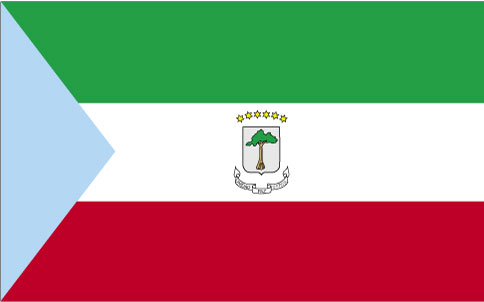
Equatorial Guinea
Guinea Ecuatorial
Declare Your Relationship to Equatorial Guinea
CountryReports Community
- Studying17
- From Equatorial Guinea3
- Equatorial Guinea heritage1
- Visited4
- Want to visit2
Customs and Culture
Customs and Culture
Cultural Attributes
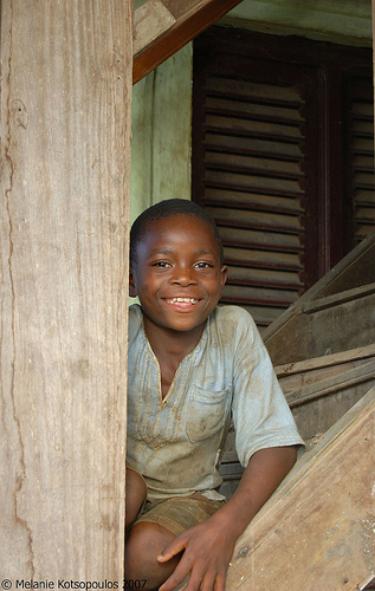
People who live on Bioko Island, or the Bubi society divides people by function farmers, hunters, and fishers.

Island and Mainland, Bound by the Gulf
Get More Customs and Culture
6 more cultural topics for members
Social Customs & Etiquette · Diet · Family · Dating Customs · Recreation · Student Life
Every country, every topic, all activities & recipes
✓ Instant access on this device · ✓ No subscription
Holidays
Independence Day
10/12Independence Day
Dates of Interest
- October 12th
How do people greet each other in Equatorial Guinea?
Equatorial Guineans are friendly and greet one another by shaking hands, considering greetings an important gesture. Standing close and touching during conversation shows mutual respect.
Do
- Shake hands when greeting
- Show respect to people of status
- Engage in close social interaction
What are the dining customs in Equatorial Guinea?
Staple foods include cocoyams, plantains, rice and peanuts, with little meat eaten; many people only eat what they can grow. Meat is the preferred protein when available and fish are abundant in coastal areas.
Good to know
- Urban dwellers eat three meals a day
- In rural areas, people often eat a light meal mid-morning and a larger meal before dark
- Try gari, a cassava-flour porridge or spiced side dish
- A popular dish is ground squash seeds made into a curd
- Goats, chickens, rodents, monkeys, snakes and fish are all eaten
How should I dress in Equatorial Guinea?
Equatorial Guineans try to look good in public, with Western-style clothes worn in urban areas. Women and girls wear bright pleated skirts with African patterns, starched blouses and polished shoes.
Good to know
- Head scarves are common
- Tailored dresses are popular for girls
- Children in villages wear shorts, jeans and tee-shirts
- Many people make little money and go barefoot
What is family life like in Equatorial Guinea?
The family and the clan are very important. Customs vary by group: Fang men may have more than one wife and can marry outside their clan, while Bubi men marry within the same clan or tribe.
Good to know
- The Bubi are matriarchal and value having girls
- Girls are considered the eyes of the home
What do people do for fun in Equatorial Guinea?
Soccer is a favorite pastime, along with table tennis learned from Chinese aid workers. Equatorial Guineans enjoy socializing with family and friends.
Good to know
- It is common to see people playing cards, checkers, and chess
Last updated: 2026-07-12 · Sources: CountryReports
Photos of Equatorial Guinea
Photos of Equatorial Guinea


Travel and Tourism
Travel and Tourism
- Travel Alert Status
- Level 1: Exercise Normal Precautions
- Currency
- 605.7
- Time Difference
- UTC+1 (6 hours ahead of Washington, DC, during Standard Time)
- Airports
- 3
Read the full travel guide — health, safety, vaccinations, disease risk, sanitation, and transit details.
View full travel guideRecipes
Recipes
History
History
Historical Eras
Pre-Colonial Era
1471 – 1778
Portuguese navigator Fernão do Pó sighted Bioko Island in 1471, initiating European awareness of the region. Pygmy peoples inhabited the mainland interior, while Bantu migrations gradually introduced coastal tribes and the Fang. Portugal held nominal control over the islands until ceding them to Spain via the Treaty of Pardo in 1778.
Spanish Colonial Rule
1778 – 1968
Spain administered the territory known as Spanish Guinea, developing lucrative cacao plantations on Bioko using imported Nigerian labor. Britain briefly occupied Fernando Poo from 1827 to 1843 to suppress the slave trade, while the 1900 Treaty of Paris resolved mainland boundary disputes. By independence, Spanish paternalism had produced one of Africa's highest literacy rates and per capita incomes.
Macías Dictatorship
1968 – 1979
Francisco Macías Nguema became the country's first president upon independence in October 1968, rapidly consolidating power into a brutal single-party state by 1970 and declaring himself President-for-Life in 1972. His regime abolished education, suppressed religion, and dismantled all public infrastructure through systematic terror. Up to one-third of the population fled or perished, leaving the country in near-total ruin.
Obiang's Rule
1979 – 1995
Teodoro Obiang Nguema Mbasogo overthrew and executed his uncle Macías in a military coup in August 1979, establishing a new authoritarian government. Nominal multiparty democracy was introduced in 1991 under international pressure, though elections remained deeply flawed and opposition parties were controlled through patronage. The country slowly rebuilt infrastructure but remained among Africa's poorest nations.
Oil Boom Era
1995 – present
Mobil's 1996 discovery of major offshore oil and gas reserves transformed Equatorial Guinea into one of sub-Saharan Africa's leading petroleum exporters, making it briefly one of the world's fastest-growing economies by 2001. Government revenues surged dramatically, funding large-scale construction, yet wealth remained concentrated among the ruling elite and living standards for most citizens improved little. Obiang has continued to govern with consolidated personal authority, facing repeated international criticism over corruption and human rights abuses.
Overview
The first inhabitants of the region that is now Equatorial Guinea are believed to have been Pygmies, of whom only isolated pockets remain in northern Rio Muni. Bantu migrations between the 17th and 19th centuries brought the coastal tribes and later the Fang. Elements of the latter may have generated the Bubi, who immigrated to Bioko from Cameroon and Rio Muni in several waves and succeeded former Neolithic populations.
Every country, every topic, all activities & recipes
✓ Instant access on this device · ✓ No subscription
Timeline of Key Events
1471
Portuguese navigator Fernao do Po sights the island of Fernando Poo.
Portuguese navigator Fernao do Po sights the island of Fernando Poo, which is now called Bioko.
1777
Portuguese cedes islands of Annobon and Fernando Poo to Spain.
Portuguese cedes islands of Annobon and Fernando Poo as well as rights on the mainland coast to Spain, giving it access to a source of slaves.
1844
Spanish settle in what became the province of Rio Muni - mainland Equatorial Guinea.
Spanish settle in what became the province of Rio Muni - mainland Equatorial Guinea.
1904
Fernando Poo and Rio Muni become the Western African Territories.
Fernando Poo and Rio Muni become the Western African Territories, later renamed Spanish Guinea.
1968
Spanish Guinea granted independence.
Spanish Guinea granted independence and becomes the Republic of Equatorial Guinea with Francisco Macias Nguema as president.
1996
Mobil oil corporation announces it has discovered sizeable new oil and gas reserves.
Mobil oil corporation announces it has discovered sizeable new oil and gas reserves.
2001
Economy emerges as one of world’s fastest-growing because of oil exploitation.
Economy emerges as one of world’s fastest-growing because of oil exploitation. Opposition says trickle-down effect of growth is too slow, too small.
Read the full history profile — narrative overview, defining eras, and the complete timeline in one place.
View expanded historyInteresting Facts
Interesting Facts
Equatorial Guinea gained independence in 1968 after 190 years of Spanish rule
See every fact — trivia, oddities, and curious tidbits gathered from across the country.
View all interesting factsGeography and Environment
Geography and Environment
- Terrain
- coastal plains rise to interior hills; islands are volcanic
- Climate
- tropical; always hot, humid
- Natural Hazards
- violent windstorms, flash floods
- Current Environmental Issues
- tap water is not potable; deforestation
Read the full geography and environment profile — terrain, climate, natural resources, hazards, land use, and international agreements.
View full geographyPeople & Demographics
People & Demographics
Religion
Languages Spoken
Spanish (official), French (official), pidgin English, Fang, Bubi, Ibo
- French
- Pidgin
- Spanish
Population
- Population
- 1,544,051
- Population in Major Urban Areas
- MALABO (capital) 137,000
- Nationality Noun
- Equatorial Guinean(s) or Equatoguinean(s)
- Ethnic Groups
- Bioko (primarily Bubi, some Fernandinos), Rio Muni (primarily Fang), Europeans less than 1,000, mostly Spanish
Education
- Literacy Definition
- Age 15 and over can read and write
Health Information
- Major Infectious Diseases — degree of risk
- Very high
Life Expectancy
- Life Expectancy at Birth
- Life expectancy at birth in Equatorial Guinea stands at approximately 62 to 63 years for the overall population, reflecting modest but notable improvements over the past several decades. Women tend to outlive men by a few years, with female life expectancy estimated around 64 to 65 years compared to roughly 60 to 61 years for males. These figures place Equatorial Guinea below the global average of around 73 years but broadly in line with many sub-Saharan African nations. Despite the country's relatively high gross national income per capita — bolstered significantly by offshore oil revenues discovered in the 1990s — the translation of that wealth into improved public health outcomes has been uneven. A considerable share of the population, particularly in rural and interior regions away from the capital Malabo and the mainland city of Bata, continues to face limited access to quality healthcare services, clean water, and adequate sanitation. Key factors influencing life expectancy include the prevalence of malaria, which remains a leading cause of morbidity and mortality, as well as challenges related to maternal and child health. The under-five mortality rate, while declining, continues to weigh on overall life expectancy calculations. Communicable diseases, poor infrastructure in remote areas, and gaps in the distribution of medical personnel across the country all contribute to health disparities between urban and rural populations. In contrast to wealthier nations where chronic non-communicable diseases such as heart disease or diabetes are the primary drivers of early death, infectious and parasitic diseases remain the dominant health burden in Equatorial Guinea. Government efforts and international health initiatives have worked to expand vaccination coverage and combat endemic diseases, contributing to the gradual upward trend in life expectancy observed since the 1960s, when the figure was closer to 35 to 40 years. While progress has been made, health advocates continue to call for greater investment in public health infrastructure to ensure that oil revenues more effectively support the long-term well-being of Equatorial Guinea's growing population.
- Infant Mortality Rate
- Equatorial Guinea faces significant challenges in infant health outcomes, with an infant mortality rate estimated at approximately 59 to 62 deaths per 1,000 live births in recent years. This figure places the country well above the global average and reflects persistent gaps in healthcare access, infrastructure, and maternal and child health services across the nation. Despite Equatorial Guinea's relatively high per capita income driven by oil revenues since the 1990s, wealth distribution has been deeply unequal, meaning that improved national income has not translated proportionally into better health outcomes for the broader population. Rural communities, which make up a substantial portion of the country, often lack adequate access to trained healthcare personnel, clean water, proper sanitation, and medical facilities — all of which are critical factors in reducing infant deaths. The leading causes of infant mortality in Equatorial Guinea include malaria, respiratory infections, diarrheal diseases, neonatal complications, and preventable conditions that could be addressed through vaccination and routine medical care. Neonatal mortality — deaths occurring within the first 28 days of life — accounts for a notable share of overall infant deaths, highlighting the need for improved obstetric care and postnatal support. UNICEF and the World Health Organization have identified Equatorial Guinea as a country requiring targeted interventions to improve child survival rates. Programs focusing on expanding immunization coverage, training community health workers, improving access to skilled birth attendants, and strengthening maternal nutrition have shown promise but face challenges related to governance, funding allocation, and geographic accessibility. The under-five mortality rate in Equatorial Guinea similarly remains elevated, compounding concerns about child health in the early years of life. While there has been gradual improvement over the past two decades, progress has been slower than in comparable sub-Saharan African nations that have more effectively channeled national resources into public health systems. Continued investment in healthcare infrastructure and social services remains essential to meaningfully reducing infant mortality across the country.
Read the full people and society profile — demographics, health, education, religion, languages, and notable people.
View full people and societyGovernment & Politics
Government & Politics
Country Identity
- Country Name
- EquatorialGuinea
- Full Country Name
- Republic of Equatorial Guinea
- Local - Long
- Republica de Guinea Ecuatorial
- Local - Short
- Guinea Ecuatorial
- Former Name
- Spanish Guinea
Government Structure
- Government Type
- republic
- Legal System
- partly based on Spanish civil law and tribal custom
- Executive Branch
- chief of state: President Teodoro OBIANG NGUEMA MBASOGO (since 3 August 1979, when he seized power in a military coup ousting his uncle, Francisco Macías Nguema) head of government: Prime Minister Manuela ROKA BOTEY (since 1 February 2023), the first woman to hold the position; First Deputy Prime Minister Clemente ENGONGA NGUEMA ONGUENE (since 2023) cabinet: Council of Ministers appointed by the president elections: president elected by popular vote for a seven-year term; election last held on 20 November 2022 (next to be held in 2029); prime minister and deputy prime ministers appointed by the president election results: Teodoro OBIANG NGUEMA MBASOGO reelected president; percent of vote - Teodoro OBIANG NGUEMA MBASOGO 94.9%; the election, like previous contests, was criticized by international observers for lacking genuine political competition and transparency
- Legislative Branch
- Equatorial Guinea has a bicameral parliament consisting of the Senate (Senate or Senado) and the House of People's Representatives (Cámara de Representantes del Pueblo). The House of People's Representatives has 100 seats, with members directly elected by popular vote to serve five-year terms. The Senate, established under the 2012 constitutional reforms, has 70 seats, of which 55 are directly elected and 15 are appointed by the president. Elections: The most recent legislative elections were held in November 2022, in which the ruling Democratic Party of Equatorial Guinea (PDGE) and its allied coalition maintained their overwhelming dominance of the legislature. The PDGE and allied parties secured nearly all seats in both chambers, with the Convergence for Social Democracy (CPDS) retaining minimal representation. Note: Despite its bicameral structure, parliament exercises limited independent authority, as the constitution concentrates executive power heavily in the presidency. Political pluralism remains restricted in practice, and opposition parties face significant barriers to meaningful participation in the electoral process.
- Judicial Branch
- Supreme Tribunal
- Suffrage
- 18 years of age; universal adult
- Constitution
- approved by national referendum 17 November 1991; amended January 1995
- Independence
- 12 October 1968 (from Spain)
- National Holiday
- Independence Day, 12 October (1968)
Capital City
- Capital Name
- Malabo; note - Malabo is on the island of Bioko; some months of the year, the government operates out of Bata on the mainland region.
- Capital - geographic coordinate
- 3 45 N, 8 47 E
- Capital Time Difference
- UTC+1 (6 hours ahead of Washington, DC, during Standard Time)
Named after King MALABO (Malabo Lopelo Melaka) (1837–1937), the last king of the Bubi, the ethnic group indigenous to the island of Bioko
Military
Branches: Equatorial Guinea Armed Forces (FAGE): Equatorial Guinea National Guard (Guardia Nacional de Guinea Ecuatoria, GNGE (Army), with Navy and Air Force
Embassy / Diplomatic Mission
U.S. Embassy Malabo
Carretera de Aeropuerto KM-3 (El Paraiso)
Apartado 95
Malabo
Telephone: 240-333-098-895
Immigrant visa services are provided through the U.S. Embassy in Yaoundé, Cameroon, Avenue Rosa Parks in the Mbankolo Quartier, adjacent to the Mount Febe Golf Club.
Mailing Address:
P.O. Box 817, Yaounde, Cameroon
Telephone: 237-2220-1500
Emergency after-hours telephone: 237-2220-1500
Facsimile: 237-2220-1572
Read the full government profile — flag symbolism, national anthem, and other national symbols.
View full government detailsEconomy
Economy
The discovery and exploitation of large oil and natural gas reserves transformed Equatorial Guinea into one of sub-Saharan Africa's largest hydrocarbon producers, driving dramatic economic growth from the mid-1990s through the early 2010s.
Snapshot
- Currency Name and Code
- Cooperation Financiere en Afrique Centrale francs (XAF)
- GDP — official exchange rate
- $7,644,000,000 (USD)
- GDP Real Growth Rate
- -3.2%
Every country, every topic, all activities & recipes
✓ Instant access on this device · ✓ No subscription
News & Weather
News & Weather
Current Weather
Latest News
Equatorial Guinea Air Force - migflug.com
migflug.com · 17h ago
Police arrested and beat 2 deportees from the US to Equatorial Guinea, lawyers say - AP News
AP News · 14d ago
EXCLUSIVE: Equatorial Guinea police pull guns on migrants deported by Trump, witnesses say - Reuters
Reuters · 25d ago
Trump is disappearing refugees into the hands of torturers – and rewarding them handsomely - theguardian.com
theguardian.com · 1d ago
DR Congo defeat Zimbabwe as Equatorial Guinea and Burkina Faso also post wins - cafonline.com
cafonline.com · 5d ago
A Central African Hotel Has Become a Nightmare Prison for U.S. Deportees - The New York Times
The New York Times · 15d ago
Equatorial Guinea vs Sierra Leone Live Stream: How to Watch 2027 Africa Cup of Nations Qualifiers - Fubo
Fubo · 5d ago
Congo DR 2-0 Eq. Guinea (Sep 24, 2026) Final Score - ESPN
ESPN · 20d ago
News via Google News
Frequently Asked Questions
Frequently Asked Questions
What is the population of Equatorial Guinea?
What is the capital of Equatorial Guinea?
Where is Equatorial Guinea located?
What countries border Equatorial Guinea?
What is the predominant religion in Equatorial Guinea?
What currency is used in Equatorial Guinea?
What languages are spoken in Equatorial Guinea?
What is the geography of Equatorial Guinea like?
What is Equatorial Guinea known for?
Last reviewed 2026