
 English
 Español
 中文
中文 हिन्दी
 Français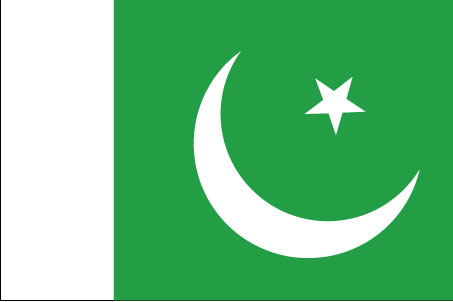
Pakistan
Declare Your Relationship to Pakistan
CountryReports Community
- Studying11
- From Pakistan10
- Pakistan heritage4
- Visited2
- Want to visit4
Customs and Culture
Customs and Culture
Cultural Attributes
Pakistani's are devout Muslims and live according to the will of Allah. There are differences between the various ethnic groups, with Pashtuns and Baluchis being more traditional and conservative than other major groups.

Land of the Indus and Mountain Fire
Get More Customs and Culture
5 more cultural topics for members
Social Customs & Etiquette · Diet · Family · Dating Customs · Recreation
Every country, every topic, all activities & recipes
✓ Instant access on this device · ✓ No subscription
Holidays
Republic Day
3/23Independence
Christmas
12/25Christmas
Most of the population is Muslim. The small Christian minority observes Bara Din (Christmas) in Western fashion. December 25th is also the birthday of the founder of Pakistan Quaid-I-Azam Mohammed Ali Jinnah, and is a National Holiday.
Dates of Interest
- August 14th
Organized by the Lok Virsa (National Institute of Folk & Traditional Heritage), Lok Mela is a cultural festival held in Islamabad that celebrates Pakistan's diverse cultural heritage. It features traditional music, dance performances, handicrafts, folk art, and cuisine from different regions of Pakistan.
How do people greet each other in Pakistan?
Greetings depend on gender: women may shake hands or hug, but men should not touch women in public and address a title with the last name. Conversations often start by asking about the health and well-being of one's family.
Do
- Use a title and last name when addressing someone
- In small groups, greet each person one by one
- Ask about the other person's family's health and well-being
Don’t
- Men should not touch women in public
- Men should not look directly at a married woman when greeting her verbally
What are the dining customs in Pakistan?
Families usually eat together from a shared platter, using chapati (bread) to scoop up hot, spicy food, with tea as the most popular drink.
Do
- Use chapati (bread) to scoop up food
- Expect rice with most meals and desserts
- Accept offered tea or coffee
Don’t
- Do not expect pork or alcohol, which Islamic law forbids
- During Ramadan, non-Muslims should avoid eating or drinking from sunrise to sundown
Good to know
- Curry and other spices make the food generally hot and spicy
- Yogurt is a common ingredient in meals
What etiquette should I follow when visiting a home in Pakistan?
Hospitality is important and guests are made to feel welcome, usually with tea or coffee and socializing before the meal.
Do
- Accept the offer of tea or coffee
- Bring a gift if you know your hosts well
- Socialize before the meal
Don’t
- Do not decline an offered beverage, as it may offend your host
- Do not expect men and women to socialize together in traditional homes
Good to know
- Visiting relatives and friends is a very important, frequent custom
- Socializing usually does not continue after the meal
How should I dress in Pakistan?
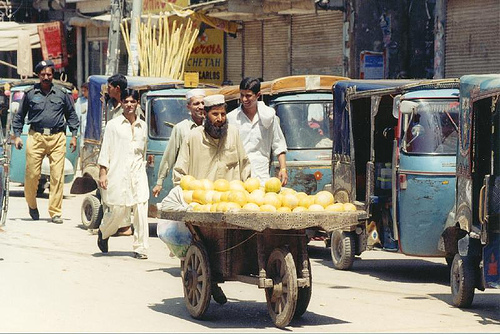
Dress conservatively, covering legs, arms, and head in public; the national dress is the shalwar-qameez, worn in both urban and rural areas.
Do
- Dress conservatively
- Cover your legs, arms, and head in public
Don’t
- Women never wear shorts
- Men wear shorts only at athletic events
Good to know
- Men usually wear a head covering, which can indicate their ethnic group
What gestures are polite or rude in Pakistan?
Use your right hand to pass items and keep both feet on the ground; several hand gestures are considered rude.
Do
- Pass items with your right hand
- Sit with both feet on the ground
Don’t
- Do not point your foot at another person
- Do not make gestures with your fingers
- Do not use a closed fist, which is an obscene gesture
Good to know
- Staring is common, so don't be offended if someone stares at you
- Women are often separated socially from men
What are family and marriage customs like in Pakistan?
Arranged marriages are the norm and the divorce rate is low; the whole family typically eats together whenever possible.
Good to know
- Engagements may last years or only a few months
- A bride and groom may meet for the first time on their wedding day
What do people do for recreation in Pakistan?
Cricket and field hockey are the most popular sports, alongside traditional games.
Good to know
- Children in rural areas enjoy hide-and-seek, marbles, and kite flying
- Gulli-danda (a boys' stick game) and kabaddi (a wrestling game) are also popular
Last updated: 2026-07-12 · Sources: CountryReports
Photos of Pakistan
Photos of Pakistan


Travel and Tourism
Travel and Tourism
- Travel Alert Status
- Level 3: Reconsider Travel
- Currency
- Pakistani rupee (PKR)
- Time Difference
- UTC+5 (10 hours ahead of Washington, DC, during Standard Time)
- Airports
- 129
Read the full travel guide — health, safety, vaccinations, disease risk, sanitation, and transit details.
View full travel guideRecipes
Recipes
History
History
Historical Eras
Ancient Civilizations
2500 BCE – 711
The Indus Valley Civilization, centered on cities such as Mohenjo-daro and Harappa, flourished from roughly 2500 BCE before giving way to Indo-Aryan migrations and the Vedic Age. Alexander the Great swept through the region in 326 BCE, and subsequent empires — Mauryan, Kushan, and Gupta — left deep imprints, with the Gandhara period producing a celebrated fusion of Buddhist and Hellenistic art centered on Taxila.
Islamic Consolidation
711 – 1526
Muhammad bin Qasim's conquest of Sindh in 711 CE brought Islam to the subcontinent for the first time, inaugurating centuries of Muslim political and cultural expansion. Mahmud of Ghazni's raids from Afghanistan (1001–1030) and Muhammad of Ghor's defeat of the Rajputs (1192) paved the way for the Delhi Sultanate (1206–1526), which established Persian-influenced Islamic governance across much of the region.
Mughal Empire
1526 – 1757
Babur's victory at the First Battle of Panipat in 1526 founded the Mughal Empire, which under Akbar, Jahangir, and Shah Jahan reached its cultural and administrative apex. Grand architectural projects, a sophisticated imperial bureaucracy, and flourishing of Urdu literature and Mughal miniature painting defined the era, before Aurangzeb's overextension and succession conflicts precipitated the empire's gradual collapse in the early 18th century.
Sikh & British Rule
1757 – 1947
As Mughal power disintegrated, Ranjit Singh forged a powerful Sikh empire stretching from Kabul to Lahore and Kashmir, encompassing much of northern Pakistan. The British East India Company supplanted Sikh rule by the mid-19th century, incorporating the region into the British Raj; it was during this colonial period that Muslim political consciousness crystallized, leading to the founding of the All-India Muslim League in 1906 and Muhammad Ali Jinnah's campaign for a separate Muslim homeland.
Independence & Partition
1947 – 1971
Pakistan emerged as an independent state on August 14, 1947, comprising West Pakistan and the geographically separated East Pakistan, amid catastrophic communal violence and mass population transfers. The unresolved accession of Kashmir triggered the first Indo-Pakistani war within weeks of independence, and chronic political instability — marked by the deaths of Jinnah and Prime Minister Liaqat Ali Khan and repeated military coups — plagued the new nation's formative decades.
Modern Pakistan
1971 – present
The secession of East Pakistan as Bangladesh in 1971, following a devastating civil war and Indian military intervention, fundamentally reshaped the country's identity. Successive cycles of civilian and military rule, the Soviet-Afghan War's profound regional spillover, Pakistan's covert nuclear weapons program culminating in open tests in 1998, and ongoing tensions with India over Kashmir have defined a nation navigating persistent security challenges alongside aspirations for democratic consolidation and economic development.
Overview
Pakistan, along with parts of western India, contains the archeological
Every country, every topic, all activities & recipes
✓ Instant access on this device · ✓ No subscription
Timeline of Key Events
1500 BCE – 500 BCE
Migrations of Indo-Aryan- speaking tribes; the Vedic Age.
Migrations of Indo-Aryan- speaking tribes; the Vedic Age.
563 BCE – 483 BCE
Life of Siddartha Gautama--the Buddha; founding of Buddhism.
Life of Siddartha Gautama--the Buddha; founding of Buddhism.
321 BCE – 180 BCE
Mauryan Empire; reign of Ashoka; spread of Buddhism.
Mauryan Empire; reign of Ashoka (r. ca. 274-236 B.C.); spread of Buddhism.
180 BCE – 150
Saka dynasties in Indus Valley.
Saka dynasties in Indus Valley.
78 – 200
Kushan Empire; Gandharan art flourishes.
Kushan Empire; Gandharan art flourishes.
319 – 600
Gupta Empire; classical age in northern India.
Gupta Empire; classical age in northern India.
711
Muhammad bin Qasim conquers Sindh and incorporates it into Umayyad Caliphate.
Muhammad bin Qasim, an Arab general, conquers Sindh and incorporates it into Umayyad Caliphate.
Read the full history profile — narrative overview, defining eras, and the complete timeline in one place.
View expanded historyInteresting Facts
Interesting Facts
When a child loses a tooth they wrap their tooth in cotton. At sunset they go to the river and thrwo their tooth in the water. It will bring them good luch. If no river is nearby, they will throw it in a good site, like a garden.
Pakistan's highest mountain K2, is in the Karakoram Range and is the second highest mountain in the world. K2 is 28,523 feet (8,617 meters). Films, fiction and documentary, have been made on the conquest of these formidable peaks.
The great Indus Valley civilization developed between 300 B.C. and 1500 B.C. or roughly at the same time as the Mesopotamian and Egyptian civilizations.
The Pakistani are an ethnically diverse people.
2 more facts for members
Every country, every topic, all activities & recipes
✓ Instant access on this device · ✓ No subscription
Geography and Environment
Geography and Environment
- Terrain
- flat Indus plain in east; mountains in north and northwest; Balochistan plateau in west
- Climate
- Seasonal temperatures vary widely in these five regions. With the exception of the Far North, summers are hot throughout the country with temperatures ranging from 90°F to 120°F and little nighttime relief. Trade winds provide some relief during the hot and humid summers in Karachi and a brief cool season comes between December and February. In Lahore, Islamabad, and Peshawar, a distinct winter season brings daytime temperatures of 60°F or less and cold nights. Islamabad and Peshawar may have light frosts. Spring and fall are delightful seasons in these three cities. Altitude governs climate in the Far North, with pleasant summers in the lower regions and perpetual snow in the higher mountains. The average annual rainfall varies from 6 inches in Karachi, 15 inches in Peshawar, and 18 inches in Lahore, to about 30 inches in Islamabad. Most rain falls during the summer monsoon from July to September, although parts of the Punjab and the Northwest Frontier experience a moderate winter rainy season as well.
- Natural Hazards
- frequent earthquakes, occasionally severe especially in north and west; flooding along the Indus after heavy rains (July and August)
- Current Environmental Issues
- water pollution from raw sewage, industrial wastes, and agricultural runoff; limited natural fresh water resources; a majority of the population does not have access to potable water; deforestation; soil erosion; desertification
Read the full geography and environment profile — terrain, climate, natural resources, hazards, land use, and international agreements.
View full geographyPeople & Demographics
People & Demographics
Religion
Languages Spoken
Punjabi 48%, Sindhi 12%, Siraiki (a Punjabi variant) 10%, Pashtu 8%, Urdu (official) 8%, Balochi 3%, Hindko 2%, Brahui 1%, English (official and lingua franca of Pakistani elite and most government ministries), Burushaski, and other 8%
- Brahui
- Pashtu
- Punjabi
- Urdu
Population
- Population
- 231,402,117
- Population in Major Urban Areas
- Karachi 13.876 million; Lahore 7.566 million; Faisalabad 3.038 million; Rawalpindi 2.164 million; Multan 1.775 million; ISLAMABAD (capital) 919,000
- Nationality Noun
- Pakistani(s)
- Ethnic Groups
- Punjabi, Sindhi, Pashtun (Pathan), Baloch, Muhajir (immigrants from India at the time of partition and their descendants)
Education
- Literacy Definition
- age 15 and over can read and write
Health Information
- Major Infectious Diseases — degree of risk
- high
Life Expectancy
- Life Expectancy at Birth
- Life expectancy at birth in Pakistan has shown steady improvement over recent decades, reflecting advances in healthcare access, vaccination programs, and reductions in infant and child mortality. As of the most recent estimates, the average life expectancy at birth in Pakistan stands at approximately 66 to 67 years overall, with women generally living slightly longer than men. Female life expectancy is estimated at around 68 years, while male life expectancy is approximately 65 years. These figures represent meaningful progress compared to earlier generations. In the 1960s, life expectancy in Pakistan was below 45 years, meaning the country has added more than two decades of average lifespan over roughly 60 years. This improvement is attributed in large part to expanded immunization campaigns, better maternal and neonatal care, and broader access to clean water and sanitation in urban centers. Despite this progress, Pakistan still faces significant challenges that keep life expectancy lower than many of its regional neighbors and well below the global average of approximately 73 years. Infant and child mortality remain disproportionately high in rural and underserved areas, where access to qualified medical professionals and health facilities is limited. Preventable and treatable diseases such as tuberculosis, typhoid, and respiratory illnesses continue to be leading causes of death in certain communities. Malnutrition is another contributing factor, particularly among children under five, and stunted development in early life has long-term consequences for overall health and longevity. Urban-rural disparities are pronounced — residents of major cities like Karachi, Lahore, and Islamabad tend to have access to better healthcare infrastructure, while communities in remote provinces such as Balochistan and parts of Khyber Pakhtunkhwa face considerably higher mortality risks. Pakistan's government, alongside international health organizations, has implemented various programs aimed at improving maternal health, reducing preventable deaths, and expanding primary healthcare networks into underserved regions. Climate-related challenges, including flooding and displacement, have introduced additional public health pressures in recent years, placing further strain on already limited healthcare resources. Continued investment across all of these areas is considered essential for further gains in life expectancy in the years ahead.
- Infant Mortality Rate
- Pakistan's infant mortality rate remains one of the more pressing public health challenges in South Asia. As of recent estimates, approximately 52 to 55 deaths occur per 1,000 live births in the first year of life, placing Pakistan's rate significantly higher than the global average and well above neighboring countries such as India and Bangladesh, both of which have made faster progress in reducing infant deaths over the past two decades. The leading causes of infant mortality in Pakistan include neonatal complications such as preterm birth, birth asphyxia, and neonatal infections, which together account for the majority of deaths in the first 28 days of life. Beyond the neonatal period, pneumonia, diarrheal diseases, and malnutrition continue to claim infant lives, particularly in rural and underserved regions. Geographic disparities are stark. Provinces such as Balochistan and parts of Khyber Pakhtunkhwa record notably higher infant death rates than urban centers like Karachi or Lahore, where access to skilled birth attendants, hospitals, and postnatal care is comparatively better. Rural areas often lack sufficient primary healthcare infrastructure, and many births still occur outside of formal medical facilities without trained attendants. Malnutrition compounds the problem significantly. Stunting and wasting rates among young children remain high, weakening immune systems and increasing vulnerability to infections that might otherwise be survivable with adequate nutrition and care. Pakistan has made measurable, if slow, progress over recent decades. In 1990, the infant mortality rate was estimated at over 100 deaths per 1,000 live births, meaning the rate has roughly halved in roughly 30 years. Government initiatives, international aid programs, and expanded immunization campaigns — particularly for diseases like measles, tetanus, and polio — have contributed to this decline. However, progress has lagged behind sustainable development targets, and significant investment in maternal health, clean water access, sanitation, and healthcare staffing will be necessary to accelerate further reductions in infant deaths.
Read the full people and society profile — demographics, health, education, religion, languages, and notable people.
View full people and societyGovernment & Politics
Government & Politics
Country Identity
- Country Name
- Pakistan
- Full Country Name
- Islamic Republic of Pakistan
- Former Name
- West Pakistan
Government Structure
- Government Type
- federal republic
- Legal System
- based on English common law with provisions to accommodate Pakistan's status as an Islamic state; accepts compulsory ICJ jurisdiction, with reservations
- Executive Branch
- note: Pakistan has undergone significant political transitions since the era of military rule under General Pervez Musharraf. Following years of democratic consolidation, the country has experienced continued political turbulence, including the ouster of Prime Minister Imran Khan via a parliamentary vote of no confidence in April 2022, and his subsequent arrest and imprisonment in 2023. General elections held in February 2024 resulted in a coalition government, with Shehbaz Sharif elected as Prime Minister for a second time. Asif Ali Zardari was elected President in March 2024, returning to the office he previously held from 2008 to 2013. chief of state: President Asif Ali ZARDARI (since 9 March 2024) head of government: Prime Minister Shehbaz SHARIF (since 4 March 2024) cabinet: Federal Cabinet appointed by the president upon the advice of the prime minister elections: the president is elected by an Electoral College consisting of members of the Senate, National Assembly, and provincial assemblies for a five-year term; the prime minister is selected by a majority vote of the National Assembly for a five-year term; general elections were last held on 8 February 2024 election results: Asif Ali ZARDARI elected president on 9 March 2024, receiving a majority of Electoral College votes; Shehbaz SHARIF elected prime minister on 4 March 2024 with 201 votes in the National Assembly, heading a Pakistan Muslim League-Nawaz-led coalition government
- Legislative Branch
- Bicameral Parliament or Majlis-e-Shoora consists of the Senate (100 seats; members indirectly elected by provincial assemblies and the National Assembly to serve six-year terms, with half the members retiring every three years) and the National Assembly (336 seats; 60 seats reserved for women; 10 seats reserved for non-Muslim minorities; members elected by popular vote to serve five-year terms). Elections: Senate - last held in March 2024; National Assembly - last held on 8 February 2024. Election results: Senate results - seats by party following the 2024 elections include Pakistan Peoples Party Parliamentarians (PPPP), Pakistan Muslim League-Nawaz (PML-N), Pakistan Tehreek-e-Insaf (PTI)-affiliated independents, and various regional parties including Balochistan National Party and Pashtoonkhwa Milli Awami Party, among others. National Assembly results - the February 2024 general elections saw seats distributed among PTI-backed independents emerging as the largest bloc, followed by PML-N and PPPP; a coalition government was subsequently formed under PML-N leadership, with Shehbaz Sharif elected Prime Minister. The Election Commission of Pakistan (ECP) oversaw the polling across all four provinces and federally administered territories.
- Judicial Branch
- Supreme Court (justices appointed by the president); Federal Islamic or Shari'a Court
- Suffrage
- 18 years of age; universal; joint electorates and reserved parliamentary seats for women and non-Muslims
- Constitution
- 10 April 1973, suspended 5 July 1977, restored with amendments 30 December 1985; suspended 15 October 1999, restored 31 December 2002
- Independence
- 14 August 1947 (from UK)
- National Holiday
- Republic Day, 23 March (1956)
Capital City
- Capital Name
- Islamabad
- Capital - geographic coordinate
- 33 41 N, 73 03 E
- Capital Time Difference
- UTC+5 (10 hours ahead of Washington, DC, during Standard Time)
derived from two words: Islam, an Urdu word referring to the religion of Islam, and -abad, a Persian suffix indicating an "inhabited place" or "city," to render the meaning "City of Islam"
Military
Branches: Pakistan Army (includes National Guard), Pakistan Navy (includes Marines and Maritime Security Agency), Pakistan Air Force (Pakistan Fiza'ya)
Embassy / Diplomatic Mission
U.S. Embassy in Islamabad
The U.S. Embassy in Islamabad is located at Diplomatic Enclave, Ramna 5.
Telephone: (92-51) 208-0000
Consular Section telephone: (92-51) 208-2700
Fax: (92-51) 282-2632
Emergency Contact Information: (92-51) 208-0000
U.S. Consulate General in Karachi
The U.S. Consulate General in Karachi is located at Plot 3-5 New TPX Area, Mai Kolachi Road. U.S. citizens requiring emergency assistance should call the Consular Section in Karachi.
Telephone: (92-21) 3527-5000
Fax: (92-21) 3561-2420
Emergency Contact Information: (92-21) 3527-5000
U.S. Consulate General in Lahore
The U.S. Consulate in Lahore is located on 50 Sharah-E-Abdul Hamid Bin Badees (Old Empress Road), near Shimla Hill Rotary.
Telephone: (92-42) 3603-4000
Fax: (92-42) 3603-4212
Emergency Contact Information: (92-42) 3603-4000
U.S. Consulate General in Peshawar
The U.S. Consulate in Peshawar is located at 11 Hospital Road, Cantonment, Peshawar.
Telephone: (92-91) 526-8800
Fax: (92-91) 528-4171
Emergency Contact Information: (92-91) 526-8800
Read the full government profile — flag symbolism, national anthem, and other national symbols.
View full government detailsEconomy
Economy
Pakistan is a lower-middle-income country whose economic trajectory has been shaped by decades of political instability, structural weaknesses, low foreign investment, and persistent tensions with neighboring India.
Snapshot
- Currency Name and Code
- Pakistan Rupee (PKR)
- GDP — official exchange rate
- $89,550,000,000 (USD)
- GDP Real Growth Rate
- 2.38%
- Gini Index
- 41
Every country, every topic, all activities & recipes
✓ Instant access on this device · ✓ No subscription
News & Weather
News & Weather
Current Weather
Latest News
Saudi Arabia, Pakistan and Turkey trigger mutual defence pact - Financial Times
Financial Times · 22h ago
Thousands of Imran Khan supporters start march to Pakistani capital, party says - Reuters
Reuters · 1d ago
Survivors ask why Sheffield rapist was able to flee to Pakistan - BBC
BBC · 3h ago
Pakistan's selection merry-go-round brings Nawaz back into focus - Cricinfo
Cricinfo · 14h ago
Pakistan successfully tests launch of extended-range Fatah-IV cruise missile: ISPR - Dawn
Dawn · 16h ago
How did a Pakistan-linked spy network target Navy’s Eastern Command, and how was it cracked? | Explained - The Hindu
The Hindu · 2h ago
Pakistan can forge ties with Israel once the Palestinian conflict is resolved - The Jerusalem Post
The Jerusalem Post · 1d ago
Pakistan provides fuel aid to 9 million low-income people as Middle East war drives up prices - AP News
AP News · 7h ago
News via Google News
Videos
Videos
2 curated YouTube videos.
Source: YouTube
Source: YouTube
Frequently Asked Questions
Frequently Asked Questions
What is the population of Pakistan?
What is the capital of Pakistan?
Where is Pakistan located?
What countries border Pakistan?
What is the main religion practiced in Pakistan?
What is the currency of Pakistan?
What languages are spoken in Pakistan?
What is Pakistan known for?
What is the geography of Pakistan like?
Last reviewed 2026