
 English
 Español
 中文
中文 हिन्दी
 Français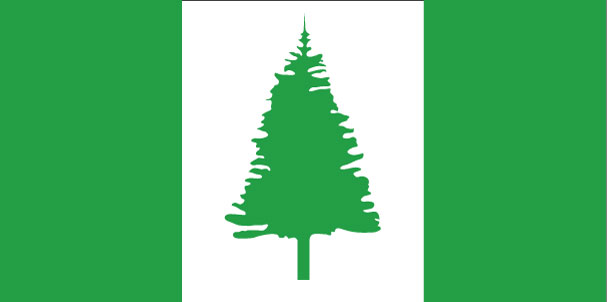
Norfolk Island
Declare Your Relationship to Norfolk Island
CountryReports Community
- Studying0
- From Norfolk Island0
- Norfolk Island heritage0
- Visited1
- Want to visit0
Customs and Culture
Customs and Culture
Cultural Attributes
Norfolk Island's culture is a distinctive blend of its two primary ancestral streams: the Tahitian-English descendants of the Bounty mutineers, who relocated from Pitcairn Island in 1856, and later settlers who arrived from mainland Australia and New Zealand. This dual heritage gives the island a cultural identity unlike anywhere else in the world. The most celebrated cultural feature is the Norfuk language, a creole tongue that combines eighteenth-century English dialects with Tahitian. Although the island's population is small — fewer than 2,000 permanent residents — Norfuk was formally recognized as one of Norfolk Island's two official languages alongside English in 2004. The language is actively taught in schools and preserved through community efforts, with its own dictionary and written literary tradition. Bounty Day, celebrated on June 8 each year, is the island's most significant cultural event. It commemorates the arrival of the Pitcairn settlers in 1856 and involves historical reenactments, traditional dress, and communal gatherings. The occasion reflects deep pride in genealogical roots, and many islanders can trace their lineage directly to the original mutineers and their Tahitian companions. Religion has historically played a central role in community life, with the Church of England maintaining a strong presence since the Pitcairn resettlement. St. Barnabas Chapel, built in 1880, stands as both a functioning place of worship and an architectural landmark on the island. Norfolk Island's cultural fabric is also shaped by its convict-era history. The island served as a British penal settlement from 1788 to 1814 and again from 1825 to 1855, and the ruins of Kingston and Arthur's Vale Historic Area are listed as part of the Australian Convict Sites UNESCO World Heritage listing. These well-preserved remnants are central to how islanders and visitors understand the island's layered past. Community life remains close-knit, with strong traditions of shared labor, communal meals, and informal social gatherings that reflect both island isolation and the enduring bonds of extended family networks.
Island of Mutiny and Redemption
Get More Customs and Culture
2 more cultural topics for members
Social Customs & Etiquette · Dating Customs
Every country, every topic, all activities & recipes
✓ Instant access on this device · ✓ No subscription
Holidays
Pitcairners Arrival Day
6/8Other
Dates of Interest
- June 8th
What language do people speak on Norfolk Island?
Norfolk Island has two official languages: English and Norfuk, a creole combining eighteenth-century English dialects with Tahitian, recognized as an official language in 2004.
Good to know
- Norfuk is actively taught in schools and has its own dictionary and written literary tradition
- The Norfuk language reflects the island's blend of Tahitian-English Bounty mutineer descendants and later Australian and New Zealand settlers
What is family and community life like on Norfolk Island?
Community life is close-knit, with strong traditions of shared labor, communal meals, and informal social gatherings reflecting both island isolation and enduring extended family bonds.
Good to know
- Many islanders can trace their lineage directly to the original Bounty mutineers and their Tahitian companions
- There is deep pride in genealogical roots among the island's fewer than 2,000 permanent residents
What cultural events and sites should travelers know about?
Bounty Day, celebrated on June 8, is the island's most significant cultural event, commemorating the 1856 arrival of the Pitcairn settlers with historical reenactments, traditional dress, and communal gatherings.
Good to know
- Visit St. Barnabas Chapel, built in 1880, a functioning place of worship and architectural landmark
- Explore the ruins of Kingston and Arthur's Vale Historic Area, part of the Australian Convict Sites UNESCO World Heritage listing
- The island's convict-era history spans British penal settlement periods from 1788 to 1814 and 1825 to 1855
Last updated: 2026-07-12 · Sources: CountryReports
Travel and Tourism
Travel and Tourism
- Currency
- Australian dollar (AUD)
- Time Difference
- UTC+11 (16 hours ahead of Washington, DC, during Standard Time)
- Airports
- 1
Read the full travel guide — health, safety, vaccinations, disease risk, sanitation, and transit details.
View full travel guideHistory
History
Historical Eras
Polynesian Settlement
1000 – 1600
Archaeological evidence indicates that East Polynesian peoples, likely from the Society Islands or nearby groups, settled Norfolk Island centuries before European contact. They left behind stone tools and artefacts but had apparently abandoned the island by the time Europeans arrived. The island was uninhabited when Captain James Cook made landfall in 1774.
First Penal Colony
1788 – 1814
Britain established its first penal settlement on Norfolk Island just weeks after founding the colony at Sydney Cove, recognising the island's strategic timber and flax resources. The settlement grew to house both convicts and free settlers but proved logistically difficult to supply and govern. Persistent hardship, mutinies, and reassessment of the island's resources led to its complete abandonment and demolition in 1814.
Second Penal Colony
1825 – 1855
Britain reopened Norfolk Island as a place of secondary punishment for convicts who had reoffended within the Australian colonies, earning it a fearsome reputation for brutal discipline under commandants such as John Price. Conditions were notoriously severe, with floggings, hard labour, and a convict uprising in 1846 marking the era. Mounting humanitarian criticism and changing penal philosophy prompted the British government to close the settlement permanently in 1855.
Pitcairn Resettlement
1856 – 1914
On 8 June 1856, all 194 descendants of the Bounty mutineers and their Tahitian companions were transplanted from overcrowded Pitcairn Island to Norfolk, bringing with them their distinctive creole language, customs, and tight-knit community identity. Two small groups later returned to Pitcairn, but the remainder established a subsistence agricultural society built around family land holdings. Bounty Day, commemorating the 1856 arrival, became and remains the island's most sacred annual celebration.
Australian Territory
1914 – 1979
Norfolk Island was formally placed under Australian administration in 1914, and during World War II an airstrip was constructed that fundamentally transformed the island's accessibility and economic trajectory. The postwar period saw tourism emerge as a significant industry, supplementing traditional farming and fishing. Debate over the island's political relationship with Australia intensified, culminating in the Norfolk Island Act of 1979 which granted the island a degree of self-governance.
Self-Governance & Modern Era
1979 – present
The Norfolk Island Act 1979 established a locally elected Legislative Assembly and an Executive Council, giving islanders substantial control over their own affairs for several decades. In 2015 Australia revoked this arrangement and reintegrated Norfolk Island under direct federal administration, a deeply controversial decision opposed by many descendants of the Bounty community. Today the island of roughly 1,800 residents balances its tourism-based economy with ongoing efforts to preserve its unique Pitcairn-descended culture, language, and heritage.
Overview
The arrival of the Pitcairn people provided a fresh dimension to Norfolk Island. They have maintained and cultivated their distinctive culture and language, and preserved the rich history and natural magnificence of the Island.
Every country, every topic, all activities & recipes
✓ Instant access on this device · ✓ No subscription
Read the full history profile — narrative overview, defining eras, and the complete timeline in one place.
View expanded historyInteresting Facts
Interesting Facts
35% of the people living on the Island are descendants of the most famous naval mutiny in modern history - HMS Bounty
See every fact — trivia, oddities, and curious tidbits gathered from across the country.
View all interesting factsGeography and Environment
Geography and Environment
- Terrain
- volcanic formation with mostly rolling plains
- Climate
- subtropical; mild, little seasonal temperature variation
- Natural Hazards
- typhoons (especially May to July)
- Current Environmental Issues
- NA
Read the full geography and environment profile — terrain, climate, natural resources, hazards, land use, and international agreements.
View full geographyPeople & Demographics
People & Demographics
Religion
Languages Spoken
English (official), Norfolk a mixture of 18th century English and ancient Tahitian
- English
Population
- Population
- 2,188
- Nationality Noun
- Norfolk Islander(s)
- Ethnic Groups
- descendants of the Bounty mutineers, Australian, New Zealander, Polynesians
Life Expectancy
- Life Expectancy at Birth
- Life expectancy at birth on Norfolk Island is notably high, reflecting the island's small, stable community, relatively comfortable standard of living, and access to basic healthcare services. While comprehensive demographic data for Norfolk Island is limited due to its extremely small population — typically hovering around 2,000 residents — available estimates suggest life expectancy at birth is broadly comparable to that of Australia, which administers the territory. Australia's overall life expectancy at birth sits at approximately 83 to 84 years, placing it consistently among the highest in the world, and Norfolk Island residents generally benefit from similar health conditions and lifestyle factors. The population of Norfolk Island skews toward older age groups, partly a result of younger residents relocating to mainland Australia or New Zealand for education and employment opportunities. This demographic tendency means health services on the island cater significantly to an aging population. The island is served by the Norfolk Island Health and Residential Aged Care Service, a small local facility that provides general medical care. Residents requiring specialized or emergency treatment are typically evacuated by air to Australia, most commonly to Sydney or Brisbane. Contributing factors to longevity on Norfolk Island include a relatively low-stress, rural lifestyle, clean air, a close-knit community with strong social ties, and access to fresh local produce including seafood. These elements are broadly consistent with patterns observed in other small island communities that record high life expectancy figures. The island does not maintain its own independent vital statistics system at the scale of sovereign nations, and detailed birth and mortality data is generally captured through Australian federal administrative frameworks. This structure has been in place since 2016, when the Norfolk Island Legislative Assembly was dissolved and the island became subject to Australian federal and New South Wales state laws. As a result, granular, island-specific life expectancy data is rarely published separately from broader Australian statistics, making precise figures for Norfolk Island alone difficult to isolate. Australia's strong overall performance on life expectancy measures — driven by quality healthcare infrastructure, public health investment, and relatively high living standards — serves as the most reliable general benchmark for understanding health outcomes on Norfolk Island.
- Infant Mortality Rate
- Norfolk Island presents a unique challenge when examining infant mortality statistics, as its exceptionally small population makes it difficult to compile reliable, regularly updated data through standard international health monitoring systems. The island, an Australian external territory located in the South Pacific Ocean, has a total population of fewer than 2,000 residents, which means that even a single infant death in a given year can produce dramatic fluctuations in any calculated rate. Because of this demographic reality, major international organizations such as the World Health Organization and UNICEF do not publish standalone infant mortality rate figures for Norfolk Island. The territory is not a sovereign nation and therefore does not report independently to United Nations statistical frameworks in the same manner as member states. Health services on Norfolk Island are administered under the broader framework of Australian federal governance. Residents have access to a small local medical facility, the Norfolk Island Health and Residential Aged Care Service, which handles routine and emergency care. However, for complex medical procedures, including high-risk births, patients are typically evacuated to hospitals in mainland Australia or New Zealand, where advanced neonatal care is available. This access to Australian-standard medical infrastructure means that birth outcomes on the island are generally managed within a system that reflects Australia's healthcare quality. Australia as a whole maintains a very low infant mortality rate, recorded at approximately 3 to 4 deaths per 1,000 live births in recent years, placing it among the healthier nations globally by this measure. Given Norfolk Island's integration into the Australian healthcare system and its access to evacuation services for critical cases, the infant health outcomes for its residents are broadly expected to align with those seen across Australia, though no verified territory-specific figure is officially published. For researchers and students seeking precise data, the Australian Institute of Health and Welfare and the Australian Bureau of Statistics are the most appropriate institutions to consult for health indicators relating to Norfolk Island as an external territory.
Read the full people and society profile — demographics, health, education, religion, languages, and notable people.
View full people and societyGovernment & Politics
Government & Politics
Country Identity
- Country Name
- NorfolkIsland
- Full Country Name
- Territory of Norfolk Island
Government Structure
- Government Type
- NA
- Legal System
- based on the laws of Australia, local ordinances and acts; English common law applies in matters not covered by either Australian or Norfolk Island law
- Executive Branch
- chief of state: King CHARLES III (since 8 September 2022); represented by Administrator George PLANT (since 1 July 2023) head of government: Assembly President and Chief Minister Andre NOBBS; the Chief Minister is elected by and from the members of the Norfolk Island Regional Council cabinet: The Norfolk Island Regional Council replaced the former Legislative Assembly following the 2015 restructuring of Norfolk Island's governance under Australian federal administration; the council handles local government matters while broader administrative authority rests with the Commonwealth of Australia through the appointed Administrator elections: the monarch is hereditary; administrator appointed by the Governor-General of Australia; following the abolition of the Norfolk Island Legislative Assembly in 2015, the island transitioned to a regional council model under the Norfolk Island Legislation Amendment Act 2015, significantly reducing the territory's self-governing powers; council elections are held periodically in accordance with Australian local government frameworks election results: The 2015 governance reforms were contentious among many Norfolk Island residents, who had previously enjoyed a higher degree of self-government; advocates for restored autonomy continue to engage with Australian federal authorities on the matter
- Legislative Branch
- Norfolk Island previously had its own unicameral Legislative Assembly, consisting of 9 seats. Members were elected under a unique voting system in which electors held nine equal votes each, with no more than four votes allocable to any single candidate. Members served three-year terms, and all seats were held by independents, as no formal political parties operated on the island. However, Norfolk Island's governance structure underwent significant change following the Norfolk Island Legislation Amendment Act 2015, passed by the Australian federal government. This legislation effectively abolished the Norfolk Island Legislative Assembly and ended the island's self-governing status. Since 1 July 2016, Norfolk Island has been governed more directly as an Australian external territory, with a regional council — the Norfolk Island Regional Council — taking over local administrative functions. The council consists of five elected members serving four-year terms. Federal and state-level legislative matters are now handled by the Australian Parliament, and Norfolk Island residents became eligible to vote in Australian federal elections from 2016 onward.
- Judicial Branch
- Supreme Court; Court of Petty Sessions
- Suffrage
- 18 years of age; universal
- Constitution
- Norfolk Island Act of 1979
- Independence
- none (territory of Australia)
- National Holiday
- Pitcairners Arrival Day, 8 June (1856)
Capital City
- Capital Name
- Kingston
- Capital - geographic coordinate
- 29 03 S, 167 58 E
- Capital Time Difference
- UTC+11 (16 hours ahead of Washington, DC, during Standard Time)
the name is a blending of the words "king's" and "town"; the British king at the time of the town's settlement in the late 18th century was GEORGE III
Read the full government profile — flag symbolism, national anthem, and other national symbols.
View full government detailsEconomy
Economy
Tourism remains the primary economic activity on Norfolk Island, attracting tens of thousands of visitors annually and historically providing a level of prosperity unusual among Pacific island communities.
Snapshot
- Currency Name and Code
- Australian Dollar (AUD)
Every country, every topic, all activities & recipes
✓ Instant access on this device · ✓ No subscription
News & Weather
News & Weather
Current Weather
Latest News
In 1987, conservationists brought 2 male owls to Norfolk Island for its last surviving female; their desce - The Economic Times
The Economic Times · 21h ago
The strange story of Norfolk Island’s super-sized sharks - SMH.com.au
SMH.com.au · 3d ago
Inbred owl faces extinction without genetic rescue, scientists warn - abc.net.au
abc.net.au · 5d ago
Norfolk Island (NFK) Exports, Imports, and Trade Partners - The Observatory of Economic Complexity
The Observatory of Economic Complexity · 18d ago
Norfolk Island voted to leave Australia. Canberra shrugged. - Politico
Politico · 37d ago
6 Airports So Isolated Pilots Need Extra Fuel Reserves Just To Fly There - Simple Flying
Simple Flying · 1d ago
Why Norfolk Island pines are the most distinctive trees in Southern California - Orange County Register
Orange County Register · 34d ago
Community Update On Norfolk Island Projects 11 September - Mirage News
Mirage News · 12d ago
News via Google News
Frequently Asked Questions
Frequently Asked Questions
What is the population of Norfolk Island?
What is the capital of Norfolk Island?
Where is Norfolk Island located?
What ocean surrounds Norfolk Island?
What is the main religion practiced on Norfolk Island?
What currency is used on Norfolk Island?
What languages are spoken on Norfolk Island?
What is Norfolk Island known for?
Who governs Norfolk Island?
Last reviewed 2026