
 English
 Español
 中文
中文 हिन्दी
 Français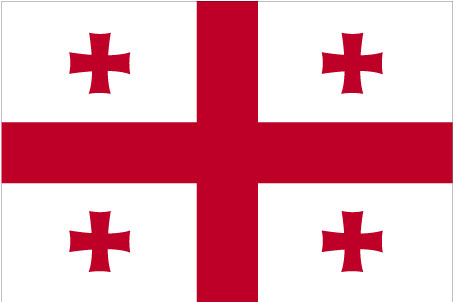
Georgia
Sak'art'velo
Declare Your Relationship to Georgia
CountryReports Community
- Studying15
- From Georgia5
- Georgia heritage10
- Visited6
- Want to visit12
Customs and Culture
Customs and Culture
Cultural Attributes
Georgia's culture is among the oldest and most distinctive in the Caucasus region, shaped by thousands of years of history at the crossroads of Europe and Asia. The Georgian language, written in its own unique Mkhedruli script, is considered one of the world's fourteen independent scripts and has been in continuous use since at least the 5th century AD. This linguistic heritage is a profound source of national pride and identity. One of the most celebrated aspects of Georgian culture is its polyphonic choral singing tradition, which UNESCO inscribed on its Representative List of the Intangible Cultural Heritage of Humanity. Georgian polyphony is characterized by three or more independent vocal parts sung simultaneously, and it features prominently in both religious ceremonies and secular gatherings. The tradition is particularly strong in regions such as Guria, Svaneti, and Kakheti, each with its own distinct style. Georgian hospitality, known locally as "stumarmaspindzloba," is deeply embedded in social life. Guests are treated with extraordinary generosity, and the ritual feast known as the "supra" is central to this culture of welcome. A supra is presided over by a "tamada" (toastmaster), who guides elaborate sequences of toasts honoring family, ancestors, peace, and the homeland. Wine holds exceptional cultural significance in Georgia, which is widely regarded as one of the oldest wine-producing regions in the world, with evidence of viticulture dating back approximately 8,000 years. The traditional method of fermenting wine in large clay vessels called "qvevri" was itself recognized by UNESCO in 2013 as an intangible cultural heritage. Religion plays a central role in Georgian cultural identity. The Georgian Orthodox Church, established in the 4th century, has shaped art, architecture, literature, and moral values throughout the country's history. More than three-quarters of the population identifies as Georgian Orthodox Christian. Traditional arts including enamel cloisonné work, carpet weaving, and the ancient form of sword dancing known as "Khorumi" further enrich a cultural landscape that has maintained remarkable continuity despite centuries of foreign invasions and occupation.

Land of Wine and Hospitality
Get More Customs and Culture
5 more cultural topics for members
Social Customs & Etiquette · Diet · Family · Dating Customs · Recreation
Every country, every topic, all activities & recipes
✓ Instant access on this device · ✓ No subscription
Holidays
Independence Day
5/26Independence Day
26 May 1918 is the date of independence from Soviet Russia, 9 April 1991 is the date of independence from the Soviet Union
Christmas
12/25Christmas
Christmas in Georgia is celebrated on January 7 which is actually December 25 based on the Julian calendar. Most people in the country greet each other by the local dialect which is Georgian and is translated to Gilosavt Krist’es Shobas , pronounced ‘gee-low-saf kris-tes show-bus,’ and is also translated as Gilosavt akhal th’els, pronounced ‘gee-low-saf akal thels’. These popular greetings are heard everywhere throughout the Christmas season in Georgia.
Literally meaning “Grandfather Snow,” Santa Claus is called Tovlis Papa, pronounced ‘tov-lis papa’ or Tovlis Babua, pronounced ‘tovlis ba-bwah’ depending on what part of Georgia you are in. Tovlis Papa is an old man with a long white beard that is dressed in the traditional Georgian garments and costume which is called chokka and wears a long fur coat that is called nabadi. Tovlis Papa leaves candies and small gifts inside good little children’s shoes and does not leave any goodies for children who have been naughty.
The Christmas season for Georgia officially starts after the New Year but lately has been celebrated on theRoman calendar date of December 25 up to January when they officially celebrate their Christmas based on the Julian calendar.
The days in between these dates are spent by the Georgian locals as a primer to the big festivities that will be held on January the 7th.
Family members all eat together at the dinner table as the eve of New Year approaches. Fireworks light up the sky when midnight comes and champagne is one of the drinks served to celebrate the New Year. Christmas Day celebrations on the other hand, are more solemn and serious. A lot of people go to church where they hear Midnight Mass. After mass, it is time for the Alilo Procession, a modified form of aleluia. During the Alilo procession, laymen and clergy travel in horse-drawn carriages where people throw in alms for the poor while singing traditional Alilo Christmas songs.
One Alilo folk song is:
Sho ba sho-i-o i-oba ghme rtman da Ga- gvite e nos da a-i-lo-i-o o oida ai-da a-i-alilo o tsda o-i-o o-i-otasdakhu tsa da de-k’em-be e rsa da krist’e kri i-I st’e I ishva da be-tlem-sa a o da A-ka tkve eni sitotskhle Sho ba sho-i-o o-i-oba a khal da Ts’e-li-ts’a a di da
Which translated to English is:
May God bring us Christmas, Alleluia! On the twenty fifth of December, Alleluia! Christ was born in Bethlehem, Alleluia! May God grant you life, Alleluia! Christmas and New Year, Alleluia!
After the solemn celebrations, families gather for a meal where traditional food and dishes like gozinaki, churchkhela, satsivi and other meat and vegetable dishes are served.
Local Georgian Christmas trees are called Chichilaki, pronounced ‘chee-chee-la-kee’ which literally means Basil’s beard. Made of curled material and soft hazelnut branches, it occupies an important place on the dinner table during New Year celebrations.
Traditionally, on the Eve of the Epiphany which is January 6, Chichilakies are burned and last year’s bad memories are supposed to be burned with it. Currently, Chichilakies are placed beside regular European Christmas trees which are decorated with fruit and sweets.
The satsivi dish is a favorite Georgian Christmas dish served by most homes on Christmas Eve.
How should I show respect when meeting people in Georgia?
Georgians value tradition, loyalty, and generosity, and respect is shown through attentive gestures when others are present.
Do
- Stand up when someone enters the room
Don’t
- Never sit with your back towards anyone
What is dining like in Georgia?
Meals are often celebrated through a feast (keipi or supra), and Georgians enjoy spicy food influenced by Turkish, Greek, Arabic, and Indian cuisine. Feasts are traditionally guided by a toastmaster called a tamada, who leads sequences of toasts.
Good to know
- A typical keipi may include khachapuri (baked cheese bread), satsivi (spiced chicken), chanakhi (lamb and vegetable stew), tolma (meat in vine leaves), and badrizhani nivrit (eggplant with garlic)
- Wine is exceptionally significant, traditionally fermented in clay qvevri vessels
- Toasts honor family, ancestors, peace, and the homeland
What etiquette should travelers know in Georgia?
Hospitality (stumarmaspindzloba) is central to Georgian life, and guests are treated with extraordinary generosity, often welcomed with a feast.
Do
- Bring a gift to your host, such as flowers or chocolates
- Stand up when someone enters the room
Don’t
- Don't sit with your back towards anyone
Good to know
- Providing a keipi (feast) is the best way to show respect for a guest
What should I wear in Georgia?
Georgians wear casual clothes and follow the latest fashions.
Good to know
- Traditional dress includes the chokha (a belted magenta or white tunic) for men and the kartuli kaba (a silk veil with a long embroidered, wide-sleeved dress) for women
What is family life like in Georgia?
Families usually consist of parents and two children, with relatives living close by.
Good to know
- Helping relatives get jobs is considered honorable
What do Georgians do for recreation?
Soccer is the most popular sport, and Georgians also enjoy the theater and classical concerts.
Good to know
- Other sports include wrestling, archery, fencing, tskhenburti (a form of polo), and leloburti (a game like rugby)
- Polyphonic choral singing is a celebrated tradition, especially in Guria, Svaneti, and Kakheti
Last updated: 2026-07-12 · Sources: CountryReports
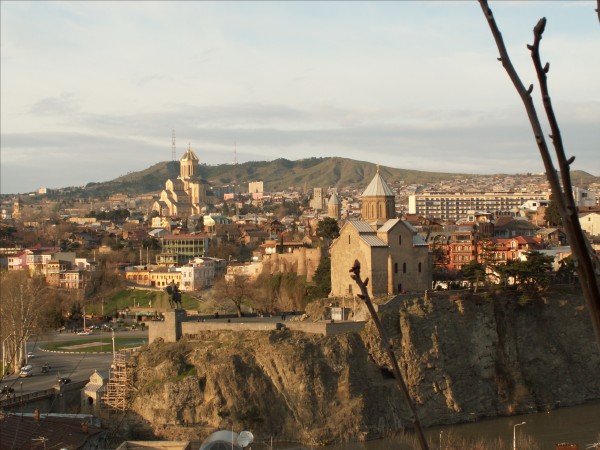
Photos of Georgia
Photos of Georgia


Travel and Tourism
Travel and Tourism
- Travel Alert Status
- Level 1: Exercise Normal Precautions
- Currency
- lari (GEL)
- Time Difference
- UTC+4 (9 hours ahead of Washington, DC, during Standard Time)
- Airports
- 31
Read the full travel guide — health, safety, vaccinations, disease risk, sanitation, and transit details.
View full travel guideRecipes
Recipes
Khatchapuri (Various Cheese-Filled Cookies)
Dessert
Main Dish
Bajhe
Main Dish
Khinkali
Main Dish
Satsivi (Fried Chicken Soaked in Sauce with Spices)
Main Dish
Chakhokhbili (Fried Chicken with Tomatoes and Spices)
Side Dish
Beets with Walnuts
Side Dish
Kidney Beans
Dessert
PremiumKhatchapuri (Various Cheese-Filled Cookies)
History
History
Historical Eras
Ancient Kingdoms
1000 BCE – 330
The early Georgian peoples organized into the kingdoms of Colchis along the Black Sea coast and Kartli-Iberia in the eastern interior, absorbing significant Greek cultural influence through Black Sea trade. Roman expansion brought the Caucasus under Roman suzerainty by 66 BCE. These centuries established the distinct Georgian ethnic and cultural identity that would persist through later conquests.
Christian Kingdom
330 – 813
King Mirian III of Kartli-Iberia accepted Christianity around 330, binding Georgia spiritually and culturally to the Roman and later Byzantine Empire. Christianity became the cornerstone of Georgian national identity, with the Georgian Orthodox Church serving as a unifying institution. This era saw Georgia contested between Byzantine and Sassanid Persian spheres of influence before Arab invasions in the 7th century.
Bagratid & Golden Age
813 – 1386
The Bagratid Dynasty unified the Georgian kingdoms, reaching its zenith under David IV the Builder (1089–1125), who expelled the Seljuk Turks and forged an expansive Georgian Empire stretching from the Black Sea to the Caspian. Queen Tamar (1184–1213) extended this empire further, presiding over a golden age of Georgian literature, architecture, and statecraft. Mongol invasions in the 13th century and Timur's devastating sack of Tbilisi in 1386 shattered this imperial order.
Ottoman & Persian Rule
1386 – 1801
A fragmented Georgia fell increasingly under Ottoman and Persian domination; by 1553 the two empires had formally divided Georgian territory between them. The kingdom of Kartli-Kakheti was briefly reunified by Herekle II in 1762, but his realm faced constant Persian pressure. Seeking protection, Herekle II appealed to Russia, leading to the Treaty of Georgievsk in 1783 and ultimately the Russian abolition of the Bagratid Dynasty in 1801.
Russian Imperial Era
1801 – 1918
Annexed into the Russian Empire, Georgia lost its dynastic sovereignty but gained relative security from Ottoman and Persian raids. Russian rule brought administrative modernization and infrastructure alongside cultural suppression and periodic nationalist resistance. The collapse of the Russian Empire in 1917 opened a brief window for independence, and Georgia declared itself a sovereign democratic republic in 1918.
Soviet & Modern Georgia
1918 – present
Georgia's first republic lasted only until 1921, when the Red Army invaded and incorporated it into the Transcaucasian Soviet Federated Socialist Republic, later the Georgian SSR. The country regained independence with the dissolution of the Soviet Union in 1991, but immediately faced ethnic conflicts in Abkhazia and South Ossetia, economic collapse, and enduring Russian geopolitical pressure, including a brief war with Russia in 2008.
Overview
THE THREE REPUBLICS of Transcaucasia--Armenia, Azerbaijan, and
Every country, every topic, all activities & recipes
✓ Instant access on this device · ✓ No subscription
Timeline of Key Events
66 BCE
Romans complete conquest of Caucasus Mountains region
Romans complete conquest of Caucasus Mountains region, including Georgian kingdom of Kartli-Iberia.
330
King Marian III of Kartli-Iberia accepts Christianity for the Georgian people.
King Marian III of Kartli-Iberia accepts Christianity for the Georgian people.
813
Armenian prince Ashot I begins 1,000 years of rule in Georgia by Bagratid Dynasty.
Armenian prince Ashot I begins 1,000 years of rule in Georgia by Bagratid Dynasty.
1099 – 1125
David IV the Builder establishes expanded Georgian Empire and begins golden age of Georgia.
David IV the Builder establishes expanded Georgian Empire and begins golden age of Georgia.
1100 – 1300
Cilician Armenian and Georgian armies aid European armies in Crusades.
Cilician Armenian and Georgian armies aid European armies in Crusades to limit Muslim control of Holy Land.
1386
Timur (Tamerlane) sacks Tbilisi, ending Georgian Empire.
Timur (Tamerlane) sacks Tbilisi, ending Georgian Empire.
1401 – 1500
Most of modern Armenia, Azerbaijan, and Georgia become part of Ottoman Empire.
Most of modern Armenia, Azerbaijan, and Georgia become part of Ottoman Empire.
Read the full history profile — narrative overview, defining eras, and the complete timeline in one place.
View expanded historyInteresting Facts
Interesting Facts
When a child loses a tooth they throw their tooth high up on the roof of their house and say “Mouse, mouse, take away my spoiled tooth and send me back a strong healthy one.”
Perhaps the most famous Georgian was Josif Vissarionovich Dzhugashvili who called himself "Stalin" or man of steel. Born in 1879, Stalin became the second leader of the USSR (after Lenin). Stalin led the USSR until his death in 1953.
Financial problems have meant that independent Georgia can only guarantee free education for the first nine years of school, starting at the age of six.
Georgia has centuries-old tradition of winemaking.
See every fact — trivia, oddities, and curious tidbits gathered from across the country.
View all interesting factsGeography and Environment
Geography and Environment
- Terrain
- largely mountainous with Great Caucasus Mountains in the north and Lesser Caucasus Mountains in the south; Kolkhet'is Dablobi (Kolkhida Lowland) opens to the Black Sea in the west; Mtkvari River Basin in the east; good soils in river valley flood plains,
- Climate
- Protected by the Black Sea and Caucasus Mountains, Georgia’s climate is relatively mild. Seasonal temperatures range from winter daytime highs of 32°F–35°F to summer daytime highs of 86°F–93°F. Except in the subtropical regions, humidity is relatively low in summer. Spring daytime highs average in the high 60s to the mid 70s. The weather allows for outside activity most of the year.
- Natural Hazards
- earthquakes
- Current Environmental Issues
- air pollution, particularly in Rust'avi; heavy pollution of Mtkvari River and the Black Sea; inadequate supplies of potable water; soil pollution from toxic chemicals
Read the full geography and environment profile — terrain, climate, natural resources, hazards, land use, and international agreements.
View full geographyPeople & Demographics
People & Demographics
Religion
Languages Spoken
Georgian 71% (official), Russian 9%, Armenian 7%, Azeri 6%, other 7%
note: Abkhaz is the official language in Abkhazia
- Armenian
- Azeri
- Georgian
- Russian
Population
- Population
- 3,728,573
- Population in Major Urban Areas
- TBILISI (capital) 1.121 million
- Nationality Noun
- Georgian(s)
- Ethnic Groups
- Georgian 70.1%, Armenian 8.1%, Russian 6.3%, Azeri 5.7%, Ossetian 3%, Abkhaz 1.8%, other 5%
Education
- Literacy Definition
- Age 15 and over can read and write
Life Expectancy
- Life Expectancy at Birth
- Life expectancy at birth in Georgia stands at approximately 74 to 75 years overall, with notable differences between men and women. Women in Georgia can expect to live to around 78 to 79 years, while men have a considerably shorter life expectancy of approximately 70 to 71 years. This gender gap of roughly eight to nine years is among the more pronounced disparities in the broader European and Central Asian region. Georgia has made meaningful progress in improving population health outcomes over recent decades. Life expectancy declined sharply following the collapse of the Soviet Union in the early 1990s, as economic hardship, conflict in Abkhazia and South Ossetia, and the deterioration of public health infrastructure took a heavy toll. Since the mid-2000s, a series of healthcare reforms have helped reverse this trend. The government undertook significant restructuring of its health system, expanding access to primary care and introducing universal health coverage programs, particularly after 2013. Key contributors to mortality in Georgia include cardiovascular disease, which accounts for the largest share of deaths, followed by cancers and respiratory conditions. These noncommunicable diseases place a significant burden on the population and remain a central focus of public health efforts. Lifestyle factors such as tobacco use, high rates of alcohol consumption among men, and diets rich in salt and animal fats contribute to elevated rates of heart disease and stroke. Rural populations and lower-income groups continue to face barriers to healthcare access, which affects health outcomes in these communities disproportionately. The country also has one of the higher rates of hepatitis C infection globally, though a national elimination program launched with international support has made substantial progress in reducing prevalence and is widely regarded as a model initiative in the region. Despite these challenges, Georgia's overall life expectancy trajectory has been positive, with steady gains recorded over the past two decades. Continued investment in preventive medicine, chronic disease management, and expanded health insurance coverage are expected to support further improvements in the years ahead.
- Infant Mortality Rate
- Georgia has made substantial progress in reducing infant mortality over the past two decades, reflecting broader improvements in the country's healthcare infrastructure, prenatal care access, and public health policy. As of the most recent available data, Georgia's infant mortality rate stands at approximately 8 to 9 deaths per 1,000 live births. This represents a dramatic decline from the early post-Soviet period of the 1990s, when the rate was significantly higher due to economic instability, deteriorating health services, and limited access to quality medical care following the collapse of the Soviet Union. The improvement in infant survival rates can be attributed to several key factors. Georgia has expanded coverage of essential vaccines, strengthened maternal and child health programs, and improved the quality of neonatal care in both urban hospitals and regional health facilities. International organizations, including UNICEF and the World Health Organization, have supported Georgia in implementing evidence-based interventions targeting newborn care and reducing preventable causes of infant death such as birth asphyxia, sepsis, and preterm birth complications. Geographic and socioeconomic disparities, however, continue to influence outcomes. Rural regions and economically marginalized communities tend to face higher risks due to reduced access to specialized medical facilities and trained healthcare personnel. The government has worked to address these gaps through targeted health reforms and investment in primary healthcare networks across the country. Compared to regional neighbors, Georgia performs relatively well, with rates that approach those seen in several Central and Eastern European nations. The country's trajectory suggests continued improvement, driven by ongoing healthcare reform efforts and sustained international health partnerships. For travelers and researchers, it is worth noting that Georgia's healthcare system has undergone significant modernization, with Tbilisi and other major cities offering medical facilities capable of handling complex maternal and neonatal cases. The infant mortality rate, while still above the averages seen in Western Europe, reflects a country that has made measurable and consistent public health gains over recent years.
Read the full people and society profile — demographics, health, education, religion, languages, and notable people.
View full people and societyGovernment & Politics
Government & Politics
Country Identity
- Country Name
- Georgia
- Local - Short
- Sak'art'velo
- Former Name
- Georgian Soviet Socialist Republic
Government Structure
- Government Type
- republic
- Legal System
- based on civil law system
- Executive Branch
- chief of state: President Salome ZOURABICHVILI (since 16 December 2018); note - the president serves as a largely ceremonial head of state following constitutional reforms that shifted significant executive authority to the prime minister head of government: Prime Minister Irakli KOBAKHIDZE (since 29 February 2024); note - the prime minister is the head of government and holds primary executive authority; the cabinet is accountable to parliament cabinet: Cabinet of Ministers appointed by the prime minister elections: president elected by a 300-member electoral college for a single six-year term (as of 2024, no longer elected by direct popular vote); the most recent presidential election was held on 28 November 2024; prior to constitutional changes, the president was elected by popular vote for a five-year term election results: Salome ZOURABICHVILI elected president in the December 2018 runoff; percent of vote in runoff - Salome ZOURABICHVILI 59.5%, Grigol VASHADZE 40.5%; note - Mikheil KAVELASHVILI was elected president by the electoral college on 14 December 2024 and is expected to assume office upon completion of the transition
- Legislative Branch
- Unicameral Parliament of Georgia (Sakartvelos Parlamenti), consisting of 150 seats following constitutional reforms; members are elected through a mixed proportional representation system and serve four-year terms. The Parliament is based in the capital, Tbilisi. Elections: Last held on 26 October 2024 (next to be held in 2028). Election results: Percent of vote by party — Georgian Dream 54.1%, Coalition for Change 11.0%, Unity — National Movement 10.2%, Strong Georgia 8.8%, Gakharia for Georgia 7.8%; seats by party — Georgian Dream 89, Coalition for Change 19, Unity — National Movement 16, Strong Georgia 14, Gakharia for Georgia 12. The 2024 elections were marked by significant controversy, with opposition parties and international observers raising concerns about electoral irregularities, leading to prolonged political unrest and opposition boycotts of parliamentary proceedings.
- Judicial Branch
- Supreme Court (judges elected by the Supreme Council on the president's or chairman of the Supreme Court's recommendation); Constitutional Court; first and second instance courts
- Suffrage
- 18 years of age; universal
- Constitution
- adopted 17 October 1995
- Independence
- 9 April 1991 (from Soviet Union)
- National Holiday
- Independence Day, 26 May (1918); note - 26 May 1918 is the date of independence from Soviet Russia, 9 April 1991 is the date of independence from the Soviet Union
Capital City
- Capital Name
- T'bilisi
- Capital - geographic coordinate
- 41 41 N, 44 50 E
- Capital Time Difference
- UTC+4 (9 hours ahead of Washington, DC, during Standard Time)
The name in Georgian means "warm place," referring to the numerous sulfuric hot springs in the area
Military
Branches: Georgian Armed Forces: Land Forces (including Air and Air Defense Forces); separatist Abkhazia Armed Forces: Ground Forces, Air Forces; separatist South Ossetia Armed Forces Note: Georgian naval forces have been incorporated into the Coast Guard, which is not part of the Defense Ministry
Embassy / Diplomatic Mission
U.S. Embassy Tbilisi
11 George Balanchine Street
Tbilisi 0131
Tel: (995 32) 227-70-00 or Consular Section: (995 32) 227-77-24
Duty officer for emergencies after hours: (995 32) (995 32) 227-70-00
E-mail: AskConsulTbilisi@state.gov
Read the full government profile — flag symbolism, national anthem, and other national symbols.
View full government detailsEconomy
Economy
Georgia operates a mixed economy that has transitioned from a Soviet-era centrally planned system to a market-oriented model since gaining independence in 1991.
Snapshot
- Currency Name and Code
- Lari (GEL)
- GDP — official exchange rate
- $6,400,000,000 (USD)
- GDP Real Growth Rate
- 7.5%
- Gini Index
- 38
Every country, every topic, all activities & recipes
✓ Instant access on this device · ✓ No subscription
News & Weather
News & Weather
Current Weather
Latest News
Georgia's Kirby Smart: Lawson Luckie lives up to his name vs. Vandy - ESPN
ESPN · 3h ago
Kalen DeBoer reacts to Alabama’s win over Miss. State, says if Tide does this then ‘sky’s the limit’ - AL.com
AL.com · 3h ago
Vanderbilt QB Jared Curtis ruled out vs. Georgia - ESPN
ESPN · 9h ago
Trump says he will attend Alabama vs Georgia college football game at Bryant-Denny Stadium - foxnews.com
foxnews.com · 22h ago
Trump says he will attend Georgia-Alabama football game in Tuscaloosa - The Hill
The Hill · 22h ago
President Trump says he’ll attend Georgia-Alabama game - WSB-TV
WSB-TV · 22h ago
Friday evening weather forecast - FOX 5 Atlanta
FOX 5 Atlanta · 1d ago
Slow-moving storms this afternoon, early evening for Southeast Georgia, Northeast Florida - News4JAX
News4JAX · 9h ago
News via Google News
Videos
Videos
1 curated YouTube videos.
Source: YouTube
Frequently Asked Questions
Frequently Asked Questions
What is the population of Georgia?
What is the capital of Georgia?
Where is Georgia located?
What countries border Georgia?
What is the predominant religion in Georgia?
What currency does Georgia use?
What language is spoken in Georgia?
What is Georgia known for?
What is the geography of Georgia like?
Last reviewed 2026