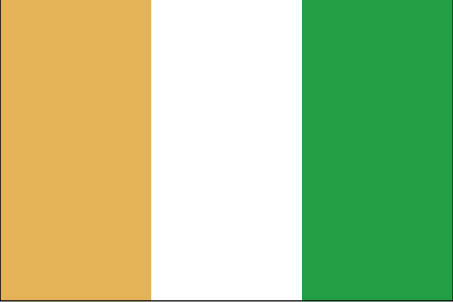
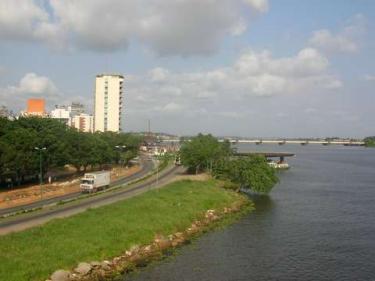
Cote d'Ivoire
Cote d'Ivoire

Declare Your Relationship to Cote d'Ivoire
CountryReports Community
- Studying5
- From Cote d'Ivoire2
- Cote d'Ivoire heritage2
- Visited3
- Want to visit3
Customs and Culture
Customs and Culture
Cultural Attributes
Côte d'Ivoire is a culturally rich and ethnically diverse nation, home to more than 60 distinct ethnic groups whose traditions, languages, and artistic expressions collectively shape the country's national identity. The largest ethnic groups include the Akan, Gur, Northern Mandes, Southern Mandes, and Kru peoples, each with unique customs, social structures, and oral traditions passed down through generations. Music and dance hold a central place in Ivorian cultural life. The country is widely credited as the birthplace of coupé-décalé, a popular genre of dance music that emerged in Paris in the early 2000s among the Ivorian diaspora and quickly spread across West and Central Africa. Traditional music features instruments such as the djembe drum, balafon (a wooden xylophone), and kora, often performed during ceremonies, festivals, and rites of passage. Ivorian visual arts are internationally recognized, particularly the intricate wooden masks crafted by the Dan, Baoulé, and Senufo peoples. These masks are not merely decorative; they carry deep spiritual significance and are used in ceremonial rituals, initiation rites, and community gatherings. The country has a strong tradition of weaving as well, with hand-woven textiles featuring bold geometric patterns that reflect ethnic identity and social status. The nation observes both Christian and Muslim holidays, reflecting its religiously diverse population — approximately 42 percent of the population identifies as Muslim, 34 percent as Christian, and the remainder practice indigenous spiritual traditions or a blend of faiths. Religion is often intertwined with traditional customs, and many communities observe rituals that blend ancestral beliefs with formal religious practice. French remains the official language and serves as the primary medium of education, government, and commerce, though Dioula functions as a widely spoken trade language across much of the country. Family and community ties are deeply valued, and extended family networks play an essential role in social support systems, decision-making, and cultural continuity throughout Ivorian society.
The World's Cocoa Coast
Social Customs & Etiquette
Greetings
Greetings in Côte d'Ivoire reflect the country's rich cultural diversity and the importance placed on social connection and respect. With more than 60 ethnic groups — including the Baoulé, Bété, Sénoufo, Dioula, and Agni — greeting customs can vary by region and community, though several common practices are widely observed across the country.
French, the official language, is commonly used in formal and urban settings. A simple "Bonjour" (Good day) or "Bonsoir" (Good evening) is a standard and respectful way to greet someone in cities like Abidjan or Yamoussoukro. "Comment ça va?" (How are you?) is a natural follow-up and is appreciated as a sign of genuine interest in the other person's well-being.
Dioula, widely spoken as a trade language across much of West Africa, is commonly heard in markets and northern regions of the country. A typical Dioula greeting is "I ni sɔgɔma" (Good morning) or "I ni tile" (Good afternoon), with the response often being "Nba" (Thank you/Yes, fine). These exchanges tend to be warm and unhurried — it is considered impolite to rush past a greeting without pausing to acknowledge the other person properly.
Physical greetings typically involve a handshake, and among close friends or family members, it is common to shake hands while also placing the left hand on the right forearm as a gesture of added respect and warmth. Cheek kisses, usually two or three, are common between friends and in informal social settings, particularly in urban areas influenced by French customs.
Elders are shown particular respect in Ivorian culture. Younger people are expected to greet older individuals first, and it is customary to slightly lower the eyes or body as a sign of deference. Addressing someone by their title or with "Monsieur" or "Madame" before their name is considered polite in professional contexts.
Taking time with greetings — asking about health, family, and daily life — is a deeply valued social norm and helps establish trust and goodwill in both personal and business relationships.
Personal Appearance
People wear both traditional and Western style clothing. In cities people wear pants or blue jeans with shirts, with many of the women wearing pagnes or brightly colored dresses. Traditional clothing is most common in rural areas. For men traditional clothing includes shorts or a short piece of cloth wrapped around their bodies with long robes for ceremonial occasions.
Diet
The Ivorians are kind people who enjoy inviting others for dinner they believe those who are blessed enough to prepare a meal should share their good fortune. In many villages people eat together in a common area. Women and girls eat as a group, Men eat as a group and young boys eat as a third group. They eat with their right hand. It is considered rude to reach across the table and they want everyone to receive similar amounts of food. Coughing, sneezing and talking during the meal is considered rude. If you need to cough, it is customary to leave the meal area. After the meal a bowl of water is passed around to cleanse the hands.
In rural areas, before the meal, a calabash (bottle gourd) with water is served, and people wash their hands in it in turns: first an honorable guest or the head of the family, then everyone else in the order of seniority, so by the time it gets to the children, the water can be dirty. Children eat together with adults, and their responsibility is to hold the calabash with their left hand so that it does not spin or shake. An adult will not scrape the food out from the bottom of a pan, as then the children who cannot eat quickly and are not as agile, will be left hungry. After the meal everyone thanks the elders for the treat, and their reply is: “All the thanks should go to God!”
The peoples of Côte d'Ivoire will serve the meal to a guest in a separate calabash: the more honorable a guest is, the more food he is offered. But a polite guest will not finish his meal, and will leave something to the host’s children. The people of Cote d’Ivoire sometimes give food to their children in separate calabashes and the children boast in front of each other that the one who got the biggest portion is loved by his mother more than the others.
Ivoirians eat yams, plantains, rice millet, corn and peanuts as staples for their diets. The national dish is fufu (foofoo) which is plantains, cassava or yams pounded into a sticky mass and served with a seasoned meat and sauce called kedjenou (KED-gen-ooh). Kedjenou is made from peanuts, eggplant okra or tomatoes. A typical side dish is a porridge made from grated cassava called Attieke. Meat, chicken and fish are popular among those who can afford it. Many dishes have hot peppers and fresh fruits are a typical dessert.
Family
Hospitality is a way of life. Men dominate interpersonal relations with the village elders being respected. Women take care of the children and many women have more than five (5) children. Different ethnic groups have their own traditions. A common ritual is initiations rights where participants undergo endurance tests. In rural areas many marriages are arranged, in the urban cities young people choose their own spouse. In the rural areas marriage can take place at a young age and many of the girls are married by age fourteen. In some groups funerals are central to the village. Among the Akan when their is a death in the village all villagers shave their heads.
Dating Customs
Dating and marriage customs in Côte d'Ivoire are shaped by a rich blend of ethnic traditions, Islamic practices, and Christian influences, reflecting the country's diverse population of more than 60 ethnic groups. While practices vary considerably between the predominantly Muslim north and the more Christian and animist south, family involvement remains a central feature of courtship and marriage across most communities.
In traditional settings, marriage is rarely viewed as a purely personal union between two individuals. Instead, it is considered an alliance between families. Formal negotiations between family representatives often precede any wedding ceremony, and the payment of a bride price — known locally as a dot — is customary in many ethnic groups. This payment, which may include cash, goods, or livestock, is made by the groom's family to the bride's family as a gesture of respect and to formalize the union.
Polygamy is legally permitted in Côte d'Ivoire under civil law, which allows a man to marry up to four wives, provided he can support them equally. This practice is more common among Muslim communities in the northern regions, though it also occurs in some traditional southern communities. However, trends in urban areas such as Abidjan show a gradual shift toward monogamous unions, influenced by education, economic pressures, and changing social attitudes among younger generations.
The legal minimum age for marriage is 18 for men and 18 for women under the 2019 reformed civil code, though child marriage remains a documented concern in rural areas, particularly affecting girls. Estimates suggest that roughly one in three girls is married before the age of 18, a figure that advocacy groups and the government have been working to reduce through legal reform and education campaigns.
Wedding celebrations are typically festive, multi-day events that combine civil registration — required by the state — with traditional ceremonies and sometimes religious rites. Music, dancing, communal feasting, and elaborate dress are hallmarks of Ivorian wedding celebrations, with specific customs differing by ethnic group, including the Baoulé, Dioula, Bété, and others.
Recreation
Football (soccer) is the most important sport. Griots or storytellers and storytelling is a favorite pastime in villages and stories may be told well into the night. Carving decorative objects is also a favorite pastime.
The people of Cote d’Ivoire value dancing as way of expression and passing down values from one generation to another. Some dancers jump up high or throw out their legs high in a swift rhythm. Among the Dan or Guro in Côte d'Ivoire, women dancers stand almost still bending their bodies, and only the lower parts of their bodies vibrate.
Dancing is a favorite amusement for villagers, and they take it very seriously. A village may have several associations of young people whose purpose is preparation and organization of celebrations, during which they dance in public. Some of these societies are secret, to join them one has to pass special ceremonies.
Student Life
The routine of going to school in Cote d’Ivoire, especially the rural parts of the country is considered a recent development and thus has to be accommodated within the normal routines that have gone on for ages. On a normal typical day children and especially girls will have to wake up at about 4:00 a.m. in order to take a long walk to the nearest water pump and fetch water to be used by the family for the day. The water pump could be about 3 miles away on average and the children will be getting back home at about 6:00 a.m. However in months when there is drought in some areas, the trip to the water pump takes a good part of the day so school is not given priority then. Those who do not make it to the water pump will have to do with pond water which is known to be contaminated and spreads disease. Once back home children will hurry off to school after a quick breakfast, which inmost cases is likely to be left over from the previous nights dinner.
The journey to the nearest school is also another walk since there is no school transport especially in rural villages. Since most schools may be far away the children do not waste time at home after coming from the water pump. The trek may be anything like 3 to 5 miles before they arrive in school ready for classes which begin at 8:00 a.m.
The normal school routine begins by a daily assembly where announcements are passed on to the children before they disperse to their various classrooms. The normal school day begins at 8:00 a.m. and goes on until 3:30 p.m. with a lunch break of about one hour. The official language of communication in school is French and the lessons take between 35 and 40 minutes. When it comes to mid morning break children freshening up and they have to share a few pit latrines in the compound. It is also time to catch up and play games. In most cases there are no balls and other playing facilities so children learn to improvise and play different games in their own groups. At lunch hour there are some schools, who offer hot lunches for the kids and where that is not available children will take water or simply play without eating lunch. In most areas in Cote d’Ivoire there is rampant poverty and there is no place where that is reflected better than the state of school buildings. In some cases the school could be a single building with one teacher that has to prepare all the children for most of the primary school. Most of the buildings are basically walls without roofs, doors or windows, which have been destroyed or looted during the civil war that has been going on in the country. Over crowding is the norm with the population in a single classroom sometimes as much as 100 children for a single teacher. There are some areas where they do not have trained teachers because they all have fled so any person with some form of formal education is allowed to teach. In a typical class, pupils sit at broken desks under a collapsing ceiling while the teacher copies the day’s lesson from the only tattered textbook. Primary school education is meant to be compulsory from the age of 6 to 11 but many children do not attend preprimary education. Classes are organized into three – two year cycles namely preparatory stages I and II (CP1 and CP2, or Cours préparatoires de première et deuxième année), elementary levels I and II (CE1 and CE2 or cours élémentaires de première et deuxième année), and intermediary levels I and II (CM1 and CM2 or cours moyens de première et deuxième année).
The end of the school day comes at about 4:00 p.m. on average and the children need to walk back home. Once they get home there is little time to play or enjoy any leisure time because they will need to help their parents with household chores. These may include preparation of the evening meal and cleaning up the compound. The evening bath is usually taken under the stars when darkness is just beginning to set it. Any homework given at school must be completed before night falls and is not usually supervised because a good number of parents are illiterate. The evening meal, usually the only one in some families is shared with the whole family around a fire which may also act as a source of light because in the poorest families they may not have a kerosene lamp. There are however other children who do not manage to go to school at all. They are forced to work with their families in their cocoa farms and many are forced to do extra work outside the home in order to supplement the family budget. Some children begin working as early as the age of 5. Because many families are polygamous and there are many children, schooling becomes an extra expense that some parents do not want to bother with.
Holidays
Independence Day
8/7Independence Day
Dates of Interest
- August 7th
What are the dining customs in Côte d'Ivoire?
Ivorians love to share meals and often invite guests to dinner, eating with the right hand in a communal setting, frequently separated into groups.
Do
- Eat with your right hand
- Leave the meal area if you need to cough
- Thank the elders after the meal
- Leave a little food for the host's children as a polite guest
Don’t
- Don't reach across the table
- Don't cough, sneeze, or talk during the meal
- Don't take more than your fair share of food
Good to know
- In villages, women and girls, men, and young boys often eat in separate groups
- A bowl or calabash of water is passed around to wash hands, in order of seniority
- More honorable guests are served more food in a separate calabash
- Staples include yams, plantains, rice, millet, corn, and peanuts; the national dish is fufu served with kedjenou sauce, with attieke as a common side
How do people dress in Côte d'Ivoire?
People wear both traditional and Western clothing; cities favor jeans and shirts, while traditional dress is more common in rural areas.
Good to know
- In cities, men wear pants or jeans with shirts, and many women wear pagnes or brightly colored dresses
- Traditional men's clothing includes shorts or a wrapped cloth, with long robes for ceremonial occasions
- Hand-woven textiles feature bold geometric patterns reflecting ethnic identity and social status
What is family life like in Côte d'Ivoire?
Hospitality is a way of life and extended family networks are central to social support and decision-making, with elders highly respected.
Good to know
- Men dominate interpersonal relations and village elders are respected
- Women care for the children and many have more than five children
- Rural marriages are often arranged and can occur young; urban youth choose their own spouses
- Among the Akan, all villagers shave their heads when there is a death in the village
What do people do for fun in Côte d'Ivoire?
Football is the most important sport, and storytelling, carving, and dancing are cherished pastimes.
Good to know
- Griots (storytellers) may tell stories well into the night
- Carving decorative objects is a favorite pastime
- Dancing is taken seriously as expression and a way to pass down values; some dance societies are secret and require special ceremonies to join
- Coupé-décalé dance music originated among the Ivorian diaspora; traditional instruments include the djembe, balafon, and kora
What should travelers know before visiting Côte d'Ivoire?
Côte d'Ivoire is ethnically and religiously diverse, with French as the official language and Dioula as a widely spoken trade language.
Good to know
- Over 60 ethnic groups shape the national identity, including the Akan, Gur, Mandes, and Kru peoples
- The population is roughly 42% Muslim and 34% Christian, with both Christian and Muslim holidays observed
- Wooden masks by the Dan, Baoulé, and Senufo carry spiritual significance and are used in rituals
Last updated: 2026-07-12 · Sources: CountryReports
Photos of Cote d'Ivoire
Travel and Tourism
Travel and Tourism
- Travel Alert Status
- Level 3: Reconsider Travel
- Currency
- 604.4
- Time Difference
- UTC 0 (5 hours ahead of Washington, DC, during Standard Time)
- Climate
- In the south, the tropical climate keeps temperatures between 24°C (75°F) and 32°C (90°F). The southern region features two rainy seasons, May to July and September to December. Humidity averages 85%. Over half the average annual precipitation (208 cm or 82 inches in Abidjan) falls in May, June, and July. Even then, however, the sun often shines. Temperatures vary in the north from 24°C to over 37°C (100°F). The northern region's one rainy season, May-October, averages 130 cm (51 inches) annual rainfall with 71% average humidity.
- Airports
- 37
- Recommended Vaccinations
- How important is it to do your research about vaccinations? It might just save your life! Make yourself aware of the different types of vaccinations and which ones you may need to travel to your destination. Schedule an appointment with your doctor at least four to six weeks before you travel to ensure you receive all important shots. Be sure that you and your family are up to date on your routine vaccinations. Which vaccinations you need will depend on a number of factors including your destination, whether you will be spending time in rural areas, the season of the year you are traveling, your age, health status, and previous immunizations.
Read the full travel guide — health, safety, vaccinations, disease risk, sanitation, and transit details.
View full travel guideRecipes
Recipes
History
History
Historical Eras
Pre-Colonial Era
1000 – 1843
The region that became Côte d'Ivoire was home to diverse ethnic groups, including the Mandé, Kru, and Akan peoples. In the 18th century, the Agni and Baoulé, two Akan subgroups, migrated from present-day Ghana and established influential kingdoms in the southeast and central regions. French missionaries made initial contact at Assinie in 1637, but sustained European presence remained limited due to the inhospitable coastline and local resistance.
French Protectorate
1843 – 1893
Admiral Bouet-Williaumez signed protectorate treaties with the kings of Grand Bassam and Assinie in 1843–44, establishing formal French influence along the coast. French explorers, missionaries, and trading companies gradually pushed inland, encountering sustained resistance from local rulers, most notably the Malinke leader Almany Samory Touré. Full pacification of the interior was not achieved until 1915, well after the territory's formal colonial designation.
French Colonial Period
1893 – 1960
Côte d'Ivoire was officially declared a French colony in 1893, with Captain Louis-Gustave Binger appointed as its first governor. From 1904 to 1958, it formed part of the Federation of French West Africa, administered largely from Paris under a philosophy of 'association' that denied Africans full citizenship rights. Post–World War II reforms, including the Brazzaville Conference of 1944 and the Loi Cadre of 1956, progressively expanded African political rights and laid the groundwork for independence.
Houphouët-Boigny Era
1960 – 1993
Côte d'Ivoire gained full independence on August 7, 1960, with Félix Houphouët-Boigny, founder of the Parti Démocratique de la Côte d'Ivoire (PDCI), becoming the country's first and long-serving president. His government maintained close ties with France, promoted cocoa and coffee export economies, and attracted foreign investment, producing the so-called 'Ivorian Miracle' of sustained economic growth through the 1970s. Single-party rule and authoritarian governance characterized the era, though multiparty politics were cautiously reintroduced in 1990.
Political Crisis & Civil War
1993 – 2011
Following Houphouët-Boigny's death in 1993, Côte d'Ivoire descended into deepening instability driven by ethnic tensions, the exclusionary concept of 'Ivoirité,' and disputes over citizenship. A military coup in December 1999 ousted President Henri Konan Bédié, and a failed coup attempt in September 2002 triggered a full civil war that split the country between the government-controlled south and rebel-held north. A decade of fragile peace agreements, a disputed 2010 presidential election, and post-election violence culminated in the capture of incumbent Laurent Gbagbo in April 2011.
Reconstruction & Modern Côte d'Ivoire
2011 – present
Alassane Ouattara assumed the presidency in 2011, overseeing a significant economic recovery that made Côte d'Ivoire one of Africa's fastest-growing economies, driven by cocoa production, infrastructure investment, and restored foreign confidence. The country navigated post-conflict reconciliation challenges, including trials related to post-election violence, while maintaining political tensions that surfaced in elections in 2015 and 2020. Ouattara's contested decision to seek a third term in 2020 renewed political divisions, reflecting ongoing challenges in consolidating democratic governance.
Overview
In the 18th century, the country was invaded from present-day Ghana by two related Akan groups--the Agni, who occupied the southeast, and the Baoule, who settled in the central section. In 1843-44, Admiral Bouet-Williaumez signed treaties with the kings of the Grand Bassam and Assinie regions, placing their territories under a French protectorate. French explorers, missionaries, trading companies, and soldiers gradually extended the area under French control inland from the lagoon region. However, complete pacification was not accomplished until 1915.
French Period
Cote d’Ivoire officially became a French colony in 1893. Captain Binger, who had explored the Gold Coast frontier, was named the first governor. He negotiated boundary treaties with Liberia and the United Kingdom (for the Gold Coast) and later started the campaign against Almany Samory, a Malinke chief, who fought against the French until 1898.
From 1904 to 1958, Cote d’Ivoire was a constituent unit of the Federation of French West Africa. It was a colony and an overseas territory under the French Third Republic. Until the period following World War II, governmental affairs in French West Africa were administered from Paris. France’s policy in West Africa was reflected mainly in its philosophy of "association," meaning that all Africans in Cote d’Ivoire were officially French "subjects" without rights to citizenship or representation in Africa or France.
During World War II, France’s Vichy regime remained in control until 1943, when members of Gen. Charles de Gaulle’s provisional government assumed control of all French West Africa. The Brazzaville Conference in 1944, the first Constituent Assembly of the French Fourth Republic in 1946, and France’s gratitude for African loyalty during World War II led to far-reaching governmental reforms in 1946. French citizenship was granted to all African "subjects," the right to organize politically was recognized, and various forms of forced labor were abolished.
A turning point in relations with France was reached with the 1956 Overseas Reform Act (Loi Cadre), which transferred a number of powers from Paris to elected territorial governments in French West Africa and also removed remaining voting inequalities.
Independence
In December 1958, Cote d’Ivoire became an autonomous republic within the French community as a result of a referendum that brought community status to all members of the old Federation of French West Africa except Guinea, which had voted against association. Cote d’Ivoire became independent on August 7, 1960, and permitted its community membership to lapse.
Cote d’Ivoire’s contemporary political history is closely associated with the career of Felix Houphouet-Boigny, President of the republic and leader of the Parti Democratique de la Cote d’Ivoire (PDCI) until his death on December 7, 1993. He was one of the founders of the Rassemblement Democratique Africain (RDA), the leading pre-independence inter-territorial political party in French West African territories (except Mauritania).
Houphouet-Boigny first came to political prominence in 1944 as founder of the Syndicat Agricole Africain, an organization that won improved conditions for African farmers and formed a nucleus for the PDCI. After World War II, he was elected by a narrow margin to the first Constituent Assembly. Representing Cote d’Ivoire in the French National Assembly from 1946 to 1959, he devoted much of his effort to inter-territorial political organization and further amelioration of labor conditions. After his 13-year service in the French National Assembly, including almost 3 years as a minister in the French Government, he became Cote d’Ivoire’s first Prime Minister in April 1959, and the following year was elected its first President.
In May 1959, Houphouet-Boigny reinforced his position as a dominant figure in West Africa by leading Cote d’Ivoire, Niger, Upper Volta (Burkina), and Dahomey (Benin) into the Council of the Entente, a regional organization promoting economic development. He maintained that the road to African solidarity was through step-by-step economic and political cooperation, recognizing the principle of nonintervention in the internal affairs of other African states.
1999 Coup and Aftermath
In a region where many political
Timeline of Key Events
1842
France imposes protectorate over coastal zone.
1893
Ivory Coast made into a colony.
1958
Ivory Coast becomes a republic within the French Community.
1960
France grants independence under President Felix Houphouet-Boigny.
France grants independence under President Felix Houphouet-Boigny. He holds power until he dies in 1993.
2000
Fighting erupts.
Fighting erupts between Gbagbo’s mainly southern Christian supporters and followers of Ouattara, who are mostly Muslims from the north.
2002
Short-lived ceasefire in October.
Short-lived ceasefire in October gives way to further clashes and battle for key cocoa-industry town of Daloa. Previously unknown rebel groups seize towns in west.
2003
President Gbagbo accepts peace deal at talks in Paris.
President Gbagbo accepts peace deal at talks in Paris. Deal proposes power-sharing government.
Read the full history profile — narrative overview, defining eras, and the complete timeline in one place.
View expanded historyInteresting Facts
Interesting Facts
The world's biggest church is the the Basilica of Our Lade of Peace in Uamoussoukro.
See every fact — trivia, oddities, and curious tidbits gathered from across the country.
View all interesting factsGeography and Environment
Geography and Environment
- Terrain
- mostly flat to undulating plains; mountains in northwest
- Climate
- In the south, the tropical climate keeps temperatures between 24°C (75°F) and 32°C (90°F). The southern region features two rainy seasons, May to July and September to December. Humidity averages 85%. Over half the average annual precipitation (208 cm or 82 inches in Abidjan) falls in May, June, and July. Even then, however, the sun often shines. Temperatures vary in the north from 24°C to over 37°C (100°F). The northern region's one rainy season, May-October, averages 130 cm (51 inches) annual rainfall with 71% average humidity.
- Natural Hazards
- coast has heavy surf and no natural harbors; during the rainy season torrential flooding is possible
- Current Environmental Issues
- deforestation (most of the country's forests - once the largest in West Africa - have been heavily logged); water pollution from sewage and industrial and agricultural effluents
Read the full geography and environment profile — terrain, climate, natural resources, hazards, land use, and international agreements.
View full geographyPeople & Demographics
People & Demographics
Religion
Languages Spoken
French (official), 60 native dialects with Dioula the most widely spoken
- French
Population
- Population
- 27,053,000
- Population in Major Urban Areas
- ABIDJAN (seat of government) 4.288 million; YAMOUSSOUKRO (capital) 966,000
- Nationality Noun
- Ivoirian(s)
- Ethnic Groups
- Akan 42.1%, Voltaiques or Gur 17.6%, Northern Mandes 16.5%, Krous 11%, Southern Mandes 10%, other 2.8% (includes 130,000 Lebanese and 14,000 French) (1998)
Education
- Literacy Definition
- Age 15 and over can read and write
Health Information
- Life Expectancy at Birth
- Life expectancy at birth in Cote d'Ivoire stands at approximately 59 to 60 years overall, with women typically outliving men by a modest margin — women averaging around 61 years and men around 58 years. These figures place the country below the sub-Saharan African regional average and significantly below the global average of roughly 73 years. Several interconnected factors contribute to this relatively low life expectancy. The country continues to face significant challenges in healthcare access, particularly in rural and interior regions where medical facilities and trained personnel remain scarce. Infectious diseases represent a major burden on public health, with malaria being one of the leading causes of illness and death, especially among children under five. HIV/AIDS also remains a concern, though prevalence rates have declined over recent decades due to expanded prevention and treatment programs. Maternal and child mortality rates have a strong influence on overall life expectancy figures. Cote d'Ivoire has made incremental progress in reducing infant mortality, yet rates remain high compared to global standards, pulling down average life expectancy calculations. Malnutrition, limited access to clean drinking water, and inadequate sanitation infrastructure in many communities compound these challenges. The country experienced periods of political instability and civil conflict, most notably in the early 2000s and again around 2010–2011, which disrupted healthcare services, displaced populations, and strained public health infrastructure. Recovery efforts since the resolution of that second conflict have brought measurable improvements, and gradual gains in life expectancy have been recorded over the past two decades. Economic growth driven largely by cocoa and coffee exports — Cote d'Ivoire is the world's leading cocoa producer — has generated government revenue that has been partially directed toward expanding healthcare services. Urban centers such as Abidjan benefit from relatively better medical infrastructure, creating a notable disparity in health outcomes between urban and rural populations. Despite ongoing challenges, the trend line for life expectancy in Cote d'Ivoire has moved gradually upward over the long term, reflecting slow but measurable improvements in child survival rates, disease management, and broader access to basic health services. Continued investment in public health infrastructure and maternal care programs will be critical to sustaining and accelerating these gains in the years ahead.
- Major Infectious Diseases — degree of risk
- very high
- Infant Mortality Rate
- Côte d'Ivoire continues to face significant challenges related to infant mortality, though the country has made measurable progress over recent decades. The infant mortality rate stands at approximately 56 to 60 deaths per 1,000 live births, meaning that roughly one in every 17 to 18 infants born in the country does not survive to their first birthday. This figure remains considerably higher than the global average of around 27 deaths per 1,000 live births, and well above the averages seen in higher-income nations. The leading causes of infant death in Côte d'Ivoire include malaria, pneumonia, diarrheal diseases, neonatal complications such as birth asphyxia and infections, and malnutrition. These conditions are often preventable or treatable with adequate healthcare infrastructure and resources, highlighting the role that systemic poverty and limited access to quality medical services play in sustaining high mortality rates. Geographic and socioeconomic disparities are stark. Infants born in rural areas face significantly greater risks than those born in urban centers like Abidjan, where healthcare facilities are more accessible. Children from the poorest households are disproportionately affected, as their families often lack access to skilled birth attendants, vaccinations, clean water, and nutritious food. Despite these challenges, Côte d'Ivoire has achieved meaningful reductions in infant mortality over the past two to three decades. In the early 1990s, the infant mortality rate was estimated at well over 100 deaths per 1,000 live births, meaning the rate has been cut roughly in half through sustained public health efforts, increased immunization coverage, improvements in maternal care, and international development support. UNICEF and the World Health Organization have been active partners in efforts to reduce infant deaths through programs targeting malaria prevention, oral rehydration therapy, nutritional supplementation, and expanded vaccination campaigns. The government has also worked to increase the proportion of births attended by trained health professionals, which directly reduces neonatal mortality risk. Continued investment in primary healthcare, maternal education, and rural health infrastructure will be essential if Côte d'Ivoire is to meet internationally recognized child survival benchmarks in the coming years.
Life Expectancy
- Life Expectancy at Birth
- Life expectancy at birth in Cote d'Ivoire stands at approximately 59 to 60 years overall, with women typically outliving men by a modest margin — women averaging around 61 years and men around 58 years. These figures place the country below the sub-Saharan African regional average and significantly below the global average of roughly 73 years. Several interconnected factors contribute to this relatively low life expectancy. The country continues to face significant challenges in healthcare access, particularly in rural and interior regions where medical facilities and trained personnel remain scarce. Infectious diseases represent a major burden on public health, with malaria being one of the leading causes of illness and death, especially among children under five. HIV/AIDS also remains a concern, though prevalence rates have declined over recent decades due to expanded prevention and treatment programs. Maternal and child mortality rates have a strong influence on overall life expectancy figures. Cote d'Ivoire has made incremental progress in reducing infant mortality, yet rates remain high compared to global standards, pulling down average life expectancy calculations. Malnutrition, limited access to clean drinking water, and inadequate sanitation infrastructure in many communities compound these challenges. The country experienced periods of political instability and civil conflict, most notably in the early 2000s and again around 2010–2011, which disrupted healthcare services, displaced populations, and strained public health infrastructure. Recovery efforts since the resolution of that second conflict have brought measurable improvements, and gradual gains in life expectancy have been recorded over the past two decades. Economic growth driven largely by cocoa and coffee exports — Cote d'Ivoire is the world's leading cocoa producer — has generated government revenue that has been partially directed toward expanding healthcare services. Urban centers such as Abidjan benefit from relatively better medical infrastructure, creating a notable disparity in health outcomes between urban and rural populations. Despite ongoing challenges, the trend line for life expectancy in Cote d'Ivoire has moved gradually upward over the long term, reflecting slow but measurable improvements in child survival rates, disease management, and broader access to basic health services. Continued investment in public health infrastructure and maternal care programs will be critical to sustaining and accelerating these gains in the years ahead.
- Infant Mortality Rate
- Côte d'Ivoire continues to face significant challenges related to infant mortality, though the country has made measurable progress over recent decades. The infant mortality rate stands at approximately 56 to 60 deaths per 1,000 live births, meaning that roughly one in every 17 to 18 infants born in the country does not survive to their first birthday. This figure remains considerably higher than the global average of around 27 deaths per 1,000 live births, and well above the averages seen in higher-income nations. The leading causes of infant death in Côte d'Ivoire include malaria, pneumonia, diarrheal diseases, neonatal complications such as birth asphyxia and infections, and malnutrition. These conditions are often preventable or treatable with adequate healthcare infrastructure and resources, highlighting the role that systemic poverty and limited access to quality medical services play in sustaining high mortality rates. Geographic and socioeconomic disparities are stark. Infants born in rural areas face significantly greater risks than those born in urban centers like Abidjan, where healthcare facilities are more accessible. Children from the poorest households are disproportionately affected, as their families often lack access to skilled birth attendants, vaccinations, clean water, and nutritious food. Despite these challenges, Côte d'Ivoire has achieved meaningful reductions in infant mortality over the past two to three decades. In the early 1990s, the infant mortality rate was estimated at well over 100 deaths per 1,000 live births, meaning the rate has been cut roughly in half through sustained public health efforts, increased immunization coverage, improvements in maternal care, and international development support. UNICEF and the World Health Organization have been active partners in efforts to reduce infant deaths through programs targeting malaria prevention, oral rehydration therapy, nutritional supplementation, and expanded vaccination campaigns. The government has also worked to increase the proportion of births attended by trained health professionals, which directly reduces neonatal mortality risk. Continued investment in primary healthcare, maternal education, and rural health infrastructure will be essential if Côte d'Ivoire is to meet internationally recognized child survival benchmarks in the coming years.
Read the full people and society profile — demographics, health, education, religion, languages, and notable people.
View full people and societyGovernment & Politics
Government & Politics
Country Identity
- Country Name
- CotedIvoire
- Full Country Name
- Republic of Cote d'Ivoire
- Local - Short
- Cote d'Ivoire
- Former Name
- Ivory Coast
Government Structure
- Government Type
- republic; multiparty presidential regime established 1960
- Legal System
- based on French civil law system and customary law; judicial review in the Constitutional Chamber of the Supreme Court; has not accepted compulsory ICJ jurisdiction
- Executive Branch
- chief of state: President Alassane OUATTARA (since 11 April 2011; reelected 31 October 2020) head of government: Prime Minister Robert MAMBE (since 2024); note: the prime minister is appointed by the president cabinet: Council of Ministers appointed by the president elections: president elected by popular vote for a five-year term; election last held on 31 October 2020 (next to be held in 2025); prime minister appointed by the president election results: Alassane OUATTARA reelected president; percent of vote - Alassane OUATTARA 94.3%, Kouadio Konan BERTIN 1.99%, other 3.71%; note: the main opposition parties boycotted the 2020 election
- Legislative Branch
- Cote d'Ivoire has a bicameral Parliament (Parlement) consisting of two chambers: the Senate (Senat) with 99 seats, of which 66 members are indirectly elected by municipal and regional councils and 33 are appointed by the president, serving five-year terms; and the National Assembly (Assemblee Nationale) with 255 seats, whose members are elected by direct popular vote in single- and multi-district constituencies to serve five-year terms. Elections for the National Assembly were last held on March 6, 2021. Election results: seats by party - RHDP 137, PDCI-RDA 50, EDS 23, UDPCI 8, other 21, independents 16. Senate elections were last held on September 16, 2023, with the RHDP winning the majority of indirectly elected seats. The Senate was formally established and began functioning following the adoption of the 2016 constitution, which restructured the country's legislature into its current bicameral form. The president of the National Assembly serves as second in the line of succession to the presidency, while the president of the Senate serves as first in the line of succession.
- Judicial Branch
- Supreme Court or Cour Supreme consists of four chambers: Judicial Chamber for criminal cases, Audit Chamber for financial cases, Constitutional Chamber for judicial review cases, and Administrative Chamber for civil cases; there is no legal limit to the number of members
- Suffrage
- 18 years of age; universal
- Constitution
- 3 November 1960; has been amended numerous times, most recently 27 July 1998
- Independence
- 7 August 1960 (from France)
- National Holiday
- Independence Day, 7 August (1960)
Capital City
- Capital Name
- Yamoussoukro (legislative capital), Abidjan (administrative capital); note - although Yamoussoukro has been the official capital since 1983, Abidjan remains the administrative capital as well as the officially designated economic capital; the US, like other countries, maintains its Embassy in Abidjan
- Capital - geographic coordinate
- 6 49 N, 5 16 W
- Capital Time Difference
- UTC 0 (5 hours ahead of Washington, DC, during Standard Time)
Yamoussoukro is named after Queen YAMOUSSOU, who ruled in the village of N'Gokro in 1929 at the time of French colonization; the village was renamed Yamoussoukro, the suffix "-kro" meaning "town" in the native Baoule language; Abidjan's name supposedly comes from a misunderstanding; tradition states that an old man carrying branches met a European explorer who asked for the name of the nearest village; the man, not understanding and terrified by this unexpected encounter, fled shouting "min-chan m’bidjan," which in the Ebrie language means: "I return from cutting leaves"; the explorer, thinking that his question had been answered, recorded the name of the locale as Abidjan; a different version has the first colonists asking native women the name of the place and getting a similar response
Military
Branches: Republican Forces of Cote d'Ivoire (Force Republiques de Cote d'Ivoire, FRCI): Army, Navy, Cote d'Ivoire Air Force (Force Aerienne de la Cote d'Ivoire) Note: FRCI is the former Armed Forces of the New Forces (FAFN)
Embassy / Diplomatic Mission
Embassy Abidjan
Address: 01 B.P. 1712
Abidjan 01 Côte d’Ivoire.
Telephone: 225-22-49-40-00
Emergency after-hours telephone: 225-22-49-44-50
Facsimile: 225-22-49-42-02
Email: AbjAmcit@state.gov
Read the full government profile — flag symbolism, national anthem, and other national symbols.
View full government detailsEconomy
Economy
Cote d'Ivoire is among the world's largest producers and exporters of cocoa beans, cashews, coffee, and palm oil, and it is the global leader in cocoa production, accounting for roughly 40% of the world's supply. As a result, the economy remains highly sensitive to fluctuations in international commodity prices and to weather conditions. Despite government efforts to diversify, the economy is still heavily dependent on agriculture and related activities, which engage close to half of the workforce.
After enduring a prolonged political and military crisis between 2002 and 2011, Cote d'Ivoire experienced a remarkable economic rebound, becoming one of the fastest-growing economies in Sub-Saharan Africa. GDP growth averaged around 8% annually between 2012 and 2019, fueled by infrastructure investment, expanded agricultural output, offshore oil and gas production, and a more favorable business climate. Growth slowed in 2020 due to the COVID-19 pandemic but rebounded quickly, with annual GDP growth returning to roughly 6–7% in subsequent years.
The government's National Development Plan aims to transform Cote d'Ivoire into an upper-middle-income economy, with priorities including industrialization, local processing of raw cocoa and cashews, expansion of the energy sector, and improvements in education and healthcare. Recent offshore oil discoveries, notably the Baleine field, are expected to significantly boost hydrocarbon output and export revenues in the coming years.
Challenges persist, however, including high public debt, regional security concerns linked to instability in the Sahel, vulnerability to global commodity price swings, and persistent poverty and inequality, particularly in rural areas. The outlook nonetheless remains positive, supported by strong domestic demand, ongoing reforms, and continued external investment.
Snapshot
- Currency Name and Code
- Communaute Financiere Africaine francs (XOF)
- GDP — official exchange rate
- $16,570,000,000 (USD)
- GDP Real Growth Rate
- 6.2%
- Gini Index
- 45.2
Banknotes


Budget & Public Finance
- Fiscal Year
- calendar year
- Annual Budget
- $2,830,000,000 (USD)
- Public Debt (% of GDP)
- 70.4%
- External Debt
- $13,260,000,000 (USD)
- Investment (% of GDP)
- 8.7%
- Economic Aid
- $1,000,000,000 (USD)
- Current Account Balance
- -$289,000,000 (USD)
- Reserves of Foreign Exchange
- $1,950,000,000 (USD)
Labor, Industry & Trade
- Labor Force by Occupation
- 68% agricultural
- Household Income — highest 10%
- 28.8%
- Industries
- foodstuffs, beverages; wood products, oil refining, truck and bus assembly, textiles, fertilizer, building materials, electricity
- Agriculture Products
- coffee, cocoa beans, bananas, palm kernels, corn, rice, manioc (tapioca), sweet potatoes, sugar, cotton, rubber; timber
- Export Commodities
- cocoa, coffee, timber, petroleum, cotton, bananas, pineapples, palm oil, fish
- Export Partners
- France 13.7%, Netherlands 12.2%, US 7.2%, Germany 5.3%, Mali 4.4%, Belgium 4.2%, Spain 4.1%
- Import Commodities
- fuel, capital equipment, foodstuffs
- Import Partners
- France 22.4%, Nigeria 16.3%, China 7.8%, Italy 4.1%
Energy
- Oil Production
- 32,900 bbl/day
- Oil Consumption
- 20,000 bbl/day
- Oil Reserves
- 220,000,000 bbl/day
- Natural Gas Production
- 1,300,000,000 cu m
- Natural Gas Consumption
- 1,300,000,000 cu m
- Natural Gas Imports
- 0 cu m
- Natural Gas Exports
- 0 cu m
- Natural Gas Reserves
- 29,730,000,000 cu m
Communications
- Telephone System
- General Assessment: Well-developed by African standards; telecommunications sector privatized in the late 1990s and operational fixed-lines have increased since that time with two fixed-line providers operating over open-wire lines, microwave radio relay, and fiber-optics; 90% digitalized Domestic: With multiple mobile-cellular service providers competing in the market, usage has increased sharply to roughly 80 per 100 persons international: country code - 225; landing point for the SAT-3/WASC fiber-optic submarine cable that provides connectivity to Europe and Asia; satellite earth stations - 2 Intelsat (1 Atlantic Ocean and 1 Indian Ocean)
- Internet Country Code
- .ci
News & Weather
News & Weather
Current Weather
Latest News
Awalé closes strategic investment for Côte d'Ivoire exploration project - Mining Weekly
Mining Weekly · 12h ago
Côte d’Ivoire mark WAFCON return with emphatic Burkina Faso victory - cafonline.com
cafonline.com · 1d ago
Cote d'Ivoire launches national public key infrastructure - Telecompaper
Telecompaper · 7h ago
Montage books near-surface gold in Côte d’Ivoire - The Northern Miner
The Northern Miner · 5h ago
Recap | Côte d’Ivoire defeats Philadelphia Union II in friendly - Philadelphia Union
Philadelphia Union · 51d ago
Watch Côte d'Ivoire vs Norway - tod.tv
tod.tv · 1d ago
Saipem wins $930 million in Eni contracts led by Baleine Phase 3 offshore Ivory Coast - worldoil.com
worldoil.com · 36m ago
Côte d’Ivoire launches national PKI to strengthen digital sovereignty - Biometric Update
Biometric Update · 1d ago
News via Google News
Climate Overview
In the south, the tropical climate keeps temperatures between 24°C (75°F) and 32°C (90°F). The southern region features two rainy seasons, May to July and September to December. Humidity averages 85%. Over half the average annual precipitation (208 cm or 82 inches in Abidjan) falls in May, June, and July. Even then, however, the sun often shines. Temperatures vary in the north from 24°C to over 37°C (100°F). The northern region's one rainy season, May-October, averages 130 cm (51 inches) annual rainfall with 71% average humidity.
Videos
Videos
1 curated YouTube videos.
Source: YouTube
Frequently Asked Questions
What is the population of Cote d'Ivoire?
What are the dining customs in Côte d'Ivoire?
How do people dress in Côte d'Ivoire?
What is family life like in Côte d'Ivoire?
What do people do for fun in Côte d'Ivoire?
What should travelers know before visiting Côte d'Ivoire?
What is the capital of Côte d'Ivoire?
Where is Côte d'Ivoire located?
What countries border Côte d'Ivoire?
What is the predominant religion in Côte d'Ivoire?
What currency is used in Côte d'Ivoire?
What language is spoken in Côte d'Ivoire?
What is Côte d'Ivoire known for?
Last reviewed 2026

English
Español
中文
हिन्दी
Français