
 English
 Español
 中文
中文 हिन्दी
 Français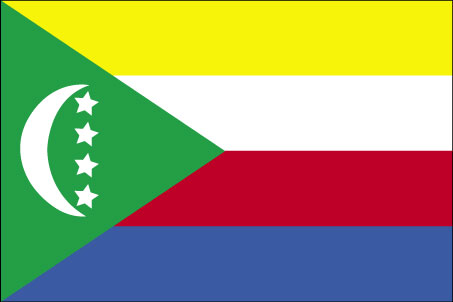
Comoros
Comores
Declare Your Relationship to Comoros
CountryReports Community
- Studying5
- From Comoros2
- Comoros heritage1
- Visited2
- Want to visit1
Customs and Culture
Customs and Culture
Cultural Attributes
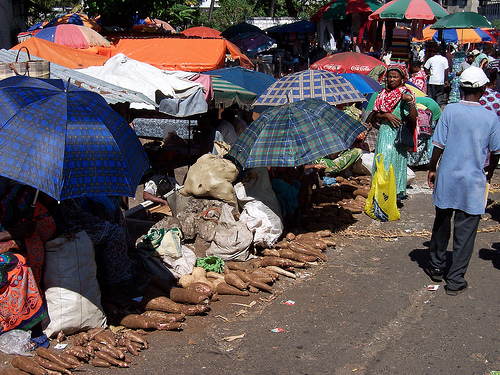
Comoros is one of the world's poorest nations. It has no major industry and no valuable minerals. The economy is based on agriculture and most people work on a farm for a living. Most of the people have mixed ancestry. They are descends of Arabs, and black Africans. Most Comorans are Muslims.
Boys are raised and taught that it is the responsibility of men to provide for the family and meet all their physical needs. This is something they learn from their earliest days and house work is left for the girls and women.

Spice Islands of the Indian Ocean
Get More Customs and Culture
5 more cultural topics for members
Social Customs & Etiquette · Diet · Family · Dating Customs · Student Life
Every country, every topic, all activities & recipes
✓ Instant access on this device · ✓ No subscription
Holidays
Independence Day
7/6Independence Day
Dates of Interest
- July 6th
What are the dining customs in Comoros?
Meals are commonly eaten with men and women separated, with the husband typically eating alone or with a parent or friend at the table while children and mothers eat in the kitchen. Males eating separately from females is a show of dignity and authority.
Good to know
- Coconuts, bananas, and cassava are the main food crops
- Much food is imported because the best land is used for commercial crops such as vanilla, cloves, and perfume plants
What should I know about etiquette in Comoros?
Respect for elders is highly valued, and children are taught to respect all elders regardless of social status.
Do
- Show respect to elders regardless of their social status
Good to know
- Most Comorans are Muslims, and mixed Arab and black African ancestry is common
What is family life like in Comoros?
Families are usually large, and many marriages are polygamous. Men are raised to see providing for the family as their responsibility, while housework is left to girls and women.
Good to know
- A high percentage of the population still lives in straw huts
- The economy is based on agriculture and most people work on a farm
Last updated: 2026-07-12 · Sources: CountryReports
Photos of Comoros
Photos of Comoros


Travel and Tourism
Travel and Tourism
- Travel Alert Status
- Level 1: Exercise Normal Precautions
- Currency
- 449.1
- Time Difference
- UTC+3 (8 hours ahead of Washington, DC, during Standard Time)
- Airports
- 4
- Recommended Vaccinations
- How important is it to do your research about vaccinations? It might just save your life! Make yourself aware of the different types of vaccinations and which ones you may need to travel to your destination. Schedule an appointment with your doctor at least four to six weeks before you travel to ensure you receive all important shots. Be sure that you and your family are up to date on your routine vaccinations. Which vaccinations you need will depend on a number of factors including your destination, whether you will be spending time in rural areas, the season of the year you are traveling, your age, health status, and previous immunizations.
Read the full travel guide — health, safety, vaccinations, disease risk, sanitation, and transit details.
View full travel guideHistory
History
Historical Eras
Early Settlement & Arab Trade
800 – 1500
Austronesian and Bantu-speaking peoples first settled the Comoros archipelago, followed by Arab and Shirazi traders who established a network of sultanates and introduced Islam. By the medieval period, the islands served as a key southern node on the Indian Ocean trade routes, linking East Africa, Madagascar, and the Arabian Peninsula. Islamic culture, architecture, and governance took deep root, shaping Comorian identity for centuries.
Sultanate Era
1500 – 1886
Rival Shirazi-descended sultanates dominated each island, engaging in inter-island warfare, the slave trade, and commerce with Arab, Swahili, and later European merchants. Portuguese, Dutch, and French navigators made contact with the islands from the 16th century onward. French influence gradually expanded through treaties with local sultans during the early 19th century, culminating in the formal establishment of a protectorate over all four main islands.
French Colonial Period
1886 – 1975
Comoros became a French protectorate in 1886 and was formally annexed as a colony in 1912, administered from Madagascar. After World War II the islands were redesignated a French overseas territory in 1947, and internal autonomy was granted in 1961. Cash crops such as ylang-ylang, vanilla, and cloves became the economic foundation under French direction, while political agitation for independence grew through the early 1970s.
Independence & Instability
1975 – 1999
Grande Comore, Moheli, and Anjouan unilaterally declared independence on July 6, 1975, while Mayotte voted to remain French. The new republic proved acutely unstable: President Ahmed Abdallah was overthrown within weeks, mercenary-backed coups restored and later killed him in 1989, and Ali Soilih's radical regime was itself ousted in 1978. By 1997, Anjouan and Moheli had declared their own secession from Comoros, deepening the constitutional crisis.
Federal Transition
1999 – 2004
Colonel Azali Assoumani seized power in a 1999 coup and brokered the Fomboni Accord of 2000, crafting a confederal framework to resolve the secessionist crisis. A new constitution approved by referendum in December 2001 reconstituted the country as the Union of Comoros, granting each island its own presidency and legislature. The union's first civilian president was inaugurated on May 26, 2002, marking a fragile but significant step toward constitutional governance.
Modern Union Era
2004 – present
The Union of Comoros has continued to grapple with coup attempts, economic underdevelopment, and reliance on foreign aid, while Mayotte's 2009 vote to fully integrate with France closed off prospects for reunification of the archipelago. Volcanic eruptions from Mount Karthala and recurring political crises have periodically destabilized the islands. Comoros remains one of the world's poorest nations, dependent on cash-crop exports and remittances, yet the federal constitutional order established in 2002 has provided greater continuity than any previous political arrangement.
Overview
Figure 6. Comoros: Administrative Divisions, 1994
Every country, every topic, all activities & recipes
✓ Instant access on this device · ✓ No subscription
Timeline of Key Events
1886
Comoros becomes a French protectorate.
Comoros becomes a French protectorate.
1912
Comoros formally become a French colony administered from Madagascar.
Comoros formally become a French colony administered from Madagascar.
1942
British forces invade the Comoros and Madagascar.
British forces invade the Comoros and Madagascar, toppling the pro-Vichy administration and handing the territories over to the Free French government of Charles de Gaulle.
1947
Comoros become an overseas territory of France,
Comoros become an overseas territory of France and are given representation in the French parliament.
1961
Comoros given autonomy.
Comoros given autonomy.
1974
Three of the islands making up the Comoros vote for independence.
Three of the islands making up the Comoros vote for independence, but a fourth island, Mayotte, votes to stay with France.
1975
The islands of Grande Comore, Moheli and Anjouan become independent.
The islands of Grande Comore, Moheli and Anjouan become independent with Ahmed Abdallah as president.
Read the full history profile — narrative overview, defining eras, and the complete timeline in one place.
View expanded historyInteresting Facts
Interesting Facts
In Comoros certain landholdings called magnahouli are controlled by women and inherited through the female line, apparently in observance of a surviving matriarchal African tradition.
In Comoros certain landholdings called magnahouli are controlled by women and inherited through the female line, apparently in observance of a surviving matriarchal African tradition.
See every fact — trivia, oddities, and curious tidbits gathered from across the country.
View all interesting factsGeography and Environment
Geography and Environment
- Terrain
- volcanic islands, interiors vary from steep mountains to low hills
- Climate
- tropical marine; rainy season (November to May)
- Natural Hazards
- cyclones possible during rainy season (December to April); Le Kartala on Grand Comore is an active volcano
- Current Environmental Issues
- soil degradation and erosion results from crop cultivation on slopes without proper terracing; deforestation
Read the full geography and environment profile — terrain, climate, natural resources, hazards, land use, and international agreements.
View full geographyPeople & Demographics
People & Demographics
Religion
Languages Spoken
Arabic (official), French (official), Shikomoro (a blend of Swahili and Arabic)
- Arabic
- French
Population
- Population
- 869,601
- Population in Major Urban Areas
- MORONI (capital) 54,000
- Nationality Noun
- Comoran(s)
- Ethnic Groups
- Antalote, Cafre, Makoa, Oimatsaha, Sakalava
- Language Note
- Even though, Arabic and French are the official languages, most people speak Comoran, a mixture of Arabic and Swahili.
Education
- Literacy Definition
- age 15 and over can read and write
Life Expectancy
- Life Expectancy at Birth
- Life expectancy at birth in Comoros stands at approximately 64 to 65 years overall, with women typically living slightly longer than men. Females in the country have an average life expectancy of around 66 years, while males average closer to 63 years. These figures reflect meaningful progress over recent decades, as life expectancy in Comoros hovered closer to 50 years in the 1970s and has steadily climbed due to improvements in healthcare access, nutrition, and disease prevention. The gains in longevity are closely tied to reductions in infant and child mortality rates, which have historically weighed down overall life expectancy statistics. As vaccination coverage has expanded and maternal health services have improved, more children are surviving past the critical early years of life, contributing to the upward trend in average lifespan. Despite this progress, Comoros continues to face significant public health challenges that temper further gains. The island nation struggles with limited healthcare infrastructure, a shortage of trained medical professionals, and geographic isolation between its main islands — Grande Comore, Anjouan, and Mohéli — which can make accessing specialized medical care difficult for rural and remote populations. Malaria remains a persistent health concern, particularly on the islands where transmission rates have historically been higher, though sustained control efforts have achieved notable success in reducing its burden in recent years. Noncommunicable diseases such as cardiovascular conditions, diabetes, and hypertension are becoming more prominent health concerns as the population ages and dietary patterns shift. Addressing these emerging threats will be important for sustaining and improving life expectancy in the coming decades. By regional comparison, Comoros falls in the mid-range for sub-Saharan Africa, performing better than several continental neighbors but still trailing behind nations with more developed health systems and stronger economies. Continued investment in primary healthcare, clean water access, sanitation, and maternal and child health programs will be essential to pushing life expectancy higher and ensuring that the improvements of recent decades are both maintained and extended.
- Infant Mortality Rate
- Infant mortality in Comoros remains a significant public health concern, though the country has made measurable progress over recent decades. The infant mortality rate — defined as the number of deaths of children under one year of age per 1,000 live births — stood at approximately 49 deaths per 1,000 live births as of recent estimates, placing Comoros among the higher-risk nations in the sub-Saharan African region, though improvements have been steady since the 1990s when rates exceeded 80 per 1,000 live births. Several interconnected factors contribute to this elevated rate. Access to skilled birth attendants remains limited, particularly in rural areas and on the outlying islands of Anjouan and Mohéli. Neonatal infections, complications during delivery, malaria, diarrheal diseases, and acute respiratory infections are among the leading causes of infant deaths. Malnutrition and stunting in mothers and young children further compound vulnerability in the first year of life. The health infrastructure in Comoros faces persistent challenges, including a shortage of trained medical personnel, limited availability of essential medicines, and inadequate transportation networks that delay emergency obstetric care. Many births in remote communities still occur without the presence of qualified health workers, increasing the risk of preventable complications. Efforts by the Comorian government, alongside international partners such as UNICEF and the World Health Organization, have focused on expanding immunization coverage, promoting breastfeeding, improving antenatal care, and training community health workers. Vaccination programs targeting diseases such as measles, polio, and tetanus have contributed to reductions in child deaths over time. Despite these gains, progress has been uneven across the three main islands. Disparities in income, education, and healthcare access between urban centers like Moroni and more isolated communities continue to influence outcomes. Continued investment in maternal and child health services, along with improvements in sanitation, nutrition, and community health education, will be essential to further reducing the infant mortality rate in the coming years.
Read the full people and society profile — demographics, health, education, religion, languages, and notable people.
View full people and societyGovernment & Politics
Government & Politics
Country Identity
- Country Name
- Comoros
- Full Country Name
- Union of the Comoros
- Local - Long
- Union des Comores
- Local - Short
- Comores
Government Structure
- Government Type
- independent republic
- Legal System
- French and Sharia (Islamic) law in a new consolidated code
- Executive Branch
- chief of state: President AZALI Assoumani (since 26 May 2016, reelected 24 March 2019, and again in January 2024); note - AZALI first came to power following a 1999 military coup and subsequently won the April 2002 presidential election; under the rotating presidency system established by the 2001 constitution, he was again elected in 2016; following a controversial 2018 constitutional referendum that abolished the rotating island presidency and allowed him to reset his term limits, AZALI was reelected in March 2019; he won a third term in the January 2024 presidential election; the president is both the chief of state and the head of government head of government: President AZALI Assoumani (since 26 May 2016); the president is both the chief of state and the head of government; there is no prime minister position under the current constitutional structure cabinet: Council of Ministers appointed by the president elections: under the 2001 constitution, the presidency originally rotated every four years among the three main islands of the Union (Ngazidja/Grande Comore, Ndzuwani/Anjouan, and Mwali/Mohéli); a 2018 constitutional referendum abolished the rotating island system and allowed for standard multi-year terms; presidential elections are now held every five years; the most recent election was held in January 2024, with the next scheduled for 2029 election results: President AZALI Assoumani reelected in the January 2024 presidential election with approximately 57% of the vote, though the results were disputed by opposition candidates who alleged irregularities
- Legislative Branch
- Unicameral Assembly of the Union (24 seats; 18 members directly elected by universal suffrage and 6 selected by the individual islands' local assemblies; members serve five-year terms). Elections: Last held on 25 January 2020 (next scheduled to be held in 2025). Election results: Percent of vote by party — NA; seats by party — Convention for the Renewal of the Comoros (CRC) and allied parties 18, opposition and independent candidates 6. The assembly reflects a political landscape dominated by parties aligned with the national government, with representation distributed across the three main islands of Grande Comore, Anjouan, and Mohéli.
- Judicial Branch
- Supreme Court or Cour Supremes (two members appointed by the president, two members elected by the Federal Assembly, one elected by the Council of each island, and others are former presidents of the republic)
- Suffrage
- 18 years of age; universal
- Constitution
- 23-Dec-01
- Independence
- 6 July 1975 (from France)
- National Holiday
- Independence Day, 6 July (1975)
Capital City
- Capital Name
- Moroni
- Capital - geographic coordinate
- 11 42 S, 43 14 E
- Capital Time Difference
- UTC+3 (8 hours ahead of Washington, DC, during Standard Time)
Moroni derives from "mroni," which means "at the river" in Shingazidja, the Comorian language spoken on Grande Comore (N'gazidja)
Military
Branches: Army of National Development (l'Armee du Developpement Nationale, AND): Comoran Security Force (also called Comoran Defense Force (Force Comorienne de Defense, FCD), includes Gendarmerie), Comoran Coast Guard, Comoran Federal Police
Embassy / Diplomatic Mission
The U.S. Embassy in Antananarivo is located at Lot 207A, Point Liberty, Andranoro-Antehiroka, Antananarivo (105), Madagascar. The mailing address is B.P. 5253, Antananarivo (105) Madagascar. The telephone number is [261] (20) 23-480-00; the fax number is [261] (20) 23-480-35.
Read the full government profile — flag symbolism, national anthem, and other national symbols.
View full government detailsEconomy
Economy
One of the world's poorest and smallest economies, Comoros is an archipelago of three islands hampered by inadequate transportation infrastructure, a young and rapidly growing population, and limited natural resources.
Snapshot
- Currency Name and Code
- Comoran francs (KMF)
- GDP — official exchange rate
- $402,000,000 (USD)
- GDP Real Growth Rate
- 2.1%
Every country, every topic, all activities & recipes
✓ Instant access on this device · ✓ No subscription
News & Weather
News & Weather
Current Weather
Latest News
New Comoros jobs law threatens livelihoods of Madagascar migrants - AFP.com
AFP.com · 2d ago
Senegal vs. Comoros Lineups, Live Streaming, How & Where to Watch on TV - Athlon Sports
Athlon Sports · 2d ago
Cameroon 3-1 Comoros (24 Sep, 2026) Final Score - ESPN
ESPN · 13d ago
Comoros: Foreign workers struggle in the wake of new law - Africanews
Africanews · 2d ago
Comoros vs. Senegal - Live Score - October 04, 2026 - FOX Sports
FOX Sports · 3d ago
Cameroon vs. Comoros Lineups, Live Streaming, TV Channels, How & Where to Watch AFCON Qualifiers - Yahoo Sports
Yahoo Sports · 13d ago
Comoros must step up fisheries investments as effects of climate change intensify, World Bank study warns - SeafoodSource
SeafoodSource · 6d ago
Comoros vs Senegal: Friendlies stats & head-to-head - BBC
BBC · 3d ago
News via Google News
Videos
Videos
1 curated YouTube videos.
Source: YouTube
Frequently Asked Questions
Frequently Asked Questions
What is the population of Comoros?
What is the capital of Comoros?
Where is Comoros located?
What are the ocean and sea borders of Comoros?
What religion is practiced in Comoros?
What is the currency of Comoros?
What languages are spoken in Comoros?
What is the geography of Comoros like?
What is Comoros known for?
Last reviewed 2026