
 English
 Español
 中文
中文 हिन्दी
 Français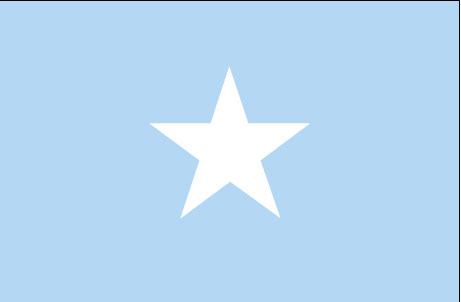
Somalia
Declare Your Relationship to Somalia
CountryReports Community
- Studying11
- From Somalia4
- Somalia heritage2
- Visited0
- Want to visit1
Customs and Culture
Customs and Culture
Cultural Attributes
Even though larger clans claim higher status, Somalis consider themselves to be equal, and subservient to no one but Allah. Unlike in some Muslim countries, women can own property and manage businesses, though they occupy an essential position in the extended family. Somali value self-reliance, respect, and tradition. Expressions of gratitude are rare since they involve reciprocal giving. Western culture has not influenced many Somalis.

Horn of Africa's Proud Heart
Get More Customs and Culture
5 more cultural topics for members
Social Customs & Etiquette · Diet · Family · Dating Customs · Recreation
Every country, every topic, all activities & recipes
✓ Instant access on this device · ✓ No subscription
Holidays
Foundation of the Somali Republic
7/1Independence
26 June (1960) in Somaliland
Christmas
12/25Christmas
Somalia is a predominantly Muslim country where beliefs are based on the fact that Jesus Christ was merely a prophet of Allah. Thus, the beliefs and traditions that go with the celebrations of Christmas are not found in the country.
They do however; celebrate a festival that can be compared with the fervor and festivity that is part of the Christmas season. This festival usually happens during the month of November or December. The festival is called Eid al-Adha or the Festival of Sacrifice. The festival is also called as Eid el-Kibir, Bari Eid, BaedEid or BakriEid in Somalia. This occasion commemorates the sacrifice of the prophet Abraham of his own son when God asked him to give Him his son by offering it as a sacrifice. Traditions for this day are for Muslims all over the world to sacrifice an animal during the day. This is to symbolize the fact that after God said to Abraham that he needs not to kill his son for Him, he offered a sacrifice of a ram instead.
Customs of the Somalis are to eat a portion of the animal that was sacrificed that is about one third of the animal sacrificed. Another one third is to be given to friends and the remaining one third is to be given to the poor. The traditions are also a sign of obedience to Allah as exemplified by Abraham.
During the day of the festival, it has been the custom of the family to gather and pray together in the mosques and temples of their faith. This usually includes visit to family members and relatives that they may have not seen for a while. The tradition of giving gifts is somewhat similar to the traditions of Christians in Christmas gift giving.
Dates of Interest
- July 1st
A cultural festival celebrated in various parts of Somalia, featuring traditional music, dance, and other cultural activities.
How do people greet each other in Somalia?
Greetings differ by gender: men shake hands three times before placing their hands on their hearts, while women shake hands and often kiss the hand they shook.
Do
- Use "Ma nahad baa" (Is there peace?) in the north or "nahad miya" in the south
- Use the Islamic greeting "Asalaamu aleikum"
Don’t
- Don't touch members of the opposite sex
What are dining customs like in Somalia?
People gather around a communal bowl or platter set on a mat and eat with the right hand from the portion directly in front of them.
Do
- Wash your hands in a bowl of water before and after eating
- Eat only from the portion directly in front of you
- Accept larger servings if you are a guest
Don’t
- Don't use your left hand to touch food, as it is reserved for personal hygiene
- Don't overindulge in food, as it is not acceptable
Good to know
- Men and women often eat separately outside the immediate family
- Men are traditionally served first, with women and children eating later
- Guests are offered larger servings
What should I know about etiquette and visiting in Somalia?
Somalis value self-reliance, respect and tradition, and consider themselves equal, subservient to no one but Allah. There is no expectation of a gift when visiting.
Do
- Announce your presence before entering a family compound
- Visit in the late afternoon when work is finished, or at night in country areas
Good to know
- Men and women usually socialize separately
- Expressions of gratitude are rare, since they involve reciprocal giving
- Hosts usually serve sweet spicy tea with milk and other refreshments
What should I wear in Somalia?
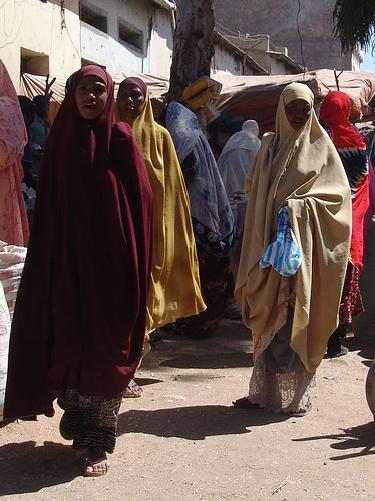
Men often wear a flowing plaid kilt ("ma'awiis") with a turban or embroidered cap, while women wear long flowing dresses with shawls and head scarves.
Good to know
- Northern women wear the long "direh" over petticoats
- Southern women favor the "guntino" wrapped around the waist and tied over one shoulder
- All women wear shawls and head scarves
What do gestures mean in Somalia?
Hands are used expressively in conversation, often with sweeping arm gestures while the eyes follow the direction of the hand movement.
Good to know
- A quick twist of the hand and wrist means nothing or no
- A thumb under the chin indicates one is full
- Snapping the fingers can mean "so on" or "long ago"
What is family life like in Somalia?
Loyalty and devotion to the family is important, and families always help each other in need, with good deeds bringing honor to the family, clan and society.
Good to know
- The extended family of the father takes precedence in assistance
- Children of urban relatives are often taken in
- Women can own property and manage businesses but hold an essential place in the extended family
What do people do for fun in Somalia?
The favorite leisure activity of adult Somalis is conversation with friends and relatives, with men gathering in coffee (tea) shops and playing games of skill.
Good to know
- Men play shah, a game similar to chess, and compete in running, wrestling and jumping
- Women entertain each other at home and scent their hair with fragrant incense smoke
- Families cherish telling ancient tales while sitting outside in the moonlight
- Boys enjoy football, volleyball and basketball, while girls enjoy basketball, dolls and dancing
Last updated: 2026-07-12 · Sources: CountryReports
Photos of Somalia
Photos of Somalia


Travel and Tourism
Travel and Tourism
- Travel Alert Status
- Level 4: Do Not Travel
- Currency
- Somali shilling (SOS)
- Time Difference
- UTC+3 (8 hours ahead of Washington, DC, during Standard Time)
- Airports
- 60
Read the full travel guide — health, safety, vaccinations, disease risk, sanitation, and transit details.
View full travel guideRecipes
Recipes
History
History
Historical Eras
Ancient & Medieval
3000 BCE – 1500
Known to ancient Egyptians as the Land of Punt, the Somali coast sustained millennia of trade with Egypt, Arabia, Greece, and China. Arab settlers established the Sultanate of Adel on the Gulf of Aden around 600 CE, and Somali clans gradually adopted Islam and developed a pastoral nomadic culture that would define the region for centuries.
Sultanates Era
1500 – 1891
Following the disintegration of the Adel Sultanate around 1500, Somalia fragmented into smaller clan-based polities and sultanates. Egypt briefly occupied coastal towns in 1875, and the Somali interior remained shaped by Islamic scholarship, clan confederation, and the Indian Ocean trade network, with Bantu communities also present in the agricultural south.
Colonial Period
1891 – 1960
Britain, Italy, and France partitioned Somali-inhabited lands into separate protectorates, while Ethiopia absorbed the Ogaden and Britain's Kenya claimed the Northern Frontier District. Resistance was fierce — most notably Mohammed Abdullah Hassan's two-decade Dervish insurgency against British rule — but colonial borders ultimately divided the Somali people into five separate territories.
Independence & Democracy
1960 – 1969
British Somaliland and Italian Somalia merged on July 1, 1960, forming the Somali Republic. Despite border conflicts with Ethiopia over the Ogaden and challenges integrating two distinct colonial administrations, Somalia functioned as a genuine parliamentary democracy, with governments regularly changed through elections — a rare achievement in post-colonial Africa.
Siad Barre Dictatorship
1969 – 1991
Major General Mohamed Siad Barre seized power in a bloodless coup on October 21, 1969, proclaiming scientific socialism and renaming the country the Somali Democratic Republic. His regime launched a disastrous war against Ethiopia over the Ogaden (1977–78), suffered a catastrophic drought in 1974–75, and ultimately collapsed by deliberately inflaming interclan rivalries until armed militias tore the state apart.
Civil War & Fragmentation
1991 – present
Siad Barre fled Mogadishu on January 27, 1991, leaving a power vacuum filled by warring clan militias. Somaliland declared independence in the north, Puntland established autonomy in 1998, and successive internationally backed governments struggled to assert authority amid persistent conflict. A UN intervention (1993–95), the rise of the Islamic Courts Union, and ongoing al-Shabaab insurgency have kept Somalia in protracted instability.
Overview
Shaykh Abdulaziz Mosque, one of Mogadishu’s oldest
Every country, every topic, all activities & recipes
✓ Instant access on this device · ✓ No subscription
Timeline of Key Events
600
Arab tribes establish the sultanate of Adel on the Gulf of Aden coast.
Arab tribes establish the sultanate of Adel on the Gulf of Aden coast.
800
Somali people begin to migrate from Yemen.
Somali people begin to migrate from Yemen.
1500
Sultanate of Adel disintegrates into small states.
Sultanate of Adel disintegrates into small states.
1800
Many Bantu people were taken from their homes and sold as slaves in Somalia.
Many Bantu people from Malawi, Mozambique and Tanzania were taken from their homes and sold as slaves in Somalia.
1875
Egypt occupies towns on Somali coast and parts of the interior.
Egypt occupies towns on Somali coast and parts of the interior.
1887
Britain proclaims protectorate over Somaliland.
Britain proclaims protectorate over Somaliland.
1888
Anglo-French agreement defines boundary between Somali possessions of the two countries.
Anglo-French agreement defines boundary between Somali possessions of the two countries.
Read the full history profile — narrative overview, defining eras, and the complete timeline in one place.
View expanded historyInteresting Facts
Interesting Facts
Somalia has the world's lowest health budget at 1.5% of it's Gross Domestic Product.
Although the country is named after its people, Somalis also live in many neighbouring countries due to the partitioning of eastern Africa by colonial powers.
Traditionally, age in Somalia is calculated by the number of gu’s a person has lived. Gu is also normally the peak season for marriages, contests and dispute settlements.
A 14th century travelogue by Ibn Battuta praises the city of Mogadishu for its size, wealth and beautiful handmade cloth of red and yellow.
2 more facts for members
Every country, every topic, all activities & recipes
✓ Instant access on this device · ✓ No subscription
Geography and Environment
Geography and Environment
- Terrain
- mostly flat to undulating plateau rising to hills in north
- Climate
- Climate is the primary factor in much of Somali life. For the large nomadic population, the timing and amount of rainfall are crucial determinants of the adequacy of grazing and the prospects of relative prosperity. During droughts such as occurred during 1974-75 and 1984-85, starvation can occur. Somalis recognize four seasons, two rainy (gu and day) and two dry (jiilaal and hagaa). The gu rains begin in April and last until June, producing a fresh supply of pasture and for a brief period turning the desert into a flowering garden. Lush vegetation covers most of the land, especially the central grazing plateau where grass grows tall. Milk and meat abound, water is plentiful, and animals do not require much care. The clans, reprieved from four months' drought, assemble to engage alternately in banter and poetic exchange or in a new cycle of hereditary feuds. They also offer sacrifices to Allah and to the founding clan ancestors, whose blessings they seek. Numerous social functions occur: marriages are contracted, outstanding disputes are settled or exacerbated, and a person's age is calculated in terms of the number of gus he or she has lived. The gu season is followed by the hagaa drought (July-September) and the hagaa by the day rains (October-November). Next is jiilaal (December-March), the harshest season for pastoralists and their herds. Most of the country receives less than 500 millimeters of rain annually, and a large area encompassing the northeast and much of northern Somalia receives as little as 50 to 150 millimeters. Certain higher areas in the north, however, record more than 500 millimeters a year, as do some coastal sites. The southwest receives 330 to 500 millimeters. Generally, rainfall takes the form of showers or localized torrential rains and is extremely variable. Mean daily maximum temperatures throughout the country range from 30° C to 40° C, except at higher elevations and along the Indian Ocean coast. Mean daily minimum temperatures vary from 20° C to more than 30° C. Northern Somalia experiences the greatest temperature extremes, with readings ranging from below freezing in the highlands in December to more than 45° C in July in the coastal plain skirting the Gulf of Aden. The north's relative humidity ranges from about 40 percent in midafternoon to 85 percent at night, varying somewhat with the season. During the colder months, December to February, visibility at higher elevations is often restricted by fog. Temperatures in the south are less extreme, ranging from about 20° C to 40° C. The hottest months are February through April. Coastal readings are usually five to ten degrees cooler than those inland. The coastal zone's relative humidity usually remains about 70 percent even during the dry seasons.
- Natural Hazards
- recurring droughts; frequent dust storms over eastern plains in summer; floods during rainy season
- Current Environmental Issues
- famine; use of contaminated water contributes to human health problems; deforestation; overgrazing; soil erosion; desertification
Read the full geography and environment profile — terrain, climate, natural resources, hazards, land use, and international agreements.
View full geographyPeople & Demographics
People & Demographics
Languages Spoken
Somali (official), Arabic, Italian, English
- Somalia
- Arabic
- Italian
Population
- Population
- 18,143,378
- Population in Major Urban Areas
- MOGADISHU (capital) 1.554 million
- Nationality Noun
- Somali(s)
- Ethnic Groups
- Somali 85%, Bantu and other non-Somali 15% (including Arabs 30,000)
- Language Note
- Standard Somali with its diverse scripts based on clan affiliation, is now written in Latin script. Literacy has increased dramatically. English, Italian and Arabic are spoken by educated Somali. The Somali language stems from the Cushitic language family.
Education
- Literacy Definition
- age 15 and over can read and write
Health Information
- Major Infectious Diseases — degree of risk
- very high
Life Expectancy
- Life Expectancy at Birth
- Life expectancy at birth in Somalia is among the lowest in the world, reflecting the country's prolonged instability, widespread poverty, and severely underdeveloped healthcare infrastructure. Current estimates place average life expectancy at approximately 56 to 57 years, a figure that has improved modestly over recent decades but remains far below the global average of around 73 years. The figures differ notably between men and women. Somali women tend to outlive men by a small margin, with female life expectancy estimated at around 58 years compared to approximately 55 years for males. These numbers, while still critically low, represent a gradual upward trend from the estimated 45 to 48 years recorded during the height of the civil conflict in the early 1990s. Several interconnected factors suppress life expectancy in Somalia. The collapse of the national healthcare system following the outbreak of civil war in 1991 left the majority of the population without reliable access to medical services. Maternal and infant mortality rates remain exceptionally high — Somalia has one of the worst maternal mortality ratios in the world, with estimates exceeding 600 deaths per 100,000 live births. Child mortality is similarly alarming, with a significant proportion of deaths occurring before age five due to preventable conditions such as acute malnutrition, diarrheal diseases, malaria, and measles. Ongoing conflict, recurrent drought, and large-scale displacement have compounded public health challenges. Millions of Somalis remain internally displaced, and a substantial portion of the population requires humanitarian assistance at any given time, limiting consistent access to clean water, sanitation, and adequate nutrition — all critical determinants of longevity. International organizations and the Somali Federal Government have made incremental progress in rebuilding health services, particularly through mobile clinics and community health worker programs. Vaccination campaigns have helped reduce mortality from certain preventable diseases, and targeted interventions addressing acute malnutrition have shown localized results. However, the path to substantially improving life expectancy remains dependent on achieving lasting political stability and sustained investment in health infrastructure across the country.
- Infant Mortality Rate
- Somalia has one of the highest infant mortality rates in the world, reflecting the severe and compounding humanitarian challenges the country faces. According to recent estimates, approximately 78 to 85 deaths occur per 1,000 live births, meaning that roughly one in twelve infants does not survive to their first birthday. This figure places Somalia consistently among the countries with the worst infant survival outcomes globally. Several interconnected factors drive this alarming rate. Decades of civil conflict have devastated the country's healthcare infrastructure, leaving large portions of the population without access to basic medical services. Skilled birth attendance remains critically low, with many deliveries occurring outside of formal health facilities and without trained medical personnel present. This significantly increases the risk of complications during and immediately after birth. Malnutrition is another major contributor. Somalia experiences recurring cycles of drought and famine, and acute malnutrition among infants and young children weakens immune systems and increases vulnerability to otherwise preventable illnesses. Diarrheal diseases, pneumonia, malaria, and measles account for a substantial proportion of infant deaths, many of which could be avoided through basic interventions such as oral rehydration therapy, vaccinations, and antibiotics. Access to clean drinking water and proper sanitation remains limited, particularly in rural and internally displaced communities. Contaminated water sources contribute directly to waterborne illnesses that disproportionately affect newborns and infants whose immune systems are not yet fully developed. Efforts by international organizations including UNICEF and the World Health Organization, in partnership with the Somali federal government, have worked to expand immunization coverage, support community health workers, and improve maternal and child nutrition programs. While some modest progress has been recorded over the past two decades — the infant mortality rate was estimated above 100 per 1,000 live births in the early 2000s — the pace of improvement remains slow relative to regional and global averages. Sustained investment in health systems, conflict resolution, and poverty reduction will be essential to meaningfully lower infant mortality in Somalia in the years ahead.
Read the full people and society profile — demographics, health, education, religion, languages, and notable people.
View full people and societyGovernment & Politics
Government & Politics
Country Identity
- Country Name
- Somalia
- Former Name
- Somali Republic, Somali Democratic Republic
Government Structure
- Government Type
- no permanent national government; transitional, parliamentary national government
- Legal System
- no national system; Shari'a and secular courts are in some localities
- Executive Branch
- chief of state: President Hassan Sheikh MOHAMUD (since 23 May 2022); note - Hassan Sheikh Mohamud previously served as president from 2012 to 2017 and was re-elected by the Federal Parliament in May 2022 following a prolonged electoral process delayed by political disputes and security challenges head of government: Prime Minister Hamza Abdi BARRE (since 25 June 2022); appointed by President Hassan Sheikh Mohamud following his election victory cabinet: Cabinet appointed by the prime minister, subject to approval by the House of the People of the Federal Parliament election results: Hassan Sheikh MOHAMUD was elected president by members of the upper and lower houses of the Federal Parliament, defeating incumbent President Mohamed Abdullahi Mohamed (also known as Farmaajo) in the third round of voting; Hamza Abdi Barre was subsequently nominated as prime minister and confirmed by the Federal Parliament
- Legislative Branch
- Bicameral Federal Parliament, consisting of the Upper House (Senate) and the House of the People (Lower House). The Senate comprises 54 seats, with members representing the country's 18 regional states. The House of the People consists of 275 seats, with members selected through a clan-based electoral system. Seats in the lower house are distributed among Somalia's major clan families — Darod, Digil-Mirifle, Dir, and Hawiye — each receiving 61 seats, with the remaining 31 seats allocated to minority clans. Members of both chambers serve four-year terms. Somalia continues to work toward a universal suffrage voting system, with ongoing efforts to transition away from the indirect clan-delegate model that has governed elections in recent electoral cycles.
- Judicial Branch
- following the breakdown of the central government, most regions have reverted to local forms of conflict resolution, either secular, traditional Somali customary law, or Shari'a (Islamic) law with a provision for appeal of all sentences
- Suffrage
- 18 years of age; universal
- Constitution
- 25 August 1979, presidential approval 23 September 1979
- Independence
- 1 July 1960 (from a merger of British Somaliland, which became independent from the UK on 26 June 1960, and Italian Somaliland, which became independent from the Italian-administered UN trusteeship on 1 July 1960, to form the Somali Republic)
- National Holiday
- Foundation of the Somali Republic, 1 July (1960); note - 26 June (1960) in Somaliland
Capital City
- Capital Name
- Mogadishu
- Capital - geographic coordinate
- 2 04 N, 45 20 E
- Capital Time Difference
- UTC+3 (8 hours ahead of Washington, DC, during Standard Time)
several theories attempt to explain the city's name; one of the more plausible is that it derives from "maq'ad-i-shah" meaning "the seat of the shah," reflecting the city's links with Persia
Military
Branches: National Security Force (NSF): Somali Army
Embassy / Diplomatic Mission
There is no U.S. Embassy in Somalia. If you are going to live in or visit Somalia, please take the time to tell our Embassy in Kenya about your trip. If you enroll your trip, we can keep you up to date with important safety and security announcements. It will also help your friends and family get in touch with you in an emergency. Here’s the link to the Smart Traveler Enrollment Program. Travelers to Somalia should register with the U.S. Embassy in Nairobi, Kenya.
U.S. Embassy Kenya
United Nations Avenue, Gigiri, Nairobi, Kenya
Telephone: (254) (20) 363-6000
After-hours emergency: (254) (20) 363-6170
Fax: (254) (20) 363-6410
Email: kenya_acs@state.gov
Read the full government profile — flag symbolism, national anthem, and other national symbols.
View full government detailsEconomy
Economy
Somalia's economy remains shaped by decades of political fragmentation, conflict, and limited central governance, though it has shown notable resilience and gradual recovery in recent years.
Snapshot
- Currency Name and Code
- Somali Shilling (SOS)
- GDP Real Growth Rate
- 2.5%
Every country, every topic, all activities & recipes
✓ Instant access on this device · ✓ No subscription
News & Weather
News & Weather
Current Weather
Latest News
Somalia won’t accept Israeli presence ‘under any circumstances’: President - Al Jazeera
Al Jazeera · 43m ago
Ethiopia Plans Somalia Troop Pullout to Fight Rebels Back Home - Bloomberg.com
Bloomberg.com · 3d ago
World News in Brief: Cycle of violence continues in Haiti, seafarer deaths off Somalia, food insecurity in the Middle East - UN News
UN News · 1d ago
Egypt Eritrea Sudan Somalia Summit Set for Sunday - kulu-media.com
kulu-media.com · 8h ago
Three Minnesotans deported to Somalia after a month at Guantánamo Bay - hiiraan.com
hiiraan.com · 1h ago
Inside Somaliland: The Israel-Turkey clash coming to the Horn of Africa - Middle East Eye
Middle East Eye · 1d ago
Police in Somalia say pirates killed 5 crew members of a hijacked tanker - ABC News - Breaking News, Latest News and Videos
ABC News - Breaking News, Latest News and Videos · 3d ago
Efforts underway to repatriate remains of 3 Pakistanis killed in Somalia tanker hijack: PMO - Dawn
Dawn · 7h ago
News via Google News
Videos
Videos
1 curated YouTube videos.
Source: YouTube
Frequently Asked Questions
Frequently Asked Questions
What is the population of Somalia?
What is the capital of Somalia?
Where is Somalia located?
What countries border Somalia?
What religion is practiced in Somalia?
What is the currency of Somalia?
What languages are spoken in Somalia?
What is Somalia's geography like?
What is Somalia known for?
Last reviewed 2026