
 English
 Español
 中文
中文 हिन्दी
 Français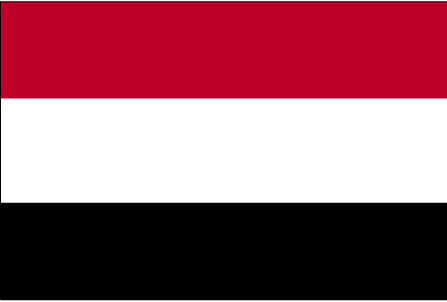
Yemen
Al Yaman
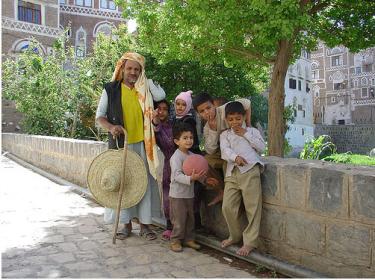
Declare Your Relationship to Yemen
CountryReports Community
- Studying8
- From Yemen1
- Yemen heritage1
- Visited2
- Want to visit2
Customs and Culture
Customs and Culture
Cultural Attributes
As Yemenis talk to each other the often touch each other. They talk loudly, repeat themselves often and interrupt each other. Schedules are loose and flexible.

Land of Frankincense and Ancient Towers
Get More Customs and Culture
5 more cultural topics for members
Social Customs & Etiquette · Diet · Family · Dating Customs · Recreation
Every country, every topic, all activities & recipes
✓ Instant access on this device · ✓ No subscription
Holidays
Unification Day
5/22Independence
Dates of Interest
- July - August
Ramadan, the greatest religious observance in Islam, is an annual month of fasting. The exact dates of Islamic holidays cannot be determined in advance, due to the nature of the Islamic lunar calender. Estimates are based on expected visibility of the hilal (waxing crescent moon following a new moon) and may vary according to location.
How do people greet each other in Yemen?
Arabic is the official language and typical Arabic greetings are common; "Marhaba" means hello.
Good to know
- Use "Marhaba" to say hello
What are the dining customs and typical foods in Yemen?
Staples include rice, bread, vegetables, lamb, and fish in coastal regions, with lunch as the largest meal of the day.
Good to know
- Breakfast is light, often ful (a bean dish) or scrambled eggs with tomatoes
- Lunch typically features chicken, lamb, or beef with cooked vegetables, rice, and flat bread soaked in buttermilk topped with tomatoes, onions, and spices
- Supper, the evening meal, is much like breakfast
- Try local favorites like salta (a meat broth with onions, tomatoes, eggs, and the herb hulba) and shourba bilsen (a lentil soup)
What social etiquette should I expect in Yemen?
Yemenis often touch each other while talking, speak loudly, repeat themselves, and interrupt one another, and schedules are loose and flexible.
Good to know
- Expect physical contact and animated conversation
- Don't rely on strict punctuality, as schedules are flexible
How should I dress in Yemen?
Dress varies by region: in hot coastal areas men wear lightweight shirts with an embroidered skirt called a futa and a head covering, while in the cooler highlands men wear a shirt called a zanna with a jacket.
Good to know
- A man's jambiyya (ceremonial dagger) identifies his clan and is sometimes worn tucked in the belt
- Women wear brightly colored cloth called sitaras, imported from India, and lots of jewelry
What is family life like in Yemen?
Most families are large, often with more than seven members, and several generations may live together.
Good to know
- Men and women are separated in public
- Women keep themselves veiled and fully covered when anyone but family is present
What do people do for recreation in Yemen?
Soccer is the most popular sport, while chewing qat is a favorite pastime for men.
Good to know
- Women hold afternoon gatherings known as tafritas
Last updated: 2026-07-12 · Sources: CountryReports
Photos of Yemen
Photos of Yemen
Family
Sana’a
Food
Father and son going to the friday prayer in Sanaa’
Yemeni, wearing the skirt called "futa"
Veiled woman in Sanaa’
Old fashioned Yemini veil from Sanaa called "sitara"
Children swinging on a car in the streets of Sanaa
Transportation
The big hennashop at Bab al-Yemen in Sanaa’
Henna merchants at Bab al-Yemen in Sanaa’
Woman at market


Travel and Tourism
Travel and Tourism
- Travel Alert Status
- Level 4: Do Not Travel
- Currency
- Yemeni rial (YER)
- Time Difference
- UTC+3 (8 hours ahead of Washington, DC, during Standard Time)
- Airports
- 44
Read the full travel guide — health, safety, vaccinations, disease risk, sanitation, and transit details.
View full travel guideRecipes
Recipes
History
History
Historical Eras
Ancient Kingdoms
1200 BCE – 628
Yemen was home to the Minaean, Sabaean, and Himyarite kingdoms, which dominated the ancient spice and incense trade routes. These sophisticated states maintained extensive commercial networks stretching to the Mediterranean world. The region subsequently came under Ethiopian and Persian rule before the Persian governor of Yemen embraced Islam in 628 CE, ending the pre-Islamic era.
Islamic & Zaydi Era
628 – 1839
Arab Islamic caliphates extended control over Yemen in the 7th century, and following the fragmentation of the Abbasid caliphate, Zaydi Imams established a durable theocratic order across northern Yemen. The Ottomans absorbed much of the region in the 16th century but were largely expelled by the 1630s, after which Zaydi Imams reasserted authority. In the south, the Kathiridi sultanate and other tribal confederations maintained distinct political structures alongside intermittent Ottoman encroachments from 1849 onward.
Colonial Division
1839 – 1918
Britain captured the strategic port of Aden in 1839, administering it as part of British India and gradually extending protectorates over the surrounding tribal territories. The Ottomans simultaneously pressed their occupation of northern Yemen, though fierce tribal resistance confined effective Turkish control largely to urban centers. The opening of the Suez Canal in 1869 amplified Aden's commercial and strategic importance, deepening the geopolitical division of Yemeni territory.
Divided Independence
1918 – 1990
The collapse of the Ottoman Empire in 1918 brought independence to North Yemen under Imam Yahya and his successors, while the south remained under British rule until 1967, when Marxist NLF guerrillas seized power and eventually proclaimed the People's Democratic Republic of Yemen in 1970. A republican revolution overthrew the Imamate in North Yemen in 1962, sparking a civil war drawing in Egypt, Saudi Arabia, and Jordan. The two Yemeni states engaged in recurrent border conflicts and ideological rivalry through the 1970s and 1980s despite nominal agreements to pursue unification.
Unified Republic
1990 – 2014
North and South Yemen merged on May 22, 1990, forming the Republic of Yemen under President Ali Abdullah Saleh. A southern secessionist uprising in 1994 was swiftly suppressed by northern forces, and a border agreement with Saudi Arabia was reached in 2000. The period nonetheless saw mounting instability, including Houthi insurgencies in the north, a resurgent southern separatist movement, and the growing presence of Al-Qaeda in the Arabian Peninsula.
Civil War & Crisis
2014 – present
Houthi forces seized Sanaa in late 2014 and advanced southward, prompting a Saudi-led military coalition to intervene in 2015 in support of the internationally recognized government. The conflict has produced one of the world's worst humanitarian catastrophes, with widespread famine, disease, and mass displacement. Yemen remains fractured among multiple armed factions, with no durable political settlement achieved.
Overview
Yemen was one of the oldest centers of civilization in the Near East. Between the 12th century BC and the 6th century AD, it was part of the Minaean, Sabaean, and Himyarite kingdoms, which controlled the lucrative spice trade, and later came under Ethiopian and Persian rule. In the 7th century, Islamic caliphs began to exert control over the area.
Every country, every topic, all activities & recipes
✓ Instant access on this device · ✓ No subscription
Timeline of Key Events
1000 BCE
A state centered around ancient trade routes rises.
A state centered around ancient trade routes rises. It is called Saba, most of its power is based on agricultural wealth arising from the famous dam of Ma’rib, and the trade of frankincense. The citizens mostly practice a worship of idols.
395
The Holy Roman Emperor Theodisius makes Christianity the new state religion.
The Holy Roman Emperor Theodisius makes Christianity the new state religion. Christian reluctance to trade and use frankincense, upsets Saba’s trade and sends the state into decline.
575
The Persians take control of a weakened Saba.
The Persians take control of a weakened Saba.
628
The Persian governor of Yemen converts to Islam.
The Persian governor of Yemen converts to Islam, followed by the rest of his subjects. During this time, the first Yemeni mosque is built in Sana’a.
628 – 1962
The Zayidi dynasty takes power in the north as a strict Islamic state.
The Zayidi dynasty takes power in the north as a strict Islamic state.
1454 – 1967
The Kathirids take power in the south.
The Kathirids take power in the south and remain the dominant force in the region until 1967.
1500 – 1600
Ottomans absorb part of Yemen into their empire but are expelled in the 1600s.
Ottomans absorb part of Yemen into their empire but are expelled in the 1600s.
Read the full history profile — narrative overview, defining eras, and the complete timeline in one place.
View expanded historyInteresting Facts
Interesting Facts
It was known to the Romans as "Arabia Felix" ("Happy Arabia") because of the riches its trade generated; Augustus Caesar attempted to annex it, but the expedition failed;
See every fact — trivia, oddities, and curious tidbits gathered from across the country.
View all interesting factsGeography and Environment
Geography and Environment
- Terrain
- narrow coastal plain backed by flat-topped hills and rugged mountains; dissected upland desert plains in center slope into the desert interior of the Arabian Peninsula
- Climate
- The interior highlands have two rainy seasons a year: the first in March and April, and a second with heavier rainfall in July and August. For the rest of the year, sunny, clear weather is the rule, with occasional dust storms. In winter, night temperatures in Sanaa can drop to 30°F, with sunshine and daytime highs of 70°F. Summer temperatures are moderate, with highs of 85°F, dropping to the low 60s at night. To the west in the Tihama (lowlands adjoining the Red Sea) where there is a mixture of African and Arab cultures, the weather is hot and humid for much of the year. Even in winter, daytime highs can be in the 90s. During the summer, torrential monsoons occur. Aden and the southern coast are similarly hot and humid, with summer temperatures frequently in the 100s. However, winter temperatures are far milder and more pleasant. The Hadhramaut and the interior desert regions extending east from Aden to the Omani border are hot and dry. To the east of the highland interior, the terrain slopes down to the sandy wastes of the deserts of inner Arabia, the famous "Empty Quarter."
- Natural Hazards
- sandstorms and dust storms in summer
- Current Environmental Issues
- very limited natural fresh water resources; inadequate supplies of potable water; overgrazing; soil erosion; desertification
Read the full geography and environment profile — terrain, climate, natural resources, hazards, land use, and international agreements.
View full geographyPeople & Demographics
People & Demographics
Religion
Languages Spoken
Arabic
- Arabic
Population
- Population
- 34,449,825
- Population in Major Urban Areas
- SANAA (capital) 2.419 million; Aden 784,000
- Nationality Noun
- Yemeni(s)
- Ethnic Groups
- predominantly Arab; but also Afro-Arab, South Asians, Europeans
Education
- Literacy Definition
- age 15 and over can read and write
Health Information
- Major Infectious Diseases — degree of risk
- high
Life Expectancy
- Life Expectancy at Birth
- Life expectancy at birth in Yemen is among the lowest in the Arab world and reflects the devastating humanitarian toll of the country's prolonged civil conflict, which began in 2015. As of the most recent available data, the average life expectancy at birth in Yemen stands at approximately 66 years overall, with women living slightly longer at around 68 years and men averaging roughly 64 years. These figures represent a significant setback from the modest but steady gains Yemen had achieved in the decades prior to the war. Between 1990 and 2014, life expectancy in the country rose by nearly a decade, driven by improvements in maternal and child healthcare, expanded vaccination programs, and greater access to basic medical services in urban centers. The conflict reversed much of that progress, and Yemen now ranks among the lowest globally for health outcomes in its income category. The ongoing war has severely degraded Yemen's healthcare infrastructure. Hundreds of medical facilities have been damaged or destroyed, and a large proportion of the country's health workers went unpaid for extended periods, causing many to abandon their posts. The collapse of the health system has allowed preventable diseases to resurge, including cholera, which produced one of the largest outbreaks in recorded modern history. Acute malnutrition, particularly among children under five, has contributed to elevated mortality rates and shortened lives across the population. The United Nations has repeatedly classified Yemen as one of the world's worst humanitarian crises, with millions facing emergency levels of food insecurity. Maternal mortality remains a serious concern, with a high number of women dying from complications related to pregnancy and childbirth due to the lack of functioning obstetric care. Infant and under-five mortality rates are similarly elevated compared to regional neighbors, compressing the overall life expectancy figure. Yemen's under-five mortality rate remains well above the average for the Middle East and North Africa region. Rural populations face the greatest challenges, as geographic isolation, destroyed infrastructure, and displacement have limited access to whatever medical services still operate. Internally displaced persons, numbering in the millions, face acute vulnerabilities that further reduce their life expectancy relative to the national average. Ongoing hostilities have also made the delivery of humanitarian aid unpredictable, leaving gaps in essential medical supply chains. Without a sustained peace agreement and large-scale reconstruction of the health sector, demographers and international health bodies project that Yemen's life expectancy will continue to lag behind neighboring countries for years or even decades to come.
- Infant Mortality Rate
- Yemen faces one of the most severe infant mortality crises in the world, a situation dramatically worsened by years of ongoing armed conflict, the collapse of the healthcare system, and widespread malnutrition. The country's infant mortality rate stands at approximately 44 to 46 deaths per 1,000 live births, meaning that nearly one in every 22 infants born in Yemen does not survive to see their first birthday. This figure places Yemen among the highest infant mortality rates in the Middle East and North Africa region. The causes behind this devastating statistic are deeply intertwined with Yemen's humanitarian emergency. Malnutrition is a leading contributor, with millions of children under five suffering from acute malnutrition, which weakens immune systems and makes infants highly susceptible to otherwise preventable infections. Diarrheal diseases, pneumonia, and neonatal sepsis are among the primary direct causes of infant death. Access to skilled healthcare has deteriorated sharply since the civil war escalated in 2015. An estimated 50 percent or more of Yemen's health facilities are either non-functional or operating far below capacity. Many mothers give birth without the assistance of trained medical personnel, increasing the risk of complications during and immediately after delivery. Premature births and low birth weight — both linked to poor maternal nutrition and inadequate prenatal care — are significant risk factors for early infant death. Water and sanitation infrastructure has also been severely damaged, contributing to outbreaks of cholera and other waterborne diseases that disproportionately affect infants and young children. Yemen experienced one of the largest cholera outbreaks in recorded history beginning in 2016, further straining an already overwhelmed health system. UNICEF and other humanitarian organizations have maintained vaccination campaigns and therapeutic feeding programs in accessible areas, helping to mitigate some of the worst outcomes. However, ongoing hostilities, blockades, and funding shortfalls continue to limit the reach of these interventions. Without sustained investment in healthcare infrastructure, clean water, and maternal nutrition programs, Yemen's infant mortality rate is unlikely to see meaningful improvement in the near term.
Read the full people and society profile — demographics, health, education, religion, languages, and notable people.
View full people and societyGovernment & Politics
Government & Politics
Country Identity
- Country Name
- Yemen
- Full Country Name
- Republic of Yemen
- Local - Long
- Al Jumhuriyah al Yamaniyah
- Local - Short
- Al Yaman
Government Structure
- Government Type
- republic
- Legal System
- based on Islamic law, Turkish law, English common law, and local tribal customary law; has not accepted compulsory ICJ jurisdiction
- Executive Branch
- chief of state: The presidency and governmental structure of Yemen have been in a state of significant transition and conflict since 2015. Abd al-Rab Mansur al-HADI, who served as Vice President under longtime President Ali Abdallah SALIH, assumed the presidency in February 2012 following SALIH's resignation amid the Arab Spring uprisings. Al-HADI was recognized internationally as Yemen's legitimate president; however, his government was displaced from Sanaa in 2014–2015 by Houthi forces. In April 2022, al-HADI transferred presidential authority to a newly formed Presidential Leadership Council (PLC), chaired by Rashad Muhammad al-ALIMI, effectively ending his individual tenure. The PLC serves as the internationally recognized governing authority, though its control over Yemeni territory remains contested. head of government: Prime Minister Maeen Abd al-Malik SAEED has served as head of government since October 2018, operating under the framework of the internationally recognized government. The cabinet functions in coordination with the Presidential Leadership Council following the 2022 restructuring of executive authority. cabinet: Council of Ministers appointed by the president on the advice of the prime minister. elections: Prior to the ongoing conflict, the president was elected by direct popular vote for a seven-year term. The most recent uncontested presidential transition occurred in February 2012, when al-HADI ran unopposed in an election endorsed by the Gulf Cooperation Council as part of a political transition agreement. No free national elections have been held since the outbreak of the civil war in 2015. election results: Abd al-Rab Mansur al-HADI elected president in February 2012; percent of vote — al-HADI 99.8%, with the election conducted as a single-candidate referendum under the GCC-brokered transition deal.
- Legislative Branch
- Yemen's legislature, established under a constitutional framework last significantly amended in 2001, was structured as a bicameral body consisting of a Shura Council (111 seats; members appointed by the president) and a House of Representatives (301 seats; members elected by popular vote to serve six-year terms). The last general parliamentary elections were held on 27 April 2003, in which the General People's Congress (GPC) dominated, winning 228 seats. Other results included Islah with 47 seats, the Yemeni Socialist Party (YSP) with 7 seats, the Nasserite Unionist Party with 3 seats, the National Arab Socialist Ba'th Party with 2 seats, and independents accounting for 14 seats. Elections scheduled for 2009 were postponed and never held. Since the outbreak of the civil war in 2014–2015, Yemen's formal legislative institutions have been largely non-functional. The House of Representatives has not convened in any meaningful capacity, and the country remains divided between the internationally recognized government, the Houthi movement controlling much of the north including Sanaa, and the Southern Transitional Council in the south. The Shura Council and House of Representatives nominally continue to exist under the recognized government but operate in a severely limited and fragmented manner amid ongoing conflict.
- Judicial Branch
- Supreme Court
- Suffrage
- 18 years of age; universal
- Constitution
- 16 May 1991; amended 29 September 1994 and February 2001
- Independence
- 22 May 1990, Republic of Yemen was established with the merger of the Yemen Arab Republic [Yemen (Sanaa) or North Yemen] and the Marxist-dominated People's Democratic Republic of Yemen [Yemen (Aden) or South Yemen]; previously North Yemen had become indep
- National Holiday
- Unification Day, 22 May (1990)
Capital City
- Capital Name
- Sanaa
- Capital - geographic coordinate
- 15 21 N, 44 12 E
- Capital Time Difference
- UTC+3 (8 hours ahead of Washington, DC, during Standard Time)
the name is reputed to mean "well-fortified" in Sabaean, the South Arabian language that went extinct in Yemen in the 6th century A.D.
Military
Branches: Land Forces, Naval and Coastal Defense Forces (includes Marines), Air and Air Defense Force (al-Quwwat al-Jawwiya al-Yemeniya), Border Guards, Stategic Reserve Forces
Embassy / Diplomatic Mission
U.S. Embassy Sana’a
Dhahr Himyar Zone, Sheraton Hotel District
P.O. Box 22347
Sana’a, Yemen
Telephone: (967) (1) 755-2000
U.S. Citizen Emergency After-Hours Telephone: (967) (1) 755-2000 (press 0 for emergencies) or 737-789-261 (for emergencies involving U.S. citizens that cannot wait until normal business hours). Visa and routine passport questions will not be answered on this phone.
Read the full government profile — flag symbolism, national anthem, and other national symbols.
View full government detailsEconomy
Economy
Yemen remains one of the poorest countries in the Arab world, and its economy has been devastated by the civil war that began in 2014.
Snapshot
- Currency Name and Code
- Yemeni Rial (YER)
- GDP — official exchange rate
- $14,340,000,000 (USD)
- GDP Real Growth Rate
- -1%
- Gini Index
- 33.4
Every country, every topic, all activities & recipes
✓ Instant access on this device · ✓ No subscription
News & Weather
News & Weather
Current Weather
Latest News
Yemen says it asked Trump for U.S. military support in fight against Houthis - NBC News
NBC News · 12h ago
Houthis push for control of Yemen highlands as Trump is said to have called off strikes - Yahoo
Yahoo · 2d ago
Trump weighed strikes against Houthis in Yemen before holding off - Axios
Axios · 3d ago
Iran must stop arming Houthis in Yemen, G7 says ahead of UN General Assembly - BBC
BBC · 2d ago
UN says Yemen violence struck camps and health centres - Al-Monitor
Al-Monitor · 20m ago
Saudi Arabia Downs Houthi Missiles Targeting Kingdom, Official Says - The New York Times
The New York Times · 3h ago
Saudi Arabia thwarts Houthi ballistic missiles, Yemen's Saudi-led coalition says - Reuters
Reuters · 1h ago
Saudi-led coalition says 6 ballistic missiles are intercepted and blames Houthi rebels - AP News
AP News · 1h ago
News via Google News
Videos
Videos
2 curated YouTube videos.
Source: YouTube
Source: YouTube
Frequently Asked Questions
Frequently Asked Questions
What is the population of Yemen?
What is the capital of Yemen?
Where is Yemen located?
What countries border Yemen?
What religion is practiced in Yemen?
What is the currency of Yemen?
What language is spoken in Yemen?
What is Yemen's geography like?
What is Yemen known for?
Last reviewed 2026