
 English
 Español
 中文
中文 हिन्दी
 Français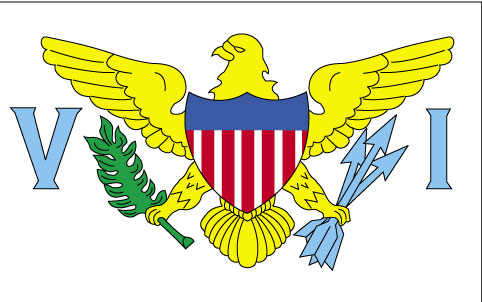
Virgin Islands
Declare Your Relationship to Virgin Islands
CountryReports Community
- Studying3
- From Virgin Islands2
- Virgin Islands heritage2
- Visited3
- Want to visit2
Customs and Culture
Customs and Culture
Cultural Attributes
The United States Virgin Islands carry a rich and layered cultural identity shaped by centuries of African, Danish, American, and Caribbean influences. This blending of traditions is visible in everything from architecture and language to music, food, and religious life. The majority of the population traces its ancestry to West and Central Africa, descendants of enslaved people brought to the islands during the Danish colonial period, which lasted from the late 1600s until the United States purchased the territory in 1917 for $25 million. This African heritage remains the dominant force in local cultural expression, from the rhythms of quelbe music — considered the official music of the Virgin Islands — to the vibrant colors of Carnival costumes. Quelbe, sometimes called "scratch music," is a folk genre performed with instruments such as the squash (a gourd), banjo, guitar, and flute. It tells stories of everyday island life and has been recognized as a significant part of the territory's living heritage. The Danish colonial legacy is still evident in the pastel-colored warehouses and townhouses lining the historic waterfront of Charlotte Amalie, the capital city on St. Thomas. Danish street names persist throughout the islands, and several preserved forts and plantation structures draw visitors and researchers interested in colonial-era history. English is the official language, though many residents also speak Virgin Islands Creole English, a dialect that incorporates elements of Dutch, Danish, African languages, and English. This local dialect, sometimes called "dialect" by residents, is an important marker of cultural identity and is used comfortably in informal settings alongside standard American English. Christianity is the predominant religion, with Baptist, Catholic, and Anglican congregations having deep roots in the community. Religious life plays a central role in social organization, with churches serving as hubs for community events and cultural gatherings. The annual St. Thomas Carnival, held in late April and early May, is among the most celebrated events in the Caribbean, featuring elaborate costumed troupes, steel pan competitions, calypso performances, and street parades that attract visitors from around the region and beyond.

Islands of Eternal Romance
Get More Customs and Culture
2 more cultural topics for members
Social Customs & Etiquette · Dating Customs
Every country, every topic, all activities & recipes
✓ Instant access on this device · ✓ No subscription
Holidays
Transfer Day
3/27Other
from Denmark to the US
Dates of Interest
- March 27th
Celebrates the transfer of power from Denmark to the United States
What languages do people speak in the Virgin Islands?
English is the official language, but many residents also speak Virgin Islands Creole English, a local dialect that blends Dutch, Danish, African languages, and English.
Good to know
- Standard American English is used comfortably alongside the local dialect
- The dialect, sometimes just called 'dialect,' is an important marker of cultural identity used in informal settings
What music and cultural events define the Virgin Islands?
Quelbe — the official folk music of the Virgin Islands, sometimes called 'scratch music' — and the vibrant St. Thomas Carnival are central to island cultural life.
Good to know
- Quelbe is performed with instruments like the squash (a gourd), banjo, guitar, and flute, telling stories of everyday island life
- The St. Thomas Carnival is held in late April and early May
- Carnival features costumed troupes, steel pan competitions, calypso performances, and street parades
What should I know about Virgin Islands history and heritage before visiting?
The islands carry a layered identity shaped by African, Danish, American, and Caribbean influences, with a dominant West and Central African heritage and a lasting Danish colonial legacy.
Good to know
- Visit Charlotte Amalie on St. Thomas to see pastel-colored Danish colonial warehouses and townhouses along the historic waterfront
- Danish street names persist throughout the islands
- Christianity is predominant, with Baptist, Catholic, and Anglican congregations, and churches serve as hubs for community events
- Preserved forts and plantation structures reflect the colonial-era history
Last updated: 2026-07-12 · Sources: CountryReports
Photos of Virgin Islands
Photos of Virgin Islands


Travel and Tourism
Travel and Tourism
- Travel Alert Status
- Level 1: Exercise Normal Precautions
- Currency
- US dollar (USD)
- Time Difference
- UTC-4 (1 hour ahead of Washington, DC, during Standard Time)
- Airports
- 2
Read the full travel guide — health, safety, vaccinations, disease risk, sanitation, and transit details.
View full travel guideRecipes
Recipes
History
History
Historical Eras
Indigenous & Pre-Contact
2000 BCE – 1493
The Virgin Islands were inhabited by successive Amerindian peoples, including the Ciboney, Arawak, and Carib. The Caribs, known as fierce seafarers, dominated the islands by the time Christopher Columbus arrived in 1493 and named the archipelago Las Once Mil Vírgenes. European contact initiated the rapid displacement and decimation of the indigenous population.
Early European Contest
1493 – 1672
Spain claimed the islands after Columbus's arrival but made no sustained settlement. Dutch, English, and Danish interests competed for control during the early 17th century, with Dutch settlers arriving around 1621 and English colonists establishing a presence on Tortola by 1666. Piracy and inter-European rivalry defined this turbulent period of shifting sovereignty.
Plantation & Slave Era
1672 – 1848
Britain consolidated control of the British Virgin Islands while Denmark firmly established its colony on St. Croix, St. Thomas, and St. John. Sugarcane plantations worked by enslaved Africans became the economic foundation of both territories, generating significant wealth through the 18th century. Denmark abolished slavery in its colonies in 1848 following a slave uprising led by General Buddhoe on St. Croix.
Decline & Danish Rule
1848 – 1917
The abolition of slavery triggered a prolonged economic decline in the Danish West Indies, as the plantation system collapsed without coerced labor and sugar prices fell globally. Denmark attempted to sell the islands to the United States as early as 1867, and negotiations continued intermittently for decades. The strategic importance of the islands during World War I finally prompted the United States to purchase them from Denmark for $25 million in 1917.
U.S. Territory Era
1917 – 1954
Following the transfer, the islands were administered by the U.S. Navy until 1931, when civilian governance was established under the Department of the Interior. Residents were granted U.S. citizenship in 1927 under the Jones-Shafroth Act. The Organic Act of 1954 established a more formal governmental structure for the U.S. Virgin Islands, creating a legislature and strengthening civil rights protections.
Modern Territory
1954 – present
The U.S. Virgin Islands developed a tourism-driven economy through the latter half of the 20th century, replacing the defunct agricultural sector. Residents gained the right to elect their own governor in 1970, though the islands remain an unincorporated territory without full voting representation in the U.S. Congress. Ongoing debates about the territory's political status — including potential statehood or greater autonomy — continue alongside recovery efforts from devastating hurricanes Irma and Maria in 2017.
Overview
During the 17th century, the archipelago was divided into two
Every country, every topic, all activities & recipes
✓ Instant access on this device · ✓ No subscription
Timeline of Key Events
1493
http://www.bvi.gov.vg/products.asp?iProd=20&iCat=4&hierarchy=0
Christopher Columbus, exploring for new lands and mineral wealth, discovered the islands and claimed them for Spain. It was evident that there was copper on Virgin Gorda. The Carib indians were so antagonistic and defended their territory so fiercely that, in 1550, Charles V of Spain decreed that they should be treated as enemies and they were exterminated.
1550
http://www.bvi.gov.vg/products.asp?iProd=20&iCat=4&hierarchy=0
Charles V of Spain decreed that they should be treated as enemies and they were exterminated. The Spanish, continuing their explorations, discovered the bounty of South America and abandoned the islands, which were left uninhabited for the last half of the 16th. century.
1585
http://www.bvi.gov.vg/products.asp?iProd=20&iCat=4&hierarchy=0
The sovereigns of Holland, England, and France became very interested in the wealth being acquired by Spain, and their representatives sailed through the waters of the islands on their way to harrass Spanish possessions and capture the Spanish treasure ships. One of those representatives was Sir Francis Drake, who passed through in 1585. The archipelago of the West Indies was becoming increasingly important as the New World was being opened up, and formal claims of possession were made on all the islands.
1621
http://www.bvi.gov.vg/products.asp?iProd=20&iCat=4&hierarchy=0
the Dutch made Tortola their base and despite spasmodic attacks from Spain, who still considered the islands to be theirs, persisted in their occupation and built a fort there. During their tenure, the islands became a haven for buccaneers.
1625
http://www.bvi.gov.vg/products.asp?iProd=20&iCat=4&hierarchy=0
Charles 1 of England issued letters of patent and a grant of ownership of the islands to the Earl of Carlisle in 1625; however, no attempt was made to occupy the islands because England was colonizing the larger islands of Barbados, St.Christopher, Nevis, Montserrat and Antigua, and, these were proving very profitable. Those islands eventually united to become the Colony of the Leeward Islands.
1665
http://www.bvi.gov.vg/products.asp?iProd=20&iCat=4&hierarchy=0
on the outbreak of war between England and Holland, Captain John Wentworth attacked the islands and the Dutch lost their foothold.
1666
http://www.bvi.gov.vg/products.asp?iProd=20&iCat=4&hierarchy=0
the islands were formally annexed by England to the government of the Leeward Islands, and came under some measure of civic control.
Read the full history profile — narrative overview, defining eras, and the complete timeline in one place.
View expanded historyInteresting Facts
Interesting Facts
The Virgin Islands has the world's highest marriage rate at 35.1 per 1,000 persons.
Columbus named the islands “Las Virgines” after the story of St Ursula and her virgin companions.
See every fact — trivia, oddities, and curious tidbits gathered from across the country.
View all interesting factsGeography and Environment
Geography and Environment
- Terrain
- mostly hilly to rugged and mountainous with little level land
- Climate
- subtropical, tempered by easterly trade winds, relatively low humidity, little seasonal temperature variation; rainy season May to November
- Natural Hazards
- several hurricanes in recent years; frequent and severe droughts and floods; occasional earthquakes
- Current Environmental Issues
- lack of natural freshwater resources
Read the full geography and environment profile — terrain, climate, natural resources, hazards, land use, and international agreements.
View full geographyPeople & Demographics
People & Demographics
Religion
Languages Spoken
English (official), Spanish, Creole
- Creole
- English
- Spanish
Population
- Population
- 100,091
- Population in Major Urban Areas
- CHARLOTTE AMALIE (capital) 60,000
- Nationality Noun
- Virgin Islander(s)
- Ethnic Groups
- black 78%, white 10%, other 12%
Education
- Literacy Definition
- NA
Life Expectancy
- Life Expectancy at Birth
- Life expectancy at birth in the United States Virgin Islands is notably high compared to many other Caribbean territories, reflecting the islands' relatively developed healthcare infrastructure and access to medical services. As a U.S. territory, residents benefit from American healthcare standards, federal health programs, and a network of medical facilities that support overall population health. The life expectancy at birth in the U.S. Virgin Islands is approximately 80 years, with women generally outliving men by several years — a pattern consistent with global trends. Female life expectancy hovers around 83 years, while male life expectancy is closer to 77 years. Several factors contribute to these favorable figures. The territory has access to modern medical care through facilities such as the Roy Lester Schneider Hospital on St. Thomas and the Gov. Juan F. Luis Hospital on St. Croix. Residents also have access to Medicare and Medicaid programs, which help cover healthcare costs for eligible populations, reducing barriers to treatment and preventive care. The islands' relatively high standard of living, compared to many neighboring Caribbean nations, also plays a role. Higher income levels and greater access to education are broadly associated with better health outcomes and longer lives. Additionally, the territory benefits from public health oversight aligned with U.S. federal standards, including disease surveillance, vaccination programs, and food safety regulations. That said, the Virgin Islands do face health challenges that can affect longevity. Chronic conditions such as obesity, diabetes, and cardiovascular disease are significant concerns among the local population. The territory's geographic isolation can also create difficulties in accessing specialized medical care, sometimes requiring patients to travel to the continental United States for advanced treatment. Natural disasters, particularly hurricanes, have also posed indirect threats to public health and healthcare delivery. Hurricane Irma and Hurricane Maria in 2017 caused substantial damage to the islands' medical infrastructure, disrupting care for many residents and creating longer-term health consequences. Recovery efforts have continued in the years since, with ongoing investments aimed at rebuilding and strengthening the healthcare system's resilience. Overall, the life expectancy figures for the U.S. Virgin Islands reflect a territory that, while facing real health challenges, benefits significantly from its association with the United States and the resources and standards that connection provides.
- Infant Mortality Rate
- The United States Virgin Islands maintains a relatively low infant mortality rate compared to many developing nations, reflecting its status as a U.S. territory with access to American healthcare standards and federal health programs. The infant mortality rate for the Virgin Islands is estimated at approximately 6 to 8 deaths per 1,000 live births, a figure broadly consistent with other small Caribbean territories that benefit from close ties to wealthier nations. This rate is influenced by several factors, including access to prenatal care, neonatal medical services, and public health infrastructure. As a U.S. territory, the Virgin Islands benefits from federal Medicaid and Medicare programs, which help extend healthcare coverage to lower-income residents and pregnant women. The primary hospital serving the territory, Schneider Regional Medical Center on St. Thomas, along with the Governor Juan F. Luis Hospital on St. Croix, provides maternal and child health services that contribute to better birth outcomes. Despite these advantages, the Virgin Islands faces ongoing healthcare challenges that can affect infant health outcomes. The territory has a limited number of specialists, and complex neonatal cases may require medical evacuation to mainland U.S. facilities. Natural disasters, most notably the devastating back-to-back hurricanes Irma and Maria in 2017, temporarily disrupted healthcare infrastructure and services, which may have had short-term effects on vulnerable populations including infants and newborns. Socioeconomic disparities within the territory also play a role. Poverty rates in the Virgin Islands are notably higher than the U.S. mainland average, and economic inequality can influence access to consistent prenatal care, nutrition, and safe living conditions — all of which are directly linked to infant survival rates. Compared to regional neighbors, the Virgin Islands performs favorably, with significantly lower infant mortality than many independent Caribbean nations. However, the territory continues to work toward aligning its health outcomes more closely with the best-performing U.S. states, where infant mortality rates can fall below 4 per 1,000 live births.
Read the full people and society profile — demographics, health, education, religion, languages, and notable people.
View full people and societyGovernment & Politics
Government & Politics
Country Identity
- Country Name
- VirginIslands
- Full Country Name
- United States Virgin Islands
- Former Name
- Danish West Indies
Government Structure
- Government Type
- NA
- Legal System
- based on US laws
- Executive Branch
- chief of state: President Joseph R. BIDEN of the US (since 20 January 2021); Vice President Kamala D. HARRIS (since 20 January 2021) head of government: Governor Albert Bryan Jr. (since 7 January 2019); Lieutenant Governor Tregenza ROACH (since 7 January 2019) cabinet: Cabinet appointed by the governor with cabinet members confirmed by the legislature elections: under the US Constitution, residents of unincorporated territories, such as the Virgin Islands, do not vote in elections for US president and vice president; governor and lieutenant governor elected on the same ticket by popular vote for four-year terms; election last held on 8 November 2022 (next to be held in November 2026) election results: Albert BRYAN Jr. reelected governor; percent of vote - Albert BRYAN Jr. (Democrat) 56%, Janelle SARAUW (Independent) 38%
- Legislative Branch
- Unicameral Senate (15 seats; members are elected by popular vote to serve two-year terms) Elections: last held on November 8, 2022 (next to be held in November 2024) Election results: seats by party — Democratic Party 9, Republican Party 5, independent 1 Note: the Virgin Islands elects one non-voting delegate to the US House of Representatives; election last held November 8, 2022; results — Stacey PLASKETT (Democrat) reelected to represent the territory in the US House of Representatives, a seat she has held since 2015
- Judicial Branch
- US District Court of the Virgin Islands (under Third Circuit jurisdiction); Territorial Court (judges appointed by the governor for 10-year terms)
- Suffrage
- 18 years of age; universal; note - island residents are US citizens but do not vote in US presidential elections
- Constitution
- Revised Organic Act of 22 July 1954
- Independence
- black 78%, white 10%, other 12%
- National Holiday
- Transfer Day (from Denmark to the US), 27 March (1917)
Capital City
- Capital Name
- Charlotte Amalie
- Capital - geographic coordinate
- 18 21 N, 64 56 W
- Capital Time Difference
- UTC-4 (1 hour ahead of Washington, DC, during Standard Time)
originally called Taphus in Danish - meaning "tap house" or "beer house" because of its many beer halls - the town received a more dignified name in 1691 when it was named Charlotte Amalie in honor of Danish King CHRISTIAN V’s wife, Charlotte AMALIE of Hesse-Kassel (1650–1714)
Read the full government profile — flag symbolism, national anthem, and other national symbols.
View full government detailsEconomy
Economy
Tourism, trade, and related services are the primary economic drivers of the U.S. Virgin Islands, accounting for the majority of GDP and employment. The territory typically hosts more than 2 million visitors annually, most arriving via cruise ships.
Snapshot
- Currency Name and Code
- US Dollar (USD)
- GDP Real Growth Rate
- -0.1%
Every country, every topic, all activities & recipes
✓ Instant access on this device · ✓ No subscription
News & Weather
News & Weather
Current Weather
Latest News
Want Caribbean sun without a passport? Try these 4 islands for a winter getaway - Yahoo Creators
Yahoo Creators · 14h ago
Territorial leaders reaffirm commitment to University of the Virgin Islands in accreditation meeting - Pasquines
Pasquines · 17h ago
Book review: Bloodstains, bullets & swamp secrets drive the gripping new mystery ‘Promised Land’ - Sun Sentinel
Sun Sentinel · 6h ago
FIVB Coaches Courses build coaching capacity in Ghana and British Virgin Islands - FIVB
FIVB · 11h ago
The Dashing Eagles’ Nations League Run Has U.S. Virgin Islands Dreaming - St. Thomas Source
St. Thomas Source · 4h ago
The first U.S. Virgin Islands' Sailing Week is set for April 2027 - Sail-World.com
Sail-World.com · 2d ago
US Virgin Islands vs Saint Martin: Concacaf Nations League stats & head-to-head - BBC
BBC · 4d ago
Troubled Caribbean Refinery Eyes Restart Amid Global Fuel Crunch - Bloomberg.com
Bloomberg.com · 1d ago
News via Google News
Videos
Videos
1 curated YouTube videos.
Source: YouTube
Frequently Asked Questions
Frequently Asked Questions
What is the population of Virgin Islands?
What is the capital of the Virgin Islands?
Where are the Virgin Islands located?
What are the ocean and sea borders of the Virgin Islands?
What religion is practiced in the Virgin Islands?
What currency is used in the Virgin Islands?
What languages are spoken in the Virgin Islands?
What is the Virgin Islands known for?
Last reviewed 2026