
 English
 Español
 中文
中文 हिन्दी
 Français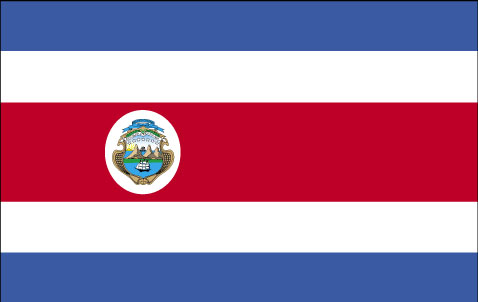
Costa Rica
Costa Rica
Declare Your Relationship to Costa Rica
CountryReports Community
- Studying32
- From Costa Rica0
- Costa Rica heritage2
- Visited3
- Want to visit6
Customs and Culture
Customs and Culture
Cultural Attributes
People generally work in order to secure financial stability. Getting a car and/or a house is the main goal of the average Costa Rican worker. Wealth would be measured in the kind and number of cars one has, the size of the house, the area where one lives in, and of course the position one has at a workplace. The poorest members of society wish for the things by which wealth is measured; that is cars, money and real estate.

Nature's Jewel, Democracy's Home
Get More Customs and Culture
5 more cultural topics for members
Social Customs & Etiquette · Diet · Family · Dating Customs · Recreation
Every country, every topic, all activities & recipes
✓ Instant access on this device · ✓ No subscription
Holidays
Independence Day
9/15Independence Day
Christmas
12/25Christmas
Beginning on Christmas Eve, churches observe the Prayer of the Rosary of the Holy Child, a celebration that extends until Candlemas (February 2). Families also observe this prayer before their private portals (Nativity Scenes).
Food for special holiday meals includes tamales (corn dough with meat filling and spicy sauce wrapped in plantain leaves and steamed), chica (liquor with ginger spice), escabeche (vinegar relish of carrots, peppers, onions, cauliflower, and green beans) eggnog, and queque Navideno (Christmas Cake).
Just before New Year’s eve the Festival of Lights is held in San Jose. The festival includes parades with tropical floats, fireworks, clowns, cartoon characters, and goblins, culminating in a grand street carnival. El tope is a horse parade on Saint Stephen’s Day. This parade features horses imported from Peru and Spain. In the parade children ride with their parents.
Aguinaldo is the Christmas bonus. It is not optional and all employers must pay it. Aguinaldo is based one one months salary and that salary must comply with the minimum wage laws based on occupation. The aguinaldo is usually paid around December 6th.
Dates of Interest
- October
A lively festival in the Caribbean city of Limón, celebrating Afro-Caribbean culture with parades, music, dancing, and colorful costumes.
How do people greet each other in CostaRica?
Greetings vary by time of day and formality; "Buenas" works throughout the entire day, while casual phrases like "¿Pura Vida?" are used among young people and close friends.
Do
- Say "Buenos días" in the morning
- Say "Buenas tardes" in the afternoon
- Say "Buenas noches" in the evening
- Use "Buenas" anytime as an all-day greeting
Good to know
- Casual phrases like "¿Qué mae, tuanis?" and "¿Todo bien?" are for young people or close social circles
What are the eating customs in CostaRica?
Meals follow set times, with coffees and lunch often eaten outside the home and dinner mostly eaten at home.
Good to know
- Lunch is eaten between 11:30 AM and 1:30 PM
- "Afternoon coffee" is around 3:30 PM–5:30 PM
- Dinner is around 7:30 PM, mostly at home
- Vigorón is a dish imported from neighboring Nicaragua
What is the etiquette for socializing and personal space in CostaRica?
People keep about 40 cm of distance in conversation, maintain eye contact, and avoid physical contact until a degree of intimacy is reached.
Do
- Maintain eye contact during conversation
- Keep about 40 cm of personal space
Don’t
- Don't pat someone's shoulder or touch their hand before you're close
- Don't turn away a visitor who arrives without notice
Good to know
- People socialize in bars, restaurants, and at football (soccer) stadiums
- Public displays of affection among couples are common
- Women tend to touch each other on the arms or shoulders; men avoid physical contact with each other
How should I dress in CostaRica?
Western-style clothing is worn, and clean, unwrinkled clothing is very important to the urban working class.
Do
- Wear clean, unwrinkled clothing
- Men: khakis and shirts, or jeans and shirts for young men
- Women: skirts/pants and blouses, or stretch jeans and tank tops for young women
Good to know
- Some areas require girls to wear school uniforms
What gestures are common in CostaRica?
Men greet each other with a handshake, adding a shoulder pat or hug in friendlier settings, while women are greeted with a kiss on the cheek.
Do
- Shake hands when men greet
- Greet women with a kiss on the cheek
What is family life like in CostaRica?
The extended family is the basis of society, and several generations may live in the same house.
Good to know
- Visiting relatives is important and done often
- A girl's fifteenth birthday (quince) is celebrated with a large party
- Godparents traditionally take an infant to church for baptism
- Funerals are required by law to be held within 24 hours of death
What do people do for recreation in CostaRica?
Costa Rica offers abundant outdoor adventures and cultural activities set against its lush landscapes and biodiversity.
Good to know
- Surf at spots like Tamarindo, Santa Teresa, Jaco, and Puerto Viejo
- Hike national parks like Arenal Volcano, Monteverde, and Corcovado
- Try zip-lining, whitewater rafting, and wildlife watching
- Relax at volcanic hot springs, take coffee tours, or explore local markets like Mercado Central in San José
Last updated: 2026-07-12 · Sources: CountryReports
Photos of Costa Rica
Photos of Costa Rica
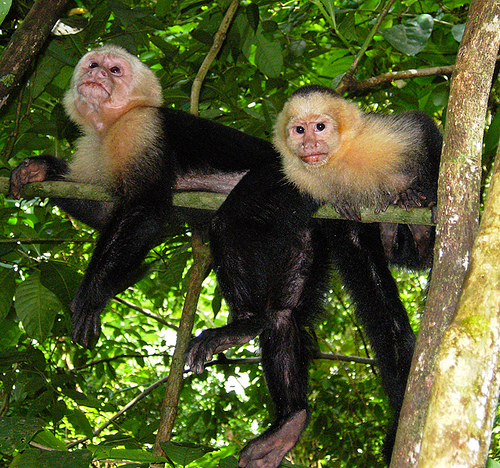
Capuchin (white-faced) monkeys, Costa Rica
Trees near Limon, Costa Rica
Coastal Beach, near Limon
Springtime in Costa Rica
Rainforest ner Monteverde
Rainforest at dusk, Costa Rica
Tree fern in the Monteverde Cloud Forest Reserve, Costa Rica
Malinche tree, Costa Rica
Single car bridge, Costa Rica
Iguana lizard, Costa Rica
Arenal volcano, Costa Rica
Sunset in Puerto Jiminez, Costa Rica


Travel and Tourism
Travel and Tourism
- Travel Alert Status
- Level 2: Exercise Increased Caution
- Currency
- 543.4
- Time Difference
- UTC-6 (1 hour behind Washington, DC, during Standard Time)
- Climate
- Altitude determines the climate throughout Costa Rica. Areas below 3,000 feet have average annual temperatures of around 80°, with little variation from month to month. The temperature drops from around 74° at 3,000 feet to 59 degrees at 5,000 feet. Above 5,000 feet, the average annual temperatures can range as low as 40 degrees to the mid-50s, with occasional frost during the coolest months. The temperature in San Jose is generally pleasant, with two seasons distinguished mainly by the rainfall. The dry season runs from December through April and the wet season extends from May through November. Even during the wet season the mornings generally are clear, with the afternoons and evenings dominated by heavy rains nearly every day. Relatively high winds often are present during the dry season. The average temperature in San Jose is 70 to 75° Fahrenheit. In December, the coolest month, the average temperature drops to around 65°. Temperatures drop into the 50s at night throughout the year. Humidity in San Jose averages 80 percent annually.
- Airports
- 149
Read the full travel guide — health, safety, vaccinations, disease risk, sanitation, and transit details.
View full travel guideRecipes
Recipes
Mesclun Salad with Goat Cheese and Cider Vinaigrette
Side Dish
Main Dish
Gallo Pinto (Mixture of Rice and Black Beans)
Main Dish
Enyucados
Main Dish
Stuffed Chayotes
Main Dish
Creole Chicken
Main Dish
Tamales
Main Dish
Coconut Shrimp
Main Dish
PremiumOnion, Potato and Palmito Tortilla
Side Dish
PremiumVigorón
Side Dish
PremiumCosta Rican Terrine with Coconut-Date Vinaigrette
History
History
Historical Eras
Pre-Columbian Era
1000 BCE – 1502
Before European contact, Costa Rica was home to diverse indigenous peoples, including the Chorotega, Bribri, and Boruca, who lived in small chiefdoms sustained by agriculture, trade, and craft. The region served as a cultural corridor between Mesoamerican and Andean civilizations. Relatively small population sizes and the absence of large centralized empires shaped the social landscape that Spanish colonizers would later encounter.
Spanish Colonial Period
1502 – 1821
Christopher Columbus made the first European landfall on Costa Rica's Caribbean coast in 1502, and permanent Spanish settlement began in 1522. Administered as part of the Captaincy General of Guatemala, the colony yielded little gold, pushing settlers toward smallholder agriculture. This scarcity fostered an unusually egalitarian society, ethnically homogeneous and geographically isolated from the major colonial centers of Mexico and Peru.
Independence & Federation
1821 – 1838
Costa Rica joined the Central American provinces in declaring independence from Spain in 1821, subsequently becoming part of the United Provinces of Central America in 1823. Border disputes and political instability plagued the Federation from its inception, including the annexation of the Guanacaste Province from Nicaragua. By 1838, as the Federation dissolved in practice, Costa Rica formally proclaimed full sovereignty.
Export & Nation-Building
1838 – 1899
As an independent republic, Costa Rica experienced transformative economic growth driven first by coffee exports from the 1840s and later by banana cultivation introduced by the United Fruit Company in the 1870s. These export booms widened class distinctions but also funded public infrastructure and education. The era was punctuated by the 1856 campaign against American filibuster William Walker, which became a defining moment of national identity.
Democratic Consolidation
1899 – 1949
The elections of 1899 marked the beginning of genuine democratic governance, establishing a tradition interrupted only twice: by Federico Tinoco's dictatorship from 1917 to 1919 and by the disputed 1948 election that triggered a six-week civil war led by José Figueres Ferrer. The conflict, the bloodiest of the twentieth century in Costa Rica with over 2,000 deaths, ended with a landmark constitution in 1949 that abolished the military and guaranteed universal suffrage.
Modern Democratic Era
1949 – present
Under the 1949 constitution, Costa Rica established itself as a stable, demilitarized democracy, with José Figueres winning the first election in 1953. The country diversified its economy beyond agriculture to include technology and tourism, achieving one of the highest standards of living in Latin America. Costa Rica also emerged as a regional peacemaker, with President Óscar Arias Sánchez earning the 1987 Nobel Peace Prize for brokering the Central American peace accords.
Overview
In 1502, on his fourth and last voyage to the New World, Christopher Columbus made the first European landfall in the area. Settlement of Costa Rica began in 1522. For nearly three centuries, Spain administered the region as part of the Captaincy General of Guatemala under a military governor. The Spanish optimistically called the country "Rich Coast." Finding little gold or other valuable minerals in Costa Rica, however, the Spanish turned to agriculture.
Every country, every topic, all activities & recipes
✓ Instant access on this device · ✓ No subscription
Timeline of Key Events
1502
Christopher Columbus landed on the Caribbean shore of Costa Rica.
Christopher Columbus landed on the Caribbean shore of Costa Rica on his fourth and last voyage to the New World.
1540
Costa Rica becomes part of the vice-royalty of New Spain.
Costa Rica becomes part of the vice-royalty of New Spain. Throughout the colonial period, Costa Rica remained one of the provinces ruled by the Spanish viceroyalty in Guatemala
1808
Coffee plants are first brought to Costa Rica from Cuba.
Coffee plants are first brought to Costa Rica from Cuba, and coffee quickly becomes the principal crop.
1821
Central America declares itself independent from Spain.
Central America declares itself independent from Spain.
1823
Costa Rica joins the United Provinces of Central America.
Costa Rica joins the United Provinces of Central America with El Salvador, Guatemala, Honduras and Nicaragua.
1838
Costa Rica becomes fully independent.
Costa Rica becomes fully independent.
1849
Costa Rica ousts American William Walker, who wanted to extend slavery .
Costa Rica ousts American William Walker, who wanted to extend slavery to Central American countries in an expression of Manifest destiny. He invaded and named himself president of Nicaragua. Costa Rica, with the help of Guatemala, El Salvador and Honduras, defeated Walker and his supporters with 9,000 soldiers.
Read the full history profile — narrative overview, defining eras, and the complete timeline in one place.
View expanded historyInteresting Facts
Interesting Facts
When a child loses a tooth the mother takes the tooth and has it plated with gold and made into an earring for the child to wear.
During the fourth voyage to the New World in 1502 Christopher Columbus landed at "Cariari," known today as Puerto Limon. Christopher Columbus actually named Costa Rica (rich coast) under the assumption that the land was filled with precious metals
Costa Rica has one of world’s largest varieties of flora, fauna.
See every fact — trivia, oddities, and curious tidbits gathered from across the country.
View all interesting factsGeography and Environment
Geography and Environment
- Terrain
- coastal plains separated by rugged mountains including over 100 volcanic cones, of which several are major volcanoes
- Climate
- Altitude determines the climate throughout Costa Rica. Areas below 3,000 feet have average annual temperatures of around 80 degrees, with little variation from month to month. The temperature drops from around 74 degrees at 3,000 feet to 59 degrees at 5,000 feet. Above 5,000 feet, the average annual temperatures can range as low as 40 degrees to the mid-50s, with occasional frost during the coolest months. The temperature in San Jose is generally pleasant, with two seasons distinguished mainly by the rainfall. The dry season runs from December through April and the wet season extends from May through November. Even during the wet season the mornings generally are clear, with the afternoons and evenings dominated by heavy rains nearly every day. Relatively high winds often are present during the dry season. The average temperature in San Jose is 70 to 75 degrees Fahrenheit. In December, the coolest month, the average temperature drops to around 65 degrees. Temperatures drop into the 50s at night throughout the year. Humidity in San Jose averages 80 percent annually.
- Natural Hazards
- occasional earthquakes, hurricanes along Atlantic coast; frequent flooding of lowlands at onset of rainy season and landslides; active volcanoes
- Current Environmental Issues
- deforestation and land use change, largely a result of the clearing of land for cattle ranching and agriculture; soil erosion; coastal marine pollution; fisheries protection; solid waste management; air pollution
Read the full geography and environment profile — terrain, climate, natural resources, hazards, land use, and international agreements.
View full geographyPeople & Demographics
People & Demographics
Religion
Languages Spoken
Spanish (official), English
- Spanish
Population
- Population
- 5,213,374
- Population: Male/Female
- male: 2,635,481 female: 2,630,094
- Population Distribution
- roughly half of the nation's population resides in urban areas; the capital of San Jose is the largest city and home to approximately one-fifth of the population
- Urban Population
- urban population: 82.6% of total population rate of urbanization: 1.5% annual rate of change
- Population in Major Urban Areas
- 1.462 million SAN JOSE (capital)
- Nationality Noun
- noun: Costa Rican(s) adjective: Costa Rican
- Ethnic Groups
- White or Mestizo 83.6%, Mulatto 6.7%, Indigenous 2.4%, Black or African descent 1.1%, other 1.1%, none 2.9%, unspecified 2.2%
- Language Note
- Spanish (official), English
Demographic Profile
Costa Rica's political stability, high standard of living, and well-developed social benefits system set it apart from its Central American neighbors. Through the government's sustained social spending - almost 20% of GDP annually - Costa Rica has made tremendous progress toward achieving its goal of providing universal access to education, healthcare, clean water, sanitation, and electricity. Since the 1970s, expansion of these services has led to a rapid decline in infant mortality, an increase in life expectancy at birth, and a sharp decrease in the birth rate. The average number of children born per women has fallen from about 7 in the 1960s to 3.5 in the early 1980s to below replacement level today. Costa Rica's poverty rate is lower than in most Latin American countries, but it has stalled at around 20% for almost two decades.
Costa Rica is a popular regional immigration destination because of its job opportunities and social programs. Almost 9% of the population is foreign-born, with Nicaraguans comprising nearly three-quarters of the foreign population. Many Nicaraguans who perform unskilled seasonal labor enter Costa Rica illegally or overstay their visas, which continues to be a source of tension. Less than 3% of Costa Rica's population lives abroad. The overwhelming majority of expatriates have settled in the United States after completing a university degree or in order to work in a highly skilled field.
Education
- Literacy Definition
- age 15 and over can read and write
Health Information
- Major Infectious Diseases — degree of risk
- degree of risk: intermediate food or waterborne diseases: bacterial diarrhea vectorborne diseases: dengue fever
- Alcohol consumption per capita
- total: 3.07 liters of pure alcohol beer: 2.17 liters of pure alcohol wine: 0.15 liters of pure alcohol spirits: 0.36 liters of pure alcohol other alcohols: 0.39 liters of pure alcohol
- Tobacco Use
- total: 8.8% male: 12.9% female: 4.6%
- Child Marriage
- women married by age 15: 2% women married by age 18: 17.1%
Life Expectancy
- Life Expectancy at Birth
- total population: 80.9 years male: 78.3 years female: 83.6 years
- Median Age
- total: 35.5 years male: 34.9 years female: 36.1 years
- Age Structure
- 0-14 years: 18.8% (male 506,041/female 482,481) 15-64 years: 70.2% (male 1,862,872/female 1,832,024) 65 years and over: 11.1% (male 266,568/female 315,589)
- Infant Mortality Rate
- total: 5.6 deaths/1,000 live births male: 6.1 deaths/1,000 live births female: 5.1 deaths/1,000 live births
Read the full people and society profile — demographics, health, education, religion, languages, and notable people.
View full people and societyGovernment & Politics
Government & Politics
Country Identity
- Country Name
- CostaRica
- Full Country Name
- Republic of Costa Rica
- Local - Long
- Republica de Costa Rica
- Local - Short
- Costa Rica
Government Structure
- Government Type
- democratic republic
- Legal System
- based on Spanish civil law system; judicial review of legislative acts in the Supreme Court; has accepted compulsory ICJ jurisdiction
- Executive Branch
- chief of state: President Rodrigo CHAVES Robles (since 8 May 2022); Vice President Mary MuniveESTRADA (since 8 May 2022); note - the president is both the chief of state and head of government head of government: President Rodrigo CHAVES Robles (since 8 May 2022); Vice President Mary Munive ESTRADA (since 8 May 2022); note - the president is both the chief of state and head of government cabinet: Cabinet selected by the president elections: president and vice president elected on the same ticket by popular vote for four-year terms; election last held on 6 February 2022, with a runoff on 3 April 2022 (next to be held in February 2026) election results: Rodrigo CHAVES Robles elected president in second round; percent of vote in first round - Jose Maria FIGUERES Olsen (PLN) 27.3%, Rodrigo CHAVES Robles (PPSD) 16.8%, Fabricio ALVARADO Munoz (PNR) 14.9%, other 41%; percent of vote in runoff - Rodrigo CHAVES Robles (PPSD) 52.8%, Jose Maria FIGUERES Olsen (PLN) 47.2%; CHAVES assumed the presidency on 8 May 2022
- Legislative Branch
- Unicameral Legislative Assembly or Asamblea Legislativa (57 seats; members are elected by direct, popular vote to serve four-year terms) Elections: last held on 6 February 2022 (next to be held in February 2026) Election results: percent of vote by party - NA; seats by party - PPSD 10, PLN 9, PLP 9, PUSC 9, PRN 7, PNG 4, FA 3, other 6
- Judicial Branch
- Supreme Court or Corte Suprema (22 justices are elected for eight-year terms by the Legislative Assembly)
- Suffrage
- 18 years of age; universal and compulsory
- Constitution
- 7-Nov-49
- Independence
- 15 September 1821 (from Spain)
- National Holiday
- Independence Day, 15 September (1821)
Capital City
- Capital Name
- San Jose
- Capital - geographic coordinate
- 9 56 N, 84 05 W
- Capital Time Difference
- UTC-6 (1 hour behind Washington, DC, during Standard Time)
named in honor of Saint Joseph
Military
Branches: no regular military forces; Ministry of Public Security, Government, and Police
Embassy / Diplomatic Mission
Embassy San Jose
Calle 120 Avenida 0,
Pavas, San José, Costa Rica
Telephone: [506] 2519-2000
Emergency after-hours telephone: [506] 2519-2000
Facsimile: [506] 2200-2455
Read the full government profile — flag symbolism, national anthem, and other national symbols.
View full government detailsEconomy
Economy
Costa Rica has one of the most stable economies in Latin America, driven by tourism, agriculture, medical devices, and high-value services exports.
Snapshot
- Currency Name and Code
- Costa Rican colones (CRC)
- GDP — official exchange rate
- $19,380,000,000 (USD)
- GDP Real Growth Rate
- 4%
- Gini Index
- 46.5
Every country, every topic, all activities & recipes
✓ Instant access on this device · ✓ No subscription
News & Weather
News & Weather
Current Weather
Latest News
Costa Rica Proposes 15% Tax on Certain Foreign Income - The Tico Times
The Tico Times · 2h ago
Saved by the Bell Star Mario Lopez Films Campaign in Costa Rica - The Tico Times
The Tico Times · 19h ago
Costa Rica Pauses School Rebuild Over Possible Archaeological Site - The Tico Times
The Tico Times · 15h ago
Opinion | They Had No Connection to Costa Rica. America Sent Them There Anyway. - The New York Times
The New York Times · 1d ago
Indignant Cuba says it learned of diplomatic break with Costa Rica from the Miami Herald - Miami Herald
Miami Herald · 2d ago
Costa Rica Birth Rate: When Wellness Begins at Home - The Costa Rica News
The Costa Rica News · 22h ago
Yaneek Page | Ja’s crime rate nears Costa Rica’s, but growth promise unfulfilled - Jamaica Gleaner
Jamaica Gleaner · 3d ago
Costa Rica Pilot Faces Discipline After Aviation Safety Criticism - The Tico Times
The Tico Times · 1d ago
News via Google News
Climate Overview
Altitude determines the climate throughout Costa Rica. Areas below 3,000 feet have average annual temperatures of around 80°, with little variation from month to month. The temperature drops from around 74° at 3,000 feet to 59 degrees at 5,000 feet. Above 5,000 feet, the average annual temperatures can range as low as 40 degrees to the mid-50s, with occasional frost during the coolest months.
The temperature in San Jose is generally pleasant, with two seasons distinguished mainly by the rainfall. The dry season runs from December through April and the wet season extends from May through November. Even during the wet season the mornings generally are clear, with the afternoons and evenings dominated by heavy rains nearly every day. Relatively high winds often are present during the dry season.
The average temperature in San Jose is 70 to 75° Fahrenheit. In December, the coolest month, the average temperature drops to around 65°. Temperatures drop into the 50s at night throughout the year. Humidity in San Jose averages 80 percent annually.
Videos
Videos
1 curated YouTube videos.
Source: YouTube
Frequently Asked Questions
Frequently Asked Questions
What is the population of Costa Rica?
What is the capital of Costa Rica?
Where is Costa Rica located?
What countries border Costa Rica?
What is the predominant religion in Costa Rica?
What currency is used in Costa Rica?
What language is spoken in Costa Rica?
What is Costa Rica known for?
What type of government does Costa Rica have?
Last reviewed 2026