
 English
 Español
 中文
中文 हिन्दी
 Français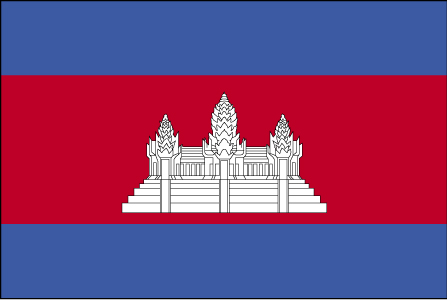
Cambodia
Kampuchea
Declare Your Relationship to Cambodia
CountryReports Community
- Studying19
- From Cambodia4
- Cambodia heritage4
- Visited3
- Want to visit4
Customs and Culture
Customs and Culture
Cultural Attributes
Buddhism generally shapes the lives and perspectives of Cambodia's people. Cambodians are usually optimistic. The group or community (often defined as the extended family) is more important than the individual, as are ancestors and rulers. The individual generally has limited privacy and rights, and is expected to act for the good of the community.

Temple of Resilience
Get More Customs and Culture
5 more cultural topics for members
Social Customs & Etiquette · Diet · Family · Dating Customs · Recreation
Every country, every topic, all activities & recipes
✓ Instant access on this device · ✓ No subscription
Holidays
Independence Day
11/9Independence Day
Christmas
12/25Christmas
Cambodia is a country that is located in the Southeast region of the Asian continent. Hence, it has been part of the French Indochina colonized countries during its early years. This has resulted in some of its traditions and beliefs about Christmas. Most people in the country are non-Christians which make the celebration of Christmas in Cambodia more solemn than in other Christian countries.
Merry Christmas in traditional Cambodian language is ‘Soursdey Noel,’ pronounced ‘soors-dee Noel.’ Take note of the influence of the French culture even in the greeting as “Noel” is a native French word.
Santa Claus is well known in Cambodia. Even among Buddhist children, he is still considered a prime figure of the occasion and is the giver of gifts to children who are good. This has helped build up the tradition of Santa Claus among non-Christians as a saint who goes from house to house during Christmas Eve to check on good little children and give them gifts.
The tradition taught to the local Christians was to place a shoe outside their bedroom door during the night. The next day, good little children find their shoes brimming over with little toys and goodies stuffed into their shoes by Santa Claus.
Christmas starts in December which is also when the weather starts to get a little chilly. The locals stores and shops display Christmas ornaments and decors made or ceramics, embroideries and native materials that light up the streets and windows.
The traditions for the local Christian groups during this period are to go to masses that are held celebrating the birth of Christ. In distant villages they celebrate the occasion in the privacy of their homes with prayers and small ceremonies. Christmas feast dishes include Pleah beef salad with prahok, kuyteav, fish dishes, noodles and rice. The New Year celebrations are usually the indication that the Christmas season is about to end.
Christmas trees are found in almost every Christian home in the country. Even some non-Christian homes have these trees in their homes to make the season more festive. Traditional Christmas trees are decorated with crystal ornaments, candy canes, angel figurines and Christmas bells and balls.
Dates of Interest
- December 25th
Cambodia is a country that is located in the Southeast region of the Asian continent. Hence, it was part of the French Indochina colonized countries during its early years. This has resulted in some of its traditions and beliefs about Christmas. Most people in the country are non-Christians which makes the celebration of Christmas in Cambodia more solemn than in other Christian countries. Merry Christmas in the traditional Cambodian language is 'Soursdey Noel,' pronounced 'soors-dee Noel.' Take note of the influence of the French culture even in the greeting as "Noel" is a native French word. Santa Claus is well known in Cambodia. Even among Buddhist children, he is still considered a prime figure of the occasion and is the giver of gifts to children who are good. This has helped build up the tradition of Santa Claus among non-Christians as a saint who goes from house to house on Christmas Eve to check on children and deliver gifts.
How do people greet each other in Cambodia?
A common greeting is placing both hands together in a prayer-like position, often with the phrase "sok sebai" ("How are you?"). Shaking hands is not common.
Do
- Place both hands together in a prayer-like position to greet
- Bow your head slightly if you are holding or carrying something
Don’t
- Don't expect handshakes, as they are uncommon
Good to know
- "Sok sebai" means "How are you?"
What are dining customs like in Cambodia?
The two basic dishes are soup and rice, with rice as the staple; Cambodians eat with chopsticks, a spoon, or their fingers depending on the food and family custom.
Good to know
- A bowl of soup may combine fish, eggs, vegetables, meat and spicy broth
- Cambodian food is generally blander with more fish and gravies than neighboring countries
- Cuisine shows Indian, Chinese, and European influences
- Seafood and fish are common
What etiquette should I know when visiting a home or temple in Cambodia?
Remove your shoes when entering a home, place of worship, or religious school, and expect to be honored as a guest with the best seat and food.
Do
- Remove your shoes when entering a home, wat, or religious school
- Remove hats and shoes when entering a wat (pagoda)
- Accept the best place to sit and best portion of food graciously
Don’t
- Don't embarrass someone in public
- Don't raise your voice, as it signals a bad personality
How should I dress in Cambodia?
Traditional clothing for men and women is common, and a "krama" (a large scarf) is often used as a hat or small blanket.
Good to know
- Younger women may wear colored hats
- A krama scarf can serve as a hat or small blanket
What gestures should I be aware of in Cambodia?
Gesture rules come from Buddhism; waving the hand is a sign of friendship, and it is important to distinguish a "yes" meaning "I'm listening" from a "yes" meaning "I understand."
Do
- Wave your hand as a friendly gesture
Don’t
- Don't raise your voice
- Don't embarrass anyone in public
Good to know
- Clarify whether a "yes" means someone is listening or actually understands
What is family life like in Cambodia?
Multiple generations often live together, the elderly are cared for by their children, and the extended family community is valued above the individual.
Good to know
- Cambodia has many orphans, widows, and single-parent families due to the Khmer Rouge era
- Single mothers often try to remarry or form small clans of women and children for mutual aid
- Khmer tradition allows a man more than one wife, but it is rarely practiced due to economic burden
- Khmer do not intermarry with other ethnic groups
What do people do for recreation in Cambodia?
Soccer and volleyball are the most popular sports, with basketball, bicycle racing, and hopscotch for girls also played.
Good to know
- A popular village game involves throwing your sandals at a line drawn in the dirt, closest sandal wins
- Children's recreation is limited by family chores
Last updated: 2026-07-12 · Sources: CountryReports
Photos of Cambodia
Photos of Cambodia


Travel and Tourism
Travel and Tourism
- Travel Alert Status
- Level 1: Exercise Normal Precautions
- Currency
- 4066
- Time Difference
- UTC+7 (12 hours ahead of Washington, DC, during Standard Time)
- Airports
- 20
- Recommended Vaccinations
- How important is it to do your research about vaccinations? It might just save your life! Make yourself aware of the different types of vaccinations and which ones you may need to travel to your destination. Schedule an appointment with your doctor at least four to six weeks before you travel to ensure you receive all important shots. Be sure that you and your family are up to date on your routine vaccinations. Which vaccinations you need will depend on a number of factors including your destination, whether you will be spending time in rural areas, the season of the year you are traveling, your age, health status, and previous immunizations.
Read the full travel guide — health, safety, vaccinations, disease risk, sanitation, and transit details.
View full travel guideRecipes
Recipes
Kuay Namuan (Bananas Cooked in Coconut Milk)
Dessert
Main Dish
Aioan Chua Noeung Phset Kretni (Stir Fried Chicken with Mushrooms)
Main Dish
Sousi Pa (Fish with Coconut Cream)
Main Dish
Sweet Soup
Main Dish
Aioan Chua Noeung Phset Kretni (Stir Fried Chicken with Mushrooms)
Dessert
Kuay Namuan (Bananas Cooked in Coconut Milk)
Dessert
Sticky Rice and Mango
Dessert
PremiumKuay Namuan (Bananas Cooked in Coconut Milk)
History
History
Historical Eras
Funan & Chenla
100 – 802
The earliest Indianized kingdoms of mainland Southeast Asia emerged in the Mekong Delta region. Funan, a trading and agrarian state heavily influenced by Indian religion and statecraft, flourished from roughly the first to sixth century before being absorbed by its successor polity, Chenla, which expanded Khmer dominion across much of modern Cambodia, Laos, and Vietnam.
Angkor Empire
802 – 1431
Jayavarman II unified the Khmer realm in 802 and inaugurated the Angkor period, the zenith of Khmer civilization. At its height under Jayavarman VII (1181–ca. 1218), the empire controlled vast territories from its monumental capital at Angkor, producing masterworks of hydraulic engineering and temple architecture. Sustained Thai pressure, dynastic strife, and the collapse of the irrigation network led to the abandonment of Angkor after the Siamese sacked it in 1431.
Post-Angkor Decline
1431 – 1863
With Angkor lost, the Khmer court relocated southward toward the Mekong, and Cambodia was reduced to a buffer state contested by Siam and a expanding Vietnam. The Thai seized the capital Lovek in 1594, and by the late seventeenth century Vietnam had annexed the Mekong Delta, severing Cambodia from the sea. Centuries of territorial attrition left the kingdom politically fragmented and economically weakened.
French Protectorate
1863 – 1953
King Norodom signed a protectorate agreement with France in 1863, initiating nine decades of colonial rule that gradually stripped the monarchy of real authority. During World War II, Japanese occupation paradoxically fostered Khmer nationalist sentiment even while Vichy French administrators remained in place. King Norodom Sihanouk's sustained diplomatic campaign — his Royal Crusade for Independence — compelled France to transfer sovereignty, and full independence was declared in November 1953.
Sihanouk & War Years
1953 – 1975
Independent Cambodia navigated Cold War pressures under Sihanouk, who abdicated the throne in 1955 to dominate civilian politics and pursued a precarious neutrality. A US-backed coup in 1970 installed Lon Nol, drawing Cambodia fully into the Vietnam War and enabling the Khmer Rouge insurgency to grow. Years of US bombing and civil conflict devastated the countryside and set the stage for the Khmer Rouge's seizure of Phnom Penh in April 1975.
Khmer Rouge & Recovery
1975 – 1993
The Khmer Rouge regime evacuated cities, abolished currency, and executed perceived enemies in an agrarian revolution that killed an estimated 1.5 to 2 million people between 1975 and 1979. A Vietnamese invasion in late 1978 toppled the regime but sparked over a decade of civil war and international isolation. The 1991 Paris Peace Accords and UN-supervised elections in 1993 restored a constitutional monarchy and began Cambodia's halting transition toward stability.
Modern Cambodia
1993 – present
The restoration of the monarchy under King Sihanouk and subsequent coalition governments presided over gradual economic growth, though factional violence in 1997 briefly destabilized the country. The final Khmer Rouge elements surrendered in 1999, and UN-backed tribunals later prosecuted surviving leaders for crimes against humanity. Cambodia has since pursued integration into ASEAN and sustained development, even as concerns about democratic backsliding and single-party dominance persist.
Overview
A gate of the Angkor Thom temple complex,
Every country, every topic, all activities & recipes
✓ Instant access on this device · ✓ No subscription
Timeline of Key Events
1700
Viets conquer Mekong Delta.
Viets conquer Mekong Delta; weaker Khmer kingdom assumes roughly modern borders of Cambodia.
1834 – 1841
Viets attack and share increasing control over Khmers with Siam kingdom.
Viets attack and share increasing control over Khmers with Siam kingdom.
1863
Cambodia becomes a protectorate of France. French colonial rule lasts for 90 years.
Cambodia becomes a protectorate of France. French colonial rule lasts for 90 years.
1941 – 1945
Cambodia is occupied by Japan during World War II.
Cambodia is occupied by Japan during World War II.
1946
France re-imposes its protectorate.
France re-imposes its protectorate.
1953
Cambodia wins its independence from France.
Cambodia wins its independence from France. Under King Sihanouk, it becomes the Kingdom of Cambodia.
1965
Head of State Sihanouk breaks off relations with the US.
Head of State Sihanouk breaks off relations with the US and allows North Vietnamese guerrillas to set up bases in Cambodia in pursuance of their campaign against the US-backed government in South Vietnam.
Read the full history profile — narrative overview, defining eras, and the complete timeline in one place.
View expanded historyInteresting Facts
Interesting Facts
When a child loses a tooth, if they lose a lower tooth, they throw it on the roof. If they lose an uppe rtooth, they put it under their bed. Their parents tell them that the new tooth will grow toward the old one and come in straight.
Located in Northwestern Cambodia, Angkor, the Capital of the Ancient Khmer Empire was possibly founded around the Ninth Century AD by King Jayavarman II. However, the city reached its peak glory in the 12th Century under Kings Suryavarman II and Jayavarman VII. The most beautiful and most famous monument in the city, Angkor Wat, lies about one kilometer south of the Royal town of Angkor Thom which was founded by Jayavarman VII. The Temple of Angkor Wat was dedicated to the Hindu God Vishnu by King Suryavarman II, who reigned between AD 1131 and 1150. The Temple was constructed over a period of 30 years, and illustrates some of the most beautiful examples of Khmer and Hindu art. Covering an area of about 81 hectares, the complex consists of five towers, which are presently shown on the Cambodian national flag. These towers are believed to represent the five peaks of Mount Meru, the Home of Gods and Center of the Hindu Universe. Angkor Wat features the longest continuous bas-relief in the world, which runs along the outer gallery walls, narrating stories from Hindu Mythology. With the decline of the Ancient Khmer Empire, Angkor Wat was turned into a Buddhist Temple and was continuously maintained, which helped its preservation. In 1992, the UNESCO World Heritage Committee declared the monument, and the whole city of Angkor, a World Heritage Site.
The Mekong River is the tenth longest river in the world. It flows through China, Myanmar (Burma), Laos, Thailand and Vietnam as well as Cambodia.
Suryavarman I, who held power from 1002 to 1050, built a huge reservoir, 8 km by 1.6 km, that still supplies water to nearby communities.
2 more facts for members
Every country, every topic, all activities & recipes
✓ Instant access on this device · ✓ No subscription
Geography and Environment
Geography and Environment
- Terrain
- mostly low, flat plains; mountains in southwest and north
- Climate
- The climate in Cambodia is relatively consistent throughout the country — hot and humid. There are two distinct seasons: a dry season that lasts from November to May, and a rainy season lasting from June to October. The country has an average annual rainfall of between 50 and 75 inches with the southwestern mountains, the area with the highest rainfall, receiving nearly 200 inches per year. December to February are the coolest months of the year, when temperatures can drop to the mid to upper 60ºF (25–27ºC). April is the hottest month, when temperatures regularly exceed 100ºF (40ºC). The average relative humidity is 81%. During the rainy season, periodic flooding in Phnom Penh can make driving a problem due to the city's old and dysfunctional drainage system. Despite this, standing water usually drains away within a matter of hours.
- Natural Hazards
- monsoonal rains (June to November); flooding; occasional droughts
- Current Environmental Issues
- illegal logging activities throughout the country and strip mining for gems in the western region along the border with Thailand have resulted in habitat loss and declining biodiversity (in particular, destruction of mangrove swamps threatens natural fisheries); soil erosion; in rural areas, most of the population does not have access to potable water; declining fish stocks because of illegal fishing and overfishing
Read the full geography and environment profile — terrain, climate, natural resources, hazards, land use, and international agreements.
View full geographyPeople & Demographics
People & Demographics
Religion
Languages Spoken
Khmer (official) 95%, French, English
- Khmer
- French
Population
- Population
- 17,763,980
- Population in Major Urban Areas
- PHNOM PENH (capital) 1.55 million
- Nationality Noun
- Cambodian(s)
- Ethnic Groups
- Khmer 90%, Vietnamese 5%, Chinese 1%, other 4%
- Language Note
- The Khmer language comes from an older language called paali, which developed as a successor to Indian Sanskrit. Khmer has 26 vowels and 33 consonants.
Education
- Literacy Definition
- Age 15 and over can read and write
Health Information
- Major Infectious Diseases — degree of risk
- Very high
Life Expectancy
- Life Expectancy at Birth
- Life expectancy at birth in Cambodia has improved dramatically over the past several decades, reflecting the country's recovery from decades of conflict, genocide, and widespread poverty. As of the most recent available data, the average life expectancy at birth in Cambodia stands at approximately 70 years, with women living slightly longer than men — around 72 years compared to roughly 68 years for men. This represents a remarkable turnaround. In the late 1970s and early 1980s, following the devastating Khmer Rouge regime and the mass atrocities of 1975–1979, life expectancy in Cambodia had collapsed to among the lowest in the world, estimated at below 40 years in some assessments. The destruction of health infrastructure, the loss of trained medical professionals, and the displacement of millions of people created a public health crisis that took generations to address. Progress since then has been driven by significant improvements in maternal and child health, expanded access to immunization programs, better nutrition, and the reduction of infectious disease burdens including malaria and tuberculosis. The infant mortality rate has declined sharply over recent decades, falling from well above 100 deaths per 1,000 live births in the early 1990s to under 25 today, which has had a meaningful positive effect on overall life expectancy figures. Despite these gains, Cambodia continues to face health challenges that temper further improvements. Non-communicable diseases such as cardiovascular disease, cancer, and diabetes are becoming more prevalent as the population ages and urbanizes. Access to quality healthcare remains uneven, with rural communities — home to a large share of the population — often lacking adequate medical facilities and trained personnel. Out-of-pocket healthcare costs remain a significant barrier for many families, and health workforce shortages persist across much of the country. Cambodia's life expectancy figures now sit near or slightly below the regional average for Southeast Asia, reflecting both its impressive progress and the continued work needed to strengthen its healthcare system. International health organizations and development partners continue to invest in Cambodia's public health infrastructure, with a focus on universal health coverage and disease prevention as key priorities for extending healthy life expectancy in the years ahead.
- Infant Mortality Rate
- Cambodia has made remarkable progress in reducing infant mortality over the past three decades, reflecting significant improvements in public health infrastructure, maternal care, and access to medical services. The infant mortality rate — defined as the number of deaths of infants under one year of age per 1,000 live births — stood at approximately 22 to 24 deaths per 1,000 live births in recent years, a dramatic decline from rates exceeding 80 per 1,000 live births recorded in the early 1990s. This improvement is largely attributed to expanded access to skilled birth attendants, increased immunization coverage, and targeted nutrition programs supported by international organizations and the Cambodian government. The percentage of births attended by trained health personnel has risen sharply, helping to reduce complications during and immediately after delivery that historically accounted for a large share of infant deaths. Despite this progress, Cambodia's infant mortality rate remains higher than the averages seen in many Southeast Asian neighbors, including Thailand and Vietnam. Rural and remote communities continue to face disproportionately higher infant death rates compared to urban centers like Phnom Penh, largely due to limited access to healthcare facilities, lower household incomes, and inadequate sanitation infrastructure. Leading causes of infant death in Cambodia include neonatal conditions such as preterm birth complications, birth asphyxia, and neonatal infections, alongside post-neonatal causes such as pneumonia, diarrheal diseases, and malnutrition. Efforts to address these issues have included community-based health education campaigns, expanded vaccination programs, and initiatives to improve clean water access and sanitation in rural provinces. The Cambodian government, working alongside UNICEF, the World Health Organization, and various non-governmental organizations, continues to pursue targets aligned with the Sustainable Development Goals, which call for reducing neonatal mortality to no more than 12 deaths per 1,000 live births globally by 2030. While challenges remain — particularly in reaching the most vulnerable and geographically isolated populations — the overall trajectory reflects meaningful and sustained progress in protecting infant health across the country.
Read the full people and society profile — demographics, health, education, religion, languages, and notable people.
View full people and societyGovernment & Politics
Government & Politics
Country Identity
- Country Name
- Cambodia
- Full Country Name
- Kingdom of Cambodia
- Local - Long
- Preahreacheanacha Kampuchea (phonetic pronunciation)
- Local - Short
- Kampuchea
- Former Name
- Kingdom of Cambodia, Khmer Republic, Democratic Kampuchea, People's Republic of Kampuchea, State of Cambodia
Government Structure
- Government Type
- multiparty democracy under a constitutional monarchy established in September 1993
- Legal System
- primarily a civil law mixture of French-influenced codes from the United Nations Transitional Authority in Cambodia (UNTAC) period, royal decrees, and acts of the legislature, with influences of customary law and remnants of communist legal theory; increasing influence of common law in recent years
- Executive Branch
- chief of state: King Norodom SIHAMONI (since 29 October 2004) head of government: Prime Minister HUN Manet (since 22 August 2023); Deputy Prime Ministers include SUN Chanthol, HOR Namhong, BUN Rany Hun Sen, TEA Banh, and others cabinet: Council of Ministers named by the prime minister and appointed by the monarch elections: none; the monarch is chosen by a Royal Throne Council from among eligible male members of the royal family; following legislative elections, a member of the majority party or majority coalition is nominated as prime minister by the Chairman of the National Assembly and appointed by the king; HUN Manet, son of long-serving former Prime Minister HUN Sen, assumed office following the Cambodian People's Party's sweeping victory in the July 2023 general elections
- Legislative Branch
- Bicameral Parliament of Cambodia consists of the National Assembly (125 seats; members elected by popular vote to serve five-year terms) and the Senate (62 seats; two members appointed by the monarch, two elected by the National Assembly, and 58 elected by provincial and municipal councils; members serve six-year terms). Elections: National Assembly - last held on 23 July 2023; Senate - last held on 25 February 2024. Election results: National Assembly - percent of vote by party - CPP 82.3%, FUNCINPEC 9.2%, Khmer Will Party 4.7%, other 3.8%; seats by party - CPP 120, FUNCINPEC 5; Senate - seats by party - CPP 55, FUNCINPEC 5, other 2, with 2 appointed by the monarch and 2 elected by the National Assembly (2024).
- Judicial Branch
- Supreme Council of the Magistracy (provided for in the constitution and formed in December 1997); Supreme Court (and lower courts) exercises judicial authority
- Suffrage
- 18 years of age; universal
- Constitution
- promulgated 21 September 1993
- Independence
- 9 November 1953 (from France)
- National Holiday
- Independence Day, 9 November (1953)
Capital City
- Capital Name
- Phnom Penh
- Capital - geographic coordinate
- 11 33 N, 104 55 E
- Capital Time Difference
- UTC+7 (12 hours ahead of Washington, DC, during Standard Time)
Phnom Penh translates as "Penh's Hill" in Khmer; the city takes its name from the present Wat Phnom (Hill Temple), the tallest religious structure in the city, whose establishment, according to legend, was inspired in the 14th century by a pious nun, Daun PENH
Military
Branches: Royal Cambodian Armed Forces: Royal Cambodian Army, Royal Khmer Navy, Royal Cambodian Air Force
Embassy / Diplomatic Mission
US Embassy Phnom Penh
No. 1, Street 96 (near Wat Phnom), Phnom Penh, Cambodia
Telephone: (855-23) 728-000
Fax: (855-23) 728-700
Read the full government profile — flag symbolism, national anthem, and other national symbols.
View full government detailsEconomy
Economy
Cambodia has experienced significant economic transformation over the past two decades, transitioning from one of the world's poorest nations to a lower-middle-income country, a status it achieved in 2015.
Snapshot
- Currency Name and Code
- riels (KHR)
- GDP — official exchange rate
- $4,729,000,000 (USD)
- GDP Real Growth Rate
- 5.8%
- Gini Index
- 10
Every country, every topic, all activities & recipes
✓ Instant access on this device · ✓ No subscription
News & Weather
News & Weather
Current Weather
Latest News
Documentary Says Foreign Investors Avoid Blame for Cambodia Microloan Harms - CamboJA News
CamboJA News · 2h ago
Cambodia seeks stronger water regulator to drive sector reform - Khmer Times
Khmer Times · 3h ago
Manet: ‘US urges Thailand to halt provocative actions’ as Cambodia seeks restart of JBC - Phnom Penh Post
Phnom Penh Post · 3h ago
I've been to more than 60 countries. One Southeast Asian city kept pulling me back — now it's home. - Business Insider
Business Insider · 3h ago
General conference special: 'Kingdom of Faith: The Saints in Cambodia' - KSL News
KSL News · 2d ago
UN-appointed expert did not order Thailand to 'return' border village to Cambodia - Yahoo
Yahoo · 5h ago
🇰🇭 Cambodia: Cambodia’s Finest Voice Participants Revealed - Eurovoix
Eurovoix · 1d ago
Thai authorities arrest 26 Cambodian nationals in Sa Kaeo border raid - Khaosod English
Khaosod English · 23h ago
News via Google News
Videos
Videos
1 curated YouTube videos.
Source: YouTube
Frequently Asked Questions
Frequently Asked Questions
What is the population of Cambodia?
What is the capital of Cambodia?
Where is Cambodia located?
What countries border Cambodia?
What is the main religion practiced in Cambodia?
What is the currency of Cambodia?
What language is spoken in Cambodia?
What is Cambodia known for?
Last reviewed 2026