
 English
 Español
 中文
中文 हिन्दी
 Français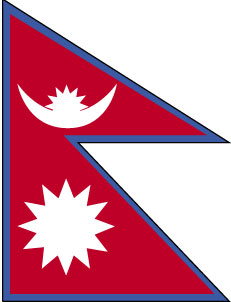
Nepal
Declare Your Relationship to Nepal
CountryReports Community
- Studying10
- From Nepal4
- Nepal heritage1
- Visited1
- Want to visit1
Customs and Culture
Customs and Culture
Cultural Attributes
Nepalese people live a largely rural life, with the majority of the population residing in villages and small towns. Homes are typically two-story structures built from stone, mud brick, or, increasingly in urban areas, concrete. Agriculture remains the backbone of the economy, employing a large portion of the working population, and many smallholder farmers primarily grow enough food to sustain their families. Staple crops include rice, maize, millet, and wheat.
Beyond farming, many Nepalese earn their livelihoods as skilled craft workers, including blacksmiths, goldsmiths, shoemakers, and tailors — traditions that continue to hold cultural and economic importance. The tourism industry is a significant source of employment, drawing visitors to the Himalayas, trekking routes, and cultural heritage sites. Remittances from Nepalese working abroad, particularly in Gulf countries and Malaysia, also play a major role in household incomes and the broader national economy.
Spiritual and religious beliefs are deeply woven into everyday life. Many people, particularly in rural communities, hold beliefs in supernatural forces, including evil spirits and ghosts, as potential causes of illness and misfortune, often seeking remedies through traditional healers or religious rituals alongside modern medicine. Nepalese society is generally known for its hospitality and warmth toward visitors, and Western travelers are commonly perceived as honest, punctual, and pragmatic, though cross-cultural exchange has increasingly nuanced these mutual perceptions in recent decades.

Roof of the World, Sanctuary of the Spirit
Get More Customs and Culture
5 more cultural topics for members
Social Customs & Etiquette · Diet · Family · Dating Customs · Recreation
Every country, every topic, all activities & recipes
✓ Instant access on this device · ✓ No subscription
Holidays
Birthday of King GYANENDRA
7/7Birthday
Christmas
12/25Christmas
Nepal is a multi cultural country of different religions and cultures. As a result, Nepalese people have a diverse tradition with regard to Christmas. They celebrate Christmas with a mix of Asian and Western culture. The traditional way of greeting in the holiday is Merry Christmas. As most Nepali’s use English they are most familiar with this greeting. However, some Nepali Hindus use the Hindi greeting of Sub Naya Baras, pronounced ‘soob-na-ya-ba-ras’ as their traditional Christmas greeting. Although this greeting means “a good new year” it is the traditional greeting for Christmas.
For Christian communities, Santa Claus is still a primary figure of the Christmas season Some Hindu children believe in the tradition that being good for the year will bring great presents. Hindu children who celebrate Christmas practice the tradition of placing Christmas stockings by their window and expect to find gifts in the morning.
Nepal is the home of the largest Shiva temple in the world which is the Pashupatinath Temple. Thus, the minority Christians try to keep their own rituals and ceremonies as private as possible as to show respect to the much larger Hindu community. The Christmas season usually ends after the New Year celebrations are done. Traditional dishes served include roast turkey, pumpkin pies, Christmas pudding and the typical Dal-bhat-tarklari meal. Dal is a lentil soup, with boild rice and is served with tarkari or vegetables.
Dates of Interest
- May 1st
National Democracy Day commemorates the restoration of democracy in Nepal in 1951 after the end of the Rana regime. It celebrates the country's commitment to democratic values.
How do people greet each other in Nepal?
Namaste is the traditional Nepalese greeting; people generally do not shake hands. Titles or the suffix jee/jye with the last name are polite.
Do
- Use Namaste as your greeting
- Add titles (Professor, Doctor, Director) or the suffix jee/jye with the last name
- Ask permission before taking leave of others
- In informal settings, raise the right hand in a salaam gesture to greet or farewell
Don’t
- Don't expect to shake hands
- Don't say namaste to children
Good to know
- At formal gatherings, a guest may be adorned with a mala (flower necklace)
- In some Buddhist communities, a khada (cotton scarf) may be offered instead of a mala
What are the dining customs in Nepal?
Diet varies by region, with rice, lentil soup, and vegetable curry common in urban and upper-class areas, while millet and corn are staples for most people. Use the right hand for eating.
Do
- Use the right hand for eating and for giving or receiving objects
- Accept tea offered with sugar and milk to guests
Good to know
- Many high-caste people are vegetarian or eat only goat meat
- Middle castes eat goat or chicken when available; some eat water buffalo
- Rice is a staple in the Terai; roti may be made with different grains
What etiquette should I know when visiting Nepalese homes?
Nepalese are warm and hospitable, and guests are usually offered tea. Remove your shoes when entering a home or Hindu temple.
Do
- Remove your shoes when entering a home or Hindu temple
- Use the right hand to give or receive objects
Don’t
- Don't open gifts at the time you receive them
Good to know
- Physical purity, spiritual refinement, and humility are highly valued
How should I dress in Nepal?
Men often wear Western-style clothing, but traditional attire remains typical for women, such as the sari and cholo (blouse).
Good to know
- Women in the south and unmarried girls often wear Punjabi
- Married Hindu women wear a red tika and vermilion powder in their hair to signify their husband is alive
- Women of Tibetan background wear a wraparound jumper and a colorful apron if married
Which gestures are important in Nepal?
Many hand and finger gestures carry meaning, and touching or feet contact require care. Cows are sacred and should not be touched.
Do
- Beckon by waving all fingers with the palm down
- Apologize immediately if your foot touches another person
Don’t
- Don't point or use other finger gestures
- Don't touch cows, as they are sacred
- Don't touch foods or flowers displayed at bazaars, as they become impure
- Don't wink at a person of the opposite sex, or whistle inside a home or at night
What is family life like in Nepal?
The family is the basic social unit and takes precedence over the individual, with traditional families being large and extended. Women, especially among Hindus, generally have few rights or privileges.
Good to know
- Aunts, uncles, and relatives often live together and share the same kitchen
- Among the educated, sons increasingly set up separate households after marriage
- Land is inherited and divided equally between sons
- Women often marry before age 18 and join the husband's extended family
What do people do for recreation in Nepal?
Popular sports include soccer, cricket, basketball, and table tennis, while traditional entertainment includes festivals, folk dances, and folk music.
Good to know
- Enjoy festivals, folk dances, and folk music as traditional entertainment
Last updated: 2026-07-12 · Sources: CountryReports
Photos of Nepal
Photos of Nepal
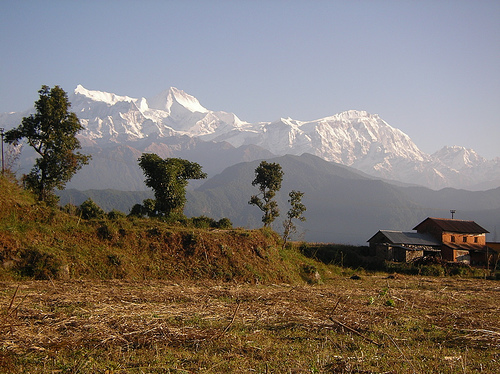
Anapurnas, Nepal
Durbar Square, Nepal
Durbar Square, Nepal
Rural Nepal city as seen from the air
Young men in Kathmandu, Nepal
Ladies shop at The Thamel
Old woman drinks tea in Kathmandu
Waiting for cab clients
Market shop in Kathmandu
Playing table billiard
Nepal children pose for the camera
View over Kathmandu


Travel and Tourism
Travel and Tourism
- Travel Alert Status
- Level 2: Exercise Increased Caution
- Currency
- Nepalese rupee (NPR)
- Time Difference
- UTC+5.75 (10.75 hours ahead of Washington, DC, during Standard Time)
- Airports
- 46
Read the full travel guide — health, safety, vaccinations, disease risk, sanitation, and transit details.
View full travel guideRecipes
Recipes
History
History
Historical Eras
Ancient & Licchavi Era
563 BCE – 750
Nepal's recorded history begins with the birth of Siddhartha Gautama (the Buddha) at Lumbini around 563 BCE and the later Mauryan presence under Ashoka. From roughly the 4th century CE, the Licchavi dynasty ruled the Kathmandu Valley, establishing the valley's enduring role as Nepal's political and cultural heartland and fostering a rich synthesis of Hindu and Buddhist traditions.
Malla Dynasty
750 – 1768
Following a transitional period, the Malla kings rose to prominence by the early 13th century under Arimalla, presiding over a flourishing of Newar art, architecture, and temple construction across the Kathmandu Valley. After 1484 the kingdom fractured into three rival city-states — Kathmandu, Patan, and Bhadgaon — which competed fiercely even as external threats from Bengal and the expanding Mughal world pressed from the south and west.
Gorkha Unification
1559 – 1816
Founded in 1559, the small hill kingdom of Gorkha began its remarkable expansion under Prithvi Narayan Shah, conquering the Malla city-states in 1768 and unifying Nepal's fragmented principalities into a single nation. The new kingdom's armies then pushed far east and west across the Himalayas, clashing with the Qing dynasty in Tibet (1791–92) and eventually fighting the Anglo-Nepalese War (1814–16), which ended in the Sugauli Treaty and fixed Nepal's modern borders.
Rana Oligarchy
1846 – 1951
Jung Bahadur Rana seized power in 1846 through the Kot Massacre, establishing a hereditary prime ministerial dynasty that reduced the Shah kings to ceremonial figureheads for nearly a century. The Ranas maintained strict isolationism, suppressed modernization, and exploited the peasantry, keeping Nepal effectively medieval while the wider world industrialized. Popular resistance, catalyzed by Indian independence in 1947, led to the revolution of 1950–51 that ended Rana rule.
Constitutional Experiments
1951 – 1990
King Tribhuvan restored nominal royal authority in 1951 and introduced a cabinet government, but democratic progress remained fragile. King Mahendra dissolved the first elected parliament in 1960, arrested Prime Minister B.P. Koirala, and replaced multiparty democracy with the partyless Panchayat system — a form of guided, indirect democracy that concentrated power in the palace and stifled political pluralism for three decades.
Democracy & Civil Conflict
1990 – present
Mass popular protests in 1990 compelled King Birendra to legalize parties and adopt a democratic constitution establishing a constitutional monarchy. The era was convulsed by the Maoist People's War launched in 1996 and the shocking royal massacre of 2001, in which Crown Prince Dipendra killed ten members of the royal family before fatally shooting himself. These crises ultimately led to the abolition of the monarchy and the declaration of a federal democratic republic in 2008.
Overview
The all-seeing eyes of Buddha, a detail from the great stupa of
Every country, every topic, all activities & recipes
✓ Instant access on this device · ✓ No subscription
Timeline of Key Events
563 BCE
The Buddha born in Lumbini, in Tarai Region of Nepal.
The Buddha born in Lumbini, in Tarai Region of Nepal.
268 BCE – 231 BCE
Ashoka establishes empire in north India.
Ashoka establishes empire in north India.
353 – 373
Samudragupta establishes empire in north India.
Samudragupta establishes empire in north India.
400 – 750
Licchavi kingdom in power in Kathmandu Valley.
Licchavi kingdom in power in Kathmandu Valley.
750 – 1200
“Transitional” kingdom in power in Kathmandu Valley.
“Transitional” kingdom in power in Kathmandu Valley.
1100 – 1484
Khasa Malla kings rule in western Nepal.
Khasa Malla kings rule in western Nepal.
1200 – 1216
Arimalla, first monarch of the Malla Dynasty, rules in Kathmandu Valley.
Arimalla, first monarch of the Malla Dynasty, rules in Kathmandu Valley.
Read the full history profile — narrative overview, defining eras, and the complete timeline in one place.
View expanded historyInteresting Facts
Interesting Facts
When a child loses a tooth the parents say that if a crow or a bird sees or eats their tooth, a new one won't come in. They bury their tooth in the garden and cover it with soil. Or they might cover the tooth with cow dung or muc and throw it on the roof so it will be hidden.
Mount Everest is the highest mountain in the world. It's peak is 29,028 feet above sea level.
Nepal has the world's fewest hospitals per capita with three per 10,000 people.
A birthday tradition in Nepal is a mark on the forehead. A certain mixture of rice yogurt and color is placed on the birthday child's forehead for good luck.
See every fact — trivia, oddities, and curious tidbits gathered from across the country.
View all interesting factsGeography and Environment
Geography and Environment
- Terrain
- Terai or flat river plain of the Ganges in south, central hill region, rugged Himalayas in north
- Climate
- Kathmandu’s climate is pleasant. During the fall to winter season (October-March), temperatures range from 30°F to 75°F. This season is characterized by morning fog, sunny days, and cold nights. It may rain occasionally, but Kathmandu has had no snow since 1939. A temperature range from 40°F to 90°F, with intermittent rain, warm days, and usually comfortable nights, marks the spring season (March-May). Near the end of the spring season and before the rainy season begins, dust gathers heavily throughout the Kathmandu Valley, causing a haze that obscures the mountains. The monsoon season begins in June and continues until late September. Temperatures in the rainy season range from 55°F to 90°F, and rainfall is from 30 to 60 inches. Rain showers occur almost daily.
- Natural Hazards
- severe thunderstorms, flooding, landslides, drought, and famine depending on the timing, intensity, and duration of the summer monsoons
- Current Environmental Issues
- deforestation (overuse of wood for fuel and lack of alternatives); contaminated water (with human and animal wastes, agricultural runoff, and industrial effluents); wildlife conservation; vehicular emissions
Read the full geography and environment profile — terrain, climate, natural resources, hazards, land use, and international agreements.
View full geographyPeople & Demographics
People & Demographics
Religion
Languages Spoken
Nepali (official; spoken by 90% of the population), about a dozen other languages and about 30 major dialects
- Nepali
Population
- Population
- 30,034,989
- Population in Major Urban Areas
- KATHMANDU (capital) 1.015 million
- Nationality Noun
- Nepalese (singular and plural)
- Ethnic Groups
- Brahman, Chetri, Newar, Gurung, Magar, Tamang, Rai, Limbu, Sherpa, Tharu, and others (1995)
- Language Note
- As many as twenty major languages are spoken with many different dialects. The Nepali language is related to Hindi, which is the official language.
Education
- Literacy Definition
- age 15 and over can read and write
Health Information
- Major Infectious Diseases — degree of risk
- high
Life Expectancy
- Life Expectancy at Birth
- Life expectancy at birth in Nepal has improved significantly over recent decades, reflecting the country's progress in public health infrastructure, maternal and child care, and disease prevention. As of the most recent data available, the average life expectancy at birth in Nepal is approximately 72 years overall, with women living slightly longer than men — women averaging around 74 years compared to approximately 70 years for men. This represents a dramatic improvement from earlier generations. In the 1960s, life expectancy in Nepal hovered around 35 to 40 years, making the gains of the past six decades among the most substantial in South Asia. Key drivers of this improvement include expanded access to primary healthcare, immunization programs, better nutrition, declining rates of infant and child mortality, and improvements in maternal health services. Nepal has made notable strides in reducing under-five mortality, which historically was one of the most significant factors pulling down average life expectancy figures. Government-led and internationally supported programs targeting malaria, tuberculosis, and diarrheal diseases have also contributed to longer lifespans across both urban and rural populations. However, disparities remain. Life expectancy and access to healthcare vary considerably between urban centers like Kathmandu and remote mountainous or hilly regions, where geographic isolation limits access to hospitals, trained medical personnel, and medications. People living in the Terai lowlands and in rural hill communities often experience worse health outcomes than those in larger cities. Non-communicable diseases such as cardiovascular disease, diabetes, and chronic respiratory illness are becoming increasingly prevalent and represent a growing challenge to future gains in life expectancy. These conditions now account for a substantial and rising share of total mortality in the country. Additionally, Nepal continues to face pressure from a large share of its working-age population migrating abroad for employment, which strains the domestic health workforce and affects the long-term sustainability of health service delivery. Despite these challenges, Nepal's trajectory in improving life expectancy is broadly positive, and international health organizations consider it a notable success story in low-income country health development.
- Infant Mortality Rate
- Nepal has made remarkable progress in reducing infant mortality over the past three decades, transforming from one of South Asia's most concerning cases into a model of public health improvement. The infant mortality rate currently stands at approximately 25 to 27 deaths per 1,000 live births, a dramatic decline from the rate of over 120 per 1,000 live births recorded in the early 1990s. This improvement reflects sustained investment in community health infrastructure, including the deployment of Female Community Health Volunteers (FCHVs), a nationwide network of roughly 52,000 trained volunteers who provide basic health education, immunization support, and maternal care guidance at the village level. Their work has been particularly impactful in reaching remote mountain and hill communities where formal medical facilities remain scarce. Several factors continue to influence infant survival rates across the country. Geographic isolation presents ongoing challenges, as many rural communities in hilly and mountainous regions lack reliable access to hospitals or skilled birth attendants. Neonatal causes — including complications from premature birth, birth asphyxia, and neonatal sepsis — account for the majority of infant deaths. Diarrheal diseases and acute respiratory infections also remain significant contributors, particularly in areas with limited access to clean water and sanitation. Urban and rural disparities remain notable. Infants born in Kathmandu and other major urban centers have significantly better survival outcomes compared to those born in remote districts such as Humla, Mugu, or Dolpa, where poverty rates are high and health services are limited. Nepal's government, in partnership with organizations such as UNICEF and the World Health Organization, has implemented targeted programs including expanded immunization campaigns, promotion of exclusive breastfeeding, and improved skilled birth attendance rates, which have climbed from under 10 percent in the 1990s to over 80 percent in recent years. While progress has been substantial, further reductions in infant mortality will depend on continued investment in rural health systems, sanitation, and nutrition programs.
Read the full people and society profile — demographics, health, education, religion, languages, and notable people.
View full people and societyGovernment & Politics
Government & Politics
Country Identity
- Country Name
- Nepal
- Full Country Name
- Kingdom of Nepal
Government Structure
- Government Type
- parliamentary democracy and constitutional monarchy
- Legal System
- based on Hindu legal concepts and English common law; has not accepted compulsory ICJ jurisdiction
- Executive Branch
- chief of state: President RAM CHANDRA PAUDEL (took office 13 March 2023); Vice President PURNA BAHADUR KHAM (took office 20 March 2023) head of government: Prime Minister KP SHARMA OLI (took office 15 July 2024); Deputy Prime Ministers BISHNU PRASAD PAUDEL and RABI LAMICHHANE cabinet: Council of Ministers appointed by the president on the recommendation of the prime minister elections/appointments: president indirectly elected by an electoral college consisting of members of the federal parliament and the provincial assemblies for a five-year term (eligible for a second term); election last held on 9 March 2023; following legislative elections, the leader of the majority party or majority coalition is usually appointed prime minister by the president election results: RAM CHANDRA PAUDEL elected president; electoral college vote — RAM CHANDRA PAUDEL (NC) 33,802, SUBASH CHANDRA NEMBANG (CPN-UML) 15,518 note: Nepal was officially declared a federal democratic republic on 28 May 2008, formally abolishing the 240-year-old Shah monarchy. The transition ended the reign of King GYANENDRA Bir Bikram Shah, who had assumed direct executive control in February 2005 after dismissing the government. The royal palace massacre of 1 June 2001, in which King BIRENDRA Bir Bikram Shah Dev and most of the royal family were killed, had preceded this era of political upheaval; Crown Prince DIPENDRA is believed to have been responsible for the shootings before fatally wounding himself, and was briefly crowned king before dying three days later, after which GYANENDRA succeeded him.
- Legislative Branch
- Nepal operates under a federal democratic republican system established by the 2015 Constitution. The legislative branch is a bicameral Parliament consisting of the National Assembly (upper house) and the House of Representatives (lower house). The National Assembly has 59 seats. Of these, 56 members are elected by an electoral college comprising members of the House of Representatives, Provincial Assemblies, and local government bodies, with 8 members elected from each of Nepal's 7 provinces. The remaining 3 members are nominated by the President on the recommendation of the Council of Ministers. Members serve six-year terms, with one-third of the membership renewed every two years. The House of Representatives has 275 seats. Of these, 165 members are elected through a first-past-the-post system from single-member constituencies, and 110 are elected through a proportional representation system. Members serve five-year terms. Elections: House of Representatives - last held on 20 November 2022. The National Assembly most recently held elections in January 2025 to renew one-third of its membership. Election results: House of Representatives (2022) - seats by party - CPN-UML 78, Nepali Congress 89, CPN (Maoist Centre) 32, Rastriya Swatantra Party 20, Rastriya Prajatantra Party 14, Janajati Samajwadi Party 12, Janamat Party 6, others 24. Following the election, a coalition government was formed with Nepali Congress emerging as the single largest party.
- Judicial Branch
- Supreme Court or Sarbochha Adalat (chief justice is appointed by the monarch on recommendation of the Constitutional Council; the other judges are appointed by the monarch on the recommendation of the Judicial Council)
- Suffrage
- 18 years of age; universal
- Constitution
- 9-Nov-90
- Independence
- 1768 (unified by Prithvi Narayan Shah)
- National Holiday
- Birthday of King GYANENDRA, 7 July (1946)
Capital City
- Capital Name
- Kathmandu
- Capital - geographic coordinate
- 27 43 N, 85 19 E
- Capital Time Difference
- UTC+5.75 (10.75 hours ahead of Washington, DC, during Standard Time)
name derives from the Kasthamandap temple that stood in Durbar Square; in Sanskrit, kastha means "wood" and mandapa means "pavilion"; the three-story structure was made entirely of wood, without iron nails or supports, and dated to the late 16th century; it collapsed during a 2015 earthquake
Military
Branches: Nepal Army
Embassy / Diplomatic Mission
The U.S. Embassy is located in the Maharajgunj neighborhood of Kathmandu, telephone 977-1-400-7200. (The “ ” sign refers to your international dialing prefix, which is “011” in the United States, and “00” in most other countries. Thus, to call the Embassy from the United States, dial 011-977-1-400-7200.) The Embassy’s website has information on the Embassy’s operating hours and holidays. The Embassy’s Consular Section can also be reached at the same telephone number, or via email. (Nepal local time is 9hours and 45 minutes ahead of Eastern Time during summer months, and 10 hours and 45 minutes ahead of Eastern Time in winter months.)
Read the full government profile — flag symbolism, national anthem, and other national symbols.
View full government detailsEconomy
Economy
Nepal remains one of the least developed countries in South Asia, though it has made significant progress in reducing poverty over the past two decades.
Snapshot
- Currency Name and Code
- Nepalese Rupee (NPR)
- GDP — official exchange rate
- $6,655,000,000 (USD)
- GDP Real Growth Rate
- 3.9%
- Gini Index
- 37.7
Every country, every topic, all activities & recipes
✓ Instant access on this device · ✓ No subscription
News & Weather
News & Weather
Current Weather
Latest News
Warnings Across the Himalayas After Nepal Floods - The New York Times
The New York Times · 5d ago
Hindutva Is Slowly Seeping Into Nepal - The Diplomat – Asia-Pacific Current Affairs Magazine
The Diplomat – Asia-Pacific Current Affairs Magazine · 1d ago
Warming Himalayas: Nepal’s Climate Justice Test - The Diplomat – Asia-Pacific Current Affairs Magazine
The Diplomat – Asia-Pacific Current Affairs Magazine · 2h ago
One month after deadly Nepal flood, Georgia couple grapples with why they made it home - cbsnews.com
cbsnews.com · 16h ago
The Patagonia town where Nepal’s deadly glacier flood could be repeated – and what they’ve learned - The Guardian
The Guardian · 20h ago
‘Orphaned’ by floods, more than 500 Nepali children face uncertain future - Al Jazeera
Al Jazeera · 1d ago
Inside Nepal's hidden tunnel networks that became death traps - Reuters
Reuters · 2d ago
After $329 million in DOGE cuts to USAID, Nepal is growing its economy with a Gen Z tech revolution - Fortune
Fortune · 3d ago
News via Google News
Videos
Videos
2 curated YouTube videos.
Source: YouTube
Source: YouTube
Frequently Asked Questions
Frequently Asked Questions
What is the population of Nepal?
What is the capital of Nepal?
Where is Nepal located?
What countries border Nepal?
What is the predominant religion in Nepal?
What is the currency of Nepal?
What language is spoken in Nepal?
What is Nepal's geography and terrain like?
What is Nepal known for?
Last reviewed 2026