
 English
 Español
 中文
中文 हिन्दी
 Français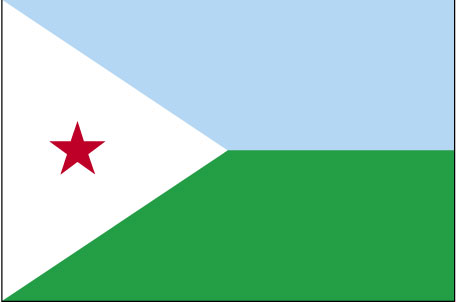
Djibouti
Declare Your Relationship to Djibouti
CountryReports Community
- Studying8
- From Djibouti1
- Djibouti heritage1
- Visited2
- Want to visit1
Customs and Culture
Customs and Culture
Cultural Attributes
Djiboutians respect traditional especially oral poetry and song. The visual arts are influenced by Islam which does not allow humans or animals to be represented in artwork. Wealthy upper-class businessmen live comfortably in modern cities. In rural areas herders have few possessions.

The Horn's Crossroads of Trade and Tradition
Get More Customs and Culture
5 more cultural topics for members
Social Customs & Etiquette · Diet · Family · Dating Customs · Recreation
Every country, every topic, all activities & recipes
✓ Instant access on this device · ✓ No subscription
Holidays
Independence Day
6/27Independence Day
Dates of Interest
- June 27th
What are the dining customs in Djibouti?
Many Djiboutians observe Islamic dietary laws, so pork and alcohol are avoided, and meat comes mainly from goats, sheep, camels and cattle.
Do
- Try common meals of sheep and goat meat
- Sample burri, a papyrus root porridge made with milk
- Enjoy the thick wheat flatbread eaten with a ghee-based sauce
Don’t
- Don't expect pork or alcohol to be served
- Don't assume beef is everyday fare—it's reserved for special occasions
What should I know about gestures in Djibouti?
The left side of the body is considered unclean, so the right hand is used for social and eating interactions.
Do
- Use your right hand for eating, accepting gifts, and shaking hands
- Accept a drink of milk among the Afar, as it signifies a bond between two people
Don’t
- Never use your left hand for eating, accepting a present, or shaking hands
How should I dress in Djibouti?
Dress varies by setting: Western-style clothing is worn in cities, while loose desert clothing is common in rural areas.
Good to know
- Women in Djibouti do not wear veils, though Afar women wear a black headscarf
- In rural areas, expect the loose clothing suited to desert life
What is family life like in Djibouti?
Djiboutians show great respect for elders, and family and clan ties are central to social standing.
Good to know
- Marriage is seen as a union between two families
- Traditionally Muslim men may marry up to four women
- A married woman moves into her husband's often extended-family household
- Unmarried men and women usually remain with their extended families
What do people do for recreation in Djibouti?
Socializing is central, with activities differing between rural areas and cities.
Good to know
- In rural areas women visit and do crafts like weaving or needlework while talking
- Men enjoy drinking coffee and socializing
- The village market is an important place to socialize
- In cities people enjoy movies and urban activities, and children play football (soccer)
Last updated: 2026-07-12 · Sources: CountryReports
Photos of Djibouti
Photos of Djibouti


Travel and Tourism
Travel and Tourism
- Travel Alert Status
- Level 2: Exercise Increased Caution
- Currency
- 177.7
- Time Difference
- UTC+3 (8 hours ahead of Washington, DC, during Standard Time)
- Climate
- Djibouti has two seasons. During the May-to-September hot season, daytime temperatures average over 100°F and often exceed 120°F. The high temperatures are sometimes accompanied by hot, sandy winds called the "Kahm Sin." The beginning and ending months of the hot season are also marked by high humidity. The cooler season, from October through April, has clear skies, refreshingly cool breezes, somewhat lower humidity, and temperatures in the 80s. Because of its geographic location between the Ethiopian and Yemeni escarpments, Djibouti gets little precipitation. Occasional rains occur mostly in the hills in the interior, but the average annual rainfall is only 5 to 10 inches. Rains most often come to Djibouti City in the fall and spring; some years are rainless. Because of a high water table and lack of drainage, the rare heavy rain can cause flooding in and around the capital.
- Airports
- 13
Read the full travel guide — health, safety, vaccinations, disease risk, sanitation, and transit details.
View full travel guideRecipes
Recipes
History
History
Historical Eras
Ancient & Pre-Colonial
3000 BCE – 1862
For millennia, the nomadic Afar and Somali peoples of the region engaged in trade with ancient Egypt, India, and China, exchanging hides and skins for spices and perfumes. Through sustained contact with the Arabian Peninsula over more than a thousand years, these tribes became among the first in Africa to adopt Islam. The area's strategic position at the mouth of the Red Sea made it a valued crossroads of Indian Ocean commerce.
French Protectorate
1862 – 1896
French interest in the Horn of Africa grew following explorer Rochet d'Hericourt's journeys into Shoa in the 1840s and the opening of the Suez Canal in 1869. France purchased the anchorage of Obock from the sultans of Raheita, Tadjoura, and Gobaad in 1862, and by 1884–85 had expanded its protectorate to include the Gulf of Tadjoura coastline. The administrative capital was transferred from Obock to the town of Djibouti in 1892.
French Somaliland
1896 – 1967
Formally named French Somaliland in 1896, the colony's borders were demarcated in 1897 by agreement with Ethiopian Emperor Menelik II, and the Franco-Ethiopian railway connecting Djibouti to Addis Ababa was completed in 1917, cementing the territory's role as a vital trade corridor. During World War II the territory fell under Vichy administration and British blockade before being recaptured by Allied forces in late 1942. Postwar reforms granted increasing self-governance, culminating in a territorial assembly and executive council established under the Loi Cadre of 1956.
Territory of Afars & Issas
1967 – 1977
A 1967 referendum, shaped by an amended electoral law that favored the Afar population and European residents, produced a vote to remain within the French Community, and the territory was renamed the French Territory of the Afars and Issas. Somali nationalist sentiment and mounting pressure for self-determination intensified throughout the early 1970s, however, and a second referendum held in May 1977 returned an overwhelming majority for independence. On June 27, 1977, the Republic of Djibouti was formally proclaimed.
One-Party Republic
1977 – 1999
Founding president Hassan Gouled Aptidon established an authoritarian single-party state under the Rassemblement Populaire pour le Progrès, serving three consecutive six-year terms. An armed Afar insurgency launched in 1991 destabilized the north of the country, prompting a limited political opening: the 1992 constitution permitted four legally recognized parties for a ten-year period. A peace accord signed in 2001 formally concluded the decade-long uprising, though tensions persisted throughout the transition.
Modern Djibouti
1999 – present
Ismail Omar Guelleh assumed the presidency in May 1999 and has consolidated power through successive constitutional amendments, while steering Djibouti toward its role as a premier Horn of Africa logistics and military hub. The country hosts French, American, and Chinese military bases, reflecting its extraordinary strategic value at the mouth of the Red Sea. A brief border conflict with Eritrea erupted in 2008, underscoring the region's continued volatility even as Djibouti's port economy expanded rapidly.
Overview
The Republic of Djibouti gained its independence on June 27, 1977. It is the successor to French Somaliland (later called the French Territory of the Afars and Issas), which was created in the first half of the 19th century as a result of French interest in the Horn of Africa.
Every country, every topic, all activities & recipes
✓ Instant access on this device · ✓ No subscription
Timeline of Key Events
1892
Djibouti becomes capital of French Somaliland.
Djibouti becomes capital of French Somaliland.
1897
Ethiopia acquires parts of Djibouti after signing a treaty with France.
Ethiopia acquires parts of Djibouti after signing a treaty with France.
1946
Djibouti made an overseas territory within the French Union.
Djibouti made an overseas territory within the French Union with its own legislature and representation in the French parliament.
1958
Djibouti votes to join the French Community.
Djibouti votes to join the French Community.
1967
Afar people and Europeans vote to remain part of the French Community.
Referendum takes place during which Afar people and Europeans vote to remain part of the French Community; French Somaliland renamed the French Territory of the Afars and the Issas.
1977
The electorate voted for independence.
The electorate voted for independence in a May 1977 referendum. The Republic of Djibouti was established on June 27, 1977, and Hassan Gouled Aptidon became the country’s first president.
1992
The constitution permitted the legalization of four political parties for a period of 10 years.
The constitution permitted the legalization of four political parties for a period of 10 years, after which a complete multiparty system would be installed.
Read the full history profile — narrative overview, defining eras, and the complete timeline in one place.
View expanded historyInteresting Facts
Interesting Facts
The nomadic way of life in Djibouti goes back thousands of years.
See every fact — trivia, oddities, and curious tidbits gathered from across the country.
View all interesting factsGeography and Environment
Geography and Environment
- Terrain
- coastal plain and plateau separated by central mountains
- Climate
- Djibouti has two seasons. During the May-to-September hot season, daytime temperatures average over 100 ºF and often exceed 120 ºF. The high temperatures are sometimes accompanied by hot, sandy winds called the "Kahm Sin." The beginning and ending months of the hot season are also marked by high humidity. The cooler season, from October through April, has clear skies, refreshingly cool breezes, somewhat lower humidity, and temperatures in the 80s. Because of its geographic location between the Ethiopian and Yemeni escarpments, Djibouti gets little precipitation. Occasional rains occur mostly in the hills in the interior, but the average annual rainfall is only 5 to 10 inches. Rains most often come to Djibouti City in the fall and spring; some years are rainless. Because of a high water table and lack of drainage, the rare heavy rain can cause flooding in and around the capital.
- Natural Hazards
- earthquakes; droughts; occasional cyclonic disturbances from the Indian Ocean bring heavy rains and flash floods
- Current Environmental Issues
- inadequate supplies of potable water; limited arable land; desertification; endangered species
Read the full geography and environment profile — terrain, climate, natural resources, hazards, land use, and international agreements.
View full geographyPeople & Demographics
People & Demographics
Religion
Languages Spoken
French (official), Arabic (official), Somali, Afar
- Arabic
- French
Population
- Population
- 1,120,849
- Population in Major Urban Areas
- DJIBOUTI (capital) 496,000
- Nationality Noun
- Djiboutian(s)
- Ethnic Groups
- Somali 60%, Afar 35%, French, Arab, Ethiopian, and Italian 5%
Education
- Literacy Definition
- Age 15 and over can read and write
Health Information
- Major Infectious Diseases — degree of risk
- High
Life Expectancy
- Life Expectancy at Birth
- Life expectancy at birth in Djibouti stands at approximately 63 to 64 years overall, with women living slightly longer than men at around 65 years compared to roughly 62 years for men. These figures place Djibouti in the lower range among African nations, reflecting both the persistent challenges and the gradual improvements the country has made in public health over recent decades. Several factors influence these numbers significantly. Djibouti faces ongoing public health challenges, including a notable prevalence of tuberculosis, HIV/AIDS, and vector-borne diseases. Access to clean drinking water and adequate sanitation remains limited outside of the capital city, contributing to waterborne illnesses that particularly affect infant and child mortality rates. The country's arid climate and limited agricultural capacity also contribute to food insecurity, which in turn affects nutritional health and overall longevity. Infant mortality, while still elevated compared to global averages, has been declining steadily. This improvement is largely attributed to expanded vaccination programs, increased access to maternal healthcare, and international aid supporting healthcare infrastructure. Djibouti's government, in partnership with organizations such as the World Health Organization and UNICEF, has worked to extend basic medical services to more of the population, including rural and nomadic communities that have historically been underserved. Urban residents, particularly those in Djibouti City, tend to have better access to hospitals and clinics, giving them somewhat higher life expectancy prospects compared to those living in more remote areas. The concentration of healthcare resources in the capital creates a notable disparity in health outcomes across the country. Despite these challenges, life expectancy in Djibouti has risen considerably since the 1970s, when it hovered closer to the low 40s, representing meaningful and sustained progress in public health. Continued investment in clean water access, disease prevention, and maternal and child health services will be critical to sustaining and accelerating these gains in the years ahead.
- Infant Mortality Rate
- Djibouti has made measurable progress in reducing infant mortality over recent decades, though rates remain elevated compared to global averages. The country's infant mortality rate stands at approximately 40 to 43 deaths per 1,000 live births, reflecting ongoing challenges in healthcare access, nutrition, and infrastructure — particularly in rural and peri-urban areas. Infants in Djibouti face heightened risks from preventable and treatable causes, including neonatal infections, diarrheal diseases, acute respiratory infections, and complications arising from preterm birth. Malnutrition compounds these risks significantly, as stunting and wasting among young children remain persistent public health concerns. The country's harsh arid climate, limited freshwater resources, and food insecurity contribute to the vulnerability of newborns and young infants. Disparities in infant survival exist between urban and rural populations. Djibouti City, home to the majority of the country's population, has comparatively better access to hospitals, trained midwives, and maternal care services. In contrast, nomadic and semi-nomadic communities in the interior regions often lack consistent access to skilled birth attendants and postnatal care, placing infants at considerably greater risk during their first weeks of life. Government efforts, supported by international partners including UNICEF and the World Health Organization, have focused on expanding immunization coverage, improving antenatal and postnatal care, promoting exclusive breastfeeding, and training community health workers. Vaccination programs targeting diseases such as diphtheria, measles, and polio have contributed to declines in child deaths over time. Despite progress, Djibouti's infant mortality rate remains higher than the global average of approximately 27 deaths per 1,000 live births, and higher still compared to upper-middle-income countries. Continued investment in maternal and child health systems, clean water access, and nutrition programs is considered essential to sustaining and accelerating reductions in infant deaths. The country's ongoing refugee population, arriving primarily from neighboring Somalia and Ethiopia, also places additional strain on health resources and affects overall infant health outcomes.
Read the full people and society profile — demographics, health, education, religion, languages, and notable people.
View full people and societyGovernment & Politics
Government & Politics
Country Identity
- Country Name
- Djibouti
- Full Country Name
- Republic of Djibouti
- Former Name
- French Territory of the Afars and Issas, French Somaliland
Government Structure
- Government Type
- republic
- Legal System
- based on French civil law system, traditional practices, and Islamic law
- Executive Branch
- chief of state: President Ismail Omar GUELLEH (since 8 May 1999) head of government: Prime Minister Aden Hassan AWED (since 27 March 2023) cabinet: Council of Ministers responsible to the president elections: president elected by popular vote for a six-year term; election last held on 9 April 2021 (next to be held in 2027); prime minister appointed by the president election results: Ismail Omar GUELLEH reelected president; percent of vote - Ismail Omar GUELLEH 97.4%
- Legislative Branch
- Unicameral National Assembly or Assemblée nationale (65 seats; members directly elected in multi-seat constituencies by simple majority vote to serve five-year terms) Elections: last held on 24 February 2023 (next to be held in 2028) Election results: percent of vote by coalition - UMP 71.3%, USN 28.7%; seats by coalition - UMP 58, USN 7; the Union pour la Majorité Présidentielle (UMP), the ruling coalition led by the People's Rally for Progress (RPP), retained a commanding majority in the assembly
- Judicial Branch
- Supreme Court or Cour Supreme
- Suffrage
- 18 years of age; universal adult
- Constitution
- multiparty constitution approved by referendum 4 September 1992
- Independence
- 27 June 1977 (from France)
- National Holiday
- Independence Day, 27 June (1977)
Capital City
- Capital Name
- Djibouti
- Capital - geographic coordinate
- 11 35 N, 43 09 E
- Capital Time Difference
- UTC+3 (8 hours ahead of Washington, DC, during Standard Time)
The origin of the name is disputed; multiple descriptions, possibilities, and theories have been proposed
Military
Branches: Djibouti Armed Forces (Forces Armees Djiboutiennes, FAD): Djibouti National Army (includes Navy, Djiboutian Air Force (Force Aerienne Djiboutienne, FAD), National Gendarmerie (GN)
Embassy / Diplomatic Mission
U.S. Embassy Djibouti
Lotissement Haramous Lot # 350B
Djibouti City, Republic of Djibouti
Phone: 253-21-453-000
Email: ConsularDjibouti@State.gov
Read the full government profile — flag symbolism, national anthem, and other national symbols.
View full government detailsEconomy
Economy
Djibouti's economy is based largely on service activities tied to the country's strategic location at the entrance to the Red Sea and its status as a free trade zone in the Horn of Africa.
Snapshot
- Currency Name and Code
- Djiboutian francs (DJF)
- GDP Real Growth Rate
- 5.4%
Every country, every topic, all activities & recipes
✓ Instant access on this device · ✓ No subscription
News & Weather
News & Weather
Current Weather
Latest News
Djibouti faces ‘overlapping emergencies’ as Yemen’s refugee exodus continues - UN News
UN News · 11h ago
Police occupy Djibouti FA headquarters amid attempt to oust Fifa council member - The Guardian
The Guardian · 1d ago
Djibouti withdraw from CAF U-17 Africa Cup of Nations Zonal qualifiers - cecafa
cecafa · 16h ago
Japan to grant $10M in aid to Djibouti, Yemen amid tensions with Houthis - Anadolu Ajansı
Anadolu Ajansı · 16h ago
Japan to Give 10-M.-Dlr Humanitarian Aid to Yemen, Djibouti - nippon.com
nippon.com · 18h ago
Yemen: Escalating conflict drives new displacement and refugee arrivals in Djibouti - UNHCR - The UN Refugee Agency
UNHCR - The UN Refugee Agency · 21d ago
Thousands flee to Djibouti from Yemen's war - DW.com
DW.com · 2d ago
NASA Welcomes Djibouti as Newest Artemis Accords Signatory - NASA (.gov)
NASA (.gov) · 22d ago
News via Google News
Climate Overview
Djibouti has two seasons. During the May-to-September hot season, daytime temperatures average over 100°F and often exceed 120°F. The high temperatures are sometimes accompanied by hot, sandy winds called the "Kahm Sin." The beginning and ending months of the hot season are also marked by high humidity. The cooler season, from October through April, has clear skies, refreshingly cool breezes, somewhat lower humidity, and temperatures in the 80s.
Because of its geographic location between the Ethiopian and Yemeni escarpments, Djibouti gets little precipitation. Occasional rains occur mostly in the hills in the interior, but the average annual rainfall is only 5 to 10 inches. Rains most often come to Djibouti City in the fall and spring; some years are rainless. Because of a high water table and lack of drainage, the rare heavy rain can cause flooding in and around the capital.
Videos
Videos
1 curated YouTube videos.
Source: YouTube
Frequently Asked Questions
Frequently Asked Questions
What is the population of Djibouti?
What is the capital of Djibouti?
Where is Djibouti located?
What countries border Djibouti?
What is the predominant religion in Djibouti?
What currency does Djibouti use?
What languages are spoken in Djibouti?
What is the geography of Djibouti like?
What is Djibouti known for?
Last reviewed 2026