
 English
 Español
 中文
中文 हिन्दी
 Français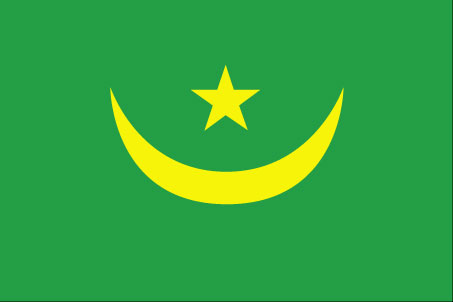
Mauritania
Muritaniyah
Declare Your Relationship to Mauritania
CountryReports Community
- Studying2
- From Mauritania1
- Mauritania heritage1
- Visited1
- Want to visit2
Customs and Culture
Customs and Culture
Cultural Attributes
Mauritania is a land of two cultures, French as of result of once being a French colony, and the Islamic of North Africa as evidenced in the flag. This culture clash along with the droughts of the Sahara has led to conflict and troubles in Mauritania. About 2/3 of the Mauritanian people are Moors with the other third being black Africans. Most black Mauritanians are farmers living along the Senegal River in the south of the country. They usually live in round mud-brick huts.
The nation's education system is poor with less than half of the children entering elementary school and only about 15-20 percent entering high school.
Incomes are low and most workers make enough to support their families. The majority of people are farmers and livestock herders. The farmers grow corn, dates, millet, and red beans. Some people make their living by fishing.
The Mauritian people are family oriented and religious with almost all people being Muslim. In the desert valleys people live in light colored cottons tents. The ground inside the tents are covered with large woven mats known as hasiras

Land of the Winds and the Desert's Soul
Get More Customs and Culture
5 more cultural topics for members
Social Customs & Etiquette · Diet · Family · Dating Customs · Recreation
Every country, every topic, all activities & recipes
✓ Instant access on this device · ✓ No subscription
Holidays
Independence Day
11/28Independence Day
Dates of Interest
- November 28th
How do people greet and interact in Mauritania?
Under the value of essahwa, young men treat elders with respect, using appropriate language and avoiding loud conversation.
Do
- Show respect to elders
- Use appropriate, polite language
Don’t
- Speak loudly in conversation
- Show public displays of affection
What are dining customs like in Mauritania?
Lunch is the biggest meal, often a spicy fish and vegetable stew with rice, while couscous (also called lachiri in some areas) is a common dinner.
Do
- Try local dishes like mechoui (whole roast lamb), spiced fish, dates, and couscous
- Enjoy popular drinks such as zrig (goat's milk, water and sugar) and sweet Arab mint tea
Don’t
- Consume alcohol, which is prohibited by the Islamic faith
Good to know
- Tishtar is a common lunch dish
- Other foods include fish balls, dried fish, and dried meat
What should I wear in Mauritania?
Traditional dress includes the malaffa for women (a long cloak wrapped from head to toe) and the dara for men (a long loose robe over baggy pants), while urban office attire is Western-style pants and shirt.
Good to know
- In cities, Western pants and shirts are common office attire
How important is family in Mauritania?
Mauritanians are family oriented; families belong to a larger lineage group, and related lineages form a clan.
Good to know
- Marriage within a clan is preferred
- Men are permitted to marry more than one wife, but many do not
What do people do for recreation in Mauritania?
Soccer is the most popular sport.
Good to know
- Liguam is a children's game similar to tug-of-war
What should I know before visiting Mauritania?
Mauritania blends French colonial and North African Islamic cultures; about two-thirds of people are Moors and one-third are black Africans, and almost everyone is Muslim.
Good to know
- Most people are farmers and livestock herders; some make a living by fishing
- In desert valleys people live in light-colored cotton tents floored with woven mats called hasiras
- Many black Mauritanians live in round mud-brick huts along the Senegal River
Last updated: 2026-07-12 · Sources: CountryReports
Photos of Mauritania
Photos of Mauritania


Travel and Tourism
Travel and Tourism
- Travel Alert Status
- Level 3: Reconsider Travel
- Currency
- ouguiya (MRO)
- Time Difference
- UTC 0 (5 hours ahead of Washington, DC, during Standard Time)
- Airports
- 24
Read the full travel guide — health, safety, vaccinations, disease risk, sanitation, and transit details.
View full travel guideRecipes
Recipes
History
History
Historical Eras
Ancient & Berber Era
300 – 1040
Berber peoples migrated southward into the region from the third century onward, gradually displacing and assimilating earlier inhabitants. The Sanhadja Confederation rose to prominence between the eighth and tenth centuries, controlling trans-Saharan trade routes and facilitating early Islamization through contact with Arab merchants. Internal rivalries among Sanhadja clans ultimately undermined the confederation's cohesion.
Almoravid Empire
1040 – 1250
The Almoravid movement emerged from the Sanhadja Berbers of the western Sahara, launching a militant Islamic reform that conquered Morocco, Spain, and the Ghana Empire to the south. Founded by Abdallah ibn Yasin and expanded militarily by Yusuf ibn Tashfin, the empire spread rigorous Sunni Islam across a vast territory. The Almohad Empire's rise and internal fragmentation brought Almoravid dominance to an end by the mid-thirteenth century.
Arab Consolidation
1250 – 1900
Yemeni Arab tribes, particularly the Banu Hassan, steadily penetrated Mauritania from the twelfth century onward, completing their military and cultural dominance after the Mauritanian Thirty-Year War (1644–1674), in which Berber groups failed to repel Arab warriors. This era cemented arabization and the hierarchical Maure social order of warriors, clerics, and vassals. European powers, principally France, competed for coastal trade in gum arabic but exercised limited inland control until the nineteenth century.
French Colonial Period
1900 – 1960
France formally established Mauritania as a colonial territory in 1904 and incorporated it into French West Africa in 1920, administering it largely through Senegal. Colonial governance relied on Islamic religious leaders and traditional elites rather than direct rule, leaving the country's social structure and economy largely undeveloped. Following World War II, a series of constitutional reforms and regular elections gradually built political capacity, culminating in independence on November 28, 1960.
Independence & Nation-Building
1960 – 1991
The Islamic Republic of Mauritania emerged under President Mokhtar Ould Daddah, navigating tensions between its Arab-Berber north and sub-Saharan African south. The country annexed the southern portion of Spanish Sahara in 1976 but was forced to renounce its claim by 1979 following devastating Polisario Front guerrilla raids. A succession of military coups, economic hardship driven by drought and desertification, and violent inter-ethnic clashes in 1989–1990 defined this turbulent foundational period.
Multiparty Modern Era
1991 – present
A new constitution in 1991 legalized opposition parties and nominally introduced multiparty democracy, though presidential elections remained widely criticized as flawed and effective power stayed concentrated within a narrow elite. Parliament formally outlawed slavery in 2007, decades after a 1981 ban proved largely unenforced, reflecting persistent social inequalities between the dominant Maure population and black minority communities. Offshore oil production beginning in 2006 offered new economic prospects alongside enduring governance and human rights challenges.
Overview
Architectural detail of an old mosque at Tîchît
Every country, every topic, all activities & recipes
✓ Instant access on this device · ✓ No subscription
Timeline of Key Events
1500
European mariners and traders establish settlements.
European mariners and traders establish settlements.
1644 – 1674
Mauritanian Thirty-Year War: Berbers unsuccessful in repelling Arab warriors.
Mauritanian Thirty-Year War: Berbers unsuccessful in repelling Arab warriors.
1850 – 1860
French forces gain control of southern Mauritania.
French forces gain control of southern Mauritania. In 1898 France wins the allegiance of Moors in the region.
1904
France establishes Mauritania as a colonial territory.
France establishes Mauritania as a colonial territory.
1920
Mauritania becomes part of French West Africa, and is administered from Senegal.
Mauritania becomes part of French West Africa, and is administered from Senegal.
1946
Becomes a French overseas territory.
Becomes a French overseas territory.
1957
Nouakchott established as the capital.
Nouakchott established as the capital.
Read the full history profile — narrative overview, defining eras, and the complete timeline in one place.
View expanded historyInteresting Facts
Interesting Facts
When a child loses a tooth their parents tell them to wrap up their tooth in a small piece of cloth and throw it as hard as they can on to the roof of their house. If they get up very early the next morning, they will find a rooster on the roof and they can keep him. If they don't wake up early enought, they won't find the rooster.
Nouakchott, the capital of Mauritania, is one of the newest capitals in the world: construction began in 1960.
The name of the capital, Nouakchott, means "place of the winds"
See every fact — trivia, oddities, and curious tidbits gathered from across the country.
View all interesting factsGeography and Environment
Geography and Environment
- Terrain
- mostly barren, flat plains of the Sahara; some central hills
- Climate
- Mauritania's climate is hot and arid, except in the far south, which has higher humidity. In Nouakchott, daytime temperatures reach 85 °F in the winter, although at night sweaters and blankets are needed. Summer temperatures regularly reach over 100 °F during the day. It is usually a dry heat that most find more bearable than the same temperatures with high humidity. Summer evenings can be considerably cooler. The area's fine sand makes beach going one of the highlights of a tour in Nouakchott. However, winds can stir this sand into sandstorms that last several hours. These infrequent sandstorms occur throughout the year, although they are less frequent during the summer and fall months.
- Natural Hazards
- hot, dry, dust/sand-laden sirocco wind blows primarily in March and April; periodic droughts
- Current Environmental Issues
- overgrazing, deforestation, and soil erosion aggravated by drought are contributing to desertification; very limited natural fresh water resources away from the Senegal, which is the only perennial river
Read the full geography and environment profile — terrain, climate, natural resources, hazards, land use, and international agreements.
View full geographyPeople & Demographics
People & Demographics
Religion
Languages Spoken
Hassaniya Arabic (official), Pulaar, Soninke, Wolof (official), French
- French
Population
- Population
- 4,934,983
- Population in Major Urban Areas
- NOUAKCHOTT (capital) 786,000
- Nationality Noun
- Mauritanian(s)
- Ethnic Groups
- mixed Maur/black 40%, Maur 30%, black 30%
Education
- Literacy Definition
- age 15 and over can read and write
Health Information
- Major Infectious Diseases — degree of risk
- very high
Life Expectancy
- Life Expectancy at Birth
- Life expectancy at birth in Mauritania has shown meaningful improvement over recent decades, reflecting gradual advances in healthcare access, public health infrastructure, and nutrition programs. As of the most recent available data, the average life expectancy at birth stands at approximately 67 years, with women typically outliving men by several years — a pattern consistent with global trends. In the early 1960s, life expectancy in Mauritania hovered around 40 years, making the gains achieved over the past six decades a significant public health accomplishment. However, the country still lags behind the global average of roughly 73 years, and the gap with higher-income nations remains considerable. Several factors continue to challenge longevity in Mauritania. The country faces persistent issues with infant and child mortality, maternal health complications, and the prevalence of communicable diseases including malaria and respiratory infections. Access to clean drinking water and adequate sanitation, particularly in rural and nomadic communities spread across the vast Sahara and Sahel regions, remains uneven and directly affects health outcomes. Malnutrition is another contributing factor, especially among children under five. While government initiatives and international development programs have helped reduce stunting and wasting rates, food insecurity tied to drought cycles and desertification continues to pose ongoing challenges for the broader population's health. Urban residents, particularly in the capital Nouakchott, tend to have better access to hospitals, clinics, and trained medical personnel, which contributes to somewhat longer life expectancies in those areas compared to rural populations. The public health system, while expanding, is still under-resourced relative to demand. International organizations including UNICEF and the World Health Organization have partnered with the Mauritanian government to improve vaccination coverage, prenatal care, and disease prevention programs — efforts that are gradually reflected in improving life expectancy figures. Continued investment in these areas is considered essential for further progress in the coming decades.
- Infant Mortality Rate
- Mauritania faces significant challenges in reducing infant mortality, though the country has made measurable progress over recent decades. The infant mortality rate — defined as the number of deaths among children under one year of age per 1,000 live births — stood at approximately 51 deaths per 1,000 live births in recent years, placing Mauritania among the higher-burden countries in West Africa, though well below its peak rates from earlier generations. Several interconnected factors drive this elevated rate. Access to skilled healthcare workers during and after childbirth remains limited, particularly in rural and desert regions where the population is dispersed across a vast and challenging landscape. Neonatal infections, preterm birth complications, and pneumonia are among the leading direct causes of infant deaths. Malnutrition compounds these risks considerably, as undernourished infants have weaker immune systems and are more vulnerable to common illnesses that would otherwise be survivable. Geographic and infrastructural barriers play a substantial role. Many communities in Mauritania's interior lie far from functioning health facilities, and transportation infrastructure can be inadequate, particularly during seasonal weather extremes. This means families may be unable to reach emergency obstetric care or pediatric services in time to prevent deaths that might be averted in better-resourced settings. Progress has nonetheless been documented. Between 1990 and the early 2020s, Mauritania's infant mortality rate dropped by more than half, reflecting improvements in vaccination coverage, oral rehydration therapy for diarrheal diseases, and expanded access to prenatal care in urban centers such as Nouakchott and Nouadhibou. Immunization campaigns supported by international health organizations have helped reduce deaths from vaccine-preventable diseases like measles and pertussis. Ongoing efforts by the Mauritanian government, in partnership with international organizations and NGOs, aim to further expand community health worker programs, improve nutrition interventions, and strengthen the cold chain for vaccines in remote areas. Achieving continued reductions will require sustained investment in both health infrastructure and maternal education, particularly in reaching pastoralist and other nomadic communities that have historically had limited contact with formal healthcare systems.
Read the full people and society profile — demographics, health, education, religion, languages, and notable people.
View full people and societyGovernment & Politics
Government & Politics
Country Identity
- Country Name
- Mauritania
- Full Country Name
- Islamic Republic of Mauritania
- Local - Long
- Al Jumhuriyah al Islamiyah al Muritaniyah
- Local - Short
- Muritaniyah
Government Structure
- Government Type
- republic
- Legal System
- a combination of Shari'a (Islamic law) and French civil law
- Executive Branch
- chief of state: President Mohamed Ould Cheikh El GHAZOUANI (since 1 August 2019); elected in the June 2019 presidential election with approximately 52% of the vote in the first round, marking the first peaceful democratic transfer of power in Mauritania's history head of government: Prime Minister Mokhtar Ould DJAY (since 6 August 2024) cabinet: Council of Ministers appointed by the president elections: president elected by absolute majority popular vote in two rounds if needed for a five-year term (eligible for a second term); last held on 29 June 2024; prime minister appointed by the president election results: President Mohamed Ould Cheikh El GHAZOUANI reelected in the first round with approximately 56.1% of the vote, defeating several challengers including opposition candidate Biram Dah ABEID who received around 22.1% of the vote
- Legislative Branch
- Unicameral Parliament or Al-Barlamane, which consists of the National Assembly or Al-Jamiya Al-Wataniya (176 seats; members directly elected in multi-seat constituencies by a mixed majority and proportional representation vote; members serve five-year terms). Mauritania abolished its Senate in 2017 following a constitutional referendum, consolidating the legislature into a single chamber. The reform also eliminated regional councils, with their functions absorbed by the National Assembly. Elections: National Assembly — last held on 13 and 27 May 2023 (next to be held in 2028). Election results: National Assembly — percent of vote by party — El-Insaf (Union for the Republic) approximately 52%, Tewassoul (National Rally for Reform and Development) approximately 10%, other parties and independents approximately 38%; seats by party — El-Insaf 107, Tewassoul 11, El-Karama 10, Republican Front for Unity and Democracy 7, Rally of Democratic Forces 6, other parties and independents 35. The ruling El-Insaf party, aligned with President Mohamed Ould Ghazouani, retained a strong majority in the assembly following the 2023 elections.
- Judicial Branch
- Supreme Court or Cour Supreme; Court of Appeals; lower courts
- Suffrage
- 18 years of age; universal
- Constitution
- 12-Jul-91
- Independence
- 28 November 1960 (from France)
- National Holiday
- Independence Day, 28 November (1960)
Capital City
- Capital Name
- Nouakchott
- Capital - geographic coordinate
- 18 04 N, 15 58 W
- Capital Time Difference
- UTC 0 (5 hours ahead of Washington, DC, during Standard Time)
may derive from the Berber "nawakshut" meaning "place of the winds"
Military
Branches: Mauritanian Armed Forces: Army, Mauritanian Navy (Marine Mauritanienne; includes naval infantry), Islamic Republic of Mauritania Air Group (Groupement Aerienne Islamique de Mauritanie, GAIM)
Embassy / Diplomatic Mission
Embassy Nouakchott
Address: The U.S. Embassy is located between the Presidency building and the Spanish Embassy on Rue Abdallaye. The postal address is B.P. 222, Nouakchott, Mauritania.
Telephone: (222) 4525-2660, 4525-2663, 4525-1145 or 4525-3288
Emergency after-hours telephone: (222) 3662-8163
Emergency Consular Recording (to relay messages during emergency situations): (222) 4525-3701
Facsimile: (222) 4525-1592
Read the full government profile — flag symbolism, national anthem, and other national symbols.
View full government detailsEconomy
Economy
Mauritania's economy is dominated by extractive industries, fisheries, and agriculture, with roughly half of the population still depending on farming and livestock for their livelihood.
Snapshot
- Currency Name and Code
- Ouguiya (MRO)
- GDP — official exchange rate
- $1,346,000,000 (USD)
- GDP Real Growth Rate
- 4.3%
- Gini Index
- 39
Every country, every topic, all activities & recipes
✓ Instant access on this device · ✓ No subscription
News & Weather
News & Weather
Current Weather
Latest News
Red Bull New York II Midfielder Abdellahi Nasser Dine Called Up to U-23 Mauritania National Team for 2027 U-23 AFCON Qualifiers - Red Bull New York
Red Bull New York · 23h ago
(Hello Africa) Chinese naval hospital ship brings medical care closer to Mauritanian residents - Xinhua
Xinhua · 5h ago
A story of trust and friendship: Mauritanian mother names newborn 'Khalil' aboard Chinese hospital ship - Global Times
Global Times · 6h ago
“They told us to leave and never to come back” - The Malian survivors of the conflict who have been forced into exile by armed groups - Amnesty International
Amnesty International · 4d ago
Mauritania govt, CWP advance Aman green hydrogen project - Renewables Now
Renewables Now · 1d ago
Ohio bike shop offers refuge and community to Mauritanian immigrants - africanews.com
africanews.com · 2d ago
Chinese Naval Hospital Ship Auspicious Ark Visits Mauritania - China Military Online
China Military Online · 3d ago
From Mauritania to the IOM3 Library: 25 years of friendship and mining - IOM3
IOM3 · 1d ago
News via Google News
Frequently Asked Questions
Frequently Asked Questions
What is the population of Mauritania?
What is the capital of Mauritania?
Where is Mauritania located?
What countries border Mauritania?
What is the religion of Mauritania?
What is the currency of Mauritania?
What languages are spoken in Mauritania?
What is the geography of Mauritania like?
What is Mauritania known for?
Last reviewed 2026