
 English
 Español
 中文
中文 हिन्दी
 Français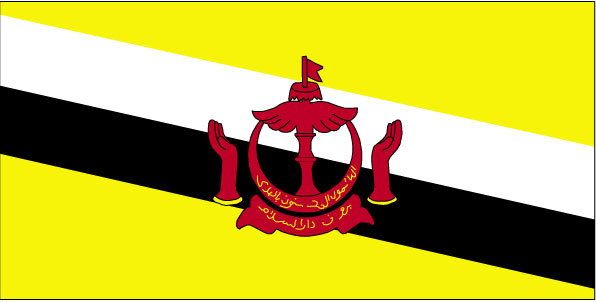
Brunei
Declare Your Relationship to Brunei
CountryReports Community
- Studying4
- From Brunei0
- Brunei heritage0
- Visited0
- Want to visit0
Customs and Culture
Customs and Culture
Cultural Attributes
Brunei's culture mainly derived from the Old Malay World, which encompassed the Malay Archipelago, and from this stemmed what is known as the Malay Civilization

Realm of the Golden Sultan
Get More Customs and Culture
3 more cultural topics for members
Social Customs & Etiquette · Diet · Dating Customs
Every country, every topic, all activities & recipes
✓ Instant access on this device · ✓ No subscription
Holidays
National Day
2/23Independence
1 January 1984 was the date of independence from the UK, 23 February 1984 was the date of independence from British protection. Parades are held at the Hassanal Bolkiah National Stadium before an enthusiastic crowd of up to 35,000 spectators. It is an extravaganza of colour, music and lively displays. The Sultan and other members of the royal family attend the celebrations.
Royal Brunei Armed Forces Day
5/31Other
The formation of the Royal Brunei Armed Forces is commemorated every year on May 31, and the event usually takes place at the Taman Haji Sir Omar Ali Saiffudden in the heart of the city.
It consists of a military parade and displays, such as a parachute show or battle demonstrations.
His Majesty the Sultan's Birthday
7/15Birthday
This is a joyous occasion during which the whole country celebrates with festivities. It usually starts when the people gather at the Taman Haji Sir Muda Omar Ali Saifuddien, in the centre of Bandar Seri Begawan.
The Sultan meets them and delivers the titah, speech, to mark the occasion. Following this is an investiture at the Istana Nurul Iman, and, for the next two weeks, a series of processions, parades and fireworks brighten the streets.
Chinese New Year
Other
The Chinese community celebrates this festival for two weeks. It begins with a traditional reunion dinner on the eve of the celebration, which all members of the family attend. Ang Pow or red packets are given to unmarried youngsters.
Christmas Day
12/25Christmas
Although not celebrated on a wide scale, Christmas Day is nevertheless a happy occasion well received by the nation. It centers around Bandar Seri Begawan and the Belait District, where the greatest concentration of Christian expatriates reside.
What are the dining customs in Brunei?
Dining in Brunei follows Muslim customs, with food eaten and passed using the right hand and all public eating places serving certified halal food.
Do
- Use your right hand for eating and passing food
- Expect halal food at all public eating places
Good to know
- Breakfast may include rice porridge, rice with curry, laksa, roti, toast, tea or coffee
- Lunch might be rice with vegetables, fish or meat, or murtabak (meat-filled pastry)
- Dinner is rice with two or three side dishes and dessert served together
- Fish is preferred, with chicken the second most commonly eaten meat
What should I know about Brunei's culture before I go?
Brunei's culture derives mainly from the Old Malay World of the Malay Archipelago, forming what is known as the Malay Civilization, and has a strong Muslim population.
Good to know
- Typical foods include rice, fish, squash, banana, durian, rambutan, and eggplant
- Desserts are often fresh fruit or sweet treats made from coconuts
Last updated: 2026-07-12 · Sources: CountryReports
Photos of Brunei
Photos of Brunei


Travel and Tourism
Travel and Tourism
- Travel Alert Status
- Level 1: Exercise Normal Precautions
- Currency
- 1.386
- Time Difference
- UTC+8 (13 hours ahead of Washington, DC during Standard Time)
- Airports
- 2
- Recommended Vaccinations
- How important is it to do your research about vaccinations? It might just save your life! Make yourself aware of the different types of vaccinations and which ones you may need to travel to your destination. Schedule an appointment with your doctor at least four to six weeks before you travel to ensure you receive all important shots. Be sure that you and your family are up to date on your routine vaccinations. Which vaccinations you need will depend on a number of factors including your destination, whether you will be spending time in rural areas, the season of the year you are traveling, your age, health status, and previous immunizations.
Read the full travel guide — health, safety, vaccinations, disease risk, sanitation, and transit details.
View full travel guideRecipes
Recipes
History
History
Historical Eras
Ancient Po-ni
700 – 1368
Chinese and Arabic records document an early trading kingdom at the mouth of the Brunei River as far back as the seventh or eighth century. Known to the Chinese as Po-ni, it fell under the influence of the Sumatran Srivijaya Empire and later the Javanese Majapahit Empire before reasserting its independence. This period laid the cultural and commercial foundations for the later Brunei Sultanate.
Brunei Sultanate Golden Age
1368 – 1619
The Brunei Sultanate rose to regional dominance, extending its authority over the whole of Borneo and into the Philippines. Sultan Bolkiah, the fifth ruler (1473–1521), led celebrated maritime campaigns and briefly captured Manila, while the ninth sultan, Hassan (1605–1619), formalized an elaborate royal court structure that persists in modified form today. This era represents the height of Bruneian political, cultural, and commercial power.
Decline & European Pressure
1619 – 1888
Internal succession disputes weakened the sultanate as European colonial powers disrupted traditional trade networks across Southeast Asia. British adventurer James Brooke arrived in 1839, suppressed a rebellion, and was rewarded with governance of Sarawak, gradually stripping Brunei of territory. By 1846 Brunei had ceded Labuan to Britain, reducing the sultanate to approximately its present size.
British Protectorate
1888 – 1941
In 1888 Brunei formally became a British protectorate, retaining internal autonomy while ceding control of foreign affairs to London. A Residential System introduced in 1906 placed a British Resident as executive adviser to the sultan on all matters except religion and custom. The discovery of significant oil deposits at Seria in 1929 transformed Brunei's economic prospects and drew renewed strategic interest from Britain.
Japanese Occupation & Decolonization
1941 – 1984
Japan occupied Brunei from 1941 to 1945, severely disrupting oil production and civilian life before Allied forces restored British administration. A 1959 constitution granted self-governance in internal affairs, though an armed uprising by the Parti Rakyat Brunei in 1962 led the sultan to abandon plans for a partially elected legislature. Brunei declined to join the Malaysian federation and on January 1, 1984, became a fully independent sovereign state.
Independent Brunei
1984 – present
Under Sultan Hassanal Bolkiah, the 29th ruler, independent Brunei has pursued a philosophy of Melayu Islam Beraja — Malay Islamic Monarchy — as its national ideology. Vast petroleum and natural gas revenues have sustained among the highest per capita incomes in the developing world and funded extensive public welfare provisions. Brunei joined ASEAN in 1984 and has maintained political stability under continued absolute monarchical rule.
Overview
Historians believe there was a forerunner to the present Brunei Sultanate, which the Chinese called Po-ni. Chinese and Arabic records indicate that this ancient trading kingdom existed at the mouth of the Brunei River as early as the seventh or eighth century A.D. This early kingdom was apparently conquered by the Sumatran Hindu Empire of Srivijaya in the early ninth century, which later controlled northern Borneo and the Philippines.
Every country, every topic, all activities & recipes
✓ Instant access on this device · ✓ No subscription
Timeline of Key Events
1521
Brunei visited by Spanish navigator Juan Sebastian del Cano.
Brunei visited by Spanish navigator Juan Sebastian del Cano.
1841
Sultan of Brunei Omar Ali Saifuddin II rewards British army officer James Brooke.
Sultan of Brunei Omar Ali Saifuddin II rewards British army officer James Brooke for helping to quell a civil war by granting him control of Sarawak.
1846
Brunei reduced to its present size after ceding the island of Labuan to Britain.
Brunei reduced to its present size after ceding the island of Labuan to Britain.
1888
Brunei becomes a British protectorate.
Brunei becomes a British protectorate.
1941 – 1945
Japan occupies Brunei.
Japan occupies Brunei.
1984
Brunei becomes independent.
Brunei becomes independent.
1998
Sultan Bolkiah removes his younger brother, Prince Jefri Bolkiah.
Sultan Bolkiah removes his younger brother, Prince Jefri Bolkiah, as chief of Brunei Investment Agency over concerns about his stewardship of agency; Sultan Bolkiah’s eldest son, Prince Al-Muhtadee Billah, becomes heir apparent.
Read the full history profile — narrative overview, defining eras, and the complete timeline in one place.
View expanded historyInteresting Facts
Interesting Facts
This tiny oil-rich Islamic sultanate on the northwest coast of Borneo is known chiefly for the astounding wealth of its sultan, its tax-free, subsidised society, and the fact that (statistically at least) its population enjoy one of the highest per capita incomes on earth.
See every fact — trivia, oddities, and curious tidbits gathered from across the country.
View all interesting factsGeography and Environment
Geography and Environment
- Terrain
- flat coastal plain rises to mountains in east; hilly lowland in west
- Climate
- The country’s landscape is mainly primary and secondary tropical rainforest with only a narrow coastal strip from Kuala Belait to Bandar Seri Begawan that is cultivated. The rainforest receives as much as 146 inches of rain in the interior, but only 108 inches a year is recorded on the coast. The two defined rainy seasons are from September to January (with December being the wettest month) and May to July. The climate is equatorial with uniform temperatures and high humidity.
- Natural Hazards
- typhoons, earthquakes, and severe flooding are rare
- Current Environmental Issues
- seasonal smoke/haze resulting from forest fires in Indonesia
Read the full geography and environment profile — terrain, climate, natural resources, hazards, land use, and international agreements.
View full geographyPeople & Demographics
People & Demographics
Religion
Languages Spoken
Malay (official), English, Chinese
- English
- Malay
Population
- Population
- 484,000
- Population in Major Urban Areas
- BANDAR SERI BEGAWAN (capital) 241,000 Note: the boundaries of the capital city were expanded in 2007, greatly increasing the city area; the population of the capital increased tenfold
- Nationality Noun
- Bruneian(s)
- Ethnic Groups
- Malay 67%, Chinese 15%, indigenous 6%, other 12%
Education
- Literacy Definition
- Age 15 and over can read and write
Life Expectancy
- Life Expectancy at Birth
- Life expectancy at birth in Brunei ranks among the highest in Southeast Asia, reflecting the country's well-funded healthcare infrastructure and relatively high standard of living. Current estimates place average life expectancy at birth at approximately 75 to 76 years overall, with women typically outliving men — around 77 to 78 years for females compared to roughly 73 to 74 years for males. Brunei's strong life expectancy figures are closely tied to the government's commitment to universal healthcare. The country operates a heavily subsidized public health system that provides citizens and permanent residents with access to hospitals, clinics, and specialist care at minimal or no cost. The Raja Isteri Pengiran Anak Saleha (RIPAS) Hospital in Bandar Seri Begawan serves as the country's main referral hospital and is equipped with modern medical facilities and trained specialists. Several factors contribute to these favorable outcomes. Brunei benefits from a high per capita income, largely driven by its oil and gas sector, which enables significant government investment in health services, clean water infrastructure, and sanitation. These conditions reduce mortality risks associated with poverty-linked diseases that remain prevalent in less developed parts of the region. However, Brunei also faces health challenges that place pressure on longevity trends. Non-communicable diseases such as diabetes, cardiovascular disease, and obesity are growing concerns. The country has one of the higher rates of diabetes in Southeast Asia, and sedentary lifestyles combined with diets high in refined carbohydrates and fats have contributed to rising rates of metabolic conditions. The government has introduced public health campaigns and national wellness initiatives to address these trends and promote preventive care. Infant mortality rates in Brunei remain low, contributing positively to overall life expectancy figures. Comprehensive maternal and child health services provided by the government have helped keep neonatal and infant deaths at minimal levels. When compared globally, Brunei's life expectancy figures are competitive with many middle- and high-income nations, placing the country well above the global average and reflecting a healthcare system that, while not without challenges, successfully supports the long-term health and longevity of its population.
- Infant Mortality Rate
- Brunei maintains one of the lowest infant mortality rates in Southeast Asia, reflecting the country's robust healthcare infrastructure, high standard of living, and government commitment to universal health coverage. As of recent estimates, Brunei's infant mortality rate stands at approximately 9 to 10 deaths per 1,000 live births, a figure that places it well ahead of many of its regional neighbors and comparable to several developed nations. The government of Brunei funds a comprehensive public healthcare system that provides free or heavily subsidized medical services to citizens and permanent residents. This system ensures that expectant mothers have access to prenatal care, skilled birth attendance, and postnatal support — all critical factors in reducing infant deaths. Nearly all births in Brunei take place in medical facilities attended by trained healthcare professionals, which significantly lowers the risk of complications during delivery. Neonatal care units in Brunei's main hospitals, particularly the Raja Isteri Pengiran Anak Saleha (RIPAS) Hospital in Bandar Seri Begawan, are equipped with modern medical technology capable of managing premature births and newborn complications. This investment in specialized care has contributed meaningfully to the country's improving infant survival rates over recent decades. Brunei's high per capita income, driven largely by its petroleum and natural gas sector, supports a well-nourished population with access to clean water, sanitation, and adequate nutrition — all of which are closely linked to infant health outcomes. Maternal education levels are also relatively high, and health literacy among mothers contributes to better infant feeding practices, timely vaccination, and appropriate use of medical services. While Brunei's infant mortality rate remains low, continued vigilance is important. Health authorities continue to expand immunization programs, promote breastfeeding, and enhance neonatal monitoring protocols to drive the rate even lower. The country's trajectory suggests ongoing improvement, with the government targeting further reductions in child and infant mortality as part of its broader national development goals outlined in Wawasan Brunei 2035.
Read the full people and society profile — demographics, health, education, religion, languages, and notable people.
View full people and societyGovernment & Politics
Government & Politics
Country Identity
- Country Name
- Brunei
- Full Country Name
- Negara Brunei Darussalam
Government Structure
- Government Type
- constitutional sultanate
- Legal System
- based on English common law; for Muslims, Islamic Shari'a law supersedes civil law in a number of areas
- Executive Branch
- chief of state: Sultan and Prime Minister Sir HASSANAL Bolkiah (since 5 October 1967); note - the monarch is both the chief of state and head of government head of government: Sultan and Prime Minister Sir HASSANAL Bolkiah (since 5 October 1967); note - the monarch is both the chief of state and head of government; Crown Prince Al-Muhtadee Billah has served as Senior Minister in the Prime Minister's Office since 2005 cabinet: Council of Cabinet Ministers appointed and presided over by the monarch; deals with executive matters; note - there is also a Religious Council (members appointed by the monarch) that advises on Islamic affairs, a Privy Council (members appointed by the monarch) that deals with constitutional matters, and the Council of Succession (members appointed by the monarch) that determines the succession to the throne if the need arises elections: none; the monarch is hereditary; Brunei is an absolute monarchy governed in accordance with a constitution and the principles of the Melayu Islam Beraja (Malay Islamic Monarchy) national philosophy
- Legislative Branch
- Brunei's Legislative Council (Majlis Mesyuarat Negara) has no elected members and functions in a purely appointed advisory capacity. The council was reconvened on 25 September 2004 for the first time in 20 years, with 21 members appointed by the Sultan, and subsequently passed constitutional amendments calling for a 45-seat council with up to 15 elected members. The Sultan dissolved the council on 1 September 2005 and appointed a new, expanded council effective 2 September 2005. The council has continued to operate in an appointed form, with membership periodically revised by royal decree. As of recent years, the council consists of appointed members drawn from ex-officio officials, nominated representatives, and appointed members chosen by the Sultan. No elections have been held since March 1962, and no date for future elections has been announced, reflecting Brunei's status as an absolute monarchy governed under a framework that does not currently provide for democratic electoral participation at the national legislative level.
- Judicial Branch
- Supreme Court - chief justice and judges are sworn in by monarch for three-year terms; Judicial Committee of Privy Council in London is final court of appeal for civil cases; Shariah courts deal with Islamic laws (2006)
- Suffrage
- none
- Constitution
- 29 September 1959 (some provisions suspended under a State of Emergency since December 1962, others since independence on 1 January 1984)
- Independence
- 1 January 1984 (from UK)
- National Holiday
- National Day, 23 February (1984); note - 1 January 1984 was the date of independence from the UK, 23 February 1984 was the date of independence from British protection
Capital City
- Capital Name
- Bandar Seri Begawan
- Capital - geographic coordinate
- 4 53 N, 114 56 E
- Capital Time Difference
- UTC+8 (13 hours ahead of Washington, DC during Standard Time)
named in 1970 after Sultan Omar Ali SAIFUDDIEN III (1914-1986; "The Father of Independence") who adopted the title of "Seri Begawan" (approximate meaning "honored lord") upon his abdication in 1967; "bandar" in Malay means "town" or "city"; the capital had previously been called Bandar Brunei (Brunei Town)
Military
Branches: Royal Brunei Armed Forces: Royal Brunei Land Forces, Royal Brunei Navy, Royal Brunei Air Force (Tentera Udara Diraja Brunei)
Embassy / Diplomatic Mission
U.S. Embassy Bandar Seri Begawan
Simpang 336-52-16-9
Jalan Kebangsaan
Bandar Seri Begawan BC4115, Brunei Darussalam.
Mail from the United States can be sent to the Embassy's address:
U.S. Embassy, P.O. Box 2991, Bandar Seri Begawan BS8675, Negara Brunei Darussalam.
Telephone: 673-238-4616
After-hour emergency telephone: (673) 873-0691
Fax number: (673) 238-4606
Read the full government profile — flag symbolism, national anthem, and other national symbols.
View full government detailsEconomy
Economy
Brunei's small but wealthy economy blends foreign and domestic entrepreneurship, government regulation, extensive welfare provisions, and longstanding cultural traditions.
Snapshot
- Currency Name and Code
- Bruneian dollars (BND)
- GDP Real Growth Rate
- 1%
Every country, every topic, all activities & recipes
✓ Instant access on this device · ✓ No subscription
News & Weather
News & Weather
Current Weather
Latest News
Royal Brunei Airlines selects RTX’s Collins Aerospace FlightSense™ and Dispatch℠ services - RTX
RTX · 13h ago
Why Brunei prefers ‘quiet diplomacy’ over confrontation in South China Sea - South China Morning Post
South China Morning Post · 6h ago
CARAT Brunei 2026 Closing Ceremony - pacom.mil
pacom.mil · 4d ago
RTX’s Collins Aerospace expands aftermarket deals with ST Engineering, Royal Brunei (RTX:NYSE) - Seeking Alpha
Seeking Alpha · 1h ago
Brunei Darussalam Signs its Second Country Programme Framework (CPF) for 2025-2031 - International Atomic Energy Agency
International Atomic Energy Agency · 5d ago
READOUT: Pacific Fleet Commander’s travel to Brunei, Sept. 15-16. - cpf.navy.mil
cpf.navy.mil · 6d ago
Brunei's Prince Mateen attends UN General Assembly high-level week - The Star
The Star · 11h ago
CARAT Brunei 2026 Open Ocean Dive [Image 4 of 4] - DVIDS
DVIDS · 2d ago
News via Google News
Videos
Videos
1 curated YouTube videos.
Source: YouTube
Frequently Asked Questions
Frequently Asked Questions
What is the population of Brunei?
What is the capital of Brunei?
Where is Brunei located?
What countries border Brunei?
What is the main religion of Brunei?
What is the currency of Brunei?
What languages are spoken in Brunei?
What is Brunei known for?
What type of government does Brunei have?
Last reviewed 2026