
 English
 Español
 中文
中文 हिन्दी
 Français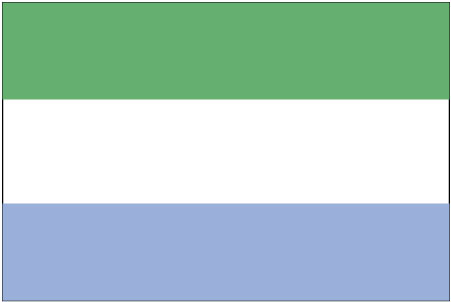
Sierra Leone
Declare Your Relationship to Sierra Leone
CountryReports Community
- Studying8
- From Sierra Leone0
- Sierra Leone heritage0
- Visited0
- Want to visit0
Customs and Culture
Customs and Culture
Cultural Attributes
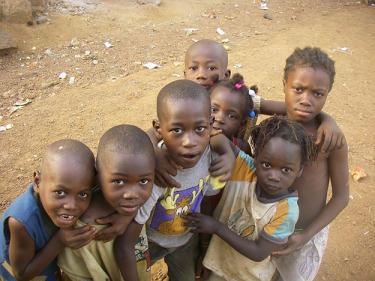
Sierra Leoneans are social people and enjoy joking and teasing. Common gestures include hand slapping and handshaking. When a mate has been chosen, the groom's parents set a "put shop" day. After this day, the bride-to-be can no longer entertain other boyfriends.

Lion Mountains Rising
Get More Customs and Culture
5 more cultural topics for members
Social Customs & Etiquette · Diet · Family · Dating Customs · Recreation
Every country, every topic, all activities & recipes
✓ Instant access on this device · ✓ No subscription
Holidays
Independence Day
4/27Independence Day
Christmas
12/25Christmas
In Freetown, the capital city festivities commence two or three weeks prior to Christmas. During this time bands tour the streets collection donations. Children accompany the adults who are masked as devils and the adults perform dances for profit. Popular masks include a fairy, the Jobai noted for its small head and flamboyant spinning and the Congoli or Gogoli with its large head. Sending Christmas cards is popular and festivities continue in the New Year.
Dates of Interest
- December
Tabaski, also known as Eid al-Adha, is a major Islamic holiday celebrated by Muslims in Sierra Leone and worldwide. It commemorates the willingness of Prophet Ibrahim (Abraham) to sacrifice his son as an act of obedience to God. Tabaski is observed with prayers, feasting, charitable giving, and the sacrifice of animals.
How do people greet each other in Sierra Leone?
English is the official language, but you'll hear local greetings depending on the region, and greetings typically involve a handshake and a warm smile.
Do
- Greet with a handshake and a warm smile
- Exchange pleasantries and ask about someone's well-being
Good to know
- In the north, Temne speakers greet with "seke" (hello) and say goodbye with "kwa"
- In the south, Mende speakers say "Bi wua/Buaa? Wu wua?" (good morning)
- In Krio, greet with "kushe/kabo" (hello)
What are the dining customs in Sierra Leone?
The largest meal is eaten at midday, often featuring foo-foo with plasa (plavar) sauce or jollof rice, and it's common to eat with your hands.
Do
- Wait to be invited to start eating
- Wash your hands before meals
- Follow your hosts' lead on table manners
Don’t
- Don't eat with your left hand
Good to know
- Foo-foo, a dough-like paste made from cassava, is a staple noon meal
- Jollof rice is a popular dish
What etiquette should I follow when visiting Sierra Leone?
Politeness, humility, and respect for elders and religion are highly valued; remove your shoes before entering homes and always ask before taking photos.
Do
- Remove your shoes before entering someone's home
- Use respectful language and gestures with elders
- Bring a small gift like fruit or sweets when invited to a home
- Ask permission before photographing people
Don’t
- Don't give alcohol as a gift
- Don't boast or speak loudly
- Don't disrespect religious customs, objects, or places of worship
- Don't make negative comments about local culture or customs
Good to know
- Attend services quietly if visiting a mosque or church
How should I dress in Sierra Leone?
Modest dress is appreciated, and lightweight, breathable fabrics like cotton and linen suit the tropical climate; Western clothing is common in cities while traditional attire appears on special occasions.
Do
- Dress modestly, especially in religious or conservative settings
- Wear lightweight, breathable fabrics for the heat
Don’t
- Don't wear revealing clothing, particularly in rural communities
Good to know
- In Muslim-majority northern and eastern areas, women often wear hijabs and modest clothing
- Traditional attire like "bubus," head ties, dashikis, and khaftans is worn for weddings and festivals
Which gestures are considered rude in Sierra Leone?
Several gestures can cause offense, especially those involving the left hand, pointing, or the soles of your feet.
Don’t
- Don't point directly at someone with your index finger
- Don't use your left hand to hand items, eat, or gesture
- Don't show the soles of your feet toward people or religious objects
- Avoid excessive public displays of affection
Good to know
- Gesture with an open hand or a nod to indicate direction
- Keep feet flat on the ground or tucked beneath you when sitting
What is family life like in Sierra Leone?
Families center on parents and children, but extended family is important and members are expected to care for their elders.
Good to know
- In most families, women handle household chores, including carrying wood and water in rural areas
What do people do for fun in Sierra Leone?
Football is the most popular sport, and people also enjoy music, dance, beaches, hiking, festivals, markets, and community gatherings.
Good to know
- Football pickup games and organized matches are widespread
- Beaches offer swimming, sunbathing, and beach volleyball
- Explore nature at Outamba-Kilimi National Park or Tacugama Chimpanzee Sanctuary
- Music, dance, and cultural festivals are central to social life
Last updated: 2026-07-12 · Sources: CountryReports
Photos of Sierra Leone
Photos of Sierra Leone


Travel and Tourism
Travel and Tourism
- Travel Alert Status
- Level 2: Exercise Increased Caution
- Currency
- leone (SLL)
- Time Difference
- UTC 0 (5 hours ahead of Washington, DC, during Standard Time)
- Airports
- 10
Read the full travel guide — health, safety, vaccinations, disease risk, sanitation, and transit details.
View full travel guideRecipes
Recipes
History
History
Historical Eras
Pre-Colonial Era
1000 – 1787
Diverse indigenous peoples, including the Temne, Mende, and Limba, established complex societies across the Sierra Leone peninsula and interior. Portuguese explorer Pedro de Sintra named the region 'Serra Lyoa' in 1462, initiating European contact and eventually the transatlantic slave trade, which profoundly disrupted local communities. By the 1700s, Sierra Leone was a significant source of enslaved people prized for their rice-farming expertise in the American South.
Freetown Settlement
1787 – 1808
In 1787, British abolitionists sponsored the resettlement of roughly 400 freed Black loyalists, formerly enslaved people, and London's 'Black Poor' in a self-styled 'Province of Freedom' on the Sierra Leone peninsula. Disease, hostile relations with the Temne, and administrative failures devastated early settlers, yet the colony persisted, bolstered by waves of liberated enslaved Africans and Nova Scotian Black loyalists. The settlement coalesced into Freetown, becoming one of Britain's first footholds in West Africa.
British Crown Colony
1808 – 1961
Freetown became a formal Crown Colony in 1808, serving as a strategic base for the Royal Navy's anti-slavery patrols and a hub of British West African administration. Thousands of recaptured Africans, collectively known as Krio, were liberated here, forming a distinctive creolized culture and a professional class that dominated regional commerce and education. Fourah Bay College, founded in 1827, made Sierra Leone the intellectual center of British West Africa for over a century, while the interior remained a separate Protectorate from 1896.
Independence & Early Republic
1961 – 1991
Sierra Leone achieved independence peacefully on 27 April 1961 under Prime Minister Sir Milton Margai and his Sierra Leone People's Party, adopting a parliamentary system within the Commonwealth. The post-independence decades were turbulent: a succession of coups and counter-coups culminated in Siaka Stevens's long authoritarian rule from 1968, during which a one-party state was formalized under the All People's Congress in 1978. By the late 1980s, endemic corruption and economic mismanagement under President Joseph Momoh had severely weakened state institutions.
Civil War
1991 – 2002
In March 1991 the Revolutionary United Front (RUF), backed by Liberian warlord Charles Taylor, launched an insurgency that plunged Sierra Leone into a decade of catastrophic violence marked by mass amputations, child soldier recruitment, and the displacement of more than two million people. A 1997 military coup by the Armed Forces Revolutionary Council briefly allied the junta with the RUF before a Nigerian-led ECOWAS force restored elected President Ahmad Tejan Kabbah in 1998. UN peacekeepers, the Lomé Peace Accord of 1999, and ultimately British military intervention in 2000 broke the RUF's power; the war was formally declared over in January 2002.
Post-War Reconstruction
2002 – present
Following the 2002 elections, Sierra Leone embarked on a fragile recovery supported by UNAMSIL peacekeepers, the Special Court for Sierra Leone, and international development aid. The Truth and Reconciliation Commission documented wartime abuses while successive governments—alternating between the SLPP and APC—worked to rebuild infrastructure, strengthen democratic institutions, and develop the country's substantial diamond, iron ore, and rutile resources. Persistent challenges including the 2014–2016 Ebola crisis and high youth unemployment continue to test the resilience of the post-conflict state.
Overview
European contacts with Sierra Leone were among the first in West Africa. In 1652, the first slaves in North America were brought from Sierra Leone to the Sea Islands off the coast of the southern United States. During the 1700s there was a thriving trade bringing slaves from Sierra Leone to the plantations of South Carolina and Georgia where their rice-farming skills made them particularly valuable.
Every country, every topic, all activities & recipes
✓ Instant access on this device · ✓ No subscription
Timeline of Key Events
1787
The British establish a refuge for freed slaves.
The British establish a refuge for freed slaves in a small portion of their West African territory now known as Sierra Leone. An area called Freetown receives 400 freedmen.
1808
Freetown settlement becomes crown colony.
Freetown settlement becomes crown colony.
1961
Sierra Leone becomes independent.
Sierra Leone becomes independent.
1991
Start of civil war.
Start of civil war.
1997
The Commonwealth suspends Sierra Leone.
The Commonwealth suspends Sierra Leone.
1999
A ceasefire is greeted with cautious optimism in Freetown.
A ceasefire is greeted with cautious optimism in Freetown amid hopes that eight years of civil war may soon be over.
2002
War declared over.
War declared over. UN mission says disarmament of 45,000 fighters is complete. Government, UN agree to set up war crimes court.
Read the full history profile — narrative overview, defining eras, and the complete timeline in one place.
View expanded historyInteresting Facts
Interesting Facts
Sierra Leone has the world's highest death rate with 25.1 per 1,000 people.
The name of the country in Portuguese mean "Lion Mountains"
See every fact — trivia, oddities, and curious tidbits gathered from across the country.
View all interesting factsGeography and Environment
Geography and Environment
- Terrain
- coastal belt of mangrove swamps, wooded hill country, upland plateau, mountains in east
- Climate
- The tropical climate has rainy and dry seasons, high temperatures, and almost constant humidity. The rainy season extends from May to November but is heaviest between July and September, when over half of the annual rainfall occurs. In Freetown, annual rainfall is 150 inches or more; inland areas receive less. The beginning and end of the rainy season are marked by frequent strong electrical storms, similar to those occurring during the hot summer months in the eastern U.S. Coastal temperatures during the rainy season range from a daily high of about 80°F. to a nightly low of about 76°F. Relative humidity in Freetown rarely falls below 80%, except when the harmattan reaches the coast. This current of dry, dusty air flows from the Sahara Desert toward the south and west, usually reaching Sierra Leone in December. During this season, which lasts through February, Freetown experiences its coolest weather.
- Natural Hazards
- dry, sand-laden harmattan winds blow from the Sahara (December to February); sandstorms, dust storms
- Current Environmental Issues
- rapid population growth pressuring the environment; overharvesting of timber, expansion of cattle grazing, and slash-and-burn agriculture have resulted in deforestation and soil exhaustion; civil war depleting natural resources; overfishing
Read the full geography and environment profile — terrain, climate, natural resources, hazards, land use, and international agreements.
View full geographyPeople & Demographics
People & Demographics
Religion
Languages Spoken
English (official, regular use limited to literate minority), Mende (principal vernacular in the south), Temne (principal vernacular in the north), Krio (English-based Creole, spoken by the descendants of freed Jamaican slaves who were settled in the Freetown area, a lingua franca and a first language for 10% of the population but understood by 95%)
- English
Population
- Population
- 8,791,092
- Population in Major Urban Areas
- FREETOWN (capital) 941,000
- Nationality Noun
- Sierra Leonean(s)
- Ethnic Groups
- 20 native African tribes 90% (Temne 30%, Mende 30%, other 30%), Creole (Krio) 10% (descendants of freed Jamaican slaves who were settled in the Freetown area in the late-18th century), refugees from Liberia's recent civil war, small numbers of Europeans,
Education
- Literacy Definition
- age 15 and over can read and write English, Mende, Temne, or Arabic
Health Information
- Major Infectious Diseases — degree of risk
- very high
Life Expectancy
- Life Expectancy at Birth
- Life expectancy at birth in Sierra Leone stands at approximately 61 years overall, with women averaging around 63 years and men around 59 years. These figures, while reflecting meaningful improvement over the past two decades, still rank among the lower life expectancy averages globally, underscoring the significant public health challenges the country continues to face. Sierra Leone's life expectancy was severely impacted by a brutal civil war that lasted from 1991 to 2002, which devastated the country's health infrastructure and led to widespread mortality. The subsequent recovery period saw gradual improvements, but the 2014–2016 Ebola virus outbreak dealt another serious blow, killing thousands and overwhelming an already fragile healthcare system. That epidemic contributed to a temporary decline in life expectancy and set back years of hard-won health sector progress. Several interconnected factors continue to suppress life expectancy in Sierra Leone. The country has one of the highest maternal mortality rates in the world, with estimates exceeding 400 deaths per 100,000 live births in recent years. Child mortality also remains elevated, with preventable diseases such as malaria, pneumonia, and diarrheal illness accounting for a large share of deaths among children under five. Access to clean water, sanitation, and skilled healthcare providers remains limited, particularly in rural and remote areas where the majority of the population lives. Infectious disease remains a leading driver of premature death. Malaria is endemic throughout the country and is a major cause of mortality across all age groups. HIV/AIDS, tuberculosis, and acute respiratory infections also contribute significantly to the overall disease burden. Positive trends are nonetheless emerging. Vaccination campaigns, improved maternal and child health programs, and increased investment in healthcare infrastructure have contributed to gradual gains in life expectancy over recent decades. International partnerships with organizations such as the World Health Organization and UNICEF have supported expanded access to essential medicines and trained health workers, helping to strengthen a system that remains under considerable strain. Despite ongoing challenges, the upward trajectory in life expectancy reflects resilience and incremental progress. Continued investment in primary healthcare, nutrition, and disease prevention will be critical to sustaining and accelerating these gains in the years ahead.
- Infant Mortality Rate
- Infant mortality remains one of the most pressing public health challenges facing the country. As of the most recent available data, the infant mortality rate stands at approximately 78 deaths per 1,000 live births, meaning that roughly 1 in every 13 infants born does not survive to reach their first birthday. This figure places the nation among the countries with the highest infant mortality rates in the world and significantly above the global average of around 27 deaths per 1,000 live births. The causes of infant death are closely tied to underlying health system weaknesses and socioeconomic conditions. Neonatal infections, malaria, pneumonia, diarrheal diseases, and complications arising from preterm birth are among the leading direct causes. Malnutrition compounds the risk considerably, leaving infants more vulnerable to illness and less able to recover. Access to skilled birth attendants remains limited in many rural areas, and a shortage of trained healthcare workers, medical supplies, and functioning health facilities contributes significantly to preventable deaths. The 2014–2016 Ebola outbreak had a devastating secondary effect on infant health by disrupting an already fragile healthcare infrastructure, causing declines in vaccination coverage and maternal health service utilization. Recovery from that crisis, combined with ongoing efforts from the national government and international partners such as UNICEF and the World Health Organization, has led to gradual but measurable improvements over the past decade. The infant mortality rate has declined from over 150 deaths per 1,000 live births in the early 2000s, reflecting real progress in areas such as childhood immunization, insecticide-treated bed net distribution, and community health worker programs. Despite these gains, the pace of improvement must accelerate considerably if the country is to meet internationally agreed child health targets. Urban-rural disparities remain stark, with infants born in remote provinces facing substantially higher mortality risks than those born in or near the capital, Freetown. Continued investment in maternal care, clean water access, and nutritional support programs will be essential to sustaining and building upon the progress achieved.
Read the full people and society profile — demographics, health, education, religion, languages, and notable people.
View full people and societyGovernment & Politics
Government & Politics
Country Identity
- Country Name
- SierraLeone
- Full Country Name
- Republic of Sierra Leone
Government Structure
- Government Type
- constitutional democracy
- Legal System
- based on English law and customary laws indigenous to local tribes; has not accepted compulsory ICJ jurisdiction
- Executive Branch
- chief of state: President Julius Maada BIO (since 4 April 2018, reelected 26 June 2023); note - the president is both the chief of state and head of government head of government: President Julius Maada BIO (since 4 April 2018, reelected 26 June 2023); note - the president is both the chief of state and head of government cabinet: Ministers of State appointed by the president with the approval of Parliament; the cabinet is responsible to the president elections: president elected by popular vote for a five-year term; election last held on 24 June 2023 (next to be held in 2028); note - a candidate must win more than 55% of the vote to avoid a runoff; the president's tenure of office is limited to two five-year terms election results: Julius Maada BIO reelected president; percent of vote - Julius Maada BIO (SLPP) 56.2%, Samura KAMARA (APC) 41.2%
- Legislative Branch
- Unicameral Parliament (149 seats — 132 elected by popular vote through a proportional representation system, and 17 seats reserved for Paramount Chiefs elected in separate chiefdom elections; members serve five-year terms) Elections: Last held on June 24, 2023 (next to be held in 2028) Election results: Percent of vote by party — Sierra Leone People's Party (SLPP) 55.8%, All People's Congress (APC) 40.2%, others 4%; seats by party — SLPP 81, APC 54, C4C 2, NGC 1, others 9; Paramount Chiefs 17
- Judicial Branch
- Supreme Court; Appeals Court; High Court
- Suffrage
- 18 years of age; universal
- Constitution
- 1 October 1991; subsequently amended several times
- Independence
- 27 April 1961 (from UK)
- National Holiday
- Independence Day, 27 April (1961)
Capital City
- Capital Name
- Freetown
- Capital - geographic coordinate
- 8 29 N, 13 14 W
- Capital Time Difference
- UTC 0 (5 hours ahead of Washington, DC, during Standard Time)
name derived from the fact that the original settlement served as a haven for free-born and freed African Americans, as well as for liberated Africans rescued from slave ships
Military
Branches: Republic of Sierra Leone Armed Forces (RSLAF): Army (includes Maritime Wing and Air Wing)
Embassy / Diplomatic Mission
Embassy Freetown
Southridge, Hill Station
Telephone: (232) (76) 515 000
Emergency after-hours telephone: (232) (76) 515 000
Email: consularfreetown@state.gov
Read the full government profile — flag symbolism, national anthem, and other national symbols.
View full government detailsEconomy
Economy
Sierra Leone is one of the world's poorest countries, with significant inequality in income distribution despite possessing substantial mineral, agricultural, and fishery resources.
Snapshot
- Currency Name and Code
- Leone (SLL)
- GDP — official exchange rate
- $1,128,000,000 (USD)
- GDP Real Growth Rate
- 4.7%
- Gini Index
- 62.9
Every country, every topic, all activities & recipes
✓ Instant access on this device · ✓ No subscription
News & Weather
News & Weather
Current Weather
Latest News
Former UConn football players build school, church in Sierra Leone - NBC Connecticut
NBC Connecticut · 1d ago
EU cuts aid to Sierra Leone over its help to convicted cocaine kingpin, Netherlands says - Reuters
Reuters · 6d ago
Jenner & Block Says Sierra Leone Is Late On $4M Deal - Law360
Law360 · 1d ago
Dutch fugitive Leijdekkers allegedly funnels billions in drug money into Sierra Leone - NL Times
NL Times · 4d ago
Sierra Leone activists reach Spain, fleeing arrest and death threats - Erasing 76 Crimes
Erasing 76 Crimes · 2d ago
[SMM Titanium Flash] Kinetic Development has started a production lin - Shanghai Metals Market
Shanghai Metals Market · 21h ago
Sierra Leonean President Bio, Elumelu rally West African private sector to turn regional potential into investment, jobs - Premium Times Nigeria
Premium Times Nigeria · 21m ago
He was one of the world’s most wanted men. So he bought a west African country - The Economist
The Economist · 19d ago
News via Google News
Videos
Videos
1 curated YouTube videos.
Source: YouTube
Frequently Asked Questions
Frequently Asked Questions
What is the population of Sierra Leone?
What is the capital of Sierra Leone?
Where is Sierra Leone located?
What countries border Sierra Leone?
What is the predominant religion in Sierra Leone?
What currency does Sierra Leone use?
What languages are spoken in Sierra Leone?
What is Sierra Leone known for?
What is the recent history of Sierra Leone's civil conflict?
Last reviewed 2026