
 English
 Español
 中文
中文 हिन्दी
 Français
Government and Politics
Government and Politics of Western Sahara
Government structure, leadership, capital, military, and national symbols of Western Sahara.
Government Structure
Constitutional foundations, branches, parties, and leadership.
- Government Type
- legal status of territory and issue of sovereignty unresolved; territory contested by Morocco and Polisario Front (Popular Front for the Liberation of the Saguia el Hamra and Rio de Oro), which in February 1976 formally proclaimed a government-in-exile of
- Administrative Divisions
- none (under de facto control of Morocco)
- Suffrage
- none; a UN-sponsored voter identification campaign not yet completed
- Executive Branch
- The executive branch of Western Sahara is a subject of considerable complexity, as the territory remains one of the world's last major unresolved colonial disputes. Sovereignty is contested between the Kingdom of Morocco, which administers approximately 80 percent of the territory, and the Sahrawi Arab Democratic Republic (SADR), a government-in-exile recognized by numerous African and Latin American states but not by the United Nations or the United States. Morocco governs its administered portion of Western Sahara through a centralized structure that mirrors its domestic system. The Moroccan king, currently King Mohammed VI, exercises ultimate executive authority over the territory. Day-to-day administration is carried out through royal-appointed officials and regional governance bodies. Morocco formally designated Western Sahara as its "Southern Provinces" and has implemented a regionalization plan that includes the Laâyoune-Sakia El Hamra and Dakhla-Oued Ed-Dahab regions, each overseen by a wali (governor) appointed by Rabat. The SADR, headquartered in the Tindouf refugee camps of southwestern Algeria, operates a parallel government structure with its own executive leadership. The SADR president serves as head of state and also holds the position of Secretary-General of the Polisario Front, the political and military movement that has led the Sahrawi independence cause since 1973. Brahim Ghali has served as SADR president since 2016. The SADR also maintains a prime minister and a Council of Ministers responsible for overseeing administrative functions within the refugee camp communities and in the small liberated territories east of the Moroccan-built sand wall known as the Berm. The United Nations has sought a negotiated political solution through its Mission for the Referendum in Western Sahara (MINURSO), established in 1991. However, a binding referendum on the territory's final status has never been held, leaving the executive governance of Western Sahara effectively divided between two competing authorities with no internationally agreed resolution in sight.
- Legislative Branch
- Western Sahara presents one of the most complex and contested governance situations in the world, and as a result, it does not have a single, universally recognized legislative body. The territory's political and legal status remains unresolved, with competing authorities each claiming legitimacy over the region. Morocco, which administers the majority of Western Sahara's territory, incorporates the area into its own governmental framework. Under Moroccan administration, Western Sahara is divided into several provinces and regions, and residents participate in Moroccan national elections. Representatives from these regions hold seats in Morocco's bicameral Parliament, which consists of the Chamber of Representatives (lower house) and the Chamber of Counselors (upper house). Morocco's 2011 constitution granted expanded autonomy to its regions, and this framework has been extended to the Moroccan-administered portions of Western Sahara. The Polisario Front, the Sahrawi nationalist movement that controls the eastern portions of the territory and operates the Sahrawi Arab Democratic Republic (SADR) from refugee camps near Tindouf, Algeria, maintains its own parallel governing institutions. The SADR's legislative body is the Sahrawi National Council, which functions as a parliament for the self-proclaimed republic. The Sahrawi National Council consists of elected members drawn primarily from Sahrawi refugee communities and acts as the legislative authority of the SADR, passing laws and overseeing the activities of the SADR government. The SADR has been recognized by a number of African and developing nations, though it is not recognized by the United Nations as a sovereign state. The United Nations has been engaged in efforts to broker a political solution since the early 1990s. The UN Mission for the Referendum in Western Sahara (MINURSO) was established in 1991 to facilitate a self-determination referendum, though that referendum has never taken place. Until a final political settlement is reached, Western Sahara will continue to operate under this divided and disputed governance structure, with no single legislative branch holding authority over the entire territory.
- Election Results
- Western Sahara does not hold recognized national elections, as the territory's political status remains one of the world's most protracted and unresolved disputes. The region is largely administered by Morocco, which has controlled the majority of the territory since the withdrawal of Spanish colonial authority in 1975–1976. Morocco considers Western Sahara its "Southern Provinces" and incorporates the territory into its own administrative and electoral framework. Residents in Moroccan-administered areas participate in Moroccan national elections, including those for the House of Representatives and regional councils, under Moroccan law. The Polisario Front, a liberation movement backed by Algeria, controls a smaller eastern strip of territory known as the liberated zones and administers a refugee population in camps near Tindouf, Algeria. The Polisario Front has established its own political structure, the Sahrawi Arab Democratic Republic (SADR), which holds internal elections for its governing bodies, including the National Secretariat and the Sahrawi National Council. However, the SADR is not recognized by Morocco or the United Nations as a sovereign government, and its elections carry no internationally recognized legitimacy in terms of statehood. The United Nations has long sought a resolution through a referendum that would allow the Sahrawi people to vote on self-determination — choosing between independence, integration with Morocco, or some form of autonomy. This referendum was originally planned for 1992 under the UN Mission for the Referendum in Western Sahara (MINURSO), established in 1991 following a ceasefire agreement. However, the referendum has never taken place due to persistent disagreements between Morocco and the Polisario Front over voter eligibility criteria and other fundamental issues. Morocco has proposed a plan of broad autonomy for the territory under Moroccan sovereignty, while the Polisario Front continues to demand a full self-determination vote that includes the option of independence. As of the most recent reporting period, no date for a UN-supervised referendum has been set, leaving Western Sahara in a unique political limbo without a functioning independent electoral system recognized by the international community.
- Independence
- Arab, Berber
- International Organization Participation
- none
- Diplomatic Representation in the U.S.
- none
Capital City
Seat of government and political history.
- Capital City
- Laayoune (administrative center)
- Time Difference
- UTC 0 (5 hours ahead of Washington, DC, during Standard Time)
National Symbols
Flag, anthem, and other symbols of national identity.
National Flag
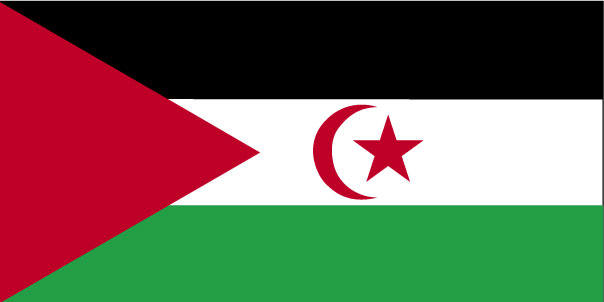
- Date of Adoption
- 27 February 1976
National Anthem
- Anthem History
- Currently administered as a territory of Morocco