
 English
 Español
 中文
中文 हिन्दी
 Français
Government and Politics
Government and Politics of United Kingdom
Government structure, leadership, capital, military, and national symbols of United Kingdom.
Government Structure
Constitutional foundations, branches, parties, and leadership.
- Government Type
- constitutional monarchy
- Administrative Divisions
- England - 47 boroughs, 36 counties*, 29 London boroughs**, 12 cities and boroughs***, 10 districts****, 12 cities*****, 3 royal boroughs******; Barking and Dagenham**, Barnet**, Barnsley, Bath and North East Somerset****, Bedfordshire*, Bexley**, Birmingham***, Blackburn with Darwen, Blackpool, Bolton, Bournemouth, Bracknell Forest, Bradford***, Brent**, Brighton and Hove, City of Bristol*****, Bromley**, Buckinghamshire*, Bury, Calderdale, Cambridgeshire*, Camden**, Cheshire*, Cornwall*, Coventry***, Croydon**, Cumbria*, Darlington, Derby*****, Derbyshire*, Devon*, Doncaster, Dorset*, Dudley, Durham*, Ealing**, East Riding of Yorkshire****, East Sussex*, Enfield**, Essex*, Gateshead, Gloucestershire*, Greenwich**, Hackney**, Halton, Hammersmith and Fulham**, Hampshire*, Haringey**, Harrow**, Hartlepool, Havering**, Herefordshire*, Hertfordshire*, Hillingdon**, Hounslow**, Isle of Wight*, Islington**, Kensington and Chelsea******, Kent*, City of Kingston upon Hull*****, Kingston upon Thames******, Kirklees, Knowsley, Lambeth**, Lancashire*, Leeds***, Leicester*****, Leicestershire*, Lewisham**, Lincolnshire*, Liverpool***, City of London*****, Luton, Manchester***, Medway, Merton**, Middlesbrough, Milton Keynes, Newcastle upon Tyne***, Newham**, Norfolk*, Northamptonshire*, North East Lincolnshire****, North Lincolnshire****, North Somerset****, North Tyneside, Northumberland*, North Yorkshire*, Nottingham*****, Nottinghamshire*, Oldham, Oxfordshire*, Peterborough*****, Plymouth*****, Poole, Portsmouth*****, Reading, Redbridge**, Redcar and Cleveland, Richmond upon Thames**, Rochdale, Rotherham, Rutland****, Salford***, Shropshire*, Sandwell, Sefton, Sheffield***, Slough, Solihull, Somerset*, Southampton*****, Southend-on-Sea, South Gloucestershire****, South Tyneside, Southwark**, Staffordshire*, St. Helens, Stockport, Stockton-on-Tees, Stoke-on-Trent*****, Suffolk*, Sunderland***, Surrey*, Sutton**, Swindon, Tameside, Telford and Wrekin****, Thurrock, Torbay, Tower Hamlets**, Trafford, Wakefield***, Walsall, Waltham Forest**, Wandsworth**, Warrington, Warwickshire*, West Berkshire****, Westminster***, West Sussex*, Wigan, Wiltshire*, Windsor and Maidenhead******, Wirral, Wokingham****, Wolverhampton, Worcestershire*, York*****; Northern Ireland - 24 districts, 2 cities*, 6 counties**; Antrim, County Antrim**, Ards, Armagh, County Armagh**, Ballymena, Ballymoney, Banbridge, Belfast*, Carrickfergus, Castlereagh, Coleraine, Cookstown, Craigavon, Down, County Down**, Dungannon, Fermanagh, County Fermanagh**, Larne, Limavady, Lisburn, County Londonderry**, Derry*, Magherafelt, Moyle, Newry and Mourne, Newtownabbey, North Down, Omagh, Strabane, County Tyrone**; Scotland - 32 council areas; Aberdeen City, Aberdeenshire, Angus, Argyll and Bute, The Scottish Borders, Clackmannanshire, Dumfries and Galloway, Dundee City, East Ayrshire, East Dunbartonshire, East Lothian, East Renfrewshire, City of Edinburgh, Falkirk, Fife, Glasgow City, Highland, Inverclyde, Midlothian, Moray, North Ayrshire, North Lanarkshire, Orkney Islands, Perth and Kinross, Renfrewshire, Shetland Islands, South Ayrshire, South Lanarkshire, Stirling, West Dunbartonshire, Eilean Siar (Western Isles), West Lothian; Wales - 11 county boroughs, 9 counties*, 2 cities and counties**; Isle of Anglesey*, Blaenau Gwent, Bridgend, Caerphilly, Cardiff**, Ceredigion*, Carmarthenshire*, Conwy, Denbighshire*, Flintshire*, Gwynedd, Merthyr Tydfil, Monmouthshire*, Neath Port Talbot, Newport, Pembrokeshire*, Powys*, Rhondda Cynon Taff, Swansea**, Torfaen, The Vale of Glamorgan*, Wrexham
- Legal System
- common law tradition with early Roman and modern continental influences; has judicial review of Acts of Parliament under the Human Rights Act of 1998; accepts compulsory ICJ jurisdiction, with reservations
- Suffrage
- 18 years of age; universal
- Citizenship
- citizenship by birth: no citizenship by descent only: at least one parent must be a citizen of the United Kingdom dual citizenship recognized: yes residency requirement for naturalization: 5 years
- Executive Branch
- chief of state: King CHARLES III (since 8 September 2022); Heir Apparent Prince WILLIAM (Prince of Wales, born 21 June 1982) head of government: Prime Minister Keir STARMER (since 5 July 2024) cabinet: Cabinet of Ministers appointed by the prime minister elections: none; the monarchy is hereditary; following legislative elections, the leader of the majority party or the leader of the majority coalition is usually the prime minister
- Legislative Branch
- Bicameral Parliament comprised of the House of Lords (consists of approximately 800 members, including life peers appointed by the Crown on the advice of the Prime Minister, 92 hereditary peers elected by their peers to remain following the House of Lords Act 1999, and 26 Lords Spiritual representing the Church of England) and the House of Commons (650 seats; members are elected by popular vote using a first-past-the-post system to serve terms of up to five years unless the House is dissolved earlier). Elections: House of Lords - no general elections (hereditary peer vacancies are filled by by-elections among peers of the same party or grouping); House of Commons - last held on 4 July 2024. Election results: House of Commons - percent of vote by party - Labour 33.7%, Conservative 23.7%, Liberal Democrats 12.2%, Reform UK 14.3%, Scottish National Party (SNP) 2.5%, other 13.6%; seats by party - Labour 412, Conservative 121, Liberal Democrats 72, Reform UK 5, SNP 9, other 31. Note: Devolved legislatures operate in Scotland (Scottish Parliament), Wales (Senedd Cymru/Welsh Parliament), and Northern Ireland (Northern Ireland Assembly). The Scottish Parliament and Welsh Parliament were established following referendums and elections in 1999. The Northern Ireland Assembly, established under the Good Friday Agreement, has experienced several suspensions since its creation, most recently between February 2022 and February 2024, when a new power-sharing Executive was restored.
- Judicial Branch
- House of Lords (highest court of appeal; several Lords of Appeal in Ordinary are appointed by the monarch for life); Supreme Courts of England, Wales, and Northern Ireland (comprising the Courts of Appeal, the High Courts of Justice, and the Crown Courts); Scotland's Court of Session and Court of the Justiciary
- Political Parties
- Conservative and Unionist Party [David CAMERON]; Democratic Unionist Party (Northern Ireland) [Rev. Ian PAISLEY]; Labor Party [Anthony (Tony) BLAIR]; Liberal Democrats [Charles KENNEDY]; Party of Wales (Plaid Cymru) [Dafydd IWAN]; Scottish National Party or SNP [Alex SALMOND]; Sinn Fein (Northern Ireland) [Gerry ADAMS]; Social Democratic and Labor Party or SDLP (Northern Ireland) [Mark DURKAN]; Ulster Unionist Party (Northern Ireland) [Sir Reg EMPEY]
- Head of State
- King CHARLES III
- Head of Government
- Prime Minister David Cameron
- Cabinet
- Cabinet of Ministers appointed by the prime minister
- Elections
- House of Lords - no general elections (hereditary peer vacancies are filled by by-elections among peers of the same party or grouping); House of Commons - last held on 4 July 2024.
- Election Results
- House of Commons — percent of vote by party: Labour 33.7%, Conservative 23.7%, Reform UK 14.3%, Liberal Democrats 12.2%, Scottish National Party (SNP) 2.5%, other 13.6%; seats by party: Labour 412, Conservative 121, Liberal Democrats 72, Reform UK 5, SNP 9, other 31. These figures reflect the results of the July 2024 general election, in which Labour secured a substantial parliamentary majority under leader Keir Starmer despite winning just over a third of the popular vote, owing to the mechanics of the first-past-the-post electoral system. Note: Devolved legislatures operate in Scotland (Scottish Parliament), Wales (Senedd Cymru/Welsh Parliament), and Northern Ireland (Northern Ireland Assembly). The Scottish Parliament and Welsh Parliament were established following referendums and elections in 1999. The Northern Ireland Assembly, established under the Good Friday Agreement, has experienced several suspensions since its creation, most recently between February 2022 and February 2024, when a new power-sharing Executive was restored following an agreement that resolved a dispute over post-Brexit trading arrangements.
- Constitution
- unwritten; partly statutes, partly common law and practice
- Independence
- England has existed as a unified entity since the 10th century; the union between England and Wales, begun in 1284 with the Statute of Rhuddlan, was not formalized until 1536 with an Act of Union; in another Act of Union in 1707, England and Scotland
- National Holiday
- the UK does not celebrate one particular national holiday
- International Organization Participation
- AfDB, AsDB, Australia Group, BIS, C, CDB, CE, CERN, EAPC, EBRD, EIB, ESA, EU, FAO, G- 5, G- 7, G- 8, G-10, IADB, IAEA, IBRD, ICAO, ICC, ICCt, ICFTU, ICRM, IDA, IEA, IFAD, IFC, IFRCS, IHO, ILO, IMF, IMO, Interpol, IOC, IOM, ISO, ITU, MONUC, NAM (guest), NATO, NEA, NSG, OAS (observer), OECD, OPCW, OSCE, Paris Club, PCA, UN, UN Security Council, UNAMSIL, UNCTAD, UNESCO, UNFICYP, UNHCR, UNIDO, UNITAR, UNMEE, UNMIK, UNMIL, UNMOVIC, UNOMIG, UNRWA, UPU, WCO, WEU, WHO, WIPO, WMO, WTrO, ZC
- Diplomatic Representation in the U.S.
- chief of mission: Ambassador David G. MANNING chancery: 3100 Massachusetts Avenue NW, Washington, DC 20008 telephone: [1] (202) 588-6500 FAX: [1] (202) 588-7870 consulate(s) general: Atlanta, Boston, Chicago, Houston, Los Angeles, New York, Orlando, San Francisco consulate(s): Dallas, Denver, Miami, Seattle
- U.S. Diplomatic Representation
- chief of mission: Ambassador Robert Holmes TUTTLE embassy: 24/31 Grosvenor Square, London, W1A 1AE mailing address: PSC 801, Box 40, FPO AE 09498-4040 telephone: [44] (0) 20 7499-9000 FAX: [44] (0) 20 7629-9124 consulate(s) general: Belfast, Edinburgh
Capital City
Seat of government and political history.
- Capital City
- London
- Location
- 51 30 N, 0 05 W
- Time Difference
- UTC 0 (5 hours ahead of Washington, DC, during Standard Time) time zone note: the time statements apply to the United Kingdom proper, not to its crown dependencies or overseas territories
- History
- the name derives from the Roman settlement of Londinium, established on the current site of London around A.D. 43; the original meaning of the name is uncertain
Embassy and Diplomatic Representation
Embassy location and contact details.
U.S. Embassy London 24 Grosvenor Square, London W1K 6AH Telephone: 020-7499-9000 Telephone from the United States: 011-44-20-7499-9000 (24 hours) Consular fax: 020-7495-5012 Consular fax from the United States: 011-44-20-7495-5012 U.S. Consulate General Edinburgh, Scotland 3 Regent Terrace, Edinburgh EH7 5BW Telephone: 013-1556-8315 Telephone from the United States: 011-44-13-1556-8315 Emergency after-hours telephone: 020-7499-9000 Emergency after-hours telephone from the United States: 011-44-20-7499-9000 Fax: 0131-557-6023 Fax from the United States: 011-44-131-557-6023 U.S. Consulate General Belfast, Northern Ireland Danesfort House, 223 Stranmillis Road, Belfast BT9 5GR Telephone: 028-9038-6100 Telephone from the United States: 011-44-28-9038-6100 Emergency after-hours telephone: 01253 501106 Emergency after-hours telephone from the United States: 011-44-1253 501106 Fax: 028-9068-1301 Fax from the United States: 011-44-28-9068-1301 There is no U.S. consular representation in Gibraltar. You should direct passport questions from there to the U.S. Embassy in Madrid, located at Serrano 75, Madrid, Spain; telephone: 34-91-587-2200 and fax: 34-91-587-2303. You should direct all other inquiries to the U.S. Embassy in London.
Military
Branches, service obligations, expenditures, and manpower.
- Military Branches
- Army, Royal Navy (includes Royal Marines), Royal Air Force
- Service Age and Obligation
- 16-33 years of age (officers 17-28) for voluntary military service (with parental consent under 18); no conscription; women serve in military services, but are excluded from ground combat positions and some naval postings; as of October 2009, women comprised 12.1% of officers and 9% of enlisted personnel in the regular forces; must be citizen of the UK, Commonwealth, or Republic of Ireland; reservists serve a minimum of 3 years, to age 45 or 55; 17 years 6 months of age for voluntary military service by Nepalese citizens in the Brigade of Gurkhas; 16-34 years of age for voluntary military service by Papua New Guinean citizens
National Symbols
Flag, anthem, and other symbols of national identity.
National Flag
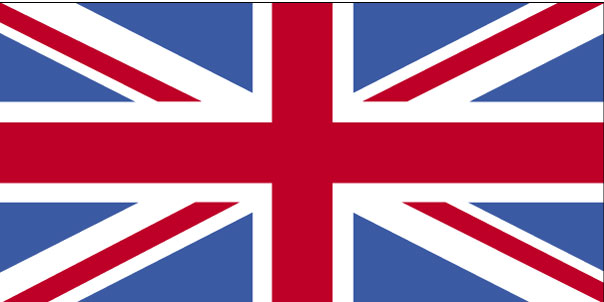
- Flag Symbolism
- blue field with the red cross of Saint George (patron saint of England) edged in white superimposed on the diagonal red cross of Saint Patrick (patron saint of Ireland), which is superimposed on the diagonal white cross of Saint Andrew (patron saint of Scotland); properly known as the Union Flag, but commonly called the Union Jack; the design and colors (especially the Blue Ensign) have been the basis for a number of other flags including other Commonwealth countries and their constituent states or provinces, as well as British overseas territories
- Date of Adoption
- 1 January 1801
National Anthem
- Anthem Lyrics (English)
- God Save the Queen God save our gracious Queen, Long live our noble Queen, God save the Queen! Send her victorious, Happy and glorious, Long to reign over us, God save the Queen! O lord God arise, Scatter our enemies, And make them fall! Confound their knavish tricks, Confuse their politics, On you our hopes we fix, God save the Queen! Not in this land alone, But be God's mercies known, From shore to shore! Lord make the nations see, That men should brothers be, And form one family, The wide world ov'er From every latent foe, From the assasins blow, God save the Queen! O'er her thine arm extend, For Britain's sake defend, Our mother, prince, and friend, God save the Queen! Thy choicest gifts in store, On her be pleased to pour, Long may she reign! May she defend our laws, And ever give us cause, To sing with heart and voice, God save the Queen! See also: Scotland Anthem Text put in wales here as well.
Other National Symbols
Coat of Arms
The function of the Royal coat of arms is to identify the person who is Head of State. In respect of the United Kingdom, the Royal arms are borne only by the Sovereign. The arms are used in the administration and government of the country, appearing on coins, in churches and on public buildings. They also appear on the products and goods of Royal warrant holders. The Sovereign's coat of arms has evolved over many years and reflects the history of the Monarchy and of the country. In the design the shield shows the various Royal emblems of different parts of the United Kingdom: the three lions of England in the first and fourth quarters, the lion of Scotland in the second and the harp of Ireland in the third. It is surrounded by a garter bearing the motto Honi soit qui mal y pense ('Evil to him who evil thinks'), which symbolises the Order of the Garter, an ancient order of knighthood of which the Queen is Sovereign. The shield is supported by the English lion and Scottish unicorn and is surmounted by the Royal crown. Below it appears the motto of the Sovereign, Dieu et mon droit ('God and my right'). The plant badges of the United Kingdom - rose, thistle and shamrock - are often displayed beneath the shield. Separate Scottish and English quarterings of the Royal arms originate from the Union of the Crown in 1603. The Scottish version of the Royal coat of arms shows the lion of Scotland in the first and fourth quarters, with that of England being in the second. The harp of Ireland is in the third quarter. A crest is not the same as a coat of arms. A crest is only one part of the full coat of arms: the three-dimensional object placed on top of the helm. The mottoes read 'In defence' and 'No one will attack me with impunity'. From the times of the Stuart kings, the Scottish quarterings have been used for official purposes in Scotland (for example, on official buildings and official publications). The special position of Wales as a Principality was recognised by the creation of the Prince of Wales long before the incorporation of the quarterings for Scotland and Ireland in the Royal Arms. The arms of the Prince of Wales show the arms of the ancient Principality in the centre as well as these quarterings. Coats of arms of members of the Royal Family are broadly similar to The Queen's with small differences to identify them.
Other
crown jewels
The Crown Jewels are the ceremonial treasures which have been acquired by English kings and queens, mostly since 1660. The collection includes not only the regalia used at coronations, but also crowns acquired by various monarchs, church and banqueting plate, orders, insignia, robes, a unique collection of medals and Royal christening fonts. Edward the Confessor (reigned 1042-66), who deposited his Royal ornaments for safe-keeping in Westminster Abbey, may have been the first monarch to assemble a regalia. These have been replaced or altered over the succeeding centuries. The Crown Jewels suffered their most disastrous fate following the execution of Charles I in the seventeenth century. In 1649 Cromwell ordered that the Royal regalia 'be totally broken' as being symbolic of the 'detestable rule of kings'. The regalia's precious stones were sold separately and the precious metal sent to the Mint to be coined, although other pieces (such as the Coronation Spoon dating from the twelfth century and later returned to Charles II) were sold intact. The Coronation Chair (dating from 1300) remained intact as it was used in 1653 at Westminster Hall when Cromwell was installed as Lord Protector. However, detailed records of the old regalia survived, and replacements for the lost regalia were made at a cost of nearly £12,185 for Charles II's coronation in 1661. Since Charles II's coronation, there have been many additions and alterations to the regalia. New sets of regalia had to be made in 1685 for James II's wife, Mary of Modena (the first Queen Consort to be crowned since the Restoration) and for Mary II in 1689 when she was crowned with her husband William III (as Queen in her own right). From the reign of Anne (crowned in 1702) until the early twentieth century, it was quite usual for the regalia to be set with jewels hired for the coronation only. Afterwards, the stones were returned to the jewellers and the regalia were sometimes re-set with crystals or paste and put in the Jewel House for display. The monarch would then use a State crown set with coloured jewels for Parliamentary use. The Crown Jewels have had a turbulent history. King John is said to have lost the Crown Jewels in quicksand in 1216. Edward III pawned the jewels to pay his troops during an overseas campaign. Charles I's wife also managed to pawn the Crown Jewels in Holland at the beginning of the Civil War. The most famous attempt at theft was in 1671 by Colonel Thomas Blood. He was caught at the East Gate of the Tower with the crown, one sceptre and the orb. During the Second World War the jewels were hidden in a secret location which has never been disclosed. More often, the crowns were dismantled, leaving only the frames. For example, George IV tried to persuade Parliament to buy the stones for his crown so that it could remain set as a permanent crown. He failed and the crown was eventually dismantled. Britain is the only European monarchy still using its regalia for the consecration ceremony of crowning the Sovereign. At Westminster Abbey, where William I was the first monarch to be crowned, the Sovereign is escorted to the Coronation Chair (used at every coronation since 1300) by individuals carrying the processional regalia. These include two of the Royal maces, three swords (representing Mercy, Spiritual Justice and Temporal Justice), the Great Sword of State (symbolising the Sovereign's Royal authority) and St Edward's Staff (dating from 1661). After the coronation oath comes the anointing by the Archbishop of Canterbury on the Sovereign's hands, breast and head, using the ampulla and spoon. The ampulla (dated 1661) is a golden eagle flask which holds the holy oil used in the anointing, whilst the spoon is the oldest piece in the regalia, probably made for Henry II or Richard I. The anointing is followed by dressing in the coronation robes (up to Queen Victoria's coronation in 1838, new robes were provided; George V and his successors have all worn the robes on display in the Jewel House). The spurs (dating from 1661 and representing knighthood and chivalry), the jewelled Sword of Offering (dating from 1820) and the armills (gold bracelets representing sincerity and wisdom, The Queen was given new armills by the Commonwealth for her coronation in 1953) are then presented. The Sovereign's Orb (representing Christian sovereignty) is placed in the Sovereign's right hand. Set with precious stones and pearls, it was made for Charles II's coronation, for a total cost of £1,150. The coronation ring (representing kingly dignity, and dating from 1831) and the sceptres are then presented. The Sceptre with the Cross symbolises the Sovereign's temporal power under the Cross, while the Sceptre with Dove - or Rod of Equity and Mercy - symbolises the Sovereign's spiritual role. The climax comes when the Archbishop of Canterbury places St Edward's Crown on the Sovereign's head. Portrait of The Queen with the coronation regalia © Cecil Beaton / Camera Press Some of the regalia are used at times other than coronations: for example, at the State Opening of Parliament. On such occasions, the Imperial State Crown is removed from the display case in the Jewel House at the Tower of London and a label is left with the simple message 'In use'. The Crown Jewels have been housed in the Tower of London since 1303 following a theft from Westminster Abbey. After the Restoration of Charles II, the regalia were kept in a locked cupboard at the Tower of London and shown to visitors by the unpaid custodian in return for a viewing fee. After Colonel Blood's near success in stealing the Crown Jewels, this informal arrangement ended and an armed guard was provided. In the eighteenth century, visitors were locked into the windowless room with an armed guard outside and viewed the regalia from their seats. Today the Crown Jewels are kept in a Jewel House at the Tower of London, opened by The Queen in 1994. The Crown Jewels are part of the national heritage and held by The Queen as Sovereign.