
 English
 Español
 中文
中文 हिन्दी
 Français
政府与政治
英国的政府与政治
英国的政府结构、领导人、首都、军事和国家象征。
政府结构
宪法基础、权力分支、政党和领导层。
- 政府类型
- 君主立宪制
- 行政区划
- 英格兰 - 47个自治市镇、36个郡*、29个伦敦自治市镇**、12个市及自治市镇***、10个地区****、12个城市*****、3个皇家自治市镇******;巴金和达根汉**、巴尼特**、巴恩斯利、巴斯和东北萨默塞特****、贝德福德郡*、贝克斯利**、伯明翰***、布莱克本和达温、黑池、博尔顿、伯恩茅斯、布拉克内尔森林、布拉德福德***、布伦特**、布莱顿和霍夫、布里斯托尔城*****、布罗姆利**、白金汉郡*、伯里、卡尔德谷、剑桥郡*、卡姆登**、柴郡*、康沃尔郡*、考文垂***、克罗伊登**、坎布里亚郡*、达灵顿、德比城*****、德比郡*、德文郡*、唐卡斯特、多塞特郡*、达德利、杜伦郡*、伊灵**、东约克郡****、东苏塞克斯郡*、恩菲尔德**、埃塞克斯郡*、盖茨黑德、格洛斯特郡*、格林威治**、哈克尼**、哈尔顿、哈默史密斯和富勒姆**、汉普郡*、哈林盖**、哈罗**、哈特尔浦、哈弗林**、赫里福德郡*、赫特福德郡*、希灵登**、豪恩斯洛**、怀特岛*、伊斯灵顿**、肯辛顿和切尔西****、肯特郡*、金斯顿-雨-赫尔城*****、泰晤士河上金斯顿****、柯克利斯、诺斯利、兰贝斯**、兰开夏郡*、利兹***、莱斯特城*****、莱斯特郡*、莱瑟姆**、林肯郡*、利物浦***、伦敦城*****、卢顿、曼彻斯特***、梅德韦、默顿**、米德尔斯堡、米尔顿凯恩斯、纽卡斯尔-雨-泰恩***、纽汉**、诺福克郡*、北安普敦郡*、北东林肯郡****、北林肯郡****、北萨默塞特****、北泰恩赛德、诺森伯兰郡*、北约克郡*、诺丁汉城*****、诺丁汉郡*、奥德汉、牛津郡*、彼得伯勒城*****、普利茅斯城*****、普尔、朴茨茅斯城*****、雷丁、雷德布里奇**、雷德卡和克利夫兰、里士满-泰晤士河****、罗奇代尔、罗瑟勒姆、卢特兰****、索尔福德***、什罗普郡*、桑威尔、塞夫顿、谢菲尔德***、斯劳、索利赫尔、萨默塞特郡*、南安普敦城*****、绍森德-海滨、南格洛斯特郡****、南泰恩赛德、萨瑟克**、斯塔福德郡*、圣海伦斯、斯托克波特、斯托克-蒂斯河、斯托克-雨-特伦特城*****、萨福克郡*、桑德兰***、萨里郡*、萨顿**、斯温顿、塔梅塞德、特尔福德和雷金****、瑟罗克、托贝、塔楼哈姆莱茨**、特拉福德、韦克菲尔德***、沃尔萨尔、沃尔瑟姆森林**、旺兹沃思**、沃灵顿、沃里克郡*、西伯克郡****、威斯敏斯特***、西苏塞克斯郡*、威根、威尔郡*、温莎和梅登黑德****、威拉尔、沃金汉****、伍尔弗汉普顿、伍斯特郡*、约克城*****;北爱尔兰 - 24个地区、2个城市*、6个郡**;安特里姆郡、安特里姆郡**、阿兹、阿马、阿马郡**、巴利梅纳、巴利蒙尼、班布里奇、贝尔法斯特*、卡里克弗格斯、卡斯尔雷、科尔雷因、库克斯敦、克雷格伦、唐、唐郡**、邓甘农、费马纳、费马纳郡**、拉尼、利马瓦迪、利斯本、伦敦德里郡**、德里*、马格赫拉费尔特、莫伊尔、纽里和莫恩、纽镇艾比、北唐、奥马、斯特拉班、泰龙郡**;苏格兰 - 32个议会区;阿伯丁城、阿伯丁郡、安格斯、阿盖尔和比特、苏格兰边境、克拉克曼南郡、邓弗里斯和加洛韦、邓迪城、东艾尔郡、东邓巴顿郡、东洛锡安、东伦弗鲁郡、爱丁堡城、法尔柯克、费夫郡、格拉斯哥城、高地、因弗克莱德、中洛锡安、莫里、北艾尔郡、北拉纳克郡、奥克尼群岛、珀斯和金罗斯、伦弗鲁郡、设得兰群岛、南艾尔郡、南拉纳克郡、斯特灵、西邓巴顿郡、艾莱南郡(西赫布里底群岛)、西洛锡安;威尔士 - 11个郡自治市镇、9个郡*、2个市及郡**;安格尔西岛*、布莱诺格温特、布里森德、凯菲利、卡迪夫**、卡迪根*、卡马森郡*、康韦、登比郡*、弗林特郡*、圭内德、梅瑟蒂德菲尔、蒙茅斯郡*、尼斯港塔尔博特、纽波特、彭布罗克郡*、波伊斯郡*、龙达-辛农-塔夫、斯旺西**、托瓦恩、格拉摩根谷*、雷克瑟姆
- 法律制度
- 普通法传统,具有早期罗马和现代大陆法的影响;根据1998年《人权法案》对议会法案拥有司法审查权;接受国际法院的强制管辖权,但保留部分权利
- 选举权
- 18岁及以上;普遍适用
- 公民身份
- 出生公民资格:否 仅限血统公民资格:至少一名父母必须是英国公民 承认双重国籍:是 入籍居住要求:5年
- 行政部门
- 国家元首:查尔斯三世国王(自2022年9月8日起);王位推定继承人威廉王子(威尔士亲王,生于1982年6月21日) 政府首脑:首相Keir STARMER(自2024年7月5日起) 内阁:由首相任命的内阁大臣 选举:无;王位世袭;立法选举结束后,多数党领袖或多数党联盟领袖通常出任首相
- 立法机构
- 两院制议会,由上议院(约800名议员组成,包括由首相建议、国王任命的终身贵族,依据1999年《上议院法》经贵族同侪选举留任的92名世袭贵族,以及代表英格兰国教会的26名神职贵族)和下议院(650个席位;议员通过普选以简单多数制产生,任期最长五年,但议会提前解散者除外)构成。 选举:上议院——不进行全体选举(世袭贵族出现空缺时,由同党或同一团体的贵族进行补选填补);下议院——上次选举于2024年7月4日举行。 选举结果:下议院——各党得票率:工党33.7%,保守党23.7%,自由民主党12.2%,英国改革党14.3%,苏格兰民族党2.5%,其他13.6%;各党席位:工党412席,保守党121席,自由民主党72席,英国改革党5席,苏格兰民族党9席,其他31席。 注:苏格兰(苏格兰议会)、威尔士(威尔士议会/Senedd Cymru)及北爱尔兰(北爱尔兰议会)均设有权力下放的立法机构。苏格兰议会和威尔士议会于1999年经公投后选举成立。北爱尔兰议会依据《耶稣受难日协议》建立,自成立以来曾多次中止,最近一次中止发生于2022年2月至2024年2月间,此后新的权力共享行政机构得以恢复运作。
- 司法部门
- House of Lords (highest court of appeal; several Lords of Appeal in Ordinary are appointed by the monarch for life); Supreme Courts of England, Wales, and Northern Ireland (comprising the Courts of Appeal, the High Courts of Justice, and the Crown Courts); Scotland's Court of Session and Court of the Justiciary
- 政治党派
- 保守党与统一党 [David CAMERON];民主统一党(北爱尔兰)[Rev. Ian PAISLEY];工党 [Anthony (Tony) BLAIR];自由民主党 [Charles KENNEDY];威尔士党(Plaid Cymru)[Dafydd IWAN];苏格兰民族党(SNP)[Alex SALMOND];新芬党(北爱尔兰)[Gerry ADAMS];社会民主工党(SDLP,北爱尔兰)[Mark DURKAN];阿尔斯特统一党(北爱尔兰)[Sir Reg EMPEY]
- 国家元首
- 伊丽莎白二世女王
- 政府首脑
- Prime Minister David Cameron
- 柜子
- Cabinet of Ministers appointed by the prime minister
- 选举
- 君主制为世袭制;立法选举后,通常由多数党领袖或多数党联盟领袖担任首相
- 选举结果
- 下议院——各党派得票百分比:工党33.7%,保守党23.7%,英国改革党14.3%,自由民主党12.2%,苏格兰民族党(SNP)2.5%,其他13.6%;各党派席位:工党412席,保守党121席,自由民主党72席,英国改革党5席,苏格兰民族党9席,其他31席。上述数据反映2024年7月大选结果。此次大选中,工党在领袖Keir Starmer的带领下,尽管仅获得略超三分之一的普选票,但凭借"简单多数制"选举制度的运作机制,仍在议会中赢得了绝对多数席位。 注:苏格兰(苏格兰议会)、威尔士(威尔士议会/Senedd Cymru)和北爱尔兰(北爱尔兰议会)分别设有权力下放的地方立法机构。苏格兰议会和威尔士议会于1999年经公投及选举后正式成立。北爱尔兰议会依据《贝尔法斯特协议》(又称《受难节协议》)设立,自成立以来历经多次中止运作,最近一次为2022年2月至2024年2月。此后,各方就英国脱欧后贸易安排争议达成协议,权力共享行政机构随之恢复运作。
- 宪法
- 不成文宪法;部分为成文法,部分为普通法和惯例
- 独立
- 英格兰自10世纪以来就以统一实体的形式存在;英格兰和威尔士之间的联合始于1284年的《鲁德兰法令》,但直到1536年的《联合法案》才正式确立;在1707年的另一项《联合法案》中,英格兰和苏格兰
- 国家假日
- 英国没有一个特定的全国性节日。
- 国际组织参与
- 非洲开发银行、亚洲开发银行、澳大利亚集团、国际清算银行、英联邦、加勒比开发银行、欧洲委员会、欧洲核子研究组织、欧洲-大西洋伙伴关系委员会、欧洲复兴开发银行、欧洲投资银行、欧洲航天局、欧盟、联合国粮农组织、五国集团、七国集团、八国集团、十国集团、泛美开发银行、国际原子能机构、国际复兴开发银行、国际民航组织、国际商会、国际刑事法院、国际自由工会联合会、国际红十字与红新月运动、国际开发协会、国际能源署、国际农业发展基金、国际金融公司、国际红十字与红新月会联合会、国际水文组织、国际劳工组织、国际货币基金组织、国际海事组织、国际刑警组织、国际奥委会、国际移民组织、国际标准化组织、国际电信联盟、联合国刚果民主共和国特派团、不结盟运动(观察员)、北约、核能机构、核供应国集团、美洲国家组织(观察员)、经合组织、禁止化学武器组织、欧安组织、巴黎俱乐部、常设仲裁法院、联合国、联合国安理会、联合国塞拉利昂特派团、联合国贸发会议、联合国教科文组织、联合国驻塞浦路斯维和部队、联合国难民署、联合国工业发展组织、联合国训练研究所、联合国埃塞俄比亚和厄立特里亚特派团、联合国科索沃临时行政当局特派团、联合国利比里亚特派团、联合国监核视委、联合国格鲁吉亚观察团、联合国近东巴勒斯坦难民救济和工程处、万国邮联、世界海关组织、西欧联盟、世界卫生组织、世界知识产权组织、世界气象组织、世界贸易组织、桑给巴尔委员会
- 驻美外交代表机构
- 使馆馆长:大使 David G. MANNING 使馆地址:华盛顿特区西北马萨诸塞大道3100号,邮编20008 电话:[1] (202) 588-6500 传真:[1] (202) 588-7870 总领事馆:亚特兰大、波士顿、芝加哥、休斯敦、洛杉矶、纽约、奥兰多、旧金山 领事馆:达拉斯、丹佛、迈阿密、西雅图
- 美国外交代表
- 使馆馆长:大使Robert Holmes TUTTLE 使馆地址:伦敦格罗夫纳广场24/31号,邮编W1A 1AE 通信地址:PSC 801, Box 40, FPO AE 09498-4040 电话:[44] (0) 20 7499-9000 传真:[44] (0) 20 7629-9124 总领事馆:贝尔法斯特、爱丁堡
首都
政府所在地和政治历史
- 首都
- 伦敦
- 位置
- 北纬51度30分,西经0度05分
- 时差
- UTC 0(比华盛顿特区快5小时,适用于标准时间期间) 时区说明:上述时间说明仅适用于英国本土,不适用于其王室属地或海外领地。
- 历史
- 该名称源自罗马定居点Londinium,约于公元43年建立于现今伦敦所在地;该名称的原始含义尚不明确
大使馆和外交代表机构
大使馆位置和联系方式
美国驻伦敦大使馆 24 Grosvenor Square, London W1K 6AH 电话:020-7499-9000 从美国拨打的电话:011-44-20-7499-9000(24小时) 领事传真:020-7495-5012 从美国拨打的领事传真:011-44-20-7495-5012 美国驻苏格兰爱丁堡总领事馆 3 Regent Terrace, Edinburgh EH7 5BW 电话:013-1556-8315 从美国拨打的电话:011-44-13-1556-8315 非办公时间紧急联系电话:020-7499-9000 从美国拨打的非办公时间紧急联系电话:011-44-20-7499-9000 传真:0131-557-6023 从美国拨打的传真:011-44-131-557-6023 美国驻北爱尔兰贝尔法斯特总领事馆 Danesfort House, 223 Stranmillis Road, Belfast BT9 5GR 电话:028-9038-6100 从美国拨打的电话:011-44-28-9038-6100 非办公时间紧急联系电话:01253 501106 从美国拨打的非办公时间紧急联系电话:011-44-1253 501106 传真:028-9068-1301 从美国拨打的传真:011-44-28-9068-1301 美国在直布罗陀没有设立领事机构。如有护照相关问题,请联系美国驻西班牙马德里大使馆,地址为西班牙马德里Serrano 75;电话:34-91-587-2200,传真:34-91-587-2303。其他事项请联系美国驻伦敦大使馆。
军事
分支机构、服务义务、支出和人力。
- 军事分支
- 陆军、皇家海军(含皇家海军陆战队)、皇家空军
- 服务年限和义务
- 自愿服役年龄为16至33岁(军官为17至28岁)(18岁以下须经父母同意);不实行征兵制;女性可在军队中服役,但不得担任地面作战职务及部分海军职位;截至2009年10月,女性占正规部队军官总数的12.1%,占士兵总数的9%;服役者须为英国、英联邦或爱尔兰共和国公民;预备役人员最短服役期为3年,最高服役年龄为45岁或55岁;尼泊尔公民加入廓尔喀旅自愿服役的年龄为17岁6个月;巴布亚新几内亚公民自愿服役的年龄为16至34岁。
国家象征
国旗、国歌及其他国家认同的象征
国旗
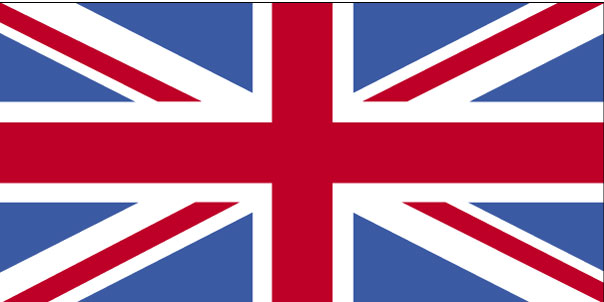
- 旗帜象征
- 蓝色旗面,上有圣乔治红十字(英格兰的守护圣人)的白边图案,其上又叠加了圣帕特里克的对角线红十字(爱尔兰的守护圣人),再上面叠加了圣安德鲁的对角线白十字(苏格兰的守护圣人);正式名称为联合旗,但通常被称为米字旗;该设计和颜色(尤其是蓝色船旗)成为了许多其他旗帜的基础,包括其他英联邦国家及其构成州或省,以及英国海外领土
- 采纳日期
- 1801年1月1日
国歌
- 国歌歌词(英文)
- God Save the Queen God save our gracious Queen, Long live our noble Queen, God save the Queen! Send her victorious, Happy and glorious, Long to reign over us, God save the Queen! O lord God arise, Scatter our enemies, And make them fall! Confound their knavish tricks, Confuse their politics, On you our hopes we fix, God save the Queen! Not in this land alone, But be God's mercies known, From shore to shore! Lord make the nations see, That men should brothers be, And form one family, The wide world ov'er From every latent foe, From the assasins blow, God save the Queen! O'er her thine arm extend, For Britain's sake defend, Our mother, prince, and friend, God save the Queen! Thy choicest gifts in store, On her be pleased to pour, Long may she reign! May she defend our laws, And ever give us cause, To sing with heart and voice, God save the Queen! See also: Scotland Anthem Text put in wales here as well.
其他国家象征
Coat of Arms
The function of the Royal coat of arms is to identify the person who is Head of State. In respect of the United Kingdom, the Royal arms are borne only by the Sovereign. The arms are used in the administration and government of the country, appearing on coins, in churches and on public buildings. They also appear on the products and goods of Royal warrant holders. The Sovereign's coat of arms has evolved over many years and reflects the history of the Monarchy and of the country. In the design the shield shows the various Royal emblems of different parts of the United Kingdom: the three lions of England in the first and fourth quarters, the lion of Scotland in the second and the harp of Ireland in the third. It is surrounded by a garter bearing the motto Honi soit qui mal y pense ('Evil to him who evil thinks'), which symbolises the Order of the Garter, an ancient order of knighthood of which the Queen is Sovereign. The shield is supported by the English lion and Scottish unicorn and is surmounted by the Royal crown. Below it appears the motto of the Sovereign, Dieu et mon droit ('God and my right'). The plant badges of the United Kingdom - rose, thistle and shamrock - are often displayed beneath the shield. Separate Scottish and English quarterings of the Royal arms originate from the Union of the Crown in 1603. The Scottish version of the Royal coat of arms shows the lion of Scotland in the first and fourth quarters, with that of England being in the second. The harp of Ireland is in the third quarter. A crest is not the same as a coat of arms. A crest is only one part of the full coat of arms: the three-dimensional object placed on top of the helm. The mottoes read 'In defence' and 'No one will attack me with impunity'. From the times of the Stuart kings, the Scottish quarterings have been used for official purposes in Scotland (for example, on official buildings and official publications). The special position of Wales as a Principality was recognised by the creation of the Prince of Wales long before the incorporation of the quarterings for Scotland and Ireland in the Royal Arms. The arms of the Prince of Wales show the arms of the ancient Principality in the centre as well as these quarterings. Coats of arms of members of the Royal Family are broadly similar to The Queen's with small differences to identify them.
Other
皇冠珠宝
The Crown Jewels are the ceremonial treasures which have been acquired by English kings and queens, mostly since 1660. The collection includes not only the regalia used at coronations, but also crowns acquired by various monarchs, church and banqueting plate, orders, insignia, robes, a unique collection of medals and Royal christening fonts. Edward the Confessor (reigned 1042-66), who deposited his Royal ornaments for safe-keeping in Westminster Abbey, may have been the first monarch to assemble a regalia. These have been replaced or altered over the succeeding centuries. The Crown Jewels suffered their most disastrous fate following the execution of Charles I in the seventeenth century. In 1649 Cromwell ordered that the Royal regalia 'be totally broken' as being symbolic of the 'detestable rule of kings'. The regalia's precious stones were sold separately and the precious metal sent to the Mint to be coined, although other pieces (such as the Coronation Spoon dating from the twelfth century and later returned to Charles II) were sold intact. The Coronation Chair (dating from 1300) remained intact as it was used in 1653 at Westminster Hall when Cromwell was installed as Lord Protector. However, detailed records of the old regalia survived, and replacements for the lost regalia were made at a cost of nearly £12,185 for Charles II's coronation in 1661. Since Charles II's coronation, there have been many additions and alterations to the regalia. New sets of regalia had to be made in 1685 for James II's wife, Mary of Modena (the first Queen Consort to be crowned since the Restoration) and for Mary II in 1689 when she was crowned with her husband William III (as Queen in her own right). From the reign of Anne (crowned in 1702) until the early twentieth century, it was quite usual for the regalia to be set with jewels hired for the coronation only. Afterwards, the stones were returned to the jewellers and the regalia were sometimes re-set with crystals or paste and put in the Jewel House for display. The monarch would then use a State crown set with coloured jewels for Parliamentary use. The Crown Jewels have had a turbulent history. King John is said to have lost the Crown Jewels in quicksand in 1216. Edward III pawned the jewels to pay his troops during an overseas campaign. Charles I's wife also managed to pawn the Crown Jewels in Holland at the beginning of the Civil War. The most famous attempt at theft was in 1671 by Colonel Thomas Blood. He was caught at the East Gate of the Tower with the crown, one sceptre and the orb. During the Second World War the jewels were hidden in a secret location which has never been disclosed. More often, the crowns were dismantled, leaving only the frames. For example, George IV tried to persuade Parliament to buy the stones for his crown so that it could remain set as a permanent crown. He failed and the crown was eventually dismantled. Britain is the only European monarchy still using its regalia for the consecration ceremony of crowning the Sovereign. At Westminster Abbey, where William I was the first monarch to be crowned, the Sovereign is escorted to the Coronation Chair (used at every coronation since 1300) by individuals carrying the processional regalia. These include two of the Royal maces, three swords (representing Mercy, Spiritual Justice and Temporal Justice), the Great Sword of State (symbolising the Sovereign's Royal authority) and St Edward's Staff (dating from 1661). After the coronation oath comes the anointing by the Archbishop of Canterbury on the Sovereign's hands, breast and head, using the ampulla and spoon. The ampulla (dated 1661) is a golden eagle flask which holds the holy oil used in the anointing, whilst the spoon is the oldest piece in the regalia, probably made for Henry II or Richard I. The anointing is followed by dressing in the coronation robes (up to Queen Victoria's coronation in 1838, new robes were provided; George V and his successors have all worn the robes on display in the Jewel House). The spurs (dating from 1661 and representing knighthood and chivalry), the jewelled Sword of Offering (dating from 1820) and the armills (gold bracelets representing sincerity and wisdom, The Queen was given new armills by the Commonwealth for her coronation in 1953) are then presented. The Sovereign's Orb (representing Christian sovereignty) is placed in the Sovereign's right hand. Set with precious stones and pearls, it was made for Charles II's coronation, for a total cost of £1,150. The coronation ring (representing kingly dignity, and dating from 1831) and the sceptres are then presented. The Sceptre with the Cross symbolises the Sovereign's temporal power under the Cross, while the Sceptre with Dove - or Rod of Equity and Mercy - symbolises the Sovereign's spiritual role. The climax comes when the Archbishop of Canterbury places St Edward's Crown on the Sovereign's head. Portrait of The Queen with the coronation regalia © Cecil Beaton / Camera Press Some of the regalia are used at times other than coronations: for example, at the State Opening of Parliament. On such occasions, the Imperial State Crown is removed from the display case in the Jewel House at the Tower of London and a label is left with the simple message 'In use'. The Crown Jewels have been housed in the Tower of London since 1303 following a theft from Westminster Abbey. After the Restoration of Charles II, the regalia were kept in a locked cupboard at the Tower of London and shown to visitors by the unpaid custodian in return for a viewing fee. After Colonel Blood's near success in stealing the Crown Jewels, this informal arrangement ended and an armed guard was provided. In the eighteenth century, visitors were locked into the windowless room with an armed guard outside and viewed the regalia from their seats. Today the Crown Jewels are kept in a Jewel House at the Tower of London, opened by The Queen in 1994. The Crown Jewels are part of the national heritage and held by The Queen as Sovereign.