
 English
 Español
 中文
中文 हिन्दी
 Français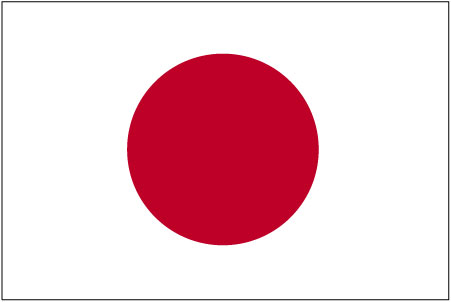
Japan
Declare Your Relationship to Japan
CountryReports Community
- Studying156
- From Japan16
- Japan heritage18
- Visited35
- Want to visit109
Customs and Culture
Customs and Culture
Cultural Attributes
The Japanese believe in returning favors and giving gifts when they have personally received them from others. Age and tradition are honored. Various social strains are leading many people to re-evaluate what is most important in life.

Tradition Forged in Steel and Snow
Social Customs & Etiquette
Greetings
Bowing is the normal greeting between Japanese people. A person wishing to show respect will bow lower than the other person. Japanese people will often shake hands with people that are not from Japan. A handshake is preferred with foreign visitors. Japanese prefer that one's title be given to each other when introduced. A person's first name is usually for family and friends. Greetings used depends on the relationship. A worker might greet with "Ohayogozaimasu" (Good morning) to one of higher social standing, but he or she would greet others with "Irasshaimase" (welcome).
Gestures
It is impolite to yawn in public. A person sits up straight with both feet on the floor. Legs may be crossed at the knee or ankles, but it is improper to place an ankle over a knee. Beckoning is done by waving all fingers with the palm down. It is polite to point with the entire hand. Shaking one hand from side to side with the palm forward means “no”. A person refers to himself by pointing the index finger at his nose. Laughter does not necessarily signify joy or amusement; it can also be a sign of embarrassment. The mouth should be covered when using a toothpick. Chewing gum in public is considered impolite. Young girls often walk hand in hand. Blowing your nose in public is considered rude.
The act of presenting business cards is very important in Japan. Remember to hold the business card with both hands, grasping it between the thumbs and forefingers. Present it with the printing pointing towards the person to which you are giving the card, and bow slightly. The receiver will accept the card with both hands, bow slightly, and then read the card carefully. When you receive a business card place it on the table in front of you for further reference.
The Japanese find it difficult to answer a definite "no" to either a question or statement. They signal that they "don't know" or "don't understand" something by waving their own hand in front of their face, with the palm outward. This also may signal that "I'm undeserving" if you pay them a compliment.
The "OK" signal is often interpreted as the symbol for money, whereby the circular shape of the index finger and thumb together suggest the shape of a coin. This symbol may be used in a store if you want the cashier to give you your change in coins.
Visiting
Visiting is normally arranged in advance; surprise visits between neighbors are uncommon, especially in urban areas. Shoes are removed before stepping into a Japanese home. There is usually a small hallway (genkan) between the door and the living area where one removes their shoes. After being removed, they are placed together pointing toward the outdoors, or in a closet, or on a shelf in the genkan. Coats are removed before stepping into the genken. Slippers may be worn inside, but are removed before entering rooms with straw mat floors (tatami).
Japanese emphasize modesty and are generally reserved in their actions and language. When offered a meal, guests frequently will hesitate before accepting the offer. Modesty dictates that one should deny a compliment. Gift giving is extremely important in Japan because a gift says a great deal about the giver’s relationship to, and respect for, the recipient. Food and drink are the most common gifts.
When Japanese people visit a friend or relative in the hospital, they do not bring potted plants, which are considered bad luck, since the roots may suggest that the patient will become “rooted” and stay in the hospital for a long time. Chrysanthemums or white flowers are also bad luck because they are associated with death and funerals.
Personal Appearance
Most Japanese adults dress to be like the rest of the crowd. Business people usually wear suits with ties. Youth prefer to wear clothing that does not conform to the rest of the crowd. They prefer to wear the latest styles from America and Europe. They wear jeans, t-shirts, and sneakers.
A Kimono or Wafuku is a long robe with long sleeves, it has no buttons or zippers and is held together by a sash, or obi, at the waist. The designs in the fabric can be simple or elaborate. The kimono is worn for social events or special occasions.
Diet
The Japanese diet consists largely of rice, fresh vegetables, seafood, fruit, and small portions of meat. Rice and tea are part of almost every meal. Teriyaki sauce is famous, along with sushi (small portions of savory rice wrapped in seaweed.) The ritual of the tea ceremony, cha no yu, is 600 years old. Both guests and host follow special rules of etiquette. The aim of the ceremony is to achieve a feeling of peacefulness.
Although many youths eat while walking in public, it is generally considered bad manners for adults to do so. Snack foods sold at street stands are thus eaten at the stand. In a traditional meal, the Japanese typically eat from their bowl while holding it at chest level instead of bending down to the table. Chopsticks (hashi) are used to eat most meals, but people generally use Western utensils when eating Western food. The main meal is eaten in the evening. Because many people work late hours, they may eat dinner in office building restaurants or on the way home.
The Japanese diet is frequently comprised of rice, vegetables, seafood, fruit, and small amounts of meat. Rice and tea are part of almost every meal. Teriyaki sauce is famous, along with sushi (small portions of savory rice wrapped in seaweed.) The ritual of the tea ceremony, cha no yu, is 600 years old. Both guests and host follow special rules of etiquette. The aim of the ceremony is to achieve a feeling of peacefulness.

Family
The family is considered the foundation of society. Reputation and responsibility are important attributes in Japanese society. The mother has the responsibility of taking care of the household affairs, but the father is considered the head of the home. Historically, it was considered improper for a woman to be employed, but many women currently work outside the home. Although the current trend is away from the traditional multi-generation families, many aged parents still live with their married children.
Most Japanese people live in crowded cities. Their homes have small rooms. Many Japanese people live in tall apartment buildings. Japanese people take off their shoes by the door. This is because their floors are covered with tatami (tah-tah-mee) mats. These mats are made of grass and can tear easily. At home, some Japanese sit on cushions at low tables. At night, many sleep on futons (pronounced foo-tahns). Futons are mats that roll out.
Dating Customs
Youth, in Japan, generally start to consider dating at the of age fifteen. They enjoy movies, dancing, shopping, and eating out. Western music is popular and fashion trends may derive from Western culture. For the more affluential, weddings can be elaborate. Marriage ceremonies frequently take place in hotels. Couples may wear traditional "kimonos" for the wedding ceremony and may wear different clothing for an evening party. Those invited to the wedding bring gifts or cash, and may also be given gifts from the couple.
Recreation
Japanese children enjoy kite flying and origami, the ancient art of paper folding. Card games such as Karuta or board games such as Shogi and Go, which involve strategy, are also popular. Many Japanese children enjoy video games such as Nintendo games, a Japanese video game company. The Japanese are constantly inventing new toys. Many have become popular worldwide, including Tamagotchi pets and Pokémon cards.
The most ancient and traditional Japanese sport is sumo wrestling. Prospective wrestlers begin professional training at 15. They live and train at a sumo school where they are encouraged to gain weight by eating large amounts of a fattening stew. Over time, they become very heavy. Sumo matches take place in a ring called a dohyo, the floor of which is made of a special clay covered with a thin layer of sand. The object of a sumo match is to force the opponent out of the inner circle of the dohyo. Each match begins with a ritual in which salt is used to purify the ring. Before fighting, wrestlers intimidate each other with menacing stares. It is forbidden for a wrestler to physically injure his opponent. It was introduced to Japan in 1873 by an American named Horace Wilson, who taught at Tokyo University.
Martial arts are popular. Judo, karate, and aikido are performed without weapons. Participants use kicks and throws to defeat an opponent. The Kiai or “combat shout” is very important and signifies mental concentration. Kendo is a form of fencing using bamboo swords. Kyudo is a form of archery: participants use a bow constructed of bamboo wood to shoot arrows at targets.
Professional baseball teams have been in existence since the 1930s. High schools participate in baseball championships and compete against other schools. There are also little league teams for children. While most of the rules are based on the American game, the Japanese have modified the philosophy behind the game to emphasize team effort above the achievements of individual players.
Golf was introduced to Japan in 1903 by the English. Golf is considered a sport for the wealthy and is a symbol of prestige. Many business people go to golf clubs to entertain clients and negotiate business deals.
Japan has many mountain ranges which provide excellent terrain for skiing. The best skiing can be found on the northern island of Hokkaido. Many Japanese enjoy karaoke, which means “empty orchestra.” Amateur singers go to nightclubs and sing pop music to a prerecorded accompaniment. Pachinko or “pinball” is also popular and pachinko parlors can be found in most towns.
Many Japanese enjoy manga (a type of comic book). These books are not just for children but are enjoyed by many adults and tell realistic stories about life and work, or contain stories of fictional and often fantastical adventures. Many are published in weekly or monthly series.
Student Life
Children must arise fairly early, usually by 6:30 a.m. After showering and dressing, they eat breakfast. Children are more likely to eat a traditional Japanese breakfast than working adults, who tend to eat faster and eat a more Western (or American) style of breakfast. The main foods for a traditional Japanese breakfast are bread, miso soup (a soup made with soybeans), and natto (fermented soybeans that are placed on top or mixed in with rice). Western-style breakfast foods, which are slowly becoming more popular, include toast, jam, fried or boiled eggs, and yogurt. Interestingly, most families will also watch television while they eat breakfast.
Students often walk, ride bikes, or ride public transportation, depending on the distance from the school and individual circumstances. For some students in high school who must travel to a school that they feel will best help them to get into a good university, this means up to two or more hours each day on public transportation. School begins at 8:30 in the morning, and ends at 3:00 in the afternoon, although many students will stay at the school until 5:00 or 6:00 to participate in sports or other activities. This means that most students do not get home from school each day until shortly after sunset, and then they must still eat dinner and spend time doing homework.
The school system in Japan is free to students from ages 6 through 14. After that, many attend private high schools to prepare for college entrance exams. These schools can be quite expensive but are the best way to ensure that a student can get accepted to the school he or she wants. Menus for lunch will vary according to the region of the country the school is in, but some foods are typical throughout most of the country. Examples of these might be rice (which can be served at most meals), soup, tofu stew, assorted vegetables, frozen yogurt, and milk. The student’s family pays about one-third of the price of lunch, at the government pays for the rest, although financial help is available to low-income families. Some students bring lunch from home. Common foods in home lunches are cold rice balls, grilled fish, and pickled vegetables. Regardless of whether a student eats a prepared lunch from home or at the school cafeteria, it is an important part of the daily experience at school, and educators and parents alike understand that a healthy lunch will help the students do better in school. All teachers teach the same material throughout the country from the same books, which have been approved by the Japanese government. Some teachers feel that while this gives all students the same education, it does not allow the teachers much creativity in how they teach. The classes can be quite large, in fact, it is not unusual to have as many as 40 students in each class. It is also interesting to learn that students help to clean up the school and gardens, organize lunch, and clean up after lunch. This helps them to develop responsibility. In general, Japanese schools place more emphasis on teaching moral values and good character traits than schools in other countries.
Most students in Japan wear a uniform when attending school, usually a black or navy jacket with matching shorts or skirt for girls and slacks for boys. Japanese children go to school five days a week. Twice a month they attend school on Saturday. Some schools even make boys shave their heads. Working together is very important to Japanese people. Students learn teamwork, and every day they clean their school. They keep the rooms, halls, toilets, and yards neat. Students must pass a difficult test to get into high school. In the afternoon, many students have only an hour or two of free time before they go to juku, or private cram school. At juku students get individual help with their schoolwork. Juku is usually attended by students in junior or senior high school who are preparing for university entrance exams. The national Ministry of Education, Culture, Sports, Science, and Technology controls what courses students will study. Common subjects for students to study in both primary and junior high school are art, math, moral education, homemaking, music, science, social studies, and physical education. They also spend a lot of time studying Japanese. Japan has a very high literacy rate, which means that most people in Japan can read and write relatively well, even though the language is quite difficult to learn, especially the hundreds of characters in their “alphabet.” School attendance is very high: 100% in elementary school, 100% in junior high, 98% in high school, and 47% at the university level. Because the Japanese school system is so challenging, some experts have said that graduation from a Japanese high school is roughly the same as having two years of college in America.
Schools encourage students to participate in sports. Many Japanese students become excellent swimmers and runners. Other common sports include baseball, bowling, golf, gymnastics, and tennis. As with many Asian countries, Japan is fond of the martial arts. Some of the more common ones are aikido, judo, karate, and kendo, which is a Japanese form of fencing.
The importance of schooling in Japan influences even how children use their free time. For example, almost 70% of 5th and 6th graders on holiday spent time studying, especially during mid-morning and evenings. Although many children say they would like to spend more time playing, they feel an obligation to spend their time productively, not just wasting time. However, younger students do still spend some free time at home watching television or playing indoor games. They tend to stay at home: rarely do they spend Sundays or holidays with friends. As students get older (in junior high and older), extracurricular school clubs become the most important place for social activity—for about two hours each day after school, students participate in a club of their choice. Those clubs fall into two categories—sports and cultural clubs. Sports clubs include baseball, soccer, martial arts, tennis, basketball, gymnastics, and volleyball. Cultural clubs include choir, art, band, tea ceremony, flower arrangement, and go (a board game requiring planning and strategy). Once a student chooses a club that interests him or her, that decision is rarely changed, and the student will participate in that club until graduating from school. Children as young as 9-10 years old understand the importance of getting into good junior high schools as the way to begin the path to a good university. In order to gain entrance to the junior high they want to go to, they often give up television, comic books, playtime, and sleep, instead committing themselves to a study schedule that they often set for themselves.
Beginning in 5th and 6th grade, students often do not get home until after sunset. This is because they spend up to two hours each day in a club of their choosing after school is finished at 3:15 in the afternoon. Then they change out of their sports clothes or put other materials away before they walk, bike, or take the public transportation system home. When they get home, it is soon time to eat their evening meal, and then spend a few minutes watching television before finishing the day’s homework and going to bed. The older the student, the less sleep they get, especially if they are cramming or taking additional study classes to prepare for examinations that will determine the future high school or university they will attend. Many Japanese families who live in cities or towns enjoy eating at restaurants on weeknights. Traditional meals always include rice, supplemented with fish, tofu, pickled vegetables, soups, and occasionally eggs or meat. Younger people tend to eat less traditional food (except for breakfast—see “Mornings”). Although they like fish, they also are fond of beef, chicken, and pork. They also like to eat more fruit than the older generations. Favorite fruits include kiwi, grapefruit, apples, pears, and strawberries. Even rice is sometimes replaced by bread, toast, or sometimes baked pastries such as doughnuts. If the mother of the family works outside the home, it is more likely that any meals she fixes at home will be more Western (or American)—for example, prepackaged or frozen foods that are quickly cooked and eaten—rather than the traditional foods that have fed Japanese people for centuries.
Japanese culture places a very high value on education, especially for boys. Success in higher education is usually measured by the reputation of the university that the student attends. As you can imagine, children begin very young to prepare to enter the best universities, and parents often work very hard to help their students get into good schools by ensuring that they work hard in the younger grades of school and get good grades. School is required for children until the age of 15, but most stay in school until they are 18. In Japan, education is the best way to eventually get a good paying job. Children attend school five days a week and half a day on two Saturdays each month. The school year runs from April through the end of March of the next year, with a relatively short vacation from late July through August. There is also a two-week break in the spring and another two-week break in the fall. Students spend 240 days a year in school, 60 more than students in the United States. The grade levels of Japanese schools might seem familiar to people who know schools in the United States. This is because the Japanese government modeled their schools somewhat after those in the United States following World War II. Primary school is for students from 6 to 11 years of age. Most students aged 12 through 14 attend the next level of school, which is equivalent to American junior high school. Education is free for students attending public schools from the ages of 6 through 14. During the last two years of junior high, many students focus on getting into a high school with a reputation for sending its students on to top universities. Many of the top high schools in the country are expensive private schools that require their students to pass a challenging and difficult exam to even get into their school. Students in these two grades spend hours every day after school studying and taking practice tests to prepare them for the entrance exams for high school. In Japan, teachers have a higher social ranking than in many other countries. They are also paid quite well. Because of this, it is harder to get a job as a teacher in Japan than in most other countries of the world.
Holidays
Birthday of Emperor AKIHITO
12/23Birthday
Setsubun
2/3Other
Setsubun (seasonal division) is a festival held on February 3 or 4, one day before the start of spring according to the Japanese lunar calendar. Setsubun is not a national holiday.
For many centuries, the people of Japan have been performing rituals with the purpose of chasing away evil spirits at the start of spring.
Around the 13th century, for example, it became a custom to drive away evil spirits by the strong smell of burning dried sardine heads, the smoke of burning wood and the noise of drums. While this custom is not popular anymore, a few people still decorate their house entrances with fish heads and holy tree leaves in order to deter evil spirits from entering.
In modern days, the most commonly performed setsubun ritual is the throwing of roasted beans around one’s house and at temples and shrines across the country. When throwing the beans, you are supposed to shout "Oni wa soto! Fuku wa uchi!" (Devils out, happiness in). Afterwards you should pick up and eat the number of beans, which corresponds to your age.
Hina Matsuri
3/3Other
The Hina Matsuri or Doll Festival or Girl’s Festival is celebrated on March 3. On this day, families with girls wish their daughters a successful and happy life. Dolls are displayed in the house together with peach blossoms. The doll festival has its origin in a Chinese custom in which bad fortune is transferred to dolls and then removed by abandoning the doll on a river. On Hina Matsuri, sweet sake is drunken and chirashi sushi is eaten.
Birthdate - Mitsumasa Anno
3/20Birthday
Birthdate - Mitsumasa Anno, Japanese author, illustrator
Christmas
12/25Christmas
Hoteiosho is the bearer of gifts to the Japanese.
Because many Japanese people are not Christians. New Year’s day is the biggest Celebration for Japanese people.
Dates of Interest
- December 25th
Hoteiosho is the bearer of gifts to the Japanese. Because most Japanese people are not Christians, New Year’s day is the biggest Celebration for Japanese people.
How do people greet each other in Japan?
Bowing is the normal greeting between Japanese people, but a handshake is preferred with foreign visitors. Titles are used when introduced, and first names are reserved for family and friends.
Do
- Bow lower than the other person to show respect
- Use titles when introduced
- Offer a handshake to foreign visitors
Don’t
- Don't use someone's first name unless you are family or a friend
Good to know
- Greetings vary by relationship; a worker may say 'Ohayogozaimasu' (Good morning) to someone of higher standing or 'Irasshaimase' (welcome) to others
What are the dining customs in Japan?
The Japanese diet is largely rice, fresh vegetables, seafood, fruit, and small portions of meat, with rice and tea at almost every meal. The main meal is eaten in the evening.
Do
- Use chopsticks (hashi) for most meals
- Hold your bowl at chest level to eat from it in a traditional meal
- Use Western utensils when eating Western food
- Eat street snacks at the stand
Don’t
- Adults shouldn't eat while walking in public
Good to know
- The tea ceremony, cha no yu, is 600 years old and follows special etiquette to achieve peacefulness
- Sushi is small portions of savory rice wrapped in seaweed; teriyaki sauce is famous
What etiquette should I know when visiting a Japanese home?
Visits are usually arranged in advance, and shoes are removed before stepping into a home. The Japanese emphasize modesty and are generally reserved.
Do
- Remove shoes in the genkan and place them together pointing toward the outdoors
- Remove your coat before stepping into the genkan
- Remove slippers before entering rooms with tatami (straw mat) floors
- Return favors and give gifts when you have received them
Don’t
- Don't make surprise visits, especially in urban areas
- Don't bring potted plants to hospital patients (bad luck)
- Don't give chrysanthemums or white flowers (associated with death and funerals)
Good to know
- Guests often hesitate before accepting an offered meal, and modesty dictates denying a compliment
- Food and drink are the most common gifts
How should I dress in Japan?
Most Japanese adults dress to blend in with the crowd, and business people usually wear suits with ties. Youth prefer the latest American and European styles.
Good to know
- Youth wear jeans, t-shirts, and sneakers
- The kimono (wafuku) is a long robe held together by a sash (obi), worn for social events or special occasions
What gestures are important in Japan?
Gestures matter greatly, from how you present a business card to how you signal 'no.' Laughter can signify embarrassment rather than amusement.
Do
- Beckon by waving all fingers with the palm down
- Point with the entire hand
- Sit up straight with both feet on the floor
- Present a business card with both hands, printing facing the recipient, and bow slightly
Don’t
- Don't yawn in public
- Don't place an ankle over a knee
- Don't chew gum in public
- Don't blow your nose in public
Good to know
- Shaking one hand side to side with the palm forward means 'no'
- Refer to yourself by pointing your index finger at your nose
- The 'OK' sign is often read as the symbol for money
- Place a received business card on the table in front of you for reference
What is family life like in Japan?
The family is the foundation of society, with the father considered head of the home and the mother responsible for household affairs. Many aged parents still live with their married children.
Good to know
- Many women now work outside the home
- Most people live in crowded cities in small-roomed homes or tall apartment buildings
- Shoes come off at the door to protect the tatami mats
- Some sit on cushions at low tables and sleep on futons that roll out
What do people do for fun and sport in Japan?
Popular pastimes include origami, strategy games, video games, and manga, while traditional sports include sumo wrestling and martial arts. Baseball, golf, skiing, karaoke, and pachinko are also enjoyed.
Good to know
- Sumo wrestlers train from age 15 and aim to force opponents out of the dohyo ring
- Judo, karate, and aikido use kicks and throws, with the Kiai 'combat shout' signifying concentration
- Kendo uses bamboo swords and kyudo is bamboo-bow archery
- Karaoke means 'empty orchestra'; manga comic books are enjoyed by adults too
Last updated: 2026-07-12 · Sources: CountryReports
Photos of Japan
Photos of Japan


Travel and Tourism
Travel and Tourism
- Travel Alert Status
- Level 1: Exercise Normal Precautions
- Currency
- 132.44
- Time Difference
- UTC+9 (14 hours ahead of Washington, DC, during Standard Time)
- Airports
- 175
Read the full travel guide — health, safety, vaccinations, disease risk, sanitation, and transit details.
View full travel guideRecipes
Recipes
Kuri Kinton (Golden Chestnuts)
Dessert
Main Dish
Suki
Main Dish
Halibut Teriyaki
Main Dish
Tempura
Main Dish
Sweet and Sour Pickled Scallions
Main Dish
Shabu Shabu
Main Dish
Buta Zen Mai
Main Dish
PremiumKuri Kinton (Golden Chestnuts)
Side Dish
PremiumSushemi
Side Dish
PremiumJapanese Style Potato Salad
History
History
Historical Eras
Ancient & Classical
300 BCE – 794
From the Yayoi period through the Kofun, Asuka, and Nara eras, early Japanese society coalesced around powerful clans, culminating in the Yamato imperial line claiming divine descent. Chinese political models, Buddhism, and Confucian ethics were systematically adopted, producing a centralized imperial court. The Nara period saw Japan's first permanent capital and the compilation of foundational texts such as the Kojiki and Nihon Shoki.
Heian & Court Culture
794 – 1185
The imperial capital at Heian-kyō (modern Kyoto) became the center of a refined aristocratic civilization dominated by the Fujiwara clan, who controlled the throne through hereditary regency. Literature and the arts flourished, producing masterworks such as Murasaki Shikibu's The Tale of Genji. The era ended as rival warrior clans — the Taira and Minamoto — plunged the country into civil war.
Feudal & Shogunate Era
1185 – 1600
A succession of military governments — the Kamakura, Muromachi, and brief Azuchi-Momoyama shogunates — ruled Japan in the emperor's name, establishing a feudal order dominated by samurai culture. The Kamakura period saw the repulsion of two Mongol invasion fleets in 1274 and 1281, while the Ōnin War (1467–1477) triggered a century of near-constant civil strife known as the Sengoku period. Warlords Oda Nobunaga and Toyotomi Hideyoshi ultimately reunified the country, and Portuguese contact in 1542 introduced firearms and Christianity.
Edo (Tokugawa) Period
1600 – 1868
Tokugawa Ieyasu's victory at Sekigahara in 1600 established the Edo shogunate, inaugurating over two and a half centuries of enforced peace, political stability, and strict social hierarchy. The regime implemented sakoku — a policy of near-total isolation — limiting foreign trade to Dutch and Chinese merchants at Nagasaki. Urban merchant culture, kabuki theater, woodblock printing, and haiku poetry flourished during this era of internal prosperity.
Meiji & Imperial Expansion
1868 – 1945
The Meiji Restoration ended shogunal rule and restored imperial authority, unleashing rapid Westernization, industrialization, and the construction of a modern military state. Japan defeated China (1895) and Russia (1905), annexed Korea (1910), and acquired Taiwan, emerging as a major imperial power. Ultranationalist politics gradually displaced representative government, leading Japan into military adventurism in China and ultimately into World War II, which ended with atomic bombings of Hiroshima and Nagasaki in August 1945.
Postwar & Modern Japan
1945 – present
Under Allied occupation, Japan adopted a pacifist constitution (1947), renounced war, and rebuilt its economy with remarkable speed, becoming the world's second-largest economy by the 1960s. The U.S.-Japan Security Alliance anchored Japan firmly in the Western bloc throughout the Cold War. Economic stagnation following the collapse of the asset bubble in the early 1990s — the so-called Lost Decade — defined subsequent decades, even as Japan retained its status as a global cultural and technological power.
Overview
Timeline of Key Events
300 BCE – 300
YAYOI
Rice cultivation, metalworking, and the potter’s wheel are introduced from China and Korea. Era named “Yayoi” after the place in Tokyo where wheel-turned pottery was found. In Shinto, Japan’s oldest religion, people identify kami (divine forces) in nature and in such human virtues as loyalty and wisdom. 100-300: Local clans form small political units.
300 – 645
KOFUN (YAMATO)
Unified state begins with emergence of powerful clan rulers; Japan establishes close contacts with mainland Asia. Clan rulers are buried in kofun (large tomb mounds), surrounded by haniwa (clay sculptures). Yamato clan rulers, claiming descent from Amaterasu Omikami, begin the imperial dynasty that continues to occupy the throne today. Japan adopts Chinese written characters. Shotoku Taishi (574-622) begins to shape Japanese society and government more after the pattern of China. He seeks centralization of government and a bureaucracy of merit. He also calls for reverence for Buddhism and the Confucian virtues.
645 – 710
ASUKA
A great wave of reforms called the Taika no Kaishin (Taika Reforms) aims to strengthen the emperor’s power. New aristocratic families are created. Especially powerful is that of Fujiwara no Kamatari, who helped push the reforms.
710 – 794
NARA
Imperial court builds new capital, modeled upon Chang-an in China, at Nara. Though emperors are Shinto chiefs, they patronize Buddhism in the belief that its teachings will bring about a peaceful society and protect the state. Legends surrounding the founding of Japan are compiled as history in the Kojiki (Record of Ancient Matters) and the Nihon shoki (Chronicle of Japan). With the adoption of Buddhism as the state religion, its monasteries gain political power.
794 – 1185
HEIAN
Imperial court moves to Heiankyo (now Kyoto) to escape domination of Nara’s Buddhist establishment. Official contacts with China stop in 838. Buddhism, in combination with native Shinto beliefs, continues to flourish. Flowering of classical Japanese culture aided by invention of kana (syllabary for writing Japanese language). Court women produce the best of era’s literature. Murasaki Shikibu’s Tale of Genji (ca. 1002) is the world’s first novel. Court undergoes decline of power with rise of provincial bushi (warrior class).
1191
The Zen sect is introduced.
The Zen sect is introduced.
1192 – 1333
KAMAKURA
Kamakura became the political center of Japan, when Minamoto Yoritomo chose the city as the seat of his new military government. The Kamakura government continued to rule Japan for over a century, first under the Minamoto shogun and then under the Hojo regents.
Read the full history profile — narrative overview, defining eras, and the complete timeline in one place.
View expanded historyInteresting Facts
Interesting Facts
When a child loses a tooth, if they lose an upper tooth, they throw it in the dirt. If they lose a lower tooth, they throw it on the roof. Their new tooth will grow in toward the old one and will come in straight.
Japan has the highest cost of living in the world.
Japan had the world highest paid Prime Minister, Yoshiro Mori at $676,000 per year which included monthly allowances and bonuses.
Japan’s flag, a red circle on a white background, symbolizes the land of the rising sun.
Japan is hit by up to 30 typhoons a year. Winds can reach 200 kilometers an hour and 30 centimeters of rain can fall in 24 hours.
Archaeological evidence of settlement on the islands dates back 30,000 years, and pottery objects have been found dating from 16,500 B.C.
See every fact — trivia, oddities, and curious tidbits gathered from across the country.
View all interesting factsGeography and Environment
Geography and Environment
- Terrain
- mostly rugged and mountainous
- Climate
- Temperature extremes are fewer than in the U.S. since no part of the interior is more than 100 miles from the coast. At the same time, because the islands run almost directly north-south, the climate varies. Sapporo, on the northern island, has warm summers and long, cold winters with heavy snowfall. Tokyo, Nagoya, Kyoto, Osaka, and Kobe, on the southern part of the largest island of Honshu, experience relatively mild winters with little or no snowfall and hot, humid summers. Fukuoka, on the island of Kyushu, has a climate with mild winters and short summers. Okinawa is subtropical. Spring, with its profusion of cherry blossoms and other flowering trees and shrubs, and autumn, with its gold and flaming red trees and lovely fall flowers, are the most pleasant seasons. The hot, humid summers are difficult in the cities, but the sandy beaches along the coast and the many fine mountain resorts provide pleasant relief. With rather mild and dry winters it rarely snows or rains in the Tokyo area at this time of year.
- Natural Hazards
- many dormant and some active volcanoes; about 1,500 seismic occurrences (mostly tremors) every year; tsunamis; typhoons
- Current Environmental Issues
- air pollution from power plant emissions results in acid rain; acidification of lakes and reservoirs degrading water quality and threatening aquatic life; Japan is one of the largest consumers of fish and tropical timber, contributing to the depletion of these resources in Asia and elsewhere
Read the full geography and environment profile — terrain, climate, natural resources, hazards, land use, and international agreements.
View full geographyPeople & Demographics
People & Demographics
Religion
Languages Spoken
Japanese
- Japanese
Population
- Population
- 123,294,513
- Population: Male/Female
- male: 59,875,269 female: 63,326,676
- Population Distribution
- all primary and secondary regions of high population density lie on the coast; one-third of the population resides in and around Tokyo on the central plain (Kanto Plain)
- Urban Population
- urban population: 92% of total population (2023) rate of urbanization: -0.25% annual rate of change
- Population in Major Urban Areas
- 37.194 million TOKYO (capital), 19.013 million Osaka, 9.569 million Nagoya, 5.490 million Kitakyushu-Fukuoka, 2.937 million Shizuoka-Hamamatsu, 2.666 million Sapporo
- Nationality Noun
- noun: Japanese (singular and plural) adjective: Japanese
- Ethnic Groups
- Japanese 97.5%, Chinese 0.6%, Vietnam 0.4%, South Korean 0.3%, other 1.2% (includes Filipino, Brazilian, Nepalese, Indonesian, American, and Taiwanese)
- Language Note
- Japanese
Education
- Literacy Definition
- Age 15 and over can read and write
Health Information
- Alcohol consumption per capita
- total: 8.36 liters of pure alcohol beer: 1.35 liters of pure alcohol wine: 0.29 liters of pure alcohol spirits: 1.63 liters of pure alcohol other alcohols: 5.09 liters of pure alcohol
- Tobacco Use
- total: 20.1% male: 30.1% female: 10%
Life Expectancy
- Life Expectancy at Birth
- total population: 84.3 years male: 81.1 years female: 87.1 years
- Median Age
- total: 49.9 years male: 48.3 years female: 51.3 years
- Age Structure
- 0-14 years: 12.1% (male 7,701,196/female 7,239,389) 15-64 years: 58.4% (male 36,197,840/female 35,777,966) 65 years and over: 29.5% (male 15,976,233/female 20,309,321)
- Infant Mortality Rate
- total: 1.8 deaths/1,000 live births male: 1.9 deaths/1,000 live births female: 1.6 deaths/1,000 live births
Read the full people and society profile — demographics, health, education, religion, languages, and notable people.
View full people and societyGovernment & Politics
Government & Politics
Country Identity
- Country Name
- Japan
- Full Country Name
- Japan
Government Structure
- Government Type
- constitutional monarchy with a parliamentary government
- Legal System
- modeled after European civil law system with English-American influence; judicial review of legislative acts in the Supreme Court; accepts compulsory ICJ jurisdiction with reservations
- Executive Branch
- chief of state: Emperor NARUHITO (since 1 May 2019); note: Emperor NARUHITO ascended to the Chrysanthemum Throne following the abdication of his father, Emperor AKIHITO, who became the first Japanese emperor to abdicate in roughly 200 years head of government: Prime Minister ISHIBA Shigeru (since 1 October 2024) cabinet: Cabinet appointed by the prime minister elections: Diet designates prime minister; constitution requires that the prime minister command a parliamentary majority; following legislative elections, the leader of the majority party or majority coalition in the House of Representatives usually becomes prime minister; monarch is hereditary
- Legislative Branch
- bicameral Diet or Kokkai consists of the House of Councillors or Sangi-in (248 seats - members elected for six-year terms; half reelected every three years; 148 members in multi-seat constituencies and 100 by proportional representation) and the House of Representatives or Shugi-in (465 seats - members elected for four-year terms; 289 in single-seat constituencies; 176 members by proportional representation in 11 regional blocs) elections: House of Councillors - last held 10 July 2022 (next to be held in July 2025); House of Representatives - last held 27 October 2024 (next election by October 2028) election results: House of Councillors - percent of vote by party - NA; seats by party following 2022 election - LDP 119, CDP 39, Ishin 21, Komeito 18, DPP 11, JCP 11, Reiwa 5, SDP 1, others 23 : House of Representatives - percent of vote by party - LDP 26.7%, CDP 21.9%, Ishin 9.2%, DPP 11.3%, Komeito 5.2%, others 25.7%; seats by party following 2024 election - LDP 191, CDP 148, Ishin 38, DPP 28, Komeito 24, Yuishikai 12, Reiwa 9, JCP 8, SDP 1, others 6 (2024)
- Judicial Branch
- Supreme Court (chief justice is appointed by the monarch after designation by the cabinet; all other justices are appointed by the cabinet) )
- Suffrage
- 20 years of age; universal
- Constitution
- Enacted May 3, 1947
- Independence
- 660 BC (traditional founding by Emperor Jimmu)
- National Holiday
- Birthday of Emperor AKIHITO, 23 December (1933)
Capital City
- Capital Name
- Tokyo
- Capital - geographic coordinate
- 35 41 N, 139 45 E
- Capital Time Difference
- UTC+9 (14 hours ahead of Washington, DC, during Standard Time)
originally known as Edo, meaning "estuary" in Japanese, the name was changed to Tokyo, meaning "eastern capital," in 1868
Military
Branches: Japanese Ministry of Defense (MOD): Ground Self-Defense Force (Rikujou Jieitai, GSDF); Maritime Self-Defense Force (Kaijou Jieitai, MSDF); Air Self-Defense Force (Koukuu Jieitai, ASDF)
Embassy / Diplomatic Mission
U.S. Embassy in Tokyo
1-10-5 Akasaka, Minato-ku, Tokyo 107-8420 Japan
Telephone: 81-3-3224-5000
Emergency after-hours telephone: 81-3-3224-5000
Facsimile: 81-3-3224-5856
U.S. Consulate General in Osaka-Kobe
2-11-5 Nishitenma, Kita-ku, Osaka 530-8543
Telephone: 81-6-6315-5900
Emergency after-hours telephone: 81-6-6315-5900
Facsimile: 81-6-6315-5914
U.S. Consulate General in Naha
2-1-1 Toyama, Urasoe, Okinawa 901-2104
Telephone: 81-98-876-4211
Emergency after-hours telephone:
81-3-3224-5000 (Emergency calls are routed through the Embassy switchboard after hours)
Facsimile: 81-98-876-4243
U.S. Consulate General in Sapporo
Kita 1-Jo Nishi 28-chome, Chuo-ku, Sapporo 064-0821
Telephone: 81-11-641-1115
Emergency after-hours telephone: 81-11-641-1115
Facsimile: 81-11-643-1283.
U.S. Consulate in Fukuoka
2-5-26 Ohori, Chuo-ku, Fukuoka 810-0052
Telephone: 81-92-751-9331
Emergency after-hours telephone:
81-3-3224-5000 (Emergency calls are routed through the Embassy switchboard after hours)
Facsimile: 81-92-713-9222
U.S. Consulate in Nagoya
Nagoya International Center Bldg. 6th floor, 1-47-1 Nagono, Nakamura-ku, Nagoya 450-0001
Telephone: 81-52-581-4501
Emergency after-hours telephone: 81-52-581-4501
Facsimile: 81-52-581-3190.
Read the full government profile — flag symbolism, national anthem, and other national symbols.
View full government detailsEconomy
Economy
Japan is the fourth-largest economy in the world by nominal GDP, having been surpassed by Germany in 2023, and ranks behind the United States, China, and Germany. Government-industry cooperation, a strong work ethic, mastery of high technology, and a comparatively modest defense allocation—historically around 1% of GDP, though the government has committed to raising it to 2% by 2027—have long underpinned Japan's economic strength. One notable characteristic of the economy is the close cooperation among manufacturers, suppliers, and distributors in tightly-knit groups known as keiretsu. A second traditional feature has been the guarantee of lifetime employment for a substantial portion of the urban labor force. Both features have eroded considerably as Japanese companies adapt to global competition and demographic pressures.
Industry remains a vital sector and is heavily dependent on imported raw materials and fuels, a vulnerability underscored by the country's shift away from nuclear power following the 2011 Fukushima disaster. The much smaller agricultural sector is highly subsidized and protected, with crop yields among the highest in the world. Japan is generally self-sufficient in rice but imports roughly 60% of its food on a caloric basis, including most other grains and fodder crops. Once dominant in global fisheries, Japan's share of the world catch has declined to around 3–4% as fleets have contracted.
After spectacular postwar growth—averaging roughly 10% in the 1960s, 5% in the 1970s, and 4% in the 1980s—Japan entered a prolonged period of stagnation following the collapse of its asset bubble in the early 1990s, often referred to as the "Lost Decades." Successive governments have attempted to revive growth through monetary easing, fiscal stimulus, and structural reform, most notably under the "Abenomics" program launched in 2012. While these efforts ended chronic deflation and supported corporate profits, growth has remained modest, averaging around 1% annually in recent years.
Japan's gross government debt, exceeding 250% of GDP, is the highest among advanced economies, and the rapid aging and shrinking of the population pose major long-term challenges to fiscal sustainability, labor supply, and social security systems. Robotics, automation, semiconductors, automobiles, and precision machinery remain key strengths, and Japan continues to be a global leader in industrial robot production and deployment. In 2024, the Bank of Japan ended its long-standing negative interest rate policy, marking a significant shift in monetary policy as the country navigates renewed inflation and a weakened yen.
Snapshot
- Currency Name and Code
- Yen (JPY)
- GDP — official exchange rate
- $4,664,000,000,000 (USD)
- GDP Real Growth Rate
- -0.2%
- Gini Index
- 37.9
Banknotes
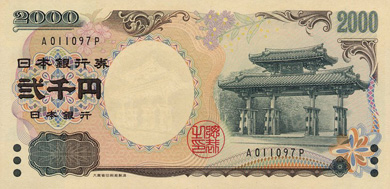
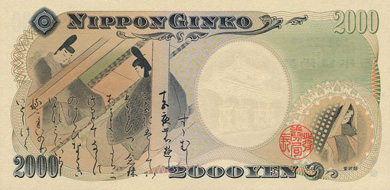
Budget & Public Finance
- Fiscal Year
- 1 April - 31 March
- Public Debt (% of GDP)
- 170%
- External Debt
- $1,545,000,000,000 (USD)
- Investment (% of GDP)
- 24.4%
- Current Account Balance
- $158,300,000,000 (USD)
Labor, Industry & Trade
- Labor Force by Occupation
- services 70%; industry 25%; agriculture 5%
- Household Income — highest 10%
- 21.7%
- Industries
- among world's largest and technologically advanced producers of motor vehicles, electronic equipment, machine tools, steel and nonferrous metals, ships, chemicals, textiles, processed foods
- Agriculture Products
- rice, sugar beets, vegetables, fruit, pork, poultry, dairy products, eggs, fish
- Export Commodities
- motor vehicles, semiconductors, office machinery, chemicals
- Export Partners
- US 28.8%, China 9.6%, South Korea 6.9%, Taiwan 6.3%, Hong Kong 6.1%
- Import Commodities
- machinery and equipment, fuels, foodstuffs, chemicals, textiles, raw materials
- Import Partners
- China 18.3%, US 17.4%, South Korea 4.6%, Indonesia 4.2%, Australia 4.1%
Energy
- Oil Production
- 3,900 bbl/day
- Oil Consumption
- 3,410,000 bbl/day
- Oil Reserves
- 44,000,000 bbl/day
- Natural Gas Production
- 3,300,000,000 cu m
- Natural Gas Consumption
- 105,500,000,000 cu m
- Natural Gas Imports
- 0 cu m
- Natural Gas Exports
- 0 cu m
- Natural Gas Reserves
- 20,900,000,000 cu m
Communications
- Telephone System
- General Assessment: excellent domestic and international service Domestic: high level of modern technology and excellent service of every kind International: country code - 81; numerous submarine cables provide links throughout Asia, Australia, the Middle East, Europe, and United States; satellite earth stations - 7 Intelsat (Pacific and Indian Oceans), 1 Intersputnik (Indian Ocean region), 2 Inmarsat (Pacific and Indian Ocean regions), and 8 SkyPerfect JSAT
- Internet Country Code
- .jp
News & Weather
News & Weather
Current Weather
Latest News
Japan's first mayor to take maternity leave lands on TIME100 Next list - BBC
BBC · 7h ago
Japan Raises Residency Fees 2,000 Percent Amid ‘Anxiety’ Over Foreigners - The New York Times
The New York Times · 22h ago
Japan raises permanent residency fee by 20 times - BBC
BBC · 1d ago
Missed the JLPT? Here’s what you can do next - The Japan Times
The Japan Times · 4h ago
Japan's Game Devs Are Pretty Much All-in on AI - extremetech.com
extremetech.com · 1h ago
Ukraine war: Japan’s new sanctions on Russia target oil exports - South China Morning Post
South China Morning Post · 47m ago
U.S. to put missile system on island near Taiwan for drills - The Japan Times
The Japan Times · 1h ago
Kei Nishikori ends career with Japan Open loss to Frances Tiafoe - ESPN
ESPN · 1d ago
News via Google News
Videos
Videos
2 curated YouTube videos.
Source: YouTube
Source: YouTube
Frequently Asked Questions
Frequently Asked Questions
What is the population of Japan?
What is the capital of Japan?
Where is Japan located?
What bodies of water surround Japan?
What religion is practiced in Japan?
What is the currency of Japan?
What language is spoken in Japan?
What is the geography of Japan like?
What is Japan known for?
Last reviewed 2026