The World: a Complete Portrait of Our Planet, Its Peoples, and Its Future
World countries facts culture history and geography
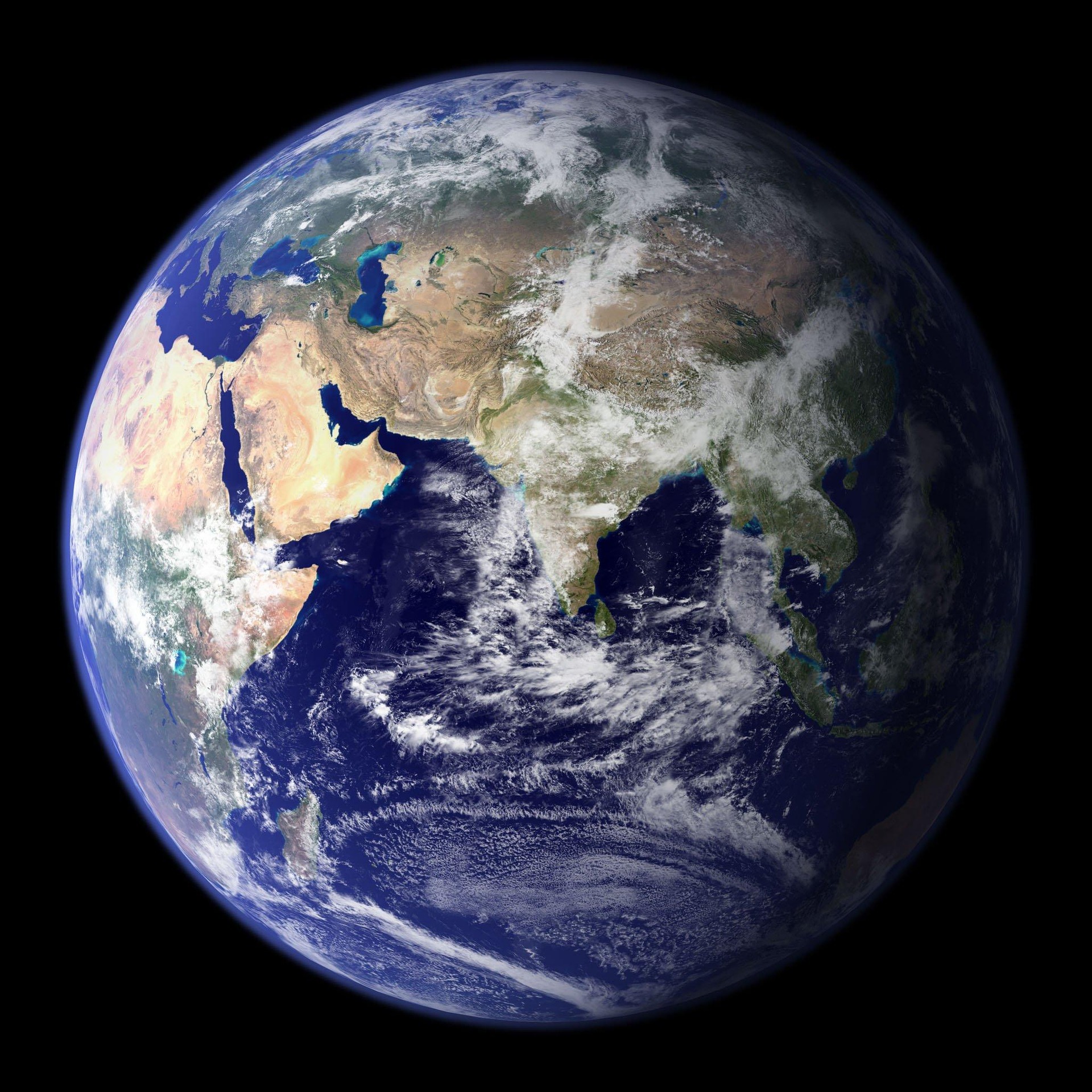
There is only one world. That fact, so obvious as to seem unremarkable, contains within it one of the most important truths of our time. The Earth is a single, interconnected system of land, water, atmosphere, and life, and the approximately 8.1 billion human beings who inhabit it are bound together by shared biological needs, shared atmospheric chemistry, and increasingly by shared economies, communications, and cultural exchange. To understand the world is not merely an intellectual exercise. It is a necessity for anyone who wishes to understand the age in which we live and the challenges and opportunities it presents.
This is a portrait of the world: its geography, its history, its peoples, its languages, its economies, its natural wonders, its human creations, and the organizations through which humanity has tried to manage its shared affairs. It is, of necessity, a portrait in broad strokes. The world is too large, too complex, and too diverse to be captured in any single account. But the broad strokes are worth drawing, because they reveal patterns and connections that are invisible when we focus only on individual countries or regions.
Geography of the World
The Earth is the third planet from the Sun in the solar system, orbiting at an average distance of approximately 150 million kilometers. It has a diameter of approximately 12,742 kilometers and a circumference of approximately 40,075 kilometers at the equator. Its surface area is approximately 510 million square kilometers, of which approximately 71 percent, or 361 million square kilometers, is covered by ocean.
The world's land surface, approximately 149 million square kilometers, is organized into seven continents: Africa, Antarctica, Asia, Australia and Oceania, Europe, North America, and South America. These divisions are in some cases as much a matter of cultural convention as strict geological fact: Europe and Asia are geologically a single landmass, Eurasia, separated by a conventional rather than a natural boundary. Australia is simultaneously a country, an island, and a continent.
The world's oceans are divided into five named bodies: the Pacific, the largest by far at approximately 165 million square kilometers; the Atlantic, at approximately 106 million square kilometers; the Indian, at approximately 70 million square kilometers; the Southern, surrounding Antarctica; and the Arctic, covering the region around the North Pole. These oceans are not separate bodies but a single interconnected global ocean, with water circulating continuously between them through complex current systems.
The world's highest point is Mount Everest in the Himalayas, at 8,849 meters above sea level. The lowest point on land is the shoreline of the Dead Sea, approximately 430 meters below sea level. The deepest point in the ocean is the Challenger Deep in the Mariana Trench, at approximately 10,935 meters below sea level.
The world's largest river by volume is the Amazon in South America. The longest river by length is generally considered to be either the Nile in Africa or the Amazon, depending on measurement methodology, both approximately 6,400 to 6,700 kilometers long. The world's largest lake is the Caspian Sea, a saltwater lake shared among Russia, Kazakhstan, Turkmenistan, Iran, and Azerbaijan. The largest freshwater lake is Lake Superior in North America.
World Population and Demographics
The world's population reached 8 billion in November 2022, having doubled in roughly 50 years. For most of human history, population growth was extremely slow, constrained by disease, famine, and limited food production. The industrial revolution, advances in medicine and sanitation, and the green revolution in agriculture enabled a dramatic acceleration in population growth beginning in the eighteenth and nineteenth centuries.
Population is unevenly distributed across the planet. Asia is by far the most populous continent, home to approximately 4.8 billion people, or roughly 60 percent of the world's population. China, with approximately 1.4 billion people, and India, with approximately 1.44 billion, are the two most populous countries, together accounting for over a third of humanity. Africa is the second most populous continent, with approximately 1.4 billion people and the fastest growing population of any continent.
The world's population is projected to reach approximately 9.7 billion by 2050, with most of that growth occurring in Africa and Asia. At the same time, many developed countries are experiencing aging populations and declining birth rates, creating demographic challenges around retirement systems, healthcare, and labor supply.
Approximately 56 percent of the world's population now lives in urban areas, a proportion that has grown dramatically over the past century and continues to rise. The world's largest cities, or urban agglomerations, include Tokyo with approximately 37 million inhabitants, Delhi with approximately 33 million, Shanghai with approximately 27 million, and Dhaka, Sao Paulo, Mexico City, Cairo, and Beijing, each with over 20 million.
History of the World
The history of modern humans, Homo sapiens, begins in Africa approximately 300,000 years ago. For the vast majority of that time, humans lived as hunter-gatherers, moving with the seasons and living in small bands. The development of agriculture, beginning independently in several regions approximately 10,000 to 12,000 years ago, was the most transformative development in human prehistory, enabling the growth of permanent settlements, population increase, social stratification, and eventually the first civilizations.
The earliest civilizations emerged in Mesopotamia, present-day Iraq, around 3500 BCE, in ancient Egypt along the Nile around 3100 BCE, in the Indus Valley of present-day Pakistan and India around 2500 BCE, and in the Yellow River valley of China around 2000 BCE. These civilizations developed writing, monumental architecture, organized religion, legal codes, and complex political structures. The great cities of the ancient world, including Uruk, Babylon, Thebes, Mohenjo-daro, and Anyang, were centers of commerce, culture, and power.
Classical antiquity, roughly 800 BCE to 600 CE, saw the rise of Greek city-states and the remarkable intellectual and cultural achievements of ancient Greece in philosophy, mathematics, science, drama, and political theory. The Persian Empire became the largest empire the world had yet seen, stretching from Egypt to India. Alexander the Great's conquests between 334 and 323 BCE spread Greek culture across the Middle East and into Central Asia. The Roman Empire at its height in the second century CE governed approximately 50 to 60 million people from Britain to Mesopotamia and created a legal, linguistic, and cultural legacy that shaped Western civilization for two millennia.
In parallel, other great civilizations flourished across the world. The Han Dynasty in China governed a realm comparable in size and population to Rome and created administrative traditions that would shape Chinese governance for two thousand years. The Maurya and Gupta Empires in India presided over periods of remarkable cultural and intellectual achievement. The Maya civilization in Mesoamerica developed sophisticated astronomy, mathematics, and a writing system. The Axum Empire in East Africa was a major Red Sea trading power.
The medieval period, roughly 500 to 1500 CE, saw the rise of Islam as a world religion and the rapid expansion of Islamic civilization across the Middle East, North Africa, Central Asia, and into Spain and India. The Islamic Golden Age produced extraordinary advances in mathematics, astronomy, medicine, and philosophy. In Europe, feudal kingdoms gradually consolidated into larger states, the Catholic Church played a dominant institutional role, and the Crusades brought Europe into violent contact with the Islamic world. In China, the Tang and Song dynasties presided over periods of cultural and technological innovation, including the invention of printing, gunpowder, and the compass. The Mongol conquests of the thirteenth century created the largest contiguous land empire in history, temporarily connecting Europe and China under a single political authority.
The Age of Exploration, beginning in the late fifteenth century, connected the previously isolated worlds of Europe, the Americas, Africa, and Asia into a single global system for the first time. Portuguese and Spanish voyagers mapped the world's coastlines and established the first global trading networks. The encounter between the Old and New Worlds was catastrophic for the indigenous peoples of the Americas, who died in vast numbers from introduced diseases and colonial violence. The transatlantic slave trade, which forcibly transported an estimated 12.5 million Africans to the Americas between the sixteenth and nineteenth centuries, was among the greatest atrocities in human history.
The Scientific Revolution of the sixteenth and seventeenth centuries transformed humanity's understanding of the natural world, establishing the methods of empirical observation, experimentation, and mathematical description that underlie modern science. The Enlightenment of the seventeenth and eighteenth centuries applied similar principles of reason to political and social questions, laying the intellectual groundwork for democracy, human rights, and secularism. The American Revolution of 1776 and the French Revolution of 1789 translated Enlightenment ideas into political reality.
The Industrial Revolution, beginning in Britain in the late eighteenth century and spreading to Europe and North America in the nineteenth, transformed how goods were produced, how people lived and worked, and how nations competed. Steam power, the factory system, railways, and later electricity and the internal combustion engine created the material foundations of modern life. The Industrial Revolution also enabled European nations to project military and economic power globally in ways that established Western dominance over much of the world.
The twentieth century was the most violent in human history but also the most transformative. Two World Wars killed an estimated 80 to 85 million people combined. The Holocaust, in which Nazi Germany systematically murdered approximately 6 million Jews and millions of others, was the most systematic act of genocide in history. The Cold War between the United States and the Soviet Union shaped international politics from 1947 to 1991, dividing the world into competing blocs and bringing humanity to the brink of nuclear annihilation on multiple occasions.
The second half of the twentieth century also brought remarkable progress. Decolonization freed dozens of nations in Africa, Asia, and the Caribbean from European rule. The Green Revolution dramatically increased food production and prevented mass famine. The mapping of the human genome, the invention of the internet, and advances in medicine transformed human life. Extreme poverty, by some measures, declined more in the decades between 1990 and 2020 than in any previous period in history.
The twenty-first century has brought new challenges: climate change, pandemic disease as demonstrated by COVID-19, the rise of artificial intelligence, and renewed great power competition among the United States, China, and Russia. How humanity navigates these challenges will determine the character of the century to come.
World Cultures and Diversity
The world contains approximately 195 sovereign nations and thousands of distinct ethnic, cultural, and linguistic groups. This diversity represents the accumulated creativity and experience of hundreds of generations of human beings adapting to different environments, solving different problems, and expressing different visions of what life should look like.
Religion is one of the most powerful forces shaping human culture worldwide. Christianity, with approximately 2.4 billion adherents, is the world's largest religion, practiced in many different forms across all continents. Islam, with approximately 1.9 billion adherents, is the world's second largest and fastest-growing religion, with major communities across the Middle East, North Africa, South Asia, and Southeast Asia. Hinduism, with approximately 1.2 billion adherents, is primarily practiced in South Asia. Buddhism, with approximately 500 million adherents, is widespread across East and Southeast Asia. Judaism, with approximately 15 million adherents, has had an influence on world history disproportionate to its numbers. Indigenous and folk religions account for several hundred million more.
The world's artistic traditions are extraordinarily diverse. From the cave paintings of Lascaux to the murals of Mexico City, from the classical music of Europe to the gamelan orchestras of Indonesia, from the epic poetry of Homer and Valmiki to the novels of Chinua Achebe and Gabriel Garcia Marquez, humanity has produced an astonishing variety of ways to make meaning, express emotion, and transmit culture across generations.
Food traditions reflect both the agricultural and ecological heritage of different regions and the creativity with which human cultures have transformed raw ingredients into cuisine of extraordinary complexity. From the spice-infused curries of India to the fermented foods of East Asia, from the olive oil and wine culture of the Mediterranean to the corn and bean traditions of the Americas, food is one of the most intimate and universal expressions of cultural identity.
Languages of the World
There are approximately 7,000 to 7,150 living languages in the world, though this number is declining as smaller languages become extinct and global languages expand. Languages belong to families, groups of languages descended from a common ancestral language. The largest language family is the Indo-European, which includes the languages of most of Europe, Iran, and the Indian subcontinent, encompassing languages as apparently different as English, Russian, Persian, Hindi, and Greek.
The most widely spoken first language in the world is Mandarin Chinese, spoken by approximately 920 million people. Spanish is the second most widely spoken native language, with approximately 475 million speakers. English, though the third or fourth most spoken native language, is by far the most widely used second language and the primary language of international business, science, diplomacy, and the internet. Arabic, Hindi, Bengali, Portuguese, Russian, Japanese, and Punjabi are also among the world's most widely spoken languages.
Approximately 40 percent of the world's languages are endangered, spoken by fewer than 1,000 people. Languages disappear when their speakers shift to more dominant languages for economic or social reasons, or when communities are disrupted by war, displacement, or assimilation policies. When a language dies, humanity loses not just a means of communication but an entire way of encoding knowledge, expressing concepts, and understanding the world.
World Economies and Trade
The world economy has a total output, measured as gross world product, of approximately 100 to 105 trillion US dollars per year. This wealth is extremely unevenly distributed. The United States, China, the European Union, Japan, and India together account for the majority of global economic output. At the same time, dozens of countries in sub-Saharan Africa, South Asia, and elsewhere have per capita incomes of less than a few thousand dollars per year.
International trade has grown enormously in recent decades, driven by improvements in transportation and communication and the reduction of trade barriers through international agreements. The World Trade Organization, established in 1995, governs international trade rules. Global supply chains now produce most manufactured goods through networks of suppliers and manufacturers spread across multiple countries.
The global economy faces significant challenges: inequality within and between countries, climate change, automation and artificial intelligence disrupting labor markets, the legacies of colonialism that have shaped the relative wealth of different regions, and the difficulty of managing global commons like the oceans and atmosphere in the absence of a global government.
Natural Wonders of the World
The world contains extraordinary natural features that have inspired awe and reverence throughout human history.
The Amazon Rainforest in South America is the largest tropical forest on Earth, home to an estimated 10 percent of all species on the planet and a critical regulator of the global climate. The Sahara Desert in North Africa is the world's largest hot desert, covering approximately 9 million square kilometers across eleven countries. The Great Barrier Reef off Australia is the world's largest coral reef ecosystem and one of the most biodiverse marine environments on Earth.
Mount Everest in the Himalayas is the world's highest mountain, a challenge that has drawn climbers from around the world since the first successful ascent by Edmund Hillary and Tenzing Norgay in 1953. Victoria Falls on the border of Zambia and Zimbabwe is one of the world's largest and most spectacular waterfalls, producing a mist visible from 50 kilometers away. Angel Falls in Venezuela is the world's highest uninterrupted waterfall at nearly 1,000 meters.
The Northern Lights, or Aurora Borealis, are one of the most spectacular natural light displays on Earth, occurring when charged particles from the Sun interact with Earth's magnetic field and atmosphere. They are visible from high northern latitudes and their southern hemisphere equivalent, the Aurora Australis, from high southern latitudes.
Famous Man-Made Wonders of the World
Humanity has created structures and landscapes of extraordinary ambition and beauty throughout its history.
The Great Wall of China, built and rebuilt over many centuries from the seventh century BCE onwards, stretches for thousands of kilometers across northern China and is one of the most remarkable construction achievements in human history. The Pyramids of Giza in Egypt, built approximately 4,500 years ago as tombs for pharaohs, remain among the largest stone structures ever built and the only surviving wonders of the ancient world.
The Colosseum in Rome, completed in 80 CE, could hold between 50,000 and 80,000 spectators and hosted gladiatorial contests, animal hunts, and other public entertainments for four centuries. The Taj Mahal in Agra, India, built by the Mughal Emperor Shah Jahan as a mausoleum for his wife in the seventeenth century, is considered one of the finest examples of Mughal architecture and one of the most beautiful buildings in the world.
Machu Picchu in Peru, the fifteenth-century Inca citadel set high in the Andes, was named one of the New Seven Wonders of the World. The Eiffel Tower in Paris, built for the 1889 World's Fair, has become one of the world's most recognized structures. The Sydney Opera House in Australia is a masterpiece of twentieth-century architecture. The Panama Canal, connecting the Atlantic and Pacific Oceans, is one of the great engineering achievements of the industrial age.
World Organizations
The international system that governs relations between states is complex and multilayered, built up gradually since the end of the Second World War.
The United Nations, established in 1945 with 51 member states and now encompassing 193, is the primary forum for international cooperation and diplomacy. Its six principal organs include the General Assembly, where all member states have equal representation; the Security Council, where five permanent members (the United States, Russia, China, France, and the United Kingdom) hold veto power; and the International Court of Justice. UN specialized agencies address specific global challenges: the World Health Organization coordinates international public health responses, UNESCO promotes education and cultural heritage, UNICEF protects children's rights, and the Food and Agriculture Organization addresses hunger and food security.
The World Bank and the International Monetary Fund, both established in 1944, provide financing and technical assistance to developing countries and manage international financial stability. The World Trade Organization manages international trade rules. NATO, the North Atlantic Treaty Organization, is the primary military alliance of Western nations. The European Union is the most advanced experiment in supranational governance, with 27 member states sharing a common currency, a common market, and a complex set of shared institutions.
Regional organizations including the African Union, the Association of Southeast Asian Nations, the Arab League, and the Organization of American States provide forums for regional cooperation on political, economic, and security matters.
Climate and Environment
The Earth's climate is the product of complex interactions between the sun's energy, the oceans, the atmosphere, and the land surface. Climate zones range from the polar regions, where permanent ice covers the land and sea, to the tropical zones near the equator, characterized by high temperatures and heavy rainfall throughout the year.
Climate change, driven by the accumulation of greenhouse gases in the atmosphere from the burning of fossil fuels, deforestation, and other human activities, is the defining environmental challenge of our time. The world's average surface temperature has risen by approximately 1.1 to 1.2 degrees Celsius since the pre-industrial period, and the consequences are already being felt: more frequent and intense extreme weather events, rising sea levels, melting glaciers and ice sheets, shifting ecosystems, and increasing risks to food and water security.
The Paris Agreement of 2015, signed by nearly every nation on Earth, committed the world to keeping warming below 2 degrees Celsius above pre-industrial levels, with efforts to limit it to 1.5 degrees. Achieving these goals requires rapid and dramatic reductions in greenhouse gas emissions, a transformation of energy systems, agriculture, transportation, and industry that represents one of the greatest challenges humanity has ever faced.
Beyond climate change, other environmental challenges include biodiversity loss, with scientists estimating that the world is experiencing a sixth mass extinction event driven by habitat destruction, pollution, and overexploitation; plastic pollution in the oceans; deforestation, particularly of tropical forests; water scarcity; and soil degradation.
The Future of the World
The world in the coming decades will be shaped by several powerful forces. Climate change will continue to affect every region, with low-lying coastal areas and vulnerable agricultural systems facing the most severe risks. Population growth, concentrated in Africa and parts of Asia, will increase pressure on food, water, and energy systems. Technological change, particularly in artificial intelligence, biotechnology, and renewable energy, will transform economies and societies in ways that are difficult to predict. Geopolitical competition, particularly between the United States, China, and Russia, will shape international relations and the capacity of the international system to address shared challenges.
At the same time, there are grounds for cautious optimism. Renewable energy has become the cheapest form of new electricity generation in most of the world. Global poverty and infant mortality have declined dramatically. Educational attainment has risen. Democratic governance, despite significant setbacks, covers more of the world's population than at any previous point in history.
The world is neither the paradise optimists sometimes imagine nor the disaster pessimists fear. It is, as it has always been, a work in progress: a vast, complex, beautiful, troubled human project, alive with creativity and potential, burdened by injustice and risk, and ultimately dependent on the choices that billions of individuals, communities, and nations make together.
#WorldHistory #Geography #WorldCulture #GlobalAwareness #NaturalWonders #Humanity #WorldLanguages #Environment #ClimateChange #UN #WorldEconomy #Travel #Education #Diversity #OurWorld
https://www.countryreports.org
Sources: un.org, data.worldbank.org, cia.gov, whc.unesco.org, who.int

English
Español
中文
हिन्दी
Français