
 English
 Español
 中文
中文 हिन्दी
 Français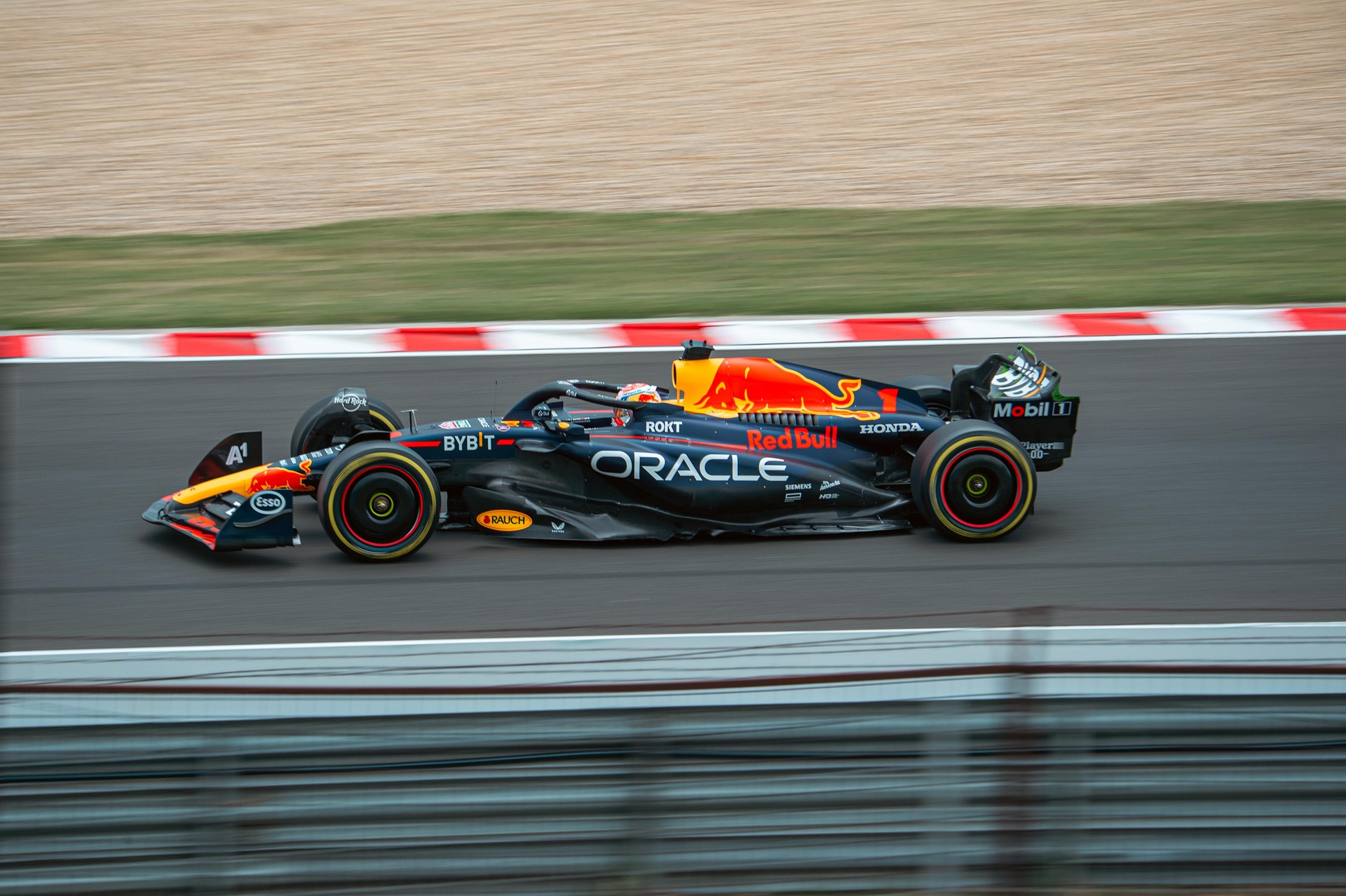
History of Formula 1 and Motorsport
A complete history of motor racing from the 1890s through the founding of Formula 1, the legendary drivers and rivalries, and the modern era
Introduction
Motor racing is among the most technologically demanding and most globally distributed of all major sports. The combination of mechanical engineering, driver skill, team strategy, and substantial economic investment that defines the modern sport has produced one of the most complex sporting traditions in the world, with disciplines ranging from the open-wheel Formula 1 championship to the prototype endurance racing at Le Mans, from the oval-track Indianapolis 500 to the stock car racing of NASCAR, from the off-road rally racing of the World Rally Championship to the two-wheeled racing of MotoGP. Each major motor racing discipline has its own distinctive technical, competitive, and cultural traditions, but all of them share a common origin in the late nineteenth-century invention of the internal combustion automobile and the immediate emergence of competitive racing as one of the principal cultural responses to the new technology.
Formula 1, the leading international single-seater motor racing championship, was founded as the Formula 1 World Championship for Drivers in 1950 by the Fédération Internationale de l'Automobile (FIA). The championship has been contested annually since then with the exception of various minor seasonal interruptions, making it one of the longest-running annual world championship competitions in any sport. The championship has been contested at famous circuits including Monaco's street course in the Principality of Monaco, the Spa-Francorchamps circuit in the Belgian Ardennes, Silverstone in central England, the Nürburgring in the German Eifel mountains, Suzuka in Japan, the Circuit Gilles Villeneuve in Montreal, Interlagos in São Paulo, Brazil, and various other circuits across approximately twenty-five host nations.
This article surveys the full history of motor racing from the 1890s city-to-city Paris-Madrid races through the pre-war Grand Prix tradition, the founding of the Formula 1 World Championship in 1950, the era-by-era champions from Juan Manuel Fangio through Jim Clark and Jackie Stewart to Niki Lauda and James Hunt to Ayrton Senna and Alain Prost to Michael Schumacher to Lewis Hamilton to Max Verstappen in the present day, the great rivalries that have defined the sport, the technical and safety transformations that have continued through more than seventy years of competition, the iconic circuits where the championship has been contested, the broader international motor racing tradition including Le Mans and the Indianapolis 500 and NASCAR and rally racing and MotoGP, and the future of a sport now transitioning to electric and sustainable propulsion technologies. Motor racing is among the most consequential technological and cultural traditions of the twentieth century, and its history is among the great cultural narratives of modern engineering, athletic competition, and national rivalry.
Origins of Motor Racing (1890s-1900s)
Motor racing emerged in the 1890s as soon as the internal combustion automobile became practically functional and reliable enough for sustained operation at speeds higher than horse-drawn vehicles could achieve. The first organized motor race was the 1894 Paris-Rouen Trial, organized by the French sporting newspaper Le Petit Journal on July 22, 1894, with the route covering 126 kilometers between the two French cities. The race was won jointly by Jules-Albert de Dion and Émile Levassor, with the official first prize going to Peugeot and Panhard et Levassor whose cars had completed the course in the best technical condition. The Paris-Rouen race established the basic format of the long-distance road race that would dominate motor racing through the following decade.
The great early motor races were the long-distance city-to-city races held across Europe through the 1890s and early 1900s. The 1895 Paris-Bordeaux-Paris race, the 1896 Paris-Marseille-Paris, the 1898 Paris-Amsterdam-Paris, the 1899 Tour de France Automobile, the 1900 Paris-Toulouse-Paris, the 1901 Paris-Berlin, the 1902 Paris-Vienna, and various other races provided the early competitive structure of motor racing. These races were held on open public roads, with the racers driving alongside ordinary horse-drawn traffic and pedestrians. The races attracted vast crowds of spectators who lined the routes, and the racing was extraordinarily dangerous by modern standards.
Continue reading with a membership
Every country, every topic, all activities & recipes
✓ Instant access on this device · ✓ No subscription