
 English
 Español
 中文
中文 हिन्दी
 Français
Government and Politics
Government and Politics of Wake Island
Government structure, leadership, capital, military, and national symbols of Wake Island.
Government Structure
Constitutional foundations, branches, parties, and leadership.
- Legal System
- the laws of the US, where applicable, apply
- Citizenship
- see United States
- Executive Branch
- Wake Island is an unincorporated territory of the United States located in the central Pacific Ocean, and as such, it does not possess an independent executive branch of government. Instead, executive authority over the island is exercised through the United States federal government, with administrative oversight delegated to the Department of the Interior's Office of Insular Affairs. The island is administered jointly by the U.S. Air Force and the U.S. Army under the jurisdiction of the United States Indo-Pacific Command. Day-to-day administrative functions are managed by a designated military commander who serves as the senior official on the island. This individual is responsible for overseeing operations, personnel, and infrastructure on what is primarily a strategically important military installation. Because Wake Island has no permanent civilian population, there is no locally elected executive, no governor, and no municipal government structure. The island's residents consist entirely of U.S. military personnel and civilian contractors who support base operations, including those related to missile defense and air refueling missions. The legal framework governing Wake Island falls under U.S. federal law. Congress holds plenary authority over the territory pursuant to the Territory Clause of the U.S. Constitution (Article IV, Section 3). The President of the United States serves as the ultimate executive authority over the island, with the chain of command running through the Secretary of Defense and ultimately to the unified combatant commander responsible for the Pacific theater. The Department of the Interior maintains nominal civilian jurisdiction and works in coordination with the Department of Defense to address environmental, conservation, and land management issues on the atoll. Wake Island is also administered in part as a National Wildlife Refuge, adding another layer of federal oversight through the U.S. Fish and Wildlife Service. In summary, Wake Island's executive structure is entirely federally directed, reflecting its status as a strategically significant but non-self-governing U.S. possession with no indigenous permanent population or autonomous local governance.
- Legislative Branch
- Wake Island does not have a legislative branch in the traditional governmental sense. It is an unincorporated, unorganized territory of the United States, meaning it operates under direct federal jurisdiction rather than through a locally elected governing body or representative assembly. The island falls under the administrative authority of the United States Air Force, which manages day-to-day operations on behalf of the U.S. Department of Defense. The Department of the Interior holds nominal jurisdiction over Wake Island as an insular area, but the practical governance of the atoll is carried out through military command structures rather than civilian legislative institutions. Because Wake Island has no indigenous population and no permanent civilian residents, there is no electorate to represent and therefore no basis for establishing a local legislature. The small number of personnel present on the island at any given time consists primarily of U.S. military and contractor staff on temporary assignment, none of whom hold permanent residency tied to Wake Island. All laws applicable to Wake Island are those enacted by the United States Congress and, where relevant, regulations issued by federal agencies such as the Department of Defense and the Department of the Interior. The U.S. Congress technically holds plenary authority over all unincorporated territories under Article IV, Section 3 of the U.S. Constitution, which grants Congress the power to make rules and regulations governing U.S. territories and possessions. Residents of Wake Island — to the extent that any are present — are subject to U.S. federal law but do not have voting representation in Congress. Wake Island does not send a non-voting delegate to the House of Representatives, which further distinguishes it from other U.S. territories such as Guam or the U.S. Virgin Islands, which do have such representation. In essence, all legislative authority over Wake Island resides exclusively at the federal level in Washington, D.C.
- Election Results
- Wake Island is an unincorporated territory of the United States located in the central Pacific Ocean. As such, it has no independent government, no permanent civilian population, and no electoral system of its own. The island is administered by the United States Air Force and falls under the jurisdiction of the Office of Insular Affairs within the U.S. Department of the Interior for certain administrative purposes. Because Wake Island is not a self-governing territory, residents do not participate in local elections, and there is no legislature, executive council, or voting body established on the island. The small population present at any given time consists entirely of U.S. military personnel and contracted civilian workers who are stationed there on a temporary basis. These individuals may retain voting rights in their home states for U.S. federal elections, including presidential and congressional races, but no elections are conducted on Wake Island itself. Wake Island does not send a delegate or representative to the U.S. Congress, distinguishing it from other U.S. territories such as Guam or the U.S. Virgin Islands, which have non-voting delegates in the House of Representatives. Political authority over Wake Island is exercised directly by the U.S. federal government, with operational control maintained by the military. In terms of U.S. presidential elections, Wake Island is not included in any state's electoral college count and does not have a mechanism for its transient population to cast ballots from the island itself. All governance decisions affecting Wake Island are made at the federal level in Washington, D.C., without any local electoral input. Given this structure, there are no election results to report for Wake Island, as the concept of contested elections simply does not apply to this remote and strategically managed outpost in the Pacific.
National Symbols
Flag, anthem, and other symbols of national identity.
National Flag
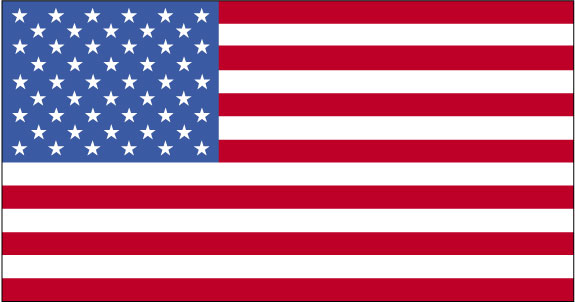
- Flag Symbolism
- the flag of the US is used
- Date of Adoption
- 4 July 1976
National Anthem
- Anthem History
- a territory of the United States