
 English
 Español
 中文
中文 हिन्दी
 Français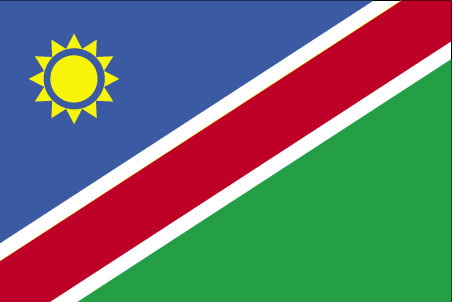
Namibia
Declare Your Relationship to Namibia
CountryReports Community
- Studying5
- From Namibia1
- Namibia heritage1
- Visited0
- Want to visit2
Customs and Culture
Customs and Culture
Cultural Attributes
The majority of rural inhabitants in Namibia engage in fishing, crop cultivation, or livestock rearing to sustain their livelihoods. Their agricultural produce typically includes staples like corn, millet, and various vegetables, while cattle and sheep form integral parts of their livestock. Many farmers cultivate sufficient crops to meet their own dietary needs. Although much of Namibia's terrain is arid, the nation boasts abundant mineral resources, including diamonds and uranium. Mining, encompassing resources like lead, copper, tin, and zinc, is Namibia's predominant economic activity. A significant portion of the male population is employed in the mining sector.
Whites constitute approximately 7 percent of Namibia's populace, with the majority residing in urban areas.

Ancient Desert, Modern Spirit
Get More Customs and Culture
5 more cultural topics for members
Social Customs & Etiquette · Diet · Family · Dating Customs · Recreation
Every country, every topic, all activities & recipes
✓ Instant access on this device · ✓ No subscription
Holidays
Independence Day
3/21Independence Day
Dates of Interest
- December 26th
Also known as Day of Goodwill, it is a public holiday in Namibia and is often observed as a day for relaxation and spending time with family and friends.
How do people greet each other in Namibia?
Namibians greet each other warmly as brothers and sisters; handshakes are common and friends often hug. In the north, say "Nawa" (Hello) in Oshivambo, and in Afrikaans "Hallo" or "Goeie môre" (Good Morning).
Do
- Shake hands or hug depending on your relationship
- Learn a few words of a local language, which is appreciated
- Show respect to elders
Good to know
- Among some groups, women and youth bend at the knee to show respect to elders
- Afrikaans often sounds like German or a cross between German and Dutch
What are the food and eating customs in Namibia?
Mealie (corn) is the staple, alongside beef, mutton, millet, peanuts, and melons. Fish is an important export but is not a staple in the diet.
Do
- Be gracious when offered food or drink in someone's home
- Use your right hand when handling food or giving something
Don’t
- Don't use your left hand for food, as it may be seen as impolite
What etiquette should I follow when visiting Namibians?
Namibians value hospitality; show deference to elders and be gracious when hosted. Be patient with a more relaxed sense of scheduling.
Do
- Bring a small gift if invited into someone's home
- Address elders by title and last name until invited to use their first name
- Ask permission before taking photographs, especially of people
- Respect the environment by following trails and not disturbing wildlife
Don’t
- Don't litter or disturb animals
Good to know
- Tipping is not mandatory but appreciated for good service
- Social gatherings may run on a more relaxed timetable
How should I dress in Namibia?
Dress conservatively, especially in rural areas, and choose lightweight, breathable fabrics suited to the hot, dry climate. Modern Western-style clothing is common in urban areas like Windhoek.
Do
- Wear lightweight, breathable clothing due to the heat
- Choose neutral colors like khaki and olive green for safaris and outdoor activities
- Dress conservatively in rural areas
Don’t
- Avoid revealing clothing
Good to know
- Traditional clothing remains common among some ethnic groups, such as the Himba in the north
Which gestures are considered rude in Namibia?
Several gestures can cause offense, including pointing with the finger, showing the sole of your foot, and using the left hand. The head is considered sacred.
Don’t
- Don't point directly with your index finger
- Don't show the sole of your foot or shoe when sitting
- Don't touch someone's head without permission, especially elders
- Avoid public displays of affection in conservative communities
Good to know
- Gesture with an open hand instead of pointing
- Avoid whistling indoors, which some consider bad luck, especially at night
- Keep feet flat on the ground or crossed at the ankles
What is family life like in Namibia?
When a man dies, his parents and siblings often inherit the property, and many households are run by women as single parents.
Good to know
- Having more than one wife is officially forbidden in Namibia
What do people do for fun in Namibia?
Football (soccer) is immensely popular, with rugby, athletics, cricket, and netball also followed. Outdoor adventures like hiking, camping, wildlife safaris, and water sports celebrate the country's natural beauty.
Good to know
- Namibia's national rugby team is the Welwitschias
- Festivals like the Windhoek Carnival celebrate cultural diversity through music and dance
- Windhoek offers a vibrant nightlife with cafes, restaurants, and entertainment venues
Last updated: 2026-07-12 · Sources: CountryReports
Photos of Namibia
Photos of Namibia


Travel and Tourism
Travel and Tourism
- Travel Alert Status
- Level 1: Exercise Normal Precautions
- Currency
- Namibian dollar (NAD); South African rand (ZAR)
- Time Difference
- UTC+1 (6 hours ahead of Washington, DC, during Standard Time)
- Airports
- 136
Read the full travel guide — health, safety, vaccinations, disease risk, sanitation, and transit details.
View full travel guideRecipes
Recipes
History
History
Historical Eras
Pre-Colonial Era
8000 BCE – 1884
The San people were the earliest inhabitants of the region, followed by the Nama and Damara. Bantu-speaking Ovambo and Herero peoples migrated southward around the 14th century, establishing pastoral societies across the interior. European contact began tentatively with Bartolomeu Dias in 1488, but the Namib Desert's hostility limited sustained incursion until traders, missionaries, and hunters penetrated the region in the late 18th and early 19th centuries.
German Colonial Rule
1884 – 1915
Adolf Lüderitz's 1883 land claim set the stage for Germany to formally annex the territory as German South West Africa in 1884. Colonial consolidation was achieved through brutal force, most infamously during the Herero and Nama wars of 1904–08, in which tens of thousands of indigenous people perished in what is widely recognized as one of the first genocides of the 20th century. Germany's administration ended when South African forces occupied the territory during World War I in 1915.
South African Mandate
1915 – 1966
South Africa assumed administration of South West Africa under a League of Nations mandate formalized in 1920, granting Pretoria sweeping legislative and administrative powers. After the League dissolved in 1946, South Africa refused UN demands to convert the territory to a trusteeship, effectively annexing it and extending apartheid policies to its population. International legal challenges culminated in a 1971 International Court of Justice opinion declaring South Africa's continued presence illegal.
Liberation Struggle
1966 – 1990
SWAPO launched its armed insurgency in 1966 following the UN General Assembly's revocation of South Africa's mandate, intensifying operations after Angola's independence in 1975 provided rear bases in the south. The conflict became entangled in Cold War regional dynamics, with South African forces conducting cross-border raids into Angola and Cuban troops supporting the MPLA government. A negotiated settlement brokered under UN Security Council Resolution 435 led South Africa to agree to Namibian independence in 1988 in exchange for Cuban troop withdrawal from Angola.
Independence & Modern Namibia
1990 – present
Namibia achieved independence on March 21, 1990, following UN-supervised elections in which SWAPO won a commanding majority; Sam Nujoma became the country's first president. The new state adopted a multiparty constitutional democracy and pursued national reconciliation, though land redistribution and economic inequality inherited from the colonial era have remained persistent challenges. SWAPO has governed continuously since independence, presiding over relative political stability while the country has developed its mining, tourism, and fishing sectors.
Overview
The San are generally assumed to have been the earliest inhabitants of the region. Later inhabitants include the Nama and the Damara or Berg Dama. The Bantu-speaking Ovambo and Herero migrated from the north in about the 14th century A.D.
Every country, every topic, all activities & recipes
✓ Instant access on this device · ✓ No subscription
Timeline of Key Events
1488
Portuguese explorer Bartolomeu Dias visits.
Portuguese explorer Bartolomeu Dias visits.
1886 – 1890
Present international boundaries established by German treaties with Portugal and Britain.
Present international boundaries established by German treaties with Portugal and Britain. Germany annexes the territory as South West Africa.
1915
South Africa takes over territory during First World War.
South Africa takes over territory during First World War.
1968
South West Africa officially renamed Namibia by UN General Assembly.
South West Africa officially renamed Namibia by UN General Assembly.
1988
South Africa agrees to Namibian independence in exchange for removal of Cuban troops from Angola.
South Africa agrees to Namibian independence in exchange for removal of Cuban troops from Angola.
1990
Namibia becomes independent, with Sam Nujoma as first president.
Namibia becomes independent, with Sam Nujoma as first president.
2004
Road bridge across Zambezi river between Namibia.
Road bridge across Zambezi river between Namibia, Zambia opens amid hopes for boost to regional trade.
Read the full history profile — narrative overview, defining eras, and the complete timeline in one place.
View expanded historyInteresting Facts
Interesting Facts
The Namib Desert is said to be the world's oldest desert.
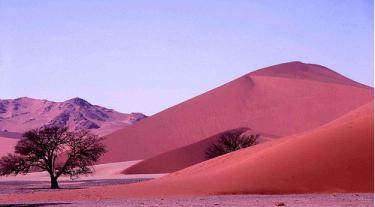
The sand dunes in the Namib Desert are among the highest sand dunes in the world.
See every fact — trivia, oddities, and curious tidbits gathered from across the country.
View all interesting factsGeography and Environment
Geography and Environment
- Terrain
- mostly high plateau; Namib Desert along coast; Kalahari Desert in east
- Climate
- Namibia’s climate is typical of a semi-desert and high plateau country, with hot days and cool nights. In mid-summer (December–February), daytime temperatures can exceed 100°F in lower elevations. In Windhoek, January average high temperatures are in the 90s. Winter (May–September) sees daytime highs of about 70°F; nights can be cold, dipping below freezing. Windhoek enjoys about 300 sunny days a year. Rains usually come from December through March, peaking in February, for a yearly average rainfall of 12–16 inches in Windhoek. The unrelenting dryness of the rest of the year makes the rains refreshing, welcome, and eagerly anticipated, turning the mountains surrounding Windhoek green for the brief summer months.
- Natural Hazards
- prolonged periods of drought
- Current Environmental Issues
- very limited natural fresh water resources; desertification; wildlife poaching; land degradation has led to few conservation areas
Read the full geography and environment profile — terrain, climate, natural resources, hazards, land use, and international agreements.
View full geographyPeople & Demographics
People & Demographics
Religion
Languages Spoken
English 7% (official), Afrikaans common language of most of the population and about 60% of the white population, German 32%, indigenous languages: Oshivambo, Herero, Nama
- Afrikaans
- English
- German
Population
- Population
- 2,567,012
- Population in Major Urban Areas
- WINDHOEK (capital) 380,000
- Nationality Noun
- Namibian(s)
- Ethnic Groups
- black 87.5%, white 6%, mixed 6.5%
Education
- Literacy Definition
- age 15 and over can read and write
Health Information
- Major Infectious Diseases — degree of risk
- high
Life Expectancy
- Life Expectancy at Birth
- Life expectancy at birth in Namibia has shown meaningful improvement over recent decades, though the country continues to face significant public health challenges that influence overall longevity. As of the most recent estimates, the average life expectancy at birth in Namibia stands at approximately 67 to 69 years, with women generally living longer than men — a pattern consistent with global trends. Namibia's life expectancy figures reflect a remarkable recovery from a severe decline that occurred during the 1990s and early 2000s, when the HIV/AIDS epidemic caused life expectancy to drop dramatically — at its lowest point falling below 50 years. The widespread rollout of antiretroviral therapy (ART) programs, supported by both the Namibian government and international health partnerships, played a critical role in reversing this trend. Namibia is widely recognized for achieving one of the highest rates of HIV treatment coverage in sub-Saharan Africa, which has been central to improving population-level health outcomes. Despite these gains, disparities in life expectancy persist across different regions and demographic groups within the country. Rural populations, particularly those in remote areas with limited access to healthcare infrastructure, tend to experience shorter life spans compared to urban residents in cities such as Windhoek and Walvis Bay. Non-communicable diseases, including cardiovascular conditions, diabetes, and respiratory illnesses, are increasingly contributing to mortality as infectious disease burdens are brought under greater control. Maternal and child health improvements have also contributed to rising life expectancy figures. Reductions in infant mortality rates, improved prenatal care access, and expanded immunization programs have helped more Namibians survive into adulthood. The country's relatively functional health system compared to many of its regional neighbors, combined with ongoing investment in public health infrastructure, supports continued incremental gains. Looking ahead, Namibia's National Development Plans and health sector strategies aim to further extend healthy life expectancy by addressing both communicable and non-communicable disease burdens, improving rural healthcare access, and strengthening nutrition and sanitation programs across the country.
- Infant Mortality Rate
- Namibia has made meaningful progress in reducing infant mortality over recent decades, though the rate remains relatively elevated compared to high-income nations. The infant mortality rate in Namibia stands at approximately 29 to 32 deaths per 1,000 live births, reflecting improvements driven by expanded healthcare access, immunization programs, and maternal health initiatives. Several factors continue to influence infant survival outcomes in Namibia. HIV/AIDS remains a significant concern, as mother-to-child transmission of the virus can affect newborn health and survival, though national prevention programs have substantially reduced transmission rates in recent years. Malnutrition, limited access to skilled birth attendants in rural and remote areas, and disparities between urban and rural healthcare infrastructure also contribute to infant deaths. The leading causes of infant mortality in Namibia include neonatal complications such as preterm birth, birth asphyxia, and neonatal infections, along with pneumonia, diarrheal diseases, and malaria in certain regions. Children in the first 28 days of life — the neonatal period — account for a significant share of all infant deaths, a pattern consistent with broader sub-Saharan African trends. The Namibian government, in partnership with UNICEF, the World Health Organization, and other international bodies, has implemented targeted interventions including expanded vaccination coverage, community health worker programs, and efforts to improve antenatal care attendance. Namibia's relatively high rate of skilled birth attendance compared to other countries in the region has been a positive factor in reducing preventable deaths. Despite these gains, significant inequalities persist between wealthier urban centers like Windhoek and Walvis Bay and more remote rural communities, where healthcare facilities may be hours away. Continuing to close these geographic and socioeconomic gaps remains central to further reducing infant mortality across the country.
Read the full people and society profile — demographics, health, education, religion, languages, and notable people.
View full people and societyGovernment & Politics
Government & Politics
Country Identity
- Country Name
- Namibia
- Full Country Name
- Republic of Namibia
- Former Name
- German Southwest Africa, South-West Africa
Government Structure
- Government Type
- republic
- Legal System
- based on Roman-Dutch law and 1990 constitution
- Executive Branch
- chief of state: President Nangolo MBUMBA (since 4 February 2024); note - President Hage GEINGOB died in office on 4 February 2024, and Vice President Mbumba was sworn in to complete the remaining term; MBUMBA was subsequently elected president in the November 2024 general elections head of government: Prime Minister Elijah NGURARE (since March 2025); note - Saara KUUGONGELWA-AMADHILA served as Prime Minister from 2015 until 2025 cabinet: Cabinet appointed by the president from among the members of the National Assembly elections: President elected by popular vote for a five-year term; election last held on 27 November 2024 (next to be held in November 2029) election results: Nangolo MBUMBA elected president; percent of vote - Nangolo MBUMBA (SWAPO) 57.8%, Panduleni ITULA (IPC) 25.5%, McHenry VENAANI (PDM) 5.1%, other 11.6%
- Legislative Branch
- Namibia's bicameral legislature consists of the National Council (42 seats; 3 members are chosen from each of the 14 regional councils to serve six-year terms) and the National Assembly (104 seats; 96 members are elected by popular vote through proportional representation and 8 are appointed by the president to serve five-year terms). Elections: National Council — elections for regional councils, which determine members of the National Council, were last held in November 2020; National Assembly — last held on 27 November 2024. Election results: National Assembly — percent of vote by party: SWAPO 51.5%, IPC 23.7%, PDM 5.4%, LPM 3.6%, NUDO 2.6%, APP 2.4%, UDF 1.6%, RP 1.1%, other parties sharing remaining votes; seats by party: SWAPO 51, IPC 20, PDM 6, LPM 4, NUDO 2, APP 2, UDF 2, RP 1, others sharing remaining seats. National Council — SWAPO holds the majority of seats following regional council elections. Note: The National Council serves primarily as a reviewing and advisory body, scrutinizing legislation passed by the National Assembly and representing regional interests at the national level.
- Judicial Branch
- Supreme Court (judges appointed by the president on the recommendation of the Judicial Service Commission)
- Suffrage
- 18 years of age; universal
- Constitution
- ratified 9 February 1990; effective 12 March 1990
- Independence
- 21 March 1990 (from South African mandate)
- National Holiday
- Independence Day, 21 March (1990)
Capital City
- Capital Name
- Windhoek
- Capital - geographic coordinate
- 22 34 S, 17 05 E
- Capital Time Difference
- UTC+1 (6 hours ahead of Washington, DC, during Standard Time)
may derive from the Afrikaans word "wind-hoek" meaning "windy corner"
Military
Branches: Namibian Defense Force (NDF): Army, Navy, Air Force
Embassy / Diplomatic Mission
The U.S. Embassy Windhoek
Located at: 14 Lossen Street, Ausspannplatz, Windhoek
Mailing address: Private Bag 12029, Ausspannplatz, Windhoek, Namibia
Telephone: (264-61) 295-8500
Consular Section: (264-61) 295-8522
Fax: (264-61) 295-8603
After-hours emergency line: (264-81) 127-4384
Read the full government profile — flag symbolism, national anthem, and other national symbols.
View full government detailsEconomy
Economy
Namibia's economy remains heavily dependent on the extraction and processing of minerals for export, with mining accounting for approximately 12-14% of GDP and over 50% of foreign exchange earnings.
Snapshot
- Currency Name and Code
- Namibia Dollar (NAD) and South Afrtican Rand (ZAR)
- GDP — official exchange rate
- $4,976,000,000 (USD)
- GDP Real Growth Rate
- 4.6%
- Gini Index
- 70.7
Every country, every topic, all activities & recipes
✓ Instant access on this device · ✓ No subscription
News & Weather
News & Weather
Current Weather
Latest News
Terrifying Video Shows Black Rhino Charging Tourist Jeep and Tearing Off Hood During Namibia Safari - Yahoo
Yahoo · 1d ago
Namibia’s twin? Chevron weighs up exploration drilling in Brazil’s Pelotas basin - Upstream Online
Upstream Online · 1d ago
RansomHouse picks a fight with Namibia's defense establishment - The Register
The Register · 5d ago
Norway's Equinor enters Namibia oil exploration with Chevron deal - Reuters
Reuters · 39d ago
US phases out $45M annual support for Namibia HIV program - AP News
AP News · 21d ago
Green comet caught soaring over Namibia photo of the day for Aug. 12, 2026 - Space
Space · 45d ago
How Namibia Pulled Ahead In Africa's Hottest Offshore Oil Basin - Crude Oil Prices Today | OilPrice.com
Crude Oil Prices Today | OilPrice.com · 54d ago
TotalEnergies wins bid to supply Namibia with fuel from Nov-Jan, energy minister says - Reuters
Reuters · 5d ago
News via Google News
Videos
Videos
1 curated YouTube videos.
Source: YouTube
Frequently Asked Questions
Frequently Asked Questions
What is the population of Namibia?
What is the capital of Namibia?
Where is Namibia located?
What countries border Namibia?
What is the predominant religion in Namibia?
What currency is used in Namibia?
What languages are spoken in Namibia?
What is the geography and terrain of Namibia like?
What is Namibia known for?
Last reviewed 2026