
 English
 Español
 中文
中文 हिन्दी
 Français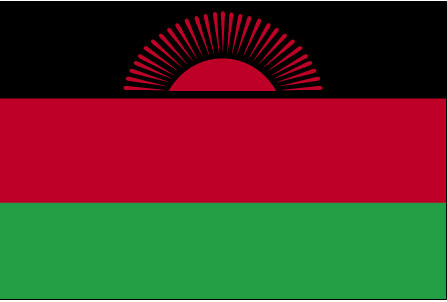
Malawi
Declare Your Relationship to Malawi
CountryReports Community
- Studying5
- From Malawi3
- Malawi heritage3
- Visited1
- Want to visit2
Customs and Culture
Customs and Culture
Cultural Attributes
Malawi is often called the "Warm Heart of Africa," a nickname that reflects the genuine hospitality and friendliness that define everyday social interactions throughout the country. This spirit of warmth is not merely a tourism slogan but an observable cultural reality rooted in the values of community, generosity, and mutual respect that permeate Malawian society. The population is ethnically diverse, with the Chewa being the largest group, alongside the Tumbuka, Lomwe, Yao, Ngoni, Sena, Tonga, and Nyanja peoples, among others. Chichewa serves as the national language and is spoken across much of the country, functioning as a cultural bridge among different ethnic communities. English is the official language used in government and education. Family and community ties are central to Malawian culture. Extended family networks play a significant role in daily life, with decisions about marriage, child-rearing, and financial matters often involving the wider family unit. Many communities in the central and southern regions follow matrilineal descent traditions, where lineage, inheritance, and land rights are traced through the mother's side of the family. Music and dance are deeply embedded in cultural expression. Traditional dances such as the Gule Wamkulu, performed by the Chewa people, have been recognized by UNESCO as an Intangible Cultural Heritage of Humanity. This masked dance tradition carries spiritual and social significance, used to mark rites of passage including initiations and funerals. The Vimbuza healing dance of the Tumbuka people is similarly inscribed on UNESCO's heritage list. Christianity is the dominant religion, practiced by approximately 77 percent of the population, while Islam is followed by around 13 percent, primarily among Yao communities in the southern and lakeshore regions. Traditional beliefs often coexist alongside formal religious practice. Food culture centers on nsima, a thick porridge made from maize flour, typically served with relishes of vegetables, fish, beans, or meat. Lake Malawi provides an important source of protein through chambo and usipa fish, which are staples in the local diet and central to both cuisine and economic life in lakeside communities.

Land of Lake Malawi and Unbounded Waters
Get More Customs and Culture
5 more cultural topics for members
Social Customs & Etiquette · Diet · Family · Dating Customs · Recreation
Every country, every topic, all activities & recipes
✓ Instant access on this device · ✓ No subscription
Holidays
Independence Day
7/6Independence Day
Dates of Interest
- July 6th
How do people greet each other in Malawi?
Men and women of the same age group shake hands vigorously, while hugging is uncommon. Malawi is known as the "Warm Heart of Africa" for its genuine hospitality and friendliness.
Do
- Shake hands vigorously with people of your own age group
- As a young person, look to the side or bow when addressed by an elder
Don’t
- Don't expect hugging as a common greeting
What are the dining customs in Malawi?
Meals center on nsima, a thick maize-flour porridge served with relishes of vegetables, fish, beans, or meat, with chambo and usipa fish from Lake Malawi as key protein staples.
Do
- Accept food offered to you as a guest
Don’t
- Don't decline food as a guest, even if you have already eaten — it is considered rude
Good to know
- Hosts customarily prepare food when receiving a guest
- Common crops include potatoes, cassava, beans, maize, rice, and tea
What etiquette should I know in Malawi?
Malawian society is rooted in community, generosity, and mutual respect, with strong deference shown to elders.
Do
- Show respect to elders
- Respect the spiritual significance of traditional ceremonies and dances
What should I wear in Malawi?
In urban areas women usually wear a skirt and blouse or a colorful modern dress, while in rural areas women wear a loin cloth tied at the waist with a blouse. Men wear pants, shirts, shorts, and occasionally a suit.
Good to know
- Middle-income business people mostly wear Western-style clothing, usually suits
Are there gestures to avoid in Malawi?
Public displays of affection are not welcome.
Don’t
- Don't kiss in public, as it is frowned upon
What is family life like in Malawi?
Family and community ties are central, and many communities in the central and southern regions follow matrilineal descent, tracing lineage, inheritance, and land rights through the mother's side. Couples often establish their households near the wife's family.
Good to know
- Decisions about marriage, child-rearing, and finances often involve the wider extended family
- Both men and women farm the land, with women growing food crops and men growing crops for sale
What do people do for recreation in Malawi?
Soccer is the main sport and basketball is growing in popularity, while music and dance are deeply embedded in cultural expression.
Good to know
- Women tell folktales in the evenings and young people organize traditional circle dances
- Masked dances such as the Chewa Gule Wamkulu (a UNESCO Intangible Cultural Heritage) are performed at initiations, funerals, and weddings
- The Vimbuza healing dance of the Tumbuka people is also on UNESCO's heritage list
Last updated: 2026-07-12 · Sources: CountryReports
Photos of Malawi
Photos of Malawi


Travel and Tourism
Travel and Tourism
- Travel Alert Status
- Level 2: Exercise Increased Caution
- Currency
- Malawian kwacha (MWK)
- Time Difference
- UTC+2 (7 hours ahead of Washington, DC, during Standard Time)
- Airports
- 42
Read the full travel guide — health, safety, vaccinations, disease risk, sanitation, and transit details.
View full travel guideRecipes
Recipes
History
History
Historical Eras
Pre-Colonial Era
1000000 BCE – 1891
Malawi's territory has been inhabited for over one million years, with Bantu-speaking peoples migrating into the region by the first millennium CE and displacing earlier Twa inhabitants. Around 1480, Bantu tribes consolidated into the Maravi Confederacy, a significant political and cultural union that gave the country its name. Portuguese contact in the 16th century and David Livingstone's arrival at Lake Malawi in 1859 preceded formal colonization, while Arab-driven slave trading intensified through the late 19th century.
Nyasaland Protectorate
1891 – 1964
Britain formally established the Nyasaland Protectorate in 1891, consolidating control over the region through administrative and economic structures favoring European settlers and planters. African resistance surfaced periodically, most notably in the 1915 armed uprising led by Reverend John Chilembwe against colonial labor conditions. Political consciousness accelerated after 1944 through the Nyasaland African Congress, and Dr. Hastings Kamuzu Banda's return in 1958 galvanized the independence movement that dismantled British rule.
Banda One-Party State
1964 – 1994
Malawi achieved full independence on July 6, 1964, with Banda becoming Prime Minister and subsequently declaring a one-party state under the Malawi Congress Party in 1966. Proclaimed President for Life in 1971, Banda exercised authoritarian control through institutions including the paramilitary Young Pioneers, suppressing political dissent and curtailing civil liberties for three decades. The capital was relocated from Zomba to Lilongwe in 1975, symbolizing Banda's ambitions for national transformation even as poverty and repression deepened.
Democratic Transition
1994 – 2000
A June 1993 referendum, driven by church pressure and international demands, saw Malawians vote overwhelmingly to end one-party rule. Free multiparty elections in May 1994 brought Bakili Muluzi and his United Democratic Front to power, inaugurating a new constitutional order that came into full effect in 1995. Muluzi was reelected in 1999, though his subsequent attempts to amend the constitution to permit a third presidential term were ultimately defeated.
Modern Malawi
2000 – present
The early 21st century confronted Malawi with converging crises including severe drought in 2002 that devastated harvests across southern Africa, a deepening HIV/AIDS epidemic, and persistent corruption within successive governments. Rapid population growth placed acute pressure on agricultural land in one of the world's most densely farmed nations, while donor-dependent economic policies yielded uneven development. Democratic consolidation continued through successive elections, though governance deficits and food insecurity remained central challenges to national stability.
Overview
Hominid remains and stone implements have been identified in Malawi dating back more than 1 million years, and early humans inhabited the vicinity of Lake Malawi 50,000 to 60,000 years ago. Human remains at a site dated about 8000 BC show physical characteristics similar to peoples living today in the Horn of Africa. At another site, dated 1500 BC, the remains possess features resembling Negro and Bushman people.
Every country, every topic, all activities & recipes
✓ Instant access on this device · ✓ No subscription
Timeline of Key Events
1 – 1499
Malawi is home to the Twa and Fulani peoples until Bantu-speaking tribes invade the region.
The region of Africa which is now known as Malawi is home to the Twa and Fulani peoples until Bantu-speaking tribes invade the region. A continuing influx of Bantu-speaking people to the area will usher in southern Africa’s Iron Age in the 13th century.
1480
Bantu tribes unite several smaller political states to form the Maravi Confederacy.
Bantu tribes unite several smaller political states to form the Maravi Confederacy which at its height includes large parts of present-day Zambia and Mozambique plus the modern state of Malawi.
1790 – 1860
Slave trade increases dramatically.
Slave trade increases dramatically.
1859
Dr. David Livingstone, Scottish missionary, arrived in Malawi.
Dr. David Livingstone, Scottish missionary, arrived in Malawi. The town of Livingstonia was later named in his honor.
1859
Maize replaced the native crops in Malawi soon after the arrival of David Livingstone.
Maize replaced the native crops in Malawi soon after the arrival of David Livingstone. It had been introduced in Africa in the 16th century by Portuguese colonizers as a reliable staple for slaving outposts.
1891 – 1893
Britain establishes the Nyasaland and District Protectorate.
Britain establishes the Nyasaland and District Protectorate, and changes its name to the British Central African Protectorate two years later. Africans are soon forced to work on White-owned coffee plantations.
1901
Britain and Germany agreed on a boundary between German East Africa and Nyasaland.
Britain and Germany agreed on a boundary between German East Africa [later Tanganyika, Rwanda and Burundi] and Nyasaland [later Malawi].
Read the full history profile — narrative overview, defining eras, and the complete timeline in one place.
View expanded historyInteresting Facts
Interesting Facts
Malawi has the world's fewest doctors with 1 per 49,118 people.
Lake Malawi is the third largest of Africa’s great lakes.
The name Malawi is derived from Marawi, the name of people who migrated to the region hundreds of years ago.
The Nyika National Park is particularly famous for its orchids.
1 more facts for members
Every country, every topic, all activities & recipes
✓ Instant access on this device · ✓ No subscription
Geography and Environment
Geography and Environment
- Terrain
- narrow elongated plateau with rolling plains, rounded hills, some mountains
- Climate
- Malawi has wet and dry seasons. The wet season is from November to April; the heaviest rainfall occurs between December and March. The dry season begins in May and lasts until November. It is hottest just before rains begin. The capital, Lilongwe (altitude 3,400 feet) is in a high, central plateau area. The average daily temperature in Lilongwe during October is 84.6°F. June, July, and August are the coolest months, and nights can be quite chilly when temperatures drop to between 41°F and 57°F. Frost occasionally occurs in Lilongwe. During the dry season, particularly September and October, high winds and some dust occur. The annual mean temperature in Lilongwe is 67.4°F, and the annual rainfall is 31.9 inches. Nights are generally cool and pleasant in Lilongwe, even during the hottest weather. Dry season days are generally sunny and warm; rains during the wet season are brief. The Blantyre area is more mountainous, and its weather more humid. The climate is also more hot and humid around Lake Malawi.
- Natural Hazards
- NA
- Current Environmental Issues
- deforestation; land degradation; water pollution from agricultural runoff, sewage, industrial wastes; siltation of spawning grounds endangers fish populations
Read the full geography and environment profile — terrain, climate, natural resources, hazards, land use, and international agreements.
View full geographyPeople & Demographics
People & Demographics
Religion
Languages Spoken
English (official), Chichewa (official), other languages important regionally
- Chichewa
- English
Population
- Population
- 20,931,751
- Population in Major Urban Areas
- LILONGWE (capital) 772,000
- Nationality Noun
- Malawian(s)
- Ethnic Groups
- Chewa, Nyanja, Tumbuka, Yao, Lomwe, Sena, Tonga, Ngoni, Ngonde, Asian, European
Education
- Literacy Definition
- age 15 and over can read and write
Health Information
- Major Infectious Diseases — degree of risk
- very high
Life Expectancy
- Life Expectancy at Birth
- Life expectancy at birth in Malawi has improved considerably over the past two decades, though it remains below the global average. As of the most recent available data, the average life expectancy at birth in Malawi stands at approximately 63 to 64 years, with women generally living several years longer than men. This figure represents a remarkable turnaround from the late 1990s and early 2000s, when life expectancy had fallen to around 44 to 47 years at the height of the HIV/AIDS epidemic. The dramatic improvement in life expectancy is largely attributed to significant progress in combating HIV/AIDS. Malawi launched an ambitious antiretroviral therapy (ART) program that expanded access to treatment across the country, helping to reduce AIDS-related mortality substantially. Adult HIV prevalence, while still a serious public health concern at roughly 8 to 9% of the adult population, has declined from its peak levels. Despite these gains, Malawi continues to face significant health challenges that suppress life expectancy. Malaria remains one of the leading causes of illness and death, particularly among children under five. Maternal and infant mortality rates are also elevated, reflecting limited access to skilled healthcare providers during childbirth, especially in rural areas. Malnutrition is widespread and compounds vulnerability to infectious diseases, while access to clean water and sanitation remains inconsistent outside urban centers. The healthcare infrastructure faces chronic underfunding, with a persistent shortage of trained medical personnel and essential supplies across much of the country. The government and international partners have invested in community health worker programs and rural health clinics to extend basic care to more of the population. The introduction of the RTS,S malaria vaccine, which Malawi was among the first countries to roll out through a pilot program, represents a meaningful step toward reducing one of the country's most significant disease burdens. Progress on life expectancy is closely tied to broader development goals, including improvements in education, food security, and poverty reduction. Malawi remains one of the least developed countries in the world, and economic constraints continue to limit the pace of health sector advancement. Recurrent climate-related shocks, including droughts and flooding, have also strained food systems and health outcomes in recent years. Nevertheless, the overall trend is positive, and continued investment in public health is expected to support further gains in life expectancy in the years ahead.
- Infant Mortality Rate
- Malawi continues to face one of the higher infant mortality rates in sub-Saharan Africa, though the country has made meaningful progress in reducing child deaths over recent decades. The infant mortality rate stands at approximately 34 to 37 deaths per 1,000 live births, reflecting improvements from figures that once exceeded 100 deaths per 1,000 live births in the early 1990s. The primary causes of infant death in Malawi include neonatal complications, malaria, pneumonia, diarrheal diseases, and malnutrition. Preterm birth complications and infections during the neonatal period — the first 28 days of life — account for a significant portion of these deaths. Limited access to skilled birth attendants and quality healthcare facilities in rural areas remains a major contributing factor, as the majority of Malawi's population lives outside urban centers where medical infrastructure is more developed. Malawi's health system faces ongoing challenges including shortages of trained healthcare workers, insufficient medical supplies, and inadequate sanitation infrastructure. These systemic issues disproportionately affect newborns and infants in rural and remote communities. Additionally, high rates of maternal malnutrition and HIV prevalence contribute to elevated risks for newborns, as infants born to HIV-positive mothers face a heightened vulnerability to illness and death. The government of Malawi, in partnership with international organizations such as UNICEF and the World Health Organization, has implemented programs targeting maternal and child health, including expanded vaccination campaigns, promotion of exclusive breastfeeding, community-based health worker programs, and improved antenatal care services. These interventions have contributed to a notable downward trend in infant mortality over the past three decades. Despite this progress, Malawi's infant mortality rate remains significantly higher than the global average of approximately 27 deaths per 1,000 live births, and well above rates seen in higher-income countries. Achieving further reductions will require sustained investment in healthcare infrastructure, poverty reduction, clean water access, and nutritional support programs across the country.
Read the full people and society profile — demographics, health, education, religion, languages, and notable people.
View full people and societyGovernment & Politics
Government & Politics
Country Identity
- Country Name
- Malawi
- Full Country Name
- Republic of Malawi
- Former Name
- British Central African Protectorate, Nyasaland Protectorate, Nyasaland
Government Structure
- Government Type
- multiparty democracy
- Legal System
- based on English common law and customary law; judicial review of legislative acts in the Supreme Court of Appeal; has not accepted compulsory ICJ jurisdiction
- Executive Branch
- chief of state: President Lazarus CHAKWERA (since 28 June 2020); note - the president is both the chief of state and head of government head of government: President Lazarus CHAKWERA (since 28 June 2020); note - the president is both the chief of state and head of government cabinet: Cabinet named by the president elections: president elected by popular vote for a five-year term; election last held on 23 June 2020 (next to be held in 2025) election results: Lazarus CHAKWERA elected president; percent of vote - Lazarus CHAKWERA (MCP) 59.3%, Peter MUTHARIKA (DPP) 39.9%, other 0.8%
- Legislative Branch
- Unicameral National Assembly (193 seats; members elected by popular vote to serve five-year terms) Elections: Last held on 16 May 2019, with a historic court-ordered fresh presidential election held on 23 June 2020 following a successful legal challenge to the original results. The next general elections are scheduled to be held in 2025. Election results: Seats by party following the 2019 elections — Malawi Congress Party (MCP) 55, Democratic Progressive Party (DPP) 62, United Transformation Movement (UTM) 4, United Democratic Front (UDF) 10, People's Party (PP) 5, Independents 55, others 2.
- Judicial Branch
- Supreme Court of Appeal; High Court (chief justice appointed by the president, puisne judges appointed on the advice of the Judicial Service Commission); magistrate's courts
- Suffrage
- 18 years of age; universal
- Constitution
- 18-May-94
- Independence
- 6 July 1964 (from UK)
- National Holiday
- Independence Day (Republic Day), 6 July (1964)
Capital City
- Capital Name
- Lilongwe
- Capital - geographic coordinate
- 13 58 S, 33 47 E
- Capital Time Difference
- UTC+2 (7 hours ahead of Washington, DC, during Standard Time)
named after the Lilongwe River that flows through the city
Military
Branches: Malawi Defense Forces (MDF): Army (includes Air Wing, Marine Unit)
Embassy / Diplomatic Mission
U.S. Embassy Lilongwe
Area 40, City Center
Lilongwe, Malawi
Mailing Address: PO Box 30016, Lilongwe 3, Malawi
Telephone: (265) 1-773-166, 1-773-342 and 1-773-367
(if dialing within Malawi add "0" before the "1"); fax (265) 1-774-976 (if dialing within Malawi add "0" before the "1").
In case of emergency, you may call the Embassy 24 hours a day and request extension 3443. In case the landlines are malfunctioning, you may also dial (265) (0)999-591024 or (265) (0) 888-734-826.
Read the full government profile — flag symbolism, national anthem, and other national symbols.
View full government detailsEconomy
Economy
Landlocked Malawi remains one of the world's least developed countries, with a per capita income among the lowest globally. The economy is predominantly agricultural, with roughly 80% of the population living in rural areas.
Snapshot
- Currency Name and Code
- Kwacha (MWK)
- GDP — official exchange rate
- $1,984,000,000 (USD)
- GDP Real Growth Rate
- 5.1%
- Gini Index
- 50.3
Every country, every topic, all activities & recipes
✓ Instant access on this device · ✓ No subscription
News & Weather
News & Weather
Current Weather
Latest News
125 years of Catholic faith in Malawi, and still growing - aleteia.org
aleteia.org · 8h ago
Malawi’s Neglected Donkeys Face Inbreeding Crisis as Farmers Lack Training and Markets - bioengineer.org
bioengineer.org · 1d ago
Malawi: 125 years of faith, rooted in Christ, serving justice - Vatican News
Vatican News · 6d ago
Wafcon 2026 review: Glory for Cameroon, Nigeria flop and Malawi cause a stir - The Guardian
The Guardian · 47d ago
Cameroon crush Malawi to win first-ever WAFCON crown - ESPN
ESPN · 50d ago
Wafcon 2026: Tabitha and Temwa Chawinga lead Malawi bid for glory in final - BBC
BBC · 52d ago
Cameroon beats Malawi to win Women’s Africa Cup of Nations for the first time - France 24
France 24 · 50d ago
Ngah brace fires Cameroon to historic first WAFCON crown with dominant Malawi victory - cafonline.com
cafonline.com · 50d ago
News via Google News
Frequently Asked Questions
Frequently Asked Questions
What is the population of Malawi?
What is the capital of Malawi?
Where is Malawi located?
What countries border Malawi?
What religion is practiced in Malawi?
What is the currency of Malawi?
What languages are spoken in Malawi?
What is the geography of Malawi like?
What is Malawi known for?
Last reviewed 2026