
 English
 Español
 中文
中文 हिन्दी
 Français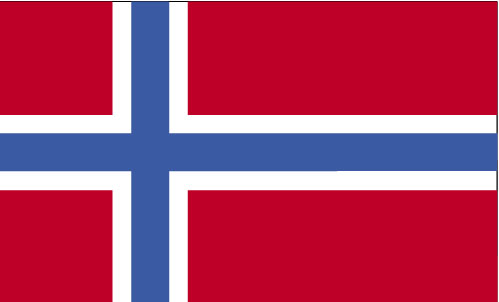
Jan Mayen
Declare Your Relationship to Jan Mayen
CountryReports Community
- Studying0
- From Jan Mayen0
- Jan Mayen heritage0
- Visited0
- Want to visit0
Customs and Culture
Customs and Culture
Cultural Attributes
Jan Mayen is a remote Norwegian volcanic island in the Arctic Ocean, situated between the Greenland Sea and the Norwegian Sea. Because it has no indigenous population and no permanent civilian residents, the island does not possess a native cultural tradition in the conventional sense. Its entire human presence consists of a small rotating staff of Norwegian military personnel and meteorological scientists, typically numbering around 18 individuals at any given time, who serve limited tours of duty before returning to mainland Norway. The cultural identity of Jan Mayen is therefore an extension of Norwegian culture rather than something that developed organically on the island itself. The personnel stationed there bring Norwegian language, customs, and social traditions with them. Norwegian is the sole language spoken on the island, and the Norwegian state exercises complete administrative authority over it through the Norwegian Armed Forces and the Norwegian Meteorological Institute. Life on Jan Mayen is defined largely by the extreme natural environment rather than by social or artistic traditions. The island's harsh subarctic climate, dramatic volcanic landscape dominated by the Beerenberg stratovolcano — the world's northernmost active volcano, rising to approximately 2,277 meters — and near-total isolation shape the day-to-day experience of those stationed there. Social interaction is necessarily confined to a very small group, and recreational life revolves around the natural surroundings, including wildlife observation, hiking, and photography. Historically, Jan Mayen was visited by Dutch and English whalers in the early 17th century and served as a significant whaling and hunting ground for several European nations. The remnants of these activities, including old whaling station ruins, give the island a modest historical character. Norway formally annexed Jan Mayen in 1929, and since then its cultural footprint has remained minimal and functional rather than expressive. There are no museums, schools, places of worship, or cultural institutions on the island. The cultural narrative of Jan Mayen is ultimately one of scientific purpose, national stewardship, and the enduring human relationship with one of the planet's most isolated and inhospitable places.
The Northernmost Fire on Earth
Social Customs & Etiquette
Jan Mayen is a remote, volcanic island in the Arctic Ocean, administered by Norway as an unincorporated territory. Because it has no permanent civilian population, the social customs and greeting practices found there are shaped entirely by the Norwegian military and meteorological personnel who staff the island on rotating assignments.
Among these stationed workers, greetings follow standard Norwegian conventions. The most common spoken greeting is "Hei" (a casual "Hi") or "Hei hei" for a slightly warmer tone. A more formal greeting is "God dag," meaning "Good day," though this is less frequently used in everyday interaction. "God morgen" (Good morning), "God ettermiddag" (Good afternoon), and "God kveld" (Good evening) are also used at appropriate times of day. When departing, "Ha det" or the more casual "Ha det bra" — roughly meaning "Goodbye" or "Take care" — are standard farewell expressions.
Physical greetings among Norwegians typically involve a firm handshake when meeting someone for the first time or in a professional context. Among friends and colleagues who know each other well, a simple nod or verbal acknowledgment is often sufficient. Hugging is generally reserved for close personal relationships. Kissing on the cheek, common in some European cultures, is not a standard Norwegian greeting custom.
Given the extreme isolation of Jan Mayen — situated roughly 600 kilometers northeast of Iceland and about 1,000 kilometers west of Norway's North Cape — the small, close-knit community of personnel stationed there tends to develop a strong sense of camaraderie. Social interactions are frequent and informal given the confined environment, but the underlying cultural framework remains distinctly Norwegian.
Visitors to Jan Mayen are rare and almost exclusively consist of scientists, researchers, or occasional expedition groups, all of whom interact with Norwegian station staff. Understanding basic Norwegian greetings and the country's generally reserved but polite social norms is useful for anyone who may find themselves on this extraordinary island.
Dating Customs
Jan Mayen is a remote volcanic island located in the Arctic Ocean between Greenland and Norway, administered as an integrated part of the Kingdom of Norway. The island has no permanent civilian population — it is staffed exclusively by rotating personnel from the Norwegian Armed Forces and the Norwegian Meteorological Institute. At any given time, only around 18 to 35 people are present on the island, all of whom are stationed there temporarily for duty assignments typically lasting several months.
Because Jan Mayen has no indigenous population, no civilian settlers, and no established local community, there are no dating customs, marriage traditions, or family structures unique to the island itself. Personnel stationed on Jan Mayen are Norwegian nationals or contracted specialists who bring with them the values, customs, and legal framework of mainland Norway.
In Norway, dating is generally informal and egalitarian, with both partners often sharing expenses and decision-making from early in a relationship. Marriage in Norway is a secular or religious ceremony registered with the state, and the legal minimum age for marriage is 18 years. Norway recognizes same-sex marriage, having legalized it in 2009, making it one of the earlier European nations to do so. Norwegian marriage law and family law fully apply to any personnel stationed on Jan Mayen, as the island operates under Norwegian jurisdiction.
Given the extreme isolation, harsh Arctic climate, and the professional nature of all postings to Jan Mayen, the island is not a destination where personal relationships are typically formed. Stationed personnel are there in an occupational capacity, and their social and family lives remain rooted in their home communities on the Norwegian mainland.
For travelers or researchers interested in the cultural dimensions of dating and marriage in the broader Norwegian context, those practices reflect Scandinavian norms of gender equality, individual autonomy, and strong legal protections for all partnership types — values that would naturally extend to anyone living or working under Norwegian administration, including in a posting as remote as Jan Mayen.
Dates of Interest
- Untitled date
What language and cultural norms should I expect on Jan Mayen?
Jan Mayen has no indigenous population; its cultural identity is an extension of mainland Norwegian culture brought by the roughly 18 rotating staff stationed there. Norwegian is the sole language spoken on the island.
Do
- Expect Norwegian language, customs, and social traditions
- Anticipate interacting with a very small group of military and meteorological personnel
What is there to do for recreation on Jan Mayen?
Recreational life revolves around the dramatic natural surroundings rather than social or artistic traditions.
Do
- Enjoy wildlife observation
- Go hiking in the volcanic landscape
- Try photography of the scenery
Good to know
- The island is dominated by the Beerenberg stratovolcano, the world's northernmost active volcano, rising to roughly 2,277 meters
- Old whaling station ruins give the island a modest historical character
What should I know before going to Jan Mayen?
Jan Mayen is a remote Norwegian volcanic island in the Arctic Ocean with no permanent civilian residents, defined by its extreme subarctic climate and near-total isolation.
Do
- Prepare for a harsh subarctic climate and dramatic volcanic environment
- Understand the Norwegian Armed Forces and Norwegian Meteorological Institute exercise complete administrative authority
Don’t
- Don't expect museums, schools, places of worship, or cultural institutions
- Don't expect a large or diverse social environment—only about 18 people are present at a time
Good to know
- The island's purpose is scientific and functional, focused on national stewardship and isolation
Last updated: 2026-07-12 · Sources: CountryReports
Travel and Tourism
Travel and Tourism
- Climate
- arctic maritime with frequent storms and persistent fog
- Airports
- 1
Read the full travel guide — health, safety, vaccinations, disease risk, sanitation, and transit details.
View full travel guideHistory
History
Historical Eras
Discovery & Whaling
1614 – 1650
Dutch and English whalers explored Jan Mayen beginning in the early 1600s, with Jan Jacobs May van Schellinkhout's 1614 visit giving the island its name. The Dutch established substantial whale oil processing stations, hosting over a thousand men during peak summer seasons and erecting fortifications to defend their operations. Intensive hunting drove the Greenland whale to near-local extinction, ending commercial whaling around 1640–1650 and leaving the island effectively abandoned.
Isolation & Exploration
1650 – 1882
For roughly two centuries following the collapse of whaling, Jan Mayen was visited only sporadically by passing vessels, with no permanent human presence. The island remained largely unmapped and scientifically unstudied, a remote and inhospitable volcanic outcrop in the Norwegian Sea. Occasional seal hunters and explorers touched its shores but left no lasting infrastructure or settlement.
Scientific Interest
1882 – 1921
The First International Polar Year of 1882–83 brought an Austro-Hungarian scientific expedition to Jan Mayen, where researchers spent a full year conducting meteorological, geomagnetic, and geographical surveys; their detailed map remained the standard reference until the 1950s. In the early twentieth century, Norwegian trappers began wintering on the island to hunt blue and white foxes, though overexploitation rapidly depleted the fox population and harsh conditions ended trapping by the 1920s.
Norwegian Annexation
1921 – 1940
Norway established its first permanent meteorological station on Jan Mayen in 1921, recognizing the island's strategic value for weather forecasting across the Norwegian Sea. The Norwegian Meteorological Institute formally annexed the island in 1922, and a Royal Decree of 8 May 1929 placed Jan Mayen under full Norwegian sovereignty; a law of 27 February 1930 incorporated it as part of the Kingdom of Norway. This period marked the transition from occasional visits to continuous, state-sponsored occupation.
World War II
1940 – 1945
Jan Mayen was never occupied by German forces and served as a pocket of Free Norway throughout the war, though the meteorological crew briefly evacuated in 1940 after burning their station to deny its use to the enemy. Returning in 1941 with Norwegian soldiers, they rebuilt the station and maintained continuous weather operations despite repeated German air attacks; two German aircraft crashed on the island during the conflict. In 1943 the United States established a radiolocation station, dubbed Atlantic City, tasked with detecting clandestine German installations on Greenland.
Modern Norwegian Territory
1945 – present
After the war, Jan Mayen settled into its role as a remote Norwegian outpost sustained by meteorological, radio, and later LORAN-C navigation operations. The long-dormant Beerenberg volcano dramatically resumed eruptions in 1970, confirming it as the northernmost active volcano on Earth and drawing renewed scientific attention. The island today is administered by Norway with no permanent civilian population, staffed only by rotating military and meteorological personnel.
Overview
FIRST INTERNATIONAL POLAR YEAR
During the first International Polar Year in 1882-83 an Austrian/Hungarian expedition chose Jan Mayen as their base. They stayed for a full year and carried out extensive research and mapping of the island. Their map was in use until the 1950’s.
FOX HUNTING
At the beginning of this century Norwegian trappers began to spend the winters on Jan Mayen. Their main prey was blue and white foxes and an occasional polar bear. Overexploitation of the fox population resulted in a fast decline of the hunting profit, and in addition the barren island and unpleasant living conditions made the hunting come to an end in the 1920’s.
ANNEXATION
Official Norwegian activity on Jan Mayen has been continuos since 1921 when the first meteorological station on the island was established.
Weather reports from Jan Mayen are important for weather forecasting in Norway and the Norwegian Sea and in 1922 the Norwegian Meteorological Institute annexed the island for Norway. By Royal Decree of 8th May 1929 Jan Mayen was placed under Norwegian sovereignty and by law of 27th February 1930 the island was declared a part of the Kingdom of Norway.
WORLD WAR 2
Jan Mayen was not occupied during the World War II, and remained as "Free Norway". In 1940 the crew of the met. Station burned down their station and left the island, but in 1941 they came back with a few Norwegian soldiers. They re-established the meteorological station and were in continuos operation throughout the war years in spite of frequent air attacks from the Germans. Two German planes crashed on the island during the war. A four-engine bomber with 9 crewmembers hit a mountain near the Norwegian garrison in 1942. In 1950 a party of British geologists found the wreck of a German plane with 4 crewmembers on the south-west side of the island. In 1959 all remains of the crews from the two planes were moved to the war cemetery in Narvik.
In 1943 the Americans were allowed to establish a radiolocating station on the island. It was built on the north side and they called it Atlantic City. The main task of the station was to locate the secret German weather and radio stations on Greenland.
METEOROLOGICAL STATION
After the war the Norwegian Meteorological Institute used Atlantic City as their station until 1949 when their new station was built on a rise above Atlantic City.
In the period 1945 - 59 the only activity on the island was weather observations and this was supplemented by radiosoundings. That is balloons which are sent up to an altitude of 25 - 30 km carrying a package of measuring instruments and a small radiotransmitter which reports back information about temperature, pressure and humidity of the air together with information about wind speed and direction.
COASTAL RADIO
The new station was also equipped and tasked to operate a coastal radio station. It maintained contact with ships in the area and relayed messages to stations on the main land. It also kept continuos watch for possible distress signals in the area. Over the years Jan Mayen Radio has been of great importance for the safety and welfare of fishing and seal-hunting ships.
LORAN-C
In 1959 a new era came to Jan Mayen. NATO decided to build a radionavigation system called LORAN, which stands for "Long Range Navigation". Jan Mayen was chosen as one of the transmitter sites working together with transmitters on the Norwegian mainland, in Germany, on the Faeroes and Iceland. The Norwegian defence Communication Administration (NORECA) was given the task to establish and operate the two stations in Norway. All machinery, building materials and equipment for the new station was transported by ship and since Jan Mayen has no harbour the load was landed by small boats and rafts, often in rough sea. This was both hard and difficult work, and not without danger. The new station was called Olonkin City, named
Read the full history profile — narrative overview, defining eras, and the complete timeline in one place.
View expanded historyInteresting Facts
Interesting Facts
Jan Mayen is a volcanic island of norwegian dominion.
See every fact — trivia, oddities, and curious tidbits gathered from across the country.
View all interesting factsGeography and Environment
Geography and Environment
- Terrain
- volcanic island, partly covered by glaciers
- Climate
- arctic maritime with frequent storms and persistent fog
- Natural Hazards
- dominated by the volcano Haakon VII Toppen/Beerenberg; volcanic activity resumed in 1970
- Current Environmental Issues
- NA
Read the full geography and environment profile — terrain, climate, natural resources, hazards, land use, and international agreements.
View full geographyPeople & Demographics
People & Demographics
Population
- Population
- 18
Health Information
- Life Expectancy at Birth
- Jan Mayen is a remote and uninhabited volcanic island located in the Arctic Ocean between Norway and Iceland. Because the island has no permanent civilian population, traditional life expectancy statistics — which measure the average number of years a newborn is expected to live based on current mortality rates — do not apply in any conventional sense. There are no birth records, no resident population cohorts, and no demographic data collected for Jan Mayen as a standalone territory. The island is administered by Norway and is home only to a small rotating staff of Norwegian military personnel and meteorological scientists, typically numbering between 15 and 35 individuals at any given time. These personnel are not permanent residents; they serve fixed tours of duty before returning to mainland Norway. As a result, no births occur on the island, and no mortality data is generated from which life expectancy figures could be calculated. For reference, Norway as a whole — the sovereign nation responsible for Jan Mayen — records one of the highest life expectancy rates in the world. Current data places life expectancy at birth in Norway at approximately 83 years overall, with women averaging around 85 years and men approximately 81 years. This figure reflects the high standard of healthcare, low rates of poverty, and strong social welfare systems present in mainland Norway. Because the personnel stationed on Jan Mayen are Norwegian citizens who receive Norwegian medical care and return to Norway for any significant health needs, their life outcomes are effectively captured within Norway's national statistics rather than those of Jan Mayen itself. In summary, Jan Mayen produces no independent life expectancy data of its own, and any meaningful discussion of longevity in relation to the island must reference the broader Norwegian population to which its rotating workforce belongs.
- Infant Mortality Rate
- Jan Mayen is a remote volcanic island located in the Arctic Ocean between Greenland and Norway, administered entirely by Norway. Due to its status as an uninhabited territory — save for a small rotating staff of Norwegian meteorologists, scientists, and military personnel — Jan Mayen has no permanent civilian population. As a result, no infant mortality rate exists for the island, as there are no births recorded among permanent residents. The concept of an infant mortality rate, which measures the number of deaths of infants under one year of age per 1,000 live births in a given year, is simply not applicable to Jan Mayen. The personnel stationed on the island are typically adult workers on temporary assignment, and no maternity or pediatric medical facilities exist there. Any medical emergencies requiring advanced care, including those related to pregnancy or childbirth, would necessitate evacuation to mainland Norway or another location with appropriate facilities. For reference, Norway — the sovereign nation responsible for Jan Mayen — maintains one of the lowest infant mortality rates in the world. Norway's infant mortality rate consistently ranks among the best globally, hovering around 2 to 3 deaths per 1,000 live births in recent years, reflecting the country's highly developed healthcare infrastructure, universal medical coverage, and strong public health systems. Because Jan Mayen functions purely as a scientific and strategic outpost rather than a civilian community, standard demographic statistics such as birth rates, death rates, and infant mortality rates are not tracked or reported for the island independently. Those interested in the health and welfare context of the broader Norwegian administrative framework can look to Norway's national health statistics, which reflect world-class outcomes across all standard indicators of population health.
Life Expectancy
- Life Expectancy at Birth
- Jan Mayen is a remote and uninhabited volcanic island located in the Arctic Ocean between Norway and Iceland. Because the island has no permanent civilian population, traditional life expectancy statistics — which measure the average number of years a newborn is expected to live based on current mortality rates — do not apply in any conventional sense. There are no birth records, no resident population cohorts, and no demographic data collected for Jan Mayen as a standalone territory. The island is administered by Norway and is home only to a small rotating staff of Norwegian military personnel and meteorological scientists, typically numbering between 15 and 35 individuals at any given time. These personnel are not permanent residents; they serve fixed tours of duty before returning to mainland Norway. As a result, no births occur on the island, and no mortality data is generated from which life expectancy figures could be calculated. For reference, Norway as a whole — the sovereign nation responsible for Jan Mayen — records one of the highest life expectancy rates in the world. Current data places life expectancy at birth in Norway at approximately 83 years overall, with women averaging around 85 years and men approximately 81 years. This figure reflects the high standard of healthcare, low rates of poverty, and strong social welfare systems present in mainland Norway. Because the personnel stationed on Jan Mayen are Norwegian citizens who receive Norwegian medical care and return to Norway for any significant health needs, their life outcomes are effectively captured within Norway's national statistics rather than those of Jan Mayen itself. In summary, Jan Mayen produces no independent life expectancy data of its own, and any meaningful discussion of longevity in relation to the island must reference the broader Norwegian population to which its rotating workforce belongs.
- Infant Mortality Rate
- Jan Mayen is a remote volcanic island located in the Arctic Ocean between Greenland and Norway, administered entirely by Norway. Due to its status as an uninhabited territory — save for a small rotating staff of Norwegian meteorologists, scientists, and military personnel — Jan Mayen has no permanent civilian population. As a result, no infant mortality rate exists for the island, as there are no births recorded among permanent residents. The concept of an infant mortality rate, which measures the number of deaths of infants under one year of age per 1,000 live births in a given year, is simply not applicable to Jan Mayen. The personnel stationed on the island are typically adult workers on temporary assignment, and no maternity or pediatric medical facilities exist there. Any medical emergencies requiring advanced care, including those related to pregnancy or childbirth, would necessitate evacuation to mainland Norway or another location with appropriate facilities. For reference, Norway — the sovereign nation responsible for Jan Mayen — maintains one of the lowest infant mortality rates in the world. Norway's infant mortality rate consistently ranks among the best globally, hovering around 2 to 3 deaths per 1,000 live births in recent years, reflecting the country's highly developed healthcare infrastructure, universal medical coverage, and strong public health systems. Because Jan Mayen functions purely as a scientific and strategic outpost rather than a civilian community, standard demographic statistics such as birth rates, death rates, and infant mortality rates are not tracked or reported for the island independently. Those interested in the health and welfare context of the broader Norwegian administrative framework can look to Norway's national health statistics, which reflect world-class outcomes across all standard indicators of population health.
Read the full people and society profile — demographics, health, education, religion, languages, and notable people.
View full people and societyGovernment & Politics
Government & Politics
Country Identity
- Country Name
- JanMayen
Government Structure
- Legal System
- the laws of Norway, where applicable, apply
- Executive Branch
- Jan Mayen is a remote volcanic island in the Arctic Ocean that functions as an integrated part of the Kingdom of Norway. It has no permanent civilian population and therefore maintains no independent executive government of its own. Administrative authority over the island is exercised entirely through Norwegian national institutions based on the mainland. The island falls under the jurisdiction of the Norwegian central government, with the Ministry of Justice and Public Security holding primary administrative responsibility. Day-to-day oversight on the island is managed by a station commander, who is a military officer appointed by the Norwegian Armed Forces. This commander oversees the small contingent of personnel stationed on Jan Mayen, which consists primarily of military and meteorological staff. Norway's formal integration of Jan Mayen into its national territory was established by the Jan Mayen Act of 1930, which brought the island under Norwegian sovereignty. Unlike Svalbard, which has its own governor and a distinct legal framework governed by an international treaty, Jan Mayen has no separate administrative tier. It is not part of any Norwegian county (fylke) and is governed directly at the national level. The Norwegian Meteorological Institute maintains a weather station on the island, and the Norwegian Armed Forces operate a Long Range Navigation (LORAN-C) station there, although the importance of these facilities has shifted over time as technology has evolved. Personnel rotations are handled through coordinated logistics between relevant Norwegian ministries and military branches. In practical terms, the "executive branch" on Jan Mayen is simply an extension of the Norwegian state apparatus. There are no elections held on the island, no locally elected officials, and no municipal or regional government. All policy decisions affecting Jan Mayen are made in Oslo, reflecting the island's status as an uninhabited or near-uninhabited territory managed for strategic, scientific, and meteorological purposes rather than civilian governance.
- Legislative Branch
- Jan Mayen is a remote volcanic island located in the Arctic Ocean between Norway and Greenland, and it holds a unique status within the Kingdom of Norway. The island is not an autonomous territory and does not possess its own legislative body or representative assembly. Instead, all legislative authority over Jan Mayen is exercised directly by the Norwegian national government in Oslo. Norway's Parliament, known as the Storting (Stortinget), serves as the supreme legislative authority for Jan Mayen. The Storting is a unicameral parliament composed of 169 representatives elected from Norway's 15 constituencies through a system of proportional representation. Members serve four-year terms, and elections are held every four years. The legal framework governing Jan Mayen is established through Norwegian national legislation, most notably the Jan Mayen Act of 1930, which formally incorporated the island into the Kingdom of Norway. Subsequent regulations, including those related to environmental protection and scientific research activities on the island, are enacted through the ordinary Norwegian legislative process and applied to Jan Mayen by extension. Day-to-day administration of Jan Mayen falls under the authority of the County Governor of Nordland (Statsforvalteren i Nordland), who acts as the representative of the central government on matters pertaining to the island. The Norwegian Ministry of Justice and Public Security holds overall administrative responsibility for Jan Mayen at the ministerial level. Because Jan Mayen has no permanent civilian population — its only inhabitants are a small rotating staff of Norwegian meteorologists and military personnel, typically numbering around 18 individuals — there is no electoral constituency, no local council, and no mechanism for local self-governance. All regulations governing activities on the island, including those related to environmental standards and the operation of the Olonkinbyen station, originate from legislation passed in Oslo and administered remotely through established Norwegian governmental structures.
Read the full government profile — flag symbolism, national anthem, and other national symbols.
View full government detailsEconomy
Economy
Jan Mayen is a remote volcanic island in the Arctic Ocean with no exploitable natural resources and no permanent population. Economic activity is limited entirely to providing logistical and support services for the personnel who operate Norway's meteorological station and the LORAN-C radio navigation station, which has been maintained by the Norwegian Defence Logistics Organisation. Staff typically rotate every six months, and the island is supplied by periodic flights from mainland Norway and occasional shipments by sea.
Banknotes


Energy
- Oil Production
- 0 bbl/day
- Oil Consumption
- 0 bbl/day
- Oil Reserves
- 0 bbl/day
- Natural Gas Production
- 0 cu m
- Natural Gas Consumption
- 0 cu m
- Natural Gas Imports
- 0 cu m
- Natural Gas Exports
- 0 cu m
- Natural Gas Reserves
- 0 cu m
Communications
- Internet Country Code
- N/A
News & Weather
News & Weather
Latest News
Video - The Northern Edge: Jan Mayen - DVIDS
DVIDS · 1d ago
Sailors, Marines Deploy Long-range Missile Systems to Norway for Drills - USNI News
USNI News · 3d ago
High North advantage – U.S. Marines, Allied Forces Deploy to Jan Mayen - marines.mil
marines.mil · 24d ago
Ny-Ålesund, Svalbard And Jan Mayen Hourly Weather Forecast - Weather Underground
Weather Underground · 21h ago
Norway's biggest quake in 100 years set off a glacier-burying avalanche on thawing ground - The Cool Down
The Cool Down · 20h ago
Arctic Permafrost Loss Made Jan Mayen Glacier Slopes Vulnerable to Earthquake Collapse - environment coastal & offshore
environment coastal & offshore · 5d ago
Operation Atlantic City: An RAF A400M Lands on Jan Mayen - MiGFlug
MiGFlug · 6d ago
Operation Atlantic City 26: A Reminder That Allied Cooperation Remains Key To America’s Security - Analysis - Eurasia Review
Eurasia Review · 1d ago
News via Google News
Climate Overview
arctic maritime with frequent storms and persistent fog
Frequently Asked Questions
Frequently Asked Questions
What is the population of Jan Mayen?
What language and cultural norms should I expect on Jan Mayen?
What is there to do for recreation on Jan Mayen?
What should I know before going to Jan Mayen?
Where is Jan Mayen located?
What ocean and sea borders surround Jan Mayen?
What is the political status of Jan Mayen?
What currency is used on Jan Mayen?
What language is spoken on Jan Mayen?
What is the geography and terrain of Jan Mayen like?
What is the Beerenberg volcano on Jan Mayen?
What is Jan Mayen known for?
Last reviewed 2026