
 English
 Español
 中文
中文 हिन्दी
 Français
Government and Politics
Government and Politics of Jan Mayen
Government structure, leadership, capital, military, and national symbols of Jan Mayen.
Government Structure
Constitutional foundations, branches, parties, and leadership.
- Legal System
- the laws of Norway, where applicable, apply
- Executive Branch
- Jan Mayen is a remote volcanic island in the Arctic Ocean that functions as an integrated part of the Kingdom of Norway. It has no permanent civilian population and therefore maintains no independent executive government of its own. Administrative authority over the island is exercised entirely through Norwegian national institutions based on the mainland. The island falls under the jurisdiction of the Norwegian central government, with the Ministry of Justice and Public Security holding primary administrative responsibility. Day-to-day oversight on the island is managed by a station commander, who is a military officer appointed by the Norwegian Armed Forces. This commander oversees the small contingent of personnel stationed on Jan Mayen, which consists primarily of military and meteorological staff. Norway's formal integration of Jan Mayen into its national territory was established by the Jan Mayen Act of 1930, which brought the island under Norwegian sovereignty. Unlike Svalbard, which has its own governor and a distinct legal framework governed by an international treaty, Jan Mayen has no separate administrative tier. It is not part of any Norwegian county (fylke) and is governed directly at the national level. The Norwegian Meteorological Institute maintains a weather station on the island, and the Norwegian Armed Forces operate a Long Range Navigation (LORAN-C) station there, although the importance of these facilities has shifted over time as technology has evolved. Personnel rotations are handled through coordinated logistics between relevant Norwegian ministries and military branches. In practical terms, the "executive branch" on Jan Mayen is simply an extension of the Norwegian state apparatus. There are no elections held on the island, no locally elected officials, and no municipal or regional government. All policy decisions affecting Jan Mayen are made in Oslo, reflecting the island's status as an uninhabited or near-uninhabited territory managed for strategic, scientific, and meteorological purposes rather than civilian governance.
- Legislative Branch
- Jan Mayen is a remote volcanic island located in the Arctic Ocean between Norway and Greenland, and it holds a unique status within the Kingdom of Norway. The island is not an autonomous territory and does not possess its own legislative body or representative assembly. Instead, all legislative authority over Jan Mayen is exercised directly by the Norwegian national government in Oslo. Norway's Parliament, known as the Storting (Stortinget), serves as the supreme legislative authority for Jan Mayen. The Storting is a unicameral parliament composed of 169 representatives elected from Norway's 15 constituencies through a system of proportional representation. Members serve four-year terms, and elections are held every four years. The legal framework governing Jan Mayen is established through Norwegian national legislation, most notably the Jan Mayen Act of 1930, which formally incorporated the island into the Kingdom of Norway. Subsequent regulations, including those related to environmental protection and scientific research activities on the island, are enacted through the ordinary Norwegian legislative process and applied to Jan Mayen by extension. Day-to-day administration of Jan Mayen falls under the authority of the County Governor of Nordland (Statsforvalteren i Nordland), who acts as the representative of the central government on matters pertaining to the island. The Norwegian Ministry of Justice and Public Security holds overall administrative responsibility for Jan Mayen at the ministerial level. Because Jan Mayen has no permanent civilian population — its only inhabitants are a small rotating staff of Norwegian meteorologists and military personnel, typically numbering around 18 individuals — there is no electoral constituency, no local council, and no mechanism for local self-governance. All regulations governing activities on the island, including those related to environmental standards and the operation of the Olonkinbyen station, originate from legislation passed in Oslo and administered remotely through established Norwegian governmental structures.
- Election Results
- Jan Mayen is a remote Norwegian volcanic island located in the Arctic Ocean between Greenland and Norway. It has no permanent civilian population and, as a result, holds no elections of any kind at the local, regional, or national level. The island is administered directly by Norway as an integrated part of the Kingdom of Norway, under the authority of the Jan Mayen Act of 1930, which established Norwegian sovereignty over the territory. Because Jan Mayen lacks civilian residents, there is no electorate, no local government body, no mayor, no municipal council, and no representative assembly of any kind. The island is staffed exclusively by personnel from the Norwegian Armed Forces and the Norwegian Meteorological Institute, who operate weather and navigation monitoring stations there. These individuals are stationed on a rotating basis and are not considered permanent inhabitants for electoral or census purposes. Administrative authority over Jan Mayen is exercised through the County of Nordland on mainland Norway, and the island falls under the jurisdiction of the national government in Oslo. The Norwegian Governor of Svalbard also plays a coordinating role in overseeing certain administrative matters related to Jan Mayen. Any policy decisions affecting the island are made at the national level by the Norwegian government and the Storting, Norway's parliament, to which Norwegian citizens on the mainland elect representatives. Residents temporarily stationed on Jan Mayen who hold Norwegian citizenship retain their voting rights and may participate in Norwegian national and local elections through absentee or postal voting procedures, in accordance with Norwegian electoral law. However, their votes are counted within their registered home municipalities on the mainland, not attributed to Jan Mayen itself. In summary, Jan Mayen generates no independent election results, candidates, or political outcomes. Its governance is entirely a function of Norwegian national administration, making it one of the few territories in the world where the concept of local electoral politics simply does not apply.
National Symbols
Flag, anthem, and other symbols of national identity.
National Flag
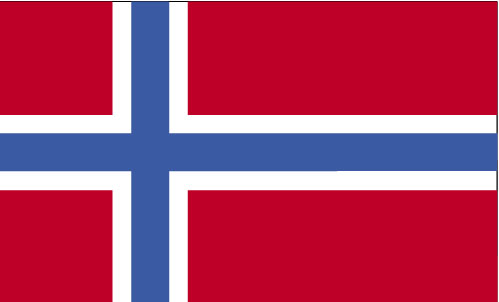
- Flag Symbolism
- the flag of Norway is used
National Anthem
- Anthem History
- This island is under Norwegian sovereignty