
 English
 Español
 中文
中文 हिन्दी
 Français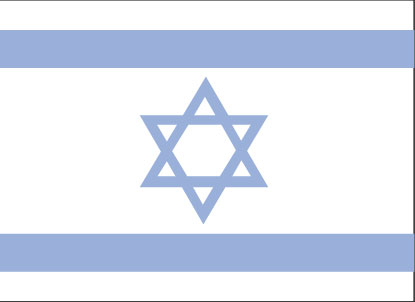
Israel
State of Israel
Declare Your Relationship to Israel
CountryReports Community
- Studying4
- From Israel1
- Israel heritage1
- Visited0
- Want to visit1
Customs and Culture
Customs and Culture
Cultural Attributes
Israel is a country with a rich and diverse cultural heritage, shaped by its history, geography, and the multicultural nature of its population. As a nation at the crossroads of Europe, Asia, and Africa, Israel's culture is a unique blend of ancient traditions and modern influences.
Religious Diversity and Influence:
Judaism: As the Jewish homeland, Israel's culture is deeply rooted in Jewish traditions and practices. Religious observances such as Shabbat, Passover, and Hanukkah are widely celebrated.
Other Religions: Israel is also home to Muslims, Christians, Druze, and Baha'is, each contributing to the country's cultural tapestry. Sites like the Al-Aqsa Mosque, the Church of the Holy Sepulchre, and the Baha'i Gardens highlight this diversity.
Language:
Hebrew and Arabic: Hebrew is the official language and a cornerstone of Jewish identity, revived in the 19th century. Arabic is also an official language and widely spoken, reflecting the Arab minority population.
Multilingual Society: Many Israelis are multilingual, often fluent in English, Russian, or French, reflecting immigration patterns.
Arts and Literature:
Music and Dance: Israeli culture embraces a wide range of music styles, from traditional klezmer and Mizrahi music to modern pop and electronic genres. Dance forms like folk hora and contemporary choreography are integral to cultural events.
Visual Arts: Israeli artists blend historical themes with modern techniques, often exploring identity, politics, and spirituality.
Literature: Israeli literature is renowned globally, with authors like Amos Oz and David Grossman addressing themes of identity, conflict, and human emotion.
Cuisine:
Diverse Influences: Israeli cuisine reflects the diaspora, combining Middle Eastern flavors with European, North African, and Asian influences. Staples include falafel, hummus, shakshuka, and challah.
Kosher Food: Many restaurants and households observe kosher dietary laws, emphasizing the significance of religion in everyday life.
Family and Community:
Family is a central aspect of Israeli society. Communities, particularly in rural areas, often form close-knit bonds. Celebrations, weddings, and holidays are occasions for large family gatherings.
Technological and Entrepreneurial Spirit:
Israel is known as the "Start-up Nation," boasting a high-tech industry and culture of innovation. This modern, forward-thinking mindset contrasts with and complements its ancient traditions.
Military and National Identity:
Military service is compulsory for most citizens and plays a significant role in shaping Israeli identity. The sense of shared responsibility fosters unity and a strong national ethos.
Holidays and Festivals:
Jewish holidays, such as Yom Kippur, Rosh Hashanah, and Sukkot, influence public life, with businesses often closing during observances.
Secular celebrations like Independence Day (Yom Ha'atzmaut) also highlight national pride.
Cultural Tensions and Integration:
The blending of diverse immigrant communities (Ashkenazi, Sephardic, Mizrahi, Ethiopian, Russian, and others) sometimes creates tensions but also enriches cultural life.
Efforts toward integration and mutual respect are ongoing, reflecting Israel's complex social fabric.

Land of Ancient Olive Trees and Modern Innovation
Greetings, Gestures & Visiting
Hebrew uses a unique alphabet with no vowels. It is read from right to left, except for numerals which are read left to right. Native born Israelis are very straightforward plain-talking people. They detest sentimentality and love a good argument. They are fierce, articulate, friendly and hospitable.
When visiting people in Israel, understanding the social norms can enhance your experience and show respect for local customs. Here are some key social norms to keep in mind:
Scheduling Visits:
Plan: It’s customary to call and arrange a visit in advance rather than drop by unexpectedly.
Punctuality: While Israelis can be informal, arriving on time is appreciated, especially in professional or formal settings.
Greetings:
Handshake or Hug: A handshake is the standard greeting, but among friends or close acquaintances, hugs or cheek kisses (one or two, depending on the relationship) may be common.
Religious Sensitivity: Be mindful that Orthodox Jews might avoid physical contact with the opposite gender. Instead, a verbal greeting or a slight nod is appropriate.
Dress Code: In secular settings, casual attire is acceptable. In more traditional or religious households, modest clothing is recommended (e.g., covering shoulders and knees).
Gift-Giving: Bring a gift, It’s polite to bring a small gift, such as flowers, wine (kosher, if applicable), chocolates, or baked goods. Avoid bringing non-kosher food (e.g., pork, shellfish) or anything made of meat and dairy combined, as many Israelis observe kosher dietary laws. In Arab households, avoid alcohol unless you know it is acceptable.
Shoes: In some households, especially religious or traditional ones, it may be customary to remove shoes before entering. Look for cues from your host or politely ask.
Table Manners: Wait for the host to invite you to sit and begin eating. Blessings or Toasts: In religious homes, there may be blessings over food or wine. Allow the host to lead.
Sharing Food: Israeli meals are often communal, and it’s common to share dishes. Try everything offered as a sign of appreciation.
Respecting Religious Practices:
Sabbath (Shabbat): If visiting a Jewish household during Shabbat (from Friday evening to Saturday evening), avoid using electronics or discussing work unless the host explicitly indicates it’s acceptable.
Prayer Times: Respect prayer times if visiting religious homes, including providing space for rituals.
Conversation Topics: Israelis are known for being direct and expressive, so don’t hesitate to engage in lively conversation. Avoid controversial topics like politics or religion unless the host brings them up.
Israelis often appreciate questions about their culture, traditions, or personal experiences.
Saying Goodbye: Express gratitude for the hospitality before leaving. It’s customary to say "Todah rabah" (Thank you very much) in Hebrew. Following-up with a thank-you message or call after your visit is always appreciated.
Daily wear is generally informal Western style. Orthodox Jews wear traditional clothing every day. Some orthodox males wear their hair in payes or sidelocks. Married Orthodox women wear a shietel (wig) and a scarf tied to the back. Orthodox men wear long black or gray coats over their shirts and pants.
Many Muslim men and women wear a "kaffiyyeh" (headdress).
Diet
The most popular food is falafel or deep fried balls of ground chickenpeas. Eggplant is another popular food. Israelis love to eat and do it often. The eat a huge breakfast and continue to eat throughout the day. Due to kosher restrictions Jewish Israelis tend to eat a main meat meal at midday and a lighter dairy meal at evening time since meat and dairy can not be eaten at the same time or with the same utensils. Camels, pigs and rabbits are forbidden by the Jewish diet. Only fish with both fins and scales are permitted to be eaten.

Family
Israeli children are generally pampered. The equality of women is protected by law but often overridden by religious traditions.
Recreation
Basketball and soccer Israel's most popular sports. The swim across Lake Kinneret and various marathons are also popular. Classical music is a favorite in Israel. A favorite past time is eating out at either outside vendors or sit down restaurants.
Student Life
A regular school morning would normally start by brushing teeth, light breakfast, usually some bread, cereals, juice, chocolate flavored milk sometimes an egg before going to school. Flavored milk and rolls are very popular among Israeli children. Due to the hot weather and humidity children may shower twice a day, also before going to school. Kids take a sandwich and sometimes fruits for a quick brunch at school. There is a 10 minutes break around 9:30 for this matter, and then they are allowed to go out of the classroom. Chores, caring for pets, etc would normally be done by parents or older children in the morning. Kids would engage in such activities after school.
A school day is different, based on school's location, whether a long day program (including lunch) exists. A typical day consists of 5-6 classes, 45-50 minutes long. There is one "major" 30 minutes recess at 9:35, which includes 10 minutes in the classroom, having a light brunch, then 20 minutes break. There is no recess between the first and second class, Yet there is a 10 minutes break between all other classes. You usually won't find a class with more than 40 pupils, however small villages and local schools may have smaller classes. The main subjects include: language, basic mathematics, nature and sciences, literature, training or sports, and some history. English is mandatory beginning at 4th grade.
Some of the schools offer a long-day program, 8:00-16:00, including lunch, homework assistance, etc. There are youth movements, clubs, sports recreation centers, and so on. Private lessons are more common during junior-high and high school because parents can usually handle elementary school's materials easily. Other activities include watching TV and spending time with the computer – surfing the web, playing games, chatting with friends, etc. Israel has broken a record in mobile(cellular) phones usage. Almost any child has a mobile phone! Children meet together outdoors, playing games, having fun at the shopping mall (eating junk food, watching movies). Weekend activities are different for Religious and Non-Religious children. Religious Jewish people don't drive, use fire, listen to the radio/watch TV through most of the weekend, thus spend most of the time reading, walking, and praying. Non-Religious children will travel, visit friends and relatives, go with friends and their families to parks, and picnics by the sea.
Holidays
Independence Day
5/14Independence Day
Israel declared independence on 14 May 1948, but the Jewish calendar is lunar and the holiday may occur in April or May
Birth date - Golda Meir
5/3Birthday
Birth date - Golda Meir, Israeli prime minister, was born May 3, 1898.
Christmas -- Hanukkah
12/25Christmas
Hanukkah is an eight day holiday starting on the 25th night of the Jewish month of Kislev.
Hanukkah (The Hebrew word means ’Dedication’) is also known as the Festival of Lights.
Hanukkah commemorates the victory of the Maccabees over the Syrians in 165 B.C.
Jewish families celebrate by lighting a special candelabra, called a menorah.
Dates of Interest
- October/November.
Celebrates olive harvesting in Arab and Druze communities.
How do people greet each other in Israel?
A handshake is the standard greeting, while friends and close acquaintances may hug or exchange one or two cheek kisses. Native-born Israelis are straightforward, plain-talking, friendly and hospitable.
Do
- Use a handshake in most settings
- Offer a verbal greeting or slight nod to Orthodox Jews who may avoid contact with the opposite gender
- Say "Todah rabah" (thank you very much) when leaving
Don’t
- Don't initiate physical contact with the opposite gender in Orthodox settings
Good to know
- Israelis love a good argument and lively conversation, so don't hesitate to engage
What are dining customs like in Israel?
Meals are often communal with shared dishes, and Israelis eat a huge breakfast and continue eating throughout the day. Many observe kosher dietary laws.
Do
- Wait for the host to invite you to sit and begin eating
- Try everything offered as a sign of appreciation
- Allow the host to lead any blessings or toasts
Don’t
- Don't combine meat and dairy at the same meal or with the same utensils
- Don't expect camel, pig, or rabbit, which are forbidden by the Jewish diet
- Don't expect fish without both fins and scales
Good to know
- Falafel (deep-fried ground chickpea balls) and eggplant are popular staples
- Jewish Israelis often eat a main meat meal at midday and a lighter dairy meal in the evening
What etiquette should I know when visiting an Israeli home?
Arrange visits in advance rather than dropping by, arrive on time, and respect religious practices in the household.
Do
- Call ahead to arrange a visit
- Bring a small gift such as flowers, kosher wine, chocolates, or baked goods
- Remove shoes if it's customary in religious or traditional homes
- Express gratitude and follow up with a thank-you message
Don’t
- Don't bring non-kosher food like pork or shellfish, or meat-and-dairy combinations
- Don't bring alcohol to Arab households unless you know it's acceptable
- Don't use electronics or discuss work during Shabbat unless the host says it's okay
- Don't raise politics or religion unless the host brings them up
Good to know
- Shabbat runs from Friday evening to Saturday evening
- Respect prayer times and provide space for rituals in religious homes
How should I dress in Israel?
Daily wear is generally informal Western style, but modest clothing is recommended in traditional or religious households.
Do
- Wear casual attire in secular settings
- Cover shoulders and knees in traditional or religious households
Good to know
- Orthodox Jews wear traditional clothing daily, including black or gray coats for men and wigs and scarves for married women
- Some Muslim men and women wear a kaffiyyeh (headdress)
What is family life like in Israel?
Family is central to Israeli society, with close-knit communities and large gatherings for celebrations, weddings, and holidays. Children are generally pampered.
Good to know
- The equality of women is protected by law but often overridden by religious traditions
What do people do for fun in Israel?
Basketball and soccer are the most popular sports, and eating out at vendors or restaurants is a favorite pastime.
Good to know
- The swim across Lake Kinneret and various marathons are popular
- Classical music is a favorite in Israel
Last updated: 2026-07-12 · Sources: CountryReports
Photos of Israel
Photos of Israel
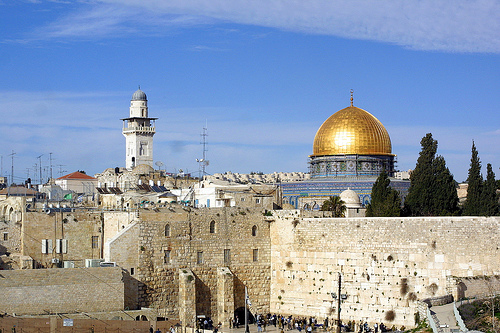
The Wailing Wall, Al Aqsa Mosque in background
Weizmann Avenue, Netanya, Israel
Camels in the Judea Desert
Dome of the Rock
Old and New architecture in Tel Aviv
Bauhaus on Yave Street, Tel Aviv
Tel Aviv beach on a Friday
Expensive home in Tel Aviv
Jaffa Beach nera Tel Aviv
Israeli forest
Desert view from Massada
Fields of the Negev near Egyptian border


Travel and Tourism
Travel and Tourism
- Travel Alert Status
- Level 3: Reconsider Travel To
- Time Difference
- UTC+2 (7 hours ahead of Washington, DC, during Standard Time)
- Climate
- The climate in Israel varies greatly from place to place. The coastal plain has wet, moderately cold winters with temperatures ranging from the mid-30s to the mid-60s. Then comes a beautiful spring followed by a long, hot, and humid summer during which the temperature can be more than 100 degrees. Hot spells, known as "sharav" or "khamsin," are quite common during spring and summer and can cause significant discomfort to persons with respiratory problems. These often are accompanied by hot desert winds from the east or the south, carrying dust and sand from as far away as the Sahara. A cooler fall then leads to the beginning of the rainy season in late October or early November. Jerusalem, which is inland and in the Judean Hills, some 2,500 feet above sea level, is generally drier and colder throughout the entire year. In the summer, it gets very hot, but it remains less humid than the coast. In the winter Jerusalem temperatures regularly drop below freezing, and it snows occasionally. The Negev, in the south, is a hot, mostly barren desert. Throughout the country, the rainy season lasts from October or November until March or April. The rains often come in heavy downpours and thunderstorms. With the first hint of summer, people go to the beach. Israelis love outdoor concerts in summer, and the spectacular ancient sites in Caesarea and Jaffa are used as open-air theaters. The high daytime temperatures are cooled off by evening breezes both in Tel Aviv and Jerusalem. Outdoor dining is especially popular in summer. Fall is somewhat like a southern U.S. fall, with cooler weather and leaves falling off of trees. Winter comes suddenly, and rain falls regularly. In some years, rainfall is sparse, causing water shortages. The northern mountains, particularly Mt. Hermon in the disputed Golan Heights, will often have snow. Toward the south and the Negev, the weather remains balmy, though the nights are cold.
- Airports
- 51
Read the full travel guide — health, safety, vaccinations, disease risk, sanitation, and transit details.
View full travel guideRecipes
Recipes
Mana-eesh Be Za'tar (Thyme Loaves)
Bread
Main Dish
Fassoulia Khadra (Green Bean Stew)
Main Dish
Imba’tara (Eggs and Tomatoes)
Main Dish
Kabab (Meat on a Skewer)
Main Dish
Moughrabiyeh (Couscous)
Side Dish
Tahina (A sauce often used on falafels or salads)
Side Dish
Fatosh
Side Dish
PremiumKousa Mahshi (Stuffed Zucchini)
Side Dish
Premium(Magloubit Batinjaan) Upside-Down Eggplant Casserole
Bread
PremiumKhoubez Kimaaj (Pita or Arabic Bread)
History
History
Historical Eras
Biblical & Ancient Israel
1200 BCE – 63 BCE
The Israelites emerged as a distinct people following the Exodus and settlement of Canaan, eventually establishing a unified monarchy under Saul, David, and Solomon. The kingdom split into Israel and Judah around 930 BCE; Assyria destroyed the northern kingdom in 722 BCE, and Babylon conquered Jerusalem in 586 BCE. After the Persian period and Alexander's conquest, the Hasmonean dynasty briefly restored Jewish sovereignty from 142 to 63 BCE.
Roman & Byzantine Rule
63 BCE – 636
Roman general Pompey captured Jerusalem in 63 BCE, drawing the region into the Roman sphere. The catastrophic Jewish revolts of 66–73 CE and 132–135 CE led to the destruction of the Second Temple, mass exile, and the renaming of the province as Syria Palaestina. Under Byzantine Christian rule from 313 CE onward, the Jewish population was marginalized, though the land retained profound religious significance for multiple faiths.
Islamic Caliphates & Crusaders
636 – 1516
Arab Muslim forces under the Rashidun Caliphate conquered the region in 636 CE, inaugurating centuries of Islamic rule under successive dynasties including the Umayyads, Abbasids, and Fatimids. The Crusaders seized Jerusalem in 1099 and established the Latin Kingdom, which fell to Saladin in 1187 and was extinguished by the Mamluks by 1291. Mamluk rule lasted until 1516, during which the region's population remained largely rural and the Jewish community small but continuous.
Ottoman Period
1516 – 1917
The Ottoman Empire conquered Palestine in 1516 under Sultan Selim I, incorporating it into a provincial administrative structure that persisted for four centuries. The region was relatively underpopulated and economically stagnant for much of this period, though the late nineteenth century brought significant Jewish immigration waves driven by European pogroms and the rising Zionist movement founded by Theodor Herzl in 1897. By the early twentieth century, competing Jewish and Arab nationalisms were creating mounting tensions under Ottoman and then British oversight.
British Mandate
1917 – 1948
Britain's 1917 Balfour Declaration pledged support for a Jewish national home in Palestine, and following World War I Britain administered the territory under a League of Nations mandate. The period was marked by mass Jewish immigration, particularly as Nazi persecution intensified in the 1930s, intensifying conflict between Jewish and Arab communities and against British authorities. The Holocaust's devastation galvanized international support for Jewish statehood, and Britain's withdrawal precipitated the declaration of Israeli independence in May 1948.
State of Israel
1948 – present
David Ben-Gurion proclaimed Israeli independence on May 14, 1948; the following day five Arab states invaded, launching the first of several major Arab-Israeli wars. Israel expanded its territory through the 1967 Six-Day War, signed peace treaties with Egypt in 1979 and Jordan in 1994, and has navigated decades of conflict with Palestinian groups alongside efforts at negotiated settlement. The country has developed into a technologically advanced democracy while grappling with unresolved questions of borders, security, and the status of the Palestinian population.
Overview
Timeline of Key Events
1201 BCE – 1300 BCE
Exodus from Egypt
Exodus from Egypt. Moses leads Israelites from Egypt, followed by 40 years of wandering in the desert.
1101 BCE – 1200 BCE
Israelites settle the Land of Israel
Israelites settle the Land of Israel.
930 BCE
Kingdom divided into Judah and Israel.
Kingdom divided into Judah and Israel.
722 BCE
Israel crushed by Assyrians; 10 tribes exiled (Ten Lost Tribes)
Israel crushed by Assyrians; 10 tribes exiled (Ten Lost Tribes).
536 BCE – 142 BCE
Persian and Hellenistic Periods
Persian and Hellenistic Periods.
129 BCE – 63 BCE
Jewish independence under Hasmonean monarchy.
Jewish independence under Hasmonean monarchy.
63 BCE
The Romans conquered the region
The Romans conquered the region.
Read the full history profile — narrative overview, defining eras, and the complete timeline in one place.
View expanded historyInteresting Facts
Interesting Facts
Consumes the most sugar at 216 pounds per person each year.
In Isreal when a child has a birthday the child sits in a chair while grown-ups raise and lower it a number of times corresponding to the child's age, plus one for good luck.
See every fact — trivia, oddities, and curious tidbits gathered from across the country.
View all interesting factsGeography and Environment
Geography and Environment
- Terrain
- Negev desert in the south; low coastal plain; central mountains; Jordan Rift Valley
- Climate
- The climate in Israel varies greatly from place to place. The coastal plain has wet, moderately cold winters with temperatures ranging from the mid-30s to the mid-60s. Then comes a beautiful spring followed by a long, hot, and humid summer during which the temperature can be more than 100 degrees. Hot spells, known as "sharav" or "khamsin," are quite common during spring and summer and can cause significant discomfort to persons with respiratory problems. These often are accompanied by hot desert winds from the east or the south, carrying dust and sand from as far away as the Sahara. A cooler fall then leads to the beginning of the rainy season in late October or early November. Jerusalem, which is inland and in the Judean Hills, some 2,500 feet above sea level, is generally drier and colder throughout the entire year. In the summer, it gets very hot, but it remains less humid than the coast. In the winter Jerusalem temperatures regularly drop below freezing, and it snows occasionally. The Negev, in the south, is a hot, mostly barren desert. Throughout the country, the rainy season lasts from October or November until March or April. The rains often come in heavy downpours and thunderstorms. With the first hint of summer, people go to the beach. Israelis love outdoor concerts in summer, and the spectacular ancient sites in Caesarea and Jaffa are used as open-air theaters. The high daytime temperatures are cooled off by evening breezes both in Tel Aviv and Jerusalem. Outdoor dining is especially popular in summer. Fall is somewhat like a southern U.S. fall, with cooler weather and leaves falling off of trees. Winter comes suddenly, and rain falls regularly. In some years, rainfall is sparse, causing water shortages. The northern mountains, particularly Mt. Hermon in the disputed Golan Heights, will often have snow. Toward the south and the Negev, the weather remains balmy, though the nights are cold.
- Natural Hazards
- sandstorms may occur during spring and summer; droughts; periodic earthquakes
- Current Environmental Issues
- limited arable land and natural fresh water resources pose serious constraints; desertification; air pollution from industrial and vehicle emissions; groundwater pollution from industrial and domestic waste, chemical fertilizers, and pesticides
Read the full geography and environment profile — terrain, climate, natural resources, hazards, land use, and international agreements.
View full geographyPeople & Demographics
People & Demographics
Religion
Languages Spoken
Hebrew (official), Arabic used officially for Arab minority, English most commonly used foreign language.
- Hebrew
- Arabic
Population
- Population
- 7,353,985
- Population in Major Urban Areas
- Tel Aviv-Yafo 3.381 million; Haifa 1.054 million; JERUSALEM (capital) 791,000
- Nationality Noun
- Israeli(s)
- Ethnic Groups
- Jewish 80.1% (Europe/America-born 32.1%, Israel-born 20.8%, Africa-born 14.6%, Asia-born 12.6%), non-Jewish 19.9% (mostly Arab)
Education
- Literacy Definition
- age 15 and over can read and write
A school day is different, based on school's location, whether a long day program (including lunch) exists. A typical day consists of 5-6 classes, 45-50 minutes long. There is one "major" 30 minutes recess at 9:35, which includes 10 minutes in the classroom, having a light brunch, then 20 minutes break. There is no recess between the first and second class, Yet there is a 10 minutes break between all other classes. You usually won't find a class with more than 40 pupils, however small villages and local schools may have smaller classes. The main subjects include: language, basic mathematics, nature and sciences, literature, training or sports, and some history. English is mandatory beginning at 4th grade.
Read the full people and society profile — demographics, health, education, religion, languages, and notable people.
View full people and societyGovernment & Politics
Government & Politics
Country Identity
- Country Name
- Israel
- Full Country Name
- State of Israel
- Local - Long
- Medinat Yisra'el
- Local - Short
- State of Israel
Government Structure
- Government Type
- parliamentary democracy
- Legal System
- mixture of English common law, British Mandate regulations, and, in personal matters, Jewish, Christian, and Muslim legal systems; in December 1985, Israel informed the UN Secretariat that it would no longer accept compulsory ICJ jurisdiction
- Executive Branch
- chief of state: President Moshe KATZAV (since 31 July 2000) head of government: Prime Minister Ariel SHARON (since 7 March 2001); note - Prime Minister (Acting) Ehud OLMERT (since 4 January 2006) cabinet: Cabinet selected by prime minister and approved by the Knesset elections: president is largely a ceremonial role and is elected by the Knesset for a seven-year term; election last held 31 July 2000 (next to be held mid-2007); following legislative elections, the president assigns a Knesset member - traditionally the leader of the largest party - the task of forming a governing coalition; election last held 28 January 2003 (next scheduled to be held March 2006) election results: Moshe KATZAV elected president by the 120-member Knesset with a total of 60 votes, other candidate, Shimon PERES, received 57 votes (there were three abstentions); Ariel SHARON continued as prime minister after Likud Party victory in January 2003 Knesset elections; Likud won 38 seats and then formed coalition government with Shinui, the National Religious Party, and the National Union; controversy surrounding SHARON's disengagement plan ultimately led to the formation of a Likud-Labor-United Torah Judaism (UTJ) coalition government in January 2005
- Legislative Branch
- unicameral Knesset (120 seats; members elected by popular vote to serve four-year terms) elections: last held 29 March 2006 (next scheduled to be held 2010) election results: percent of vote by party - NA; seats by party - Kadima 28, Labor 20, Shas 13, Yisrael Beiteinu 12, Likud 11, National Union 9, Gil-Gimla'ey Yisrael LaKneset 7, United Torah Judaism 6, Meretz 4, United Arab List 4, Hadash 3, Balad 3
- Judicial Branch
- Supreme Court (justices appointed for life by the president)
- Suffrage
- 18 years of age; universal
- Constitution
- no formal constitution; some of the functions of a constitution are filled by the Declaration of Establishment (1948), the Basic Laws of the parliament (Knesset), and the Israeli citizenship law
- Independence
- 14 May 1948 (from League of Nations mandate under British administration)
- National Holiday
- Independence Day, 14 May (1948); note - Israel declared independence on 14 May 1948, but the Jewish calendar is lunar and the holiday may occur in April or May
Capital City
- Capital Name
- Jerusalem; note - the US recognized Jerusalem as Israel’s capital in December 2017 without taking a position on the specific boundaries of Israeli sovereignty
- Capital - geographic coordinate
- 31 46 N, 35 14 E
- Capital Time Difference
- UTC+2 (7 hours ahead of Washington, DC, during Standard Time)
Jerusalem's settlement may date back to 2800 B.C.; it is named Urushalim in Egyptian texts of the 14th century B.C.; uru-shalim likely means "foundation of [by] the god Shalim", and derives from Hebrew/Semitic yry, "to found or lay a cornerstone", and Shalim, the Canaanite god of dusk and the nether world; Shalim was associated with sunset and peace and the name is based on the same S-L-M root from which Semitic words for "peace" are derived (Salam or Shalom in modern Arabic and Hebrew); this confluence has thus led to naming interpretations such as "The City of Peace" or "The Abode of Peace"
Military
Branches: Israel Defense Forces (IDF), Israel Naval Force (IN), Israel Air Force (IAF)
Embassy / Diplomatic Mission
TEL AVIV: The U.S. Embassy is located at 71 Hayarkon Street in Tel Aviv.The U.S. mailing address is 9700 Tel Aviv Place, Washington, DC 20521-9700. The telephone number is (972) (3) 519-7575, Monday through Friday. The after-hours emergency number on weekends and from 4:30 p.m. to 8:00 a.m. local time on weekdays is (972) (3) 519-7551. The fax number is (972) (3) 516-4390, or 516-0315. The Embassy can be contacted by e-mail.
Contact the Consular Section of the U.S. Embassy for information and assistance in Israel and the Golan Heights, at the ports of entry at Ben Gurion Airport, Haifa Port, the northern (Shaykh Hussein) and southern (Arava) border crossings connecting Israel and Jordan, and the border crossings between Israel and Egypt.
The Embassy also has a consular agent in Haifa at 26 Ben Gurion Boulevard, telephone (972) (4) 853-1470. The consular agent can provide both routine and emergency citizen services in the northern part of Israel. After normal working hours you can contact him via the Embassy.
JERUSALEM: The Consular Section of the U.S. Consulate General in Jerusalem is located at 14 David Flusser, Jerusalem 93392 (near the former Diplomat Hotel, now the Caprice Diamond Center, in the neighborhood of Arnona). The U.S. mailing address is 6350 Jerusalem Place, Washington, DC 20521-6350. The Consular Section's public telephone number for information and assistance is (972) (2)630-4000, Monday through Friday. The after-hours emergency number on weekends and from 4:30 p.m. to 8:00 a.m. local time on weekdays is (972) (2) 622-7230. The Consular Section's fax number is (972) (2) 630-4070. You may also contact the Consulate by e-mail.
Contact the Consular Section of the U.S. Consulate General in Jerusalem for information and assistance in Jerusalem, the West Bank, the Gaza Strip, and the Allenby Bridge crossing between the West Bank and Jordan.
Read the full government profile — flag symbolism, national anthem, and other national symbols.
View full government detailsEconomy
Economy
Israel has a highly developed, technology-driven market economy and ranks among the wealthiest nations in the Middle East. Its gross domestic product reached approximately $525 billion in 2023, with a per capita GDP of around $55,000, placing it among the top 20 economies globally by this measure. The Israeli shekel (ILS) serves as the national currency, managed by the Bank of Israel.
The country is widely known as the "Start-Up Nation" due to its dense concentration of technology firms and venture capital activity. Israel invests roughly 5.6% of GDP in research and development, the highest rate in the world. Major sectors include high-technology, software, telecommunications, biotechnology, pharmaceuticals, defense manufacturing, and advanced electronics. The metropolitan area of Tel Aviv functions as the principal commercial and innovation hub, hosting research centers for global companies such as Intel, Microsoft, Google, Apple, and IBM.
Diamonds, both polished and rough, have traditionally been a leading export, alongside chemicals, machinery, medical instruments, and agricultural products. Israel's agricultural sector, though employing only about 1% of the workforce, is renowned for advanced techniques in drip irrigation, desert farming, and water recycling—nearly 90% of wastewater is treated and reused, the highest rate globally. Offshore natural gas discoveries in the Leviathan and Tamar fields have transformed the country into a regional energy exporter, supplying gas to Egypt and Jordan.
The service sector accounts for roughly 70% of GDP, while industry contributes around 26%. Major trading partners include the United States, China, the European Union (particularly Germany and the Netherlands), and India. The country is a member of the Organisation for Economic Co-operation and Development (OECD), which it joined in 2010.
Despite its strengths, Israel faces economic challenges including high housing costs, income inequality, and disparities in workforce participation among ultra-Orthodox Jewish and Arab Israeli communities. Defense spending, ongoing regional security concerns, and political instability also weigh on fiscal planning. Inflation rose in 2022–2023 in line with global trends, and unemployment has generally remained low at under 4%.
Snapshot
- Currency Name and Code
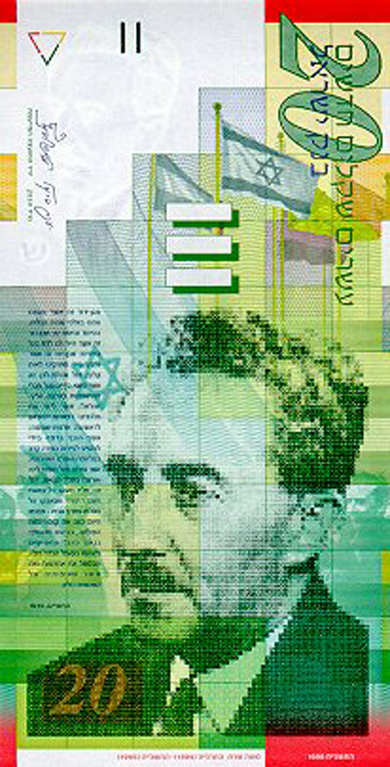
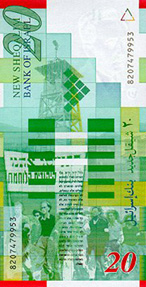
- New Israeli Sheqel (ILS)
- GDP — official exchange rate
- $114,300,000,000 (USD)
- GDP Real Growth Rate
- 5.2%
- Gini Index
- 34
Banknotes
Budget & Public Finance
- Fiscal Year
- calendar year
- Annual Budget
- $58,040,000,000 (USD)
- Public Debt (% of GDP)
- 101%
- External Debt
- $73,870,000,000 (USD)
- Investment (% of GDP)
- 17.5%
- Economic Aid
- $662,000,000 (USD)
- Current Account Balance
- $500,000,000 (USD)
- Reserves of Foreign Exchange
- $2,147,483,647 (USD)
Labor, Industry & Trade
- Labor Force by Occupation
- public services 31.2%; manufacturing 20.2%; finance and business 13.1%; commerce 12.8%; construction 7.5%; personal and other services 6.4%; transport; storage; and communications 6.2%; agriculture; forestry; and fishing 2.6%
- Household Income — highest 10%
- 28.3%
- Industries
- high-technology projects (including aviation, communications, computer-aided design and manufactures, medical electronics), wood and paper products, potash and phosphates, food, beverages, and tobacco, caustic soda, cement, diamond cutting
- Agriculture Products
- citrus, vegetables, cotton; beef, poultry, dairy products
- Export Commodities
- machinery and equipment, software, cut diamonds, agricultural products, chemicals, textiles and apparel
- Export Partners
- US 40.3%, Belgium 6.3%, Hong Kong 4.7%, UK 4%
- Import Commodities
- raw materials, military equipment, investment goods, rough diamonds, fuels, grain, consumer goods
- Import Partners
- US 18.5%, Belgium 9.1%, Germany 7.1%, UK 6.7%, Switzerland 6.3%, Italy 4.6%
Energy
- Oil Production
- 2,740 bbl/day
- Oil Consumption
- 270,100 bbl/day
- Oil Reserves
- 1,920,000 bbl/day
- Natural Gas Production
- 200,000,000 cu m
- Natural Gas Consumption
- 200,000,000 cu m
- Natural Gas Imports
- 0 cu m
- Natural Gas Exports
- 0 cu m
- Natural Gas Reserves
- 38,940,000,000 cu m
Communications
- Telephone System
- general assessment: most highly developed system in the Middle East domestic: good system of coaxial cable and microwave radio relay; all systems are digital; four privately owned mobile-cellular service providers with countrywide coverage international: country code - 972; submarine cables provide links to Europe, Cyprus, and parts of the Middle East; satellite earth stations - 3 Intelsat (2 Atlantic Ocean and 1 Indian Ocean)
- Internet Country Code
- .il
News & Weather
News & Weather
Current Weather
Latest News
Iran war updates: US launches strikes after killing of soldiers in Jordan - Al Jazeera
Al Jazeera · 3h ago
Israel Counters Iranian Spying by Warning Against Recruitment - The New York Times
The New York Times · 14h ago
Scoop: U.S. sending dozens of refueling planes to Israel as Iran escalation looms - Axios
Axios · 1d ago
Fetterman lays out ‘red line’ over leaving Democratic Party: Israel - CNN
CNN · 2d ago
Israeli ministers announce plans for new illegal settlements in Gaza and West Bank - The Guardian
The Guardian · 15h ago
Palestinian teenage footballer dies a week after Israeli settler attack - Al Jazeera
Al Jazeera · 6h ago
Palestinian teenage footballer dies after Israeli settler attack - Al Jazeera
Al Jazeera · 9m ago
Mamdani Says He May Still Order Israeli Prime Minister Netanyahu’s Arrest in NYC - The New York Times
The New York Times · 5h ago
News via Google News
Climate Overview
The climate in Israel varies greatly from place to place. The coastal plain has wet, moderately cold winters with temperatures ranging from the mid-30s to the mid-60s. Then comes a beautiful spring followed by a long, hot, and humid summer during which the temperature can be more than 100 degrees. Hot spells, known as "sharav" or "khamsin," are quite common during spring and summer and can cause significant discomfort to persons with respiratory problems. These often are accompanied by hot desert winds from the east or the south, carrying dust and sand from as far away as the Sahara. A cooler fall then leads to the beginning of the rainy season in late October or early November. Jerusalem, which is inland and in the Judean Hills, some 2,500 feet above sea level, is generally drier and colder throughout the entire year. In the summer, it gets very hot, but it remains less humid than the coast. In the winter Jerusalem temperatures regularly drop below freezing, and it snows occasionally. The Negev, in the south, is a hot, mostly barren desert. Throughout the country, the rainy season lasts from October or November until March or April. The rains often come in heavy downpours and thunderstorms.
With the first hint of summer, people go to the beach. Israelis love outdoor concerts in summer, and the spectacular ancient sites in Caesarea and Jaffa are used as open-air theaters. The high daytime temperatures are cooled off by evening breezes both in Tel Aviv and Jerusalem. Outdoor dining is especially popular in summer.
Fall is somewhat like a southern U.S. fall, with cooler weather and leaves falling off of trees. Winter comes suddenly, and rain falls regularly. In some years, rainfall is sparse, causing water shortages. The northern mountains, particularly Mt. Hermon in the disputed Golan Heights, will often have snow. Toward the south and the Negev, the weather remains balmy, though the nights are cold.
Videos
Videos
2 curated YouTube videos.
Source: YouTube
Source: YouTube
Frequently Asked Questions
Frequently Asked Questions
What is the population of Israel?
How do people greet each other in Israel?
What are dining customs like in Israel?
What etiquette should I know when visiting an Israeli home?
How should I dress in Israel?
What is family life like in Israel?
What do people do for fun in Israel?
What is the capital of Israel?
Where is Israel located?
What countries border Israel?
What is the predominant religion in Israel?
What currency is used in Israel?
What languages are spoken in Israel?
What is Israel known for?
What is the geography of Israel like?
Last reviewed 2026