
 English
 Español
 中文
中文 हिन्दी
 Français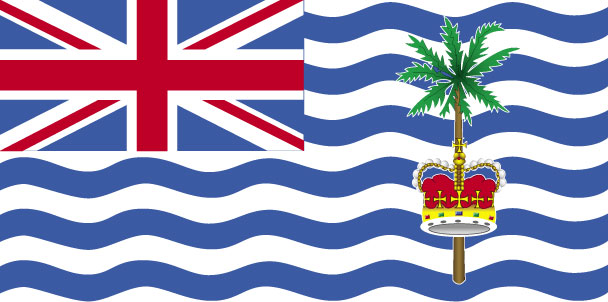
British Indian Ocean Territory
Declare Your Relationship to British Indian Ocean Territory
CountryReports Community
- Studying0
- From British Indian Ocean Territory0
- British Indian Ocean Territory heritage0
- Visited0
- Want to visit0
Quick Look Factsheet
A multi-page overview of British Indian Ocean Territory.
British Indian Ocean Territory FactsheetCustoms and Culture
Customs and Culture
Cultural Attributes
The British Indian Ocean Territory (BIOT) is a unique case in the study of world cultures, as it currently has no permanent civilian population. The territory consists of the Chagos Archipelago, a group of more than 1,000 islands and islets in the central Indian Ocean, and its only consistent inhabitants are military personnel stationed at the joint United Kingdom–United States naval support facility on Diego Garcia, the largest atoll in the chain. Historically, the islands had a distinct and vibrant community. The Chagossians, also known as the Ilois, were a Creole people descended primarily from African enslaved laborers and South Asian indentured workers brought to the islands during French and later British colonial administration. They developed their own Creole language, Chagos Creole, which blended French, English, and various African linguistic elements. Their culture was deeply tied to fishing, subsistence farming, and a strong sense of communal identity shaped by the remote island environment. Between 1968 and 1973, the entire Chagossian population — estimated at approximately 1,500 to 2,000 people — was forcibly removed by the British government to make way for the military base. Many were relocated to Mauritius and the Seychelles, where their descendants, numbering in the thousands today, continue to preserve elements of their cultural heritage. Chagossian advocacy groups have worked to maintain their ancestral music, oral traditions, and identity, even in exile. The forced displacement remains a deeply contested humanitarian and legal issue. Chagossian communities have pursued legal challenges in British courts and before international bodies, seeking the right to return to the islands. In 2019, the International Court of Justice issued an advisory opinion stating that the UK's administration of the territory was not lawful under international law, adding further weight to the ongoing cultural and political struggle of the Chagossian people. Today, the cultural legacy of the Chagos Islands is largely preserved in diaspora communities, making it a poignant example of a displaced culture seeking recognition and the right to reclaim its homeland.
Atoll of Strategic Seas
Get More Customs and Culture
2 more cultural topics for members
Social Customs & Etiquette · Dating Customs
Every country, every topic, all activities & recipes
✓ Instant access on this device · ✓ No subscription
Dates of Interest
- Untitled date
What should travelers know before going to British-Indian-Ocean-Territory?
The British Indian Ocean Territory has no permanent civilian population; its only consistent inhabitants are military personnel at the joint UK–US naval support facility on Diego Garcia, the largest atoll in the Chagos Archipelago.
Good to know
- The territory consists of the Chagos Archipelago, more than 1,000 islands and islets in the central Indian Ocean
- The original Chagossian (Ilois) population was forcibly removed between 1968 and 1973 to make way for the military base
- Chagossian culture today survives mainly in diaspora communities in Mauritius and the Seychelles
- The forced displacement and the right to return remain deeply contested humanitarian and legal issues
What was daily life and culture like for the Chagossians?
Chagossian culture was deeply tied to fishing, subsistence farming, and a strong sense of communal identity shaped by the remote island environment.
Good to know
- The Chagossians were a Creole people descended from African enslaved laborers and South Asian indentured workers
- They spoke Chagos Creole, blending French, English, and various African linguistic elements
- Advocacy groups continue to preserve ancestral music and oral traditions in exile
Last updated: 2026-07-12 · Sources: CountryReports
Travel and Tourism
Travel and Tourism
- Time Difference
- UTC+6 (12 hours ahead of Washington, DC, during Standard Time)
- Airports
- 1
- Recommended Vaccinations
- How important is it to do your research about vaccinations? It might just save your life! Make yourself aware of the different types of vaccinations and which ones you may need to travel to your destination. Schedule an appointment with your doctor at least four to six weeks before you travel to ensure you receive all important shots. Be sure that you and your family are up to date on your routine vaccinations. Which vaccinations you need will depend on a number of factors including your destination, whether you will be spending time in rural areas, the season of the year you are traveling, your age, health status, and previous immunizations.
Read the full travel guide — health, safety, vaccinations, disease risk, sanitation, and transit details.
View full travel guideHistory
History
Historical Eras
Uninhabited Prehistory
The Chagos Archipelago remained uninhabited throughout recorded history prior to European colonization, with no indigenous population ever documented. The remote coral atolls, lying over 1,500 km from the nearest continental landmass, were known to Arab and South Asian mariners but never permanently settled. European explorers charted the islands from the sixteenth century onward.
French Colonial Period
1783 – 1814
France claimed the Chagos Archipelago as a dependency of Mauritius (then Île de France) in the late eighteenth century, establishing coconut plantations worked by enslaved Africans. The islands, particularly Diego Garcia, served as a provisioning stop for vessels traversing the Indian Ocean. This era introduced the first permanent human habitation of the archipelago.
British Dependency Era
1814 – 1965
Britain acquired the Chagos Archipelago through the Treaty of Paris (1814) following the Napoleonic Wars, administering it as a dependency of Mauritius and later the Seychelles. Copra plantations continued to operate, sustaining a settled Chagossian community of several hundred people known as the Ilois. The islands remained an obscure imperial backwater until strategic considerations during the Cold War prompted a fundamental reassessment of their value.
BIOT Establishment
1965 – 1973
The British Indian Ocean Territory was formally created by Order in Council on 8 November 1965, detached from Mauritius and the Seychelles ahead of their respective independences. A secret agreement with the United States provided for the construction of a major joint military facility on Diego Garcia. Between 1967 and 1973, the entire Chagossian population was forcibly relocated, primarily to Mauritius, in one of the most controversial acts of British colonial administration in the postwar period.
Military Territory & Legal Disputes
1973 – present
Diego Garcia became a strategically critical joint UK-US naval and air support facility, used extensively during the Gulf War, the War in Afghanistan, and operations in Iraq. In 2000, the British High Court ruled that the expulsion of the Chagossians had been unlawful, though subsequent government Orders in Council again restricted resettlement, triggering prolonged legal battles. In 2024, the UK and Mauritius reached a landmark agreement in principle to transfer sovereignty of the archipelago to Mauritius, placing the territory's future status in question.
Overview
The British Indian Ocean Territory (BIOT) covers 54,400 km2 of ocean, including the reefs and islands
Every country, every topic, all activities & recipes
✓ Instant access on this device · ✓ No subscription
Read the full history profile — narrative overview, defining eras, and the complete timeline in one place.
View expanded historyInteresting Facts
Interesting Facts
The British Indian Ocean Territories were established from parts of the Outer Seychelles and Mauritius on November 8, 1965. On June 29th 1976, the former Seychelles territories were returned to Seychelles. The former Mauritius territories remain part of the British Indian Ocean Territories and are an overseas territory of the United Kingdom.
See every fact — trivia, oddities, and curious tidbits gathered from across the country.
View all interesting factsGeography and Environment
Geography and Environment
- Terrain
- flat and low (most areas do not exceed four meters in elevation)
- Climate
- tropical marine; hot, humid, moderated by trade winds
- Natural Hazards
- NA
- Current Environmental Issues
- NA
Read the full geography and environment profile — terrain, climate, natural resources, hazards, land use, and international agreements.
View full geographyPeople & Demographics
People & Demographics
Languages Spoken
English (official)
- English
Population
- Population
- 3,000
Life Expectancy
- Life Expectancy at Birth
- Life expectancy at birth is a demographic measure that reflects the average number of years a newborn can expect to live under prevailing mortality conditions. For the British Indian Ocean Territory (BIOT), this statistic is essentially not applicable in the conventional sense, as the territory has no permanent civilian population. The British Indian Ocean Territory consists primarily of the Chagos Archipelago, a group of more than 1,000 islands in the central Indian Ocean. Since the late 1960s and early 1970s, the indigenous Chagossian population was displaced, largely to Mauritius and the Seychelles, to make way for the joint United Kingdom–United States military installation on Diego Garcia, the largest atoll in the archipelago. Today, the only people residing on the territory are military personnel and civilian contractors stationed at the Diego Garcia base, all of whom are temporary residents rather than a settled civilian population. Because there is no permanent civilian population registered to BIOT, international organizations such as the World Health Organization and the World Bank do not publish life expectancy figures for this territory. Standard demographic indicators — including life expectancy at birth, infant mortality rates, and fertility rates — are calculated based on resident civilian populations, making them inapplicable to a territory whose inhabitants rotate on a temporary, non-permanent basis. The military and contractor personnel stationed on Diego Garcia are primarily citizens of the United States and the United Kingdom. Life expectancy figures for those nations can serve as a general proxy for the people living and working on the island. The United Kingdom records a life expectancy at birth of approximately 81 years, while the United States records approximately 77 years, reflecting recent trends that include the lingering impact of the COVID-19 pandemic on mortality rates in the United States. Discussions around the long-term status of BIOT have been active in recent years, with the United Kingdom and Mauritius reaching a landmark agreement in principle in 2024 regarding sovereignty over the Chagos Archipelago. This agreement also addresses the rights of displaced Chagossians and the possibility of return to their ancestral homeland. Should a civilian population ever be reestablished on the islands, formal demographic tracking — including life expectancy data — would likely follow through standard international monitoring frameworks.
- Infant Mortality Rate
- The British Indian Ocean Territory (BIOT) presents a unique case when it comes to infant mortality statistics. As an overseas territory of the United Kingdom consisting primarily of the Chagos Archipelago, BIOT has no permanent civilian population. The territory's only residents are British and American military personnel stationed at the joint naval support facility on Diego Garcia, the largest atoll in the archipelago, along with a small number of contracted civilian workers who rotate through on a temporary basis. Because no permanent civilian population inhabits the territory, standard demographic health indicators such as infant mortality rate are not calculated or reported for BIOT by international health organizations, including the World Health Organization or UNICEF. There are no births registered to a settled civilian population on the islands, and infants are not born and raised there under typical residential circumstances. Military personnel and contractors who require medical care beyond what is available on the base are typically evacuated or transferred to appropriate facilities elsewhere. This situation is a direct consequence of the displacement of the indigenous Chagossian population, who were relocated from the islands between the late 1960s and early 1970s to make way for the military base. Had the Chagossian community remained, health indicators including infant mortality would have been tracked and reported as part of a functioning civilian demographic. Today, those displaced Chagossians and their descendants live primarily in Mauritius, the Seychelles, and the United Kingdom, where their health outcomes fall under the reporting frameworks of those respective countries. For researchers or students seeking comparable data, the infant mortality rates for the United Kingdom — which administers the territory — serve as the closest relevant benchmark. The UK maintains one of the lower infant mortality rates globally, recorded at approximately 3.7 deaths per 1,000 live births in recent years, reflecting its advanced healthcare system. Any future change in the governance or civilian settlement status of the territory could prompt the collection of distinct demographic and health data specific to BIOT.
Read the full people and society profile — demographics, health, education, religion, languages, and notable people.
View full people and societyGovernment & Politics
Government & Politics
Country Identity
- Country Name
- British-Indian-Ocean-Territory
Government Structure
- Legal System
- the laws of the UK, where applicable, apply
- Executive Branch
- chief of state: King CHARLES III (since 8 September 2022) head of government: Commissioner Dr. Iona THOMAS (since 2023); the Commissioner administers the territory remotely through the Foreign, Commonwealth and Development Office and does not reside in the territory cabinet: NA elections: none; the monarch is hereditary; the Commissioner is appointed by the monarch on the advice of the Foreign, Commonwealth and Development Office
- Legislative Branch
- The British Indian Ocean Territory (BIOT) has no indigenous population and therefore no elected legislative body. The territory is administered by the United Kingdom through the British Indian Ocean Territory Administration, overseen by a Commissioner who is appointed by the Crown and based in London. Policy decisions are handled at the governmental level in the UK, with the Foreign, Commonwealth and Development Office maintaining direct administrative responsibility over the territory. The territory's population consists solely of military personnel and civilian contractors stationed at the joint UK-US naval support facility on Diego Garcia. As there are no permanent civilian residents, no elections are held and no representative legislative institutions exist within the territory. The previous content referencing a unicameral Legislative Council with elected members and electoral districts does not apply to British Indian Ocean Territory and appears to have been misattributed from another jurisdiction.
Capital City
- Capital Name
- administered from London; often regarded as being on Diego Garcia
- Capital - geographic coordinate
- 7 18S, 12 24E
- Capital Time Difference
- UTC+6 (12 hours ahead of Washington, DC, during Standard Time)
Military
Branches: No regular military forces
Read the full government profile — flag symbolism, national anthem, and other national symbols.
View full government detailsEconomy
Economy
All economic activity in the territory is concentrated on the largest island of Diego Garcia, which hosts a joint UK-US defense facility.
Snapshot
- Currency Name and Code
- US Dollar (USD)
Every country, every topic, all activities & recipes
✓ Instant access on this device · ✓ No subscription
News & Weather
News & Weather
Current Weather
Latest News
British Indian Ocean Territory (IOT) Exports, Imports, and Trade Partners - The Observatory of Economic Complexity
The Observatory of Economic Complexity · 12d ago
British-held asylum seeker dies by apparent suicide in Eswatini - The New Humanitarian
The New Humanitarian · 2d ago
NSF Diego Garcia holds 9/11 Remembrance Ceremony [Image 1 of 5] - DVIDS
DVIDS · 5d ago
Brexiters’ effort to resettle Chagos Islands hit by lack of proper boat - ft.com
ft.com · 18d ago
Trump, Iran, and Diego Garcia: Inside the Fight Over a Remote Military Base - Council on Foreign Relations
Council on Foreign Relations · 178d ago
A military base, a displaced people and Trump’s China fears: Burnham’s Chagos test - South China Morning Post
South China Morning Post · 45d ago
UK delays Chagos Islands sovereignty deal following US opposition - The Jerusalem Post
The Jerusalem Post · 159d ago
The UK’s Chagos Islands ‘Deal’: Where are We Now? - Royal United Services Institute (RUSI)
Royal United Services Institute (RUSI) · 160d ago
News via Google News
Videos
Videos
1 curated YouTube videos.
Source: YouTube
Frequently Asked Questions
Frequently Asked Questions
What is the capital of British Indian Ocean Territory?
What is the population of British Indian Ocean Territory?
What serves as the administrative center of the British Indian Ocean Territory?
Where is the British Indian Ocean Territory located?
What ocean and sea boundaries surround the British Indian Ocean Territory?
What currency is used in the British Indian Ocean Territory?
What language is spoken in the British Indian Ocean Territory?
What is the geography of the British Indian Ocean Territory like?
What is the British Indian Ocean Territory known for?
What is the history behind the establishment of the British Indian Ocean Territory?
Last reviewed 2026