
 English
 Español
 中文
中文 हिन्दी
 Français
11 Reasons Teachers Value CountryReports for Lesson Planning and Classroom Learning
A dependable, standards-friendly foundation for world cultures, geography, history, and world-language classes—without spending your weekend building resources from scratch.
Every teacher knows the challenge: you need to bring the world into your classroom—accurately, engagingly, and without spending your weekend building resources from scratch. Whether you teach world cultures, geography, history, civics, or a world language, CountryReports gives you a dependable, standards-friendly foundation for almost any country you will cover this year.
Here are eleven reasons teachers lean on CountryReports to plan lessons, differentiate for every learner, and make class time count.
1. A ready-to-teach profile for every country
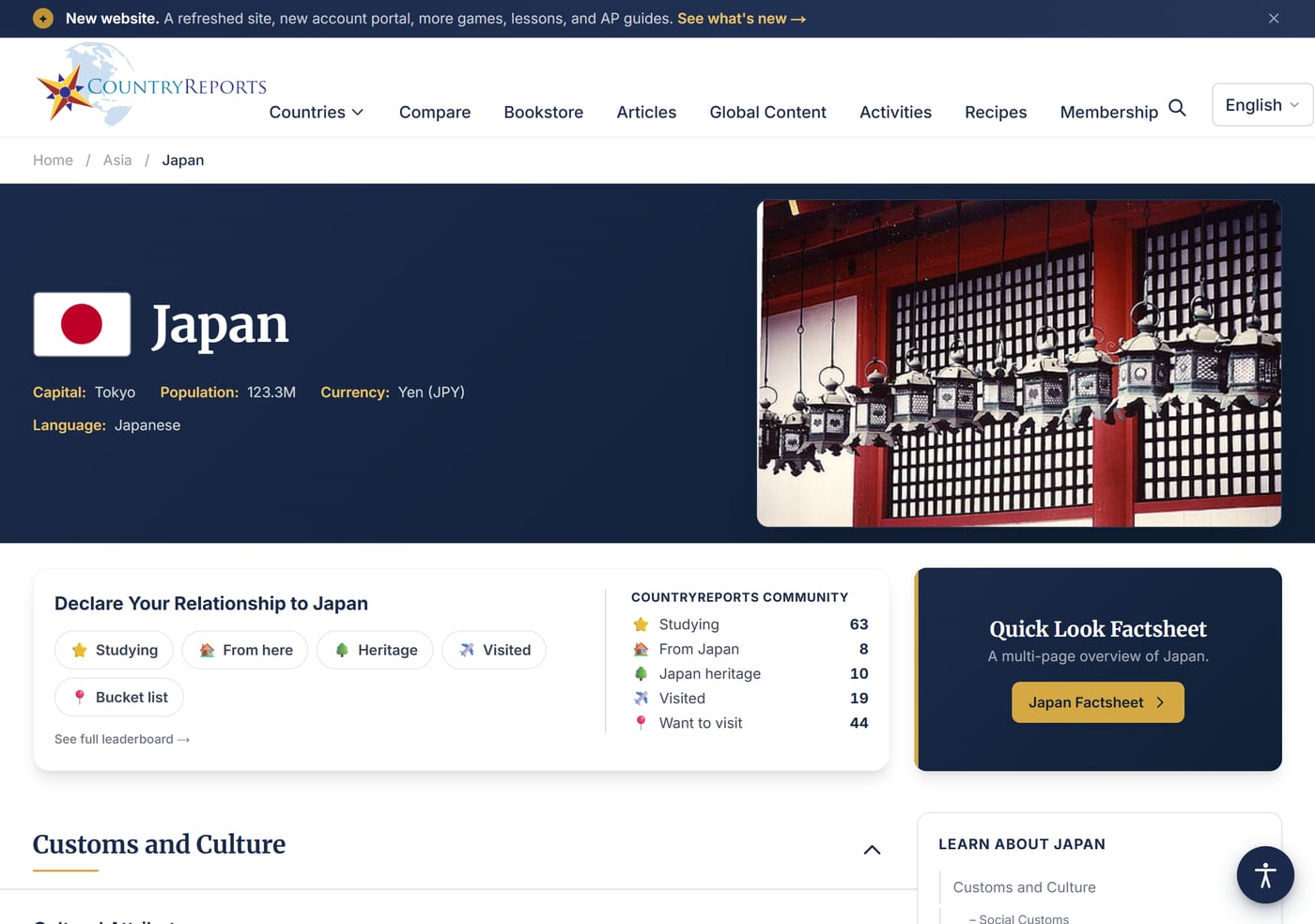
Every nation has a complete, consistently organized profile—geography, history, government, economy, culture, religion, and language. When a unit calls for a new country, the background research is already done, in a predictable structure you and your students can rely on week after week.
2. Lesson plans and course resources already built for you
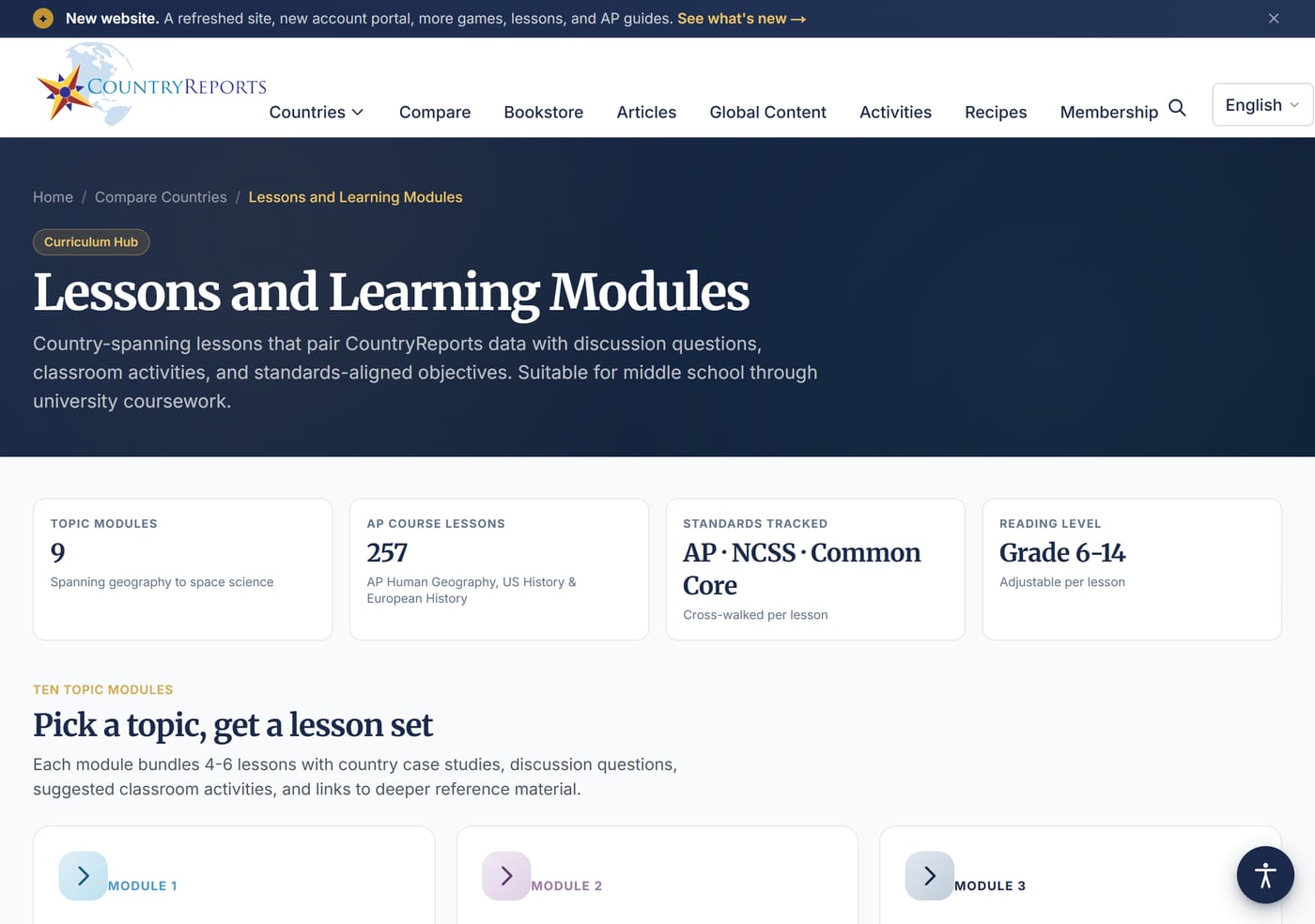
Beyond the country data, CountryReports offers teacher-facing resources and lesson support—including material aligned to courses like AP Human Geography, AP World History, and AP European History. That is a real head start when you are mapping a unit or looking for a ready framework instead of a blank page.
In the classroom: use a prepared lesson as your spine, then localize it with the specific countries your students are curious about.
3. One resource that works across your whole curriculum
The same site supports a geography map lesson, a history timeline, a civics look at how a government is structured, an economics discussion, and a world-language culture day. One trusted source across subjects means less tab-juggling for you and a consistent experience for students.
4. Differentiation built in—for every reader in the room
Your classroom spans reading levels and language backgrounds. CountryReports lets stronger readers dig into in-depth pages while others use shorter sections, visuals, and read-aloud audio—so the same lesson reaches the whole room without three separate handouts.
5. A no-prep option for sub days and early finishers
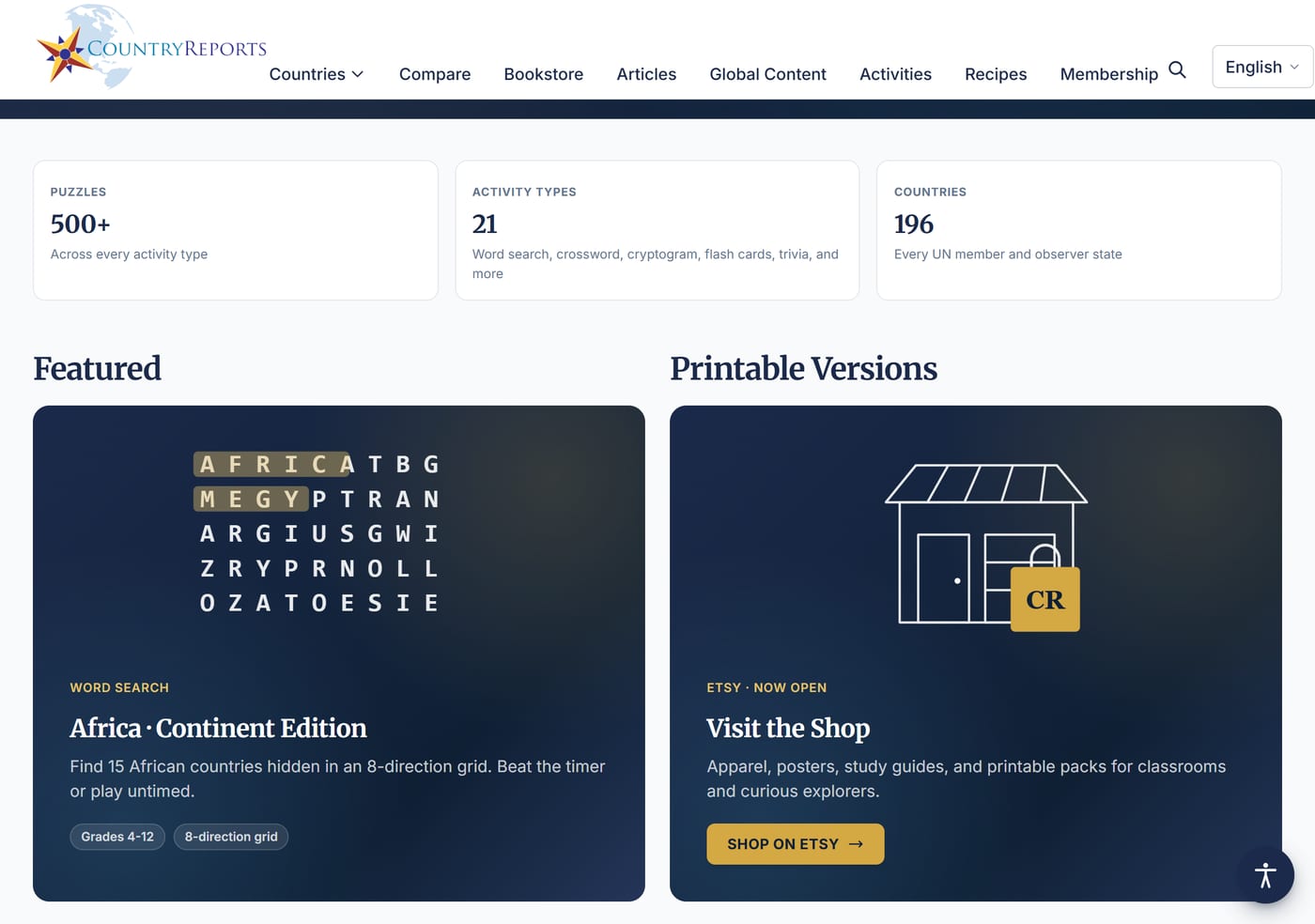
Self-checking activities, quizzes, and printable material make a genuinely productive plan when you need one fast—an emergency sub day, an early-finisher station, or a Friday change of pace—without leaving busywork.
6. Culture and daily life your textbook leaves out
Customs and etiquette, greetings, holidays, food, and family life bring a country to life in a way a textbook rarely does. These are the details that spark discussion, build empathy, and make world cultures feel real rather than abstract.
7. Slide- and handout-ready maps, flags, and photos
Every profile includes maps, the national flag, and photography—ready to drop into a slide deck, a handout, a bulletin board, or a student project. Visual anchors help every learner, and they save you a search for usable images.
8. A Compare tool that hits your higher-order thinking standards
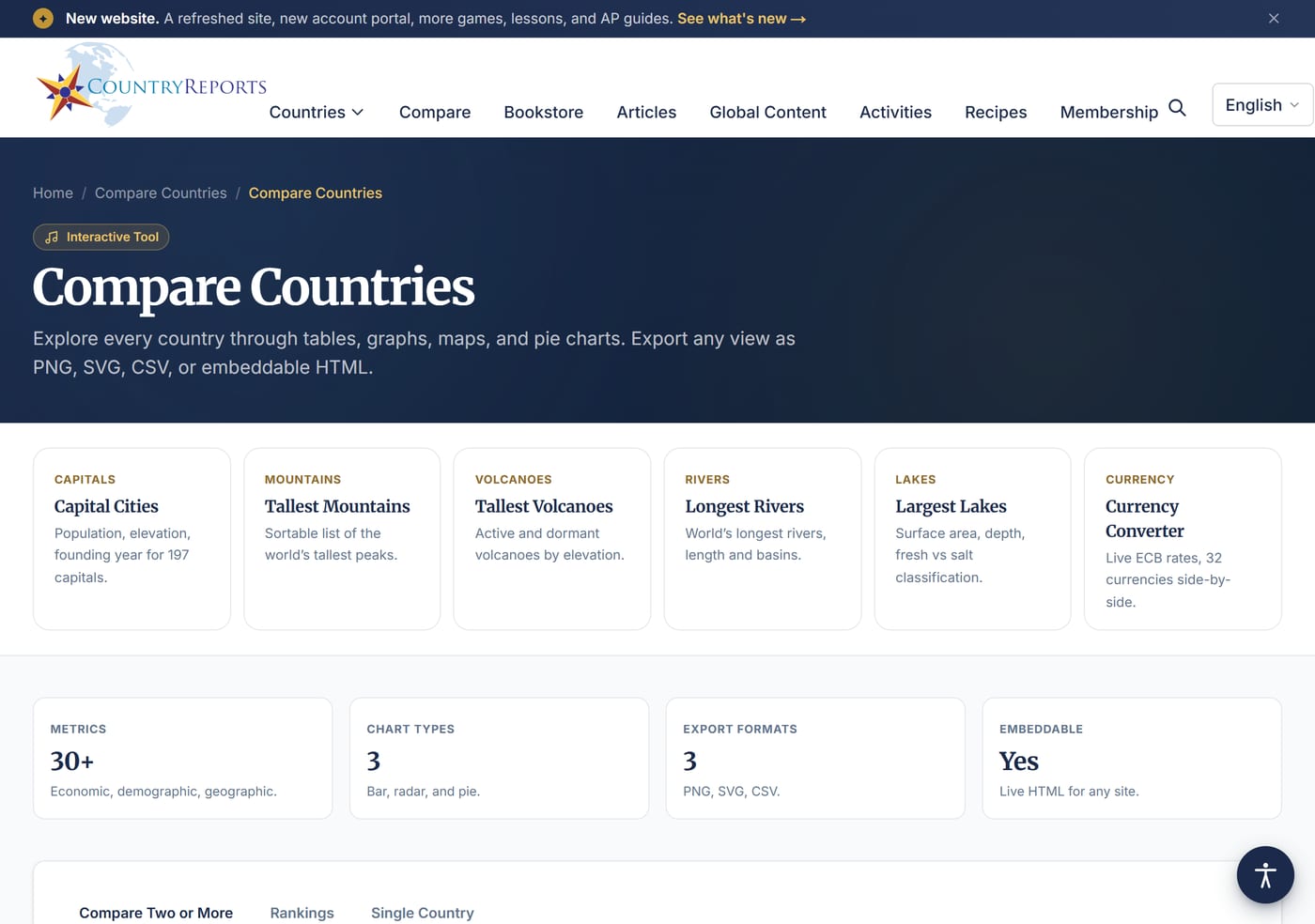
Standards ask for analysis, not just recall. The Compare Countries tool puts nations side by side across dozens of metrics—population, climate, economy, and more—so students can identify patterns, form hypotheses, and defend conclusions. It turns a fact-finding task into real analytical work.
9. Engagement without the prep—quizzes and games students actually like
Interactive activities and games make review something students want to do. Use them as a bell-ringer, a team competition, or an end-of-unit check—instant engagement with no materials to prepare.
10. Support for your multilingual classroom
CountryReports is available in English, Spanish, French, Chinese, and Hindi. For English-language learners and dual-language programs, students can read the same country profile in their home language and in English—a powerful bridge that keeps them learning the content while they build English skills.
11. A reliable, citable source that models good research
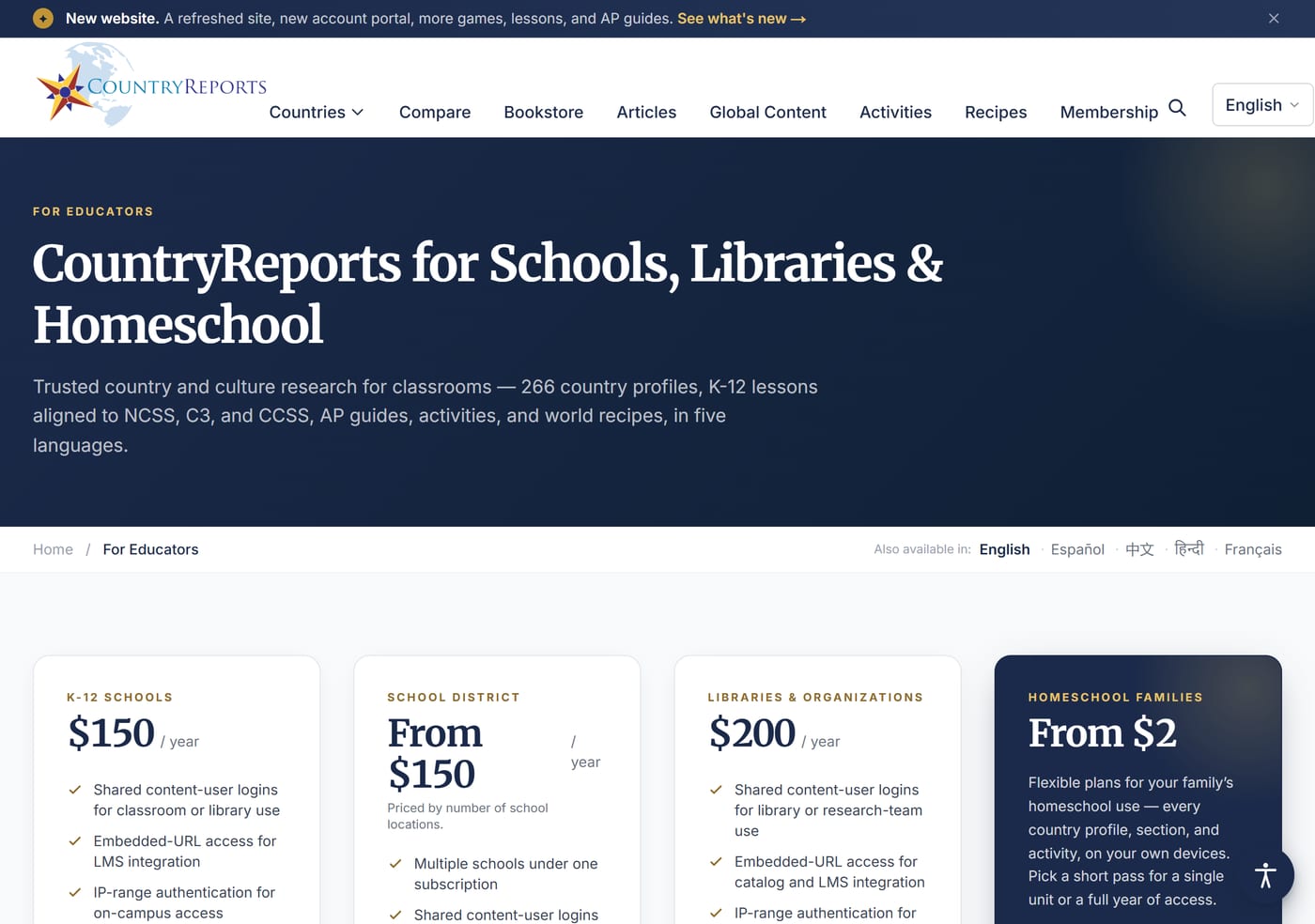
CountryReports is kept current and—true to its name—is a clearly named source students can cite properly, which is a teaching moment in itself. Many schools and libraries provide institutional access, so your students may already be able to use it at school and at home.
Bring the world into your classroom
Whether you are planning a semester of world cultures or just need a reliable answer to "where do I start with this country?", CountryReports gives teachers a trustworthy, classroom-ready window on the world. Explore a country today and see how quickly your next lesson comes together.