
 English
 Español
 中文
中文 हिन्दी
 Français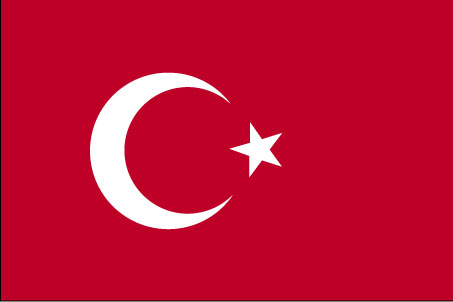
Turkey
Turkiye
Declare Your Relationship to Turkey
CountryReports Community
- Studying19
- From Turkey6
- Turkey heritage7
- Visited5
- Want to visit3
Customs and Culture
Customs and Culture
Cultural Attributes
Turkey has been interacting with Europe and Asia for many years, and have integrated qualities from both cultures. Wealth is mostly defined by cash; in country sites by gold and land. Poorest members of the society mostly dream about a life with more cash and in big cities.
They mostly believe that in big cities they can increase their life quality; however this is not always true. Most of the people are working for their children to have high level of education which is highly valued. Those who have high level education, work to gain leisure opportunities. In big cities “working for leisure opportunities” is increasing. Turks are proud of both past and present achievements. Turks value a good sense of humor, honesty, and intelligence.

Crossroads of Empires, Bridge of Cultures
Social Customs & Etiquette
Greetings
Greetings vary depending on the environment in which one is situated rather than on age. “Merhaba” would be a regular greeting that can be used with acquaintances, friends, and strangers in a respectful manner, whereas one would not say “iyi günler” to his/her friends. ”Selaminaleyküm“ is a religiously connoted greeting that is highly used in “kahves(local coffee shops for men)” and in the rural area.
Turks greet each other by hugging and kissing from cheeks between friends and close family members. Turks greet elder ones by kissing their hands and touching our foreheads to their hands. Turks greet formal people by shaking hands and using professional titles.
When getting someone's attention one would say “Pardon” or “afferdersiniz”(sorry) .
Gestures
Formally, when talking with another Turks stay close to the person with eye contact and shake hands while talking, hugging each other and listening carefully. Informally, Turks stay half-arm away, shake hands and listen to them carefully with eye contact and do not put their hands in their pockets. Turks generally use their hands a great deal during conversation.
Turks do not put their feet on a desk or table. Pointing the sole of one's foot toward another is considered rude. Public displays of affection are not acceptable.
Visiting
Socializing mostly involves food as saying “I share my food with you, I trust you”. Sometimes it involves table games too. Except in big cities, mostly younger villagers visit elder ones and discuss family issues or country matters. Turks usually do not turn away the visitor, they do everything they can do to accept them. First-time visitors to a home may bring a small gift, such as candy, fruit, or flowers.
There are “kahves” where men drink tea or Turkish coffee and play cards. Women have day visits where heavy eating is involved.
Personal space varies depending on the environment. In rural areas, personal space gets smaller. In larger towns stranger people making physical contact and not constructing a personal space is common. People who satisfy themselves with handshakes also respect personal space. Acquaintances attach more importance to eye contact than personal space. When guests are leaving every guest is hugged and then they are watched while they are leaving. When the guest is a family member and they are leaving for a long time water is poured onto the pathway they walk and they are old "go and come back as fast as water".
Personal Appearance
Western-style clothing is the most common. European fashions are popular among the youth. Some younger women prefer to wear pants, jeans, and T-shirts casually, but they also like to put on more “womanly” clothes such as mini skirts and high heels. Many women cover their heads, some in a modern fashion, and some in a more traditional way. In summer in the metropolis areas such as Ankara, Istanbul Turks do not wear the same clothes as they wear in the holiday places, near the sea such as Antalya.
There are many traditional clothes in Turkey, but most are not used today. The most common tradition clothes would be when new brides wear red cloth with golden designs one day before the wedding.
Diet
Meals are usually eaten at home, if the family members are close to the house. If not, children eat at school, workers eat near to their workplace or mostly within the refectory of their workplace. Turkish dishes are sis kebab, sis kofte and doner kebab. These dishes, made with fresh lamb or beef, are grilled with onion and other vegetables. Fish and rice pilaf are also popular.
In Ramadan month, food is served only during the evening and late at night, this is a tradition of Islam. In Turkey, it is believed that it is healthier to eat when sitting on the floor. Some families have the elder members sit at the beginning of the table and mothers closer to the kitchen. Hands are mostly kept clean and above the table. Breakfast, usually includes bread with jam, butter or honey, and tea. Lunch and dinner may include soup, rice, vegetables, macaroni, stews or salads. Dinner is a family affair, the dishes are served on a large tray, which is placed on a low table or on the floor. The family sits on cushions and pillows on the floor around the tray. Formal Turkish meals often begin with appetizers called meze.
For dessert, people usually eat fresh fruit or a pudding made with milk. Rich cakes and pastries are most often eaten as snacks with Turkish coffee. Turkish Delight (lokum) is a popular sweet. Other well-known dishes are cerkes tavugu, fresh pounded chicken and walnuts, and sigara boregi, cheese and spinach-filled deep-fried pastries. The famous kahve (Turkish coffee), a thick brew served in very small cups, is served with nearly every meal. a popular drinks are tea and ayran. Ayran is a mixture of water and yogurt with a pinch of salt. Boza is a traditional drink made from fermented bulgur wheat. The staple diet for people in rural areas is bread, eaten with onions, yogurt, olives, cheese, and occasionally pastirma, a dried spicy meat. Fresh fruit, vegetables, meat and fish are widely available in Turkey's villages.
Factory workers may eat at cafeterias, so may students. Workers in the field usually bring lunch to eat during a break from work.
Many foods are eaten with the fingers. When utensils are used, the continental style of eating is followed. At the dinner table usually, everyone has his/her place. Hands should not be on the table.

Family
The individual is loyal to one's family and dependent upon them as well. The Turkish household often times has extended family, consisting of a mother, father and their unmarried children. Sometimes married sons , with his wife and children will live at home with his parents. The married sons may remain until he is independent enough to live on his own and provide for his own family. In larger cities, women frequently work outside the home.
Dating Customs
Dating in the same manner as Western countries is not common. Typically, young people associate in groups rather than in pairs. It is against the law for women to marry before age fifteen, and men before age seventeen. The average age for marriage is twenty-five for men and twenty-two for women.
Recreation
Most of the children start playing sports when they are so young, as four years old. There are many sports played in Turkey and children play these as groups and continue playing in schools. Most of the games are played with balls. Most of the boys start playing football at early ages. In schools, football, volleyball, basketball and many other sports are carried on but less of them are continued professionally by the children.
Holidays
Independence Day
10/29Independence Day
Christmas
12/25Christmas
Islam is Turkey’s primary religion with about 1 percent of the people being Christians who celebrate Christmas on the Julian Calendar day of January 7th. Christmas is a three day celebration. Typical foods include Coffee, sweetmeats, fruit, lebban (sour milk), baklava (honey cake), etli fasulye (broth with beans and lamb), ic pilar (rice with pine nuts), labmacun dolmasi (stuffed cabbage leaves), borek (fried pastry stuffed with meat or cheese) tomato and cucumber salad with olive oil and vinegar, and kadayif (fruit pastry)
Dates of Interest
- April
An annual festival that is held each April and features the blooming of millions of tulips in Istanbul's parks and gardens, along with cultural events and activities.
How do people greet each other in Turkey?
Greetings depend on the setting rather than age; "Merhaba" works with acquaintances, friends, and strangers respectfully, while formal situations call for handshakes and professional titles.
Do
- Use "Merhaba" as a versatile, respectful greeting
- Shake hands and use professional titles with formal contacts
- Greet elders by kissing their hand and touching it to your forehead
- Say "Pardon" or "affedersiniz" to get someone's attention
Don’t
- Don't use "iyi günler" with close friends
Good to know
- "Selamünaleyküm" is a religiously connoted greeting common in men's coffee shops (kahves) and rural areas
- Friends and close family hug and kiss on both cheeks
What are dining customs like in Turkey?
Meals, especially dinner, are a family affair, often served on a large tray on a low table or floor with the family seated on cushions; many foods are eaten with the fingers.
Do
- Keep your hands clean and above the table
- Follow the continental style when utensils are used
- Try dishes like sis kebab, doner kebab, fish and rice pilaf, and Turkish Delight (lokum)
- Expect Turkish coffee (kahve) served with nearly every meal
Don’t
- Don't rest your hands on the table
- Don't expect meals during daytime in Ramadan, when food is served only in the evening and late at night
Good to know
- Formal meals often begin with appetizers called meze
- Popular drinks include tea, ayran (water, yogurt, and salt), and boza
- It is believed healthier to eat while sitting on the floor; everyone usually has their own place at the table
What should I know about hospitality and social etiquette in Turkey?
Turks are highly hospitable, rarely turning away visitors and doing everything they can to welcome them, with socializing often centered on sharing food.
Do
- Bring a small gift like candy, fruit, or flowers as a first-time home visitor
- Respect personal space, which varies by setting
Good to know
- Sharing food signals trust: "I share my food with you, I trust you"
- When guests leave, each is hugged and watched as they depart
- Personal space is smaller in rural areas and larger in towns; acquaintances value eye contact over personal space
How should I dress in Turkey?
Western-style clothing is the most common, and European fashions are popular among youth; many women cover their heads in either modern or traditional ways.
Good to know
- Clothing worn in metropolitan areas like Ankara and Istanbul differs from seaside holiday spots like Antalya in summer
- Traditional clothes are rarely worn today, except items like a new bride's red cloth with golden designs before the wedding
What gestures should I be aware of in Turkey?
Turks use their hands a great deal in conversation and value eye contact and attentive listening.
Don’t
- Don't put your feet on a desk or table
- Don't point the sole of your foot toward another person
- Don't show public displays of affection
- Don't put your hands in your pockets in informal conversation
Good to know
- Formally, people stand close with eye contact; informally, about half an arm's distance
What is family life like in Turkey?
Individuals are loyal to and dependent on their family, and households often include extended family, sometimes with married sons living with their parents until independent.
Good to know
- In larger cities, women frequently work outside the home
- Education for children is highly valued
- Dating like in Western countries is uncommon; young people tend to socialize in groups
What do people do for recreation in Turkey?
Sports are hugely popular, with many children starting as young as four and playing in groups and at school.
Good to know
- Most games involve balls, and many boys start playing football early
- Schools offer football, volleyball, basketball and other sports, though few continue professionally
Last updated: 2026-07-12 · Sources: CountryReports
Photos of Turkey
Photos of Turkey
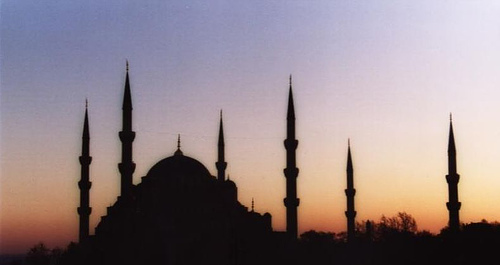
Sunset of the Blue Mosque, Instanbul
Ancient Romand aquaduct in Istanbul
Capadoccia, Turkey
Turkish woman carries straw
Spice market in Turkey
Baliklie Gol, Sanliurfa, Turkey
Bakery in Kusadasi, Turkey
Blue Mosque in Instanbul, Turkey
Ephesus, Turkey
Ruins if Ephesus, Turkey
Ruins if Ephesus, Turkey
Mosque in Turkey


Travel and Tourism
Travel and Tourism
- Travel Alert Status
- Level 2: Exercise Increased Caution
- Currency
- Turkish lira (TRL)
- Time Difference
- UTC+3 (8 hours ahead of Washington, DC, during Standard Time)
- Airports
- 120
Read the full travel guide — health, safety, vaccinations, disease risk, sanitation, and transit details.
View full travel guideRecipes
Recipes
Turkish Coffee
Beverage
Main Dish
Adana Kebabi
Main Dish
Urfa Kebabi
Main Dish
Bugler Pilavi
Main Dish
Hunkar Begendi (Grilled Eggplant With Cheese)
Main Dish
Manti (Pastry with Ground Meat and Yogurt)
Main Dish
(Couscous with Meat)
Main Dish
Premium(Chickpeas with Meat)
Main Dish
Premium(Cauliflower Mousakka)
Main Dish
Premium(Kebab with Yogurt)
History
History
Historical Eras
Ancient Anatolia
7500 BCE – 330
From Neolithic settlements at Çatalhöyük to the rise and fall of the Hittite Empire, Anatolia hosted some of the ancient world's most sophisticated civilizations. Persian conquest under Cyrus in 547 BCE and Alexander the Great's campaigns in 334 BCE brought successive Hellenistic influences. Rome and then Byzantium eventually absorbed the peninsula, culminating in Constantine's dedication of Constantinople as the New Rome in 330 CE.
Byzantine Era
330 – 1071
Constantinople served as the thriving capital of the Eastern Roman Empire for over seven centuries, preserving Greco-Roman culture and Orthodox Christianity. Byzantine Anatolia weathered Arab invasions, internal theological disputes, and persistent pressure from rival powers. The empire reached its apex under Justinian I but faced steady territorial erosion leading into the medieval period.
Seljuk & Early Ottoman
1071 – 1453
The Seljuk Turks' decisive victory at the Battle of Manzikert in 1071 opened Anatolia to Turkic settlement and Islamization. The Crusades disrupted but did not reverse this transformation, and Mongol invasions fractured the Seljuk Sultanate of Rum. From its small amirate near Bursa, founded around 1288, the Ottoman dynasty gradually absorbed rival principalities and advanced into the Balkans, setting the stage for the conquest of Constantinople.
Ottoman Empire
1453 – 1923
Mehmed II's conquest of Constantinople in 1453 established the Ottomans as the preeminent Islamic world power. The empire reached its greatest territorial and cultural zenith under Sultan Süleyman the Magnificent (1520–1566), stretching from Hungary to the Arabian Peninsula. Centuries of subsequent decline were marked by losing wars against Russia, the traumatic Balkan Wars, and Ottoman defeat in World War I, which dissolved the empire and triggered the Turkish War of Independence.
Turkish Republic
1923 – present
Mustafa Kemal Atatürk proclaimed the Republic of Turkey in 1923, replacing Ottoman imperial structures with a secular, nationalist state modeled on Western Europe. Sweeping Kemalist reforms abolished the caliphate, introduced the Latin alphabet, and modernized law, education, and governance. Turkey joined NATO in 1952 and navigated Cold War tensions, military coups, the Cyprus intervention of 1974, the PKK insurgency beginning in 1984, and ongoing negotiations for European Union membership into the twenty-first century.
Overview
Timeline of Key Events
7500 BCE
Earliest known human inhabitants of Turkey
The earliest known human inhabitants of Turkey are believed to belong to the Neolithic period and the remains of their settlements still exist in a place called Catal Hoyuk which is near the modern day Turkish city of Konya. Archaeological artifacts from these people include statues, pottery and wall paintings.
1900 BCE – 1300 BCE
Hittite Empire
The Hittite Empire flourishes, battles Egypt. Patriarch Abraham, who has been dwelling in Harran, near Sanliurfa, leaves for Canaan (Israel).
563 BCE
The Buddha born in Lumbini, in Tarai Region of Nepal
The Buddha born in Lumbini, in Tarai Region of Nepal.
547 BCE
Cyrus of Persia invades and conquers most of Anatolia
Cyrus of Persia invades and conquers most of Anatolia.
334 BCE
Alexander the Great
Alexander the Great of Macedon marches through Anatolia on his way to India.
47
St. Paul travels to the Christian and Jewish communities in Anatolia.
St. Paul travels to the Christian and Jewish communities in Anatolia.
330
Dedication of Constantinople as the New Rome
Emperor Constantine the Great dedicates Constantinople as the “New Rome,” which becomes the empire’s center of government.
Read the full history profile — narrative overview, defining eras, and the complete timeline in one place.
View expanded historyInteresting Facts
Interesting Facts
When a child loses a tooth, if their parents want to them to grow up to graduate from school, they might bury my tooth in the garden of the university. If the parents hope they will become a doctor, they bury it in the garden of a hospital, or they could bury it in a soccer field so the child will be a good soccer player.
There is a first tooth ceremony. Whoever finds the first tooth becomes one's Godmother. After finding the tooth she buys the child a new outfit to celebrate.
There is a tradition that when babies start to have first teeth a kind of pilaf consisting of wheat is prepared and delivered to neighborhoods.
Istanbul is the only city in the world that lies across two continents. The larger part of Istanbul lies in Europe, while Istanbul's suburbs are in Asia, across the Bosphorus Straits.
Among the reforms carried out by Mustafa Kemal was a law in 1935 that required all Turks to register an official surname. Before that time, most Turks were known by their given name and their father's name (for example, Mehmet, son of Ahmed). Mustafa Kemal himself chose the surname Atatürk, which means “Father of the Turks.”
In some rural areas, it is possible to identify the region that a woman is from by her clothes. The traditional form of dress for women is baggy trousers (called salvar) or skirts, and a long blouse. Turkish village women wear head-scarves (called basortusu) to cover their heads.
See every fact — trivia, oddities, and curious tidbits gathered from across the country.
View all interesting factsGeography and Environment
Geography and Environment
- Terrain
- high central plateau (Anatolia); narrow coastal plain; several mountain ranges
- Climate
- The climate varies a great deal across Turkey. Precipitation is highest on the Black Sea, where, in Rize, an average of 98 inches of rain falls each year. Ankara averages only 14 inches (chiefly accumulating from November to May), and Antalya on the south coast gets about 28 inches. Istanbul has an average of 25 inches of annual precipitation. The plateau region has hot with very dry summers and temperatures in July that range from the mid-70s to the low 90s. The skies are almost always clear and cloudless during the day and nights are cool. Winters in this region are generally windy and cold (the mean temperature for January is 30°F). Around the Sea of Marmara and Istanbul, the average temperature is 83°F in July and 35°F in January. The south coast has long summers that are often hot and humid both night and day in the midsummer months (the average temperature in mid-August is 94°F), but it is very pleasant in spring and autumn. Winters in the south are usually fairly mild. The north coast Black Sea region tends to have cooler summers and warmer winters than the other coastal areas.
- Natural Hazards
- very severe earthquakes, especially in northern Turkey, along an arc extending from the Sea of Marmara to Lake Van
- Current Environmental Issues
- water pollution from dumping of chemicals and detergents; air pollution, particularly in urban areas; deforestation; concern for oil spills from increasing Bosporus ship traffic
Read the full geography and environment profile — terrain, climate, natural resources, hazards, land use, and international agreements.
View full geographyPeople & Demographics
People & Demographics
Religion
Languages Spoken
Turkish (official), Kurdish, Arabic, Armenian, Greek
- Turkish
- Kurdish
- Arabic
- Armenian
- Greek
Population
- Population
- 85,372,377
- Population: Male/Female
- 84,119,531
- Population Distribution
- the most densely populated area is found around the Bosporus in the northwest where 20% of the population lives in Istanbul; with the exception of Ankara, urban centers remain small and scattered throughout the interior of Anatolia; an overall pattern of peripheral development exists, particularly along the Aegean Sea coast in the west, and the Tigris and Euphrates River systems in the southeast
- Urban Population
- urban population: 77.5% of total population rate of urbanization: 1.11% annual rate of change
- Population in Major Urban Areas
- 15.848 million Istanbul, 5.397 million ANKARA (capital), 3.088 million Izmir, 2.086 million Bursa, 1.836 million Adana, 1.805 million Gaziantep
- Nationality Noun
- noun: Turk(s) adjective: Turkish
- Ethnic Groups
- Turkish 70-75%, Kurdish 19%, other minorities 6-11%
- Language Note
- Turkish (official), Kurdish, other minority languages
Education
- Literacy Definition
- age 15 and over can read and write
Health Information
- Alcohol consumption per capita
- total: 1.18 liters of pure alcohol beer: 0.67 liters of pure alcohol wine: 0.16 liters of pure alcohol spirits: 0.35 liters of pure alcohol other alcohols: 0 liters of pure alcohol
- Tobacco Use
- total: 30.7% male: 42.1% female: 19.2%
- Child Marriage
- women married by age 15: 2% women married by age 18: 14.7%
Life Expectancy
- Life Expectancy at Birth
- Total population: 78.0 years Male: 75.3 years Female: 80.7 years
- Median Age
- total: 34 years male: 33.4 years female: 34.6 years
- Age Structure
- 0-14 years: 21.7% (male 9,358,711/female 8,933,673) 15-64 years: 68.6% (male 29,219,389/female 28,494,315) 65 years and over: 9.6% (male 3,669,330/female 4,444,113)
- Infant Mortality Rate
- total: 10.8 deaths/1,000 live births male: 11.6 deaths/1,000 live births female: 9.9 deaths/1,000 live births
Read the full people and society profile — demographics, health, education, religion, languages, and notable people.
View full people and societyGovernment & Politics
Government & Politics
Country Identity
- Country Name
- Turkey
- Full Country Name
- Republic of Turkey
- Local - Long
- Turkiye Cumhuriyeti
- Local - Short
- Turkiye
Government Structure
- Government Type
- republican parliamentary democracy
- Legal System
- derived from various European continental legal systems; accepts compulsory ICJ jurisdiction, with reservations
- Executive Branch
- chief of state: President Recep Tayyip ERDOGAN (since 28 August 2014; re-elected 28 May 2023) head of government: President Recep Tayyip ERDOGAN (since 9 July 2018, when the office of prime minister was abolished and executive powers were consolidated under the presidency following the constitutional reforms approved by referendum in April 2017) cabinet: Cabinet (formerly Council of Ministers) appointed by the president elections: President directly elected by absolute majority popular vote in two rounds if needed for a five-year term (eligible for a second term); election last held on 14 May 2023, with a runoff on 28 May 2023; under the presidential system adopted in 2018, the office of prime minister was eliminated election results: Recep Tayyip ERDOGAN re-elected president in the second round; percent of vote in runoff - Recep Tayyip ERDOGAN (AKP) 52.2%, Kemal KILICDAROGLU (CHP) 47.8% note: Turkey transitioned from a parliamentary to a presidential system of government on 9 July 2018, following constitutional amendments approved in a national referendum on 16 April 2017; under the new system, the president serves as both head of state and head of government, with significantly expanded executive authority
- Legislative Branch
- unicameral Grand National Assembly of Turkey or Turkiye Buyuk Millet Meclisi (600 seats; members are elected by popular vote to serve five-year terms) elections: last held 14 May 2023 (next to be held in 2028); note - the 2017 constitutional referendum approved expanding the assembly from 550 to 600 seats and shifting Turkey to a presidential system of government, eliminating the office of prime minister election results: percent of vote by party - AKP 35.6%, CHP 25.3%, MHP 10.1%, IYI Party 9.7%, DEM Party (formerly HDP) 8.8%, and other; seats by party - AKP 268, CHP 169, DEM Party 57, MHP 50, IYI Party 43, and others 13
- Judicial Branch
- Constitutional Court; High Court of Appeals (Yargitay); Council of State (Danistay); Court of Accounts (Sayistay); Military High Court of Appeals; Military High Administrative Court
- Suffrage
- 18 years of age; universal
- Constitution
- 7-Nov-82
- Independence
- 29 October 1923 (successor state to the Ottoman Empire)
- National Holiday
- Independence Day, 29 October (1923)
Capital City
- Capital Name
- Ankara
- Capital - geographic coordinate
- 39 56 N, 32 52 E
- Capital Time Difference
- UTC+3 (8 hours ahead of Washington, DC, during Standard Time)
Ankara has been linked with a second millennium B.C. Hittite cult center of Ankuwash, although this connection is uncertain; in classical and medieval times, the city was known as Ankyra (meaning "anchor" in Greek and reflecting the city's position as a junction for multiple trade and military routes); by about the 13th century the city began to be referred to as Angora; following the establishment of the Republic of Turkey in 1923, the city's name became Ankara
Military
Branches: Turkish Armed Forces (TSK): Turkish Land Forces (Turk Kara Kuvvetleri), Turkish Naval Forces (Turk Deniz Kuvvetleri; includes naval air and naval infantry), Turkish Air Forces (Turk Hava Kuvvetleri)
Embassy / Diplomatic Mission
U.S. Embassy in Ankara
110 Atatürk Boulevard, 06100, Kavaklidere
Telephone: (90) (312) 455-5555
Emergency after-hours telephone: (90) (312) 455-5555
Facsimile: (90) (312) 468-6131
Visa Information: (90) 850-252-6355 or Visa Information
U.S. Based Callers please use: (703) 439-2348
Skype ID: usvisaturkey
American Citizens Services Questions
U.S. Consulate General in Istanbul
Uçsehitler Sokagi No. 2, 34460, Istinye, Sariyer
Telephone: (90) (212) 335-9000
Emergency after-hours telephone: (90) (212) 335–9000 (ask for American Citizen Services)
Facsimile: (90) (212) 335–9102
Visa Information: (90) 850-252-6355 or Visa Information
U.S. Based Callers please use: (703) 439-2348
Skype ID: usvisaturkey
acs_istanbul@state.gov
U.S. Consulate in Adana
Girne Bulvari No. 212, Güzelevler Mahallesi, Yüregir
Telephone: (90) (322) 346-6262
Facsimile: (90) (322) 346-7916
CA-adana@state.gov
U.S. Consular Agent in Izmir
Telephone: (90) (232) 464-8755
Izmir@state.gov
Read the full government profile — flag symbolism, national anthem, and other national symbols.
View full government detailsEconomy
Economy
Turkey's dynamic economy is a complex mix of modern industry and services alongside a traditional agriculture sector that still accounts for roughly 15% of employment. It has a robust private sector, though the state continues to play a meaningful role in banking, transport, communications, and heavy industry. Services now generate the largest share of GDP, while manufacturing remains a cornerstone of the export base. Key export industries include automotive, machinery, electronics, steel, and textiles and apparel, with Turkey ranking among the world's leading producers in several of these sectors.
In recent years, the Turkish economy has been marked by volatile growth, persistent currency depreciation, and severe inflationary pressures. Real GDP growth has often been strong, exceeding 5% in several recent years, but expansion has been repeatedly disrupted by financial turbulence, including a sharp lira crisis. Inflation surged dramatically following unorthodox monetary policy decisions, peaking above 75% in 2024 before easing as the central bank reversed course and raised interest rates sharply. The current account deficit and reliance on external financing remain ongoing vulnerabilities.
Foreign direct investment has grown substantially compared to earlier decades, typically ranging between $10 billion and $14 billion annually, though inflows have fluctuated with global conditions and domestic policy uncertainty. Turkey's strategic location, customs union with the European Union, young workforce, and large domestic market continue to support its long-term economic potential, even as structural reforms and macroeconomic stabilization remain central challenges.
Snapshot
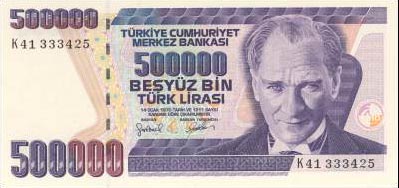
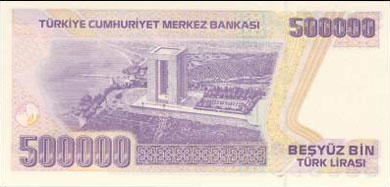
- Currency Name and Code
- Yenmi Turk Lira (TRY)
- GDP — official exchange rate
- $332,500,000,000 (USD)
- GDP Real Growth Rate
- 3.1%
- Gini Index
- 42
Banknotes
Budget & Public Finance
- Fiscal Year
- calendar year
- Public Debt (% of GDP)
- 67.5%
- External Debt
- $161,800,000,000 (USD)
- Investment (% of GDP)
- 19.3%
- Economic Aid
- $300,000,000 (USD)
- Current Account Balance
- -$22,000,000,000 (USD)
Labor, Industry & Trade
- Labor Force by Occupation
- agriculture 39.7%; services 37.9%; industry 22.4%
- Household Income — highest 10%
- 30.7%
- Industries
- textiles, food processing, autos, mining (coal, chromite, copper, boron), steel, petroleum, construction, lumber, paper
- Agriculture Products
- tobacco, cotton, grain, olives, sugar beets, pulse, citrus; livestock
- Export Commodities
- apparel, foodstuffs, textiles, metal manufactures, transport equipment
- Export Partners
- Germany 16.6%, US 9.2%, UK 8.5%, Italy 6.4%, France 6%
- Import Commodities
- machinery, chemicals, semi-finished goods, fuels, transport equipment
- Import Partners
- Germany 13.7%, Italy 8%, Russia 7.5%, US 6%, France 6%, UK 4.7%, Switzerland 4.2%
Energy
- Oil Production
- 83,000 bbl/day
- Oil Consumption
- 1,067,000 bbl/day
- Oil Reserves
- 312,000,000 bbl/day
- Natural Gas Production
- 406,000,000 cu m
- Natural Gas Consumption
- 43,490,000,000 cu m
- Natural Gas Imports
- 6,224,000,000 cu m
- Natural Gas Exports
- 0 cu m
- Natural Gas Reserves
- 6,230,000,000 cu m
Communications
- Telephone System
- general assessment: comprehensive telecommunications network undergoing rapid modernization and expansion, especially in mobile-cellular services domestic: additional digital exchanges are permitting a rapid increase in subscribers; the construction of a network of technologically advanced intercity trunk lines, using both fiber-optic cable and digital microwave radio relay, is facilitating communication between urban centers; remote areas are reached by a domestic satellite system; combined fixed-line and mobile-cellular teledensity is roughly 100 telephones per 100 persons international: country code - 90; international service is provided by the SEA-ME-WE-3 submarine cable and by submarine fiber-optic cables in the Mediterranean and Black Seas that link Turkey with Italy, Greece, Israel, Bulgaria, Romania, and Russia; satellite earth stations - 12 Intelsat; mobile satellite terminals - 328 in the Inmarsat and Eutelsat systems
- Internet Country Code
- .tr
News & Weather
News & Weather
Current Weather
Latest News
Turkey revokes operating license of Iran's Mellat Bank amid US measures - Reuters
Reuters · 12h ago
Turkey revokes operating license of Iran's Mellat Bank amid US economic pressure campaign - The Jerusalem Post
The Jerusalem Post · 5h ago
Turkey revokes license of Iranian bank's Istanbul brach, citing law on protecting financial stability - The Times of Israel
The Times of Israel · 3h ago
Turkey moves to liquidate funds at centre of ‘Ponzi-like scheme’ - Financial Times
Financial Times · 21h ago
Turkey probes alleged Israeli-led $3 billion fraud network - The Jerusalem Post
The Jerusalem Post · 2h ago
Türkiye launches raids on Israel-linked international fraud network - Daily Sabah
Daily Sabah · 17h ago
Turkey busts Israel-linked 'scam empire' behind alleged $266m fraud - middleeasteye.net
middleeasteye.net · 21h ago
Turkey Begins Broad Crackdown on L.G.B.T.Q. Community - The New York Times
The New York Times · 2d ago
News via Google News
Videos
Videos
2 curated YouTube videos.
Source: YouTube
Source: YouTube
Frequently Asked Questions
Frequently Asked Questions
What is the population of Turkey?
What is the capital of Turkey?
Where is Turkey located?
What countries border Turkey?
What is the predominant religion in Turkey?
What is the currency of Turkey?
What language is spoken in Turkey?
What is Turkey known for?
Last reviewed 2026