
 English
 Español
 中文
中文 हिन्दी
 Français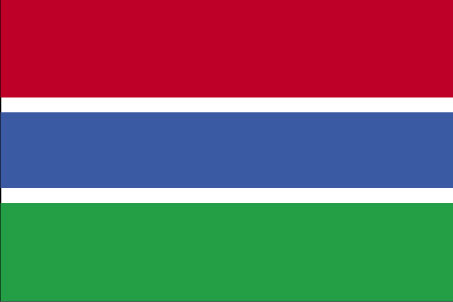
The Gambia
Declare Your Relationship to The Gambia
CountryReports Community
- Studying1
- From The Gambia0
- The Gambia heritage0
- Visited0
- Want to visit1
Customs and Culture
Customs and Culture
Cultural Attributes
Gambians are usually self-confident, proud of their heritage and curious about western civilization.

Land of the River's Gift
Get More Customs and Culture
5 more cultural topics for members
Social Customs & Etiquette · Diet · Family · Dating Customs · Recreation
Every country, every topic, all activities & recipes
✓ Instant access on this device · ✓ No subscription
Holidays
Independence Day
2/18Independence Day
Dates of Interest
- February 18th
How do people greet each other in The Gambia?
Greetings are important and vary by time of day, location, family relationship, formality, and social status. The initial greeting is the Arabic salaam aleekum.
Do
- Begin the greeting yourself when you are the one arriving
- Greet the person of higher rank first
- Ask for the surname if you don't know it
What are the dining customs in The Gambia?
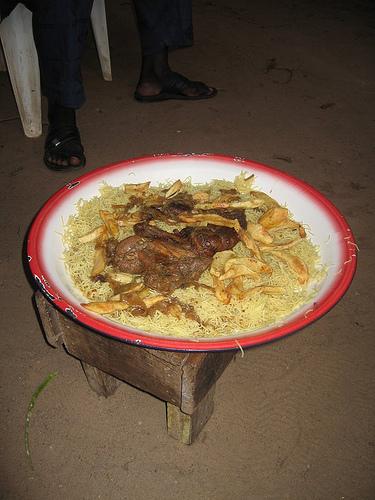
Rice and millet are the main staples, with a light lunch and the main meal in the evening; men eat from a common bowl while women and children eat separately.
Do
- Eat with the right hand
- Expect leftovers as a small morning snack
Good to know
- Each ethnic group has its own dishes
- Boys may join the men to eat once they gain good manners
- Mango, papaya, and dry-season garden vegetables like tomatoes, eggplant and okra are common
How should I dress in The Gambia?
Women typically wear long skirts of local cloth with a loose upper cloth and a head tie, while men wear second-hand western-style clothes and young people favor jeans and tee-shirts.
What is family life like in The Gambia?
In rural areas families live in houses around an open courtyard, with the oldest man in the lineage settling disputes and land allocations, and women doing most of the family labor.
Good to know
- A man may marry up to four wives
- Many rural marriages are arranged, while urban young men have greater freedom of choice
- Social status remains important in marriage
What do people do for fun in The Gambia?
Soccer is the main sport, with basketball growing in popularity, and board games like checkers and ludo are widely played.
Good to know
- Ludo is played by moving markers around a board with six cups on each side to capture the opponent's markers
Last updated: 2026-07-12 · Sources: CountryReports
Photos of The Gambia
Photos of The Gambia
Travel and Tourism
Travel and Tourism
- Currency
- Dalasi
- Time Difference
- UTC 0 (5 hours ahead of Washington, DC during Standard Time)
Read the full travel guide — health, safety, vaccinations, disease risk, sanitation, and transit details.
View full travel guideRecipes
Recipes
History
History
Historical Eras
Pre-Colonial Era
900 – 1455
The Gambia River region formed part of successive West African empires, including the Ghana and Mali empires, whose trade networks stretched across the Sahara. Arab traders documented the region as early as the 9th and 10th centuries, establishing trans-Saharan routes for gold, ivory, and slaves. The Mandinka, Wolof, Fula, and other ethnic groups established the cultural foundations that persist to the present day.
European Contact & Slave Trade
1455 – 1816
Portuguese navigators established the first European trading stations along the Gambia River in 1455, and in 1588 Portugal sold exclusive trading rights to English merchants, confirmed by Queen Elizabeth I. England and France competed fiercely for commercial dominance throughout the 17th and 18th centuries, with the 1783 Treaty of Versailles ultimately securing British possession. During this period, as many as three million people were taken from the broader region in the transatlantic slave trade, one of the most devastating demographic catastrophes in West African history.
British Colonial Rule
1816 – 1965
Britain established the military post of Bathurst (now Banjul) in 1816 as a base to suppress the slave trade, and The Gambia was formally declared a Crown Colony in 1888 with boundaries agreed with France in 1889. Slavery was abolished by ordinance in 1906, and the colony gradually developed its own executive and legislative councils from 1901 onward. Gambian troops served with Allied forces in Burma during World War II, and the country steadily advanced toward self-governance through the mid-20th century.
Independence & First Republic
1965 – 1994
The Gambia achieved independence on February 18, 1965, with Dawda Jawara serving as prime minister and later president, leading the People's Progressive Party for nearly three decades. The country briefly entered the Senegambia Confederation with Senegal in 1982, a union that dissolved in 1989, followed by a bilateral friendship treaty in 1991. Despite relative political stability, the republic struggled with poverty, drought, and economic underdevelopment throughout this period.
Jammeh Military Era
1994 – 2017
Lieutenant Yahya Jammeh seized power in a bloodless coup in July 1994, dissolving the legislature and banning political activity. A new constitution in 1996 and subsequent elections nominally restored civilian rule, but Jammeh governed with increasing authoritarianism, suppressing opposition, expelling critics, and making eccentric public claims including a purported cure for HIV/AIDS. His 22-year rule ended when he lost the 2016 presidential election to Adama Barrow and was forced into exile under regional military pressure from ECOWAS.
Democratic Transition
2017 – present
Adama Barrow assumed the presidency in January 2017, inaugurating a period of democratic reform and transitional justice following Jammeh's departure. A Truth, Reconciliation and Reparations Commission was established to document human rights abuses committed under the previous regime. The Gambia rejoined the International Criminal Court and the Commonwealth, signaling a reorientation toward democratic norms and international engagement.
Overview
A wide variety of ethnic groups live in The Gambia with a minimum of intertribal friction, each preserving its own language and traditions. The Mandinka tribe is the largest, followed by the Fula, Wolof, Jola, and Serahule. Approximately 3,500 non-Africans live in The Gambia, including Europeans and families of Lebanese origin.
Every country, every topic, all activities & recipes
✓ Instant access on this device · ✓ No subscription
Timeline of Key Events
1455
Portuguese establish trading stations along Gambia river.
Portuguese establish trading stations along Gambia river.
1618
Portugal sells its rights to the coastal region to Britain.
Portugal sells its rights to the coastal region to Britain.
1642
France founds a trading post on the Gambia river.
France founds a trading post on the Gambia river.
1658
James Island given over to the Dutch.
James Island given over to the Dutch.
1665 – 1667
James Island recaptured by Britain during the Second Dutch War.
James Island recaptured by Britain during the Second Dutch War.
1866 – 1888
The Gambia is governed as part of Sierra Leone.
The Gambia is governed as part of Sierra Leone.
1888
The Gambia becomes British Crown Colony.
The Gambia becomes British Crown Colony.
Read the full history profile — narrative overview, defining eras, and the complete timeline in one place.
View expanded historyInteresting Facts
Interesting Facts
Stone circles found in parts of the country are thought to be ancient burial sites. Alex Haley's Pulitzer Prize winning book "Roots" is based upon the story of one of his ancestors, from the Gambian village of Juffure, who was forced into slavery in the eighteenth century.
See every fact — trivia, oddities, and curious tidbits gathered from across the country.
View all interesting factsGeography and Environment
Geography and Environment
- Terrain
- flood plain of the Gambia River flanked by some low hills
- Climate
- Climate is subtropical with a distinct hot and rainy season from June to October, and a cooler dry season from November to May. The beginning and end of the rains are marked by high temperatures and high humidity, whereas the dry season is noted for the dusty and dry trade winds (harmattan) blowing in from the central Sahara. Temperatures range from a low of 48°F (9°C) in January to a high of 110°F (43°C) in October. Because of the cooling effect of the ocean, temperatures are lower along the coast than in the interior. Rainfall varies widely from year to year but ranges from an annual mean of 48 inches in the west to 34 inches upriver. Because of the humid climate and the salt air along the coast, metal rusts rapidly in The Gambia, and houses near the sea may be affected by the corrosive salt air. Termites abound year round in soils and woodwork. During the dry season, the harmattan winds blow in a fine dust. However, the moderate temperatures during the dry season with mostly sunny days give The Gambia one of West Africa’s more pleasant climates.
- Natural Hazards
- drought (rainfall has dropped by 30% in the last 30 years)
- Current Environmental Issues
- deforestation; desertification; water-borne diseases prevalent
Read the full geography and environment profile — terrain, climate, natural resources, hazards, land use, and international agreements.
View full geographyPeople & Demographics
People & Demographics
Religion
Languages Spoken
English (official), Mandinka, Wolof, Fula, other indigenous vernaculars
- English
- Mandinka
- Wolof
Population
- Population
- 2,686,002
- Population in Major Urban Areas
- BANJUL (capital) 506,000
- Nationality Noun
- Gambian(s)
- Ethnic Groups
- African 99% (Mandinka 42%, Fula 18%, Wolof 16%, Jola 10%, Serahuli 9%, other 4%), non-African 1%
Education
- Literacy Definition
- Age 15 and over can read and write
Health Information
- Major Infectious Diseases — degree of risk
- Very high
Life Expectancy
- Life Expectancy at Birth
- Life expectancy at birth in The Gambia has shown meaningful improvement over recent decades, reflecting gradual advances in public health infrastructure, maternal and child care, and disease prevention. As of the most recent available data, the average life expectancy at birth in The Gambia stands at approximately 62 years for the combined population. Women tend to live slightly longer than men, with female life expectancy estimated at around 63 years, while male life expectancy sits closer to 61 years. These figures place The Gambia below the global average of roughly 73 years, yet the country has made notable strides when compared to its own historical baseline. In the early 1960s, life expectancy in The Gambia was estimated at just under 35 years. The dramatic rise since then reflects improved access to vaccines, oral rehydration therapy, and basic prenatal care, as well as international health partnerships that have helped reduce child mortality rates. Several factors continue to weigh on life expectancy. Malaria remains a leading cause of illness and death, particularly among children under five. HIV/AIDS, tuberculosis, and respiratory infections also contribute to premature mortality. Limited access to clean drinking water and sanitation in rural areas creates persistent health risks. The country's healthcare system faces ongoing challenges including understaffing, inadequate medical facilities outside the capital Banjul, and a shortage of essential medicines. Despite these obstacles, child mortality rates have fallen considerably, and programs targeting maternal health have contributed to fewer deaths during childbirth. The Gambia has benefited from support by organizations such as UNICEF and the World Health Organization, which have funded vaccination campaigns and community health worker training programs. The under-five mortality rate, while still elevated by global standards, has declined significantly since the turn of the century, reflecting the cumulative impact of these public health investments. For travelers, The Gambia's health landscape underscores the importance of taking standard precautions such as malaria prophylaxis and ensuring routine vaccinations are up to date before visiting. For students studying development metrics, The Gambia illustrates how a low-income country can achieve incremental but meaningful health gains even under constrained resources, while still facing the challenges common to sub-Saharan West Africa.
- Infant Mortality Rate
- The Gambia faces significant challenges in infant health, with an infant mortality rate of approximately 37 to 40 deaths per 1,000 live births in recent years. This figure, while still elevated by global standards, represents a meaningful improvement from earlier decades, when the rate exceeded 80 deaths per 1,000 live births in the early 2000s. The downward trend reflects sustained public health efforts, increased access to maternal and child healthcare services, and support from international health organizations. The primary causes of infant mortality in The Gambia include neonatal complications such as preterm birth, birth asphyxia, and neonatal sepsis, as well as post-neonatal causes like malaria, diarrheal disease, acute respiratory infections, and malnutrition. Malaria remains one of the most significant contributors to under-five and infant deaths, particularly in rural and peri-urban areas where access to preventive measures and prompt treatment is more limited. Geographic disparities play a notable role in infant survival outcomes. Infants born in rural regions of The Gambia face higher mortality risks compared to those born in the Greater Banjul Area, due to differences in healthcare infrastructure, availability of skilled birth attendants, and access to emergency obstetric care. Approximately 57 percent of births in the country are attended by skilled health personnel, though this figure varies considerably by region. UNICEF and the World Health Organization have been active partners with the Gambian government in rolling out immunization campaigns, promoting exclusive breastfeeding practices, expanding oral rehydration therapy for diarrheal illnesses, and training community health workers. The government's health strategy has increasingly prioritized the Integrated Management of Childhood Illness framework to address the leading causes of infant death in a coordinated way. Despite progress, The Gambia's infant mortality rate remains higher than the Sub-Saharan African average and significantly above rates seen in high-income countries, where the figure typically falls below 5 per 1,000 live births. Continued investment in healthcare access, nutrition programs, and maternal health services will be critical to sustaining improvements in the years ahead.
Read the full people and society profile — demographics, health, education, religion, languages, and notable people.
View full people and societyGovernment & Politics
Government & Politics
Country Identity
- Country Name
- TheGambia
- Full Country Name
- Republic of The Gambia
Government Structure
- Executive Branch
- chief of state: President Adama BARROW (since 19 January 2017); note - the president is both the chief of state and head of government head of government: President Adama BARROW (since 19 January 2017); Vice President Mohammed JALLOW (since 2023); note - the president is both the chief of state and head of government cabinet: Cabinet appointed by the president elections: president elected by popular vote for a five-year term; election last held on 4 December 2021 (next to be held in December 2026) election results: Adama BARROW reelected president; percent of vote - Adama BARROW 53.2%, Ousainou DARBOE 27.7%, Mamma KANDEH 12.3%
- Legislative Branch
- Unicameral National Assembly (58 seats; 53 elected by popular vote and 5 appointed by the president; members serve five-year terms). Elections: Last held on 9 April 2022 (next to be held in 2027). Election results: Percent of vote by party — NA; seats by party — NPP 40, UDP 7, NRP 4, PDOIS 1, PPP 1, independents 4; composition — men 52, women 6.
- Judicial Branch
- Supreme Court
Capital City
- Capital Name
- Banjul
- Capital - geographic coordinate
- 13 27 N, 16 34 W
- Capital Time Difference
- UTC 0 (5 hours ahead of Washington, DC during Standard Time)
Banjul is located on Saint Mary's Island at the mouth of the Gambia River; the Mandinka used to gather fibrous plants on the island for the manufacture of ropes; "bang julo" is Mandinka for "rope fiber"; mispronunciation over time caused the term became the word Banjul
Military
Branches: Office of the Chief of Defense Staff: Gambian National Army (GNA), Gambian Navy (GN), Republican National Guard (RNG)
Embassy / Diplomatic Mission
U.S. Embassy Banjul
Address: The U.S. Embassy is located at 92 Kairaba Avenue in Fajara, a populated area and business center a few miles from the capital city of Banjul. The mailing address is P.M.B.19, Banjul, The Gambia.
Telephone: 220-439-2856, 220-439-2858 and 220-439-1971
(available 24 hours a day)
Facsimile: 220-439-2475
Work hours: Monday – Thursday 8:00 a.m. – 5:30 p.m.; Friday 8:00 a.m. – 12:00 p.m.
Read the full government profile — flag symbolism, national anthem, and other national symbols.
View full government detailsEconomy
Economy
The Gambia is one of the smallest and least developed countries in Africa, with limited mineral resources and a narrow agricultural base.
Snapshot
- Currency Name and Code
- Dalasi (GMD)
- GDP — official exchange rate
- $429,000,000 (USD)
- GDP Real Growth Rate
- 4.3%
- GDP by Sector
- agriculture: 26.8% industry: 14.5% services: 58.7%
Every country, every topic, all activities & recipes
✓ Instant access on this device · ✓ No subscription
News & Weather
News & Weather
Current Weather
Latest News
Gambia's fishers struggle with constant power outages - DW.com
DW.com · 7h ago
Hard Facts and the Threshold: What the Gambia v. Myanmar Should Not Decide - opiniojuris.org
opiniojuris.org · 3d ago
Fighting Falsehoods in The Gambia: A New Era of Verified Journalism - Welcome to the United Nations
Welcome to the United Nations · 17d ago
OHIO delegation travels to The Gambia and Senegal to advance West African partnerships - Ohio University
Ohio University · 13d ago
Gambian leader pledges halt to rolling blackouts as protests turn violent - Al Jazeera
Al Jazeera · 8d ago
The Gambia’s hidden history: how a tiny river basin influenced colonial trade and slavery - The Conversation
The Conversation · 55d ago
ECOWAS convene experts in The Gambia to advance regional competition policy - Modern Ghana
Modern Ghana · 7h ago
From The Gambia to Peterborough: Stories Behind Houston's 2026 Roster - Houston Texans
Houston Texans · 59d ago
News via Google News
Frequently Asked Questions
Frequently Asked Questions
What is the population of The Gambia?
What is the capital of The Gambia?
Where is The Gambia located?
What countries border The Gambia?
What is the predominant religion in The Gambia?
What is the currency of The Gambia?
What languages are spoken in The Gambia?
What is The Gambia known for?
Last reviewed 2026