
 English
 Español
 中文
中文 हिन्दी
 Français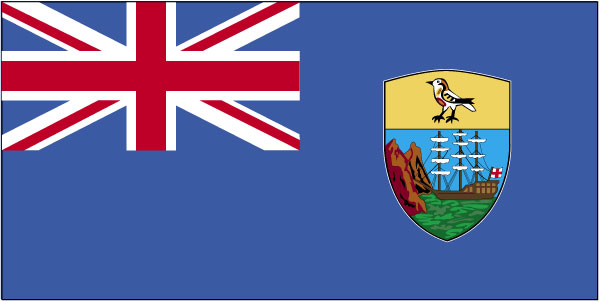
Saint Helena
Declare Your Relationship to Saint Helena
CountryReports Community
- Studying0
- From Saint Helena1
- Saint Helena heritage1
- Visited1
- Want to visit1
Customs and Culture
Customs and Culture
Cultural Attributes
Saint Helena is a small, remote British Overseas Territory in the South Atlantic Ocean, and its culture reflects a rich blend of African, European, and Asian influences that developed over centuries of settlement and trade. The island was uninhabited when first discovered by Portuguese explorers in 1502, and its population today — known as Saints — descends from British colonists, enslaved Africans, indentured laborers from India and China, and sailors from various nations who settled there over time. This diverse heritage is visible in the island's traditions, cuisine, food festivals, and everyday social life. Saints take considerable pride in their close-knit community identity, and the small population of approximately 4,500 people maintains a strong sense of mutual support and local belonging. English is the sole official language and is spoken universally across the island. Religion plays a central role in community life, with Anglican Christianity being the dominant faith. St. James's Church in Jamestown, consecrated in 1774, is one of the oldest Anglican churches in the Southern Hemisphere and serves as a focal point for both worship and cultural heritage. The island's history as a strategic waypoint for ships traveling between Europe, Africa, and Asia has left a lasting cultural imprint. Napoleon Bonaparte's exile and death on Saint Helena from 1815 to 1821 remains one of the most defining events in its identity, and Longwood House — his residence during his captivity — continues to attract visitors and serves as a cultural landmark managed by the French government. Saints have developed their own unique folk traditions, including local music, dance, and storytelling. Wire bird conservation efforts, centered on the endemic Saint Helena plover known locally as the wirebird, also reflect a deep cultural connection to the island's natural environment. The opening of Saint Helena Airport in 2016 marked a significant cultural turning point, gradually increasing the island's connection to the wider world while also bringing new questions about balancing modernization with the preservation of its distinctive heritage and way of life.
Island of Exiles, Volcanic Soul
Get More Customs and Culture
2 more cultural topics for members
Social Customs & Etiquette · Dating Customs
Dates of Interest
- Untitled date
What language do people speak in Saint Helena?
English is the sole official language and is spoken universally across the island.
Good to know
- Locals are known as Saints and take pride in their close-knit community identity
What should I know about social life and religion in Saint Helena?
Saints maintain a strong sense of mutual support and local belonging in a small community of about 4,500 people, and religion plays a central role in community life, with Anglican Christianity being the dominant faith.
Good to know
- St. James's Church in Jamestown, consecrated in 1774, is a focal point for worship and cultural heritage
What cultural traditions and sites can travelers experience in Saint Helena?
The island has unique folk traditions including local music, dance, and storytelling, along with historical landmarks and food festivals reflecting its African, European, and Asian heritage.
Good to know
- Visit Longwood House, Napoleon Bonaparte's residence during his 1815–1821 exile, now managed by the French government
- Learn about wirebird conservation, centered on the endemic Saint Helena plover
What should I know before visiting Saint Helena?
Saint Helena is a small, remote British Overseas Territory in the South Atlantic Ocean whose culture blends African, European, and Asian influences developed over centuries of settlement and trade.
Good to know
- Saint Helena Airport opened in 2016, increasing the island's connection to the wider world
- Be mindful of the island's efforts to preserve its distinctive heritage and way of life
Last updated: 2026-07-12 · Sources: CountryReports
Travel and Tourism
Travel and Tourism
- Currency
- Saint Helenian pound (SHP)
- Time Difference
- UTC 0 (5 hours ahead of Washington, DC, during Standard Time)
- Climate
- Saint Helena - tropical; marine; mild, tempered by trade winds; Tristan da Cunha - temperate; marine, mild, tempered by trade winds (tends to be cooler than Saint Helena)
- Airports
- 1
Read the full travel guide — health, safety, vaccinations, disease risk, sanitation, and transit details.
View full travel guideHistory
History
Historical Eras
Portuguese Discovery
1502 – 1658
Portuguese navigator João da Nova discovered the uninhabited island on Saint Helena's feast day, 21 May 1502. For over a century it served as a remote resupply point for Portuguese vessels on the spice trade routes, with no permanent settlement established. The island's strategic mid-Atlantic position made it a valuable waypoint long before formal colonization.
East India Company Rule
1658 – 1834
Lord Protector Richard Cromwell authorized the British East India Company to colonize and fortify Saint Helena in 1658, establishing the island as a key staging post for British commercial and naval power in the South Atlantic. The era's defining episode was the exile of Napoleon Bonaparte, banished here following his defeat at Waterloo in 1815 and remaining until his death in 1821. The island flourished as a vital port of call during this period.
Crown Colony Era
1834 – 1869
Saint Helena was transferred from East India Company control to direct British Crown administration in 1834, formalizing imperial governance over the island. The period saw the island serve as a point of detention for notable political exiles, including Zulu chief Dinizulu from 1890, and housed up to 6,000 Boer prisoners of war between 1900 and 1903. The island remained an important Atlantic waypoint and administrative outpost of the British Empire.
Decline & Isolation
1869 – 1939
The opening of the Suez Canal in 1869 drastically reduced maritime traffic around the Cape of Good Hope, stripping Saint Helena of its strategic commercial importance virtually overnight. The island's economy contracted sharply, and population decline became a persistent challenge. During this period the island's infrastructure turned inward, with former facilities repurposed domestically, including a penal establishment operating from 1867 and a prison farm functioning until official closure in 1932.
Modern Saint Helena
1939 – present
The British Crown reclaimed administrative control of key island assets in 1939, and Saint Helena gradually shifted toward a subsidized Crown dependency economy. The island gained renewed international attention with the construction of Saint Helena Airport, which opened in 2016, ending centuries of near-total reliance on sea transport. Today Saint Helena, Ascension, and Tristan da Cunha form a single British Overseas Territory, with tourism and heritage linked to Napoleon's exile serving as key economic drivers.
Overview
St Helena was discovered on St Helena day (21 May) 1502 by the
Timeline of Key Events
1826
Named St Helena after Aboriginal exiled on Island.
Named St Helena after Aboriginal exiled on Island.
1867
Declared Penal Establishment.
Declared Penal Establishment.
1921 – 1932
Became prison farm for low security prisoners.
Became prison farm for low security prisoners.
1932
Official Prison closure.
Official Prison closure.
1933
Opened to the public.
Opened to the public (under responsibility of Brisbane City Council) First passenger ferry service established from Wynnum Pier (Closed 1934).
1939
BCC handed Island back to State Gov’t. Leased as dairy farm to 1973.
BCC handed Island back to State Gov’t. Leased as dairy farm to 1973.
Read the full history profile — narrative overview, defining eras, and the complete timeline in one place.
View expanded historyInteresting Facts
Interesting Facts
Diana’s Peak is the highest point on St Helena at 823m above sea level and is of volcanic origin.
See every fact — trivia, oddities, and curious tidbits gathered from across the country.
View all interesting factsGeography and Environment
Geography and Environment
- Terrain
- Saint Helena - rugged, volcanic; small scattered plateaus and plains
- Climate
- Saint Helena - tropical; marine; mild, tempered by trade winds; Tristan da Cunha - temperate; marine, mild, tempered by trade winds (tends to be cooler than Saint Helena)
- Natural Hazards
- active volcanism on Tristan da Cunha
- Current Environmental Issues
- NA
Read the full geography and environment profile — terrain, climate, natural resources, hazards, land use, and international agreements.
View full geographyPeople & Demographics
People & Demographics
Languages Spoken
English
- English
Population
- Population
- 5,633
- Population in Major Urban Areas
- JAMESTOWN (capital) 1,000
- Nationality Noun
- Saint Helenian(s)
- Ethnic Groups
- African descent 50%, white 25%, Chinese 25%
Education
- Literacy Definition
- age 20 and over can read and write
Health Information
- Life Expectancy at Birth
- Life expectancy at birth on Saint Helena is notably high for such a small, remote island territory, reflecting the community's access to healthcare services, its stable social environment, and its relatively low-stress way of life. Estimates place the overall life expectancy for residents of Saint Helena, Ascension, and Tristan da Cunha at approximately 80 years, with women generally living longer than men — a pattern consistent with global trends. Saint Helena's small population, which numbers around 4,500 to 5,000 on the island itself, benefits from a publicly funded healthcare system administered by the Saint Helena Government. The island's primary medical facility is the Jamestown Hospital, which provides primary and secondary care services to residents. For more complex or specialized medical needs, residents may be referred to facilities in South Africa or the United Kingdom, a logistical challenge that has historically influenced health outcomes but has improved significantly since the opening of St. Helena Airport in 2016, which now allows medical evacuations and transfers to take place by air rather than by sea. The territory's relatively high life expectancy can be attributed to several factors. The island experiences low levels of violent crime and industrial hazard, and the population benefits from a close-knit community structure that tends to support elderly residents. Diet traditionally incorporates fresh fish and locally grown produce, though concerns about noncommunicable diseases such as diabetes, hypertension, and obesity have become increasingly prominent in recent years, mirroring trends seen in many small island communities worldwide. These conditions represent the primary long-term health challenges facing the island's population and healthcare system. Saint Helena's aging population is a growing demographic reality. A significant proportion of working-age residents have historically emigrated to the United Kingdom and other territories, leaving behind an older demographic profile. This shift places ongoing demands on the island's healthcare infrastructure but also reflects the longer lifespans being achieved by the resident population. Compared to the global average life expectancy of approximately 73 years, Saint Helena's figures are commendably high. The territory consistently performs above the global mean, placing it broadly in line with many higher-income nations despite its remote location and small size. Detailed year-by-year statistical data for the territory remains limited given its status as a British Overseas Territory rather than an independent nation, meaning it is not always captured in major international health databases independently of the United Kingdom.
- Infant Mortality Rate
- Saint Helena, the remote British Overseas Territory situated in the South Atlantic Ocean, maintains a relatively low infant mortality rate compared to many developing regions of the world, reflecting the territory's access to healthcare services and its small, closely administered population. The infant mortality rate for Saint Helena is estimated at approximately 12 to 14 deaths per 1,000 live births, a figure that places the territory in a moderate range globally. While this rate is higher than those seen in most Western European nations and the United Kingdom — which administers the territory — it remains significantly lower than regional averages across sub-Saharan Africa and many other developing island territories. Several factors influence infant health outcomes on Saint Helena. The island has a small general hospital, the Jamestown Hospital, which provides maternity and neonatal care services to the population of roughly 4,500 residents. Medical staff includes general practitioners and visiting specialists, though the island's geographic isolation can present challenges in accessing advanced or emergency medical care. Serious cases often require medical evacuation, which, prior to the opening of Saint Helena Airport in 2016, was an extraordinarily difficult and time-consuming process. The territory benefits from British administrative oversight, which supports healthcare funding, trained medical personnel, and public health infrastructure. Immunization programs and prenatal care services are available to residents, helping to reduce preventable infant deaths from conditions such as infections and complications during delivery. The population of Saint Helena is aging, and birth rates on the island are low, meaning the total number of infant deaths in any given year is extremely small in absolute terms — sometimes in the single digits. This makes precise statistical analysis difficult and means that year-to-year fluctuations can significantly alter the reported rate. Ongoing improvements in infrastructure, including the operational airport enabling faster medical evacuations, are expected to contribute positively to health outcomes for newborns on the island in the coming years.
Life Expectancy
- Life Expectancy at Birth
- Life expectancy at birth on Saint Helena is notably high for such a small, remote island territory, reflecting the community's access to healthcare services, its stable social environment, and its relatively low-stress way of life. Estimates place the overall life expectancy for residents of Saint Helena, Ascension, and Tristan da Cunha at approximately 80 years, with women generally living longer than men — a pattern consistent with global trends. Saint Helena's small population, which numbers around 4,500 to 5,000 on the island itself, benefits from a publicly funded healthcare system administered by the Saint Helena Government. The island's primary medical facility is the Jamestown Hospital, which provides primary and secondary care services to residents. For more complex or specialized medical needs, residents may be referred to facilities in South Africa or the United Kingdom, a logistical challenge that has historically influenced health outcomes but has improved significantly since the opening of St. Helena Airport in 2016, which now allows medical evacuations and transfers to take place by air rather than by sea. The territory's relatively high life expectancy can be attributed to several factors. The island experiences low levels of violent crime and industrial hazard, and the population benefits from a close-knit community structure that tends to support elderly residents. Diet traditionally incorporates fresh fish and locally grown produce, though concerns about noncommunicable diseases such as diabetes, hypertension, and obesity have become increasingly prominent in recent years, mirroring trends seen in many small island communities worldwide. These conditions represent the primary long-term health challenges facing the island's population and healthcare system. Saint Helena's aging population is a growing demographic reality. A significant proportion of working-age residents have historically emigrated to the United Kingdom and other territories, leaving behind an older demographic profile. This shift places ongoing demands on the island's healthcare infrastructure but also reflects the longer lifespans being achieved by the resident population. Compared to the global average life expectancy of approximately 73 years, Saint Helena's figures are commendably high. The territory consistently performs above the global mean, placing it broadly in line with many higher-income nations despite its remote location and small size. Detailed year-by-year statistical data for the territory remains limited given its status as a British Overseas Territory rather than an independent nation, meaning it is not always captured in major international health databases independently of the United Kingdom.
- Infant Mortality Rate
- Saint Helena, the remote British Overseas Territory situated in the South Atlantic Ocean, maintains a relatively low infant mortality rate compared to many developing regions of the world, reflecting the territory's access to healthcare services and its small, closely administered population. The infant mortality rate for Saint Helena is estimated at approximately 12 to 14 deaths per 1,000 live births, a figure that places the territory in a moderate range globally. While this rate is higher than those seen in most Western European nations and the United Kingdom — which administers the territory — it remains significantly lower than regional averages across sub-Saharan Africa and many other developing island territories. Several factors influence infant health outcomes on Saint Helena. The island has a small general hospital, the Jamestown Hospital, which provides maternity and neonatal care services to the population of roughly 4,500 residents. Medical staff includes general practitioners and visiting specialists, though the island's geographic isolation can present challenges in accessing advanced or emergency medical care. Serious cases often require medical evacuation, which, prior to the opening of Saint Helena Airport in 2016, was an extraordinarily difficult and time-consuming process. The territory benefits from British administrative oversight, which supports healthcare funding, trained medical personnel, and public health infrastructure. Immunization programs and prenatal care services are available to residents, helping to reduce preventable infant deaths from conditions such as infections and complications during delivery. The population of Saint Helena is aging, and birth rates on the island are low, meaning the total number of infant deaths in any given year is extremely small in absolute terms — sometimes in the single digits. This makes precise statistical analysis difficult and means that year-to-year fluctuations can significantly alter the reported rate. Ongoing improvements in infrastructure, including the operational airport enabling faster medical evacuations, are expected to contribute positively to health outcomes for newborns on the island in the coming years.
Read the full people and society profile — demographics, health, education, religion, languages, and notable people.
View full people and societyGovernment & Politics
Government & Politics
Country Identity
- Country Name
- SaintHelena
Government Structure
- Government Type
- NA
- Legal System
- NA
- Executive Branch
- chief of state: King CHARLES III (since 8 September 2022) head of government: Governor and Commander in Chief Andrew BURNS (since 19 April 2021) cabinet: Executive Council consists of the governor, three ex-officio officers, and five elected members of the Legislative Council elections: none; the monarch is hereditary; governor is appointed by the monarch
- Legislative Branch
- Unicameral Legislative Council (15 seats, including the speaker, 3 ex officio members, and 12 elected members; elected members are chosen by popular vote to serve four-year terms) Elections: last held on 18 July 2021 (next to be held in 2025) Election results: percent of vote - NA%; seats - all 12 elected members are independents
- Judicial Branch
- Magistrate's Court; Supreme Court; Court of Appeal
- Suffrage
- NA years of age
- Constitution
- 1-Jan-89
- Independence
- none (overseas territory of the UK)
- National Holiday
- Birthday of Queen ELIZABETH II, second Saturday in June (1926)
Capital City
- Capital Name
- Jamestown
- Capital - geographic coordinate
- 15 56 S, 5 43 W
- Capital Time Difference
- UTC 0 (5 hours ahead of Washington, DC, during Standard Time)
founded in 1659 and named after James, Duke of York, who would become King JAMES II of England (r. 1785-1788)
Read the full government profile — flag symbolism, national anthem, and other national symbols.
View full government detailsEconomy
Economy
Saint Helena's economy remains heavily dependent on financial assistance from the United Kingdom, which provides annual budgetary support of approximately £30 million to fund essential public services and infrastructure.
Snapshot
- Currency Name and Code
- Saint Helana Pound (SHP)
- GDP Real Growth Rate
- 6.9%
News & Weather
News & Weather
Current Weather
Latest News
Condominium in Saint Helena sells for $855,000 - pressdemocrat.com
pressdemocrat.com · 13h ago
Service & Solidarity Spotlight: Adventist Health St. Helena Nurses Join California Nurses Association - AFL-CIO
AFL-CIO · 1d ago
St. Helena College and Career Academy open STEAM Lab ahead of 2026-27 school year - WBRZ
WBRZ · 16h ago
Single-family home in Saint Helena sells for $881,000 - pressdemocrat.com
pressdemocrat.com · 13h ago
Schedule - St. Helena College and Career Academy Hawks (Greensburg, LA) Football 26-27 - MaxPreps
MaxPreps · 3d ago
Here's what's happening in St. Helena - The Napa Valley Register
The Napa Valley Register · 1d ago
They escaped the slave trade to an island in the middle of the ocean. Almost two centuries later, science is revealing their life histories. - UC Santa Cruz - News
UC Santa Cruz - News · 14d ago
St. Helena Island church to host free back-to-school community event Saturday - WJCL
WJCL · 7d ago
News via Google News
Climate Overview
Saint Helena - tropical; marine; mild, tempered by trade winds; Tristan da Cunha - temperate; marine, mild, tempered by trade winds (tends to be cooler than Saint Helena)
Frequently Asked Questions
Frequently Asked Questions
What is the population of Saint Helena?
What language do people speak in Saint Helena?
What should I know about social life and religion in Saint Helena?
What cultural traditions and sites can travelers experience in Saint Helena?
What should I know before visiting Saint Helena?
What is the capital of Saint Helena?
Where is Saint Helena located?
What are the ocean borders of Saint Helena?
What currency is used in Saint Helena?
What language is spoken in Saint Helena?
What is the geography of Saint Helena like?
What is Saint Helena known for?
Who discovered Saint Helena and what is its early history?
Last reviewed 2026