
 English
 Español
 中文
中文 हिन्दी
 Français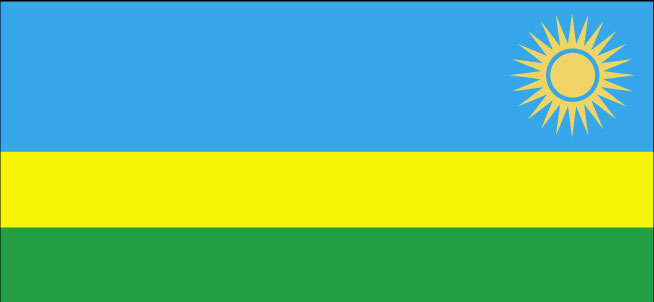
Rwanda
Rwanda
Declare Your Relationship to Rwanda
CountryReports Community
- Studying1
- From Rwanda1
- Rwanda heritage0
- Visited0
- Want to visit0
Customs and Culture
Customs and Culture
Cultural Attributes
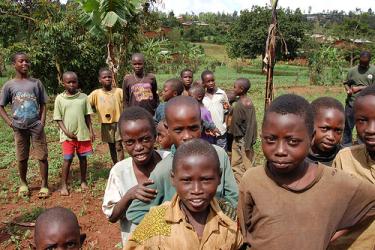
Conditions in the city and the rural areas vary greatly. Many in rural areas people live in small houses with mud walls. They lack some of the items that are common in most cities such as electricity, running water and indoor plumbing. Rwandans are friendly, polite and helpful people.

A Thousand Hills of Resilience
Get More Customs and Culture
6 more cultural topics for members
Social Customs & Etiquette · Diet · Family · Dating Customs · Recreation · Student Life
Holidays
Independence Day
7/1Independence Day
Dates of Interest
- July 1st
How do people greet each other in Rwanda?
Greetings are an essential part of Rwandan social life; younger people greet older people first, and women are expected to greet men first.
Do
- In rural areas, greet everyone who passes you
- In urban areas, greet all friends and acquaintances
- Use greetings like Muraho (Hello, it's been a while), Mwaramutse (Good morning) or Mwiriwe (Good afternoon/evening)
- Follow up with Amakuru? (How's the news?) or, among close friends, Bite se? (How are things going?)
Don’t
- Don't fail to greet friends and acquaintances — it is considered rude
Good to know
- Formal greetings include wishes like 'May you have many cows' or 'May you have children'
- Some people use Christian greetings such as 'May Jesus be praised'
- Typical responses are Ni meza (Fine) or Ni meza cyane (Very fine)
What is the food and eating like in Rwanda?
The Rwandan diet centers on sweet potatoes, beans, corn, peas, millet and fruit, with dinner as the heaviest meal.
Good to know
- Breakfast is traditionally sweet potatoes and porridge (sorghum, corn and millet mixed with milk); in cities like Kigali it's often bread and tea
- Rwandans add lots of milk and sugar to their tea
- Common dishes include umutsima (cassava and corn), isombe (cassava leaves with eggplant and spinach) and mizuzu (fried plantains)
- Roadside vendors in urban areas sell roasted corn and barbecued meat
What are the etiquette and hospitality customs in Rwanda?
Visiting relatives and friends is an important activity; those who don't visit regularly are considered anti-social.
Do
- On special occasions, bring gifts when visiting
- As a guest, always accept what is offered
Don’t
- Don't refuse an offer from a host — it is a sign of disrespect
How should I dress in Rwanda?
Western-style clothing is typical, though most clothing is used or of low quality.
Good to know
- Western dress is the norm
What gestures should I know in Rwanda?
The warmest Rwandan greeting resembles a hug, reserved for close friends and family.
Good to know
- In this greeting, each person's left hand touches the other's hip and the right hand reaches up to the other's shoulder
- Reserve this warm greeting for close friends and family
What is family life like in Rwanda?
Family is central; an inzu (family/household) usually includes a husband, wife, children and close relatives, and large families are common.
Good to know
- A family without children is considered incomplete
- A traditional homestead (rugo) has several beehive-shaped houses in a fenced compound, with the main family house in the middle
- Related families form a kinship unit called umuryango, headed by the oldest, most influential male (umukungu)
- It is expected that all Rwandans will marry; the groom's family pays a bride-price, usually a cow, to the bride's father
What do people do for fun in Rwanda?
Soccer is popular, along with running, high jumping, recreational wrestling, and swimming near the lakes.
Good to know
- Children play hide and seek, skipping and hopscotch
- Mancala is a traditional board game played with 48 dried peas on a board with two rows of six cups
- Igisoro is a more complex version using a table with 32 cups in four rows of eight
Last updated: 2026-07-12 · Sources: CountryReports
Photos of Rwanda
Photos of Rwanda


Travel and Tourism
Travel and Tourism
- Travel Alert Status
- Level 1: Exercise Normal Precautions
- Currency
- Rwandan franc (RWF)
- Time Difference
- UTC+2 (7 hours ahead of Washington, DC, during Standard Time)
- Climate
- Despite Rwanda’s location of only two degrees below the equator, the altitude provides a mild, temperate climate for most parts of the country. The average 24-hour temperature in Kigali is 73° F. The higher reaches above 14,700 feet might even experience frost and snow. Two rainy seasons generally occur from February through May, and from September through December; but variations do occur. The rains can be torrential, although brief, and sometimes are accompanied by strong winds and lightning. Annual rainfall averages 31 inches and is generally heavier in the western and northwestern mountains than in the eastern savanna. The long dry summer season from May to September turns the hills around Kigali a reddish ochre, fine dust is everywhere, and the grass dries up.
- Airports
- 9
Read the full travel guide — health, safety, vaccinations, disease risk, sanitation, and transit details.
View full travel guideRecipes
Recipes
Cassavas with Dried Beans- Side dish
Main Dish
Main Dish
Pinto Beans with Cassava
Main Dish
Chicken with Tomato Sauce
Main Dish
Ubugali — Cassava Porridge
Main Dish
Isombe
Side Dish
Banana with Green Split Peas
Bread
Amandazi — Fritters
Main Dish
PremiumCassavas with Dried Beans- Side dish
History
History
Historical Eras
Pre-colonial Kingdom
1400 – 1894
Tutsi pastoralists migrating from the Horn of Africa gradually established a centralized monarchy over the Hutu farming population, with a mwami (king) at its apex. The feudal ubuhake system bound Hutu cultivators to Tutsi lords in exchange for cattle and land use, creating a deeply stratified society. By the 19th century, the Rwandan kingdom was among the most organized and powerful polities in the Great Lakes region.
Colonial Era
1894 – 1962
German Count Von Goetzen's 1894 visit inaugurated European penetration; by 1899 the mwami accepted a German protectorate. Belgium seized control during World War I and governed Ruanda-Urundi under League of Nations and later UN mandates, institutionalizing Tutsi-Hutu divisions through measures such as the 1935 ethnic identity cards. Belgian reforms in the 1950s inadvertently catalyzed a 1959 Hutu revolt that toppled the Tutsi monarchy and drove over 160,000 Tutsis into exile.
First Republic
1962 – 1973
Rwanda gained full independence on July 1, 1962, with Grégoire Kayibanda of the PARMEHUTU party as its first elected president. The new government pursued social development and broad international recognition, establishing relations with 43 countries within a decade. However, persistent anti-Tutsi violence, government corruption, and regional factional rivalries steadily undermined the republic's democratic aspirations.
Habyarimana Regime
1973 – 1990
Major General Juvénal Habyarimana seized power in a bloodless coup on July 5, 1973, dissolving the National Assembly and banning political parties. His single-party National Revolutionary Movement for Development (MRND), formalized in 1975, promoted national unity while consolidating authoritarian rule and entrenching Hutu political dominance. Habyarimana was re-elected unopposed in 1983 and 1988, presiding over relative stability but mounting ethnic discrimination against Tutsis.
Civil War & Genocide
1990 – 1994
On October 1, 1990, the Rwandan Patriotic Front (RPF), composed largely of Tutsi exiles from Uganda, invaded northern Rwanda, igniting a civil war. Despite the 1993 Arusha Accords promising power-sharing, President Habyarimana's assassination on April 6, 1994, triggered a meticulously organized genocide in which approximately 800,000 Tutsis and moderate Hutus were killed in roughly 100 days before the RPF's military victory ended the slaughter in July.
Post-Genocide Rwanda
1994 – present
The RPF-led government of national unity faced the immense task of rebuilding a shattered society, repatriating millions of refugees, and pursuing justice through the gacaca community court system and the UN International Criminal Tribunal for Rwanda. Under President Paul Kagame, who formally took office in 2000, Rwanda achieved sustained economic growth, sweeping institutional reforms, and a strong emphasis on national identity over ethnicity. The country has emerged as a model of post-conflict reconstruction, though concerns about political freedoms and regional stability persist.
Overview
According to folklore, Tutsi cattlebreeders began arriving in the area from the Horn of Africa in the 15th century and gradually subjugated the Hutu inhabitants. The Tutsis established a monarchy headed by a mwami (king) and a feudal hierarchy of Tutsi nobles and gentry. Through a contract known as ubuhake, the Hutu farmers pledged their services and those of their descendants to a Tutsi lord in return for the loan of cattle and use of pastures and arable land.
Timeline of Key Events
1884
The Berlin Conference is held on the division of Africa between Europen Nations.
The Berlin Conference is held on the division of Africa between Europen Nations.
1899
Rwanda became a German colony.
Rwanda became a German colony.
1900
King Musinga receives the first group of European Catholic missionaries.
King Musinga receives the first group of European Catholic missionaries, known as the “White Fathers” or “Peres Blancs”.
1919
Rwanda became a mandate territory of the League of Nations under the administration of Belgium.
After the defeat of the Germans during WW1, subsequently in 1919 Rwanda became a mandate territory of the League of Nations under the administration of Belgium. The Germans and the Belgians administered Rwanda through a system of indirect rule. During this colonial era, a cash crop economy was introduced in Rwanda, and this was administered through harsh methods that further alienated the King and his chiefs from the rest of the population.
1923
Belgium granted League of Nations mandate to govern Ruanda-Urundi.
Belgium granted League of Nations mandate to govern Ruanda-Urundi, which it ruled indirectly through Tutsi kings.
1931
Belgium forces King Musinga to abdicate his throne.
Belgium forces King Musinga to abdicate his throne, who is then exiled to Kamembe (current prefecture of Cyangugu), near the Rwanda-DRC border. His son, king Rudahigwa Mutara II, succeeds him.
1935
The Belgian Colonial Administration issues identification that clearly categorized people.
The Belgian Colonial Administration issues, for the first time, identification that clearly categorized people as “Hutu”,“ Tutsi” and “Twa” on the basis of the number of heads of cattle they owned. Those with ten or more cows were categorized as “Tutsi”, while those with less were categorized as “Hutu”.
Read the full history profile — narrative overview, defining eras, and the complete timeline in one place.
View expanded historyInteresting Facts
Interesting Facts
Rwanda is Africa's most densely populated country. More than eight million people live in a country that is less than half the size of Nova Scotia. More than 90% of the population lives in rural areas.
The mwami (king) in Rwanda was considered a sacred being, whose power was of divine origin. A drum called kalinga, which was so sacred that it was never used, was a symbol of his authority.
Despite years of ethnic conflict, the Hutus and Tutsis share many cultural characteristics and family life is similar for both groups. Intermarriage over several generations has also blurred distinctions between Hutus and Tutsis.
In addition to the Hutu, Tutsi and Twa people, Rwanda has a small minority of Hima people. This is a nomadic group from the Nile Valley, who inhabit the northern and northeastern regions of Rwanda.
See every fact — trivia, oddities, and curious tidbits gathered from across the country.
View all interesting factsGeography and Environment
Geography and Environment
- Terrain
- mostly grassy uplands and hills; relief is mountainous with altitude declining from west to east
- Climate
- Despite Rwanda’s location of only two degrees below the equator, the altitude provides a mild, temperate climate for most parts of the country. The average 24-hour temperature in Kigali is 73° F. The higher reaches above 14,700 feet might even experience frost and snow. Two rainy seasons generally occur from February through May, and from September through December; but variations do occur. The rains can be torrential, although brief, and sometimes are accompanied by strong winds and lightning. Annual rainfall averages 31 inches and is generally heavier in the western and northwestern mountains than in the eastern savanna. The long dry summer season from May to September turns the hills around Kigali a reddish ochre, fine dust is everywhere, and the grass dries up.
- Natural Hazards
- periodic droughts; the volcanic Virunga mountains are in the northwest along the border with Democratic Republic of the Congo
- Current Environmental Issues
- deforestation results from uncontrolled cutting of trees for fuel; overgrazing; soil exhaustion; soil erosion; widespread poaching
Read the full geography and environment profile — terrain, climate, natural resources, hazards, land use, and international agreements.
View full geographyPeople & Demographics
People & Demographics
Religion
Languages Spoken
Kinyarwanda (official) universal Bantu vernacular, French (official), English (official), Kiswahili (Swahili) used in commercial centers
- Bantu
- English
- French
- Kinyarwanda
- Swahili
Population
- Population
- 14,094,683
- Population in Major Urban Areas
- KIGALI (capital) 1.004 million
- Nationality Noun
- Rwandan(s)
- Ethnic Groups
- Hutu 84%, Tutsi 15%, Twa (Pygmoid) 1%
Education
- Literacy Definition
- age 15 and over can read and write
The heavy war that took place in Rwanda destroyed the schools infrastructure. Many describe schools as simply shells consisting of walls with gaping holes or doors and windows which do not have any grills or window panes. Many school buildings were also destroyed so it is not strange to find other children learning under trees. On average the teacher student ratio in many primary schools is about 1:80. When it comes to supplies needed to facilitate learning, the priority is basically pen and paper, with children sharing text books due to the scarcity in many rural schools. Most children will learn about computers in high school or college. There is however a lot of rehabilitation especially where infrastructure is involved thanks to assistance from the international community.
Health Information
- Life Expectancy at Birth
- Life expectancy at birth in Rwanda has undergone one of the most dramatic improvements of any country in modern history. From the devastating aftermath of the 1994 genocide, which saw life expectancy collapse to an estimated 28 years, Rwanda has rebuilt its health system and population outcomes with remarkable speed and determination. As of the most recent data available, life expectancy at birth in Rwanda stands at approximately 69–70 years overall, with women living slightly longer than men — roughly 71–72 years for females compared to around 67–68 years for males. This represents an extraordinary recovery and reflects sustained gains across multiple decades. Several factors have driven this improvement. Rwanda has made significant investments in community-based health care, expanding a network of trained community health workers across rural areas who provide basic services, health education, and disease prevention at the village level. The country has achieved high vaccination coverage rates and made considerable progress in reducing infant and child mortality, both of which directly influence life expectancy calculations. The reduction of deaths from HIV/AIDS has also played a major role. Rwanda launched one of Africa's most effective antiretroviral treatment programs, dramatically lowering AIDS-related mortality. Similarly, sustained campaigns against malaria, tuberculosis, and other infectious diseases have helped extend average lifespans. Rwanda's community-based health insurance scheme, known as Mutuelle de Santé, has expanded access to care across lower-income populations and contributed meaningfully to these outcomes. Maternal health improvements have contributed as well. Skilled birth attendance rates have risen sharply, and maternal mortality — while still a challenge — has declined significantly from its post-genocide peak. Under-five child mortality has also fallen considerably, reflecting broader gains in nutrition, immunization coverage, and access to primary care services. Rwanda's performance on life expectancy now places it among the better-performing nations in sub-Saharan Africa. The government's long-term development strategy, Vision 2050, continues to target improvements in health outcomes as a central pillar of national development. Ongoing challenges include a rising burden of non-communicable diseases such as cardiovascular conditions and diabetes, limited access to specialized medical care in rural areas, and persistent inequalities between urban and rural populations. The health ministry is actively working to address these issues through expanded insurance coverage, increased health infrastructure investment, and continued strengthening of the community health worker network.
- Major Infectious Diseases — degree of risk
- very high
- Infant Mortality Rate
- Rwanda has made remarkable strides in reducing infant mortality over the past two decades, transforming from one of the highest rates in the world to a country often cited as a model for health system improvement in sub-Saharan Africa. The infant mortality rate — defined as the number of deaths of infants under one year of age per 1,000 live births — stood at approximately 26 deaths per 1,000 live births as of the most recent available data, a dramatic improvement from rates exceeding 100 per 1,000 live births recorded in the early 2000s. This decline is the result of sustained government investment in community-based healthcare, widespread immunization campaigns, improved access to skilled birth attendants, and the expansion of the Community Health Worker program, which places trained health workers in villages throughout the country. These workers provide basic maternal and child health services, monitor pregnancies, and promote early treatment of common infant illnesses such as malaria, pneumonia, and diarrheal disease — three of the leading causes of infant death in the region. Rwanda's health insurance scheme, known as Mutuelle de Santé, has significantly increased access to affordable care for low-income families, contributing to higher rates of facility-based deliveries and postnatal checkups. The country has also prioritized malnutrition prevention and exclusive breastfeeding promotion, both of which directly impact newborn survival rates. Despite this progress, challenges remain. Infants born in rural and remote areas still face higher mortality risks due to geographic barriers, limited infrastructure, and delays in reaching emergency care. Neonatal mortality — deaths occurring within the first 28 days of life — continues to represent a significant share of total infant deaths, with complications during delivery and infections accounting for many of these cases. Rwanda's trajectory in reducing infant mortality is widely regarded as one of the most significant public health achievements on the African continent, and the country continues to set ambitious targets under its national health sector strategic plans to further reduce preventable infant deaths.
Life Expectancy
- Life Expectancy at Birth
- Life expectancy at birth in Rwanda has undergone one of the most dramatic improvements of any country in modern history. From the devastating aftermath of the 1994 genocide, which saw life expectancy collapse to an estimated 28 years, Rwanda has rebuilt its health system and population outcomes with remarkable speed and determination. As of the most recent data available, life expectancy at birth in Rwanda stands at approximately 69–70 years overall, with women living slightly longer than men — roughly 71–72 years for females compared to around 67–68 years for males. This represents an extraordinary recovery and reflects sustained gains across multiple decades. Several factors have driven this improvement. Rwanda has made significant investments in community-based health care, expanding a network of trained community health workers across rural areas who provide basic services, health education, and disease prevention at the village level. The country has achieved high vaccination coverage rates and made considerable progress in reducing infant and child mortality, both of which directly influence life expectancy calculations. The reduction of deaths from HIV/AIDS has also played a major role. Rwanda launched one of Africa's most effective antiretroviral treatment programs, dramatically lowering AIDS-related mortality. Similarly, sustained campaigns against malaria, tuberculosis, and other infectious diseases have helped extend average lifespans. Rwanda's community-based health insurance scheme, known as Mutuelle de Santé, has expanded access to care across lower-income populations and contributed meaningfully to these outcomes. Maternal health improvements have contributed as well. Skilled birth attendance rates have risen sharply, and maternal mortality — while still a challenge — has declined significantly from its post-genocide peak. Under-five child mortality has also fallen considerably, reflecting broader gains in nutrition, immunization coverage, and access to primary care services. Rwanda's performance on life expectancy now places it among the better-performing nations in sub-Saharan Africa. The government's long-term development strategy, Vision 2050, continues to target improvements in health outcomes as a central pillar of national development. Ongoing challenges include a rising burden of non-communicable diseases such as cardiovascular conditions and diabetes, limited access to specialized medical care in rural areas, and persistent inequalities between urban and rural populations. The health ministry is actively working to address these issues through expanded insurance coverage, increased health infrastructure investment, and continued strengthening of the community health worker network.
- Infant Mortality Rate
- Rwanda has made remarkable strides in reducing infant mortality over the past two decades, transforming from one of the highest rates in the world to a country often cited as a model for health system improvement in sub-Saharan Africa. The infant mortality rate — defined as the number of deaths of infants under one year of age per 1,000 live births — stood at approximately 26 deaths per 1,000 live births as of the most recent available data, a dramatic improvement from rates exceeding 100 per 1,000 live births recorded in the early 2000s. This decline is the result of sustained government investment in community-based healthcare, widespread immunization campaigns, improved access to skilled birth attendants, and the expansion of the Community Health Worker program, which places trained health workers in villages throughout the country. These workers provide basic maternal and child health services, monitor pregnancies, and promote early treatment of common infant illnesses such as malaria, pneumonia, and diarrheal disease — three of the leading causes of infant death in the region. Rwanda's health insurance scheme, known as Mutuelle de Santé, has significantly increased access to affordable care for low-income families, contributing to higher rates of facility-based deliveries and postnatal checkups. The country has also prioritized malnutrition prevention and exclusive breastfeeding promotion, both of which directly impact newborn survival rates. Despite this progress, challenges remain. Infants born in rural and remote areas still face higher mortality risks due to geographic barriers, limited infrastructure, and delays in reaching emergency care. Neonatal mortality — deaths occurring within the first 28 days of life — continues to represent a significant share of total infant deaths, with complications during delivery and infections accounting for many of these cases. Rwanda's trajectory in reducing infant mortality is widely regarded as one of the most significant public health achievements on the African continent, and the country continues to set ambitious targets under its national health sector strategic plans to further reduce preventable infant deaths.
Read the full people and society profile — demographics, health, education, religion, languages, and notable people.
View full people and societyGovernment & Politics
Government & Politics
Country Identity
- Country Name
- Rwanda
- Full Country Name
- Rwandese Republic
- Local - Long
- Republika y'u Rwanda
- Local - Short
- Rwanda
- Former Name
- Ruanda
Government Structure
- Government Type
- republic; presidential, multiparty system
- Legal System
- based on German and Belgian civil law systems and customary law; judicial review of legislative acts in the Supreme Court; has not accepted compulsory ICJ jurisdiction
- Executive Branch
- chief of state: President Paul KAGAME (since 22 April 2000) head of government: Prime Minister Edouard NGIRENTE (since 30 August 2017) cabinet: Council of Ministers appointed by the president elections: President elected by popular vote for a seven-year term; elections last held 4 August 2017 (next to be held in 2024) election results: Paul KAGAME reelected president; Paul KAGAME 98.79%, Philippe MPAYIMANA 0.72%, Frank HABINEZA 0.49%
- Legislative Branch
- Bicameral Parliament consists of the Senate (26 seats; 12 members elected by local councils, 8 appointed by the president, 4 by the Political Organizations Forum, and 2 representing institutions of higher learning; members serve eight-year terms) and the Chamber of Deputies (80 seats; 53 members elected by popular vote, 24 women elected by local bodies, and 3 selected by youth and disability organizations; members serve five-year terms). Elections: Senate - last held in October 2019 (next to be held in 2027); Chamber of Deputies - last held on 15-16 July 2024 (next to be held in 2029). Election results: Chamber of Deputies seats by party following the 2024 elections - Rwandan Patriotic Front coalition (RPF Inkotanyi) 37, Liberal Party (PL) 5, Social Democratic Party (PSD) 4, additional 27 members indirectly elected, including 24 women's seats and 3 seats for youth and disability representatives; women hold approximately 61% of seats in the Chamber of Deputies, making Rwanda's parliament one of the highest in the world for female representation.
- Judicial Branch
- Supreme Court; High Courts of the Republic; Provincial Courts; District Courts; mediation committees
- Suffrage
- 18 years of age; universal adult
- Constitution
- on 5 May 1995, the Transitional National Assembly adopted as Fundamental Law the constitution of 18 June 1991, provisions of the 1993 Arusha peace accord, the July 1994 Declaration by the Rwanda Patriotic Front, and the November 1994 multiparty protocol of understanding
- Independence
- 1 July 1962 (from Belgium-administered UN trusteeship)
- National Holiday
- Independence Day, 1 July (1962)
Capital City
- Capital Name
- Kigali
- Capital - geographic coordinate
- 1 57 S, 30 03 E
- Capital Time Difference
- UTC+2 (7 hours ahead of Washington, DC, during Standard Time)
the city takes its name from nearby Mount Kigali; the name "Kigali" is composed of the Bantu prefix ki and the Rwandan gali meaning "broad" and likely refers to the broad, sprawling hill that has been dignified with the title of "mount"
Military
Branches: Rwanda Defense Force (RDF): Rwanda Army (Rwanda Land Force), Rwanda Air Force (Force Aerienne Rwandaise, FAR)
Embassy / Diplomatic Mission
U.S. Embassy Kigali
2657 Avenue de la Gendarmerie
Kigali, Rwanda
Telephone: 250 (252) 596-400
Facsimile: 250 (252) 596-591
Mailing address: B.P. 28, Kigali, Rwanda
Consular Section e-mail: consularkigali@state.gov.
American Citizen Services hours: Tuesdays from 8:00 - 12:00 and Fridays from 8:00 - 12:00 by appointment.
The Embassy is closed on U.S. and Rwandan holidays.
Read the full government profile — flag symbolism, national anthem, and other national symbols.
View full government detailsEconomy
Economy
Rwanda is a landlocked country in East Africa with a predominantly rural population, though the share engaged in agriculture has declined from roughly 90% in the early 2000s to about 56% today as the economy diversifies.
Snapshot
- Currency Name and Code
- Rwanda Franc (RWF)
- GDP — official exchange rate
- $1,817,000,000 (USD)
- GDP Real Growth Rate
- 7.2%
- Gini Index
- 28.9
News & Weather
News & Weather
Current Weather
Latest News
Congo, Rwanda spar over protocol to disarm Rwandan rebels - Reuters
Reuters · 3d ago
Jacaranda by Gaël Faye review – the limits of forgiveness after Rwanda - The Guardian
The Guardian · 1d ago
Why Rwandans are warming to dogs - The Economist
The Economist · 2d ago
Senator Donatille Mukabalisa passes on| The New Times - newtimes.co.rw
newtimes.co.rw · 2d ago
DRC-Rwanda: What we know about the FDLR demobilisation plan - The Africa Report
The Africa Report · 1d ago
DR Congo says militia linked to Rwanda's genocide agree to surrender - africanews.com
africanews.com · 3d ago
Opinion | Rwanda, Israel and the Inversion of ‘Genocide’ - WSJ
WSJ · 10d ago
Operation Selva Brings Cochlear Implants to Rwanda - University of Utah Health
University of Utah Health · 2d ago
News via Google News
Climate Overview
Despite Rwanda’s location of only two degrees below the equator, the altitude provides a mild, temperate climate for most parts of the country. The average 24-hour temperature in Kigali is 73° F. The higher reaches above 14,700 feet might even experience frost and snow.
Two rainy seasons generally occur from February through May, and from September through December; but variations do occur. The rains can be torrential, although brief, and sometimes are accompanied by strong winds and lightning. Annual rainfall averages 31 inches and is generally heavier in the western and northwestern mountains than in the eastern savanna.
The long dry summer season from May to September turns the hills around Kigali a reddish ochre, fine dust is everywhere, and the grass dries up.
Frequently Asked Questions
Frequently Asked Questions
What is the population of Rwanda?
How do people greet each other in Rwanda?
What is the food and eating like in Rwanda?
What are the etiquette and hospitality customs in Rwanda?
How should I dress in Rwanda?
What gestures should I know in Rwanda?
What is family life like in Rwanda?
What do people do for fun in Rwanda?
What is the capital of Rwanda?
Where is Rwanda located?
What countries border Rwanda?
What religion is practiced in Rwanda?
What is the currency of Rwanda?
What languages are spoken in Rwanda?
What is the geography of Rwanda like?
What is Rwanda known for?
Last reviewed 2026