
 English
 Español
 中文
中文 हिन्दी
 Français
Libya
Declare Your Relationship to Libya
CountryReports Community
- Studying11
- From Libya1
- Libya heritage2
- Visited2
- Want to visit2
Customs and Culture
Customs and Culture
Cultural Attributes
Libyans value courtesy. It is considered rude to criticize another person directly or to discuss family matters in public. When two people meet, they begin their conversation with a series of formal questions and answers about their health and families. When asking and answering these ritual questions, people clasp each other's hands.

Children of the Sun's Smile
Get More Customs and Culture
5 more cultural topics for members
Social Customs & Etiquette · Diet · Family · Dating Customs · Recreation
Every country, every topic, all activities & recipes
✓ Instant access on this device · ✓ No subscription
Holidays
Revolution Day
9/1Independence
Christmas
12/25Christmas
Islam is the predominant religion in Libya with 97% of the population associating with the faith so celebrating Christmas in not common. The closest holiday to the Christmas date is the Anniversary of Libyan independence in December 24, 1951. Christmas in Libya would find Christians turning up in Church and the Muslims in the different camps down in the vast deserts. It is only a few months after the end of Ramadan and the feast of El Fitr celebrated in October by Muslims.
December 8, the feast of the Blessed Virgin Mary, the Catholic Church, officially kicks off the Christmas celebrations in Tripoli and in Benghazi. On Christmas Eve, the choirs of the different churches in different linguistic groups sing their traditional Christmas Carols. The midnight mass on the eve of Christmas is usually held at the only church in Tripoli, St Francis Church at Dahra. People from all corners of the world staying in Libya in the season of Christmas fill up the vast vicinity of the church. During Christmas, Libyans enjoy traditional Libyan music which includes the traditional folk Tuareg music and dance that are popular in Ghadames and the south. Dance troupes performing music and dance also portray traditions of folk culture at Christmastime.
Since much of the Christmas festivities may not be available, people may enjoy common Libyan foods such as couscous, bazeen, a type of unsweetened cake, and shrub( soup).
How do people greet each other in Libya?
A common greeting is "Salaam aleikum" ("Peace be with you"), and another is "Sabbahakum Allah bi'l-khair" ("May Allah give you a good morning"). When meeting, people exchange ritual questions about health and family while clasping hands.
Do
- Begin conversations with formal questions about health and family
- Clasp the other person's hands during the ritual greeting
Good to know
- Libyans value courtesy in social interactions
What are dining customs like in Libya?
Meals often begin and end with a short prayer, and people traditionally eat with the fingers of the right hand. The main meal is usually served between 1 PM and 3 PM.
Do
- Eat with the fingers of your right hand
- Dip three fingers into the perfumed water bowl for ritual cleansing when it is passed
Don’t
- Do not eat with your left hand, which is considered unclean
Good to know
- Expect a light breakfast such as tea and bread, or couscous with milk and honey
- Popular dishes include shakshouka and meat-and-vegetable stew on couscous
What etiquette should I know in Libya?
Libyans value courtesy and discretion in public.
Don’t
- Do not criticize another person directly
- Do not discuss family matters in public
What should I wear in Libya?
Both Western and traditional clothing are seen in cities, while traditional dress is very common in rural areas. Women cover their hair to maintain Islamic standards.
Good to know
- Traditional men wear a long white gown over a shirt and pants
- Traditional women wear gowns covering the head and body
- In cities, girls wear brightly colored dresses and boys wear jeans and shirts
What is family life like in Libya?
Families were traditionally extended households, though many young urban couples now set up their own homes. Men are usually regarded as the head of the family, while women are responsible for maintaining the home.
Good to know
- Many young people in cities choose their own partners, while arranged marriages still occur in rural areas
- Many younger urban women no longer wear veils and commonly leave home unescorted for school and work
- Berbers live in western villages, Bedouin live in the desert south, including the indigo-robed Tuaregs
What do people do for fun in Libya?
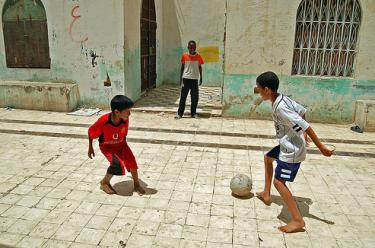
Soccer is the most popular sport, alongside horse and chariot racing, camel racing, and coastal water sports.
Good to know
- In the south, people race camels in a sport called mehari, where rider skill matters more than speed
- Families picnic on beaches and children play paddle-and-ball games
- Traditional games include a Bedouin three-in-a-row pebble game and the children's stick game isseren
Last updated: 2026-07-12 · Sources: CountryReports
Photos of Libya
Photos of Libya


Travel and Tourism
Travel and Tourism
- Travel Alert Status
- Level 4: Do Not Travel
- Currency
- Libyan dinar (LYD)
- Time Difference
- UTC+2 (7 hours ahead of Washington, DC, during Standard Time)
- Airports
- 140
Read the full travel guide — health, safety, vaccinations, disease risk, sanitation, and transit details.
View full travel guideRecipes
Recipes
History
History
Historical Eras
Ancient & Classical
700 BCE – 643
Phoenicians established trading posts along the Libyan coast, followed by Greek colonization of Cyrenaica and the founding of cities such as Cyrene around 631 BCE. Rome conquered the region progressively, transforming Tripolitania and Cyrenaica into prosperous provinces with monumental cities like Leptis Magna. The Vandals seized control in 455 CE, followed by a brief Byzantine reconquest, until the region's political fabric was fundamentally altered by the Arab conquest.
Islamic & Arab Era
643 – 1551
Arab forces under Amr ibn al-As swept across Libya beginning in 643, introducing Islam and initiating the Arabization of the Berber population — arguably the most transformative cultural shift in Libyan history. The region passed through Umayyad, Abbasid, Fatimid, and Norman Sicilian rule, with Tripolitania and Cyrenaica conquered briefly by the Normans in 1146. Fragmented tribal and dynastic authority characterized much of this period, with Saharan trade routes sustaining urban centers like Tripoli and Fezzan's oasis towns.
Ottoman Period
1551 – 1911
Ottoman forces seized Tripoli in 1551, incorporating Libya into their empire, though effective control remained limited in the interior. The Karamanli dynasty rose to autonomous power from 1711 to 1835, most notably provoking the First Barbary War with the United States between 1801 and 1805. Direct Ottoman rule was reimposed in 1835, and the 19th century saw the Sanusi religious order consolidate influence in Cyrenaica, laying the groundwork for later nationalist resistance.
Italian Colonial Rule
1911 – 1943
Italy invaded and conquered Libya from the Ottomans in 1911–1912, but faced prolonged armed resistance, particularly from the Sanusi movement in Cyrenaica. Tripolitania and Cyrenaica were administratively unified under Italian rule in 1929, and organized resistance effectively ended by 1931 with the capture and execution of resistance leader Omar Mukhtar. Libya was then developed as an Italian settler colony until Allied forces expelled the Axis powers in 1943, after which Britain and France divided administrative control.
Kingdom of Libya
1951 – 1969
On December 24, 1951, Libya became the first country to achieve independence through the United Nations, with Idris al-Sanusi crowned as king. The discovery of significant oil reserves and the granting of extraction concessions to American companies in 1956 transformed the economy and made Libya a strategically important state. Despite newfound oil wealth, the monarchy struggled to distribute prosperity equitably, fueling discontent that ultimately enabled Muammar al-Qadhafi's coup.
Qadhafi & Beyond
1969 – present
Colonel Muammar al-Qadhafi seized power in a military coup on September 1, 1969, and governed through his idiosyncratic Third Universal Theory, nationalizing oil assets and using petroleum revenues to export revolution abroad. International isolation deepened after the 1988 Lockerbie bombing led to UN sanctions, though Qadhafi eventually sought rehabilitation in the 2000s. The 2011 Arab Spring uprising, backed by NATO air power, ended his 42-year rule and his life, plunging Libya into prolonged civil conflict and institutional fragmentation.
Overview
An arch from Leptis Magna, built by the
Every country, every topic, all activities & recipes
✓ Instant access on this device · ✓ No subscription
Timeline of Key Events
107 BCE
Northwestern Libya is conquered by Rome.
Northwestern Libya is conquered by Rome, and comes under administration of Africa Proconsularis which has its administrative center around Carthage. The region becomes later a province of its own, under the name of Tripolitania.
455
Vandals take possession of Libya.
Vandals take possession of Libya.
643
Arabs under Amr Ibn al-As conquer Libya and spread Islam.
Amr Ibnu l-As conquers northeastern Libya, known as Barka, and the region becomes part of the new Muslim Empire governed from Madina in today’s Saudi Arabia.
647
Tripolitania is conquered by the Arabs.
Tripolitania is conquered by the Arabs.
1146
Tripolitania and Cyrenaica is conquered by the Normans of Sicily.
Tripolitania and Cyrenaica is conquered by the Normans of Sicily.
1521
Barka is incorporated into the Ottoman Empire, but control remains in the hands of local rulers.
Libya becomes part of the Ottoman Empire, which joins the three provinces of Tripolitania, Cyrenaica and Fezzan into one regency in Tripoli.
1711 – 1835
Rise of the Karamanli dynasty
Rise of the Karamanli dynasty, which served to protect the corsair activity centred to Tripoli, and strongly irritating European powers. Still, trade between Libya and Europe thrives. Much of this trade was with slaves, destined for the American continent.
Read the full history profile — narrative overview, defining eras, and the complete timeline in one place.
View expanded historyInteresting Facts
Interesting Facts
In 1933, a weather station in the Sahara (Azizia, Libia) recorded a tempurature at 136° F.
When a child loses a tooth they throw their tooth to the sun and say “Bring me a new tooth.” They say they have a bright smile because their teeth came from the sun.
The hottest spot on the planet is Al Aziziya, in the Sahara desert where a temperature of over 136°F has been recorded.
The name “Libya” once referred to all of the lands of Africa, not just the area of North Africa now known as Libya. The Egyptians were the first to call the rest of Africa (that is, the lands that were not part of Egypt) Libya.
2 more facts for members
Every country, every topic, all activities & recipes
✓ Instant access on this device · ✓ No subscription
Geography and Environment
Geography and Environment
- Terrain
- mostly barren, flat to undulating plains, plateaus, depressions
- Climate
- Mediterranean along coast; dry, extreme desert interior
- Natural Hazards
- hot, dry, dust-laden ghibli is a southern wind lasting one to four days in spring and fall; dust storms, sandstorms
- Current Environmental Issues
- desertification; very limited natural fresh water resources; the Great Manmade River Project, the largest water development scheme in the world, is being built to bring water from large aquifers under the Sahara to coastal cities
Read the full geography and environment profile — terrain, climate, natural resources, hazards, land use, and international agreements.
View full geographyPeople & Demographics
People & Demographics
Religion
Languages Spoken
Arabic, Italian, English, all are widely understood in the major cities
- Arabic
- Italian
Population
- Population
- 7,381,016
- Population in Major Urban Areas
- TRIPOLI (capital) 1.127 million
- Nationality Noun
- Libyan(s)
- Ethnic Groups
- Berber and Arab 97%, Greeks, Maltese, Italians, Egyptians, Pakistanis, Turks, Indians, Tunisians
Education
- Literacy Definition
- age 15 and over can read and write
Life Expectancy
- Life Expectancy at Birth
- Life expectancy at birth in Libya stands at approximately 71 to 72 years for the overall population, with women typically outliving men by several years. Female life expectancy hovers around 74 to 75 years, while male life expectancy falls closer to 69 to 70 years. These figures place Libya in a moderate range compared to global averages and reflect both the country's historical investments in public health infrastructure and the ongoing challenges posed by years of political instability and conflict. Prior to the 2011 civil war and the upheaval that followed, Libya had made notable strides in healthcare access. The country used revenues from its substantial oil wealth to build hospitals, train medical professionals, and subsidize healthcare services for its citizens. These investments contributed to significant gains in life expectancy over the latter half of the twentieth century, with Libyans living considerably longer in 2000 than they did in 1960, when life expectancy was below 50 years. However, the collapse of central governance after 2011 severely disrupted the healthcare system. Hospitals faced shortages of medicine, equipment, and staff. Many skilled medical professionals fled the country amid ongoing violence, and facilities in conflict zones were damaged or destroyed. These conditions have slowed and in some periods reversed what had previously been steady progress in health outcomes. The continued division of the country between competing governing authorities has further complicated efforts to restore consistent, nationwide healthcare delivery. Key causes of mortality in Libya include cardiovascular disease, diabetes, and road traffic accidents, the latter of which has historically been a significant contributor to premature death in the country. Non-communicable diseases account for the majority of deaths, a pattern consistent with nations that have undergone epidemiological transitions away from infectious disease as the primary health burden. Despite its challenges, Libya continues to benefit from a relatively young population and ongoing international humanitarian health efforts, both of which support a degree of resilience in population health metrics. Future improvements in life expectancy will likely depend heavily on the restoration of political stability and the rebuilding of the country's healthcare infrastructure, which remains one of the most critical factors influencing long-term population health in the country.
- Infant Mortality Rate
- Libya's infant mortality rate has shown meaningful improvement over recent decades, though the country continues to face public health challenges that affect newborn and infant survival. As of the most recent available data, Libya's infant mortality rate stands at approximately 10 to 12 deaths per 1,000 live births, a figure that reflects notable progress compared to rates recorded in earlier generations but still indicates room for continued advancement. In the mid-twentieth century, Libya's infant mortality rate was considerably higher, reflecting limited access to formal healthcare infrastructure, trained medical personnel, and essential maternal and child health services. The dramatic drop in infant deaths over subsequent decades was driven in large part by expanded hospital networks, improved access to prenatal care, immunization programs, and greater availability of skilled birth attendants. The primary causes of infant mortality in Libya include complications arising from premature birth, neonatal infections, congenital conditions, and birth asphyxia. Respiratory infections and diarrheal diseases also remain contributors, particularly in areas with inconsistent access to clean water and sanitation. Libya's prolonged period of political instability and armed conflict following 2011 has placed significant strain on the country's healthcare system. Hospitals and clinics in certain regions have suffered damage or disruption, supply chains for medications and medical equipment have been interrupted, and trained healthcare workers have, in some instances, been displaced. These factors have raised concerns among international health organizations that hard-won gains in reducing infant mortality could be threatened or reversed if the healthcare infrastructure is not adequately maintained and restored. International organizations, including UNICEF and the World Health Organization, have been active in supporting maternal and child health initiatives within the country, working alongside Libyan health authorities to maintain vaccination coverage, promote breastfeeding practices, and improve neonatal care protocols. Compared to the broader Middle East and North Africa region, Libya's infant mortality rate is relatively moderate, performing better than some lower-income neighbors but trailing behind countries with more stable and well-resourced health systems. Continued investment in healthcare infrastructure, political stability, and sustained international cooperation will be critical to further reducing infant deaths in the coming years.
Read the full people and society profile — demographics, health, education, religion, languages, and notable people.
View full people and societyGovernment & Politics
Government & Politics
Country Identity
- Country Name
- Libya
- Full Country Name
- Great Socialist People's Libyan Arab Jamahiriya
- Local - Long
- Al Jumahiriyah al Arabiyah al Libiyah ash Shabiyah al Ishtirakiyah al Uzma
Government Structure
- Government Type
- Jamahiriya (a state of the masses) in theory, governed by the populace through local councils; in fact, a military dictatorship
- Legal System
- based on Italian civil law system and Islamic law; separate religious courts; no constitutional provision for judicial review of legislative acts; has not accepted compulsory ICJ jurisdiction
- Executive Branch
- chief of state: Following the fall of Muammar al-QADHAFI's regime in October 2011, Libya has undergone significant political transition. As of 2024, the country remains divided between rival administrations. Mohamed al-MENFI serves as Chair of the Presidential Council, a body established under the 2020 UN-brokered Libyan Political Dialogue Forum to serve as a collective head of state. head of government: Libya is currently split between two competing governments. The Government of National Unity (GNU), based in Tripoli and internationally recognized, is led by Prime Minister Abdul Hamid DBEIBAH (since March 2021). A rival administration, the Government of National Stability (GNS), based in the east and backed by the Libyan National Army, is led by Prime Minister Osama HAMMAD. cabinet: The GNU cabinet was formed following the Libyan Political Dialogue Forum process facilitated by the United Nations Support Mission in Libya (UNSMIL), with ministers appointed by the Prime Minister and approved by the House of Representatives. elections: Libya has not held a successful national election since the transitional period following the 2011 revolution. Planned presidential and parliamentary elections in December 2021 were postponed due to unresolved disputes over electoral laws and candidate eligibility. Subsequent attempts to organize elections have stalled amid ongoing political deadlock between rival factions. election results: No conclusive national election results are available for the post-2011 period due to the repeated postponement of scheduled votes and the continuation of a divided governing structure.
- Legislative Branch
- Libya's legislative branch remains in a state of division and transition following the 2011 civil war that ended Muammar Gaddafi's rule. The country currently operates with two rival legislative bodies. The internationally recognized House of Representatives (HoR), also known as the Council of Deputies, is based in Tobruk and holds 200 seats, with members elected by popular vote. In the west, the Tripoli-based High State Council, established under the 2015 Libyan Political Agreement, functions as an advisory legislative body. Efforts to unify the two chambers and establish a permanent constitutional framework have been ongoing but remain unresolved. The earlier unicameral General People's Congress, which operated under Gaddafi's Jamahiriya system with members elected indirectly through a hierarchy of people's committees, was dissolved following the 2011 revolution. Libya continues to work toward holding national elections and forming a unified, representative legislative body as part of broader political reconciliation efforts.
- Judicial Branch
- Supreme Court
- Suffrage
- 18 years of age; universal and compulsory
- Constitution
- 11 December 1969, amended 2 March 1977
- Independence
- 24 December 1951 (from Italy)
- National Holiday
- Revolution Day, 1 September (1969)
Capital City
- Capital Name
- Tripoli (Tarabulus)
- Capital - geographic coordinate
- 32 53 N, 13 10 E
- Capital Time Difference
- UTC+2 (7 hours ahead of Washington, DC, during Standard Time)
originally founded by the Phoenicians as Oea in the 7th century B.C., the city changed rulers many times over the successive centuries; by the beginning of the 3rd century A.D. the region around the city was referred to as Regio Tripolitana by the Romans, meaning "region of the three cities" - namely Oea (i.e., modern Tripoli), Sabratha (to the west), and Leptis Magna (to the east); over time, the shortened name of "Tripoli" came to refer to just Oea, which derives from the Greek words tria and polis meaning "three cities"
Military
Branches: note - in transition; government attempting to staff a new national army with anti-QADAFI militia fighters and former members of QADAFI's military
Embassy / Diplomatic Mission
U.S. Embassy Tripoli
Walee al-Ahad Street
Airport Road District
Tel: 218 91 220 4560 between 1:00pm and 4:00pm Sunday through Thursday Libyan time.
For emergencies involving U.S. citizens only: telephone 218 91 220 5203
American Citizen Services Email: consulartripoli@state.gov
Read the full government profile — flag symbolism, national anthem, and other national symbols.
View full government detailsEconomy
Economy
Libya's economy remains heavily dependent on the hydrocarbons sector, which accounts for roughly 60% of GDP, over 90% of government revenue, and nearly all export earnings.
Snapshot
- Currency Name and Code
- Lybian Dinar (LYD)
- GDP — official exchange rate
- $31,490,000,000 (USD)
- GDP Real Growth Rate
- 9.9%
Every country, every topic, all activities & recipes
✓ Instant access on this device · ✓ No subscription
News & Weather
News & Weather
Current Weather
Latest News
Eastern Libya parliament approves maritime deal with Turkey, drawing Greek rejection - Reuters
Reuters · 1d ago
Two European women held captive for more than a year in Niger freed in Libya - BBC
BBC · 2h ago
How the Muslim Brotherhood Threatens US Interests in Sudan and Libya - The National Interest
The National Interest · 16h ago
EXCLUSIVE: Libyan Police ‘Sell’ Nigerian Woman After Arrest, Demand 5,000 Dinars For Release From Detention Site - Sahara Reporters
Sahara Reporters · 1d ago
Eastern Libyan forces display Turkish-designed armoured vehicles - Janes
Janes · 2d ago
Turkey-Libya Deal Threatens to Stir Up Energy and Maritime Tensions - Bloomberg.com
Bloomberg.com · 1d ago
Niger: Two Western hostages released in Libya after more than 18 months in Islamic State captivity - The Africa Report
The Africa Report · 4h ago
US Declines to Take Position on Turkey-Libya Maritime Deal - Greek City Times
Greek City Times · 7h ago
News via Google News
Videos
Videos
1 curated YouTube videos.
Source: YouTube
Frequently Asked Questions
Frequently Asked Questions
What is the population of Libya?
What is the capital of Libya?
Where is Libya located?
What countries border Libya?
What is the main religion in Libya?
What is the currency of Libya?
What languages are spoken in Libya?
What is Libya known for?
What are some distinctive cultural traditions in Libya?
Last reviewed 2026