
 English
 Español
 中文
中文 हिन्दी
 Français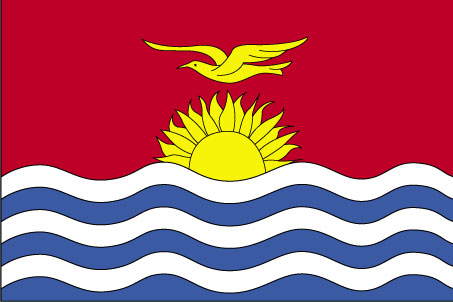
Kiribati
Declare Your Relationship to Kiribati
CountryReports Community
- Studying4
- From Kiribati0
- Kiribati heritage0
- Visited0
- Want to visit1
Customs and Culture
Customs and Culture
Cultural Attributes
The people of Kiribati, known as I-Kiribati, maintain a culture deeply rooted in community, oral tradition, and the sea. Life on these low-lying Pacific atolls has shaped a society where cooperation and shared resources are essential to survival, and these values are reflected in nearly every aspect of daily life. The maneaba, a traditional open-sided meeting house, stands at the center of I-Kiribati community life. Each village has one, and it serves as the gathering place for ceremonies, dispute resolution, storytelling, and decision-making. Seating within the maneaba is structured according to clan lineage, reflecting the importance of ancestry and social hierarchy in Kiribati culture. Dance is one of the most vital cultural expressions in Kiribati. The te buki and ruoia are traditional dance styles performed at festivals and celebrations, often involving precise, coordinated body movements and elaborate costumes made from pandanus leaves and flowers. These performances can tell stories, honor ancestors, or mark important life events. Fishing remains both an economic necessity and a cultural identity. Traditional navigational knowledge passed down through generations allowed I-Kiribati people to travel vast distances across the Pacific using the stars, ocean currents, and wave patterns as guides. This deep connection to the ocean continues to inform local customs, diet, and livelihoods. Christianity plays a significant role in contemporary Kiribati society, with the majority of the population identifying as Roman Catholic or Kiribati Protestant Church members. Religious observance blends with indigenous traditions, particularly around life events such as births, marriages, and funerals. The Kiribati language, also called Gilbertese, is spoken by virtually the entire population and remains a strong marker of cultural identity. Despite growing outside influences from education systems and digital media, efforts are underway to preserve traditional songs, crafts, and oral histories for younger generations. Climate change poses one of the most serious threats not only to the land of Kiribati but to its culture, as rising sea levels risk displacing communities whose identity is inseparably tied to their ancestral islands.
Islands of the Rising Tide
Social Customs & Etiquette
Greetings in Kiribati reflect the warmth and communal spirit deeply embedded in I-Kiribati culture. The official language is Gilbertese, also known as Taetae ni Kiribati, and it is spoken across the main island groups of the Gilbert, Phoenix, and Line Islands. English is also an official language and is widely used in government, education, and business settings.
The standard Gilbertese greeting is "Mauri," a word that carries significant cultural weight beyond a simple hello. Mauri broadly translates to "life" or "wellbeing" and is used at any time of day, whether meeting someone for the first time or greeting a close friend. It can be used as both a hello and a farewell, making it a versatile and meaningful expression in daily life. Visitors to Kiribati are warmly encouraged to use this greeting, as locals genuinely appreciate the effort to engage with their language.
When meeting elders or community leaders, a respectful and gentle demeanor accompanies the greeting. Physical contact during greetings is generally relaxed and friendly — a handshake is common in formal or business settings, while close friends and family members may embrace. Direct eye contact is generally acceptable and signals openness and sincerity.
In more traditional and rural island communities, greetings often extend beyond a single word and involve asking about a person's family, health, and wellbeing. This reflects the collectivist nature of I-Kiribati society, where community bonds and interpersonal relationships take priority. Taking time to exchange pleasantries is considered polite and is not seen as a delay but rather as an essential part of social interaction.
On formal occasions or during maneaba gatherings — the traditional open-sided meeting houses central to community life — greetings may follow customary protocols that acknowledge seniority and social standing within the group. Visitors attending such gatherings should follow the lead of local hosts to ensure respectful conduct.
Learning even a few Gilbertese phrases, beginning with "Mauri," can go a long way in building genuine connections with the people of Kiribati.
Diet
People eat from their own places with a common serving dish. Food is scare in the islands and sharing food is common. Breakfast Lunch and Dinner are usually some type of rice dish flavored by soy sauce or fish, whatever is available. Breadfruit and rice are the common staples. Fish is the main source of protein. The most common drink is palm toddy or the sap of the palm which is diluted with water to make a sweet refreshing drink.
Dating Customs
Dating and marriage customs in Kiribati are deeply rooted in the islands' Micronesian traditions, though practices have evolved over time with the influence of Christianity, which was introduced by missionaries in the 19th century. Today, the vast majority of I-Kiribati identify as Christian, and this faith plays a central role in shaping social expectations around courtship and family life.
Traditionally, courtship in Kiribati involved a practice known as "te kateitei," in which young men would visit women at night in a form of chaperoned or semi-supervised social interaction. This custom has largely diminished in contemporary society, particularly in urban areas like South Tarawa, though elements of community involvement in courtship remain culturally valued.
Marriages in Kiribati are typically community and family affairs, often celebrated with feasting, dancing, and singing that can last several days. Families play an important role in approving partnerships, and weddings frequently take place in a church setting. Gifts and exchanges between families remain an important part of wedding ceremonies, reflecting the communal and reciprocal nature of I-Kiribati society.
The legal minimum age for marriage in Kiribati is 15 years for females and 16 years for males with parental consent, though the government and international organizations have worked to encourage later marriages in line with broader efforts to improve education and health outcomes for young people, particularly girls. Early marriage remains more common in the outer islands than in the capital.
Polygamy is not legally recognized in Kiribati, and civil marriage registration is required under national law. Divorce, while legally available, carries social stigma in many communities, especially in more traditional island settings where community reputation and family honor are highly regarded.
Gender roles within marriage tend to be somewhat traditional, with women often taking primary responsibility for household and childcare duties, though urbanization and increased access to education have begun to shift these dynamics among younger generations.
Holidays
Independence Day
7/12Independence Day
Dates of Interest
- July 12th
What should I know about community life and the maneaba in Kiribati?
Community life centers on the maneaba, a traditional open-sided meeting house used for ceremonies, dispute resolution, storytelling, and decision-making.
Do
- Recognize that seating in the maneaba is arranged by clan lineage
- Respect the importance of ancestry and social hierarchy
Good to know
- Each village has its own maneaba as the heart of community life
- Cooperation and shared resources are core I-Kiribati values
What are dining customs like in Kiribati?
People eat from their own places sharing a common serving dish, and since food is scarce, sharing food is common.
Good to know
- Meals are usually a rice dish flavored with soy sauce or fish
- Breadfruit and rice are the common staples, with fish as the main protein
- Palm toddy (palm sap diluted with water) is the most common drink
What role do dance and tradition play in Kiribati?
Dance is a vital cultural expression, with te buki and ruoia performed at festivals to tell stories, honor ancestors, or mark life events.
Good to know
- Costumes are made from pandanus leaves and flowers
- Traditional songs, crafts, and oral histories are being preserved for younger generations
- Christianity blends with indigenous traditions around births, marriages, and funerals
How important is fishing and the sea in Kiribati?
Fishing is both an economic necessity and a core part of I-Kiribati cultural identity, tied to traditional navigational knowledge.
Good to know
- Traditional navigation used stars, ocean currents, and wave patterns
- The connection to the ocean shapes local customs, diet, and livelihoods
What should I know before visiting Kiribati?
The Kiribati language (Gilbertese) is spoken by virtually everyone and is a strong marker of cultural identity, while climate change threatens these low-lying atolls.
Good to know
- Rising sea levels pose a serious threat to the land and culture
- Most people identify as Roman Catholic or Kiribati Protestant Church members
Last updated: 2026-07-12 · Sources: CountryReports
Travel and Tourism
Travel and Tourism
- Travel Alert Status
- Level 3: Reconsider Travel
- Currency
- Australian dollar (AUD)
- Time Difference
- UTC+12 (17 hours ahead of Washington, DC, during Standard Time) time zone note: Kiribati has three time zones: the Gilbert Islands group at UTC+12, the Phoenix Islands at UTC+13, and the Line Islands at UTC+14
- Airports
- 20
Read the full travel guide — health, safety, vaccinations, disease risk, sanitation, and transit details.
View full travel guideRecipes
Recipes
History
History
Historical Eras
Ancient Settlement
1000 – 1606
Micronesian peoples settled the Gilbert Islands between 1000 and 1300 AD, establishing the foundational I-Kiribati culture. Subsequent waves of Fijian and Tongan invaders introduced Polynesian elements, and extensive intermarriage gradually produced a population homogeneous in language, custom, and appearance. By the time of first European contact in the early 16th century, a distinct and resilient island society had long been established.
European Contact
1606 – 1892
European whalers, slave traders, and merchant vessels arrived in increasing numbers through the 18th and 19th centuries, introducing fatal diseases and stoking inter-tribal conflicts. The islands were named the Gilbert Islands in 1820 after British naval captain Thomas Gilbert, and the first permanent European settlers arrived in 1837. The resulting social disorder prompted Britain to impose a formal protectorate over the Gilbert and Ellice Islands in 1892.
British Colonial Era
1892 – 1941
Following the 1892 protectorate declaration, Britain annexed Banaba (Ocean Island) in 1900 upon discovery of valuable phosphate deposits, and formally constituted the Gilbert and Ellice Islands Colony in 1916. The Line and Phoenix Islands were incorporated piecemeal over the following two decades. Between 1957 and 1962, Britain conducted a series of hydrogen bomb test explosions in Kiribati waters, exposing islanders to nuclear fallout.
World War II
1941 – 1945
Japan seized the Gilbert Islands in 1942, establishing heavily fortified positions across the archipelago. In November 1943, U.S. Marines launched a ferocious assault on Tarawa Atoll, suffering catastrophic casualties in some of the Pacific War's bloodiest fighting. The Battle of Tarawa proved a pivotal turning point in the Central Pacific campaign and left a lasting imprint on the islands' landscape and collective memory.
Path to Independence
1945 – 1979
Britain gradually expanded self-governance in the islands from the 1960s onward. In 1975 the Ellice Islands separated from the colony, becoming the independent nation of Tuvalu in 1978. The Gilbert Islands achieved internal self-government in 1977 and became the fully independent Republic of Kiribati on July 12, 1979, with the United States simultaneously relinquishing claims to the Phoenix and Line Islands by treaty.
Independent Republic
1979 – present
Kiribati's post-independence political life was shaped by its unique parliamentary-presidential system and a strict three-term presidential limit. Ieremia Tabai, the nation's first president, served from 1979 to 1991, followed by Teburoro Tito (1994–2003) and Anote Tong, whose contested 2003 election was upheld by an Australian judge. Admitted to the United Nations in 1999, Kiribati has since gained international prominence as a frontline state facing existential threat from climate-change-driven sea level rise.
Overview
European contact began in the 16th century. Whalers, slave traders, and merchant vessels arrived in great numbers in the 1800s, fomenting local tribal conflicts and introducing often fatal European diseases. In an effort to restore a measure of order, the Gilbert and Ellice Islands (the Ellice Islands are now known as Tuvalu) consented to becoming British protectorates in 1892. Banaba (Ocean Island) was annexed in 1900 after the discovery of phosphate-rich guano deposits, and the entire collection was made a British colony in 1916. The Line and Phoenix Islands were incorporated piecemeal over the next 20 years.
Japan seized the islands during World War II. In November 1943, U.S. forces assaulted heavily fortified Japanese positions on Tarawa Atoll in the Gilberts, resulting in some of the bloodiest fighting of the Pacific campaign. The battle was a turning point in the Central Pacific.
Britain began expanding self-government in the islands during the 1960s. In 1975 the Ellice Islands separated from the colony and in 1978 became the independent country of Tuvalu. The Gilberts obtained internal self-government in 1977, and formally became an independent nation on July 12, 1979, under the name of Kiribati.
Post-independence politics were initially dominated by Ieremia Tabai, Kiribati’s first President, who served from 1979 to 1991, stepping down due to Kiribati’s three-term limit for presidents. Teburoro Tito’s tenure as President, 1994-2003, also was curtailed by the three-term limit, though in his case his third term lasted only a matter of months before he lost a no confidence motion in Parliament. (See the next section for an explanation of Kiribati’s unique presidential system.) In July 2003, Anote Tong defeated his elder brother, Harry Tong, who was backed by former President Tito and his allies. An ensuing court challenge which alleged violations of campaign finance laws could have unseated President Tong. However, in October 2003, a judge specially brought in from Australia to ensure strict neutrality ruled in President Tong’s favor.
Timeline of Key Events
1820
Named the Gilbert Islands, after British naval captain Thomas Gilbert.
Named the Gilbert Islands, after British naval captain Thomas Gilbert who came across a number of the islands in 1788 when sailing from Australia to China.
1837
First Europeans settled.
First Europeans settled.
1892
Britain declared protectorate over Gilbert Islands.
Britain declared protectorate over Gilbert Islands.
1916
The Gilbert and Ellice Islands Colony is formed.
The Gilbert and Ellice Islands Colony is formed. Over the next twenty years other island groups in the area, including the Line Islands and the Phoenix Islands, are added to the colony.
1942 – 1943
Japanese occupation.
Japanese occupation.
1957 – 1962
The Britisdh conducted test explosions of Hydrogen Bombs in Kiribati waters.
The Britisdh conducted test explosions of Hydrogen Bombs in Kiribati waters.
1979
The Gilbert Islands become an independent republic.
The Gilbert Islands become an independent republic within the Commonwealth under the name of Kiribati. Ieremia Tabai becomes president.
Read the full history profile — narrative overview, defining eras, and the complete timeline in one place.
View expanded historyInteresting Facts
Interesting Facts
The Republic of Kiribati is particularly concerned about global warming. It is thought that climate change will see the disappearance of the low-lying islands. Two of the uninhabited coral reefs have already been submerged by rising sea levels.
See every fact — trivia, oddities, and curious tidbits gathered from across the country.
View all interesting factsGeography and Environment
Geography and Environment
- Terrain
- mostly low-lying coral atolls surrounded by extensive reefs
- Climate
- tropical; marine, hot and humid, moderated by trade winds
- Natural Hazards
- typhoons can occur any time, but usually November to March; occasional tornadoes; low level of some of the islands make them very sensitive to changes in sea level
- Current Environmental Issues
- heavy pollution in lagoon of south Tarawa atoll due to heavy migration mixed with traditional practices such as lagoon latrines and open-pit dumping; ground water at risk
Read the full geography and environment profile — terrain, climate, natural resources, hazards, land use, and international agreements.
View full geographyPeople & Demographics
People & Demographics
Religion
Languages Spoken
I-Kiribati, English (official)
- English
- I-Kiribati
Population
- Population
- 119,000
- Population in Major Urban Areas
- TARAWA (capital) 44,000
- Nationality Noun
- I-Kiribati (singular and plural)
- Ethnic Groups
- predominantly Micronesian with some Polynesian
Education
- Literacy Definition
- NA
Life Expectancy
- Life Expectancy at Birth
- Life expectancy at birth in Kiribati stands at approximately 68 to 69 years overall, with notable differences between males and females. Women in Kiribati typically live longer, with a life expectancy of around 71 to 72 years, while men average closer to 65 to 67 years. These figures place Kiribati somewhat below the regional average for Pacific island nations and well below the global average of approximately 73 years. Several interconnected factors shape these outcomes. Kiribati faces significant public health challenges stemming from its remote geography and limited healthcare infrastructure. The country's scattered atolls — spread across 3.5 million square kilometers of the central Pacific Ocean — make consistent delivery of medical services extremely difficult. Access to hospitals, specialists, and emergency care varies considerably between the main island of South Tarawa and the outer islands, where basic health facilities may be the only option available. Non-communicable diseases represent a growing and serious concern. Rates of diabetes, hypertension, and cardiovascular disease have risen sharply in recent decades, driven in part by shifts in diet toward processed and imported foods, reduced physical activity, and high rates of tobacco use. These conditions are now among the leading causes of premature death in the country. Infectious diseases, including tuberculosis, continue to affect the population at rates higher than in many other Pacific nations. Overcrowding in South Tarawa, where population density rivals some of the most congested urban areas in the world, contributes to the spread of respiratory and waterborne illnesses. Clean water access and sanitation remain persistent challenges across parts of the archipelago. Maternal and child health outcomes have improved modestly over recent years due to targeted health programs and international aid, contributing incremental gains to overall life expectancy. Nonetheless, infant mortality remains elevated relative to wealthier Pacific neighbors. Climate change poses an increasingly urgent long-term threat. As a low-lying atoll nation, Kiribati is highly vulnerable to saltwater intrusion, rising sea levels, and more frequent extreme weather events, all of which threaten freshwater supplies and food security. These environmental pressures are expected to place growing strain on population health and longevity in the decades ahead.
- Infant Mortality Rate
- Kiribati faces notable challenges in infant health, reflected in its infant mortality rate, which stands at approximately 32 to 35 deaths per 1,000 live births in recent years. While this figure represents a significant improvement over previous decades — when rates exceeded 60 deaths per 1,000 live births in the 1990s — it remains considerably higher than the averages seen in developed nations and many Pacific Island neighbors. The primary drivers of infant mortality in Kiribati include neonatal complications, respiratory infections, diarrheal diseases, and malnutrition. Limited access to clean drinking water and sanitation infrastructure, particularly on the outer islands, contributes significantly to the spread of preventable illnesses among infants. The country's geographic reality — comprising 33 low-lying atolls spread across 3.5 million square kilometers of the central Pacific — creates substantial logistical barriers to healthcare delivery, making timely medical intervention for at-risk newborns difficult to achieve. South Tarawa, the densely populated capital atoll, faces overcrowding that strains existing health services, while remote islands often have little more than basic aid post facilities. Access to skilled birth attendants, neonatal care units, and emergency obstetric services is inconsistent across the archipelago. Kiribati has worked alongside international partners including UNICEF and the World Health Organization to improve maternal and child health outcomes. Efforts have focused on expanding immunization coverage, promoting breastfeeding, improving nutrition among pregnant women and infants, and training community health workers. These initiatives have contributed to the gradual downward trend in infant deaths over time. Climate change poses an additional long-term risk, as rising sea levels and increased storm intensity threaten freshwater supplies and food security — factors that directly influence infant health and survival. Continued investment in healthcare infrastructure, clean water access, and nutrition programs will be essential for Kiribati to further reduce its infant mortality rate in the years ahead.
Read the full people and society profile — demographics, health, education, religion, languages, and notable people.
View full people and societyGovernment & Politics
Government & Politics
Country Identity
- Country Name
- Kiribati
- Full Country Name
- Republic of Kiribati
- Former Name
- Gilbert Islands
Government Structure
- Government Type
- republic
- Legal System
- NA
- Executive Branch
- chief of state: President Taneti MAAMAU (since 11 March 2016); Vice President Teuea TOATU; note - the president is both the chief of state and head of government head of government: President Taneti MAAMAU (since 11 March 2016); Vice President Teuea TOATU; note - the president is both the chief of state and head of government cabinet: Cabinet appointed by the president from among the members of the House of Parliament elections: the House of Parliament nominates presidential candidates from among its members, who then compete in a national popular vote; president is elected by popular vote for a four-year term and is eligible for up to three terms; most recent election held on 22 June 2020; vice president appointed by the president election results: Taneti MAAMAU reelected president; Taneti MAAMAU 59.3%, Banuera BERINA 40.7%
- Legislative Branch
- Unicameral House of Parliament or Maneaba Ni Maungatabu (46 seats; 44 elected by popular vote, 1 appointed to represent Banaba Island, and 1 ex officio member — the attorney general; members serve four-year terms) Elections: last held on 14 August 2024, with a second round on 21 August 2024 Election results: percent of vote by party — NA; seats by party — Tobwaan Kiribati Party (TKP) 22, Boutokaan Kiribati Moa Party (BKM) 20, independents 2, other 2 (includes attorney general and Banaba representative) Note: Legislative elections are typically held in two rounds. The Maneaba Ni Maungatabu serves as the supreme legislative body of Kiribati, with elected members representing constituencies across the Gilbert Islands, as well as the Line Islands and Phoenix Islands. The attorney general holds an ex officio seat and may participate in debate but does not vote.
- Judicial Branch
- Court of Appeal; High Court; 26 Magistrates' courts; judges at all levels are appointed by the president
- Suffrage
- 18 years of age; universal
- Constitution
- 12-Jul-79
- Independence
- 12 July 1979 (from UK)
- National Holiday
- Independence Day, 12 July (1979)
Capital City
- Capital Name
- Tarawa
- Capital - geographic coordinate
- 1 21 N, 173 02 E
- Capital Time Difference
- UTC+12 (17 hours ahead of Washington, DC, during Standard Time) time zone note: Kiribati has three time zones: the Gilbert Islands group at UTC+12, the Phoenix Islands at UTC+13, and the Line Islands at UTC+14
in Kiribati creation mythology, "tarawa" was what the spider Nareau named the land to distinguish it from "karawa" (the sky) and "marawa" (the ocean)
Military
Branches: no regular military forces (establishment prevented by the constitution); Police Force
Embassy / Diplomatic Mission
U.S. Embassy Suva
158 Princes Road,Suva, Fiji
(679) 331-4466
Emergency after-hours telephone: (679) 772-8049
Facsimile: (679) 330-2267
Read the full government profile — flag symbolism, national anthem, and other national symbols.
View full government detailsEconomy
Economy
A remote country of 33 scattered coral atolls, Kiribati has few natural resources and is one of the world's least developed economies. Commercially viable phosphate deposits were exhausted around the time of independence from the UK in 1979. Copra and fish now represent the bulk of production and exports, with fishing license fees from foreign fleets operating in Kiribati's vast exclusive economic zone serving as the largest source of government revenue. The economy has fluctuated widely in recent years, with GDP per capita remaining among the lowest in the Pacific region. Economic development is constrained by a shortage of skilled workers, weak infrastructure, and remoteness from international markets, while the country is also highly vulnerable to climate change and rising sea levels. Tourism remains modest, contributing a small share of GDP and limited by the islands' isolation. The financial sector is at an early stage of development, as is the expansion of private sector initiatives. Foreign financial aid from Australia, New Zealand, Japan, the United States, the European Union, China, and the UK is a critical supplement to GDP, while income from the Revenue Equalization Reserve Fund—a sovereign wealth fund established in 1956 from phosphate earnings—helps cushion budget shortfalls. Remittances from seafarers and other workers abroad provide an important additional source of household income.
Snapshot
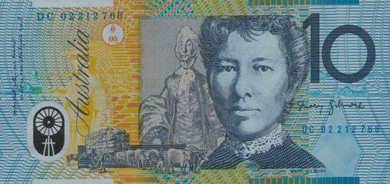
- Currency Name and Code
- Australian Dollar (AUD)
- GDP Real Growth Rate
- 2.4%
Banknotes

Budget & Public Finance
- Fiscal Year
- NA
- External Debt
- $10,000,000 (USD)
- Economic Aid
- $15,500,000 (USD)
Labor, Industry & Trade
- Industries
- fishing, handicrafts
- Agriculture Products
- copra, taro, breadfruit, sweet potatoes, vegetables; fish
- Export Commodities
- copra 62%, coconuts, seaweed, fish
- Export Partners
- Japan 54.3%, South Korea 17.1%, Thailand 17.1%
- Import Commodities
- foodstuffs, machinery and equipment, miscellaneous manufactured goods, fuel
- Import Partners
- France 30.1%, Australia 27.7%, Fiji 13.3%, Japan 9.6%, US 4.8%
Energy
- Oil Production
- 0 bbl/day
- Oil Consumption
- 200 bbl/day
- Oil Reserves
- 0 bbl/day
- Natural Gas Production
- 0 cu m
- Natural Gas Consumption
- 0 cu m
- Natural Gas Imports
- 0 cu m
- Natural Gas Exports
- 0 cu m
- Natural Gas Reserves
- 0 cu m
Communications
- Telephone System
- general assessment: generally good quality national and international service domestic: wire line service available on Tarawa and Kiritimati (Christmas Island); connections to outer islands by HF/VHF radiotelephone; wireless service available in Tarawa since 1999 international: country code - 686; Kiribati is being linked to the Pacific Ocean Cooperative Telecommunications Network, which should improve telephone service; satellite earth station - 1 Intelsat (Pacific Ocean)
- Internet Country Code
- .ki
News & Weather
News & Weather
Current Weather
Latest News
This island in Kiribati could be the key to solve the Amelia Earhart mystery - dw.com
dw.com · 8h ago
1 week out: Countdown to the search for Amelia Earhart’s plane begins - Purdue University
Purdue University · 3d ago
Water security in a changing climate: Learnings from Kiribati - Doctors Without Borders
Doctors Without Borders · 10d ago
Earhart expedition team prepares search for potential plane remains - Purdue Exponent
Purdue Exponent · 3d ago
Solar-Powered Desalination Plants Provide Clean Water to People in Kiribati Atolls - newsroom.churchofjesuschrist.org
newsroom.churchofjesuschrist.org · 196d ago
Pacific News Minute: Kiribati could change how it recognizes Taiwan again - Hawaii Public Radio
Hawaii Public Radio · 30d ago
Kiribati launches US$2.5 million ICT driven education reform with the - UNESCO
UNESCO · 136d ago
Kiribati detains Chinese ship over banned shark fin - Taipei Times
Taipei Times · 37d ago
News via Google News
Frequently Asked Questions
Frequently Asked Questions
What is the population of Kiribati?
What is the capital of Kiribati?
Where is Kiribati located?
What are the ocean and sea borders of Kiribati?
What is the dominant religion in Kiribati?
What currency is used in Kiribati?
What languages are spoken in Kiribati?
What is the geography of Kiribati like?
What is Kiribati known for?
Last reviewed 2026