
 English
 Español
 中文
中文 हिन्दी
 Français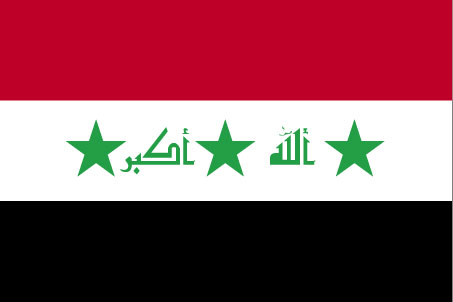
Iraq
Al Iraq
Declare Your Relationship to Iraq
CountryReports Community
- Studying3
- From Iraq1
- Iraq heritage1
- Visited1
- Want to visit1
Customs and Culture
Customs and Culture
About the People
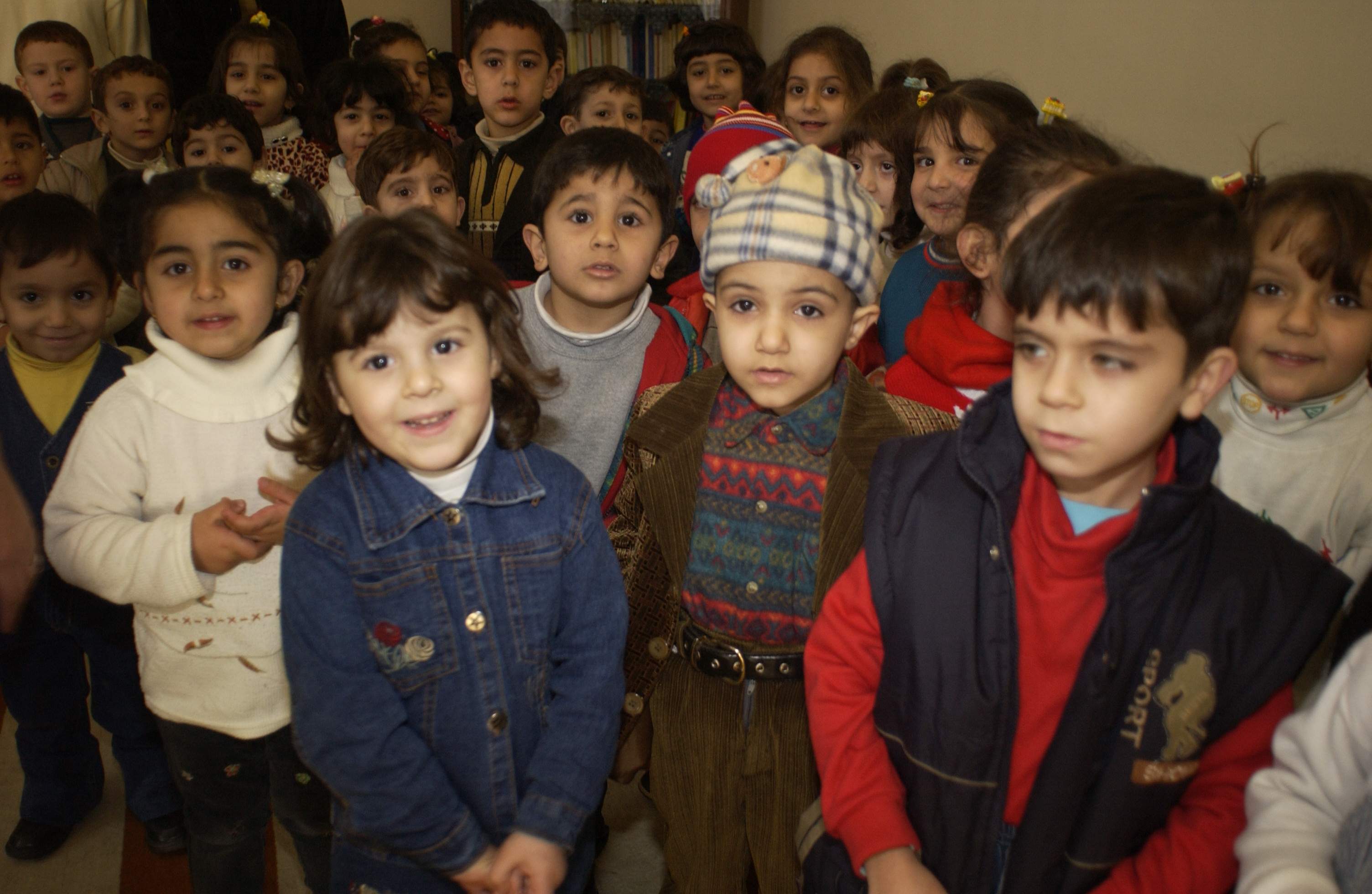
Generally, reserve is the norm, and respect for the older generation is a key. People always give up seats on the bus for older people. Men will offer a seat to women, especially if they have children. There is intense pride in national sovereignty, expressed in solidarity shown in national events. The level of women educated to university level has dropped over the last ten years.
Cultural Attributes
Generally, the reserve is the norm, and respect for the older generation is key. People always give up seats on the bus for older people. Men will offer a seat to women, especially if they have children. There is intense pride in national sovereignty, expressed in solidarity shown in national events. The level of women educated to university level has dropped over the last ten years.

Land of Two Rivers, Seat of Empires
Greetings, Gestures & Visiting
Men greet other men with a kiss and commonly hold hands. This is not the case for men and women. Women do not shake hands with men. They may say Salaam Alaykom (Peace be with you) or similar. First names are only used for greeting family and friends. If an Arab does not touch someone he greets, he either does not like him or is restraining himself because he perceives the person is unaccustomed to being touched. After shaking hands, the gesture of placing the right hand to the heart is a greeting with respect or sincerity.
Objects are always passed with the right hand or both hands, and it is impolite to point with the finger or signal to another person with the hand. Gesturing with the left hand is rude. The sole should never point toward someone. Crossing the legs is generally not considered polite.
An Arab may signify “yes” with a downward nod. “No” can be signaled in several ways:
tilting one’s head slightly back and raising the eyebrows; moving one’s head back and chin upward; moving one’s head back and making a clicking sound with the tongue; or using the open palm to move from right to left toward the person.
“That’s enough, thank you,” may be indicated by patting the heart a few times.
“Excellent” is expressed with open palms toward the person.
“OK” may be shown by touching the outer edge of one’s eyes with the fingertips.
The “A-OK” (forming a circle with the index finger and thumb of one hand) gesture is considered obscene by Arabs.
The “thumbs-up” is considered obscene by the older, more traditional Arabs. The younger generation has taken on the Western identification of saying hello.
The left hand is considered unclean; the right hand should be used when gesturing.
To beckon another person, all fingers wave with the palm facing downward.
Friends and relatives visit unannounced, but otherwise warning is appreciated. Shoes are removed at the door, and usually slippers are provided. Guests wait till the host shows them to their seat. People often sit on cushions on the floor. It is polite to take a gift of flowers, wine or other small item. The hosts may decline several times before graciously accepting. The male host usually talks.
The urban population dresses conservatively, and most women wear a scarf or head shawl. In rural areas, men wear the galabea and loose pants. Effort is made to be clean and neat even when conditions are difficult.
Diet
Devout Muslims do not eat pork, and eat only halaal meat. The Iraq diet is based around rice, unleavened bread, spiced meat dishes and stuffed vegetables.Strong coffee or tea is served before all meals. The main meal is usually mid-afternoon.
Women may eat in a different area, and serve the men. Food is prepared in abundance for the guests. The right hand is used only to eat, and food is often eaten in the hand.
Devout Muslims do not eat pork, and eat only halaal meat. The Iraq diet is based around rice, unleavened bread, spiced meat dishes and stuffed vegetables.Strong coffee or tea is served before all meals. The main meal is usually mid-afternoon.

Family
Couples can live either with the husband's extended family or in a nuclear unit. Due to economic hardship, the extended family prevails. The oldest male heads the group manages the property and makes final decisions about issues like education, work, and marriage. Women are likely to retain all domestic and child-rearing responsibilities even though they may work outside the home. Older women exercise authority over their son's wives and children. Male children are often given privileges over female children. A man inherits twice as much as a woman.
Dating Customs
In urban settings, women and men have more choice over their partner, but introductions (and outings) are often set up by members of the family. Arranged marriages used to be the norm, but not now. Since the Gulf war, the government decreed that men can marry war widows. Women are forbidden to marry non-Iraqi men. Divorce is accepted, but only if it is initiated by the man.
Recreation
Football (soccer) is Iraq’s national passion. A popular venue in Baghdad is Al-Sha’ab (“People’s”) Stadium, where throngs of Iraqis wait outside the gates even after the stadium has filled. Millions more watch via television throughout the country. Outdoor activities are popular in the north mountain regions. Swimming and fishing are popular in the Tigris and Euphrates during the summer. Rural women enjoy visiting and making handicrafts together.
Holidays
Revolution Day
7/17Independence
A public holiday celebrating the return to power in 1968 of the Ba'th Party, which advocates a single Arab Socialist nation.
New Years Day
1/1Other
Army Day
1/6Other
Commemorating the Iraqi army's 1921 founding and the day officers traditionally were promoted
Eid Al Adha
2/2Religious
Eid al Adha is a four day celebration when Muslims from all over the world offer a sacrifice by slaughtering a sheep, cow, or goat following the traditional Islamic customs. It is also called the Festival of Sacrifice. The meat from the sacrifice is shared by friends, neighbors, relatives, and also distributed to the poor and needy. Eid al Adha ends in the Pilgrimage called Hajj of the Muslim faithful in the Holy places of Mecca and Medina.
For those who had made the Pilgrimage, more is required. When the meal of sacrifice was over, pilgrims shaved their heads or cut off a lock of hair. After washing and putting on clean clothes, they returned to Mecca and completed the hajj by circling the Kaaba. When they finished they knew they had successfully done the will of God and completed the Fifth Pillar of Islam.
Revolution Anniversary
2/8Independence
Anniversary of the 1963 coup
Islamic New Year
2/22Religious
Ashoora
3/2Other
Ashoora commemorates the martyrdom in 680 AD of Muhammed's grandson Hussein. His grave site in Kerbala, Iraq has become a popular pilgrimage site for Shi'ite Muslims. On this holiday, processions re-enacting Hussein's funeral are held. Plays depicting Hussein's life are performed. And special litanies are recited in mosques. This holiday is widely observed by Shi'ite Muslims, however some Suni Muslims may also celebrate this day.
Nau Roy
3/21Other
Iraqi Kurds celebrate Nau Roy ("new day"), a festival also celebrated by Persians, Azeries and Afghans. Nau Roy marks the first day of spring (March 21) and also commemorates the legendary anniversary of the people being freed from the rule of a tyrant. The day is celebrated with parades, singing, dancing, poetry recitals, plays, picnics and the lighting of bonfires. Nau Roy is also the beginning of the Kurdish calendar year.
Labour Day
5/1Other
Prophets Birthday
5/2Birthday
The month of Rabi’ al-Awwal (the First Spring Season) of the Islamic Calendar is well known in the entire Muslim world as Shahr al-Mawhid or Mawlid al-Nabi (the Month of Birth) of the Prophet Muhammad. The precise date of his birth is disputed among the historians, but 12 of Rabi’ al-Awwal is acknowledge ito be the date and it is officially stated as a national holiday. Muhammad was born about A. D. 570 and died in A. D. 632.
At a critical point in his life, Muhammad received a vision of the angel Gabriel who called him into service as a prophet. He later received a second vision of Gabriel who told him to "magnify thy Lord." Muhammad then began to preach publicly in Mecca where he had lived for many years. Many people were receptive to his message but others ridiculed him. Because of the opposition of many citizens of Mecca and threats against him, Muhammad fled to Yathrib in A. D. 622. This journey of nearly 200 miles is known as the Hegira and is so important that the Muslim calendar begins with the year of the Hegira.
The celebration probably started in Egypt in the 13th century, a time when Christian crusaders were trying to take over the Holy Land which came under the rule of King Saladin. Noted in history that the celebration was found during the reign of Wazir al-Afdlal (487-515 AH/1095-1121 CE) of the Fatimite regime in Egypt. The celebration was held during the day time and attended by government officials and Muslim spiritual leaders in town. The Fatimite amir as a head of state sat in the balcony of the palace and three speakers in sequence delivered their Mawlid speeches.
Ibnu Khalikan’s historical report says that Ahly as-Sunnah version of the Prophet’s birthday celebration was introduced in Egypt by Al-Malik Muzaffar Ad-Din Kukburi in 604 AH/1207 CE. Kukburi was brother of Salahuddin al-Ayyubi (Saladin). These were the days of Crusade where almost 200 years waves after waves of crusaders from Europe came to the heart of the Muslim world in the Middle East to fight Muslims in their own countries.
Heres i a description of the festivities which first started in Egypt in the 13th century:
"A tower made of wood for the Amir (prince, or military governor) was erected (built) in the courtyard of the palace. People attending the festival were entertained by groups of musicians and singers of various kinds. Week after week during the month ... streets of Cairo were overcrowded by people who celebrated the occasion. On the eve of [the birthday] after prayer, people under the command of the Amir paraded on the street of Cairo starting from the Citadel proceeding to the Palace. In their hands were torches. On the Prophet's Birthday all citizens assembled in the courtyard of the Palace where a tower made of wood had been erected. Beside the tower stands a pulpit for the speakers who would sermon the audience and narrate (tell) the story of the Prophet's birthday. The Amir was not only able to see the whole audience from the tower but also watched the troops who parade on one corner of the courtyard. Guests of honor were received by the Amir on the tower and were given [robes] of honor. In the evening the Amir and officers of the state celebrated ... [with religious leaders]."
"From Egypt the tradition of celebrating the Prophet's birthday was spread to Mecca .... From the Holy City where Muslim peoples of different nationals assembled during the hajj season each year, the tradition was spread to [the rest of the Muslim world]."
Today on this day, special prayers are said in honor of Muhammad, his name is praised in public sermons (speeches), and in larger cities and towns lights and banners decorate the streets. People eat sweets, meet with friends and family, play games, and just relax.
National Day
7/14Independence
Anniversary of the coup d'etat in 1958 in which the army killed King Feisal II and Crown Prince Abdul Illah, seized Baghdad, and declared a republic.
Peace Day
8/8Other
Peace Day commemorates the anniversary of the ceasefire in the war with Iran in 1988.
Eid Al Fitr
11/14Religious
Eid Al Fitr is known as the Celebration of Fast-Breaking which signals the end of Ramadan. It is a three day celebration during which time family and friends gather together for long meals, the sharing of gifts, and religious devotion.
Eid al-Fitr is an opportunity for the faithful to celebrate their renewed commitment that they achieved through the month long fast, and to thank God for having seen them through it.
Ramadan
9Religious
The ninth month of the Muslim calendar is Ramadan, a month of fasting. During the month, all people, with the exception of the infirm and young children, refrain from eating and drinking from sunrise to sunset. People rise very early to have a meal before daybreak, then gather after dark for supper, which often begins with dates. Ramadan ends with the largest Islamic celebration, Id al-Fitr (or Eid), which occurs on the first day of Shawwal, the tenth month. People exchange Eid cards and give food and money to the needy. Children wear new clothes, girls decorate their feet and hands with henna, and families and friends exchange visits. Ramadan commemorates the month in which the Prophet Muhammad first received the messages that became the Qur'an
Id al-Adha
12/10Birthday
The holiday of Id al-Adha or Feast of the Sacrifice honours Abraham's willingness to sacrifice his son Issac. Falling on the tenth of Dhu al Hijjah, the twelfth month of the year, the occasion is often marked with the sacrifice of a lamb, whose meat is distributed to the poor. Other celebrations include Mohammed's birthday and ascension. Shi'ite Muslims also celebrate the deaths and birthdays of significant imams. An especially important day commemorates the martyrdom of Husayn (or Hussein), the third Imam
Christmas
12/25Christmas
Dates of Interest
- December 25th
The holiday of Id al-Adha or Feast of the Sacrifice honours Abraham's willingness to sacrifice his son Issac. Falling on the tenth of Dhu al Hijjah, the twelfth month of the year, the occasion is often marked with the sacrifice of a lamb, whose meat is distributed to the poor. Other celebrations include Mohammed's birthday and ascension. Shi'ite Muslims also celebrate the deaths and birthdays of significant imams. An especially important day commemorates the martyrdom of Husayn (or Hussein), the third Imam.
How do people greet each other in Iraq?
Men greet other men with a kiss and commonly hold hands, while women do not shake hands with men; a common verbal greeting is "Salaam Alaykom" (Peace be with you).
Do
- Place your right hand to your heart after shaking hands to show respect or sincerity
- Reserve first names for family and friends only
Don’t
- Don't expect women to shake hands with men
Good to know
- If an Arab doesn't touch someone he greets, he may be restraining himself because he senses the person is unaccustomed to being touched
What are the dining customs in Iraq?
Meals are prepared in abundance for guests, with strong coffee or tea served before all meals and the main meal usually taken mid-afternoon.
Do
- Use your right hand only to eat, as food is often eaten by hand
Don’t
- Devout Muslims don't eat pork and eat only halaal meat
Good to know
- Women may eat in a separate area and serve the men
- The diet centers on rice, unleavened bread, spiced meat dishes and stuffed vegetables
What etiquette should I know when visiting an Iraqi home?
Reserve is the norm and respect for elders is key; guests should wait to be shown to their seats, and people often sit on cushions on the floor.
Do
- Remove your shoes at the door (slippers are usually provided)
- Bring a small gift such as flowers or wine
- Give up your seat for older people; men should offer seats to women, especially with children
- Give warning before visiting unless you are a close friend or relative
Don’t
- Don't sit before the host shows you to your seat
Good to know
- Hosts may decline a gift several times before graciously accepting
- The male host usually leads the conversation
How should I dress in Iraq?
The urban population dresses conservatively, with most women wearing a scarf or head shawl.
Do
- Make an effort to look clean and neat
Good to know
- In rural areas, men wear the galabea and loose pants
Which gestures matter in Iraq?
Always use the right hand for gestures and passing objects, as the left hand is considered unclean.
Do
- Pass objects with the right hand or both hands
- Beckon someone by waving all fingers with the palm facing downward
- Pat the heart a few times to say "That's enough, thank you"
Don’t
- Don't point with a finger or signal with the hand
- Don't gesture with the left hand
- Don't let the sole of your foot point toward someone
- Avoid crossing your legs, and don't use the "A-OK" circle gesture, which is obscene
Good to know
- "Yes" is a downward nod; "no" can be a slight head tilt back with raised eyebrows or a tongue click
- The "thumbs-up" is considered obscene by older, more traditional Arabs
How is family life structured in Iraq?
The extended family prevails due to economic hardship, with the oldest male heading the group and making final decisions about education, work and marriage.
Good to know
- Women often retain domestic and child-rearing duties even while working outside the home
- Older women hold authority over their son's wives and children
- Male children are often given privileges over female children
What do people do for recreation in Iraq?
Football (soccer) is Iraq's national passion, drawing throngs to Baghdad's Al-Sha'ab Stadium and millions of TV viewers.
Good to know
- Outdoor activities are popular in the northern mountain regions
- Swimming and fishing in the Tigris and Euphrates are popular in summer
- Rural women enjoy visiting and making handicrafts together
Last updated: 2026-07-12 · Sources: CountryReports
Photos of Iraq
Photos of Iraq


Travel and Tourism
Travel and Tourism
- Travel Alert Status
- Level 4: Do Not Travel
- Currency
- New Iraqi dinar (NID) as of 22 January 2004
- Time Difference
- UTC+3 (8 hours ahead of Washington, DC, during Standard Time)
- Climate
- mostly desert; mild to cool winters with dry, hot, cloudless summers; northern mountainous regions along Iranian and Turkish borders experience cold winters with occasionally heavy snows that melt in early spring, sometimes causing extensive flooding. Average temperatures range from higher than 48oC (120oF) in July and August to below freezing in January. Most of the rainfall occurs from December through April and averages between 10 and 18 centimeters (4-7 in.) annually. The mountainous region of northern Iraq receives appreciably more precipitation than the central or southern desert region.
- Airports
- 111; note - unknown number were damaged during the March-April 2003 war
Read the full travel guide — health, safety, vaccinations, disease risk, sanitation, and transit details.
View full travel guideRecipes
Recipes
History
History
Historical Eras
Ancient Mesopotamia
3500 BCE – 633
The cradle of civilization, ancient Mesopotamia gave rise to Sumer, Babylon, and Assyria along the Tigris and Euphrates rivers. Innovations in writing, law, and agriculture flourished under rulers such as Hammurabi, Cyrus, and Darius. The region later passed through Achaemenid, Seleucid, Parthian, and Sasanian rule before the Arab-Muslim conquest.
Islamic Caliphates
633 – 1258
Arab Muslim forces conquered Iraq in 633, and the region became central to the early Islamic world. The Abbasid Caliphate, founded in 750 and centered in Baghdad, presided over a golden age of science, philosophy, and commerce. Internal strife, Shia revolts, and the Buyid invasion of 945 gradually weakened Abbasid authority before the Mongols sacked Baghdad in 1258.
Mongol & Timurid Era
1258 – 1534
The Mongol destruction of Baghdad in 1258 ended the Abbasid Caliphate and devastated Iraq's irrigation infrastructure, triggering prolonged economic and demographic decline. The region fragmented under successive Ilkhanid, Jalayirid, and Timurid overlords, with Timur's campaigns further devastating the population in the late fourteenth century. Tribal autonomy filled the vacuum left by collapsed central authority.
Ottoman Iraq
1534 – 1917
Ottoman Sultan Suleiman the Magnificent conquered Iraq in 1533–1534, incorporating it as a contested frontier zone repeatedly fought over with Safavid Persia. Governed through the vilayets of Mosul, Baghdad, and Basra, the region endured weak central control, persistent tribal autonomy, and economic stagnation for much of this period. Late nineteenth-century Tanzimat reforms and the opening of the Suez Canal brought modest modernization and renewed strategic importance.
British Mandate
1917 – 1932
British forces occupied Baghdad in 1917 during World War I, and the 1920 San Remo Conference formalized the League of Nations Mandate over Iraq. A major nationalist uprising in 1920 compelled Britain to install the Hashemite King Faisal I in 1921, creating a constitutional monarchy under continued British oversight. Iraq gained formal independence and League of Nations membership in 1932, though British influence and military presence persisted.
Monarchy to Republic
1932 – 1968
The Hashemite monarchy navigated coups, pan-Arab nationalism, and the turbulent aftermath of World War II before being overthrown in the 1958 revolution that killed King Faisal II and established the Republic of Iraq. A succession of military governments followed, marked by instability, Kurdish insurgency, and contests between Nasserist, communist, and Baathist factions. The Baath Party briefly held power in 1963 before being ousted, setting the stage for its definitive return.
Baath & Modern Iraq
1968 – present
The Baath Party seized power in 1968, and Saddam Hussein consolidated authoritarian rule by 1979, leading Iraq into the devastating Iran-Iraq War (1980–1988) and the Gulf War triggered by the 1990 invasion of Kuwait. The U.S.-led invasion of 2003 toppled Saddam Hussein, disbanding the Baathist state and unleashing prolonged sectarian conflict, the rise and fall of the Islamic State, and an ongoing struggle to build stable democratic governance.
Overview
Timeline of Key Events
3500 BCE
Known as Mesopotamia a region now in southeastern Iraq.
Known as Mesopotamia, the world’s first civilization developed in Sumer, a region now in southeastern Iraq.
627
Byzantine invasion, and the region was weakened politically and economically.
Byzantine invasion, and the region was weakened politically and economically.
633
Muslims conquered Syria and Iraq.
Muslims conquered Syria and Iraq.
680
Tragedy of Karbala
Tragedy of Karbala (in modern Iraq): Troops from Umayyad caliph Yazid I (645 - 683) murdered Husayn (c. 626 - 680) who, for the Shiites, was really the legitimate successor to the caliphate. This triggered the Shi’i’tes’ open and violent revolt against Umayyad rule, with the anniversary of Husayn’s death becoming a Shi’ite day of mourning.
685 – 687
Shi’i’te Muslims staged a revolt in Iraq.
Shi’i’te Muslims staged a revolt in Iraq.
747
Revolt by the Iraqi family Abbasi starts.
Revolt by the Iraqi family Abbasi starts.
750
The Abbasids assumed command of the Islamic world
The Abbasids assumed command of the Islamic world (except Spain, which fell under the control of a descendant of the Umayyad family) and moved the capital to Baghdad in Iraq.
Read the full history profile — narrative overview, defining eras, and the complete timeline in one place.
View expanded historyInteresting Facts
Interesting Facts
The ancient name for most of modern Iraq is Mesopotamia, a Greek word meaning “ and between two rivers” - the Euphrates and the Tigres. Most Iraqis still live in this region.
Iraq has two important winds. The eastern Sharki wind is hot and humid, while the northern Shamal wind brings welcome cooler air during summer weather.
The Hanging Gardens of Babylon, one of the Seven Wonders of the ancient world, were built in Iraq by King Nebuchadnezzar II (605-562 BC) for his wife, Amytis, to dispel her homesickness for mountainous northern Persia (Iran).
The Ba'ath Party began as a group of young activists in the government who supported Arab nationalism and socialism.
Iraqis observe the death of a family member with a 40-day mourning period. Women and men wear black, and after sundown during the first seven days (the aza), they share their grief with visitors, drinking coffee and listening to recordings of the Koran or to someone hired to read it aloud.
Iraqis begin work early while temperatures are cool. People frequently take a nap after finishing work around 2:30 or 3:00 p.m.
See every fact — trivia, oddities, and curious tidbits gathered from across the country.
View all interesting factsGeography and Environment
Geography and Environment
- Terrain
- mostly broad plains; reedy marshes along Iranian border in south with large flooded areas; mountains along borders with Iran and Turkey
- Climate
- mostly desert; mild to cool winters with dry, hot, cloudless summers; northern mountainous regions along Iranian and Turkish borders experience cold winters with occasionally heavy snows that melt in early spring, sometimes causing extensive flooding in c Average temperatures range from higher than 48oC (120oF) in July and August to below freezing in January. Most of the rainfall occurs from December through April and averages between 10 and 18 centimeters (4–7 in.) annually. The mountainous region of northern Iraq receives appreciably more precipitation than the central or southern desert region.
- Natural Hazards
- dust storms, sandstorms, floods
- Current Environmental Issues
- government water control projects have drained most of the inhabited marsh areas east of An Nasiriyah by drying up or diverting the feeder streams and rivers; a once sizable population of Marsh Arabs, who inhabited these areas for thousands of years, has been displaced; furthermore, the destruction of the natural habitat poses serious threats to the area's wildlife populations; inadequate supplies of potable water; development of the Tigris and Euphrates rivers system contingent upon agreements with upstream riparian Turkey; air and water pollution; soil degradation (salination) and erosion; desertification
Read the full geography and environment profile — terrain, climate, natural resources, hazards, land use, and international agreements.
View full geographyPeople & Demographics
People & Demographics
Religion
Languages Spoken
Arabic, Kurdish (official in Kurdish regions), Assyrian, Armenian
- Arabic
- Armenian
- Kurdish
Population
- Population
- 29,671,605
- Population in Major Urban Areas
- BAGHDAD (capital) 6.036 million; Mosul 1.494 million; Erbil 1.039 million; Basra 942,000; As Sulaymaniyah 867,000; Najaf 779,000
- Nationality Noun
- Iraqi(s)
- Ethnic Groups
- Arab 75%-80%, Kurdish 15%-20%, Turkoman, Assyrian or other 5%
- Language Note
- The majority of Iraqis speak Arabic, with variations in dialect according to region. Modern standard Arabic is spoken by educated Iraqis and is the written language. Other languages spoken include Chaldean, Armenian, Syriac, Turkish dialects and Persian. English is the most widely used foreign language and is taught in Iraqi schools.
Education
- Literacy Definition
- age 15 and over can read and write
Health Information
- Life Expectancy at Birth
- 71.14
- Major Infectious Diseases — degree of risk
- intermediate
- Infant Mortality Rate
- 38.86
Life Expectancy
- Life Expectancy at Birth
- 71.14
- Infant Mortality Rate
- 38.86
Read the full people and society profile — demographics, health, education, religion, languages, and notable people.
View full people and societyGovernment & Politics
Government & Politics
Country Identity
- Country Name
- Iraq
- Full Country Name
- Republic of Iraq
- Local - Long
- Al Jumhuriyah al Iraqiyah
- Local - Short
- Al Iraq
Government Structure
- Government Type
- the Iraqi Interim Government (IG) was appointed on 1 June 2004
- Legal System
- based on civil and Islamic law under the Iraqi Interim Government (IG) and Transitional Administrative Law (TAL)
- Executive Branch
- chief of state: Iraqi Transitional Government (ITG) President Jalal TALABANI (since 6 April 2005); Vice President Tariq al-Hashimi (April 2006) Deputy Presidents Adil Abd AL-MAHDI and Ghazi al-Ujayl al-YAWR (since 6 April 2005); note - the President and Deputy Presidents comprise the Presidency Council) head of government: Iraqi Transitional Government (ITG) Prime Minister Jawad al-Maliki (since April 2006); Deputy Prime Ministers Rowsch SHAWAYS, Ahmad CHALABI, and Abid al-Mutlaq al-JABBURI (since May 2005) cabinet: 32 ministers appointed by the Presidency Council, plus Prime Minister Ibrahim al-JAFARI, Deputy Prime Ministers Rowsch SHAWAYS, Ahmad CHALABI, and Abid al-Mutlaq al-JABBURI elections: held 15 December 2005 to elect a 275-member Council of Representatives
- Legislative Branch
- unicameral Council of Representatives or Mejlis Watani (consisting of 275 members elected by a closed-list, proportional-representation system) elections: held 15 December 2005 to elect a 275-member Council of Representatives that will finalize a permanent constitution election results: Council of Representatives - percent of vote by party - NA; number of seats by party - NA
- Judicial Branch
- Supreme Court appointed by the Prime Minister, confirmed by the Presidency Council
- Suffrage
- formerly 18 years of age; universal; note - in transition following April 2003 defeat of SADDAM Husayn regime by US-led coalition
- Constitution
- interim constitution signed 8 March 2004; note - the Transitional Administrative Law (TAL) was enacted 8 March 2004 to govern the country until an elected Iraqi Government can draft and ratify a new constitution in 2005
- Independence
- 3 October 1932 (from League of Nations mandate under British administration); note - on 28 June 2004 the Coalition Provisional Authority transferred sovereignty to the Iraqi Interim Government
- National Holiday
- Revolution Day, 17 July (1968); note - this holiday was celebrated under the SADDAM Husayn regime but the Iraqi Interim Government has yet to declare a new national holiday
Capital City
- Capital Name
- Baghdad
- Capital - geographic coordinate
- 33 20 N, 44 24 E
- Capital Time Difference
- UTC+3 (8 hours ahead of Washington, DC, during Standard Time)
although the origin of the name is disputed, it likely has compound Persian roots with bagh and dad meaning "god" and "given" respectively to create the meaning of "bestowed by God"
Military
Branches: Counterterrorism Service Forces: Counterterrorism Command; Iraqi Special Operations Forces (ISOF); Ministry of Defense Forces: Iraqi Army (includes Army Aviation Directorate, former National Guard Iraqi Intervention Forces, and Strategic Infrastructure Battalions), Iraqi Navy (former Iraqi Coastal Defense Force, includes Iraq Marine Force), Iraqi Air Force (Al-Quwwat al-Jawwiya al-Iraqiya)
Embassy / Diplomatic Mission
U.S. Embassy Baghdad
Al-Kindi Street
International Zone
Baghdad, Iraq
Telephone: 0760-030-3000
Telephone: 301.985.8841, ext. 4293 or 2413 (U.S. dial numbers that ring in Baghdad)
U.S. Citizen Emergency After-hours telephone: 011-964-770-443-1286 from the U.S. or 0770-443-1286 from within Iraq
Email: baghdadacs@state.gov
U.S. Consulate General Erbil
413 Ishtar, Ankawa Erbil, Iraq
Telephone: 0770-443-4396
E-mail: ErbilACS@state.gov
U.S. Consulate General Basrah
Basrah, Iraq (near Basrah International Airport)
At this time, U.S. Consulate General Basrah does not provide non-emergency consular services; please contact the U.S. Embassy in Baghdad for assistance.
U.S. Consulate Kirkuk
At this time, U.S. Consulate Kirkuk does not provide non-emergency consular services please contactthe U.S. Embassy in Baghdad for assistance.
The International Zone (IZ) is a restricted-access area. Iraqi authorities control access to the IZ. U.S. citizens seeking to enter the IZ to obtain consular services at the U.S. Embassy should email the American Citizens Services unit for IZ entry information.
Read the full government profile — flag symbolism, national anthem, and other national symbols.
View full government detailsEconomy
Economy
Iraq possesses one of the largest oil reserves in the world, estimated at approximately 145 billion barrels, ranking it among the top five globally. The economy is heavily dominated by the hydrocarbon sector, which typically accounts for more than 85 percent of government revenue, around 80 percent of foreign exchange earnings, and roughly 40 percent of gross domestic product. This dependence makes Iraq highly vulnerable to fluctuations in global oil prices.
Crude oil production has recovered substantially since the disruptions of the 2003 war and the conflict with the Islamic State, reaching around 4.3 to 4.5 million barrels per day in recent years. The Basra region in the south accounts for the bulk of national output, while the semi-autonomous Kurdistan Region operates its own oil sector, which has been a source of recurring disputes with the federal government in Baghdad over revenue sharing and export rights.
Outside of oil, Iraq's economy remains underdeveloped. Agriculture, once a significant employer along the Tigris and Euphrates river basins, has been weakened by water scarcity, soil salinization, outdated infrastructure, and decades of conflict. Key crops include wheat, barley, dates, and rice, with Iraq historically being one of the world's leading date producers. The manufacturing sector is small, focused on petrochemicals, cement, textiles, and food processing.
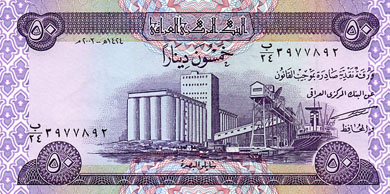
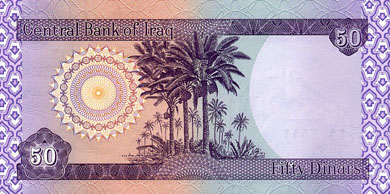
The Iraqi dinar is the national currency, and the Central Bank of Iraq manages monetary policy. Inflation has generally been kept in moderate single digits, though the dinar was devalued in late 2020 to address fiscal pressures. Unemployment remains a persistent challenge, particularly among youth, with rates often exceeding 25 percent for those under 25. The public sector employs a large share of the workforce, placing significant strain on the national budget.
Iraq faces structural challenges including widespread corruption, weak institutions, deteriorating infrastructure, and an unreliable electricity supply that often necessitates imports from neighboring Iran. The country has sought to diversify through initiatives such as the Development Road project, a planned transport corridor linking the Gulf to Turkey, and through partnerships with international energy and construction firms. Reconstruction needs, particularly in areas affected by the 2014–2017 conflict, are estimated to require tens of billions of dollars.
Snapshot
- Currency Name and Code
- Iraqi Dinar (IQD)
- GDP — official exchange rate
- $46,500,000,000 (USD)
- GDP Real Growth Rate
- -3%
Banknotes
Budget & Public Finance
- Fiscal Year
- calendar year
- Annual Budget
- $24,000,000,000 (USD)
- External Debt
- $82,100,000,000 (USD)
- Economic Aid
- $33,000,000,000 (USD)
- Current Account Balance
- -$9,447,000,000 (USD)
- Reserves of Foreign Exchange
- $2,147,483,647 (USD)
Labor, Industry & Trade
- Labor Force by Occupation
- agriculture NA%; industry NA%; services NA%
- Industries
- petroleum, chemicals, textiles, construction materials, food processing
- Agriculture Products
- wheat, barley, rice, vegetables, dates, cotton; cattle, sheep
- Export Commodities
- crude oil
- Export Partners
- US 37.4%, Taiwan 7.7%, Canada 7.5%, France 7.5%, Jordan 6.9%, Netherlands 5.8%, Italy 4.9%, Morocco 4.3%, Spain 4.1%
- Import Commodities
- food, medicine, manufactures
- Import Partners
- Jordan 10.4%, France 8.4%, China 7.9%, Vietnam 7.9%, Germany 7.2%, Russia 6.9%, Australia 6.8%, Italy 6.1%, Japan 5.3%
Energy
- Oil Production
- 2,093,000 bbl/day
- Oil Consumption
- 351,500 bbl/day
- Oil Reserves
- 112,500,000,000 bbl/day
- Natural Gas Production
- 1,500,000,000 cu m
- Natural Gas Consumption
- 1,500,000,000 cu m
- Natural Gas Imports
- 0 cu m
- Natural Gas Exports
- 0 cu m
- Natural Gas Reserves
- 3,115,000,000,000 cu m
Communications
- Telephone System
- general assessment: the 2003 liberation of Iraq severely disrupted telecommunications throughout Iraq including international connections; widespread government efforts to rebuild domestic and international communications through fiber optic links are in progress; the mobile cellular market has expanded rapidly to some 27 million subscribers by the end of 2012 domestic: repairs to switches and lines destroyed during 2003 continue; additional switching capacity is improving access; 3 GSM operators since 2007 have expanded beyond their regional roots and offer near country-wide access to second-generation services; third-generation mobile services are not available nationwide; wireless local loop is available in some metropolitan areas and additional licenses have been issued with the hope of overcoming the lack of fixed-line infrastructure international: country code - 964; satellite earth stations - 4 (2 Intelsat - 1 Atlantic Ocean and 1 Indian Ocean, 1 Intersputnik - Atlantic Ocean region, and 1 Arabsat (inoperative)); local microwave radio relay connects border regions to Jordan, Kuwait, Syria, and Turkey; international terrestrial fiber-optic connections have been established with Saudi Arabia, Turkey, Kuwait, Jordan, and Iran; links to the Fiber-Optic Link Around the Globe (FLAG) and the Gulf Bridge International (GBI) submarine fiber-optic cables have been established
- Internet Country Code
- .iq
News & Weather
News & Weather
Current Weather
Latest News
U.S. military identifies 2 soldiers killed in Iranian attack in Jordan - NBC News
NBC News · 7h ago
Thousands Of Trucks Haul Iraq’s Oil Through Syria In Sign Of Hormuz Legacy - Bloomberg.com
Bloomberg.com · 2d ago
Iraq and Syria sign agreement to restore oil pipeline that would provide alternative to Strait of Hormuz - CNBC
CNBC · 3d ago
US oil firms sign deals with Iraq to develop alternative shipping routes - AP News
AP News · 3d ago
Flavours of Iraq review – vivid childhood memories of 80s Baghdad from writer in Paris exile - The Guardian
The Guardian · 17h ago
He emigrated from Iraq and was saved by soccer. Now he’s giving back. - The Baltimore Banner
The Baltimore Banner · 1d ago
Archaeologists discover rare 2,600-year-old stele of Assyrian king in Iraq's Nineveh - The Jerusalem Post
The Jerusalem Post · 1d ago
ISIS poised to exploit historic US Iraq exit, terror group 'actively waiting in the gaps,' expert warns - Yahoo
Yahoo · 23h ago
News via Google News
Climate Overview
mostly desert; mild to cool winters with dry, hot, cloudless summers; northern mountainous regions along Iranian and Turkish borders experience cold winters with occasionally heavy snows that melt in early spring, sometimes causing extensive flooding.
Average temperatures range from higher than 48oC (120oF) in July and August to below freezing in January. Most of the rainfall occurs from December through April and averages between 10 and 18 centimeters (4-7 in.) annually. The mountainous region of northern Iraq receives appreciably more precipitation than the central or southern desert region.
Videos
Videos
1 curated YouTube videos.
Source: YouTube
Frequently Asked Questions
Frequently Asked Questions
What is the population of Iraq?
How do people greet each other in Iraq?
What are the dining customs in Iraq?
What etiquette should I know when visiting an Iraqi home?
How should I dress in Iraq?
Which gestures matter in Iraq?
How is family life structured in Iraq?
What do people do for recreation in Iraq?
What is the capital of Iraq?
Where is Iraq located?
What countries border Iraq?
What religion is practiced in Iraq?
What is the currency of Iraq?
What languages are spoken in Iraq?
What is the geography of Iraq like?
What is Iraq known for?
Last reviewed 2026