
 English
 Español
 中文
中文 हिन्दी
 Français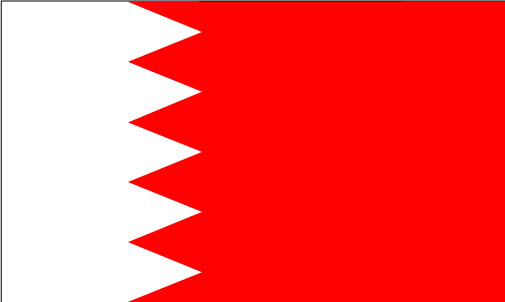
Bahrain
Al Bahrayn
Declare Your Relationship to Bahrain
CountryReports Community
- Studying7
- From Bahrain2
- Bahrain heritage1
- Visited2
- Want to visit1
Customs and Culture
Customs and Culture
Cultural Attributes
Extended family is very important.

The Island of Two Seas
Get More Customs and Culture
5 more cultural topics for members
Social Customs & Etiquette · Diet · Family · Dating Customs · Recreation
Every country, every topic, all activities & recipes
✓ Instant access on this device · ✓ No subscription
Holidays
National Day
12/16Independence
15 August 1971 is the date of independence from the UK, 16 December 1971 is the date of independence from British protection
Dates of Interest
- July - August
Ramadan, the greatest religious observance in Islam, is an annual month of fasting. The exact dates of Islamic holidays cannot be determined in advance, due to the nature of the Islamic lunar calendar. Estimates are based on the expected visibility of the hilal (waxing crescent moon following a new moon) and may vary according to location.
How do people greet each other in Bahrain?
Arabic greetings dominate, with the common "Salam malaikum" (Peace be with you) answered by "Malaikum salam." Islam strongly influences social greetings, and good friends of the same sex greet by kissing on the right and left cheeks.
Do
- Say "Marhaba" for hello and "Shokran" for thank you
- Use handshakes, which are common and may last the length of the conversation
- Greet good friends of the same sex with kisses on both cheeks
Don’t
- Don't have a man greet a woman unless it is part of business protocol
Good to know
- Arab names are long: first name, father's name, paternal grandfather's name, then family name
- "Bin" and "Ibn" mean "Son of" and "Abu" means "Father of"
What are dining customs like in Bahrain?
Meals are eaten seated on an Arabic sofa from communal dishes, with coffee marking hospitality. Conversation happens before dinner, but there is no conversation during the meal.
Do
- Eat while seated on an Arabic sofa
- Share from communal dishes
- Expect coffee served after the meal, after which guests may leave
Don’t
- Don't expect pork, which is forbidden due to Islamic influence
- Don't converse during dinner
Good to know
- Coffee may be served before the meal as a welcome for guests
- Common foods include vegetables, lamb, fish, chicken and beef, often with basmati rice
- A popular dish is ghouzi: chicken stuffed with rice, nuts, onions and hard-boiled eggs inside a whole lamb, cooked on a spit
How do people dress in Bahrain?
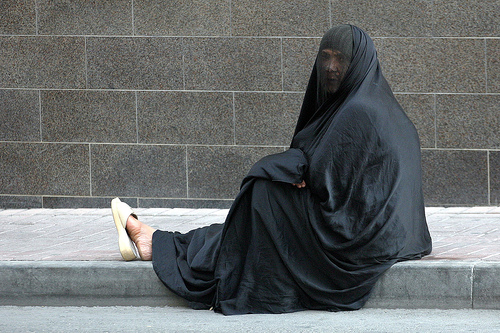
Dress reflects Islamic and Arab Bedouin roots. Men wear a long ankle-length robe called a "Thobe."
Good to know
- The head is covered by a light cloth headdress ("Gutra") held on by a heavy cloth ring ("Ocal")
- In cities, men may wear a sports coat over the Thobe and shoes instead of sandals
Are there gestures to avoid in Bahrain?
Yes, footwear placement carries meaning.
Don’t
- Don't show others the soles of your shoes, as it is disrespectful
What is the role of family in Bahrain?
Extended family is very important, and the father is the head of the house.
Good to know
- Many marriages are arranged, and those that are not typically have parental approval
- Marriage celebrations often last three days with separate events for men and women
What do people do for recreation in Bahrain?
Soccer is the most popular sport, followed by cricket and basketball, while camping is a favorite family activity.
Good to know
- Drinking tea and chatting in coffee houses is a popular pastime for men
Last updated: 2026-07-12 · Sources: CountryReports
Photos of Bahrain
Photos of Bahrain


Travel and Tourism
Travel and Tourism
- Travel Alert Status
- Level 2: Exercise Increased Caution
- Currency
- .376
- Time Difference
- UTC+3 (8 hours ahead of Washington, DC during Standard Time)
- Climate
- Bahrain, with a desert climate, is one of the world's hottest areas. Its hottest and most humid weather is from June through September with temperatures over 110°F most days. The weather is pleasant from November through May (55°-85°F) with infrequent rainfall. The combination of poor soil drainage and few storm sewers can result in muddy city streets and puddles. A narrow strip of land along the northern and northwestern coasts of Bahrain Island is cultivated with date palms, alfalfa, and vegetables. These garden areas are rapidly disappearing due to depleted water resources and development. A desert, punctuated by a north-south plateau, extends south of the cultivated area. Surrounding this plateau is a rolling basin surrounded by overhanging bluffs sloping into the sea. The ground is hard and infertile with a gravel surface until the spring when a pale, soft green covering appears in the desert following the winter rains. It provides a welcome contrast to the summer's aridity. The highest point in Bahrain is the Jebel Dukhan, 134 meters above sea level. The majority of Bahrain's oil wells are in this area. The Arabian Gulf has an average depth of only 35 meters but is much shallower in the vicinity of Bahrain.
- Airports
- 4
- Recommended Vaccinations
- How important is it to do your research about vaccinations? It might just save your life! Make yourself aware of the different types of vaccinations and which ones you may need to travel to your destination. Schedule an appointment with your doctor at least four to six weeks before you travel to ensure you receive all important shots. Be sure that you and your family are up to date on your routine vaccinations. Which vaccinations you need will depend on a number of factors including your destination, whether you will be spending time in rural areas, the season of the year you are traveling, your age, health status, and previous immunizations.
Read the full travel guide — health, safety, vaccinations, disease risk, sanitation, and transit details.
View full travel guideRecipes
Recipes
History
History
Historical Eras
Ancient Dilmun
3000 BCE – 300
Bahrain formed the heart of the ancient Dilmun civilization, one of the oldest trading cultures in the Persian Gulf, mentioned in Sumerian texts as a sacred land and commercial hub linking Mesopotamia with the Indus Valley. The archipelago's freshwater springs and strategic location made it a prosperous entrepôt. Dilmun later came under Kassite, Assyrian, and eventually Greek influence following Alexander the Great's campaigns.
Persian & Islamic Eras
300 – 1521
Bahrain passed through Sasanian Persian control before the rapid spread of Islam incorporated the islands into the Arab-Muslim world in the 7th century CE. The region became a center of the Qarmatian movement, a radical Ismaili sect that established a powerful state in the 9th–10th centuries and briefly disrupted hajj routes. Subsequently, Arab tribal confederacies and Persian governors contested control, while pearl diving and Gulf trade sustained the local economy.
Portuguese Rule
1521 – 1602
Portuguese forces seized Bahrain in 1521, incorporating it into their Indian Ocean commercial empire and constructing the fortified Qal'at al-Bahrain as a garrison. Their rule was marked by heavy taxation of the lucrative pearl trade and periodic local resistance. In 1602, Safavid Persian forces under Shah Abbas I expelled the Portuguese and reasserted Persian sovereignty over the archipelago.
Safavid & Al Khalifa Rise
1602 – 1820
Bahrain remained under Safavid and later Omani and competing tribal control for much of the 17th and early 18th centuries. In 1783, the Bani Utbah confederation led by the Al Khalifa family decisively expelled the Persian-backed rulers and established the dynasty that governs Bahrain to the present day. The early Al Khalifa period was defined by inter-Gulf rivalries, pearling wealth, and shifting alliances among the major powers of the region.
British Protectorate
1820 – 1971
A series of treaties beginning in 1820 and culminating in an 1880 exclusive agreement drew Bahrain firmly into the British sphere of influence, effectively making it a protectorate. Britain managed Bahrain's foreign affairs and defense while the Al Khalifa ruled internally; oil was discovered in 1932, transforming the economy. The 1913 treaty formally recognized Bahrain's distinct status, and Iran renounced its long-standing sovereignty claim in 1970, clearing the path for full independence.
Independent Kingdom
1971 – present
Bahrain declared full independence on August 15, 1971, signing a friendship treaty with Britain and joining the Arab League and United Nations. The country navigated regional turbulence — including participation in the 1991 Gulf War coalition and Shia-Sunni sectarian tensions — while diversifying its economy into banking and petroleum refining as oil reserves declined. In 2002, Amir Hamad bin Isa Al Khalifa proclaimed Bahrain a constitutional monarchy, introduced parliamentary elections, and extended voting rights to women.
Overview
Sharjah Mosque, built in the 1980s in traditional style
Every country, every topic, all activities & recipes
✓ Instant access on this device · ✓ No subscription
Timeline of Key Events
1913
Treaty recognizing the independence of Bahrain
Britain and the Ottoman government sign a treaty recognizing the independence of Bahrain but the country remains under British administration.
1961
Sheikh Isa Bin-Salman Al Khalifah becomes ruler of Bahrain.
Sheikh Isa Bin-Salman Al Khalifah becomes ruler of Bahrain.
1970
Iran renounces its claim to sovereignty over Bahrain
Iran renounces its claim to sovereignty over Bahrain after a United Nations report shows that Bahrainis want to remain independent.
1971
Bahrain declares independence and signs a new treaty of friendship with Britain.
Bahrain declares independence and signs a new treaty of friendship with Britain.
1972
Elections are held for a Constituent Assembly
Elections are held for a Constituent Assembly.
1973
Constitution comes into force and elections are held
After the constitution comes into force on 6 December, elections are held on 7 December for a National Assembly, an advisory legislative body, with 44 members (14 cabinet members and 30 elected by male voters) .
1991
Bahrain participates in the coalition “Operation Desert Storm” against Iraq.
As part of the Gulf Cooperation Council (GCC) Peninsula Shield Force, Bahrain participates in the coalition “Operation Desert Storm” against Iraq (the Gulf War).
Read the full history profile — narrative overview, defining eras, and the complete timeline in one place.
View expanded historyInteresting Facts
Interesting Facts
Bahrain is the world's least taxed country.
Bahrain derives its name from an Arabic word meaning “ two seas,” which refers to the blend of fresh water springs and salt sea water in Bahraini territory.
Traditionally, Bahraini streets were narrow to provide shade against the heat of the day. The narrow pathways blocked the sun, but deflected cool breezes upwards so devices called badgirs (wind catchers) were created to deflect the air downwards.
The land area of Bahrain has expanded over time because of land reclaimed from the sea. Sand and stone dredged up from the sea bed to deepen the port at Manama has been deposited around the shoreline.
2 more facts for members
Every country, every topic, all activities & recipes
✓ Instant access on this device · ✓ No subscription
Geography and Environment
Geography and Environment
- Terrain
- mostly low desert plain rising gently to low central escarpment
- Climate
- Bahrain, with a desert climate, is one of the world’s hottest areas. Its hottest and most humid weather is from June through September with temptures over 110ºF most days. The weather is pleasant from November through May (55º-85ºF) with infrequent rainfall. The combination of poor soil drainage and few storm sewers can result in muddy city streets and puddles. A narrow strip of land along the northern and northwestern coasts of Bahrain Island is cultivated with date palms, alfalfa, and vegetables. These garden areas are rapidly disappearing due to depleted water resources and development. A desert, punctuated by a north-south plateau, extends south of the cultivated area. Surrounding this plateau is a rolling basin surrounded by overhanging bluffs sloping into the sea. The ground is hard and infertile with a gravel surface until the spring when a pale, soft green covering appears on the desert following the winter rains. It provides a welcome contrast to the summer’s aridity. The highest point in Bahrain is the Jebel Dukhan, 134 meters above sea level. The majority of Bahrain's oil wells are in this area. The Arabian Gulf has an average debth of only 35 meters but is much shallower in the vacinty of Bahrain.
- Natural Hazards
- periodic droughts; dust storms
- Current Environmental Issues
- desertification resulting from the degradation of limited arable land, periods of drought, and dust storms; coastal degradation (damage to coastlines, coral reefs, and sea vegetation) resulting from oil spills and other discharges from large tankers, oil refineries, and distribution stations; lack of freshwater resources, groundwater and seawater are the only sources for all water needs
Read the full geography and environment profile — terrain, climate, natural resources, hazards, land use, and international agreements.
View full geographyPeople & Demographics
People & Demographics
Religion
Languages Spoken
Arabic, English, Farsi, Urdu
- Arabic
- Farsi
- Urdu
Population
- Population
- 1,508,108
- Population in Major Urban Areas
- MANAMA (capital) 262,000
- Nationality Noun
- Bahraini(s)
- Ethnic Groups
- Bahraini 63%, Asian 19%, other Arab 10%, Iranian 8%
Education
- Literacy Definition
- Age 15 and over can read and write
Life Expectancy
- Life Expectancy at Birth
- Life expectancy at birth in Bahrain stands among the highest in the Arab world and reflects the country's significant investments in healthcare infrastructure and public health services. As of recent estimates, the average life expectancy at birth is approximately 79 years overall, with women living to around 80–81 years and men to approximately 77–78 years. This relatively high figure is the result of several interconnected factors. Bahrain has developed a well-funded public healthcare system that provides subsidized or free medical services to its citizens, with a network of government hospitals, health centers, and specialized clinics distributed across the archipelago. The country has also made considerable progress in reducing infant and child mortality rates, which directly contributes to improved overall life expectancy statistics. Chronic non-communicable diseases, particularly cardiovascular disease, diabetes, and obesity, remain the leading health challenges in Bahrain. The prevalence of type 2 diabetes is notably high, affecting a significant portion of the adult population, and the government has introduced national programs aimed at promoting healthier diets, physical activity, and early disease screening to address these trends. Bahrain's life expectancy has climbed steadily over recent decades. In the 1970s, life expectancy at birth was estimated to be in the low 60s. This dramatic improvement over roughly 50 years reflects advances in sanitation, maternal health, vaccination coverage, and access to modern medical treatments. The country's relatively small and manageable geographic size has allowed healthcare services to be delivered efficiently across the population. Bahrain also benefits from a higher-than-average per capita income in the Gulf region, enabling greater household spending on nutrition and private healthcare options alongside government provisions. Looking ahead, the government continues to invest in healthcare modernization as part of its Vision 2030 economic and social development framework, which includes goals for expanding preventive care, strengthening mental health services, and improving population health outcomes over the long term.
- Infant Mortality Rate
- Bahrain has achieved remarkable progress in reducing infant mortality over recent decades, reflecting the country's significant investment in healthcare infrastructure and public health programs. The infant mortality rate in Bahrain stands at approximately 6 to 7 deaths per 1,000 live births, placing it among the lower-mortality nations in the Middle East and North Africa (MENA) region and positioning it favorably in comparison to global averages. This achievement is largely the result of sustained government commitment to expanding access to maternal and child health services. Bahrain operates an extensive network of public health centers and hospitals that provide prenatal care, skilled birth attendance, and postnatal follow-up for both mothers and newborns. The vast majority of births in Bahrain take place in medical facilities under the supervision of trained healthcare professionals, which significantly reduces the risk of complications that can contribute to infant deaths. Vaccination programs have also played a critical role. Bahrain maintains high immunization coverage rates for diseases such as diphtheria, tetanus, pertussis, measles, and polio, helping to protect newborns and infants from potentially fatal illnesses during their most vulnerable period of life. The country's relatively high per capita income, strong literacy rates, and well-educated population further contribute to favorable health outcomes for infants. Parents in Bahrain generally have access to nutritional guidance, clean water, and sanitation facilities — all factors closely linked to infant survival rates. Despite these achievements, health authorities continue to monitor neonatal mortality — deaths occurring within the first 28 days of life — as it accounts for a significant proportion of overall infant deaths. Premature birth and congenital conditions remain among the leading causes of infant mortality in Bahrain, as they are in many high-income countries. Ongoing improvements in neonatal intensive care units (NICUs) and specialist pediatric services are central to the country's efforts to further reduce these figures. Bahrain's infant mortality trends reflect a broader regional shift toward improved health outcomes driven by economic development, modernized healthcare systems, and strategic public health planning.
Read the full people and society profile — demographics, health, education, religion, languages, and notable people.
View full people and societyGovernment & Politics
Government & Politics
Country Identity
- Country Name
- Bahrain
- Full Country Name
- Kingdom of Bahrain
- Local - Long
- Mamlakat al Bahrayn
- Local - Short
- Al Bahrayn
- Former Name
- Dilmun
Government Structure
- Government Type
- constitutional hereditary monarchy
- Legal System
- based on Islamic law and English common law
- Executive Branch
- chief of state: King HAMAD bin Isa al-Khalifa (since 6 March 1999); Heir Apparent Crown Prince SALMAN bin Hamad Al Khalifa (son of the monarch, born 21 October 1969) head of government: Prime Minister Crown Prince SALMAN bin Hamad Al Khalifa (since 11 November 2020); note: Crown Prince Salman also serves as Prime Minister following the death of longtime Prime Minister Khalifa bin Salman al-Khalifa in November 2020 cabinet: Cabinet appointed by the monarch elections: none; the monarchy is hereditary; the prime minister is appointed by the monarch
- Legislative Branch
- Bicameral Parliament consists of the Shura Council (40 members appointed by the King) and the Council of Representatives, also known as the House of Deputies (40 members directly elected to serve four-year terms). Elections: Council of Representatives — elections are held every four years. The most recent general election was held on 12 November 2022, with runoff elections on 19 November 2022. Election results: Council of Representatives — percent of vote by party — NA; seats by party — political societies and independents loyal to the government hold the majority of seats; no formal opposition parties participated following the dissolution of major opposition groups in prior years. Note: Bahrain's modern parliamentary history began with the first National Assembly elected on 7 December 1973, which was dissolved on 26 August 1975. The National Action Charter established the current bicameral legislature on 23 December 2000, approved by referendum on 14 February 2001. The first legislative session of the reconstituted Parliament was held on 25 December 2002. Political societies, which function similarly to parties, are permitted under Bahraini law, though formal political parties remain banned. The main Shia opposition movement, Al-Wefaq, was dissolved by court order in 2016, significantly reshaping the political landscape of subsequent elections.
- Judicial Branch
- High Civil Appeals Court
- Suffrage
- 18 years of age; universal
- Constitution
- adopted late December 2000; Bahrani voters approved on 13-14 February 2001 a referendum on legislative changes (revised constitution calls for a partially elected legislature, a constitutional monarchy, and an independent judiciary)
- Independence
- 15 August 1971 (from UK)
- National Holiday
- National Day, 16 December (1971); note - 15 August 1971 is the date of independence from the UK, 16 December 1971 is the date of independence from British protection
Capital City
- Capital Name
- Manama
- Capital - geographic coordinate
- 26 14 N, 50 34 E
- Capital Time Difference
- UTC+3 (8 hours ahead of Washington, DC during Standard Time)
name derives from the Arabic "al-manama" meaning "place of rest" or "place of dreams"
Military
Branches: Bahrain Defense Force (BDF): Royal Bahraini Army (RBA), Royal Bahraini Navy (RBN), Royal Bahraini Air Force (RBAF), Royal Bahraini Air Defense Force (RBADF)
Embassy / Diplomatic Mission
The U.S. Embassy in Manama
Building No. 979
Road 3119, Block 331
Zinj District
Manama
Telephone: (973) 1724-2700
Emergency after-hours telephone: (973) 1727-5126
Facsimile: (973) 1725-6242
The workweek in Bahrain is Sunday through Thursday.
Read the full government profile — flag symbolism, national anthem, and other national symbols.
View full government detailsEconomy
Economy
Bahrain has one of the more diversified economies in the Gulf region, though hydrocarbons remain central to government finances.
Snapshot
- Currency Name and Code
- Bahraini dinars (BHD)
- GDP — official exchange rate
- $11,010,000,000 (USD)
- GDP Real Growth Rate
- 3.2%
- GDP by Sector
- agriculture: 1% industry: 35% services: 64%
Every country, every topic, all activities & recipes
✓ Instant access on this device · ✓ No subscription
News & Weather
News & Weather
Current Weather
Latest News
F1 in Bahrain… in Malaysia: The race needed a software update to start - Ars Technica
Ars Technica · 2d ago
Who impressed our judges at the Bahrain GP in Malaysia? - Formula 1
Formula 1 · 1d ago
How Lewis Hamilton fought back for Bahrain GP podium after engine glitch, strategy error - The New York Times
The New York Times · 2d ago
Edd Straw's 2026 Bahrain Grand Prix in Malaysia F1 driver rankings - The Race
The Race · 2d ago
Max Verstappen: Why Red Bull driver's victory at Bahrain Grand Prix in Malaysia was so special - Sky Sports
Sky Sports · 2d ago
The dire consequence of Russell's Bahrain GP in Malaysia retirement - Autosport
Autosport · 2d ago
Iran ‘Knocked Out’ U.S. Navy’s Bahrain Hub? 'Fifth Fleet Base Badly Damaged' - The Times of India
The Times of India · 1d ago
Andrea Stella admits ‘incorrect judgment’ ruined McLaren's Bahrain GP - Crash.net
Crash.net · 1d ago
News via Google News
Climate Overview
Bahrain, with a desert climate, is one of the world's hottest areas. Its hottest and most humid weather is from June through September with temperatures over 110°F most days. The weather is pleasant from November through May (55°-85°F) with infrequent rainfall. The combination of poor soil drainage and few storm sewers can result in muddy city streets and puddles.
A narrow strip of land along the northern and northwestern coasts of Bahrain Island is cultivated with date palms, alfalfa, and vegetables. These garden areas are rapidly disappearing due to depleted water resources and development. A desert, punctuated by a north-south plateau, extends south of the cultivated area. Surrounding this plateau is a rolling basin surrounded by overhanging bluffs sloping into the sea. The ground is hard and infertile with a gravel surface until the spring when a pale, soft green covering appears in the desert following the winter rains. It provides a welcome contrast to the summer's aridity.
The highest point in Bahrain is the Jebel Dukhan, 134 meters above sea level. The majority of Bahrain's oil wells are in this area. The Arabian Gulf has an average depth of only 35 meters but is much shallower in the vicinity of Bahrain.
Videos
Videos
1 curated YouTube videos.
Source: YouTube
Frequently Asked Questions
Frequently Asked Questions
What is the population of Bahrain?
What is the capital of Bahrain?
Where is Bahrain located?
What are Bahrain's ocean and sea borders?
What religion is practiced in Bahrain?
What currency does Bahrain use?
What languages are spoken in Bahrain?
What is the geography of Bahrain like?
What is Bahrain known for?
Last reviewed 2026