
 English
 Español
 中文
中文 हिन्दी
 Français
政府与政治
罗马尼亚的政府与政治
罗马尼亚的政府结构、领导人、首都、军事和国家象征。
政府结构
宪法基础、权力分支、政党和领导层。
- 政府类型
- republic
- 行政区划
- 41个县(judete,单数形式为judet)和1个市*(municipiu);阿尔巴、阿拉德、阿尔日什、巴克乌、比霍尔、比斯特里察-瑙绍德、博托沙尼、布拉伊拉、布拉索夫、布加勒斯特*、布扎乌、卡拉拉希、卡拉什-塞韦林、克卢日、康斯坦察、科瓦斯纳、蒂姆博维察、多尔日、加拉茨、戈尔日、朱尔朱、哈尔基塔、胡内多阿拉、亚洛米察、亚西、伊尔福夫、马拉木列什、梅赫迪尼、穆列什、尼亚姆茨、奥尔特、普拉霍瓦、萨拉日、萨图马雷、锡比乌、苏恰瓦、特莱奥曼、蒂米什、图尔恰、瓦斯卢伊、维尔恰、弗兰恰
- 法律制度
- 原来混合了民法制和共产主义法律理论;现在以法国第五共和国宪法为基础
- 选举权
- 18岁及以上;普遍选举权
- 公民身份
- 出生公民资格:否 仅限血统公民资格:至少一名父母必须是罗马尼亚公民 承认双重国籍:是 入籍居住要求:5年
- 行政部门
- 国家元首:总统Klaus IOHANNIS(自2014年12月21日起任职;于2019年11月24日获得连任) 政府首脑:总理Marcel CIOLACU(自2023年6月15日起任职) 内阁:由总理任命并经议会确认的部长委员会 选举:总统由普选产生,任期五年(可连任一届);总理由总统任命,需得到议会同意 选举结果:在2019年11月举行的总统选举第二轮投票中,Klaus IOHANNIS以约66.1%的得票率成功连任,击败获得约33.9%选票的挑战者Viorica DANCILA
- 立法机构
- 两院制议会(Parlament)由参议院(Senat,136席;议员通过直接普选按比例代表制产生,任期四年)和众议院(Camera Deputatilor,330席;议员通过直接普选按比例代表制产生,任期四年)组成。 选举:参议院——上次于2024年12月1日举行(下次预计于2028年12月举行);众议院——上次于2024年12月1日举行(下次预计于2028年12月举行)。 选举结果:参议院——按政党得票率——AUR 17.9%、PSD 16.4%、POT 14.4%、PNL 13.3%、USR 11.9%、UDMR 5.8%、其他20.3%;按政党席位——AUR 31席、PSD 24席、POT 21席、PNL 20席、USR 16席、UDMR 8席、其他16席;众议院——按政党得票率——AUR 18.4%、PSD 15.8%、POT 14.2%、PNL 13%、USR 12.2%、UDMR 5.8%、其他20.6%;按政党席位——AUR 65席、PSD 54席、POT 46席、PNL 47席、USR 40席、UDMR 22席、少数民族及其他56席。
- 司法部门
- 最高司法法院(由11名法官组成,由总统与司法部长、总检察长、由参议院任命的两名民间代表以及14名由同行选举产生的法官和检察官组成的高级法官委员会协商后任命,任期三年);一个单独的机构是宪法法院,验证选举并就法律、条约、条例和议会内部规则的宪法性作出决定;它由九名成员组成,任期九年,其中三名成员分别由总统、参议院和众议院任命
- 政治党派
- 保守党或PC [丹·沃伊库莱斯库],原名人文党或人文党;民主党或PD [埃米尔·博克];罗马尼亚匈牙利人民主联盟或UDMR [贝拉·马尔科];国家自由党或PNL [卡林·波佩斯库-塔里切亚努];大罗马尼亚党或PRM [科内留·瓦迪姆·图多尔];社会民主党或PSD [米尔恰·丹·盖奥阿纳],原名罗马尼亚社会民主党或PDSR
- 国家元首
- 特来恩·巴塞斯库
- 政府首脑
- 埃米尔·博克
- 柜子
- 由总理任命的部长会议
- 选举
- 总统由普选产生,任期五年(可连任一届);上次选举于2009年11月22日举行,第二轮投票于2009年12月6日进行(下次选举将于2014年11月至12月举行);总理由总统任命,须获得议会同意
- 选举结果
- 参议院——各党派得票率——AUR 17.9%,PSD 16.4%,POT 14.4%,PNL 13.3%,USR 11.9%,UDMR 5.8%,其他 20.3%;各党派席位——AUR 31席,PSD 24席,POT 21席,PNL 20席,USR 16席,UDMR 8席,其他 16席;众议院——各党派得票率——AUR 18.4%,PSD 15.8%,POT 14.2%,PNL 13%,USR 12.2%,UDMR 5.8%,其他 20.6%;各党派席位——AUR 65席,PSD 54席,POT 46席,PNL 47席,USR 40席,UDMR 22席,少数民族及其他 56席
- 宪法
- 1991年12月8日
- 独立
- 1877年5月9日(从土耳其宣布独立;1878年7月13日通过《柏林条约》获得国际承认;1881年3月26日宣布为王国;1947年12月30日宣布为共和国)
- 国家假日
- 统一日(罗马尼亚和特兰西瓦尼亚统一),12月1日(1918年)
- 国际组织参与
- ACCT、澳大利亚集团、国际清算银行、黑海经济合作组织、欧洲委员会、中欧倡议、欧洲-大西洋伙伴关系委员会、欧洲复兴开发银行、欧盟(申请方)、粮农组织、G-9、G-77、国际原子能机构、国际复兴开发银行、国际民用航空组织、国际商会、国际刑事法院、国际自由工会联合会、国际红十字和红新月委员会、国际农业发展基金、国际金融公司、国际红十字与红新月运动联合会、国际劳工组织、国际货币基金组织、国际海事组织、国际刑警组织、国际奥委会、国际移民组织、国际标准化组织、国际电信联盟、拉美一体化协会(观察员)、刚果民主共和国特派团、不结盟运动(客人)、核供应集团、美洲国家组织(观察员)、禁止化学武器组织、欧洲安全与合作组织、常设仲裁法院、和平伙伴关系、联合国、联合国安全理事会(临时成员)、联合国贸易和发展会议、联合国教育、科学及文化组织、联合国工业发展组织、厄立特里亚特派团、科索沃特派团、利比里亚特派团、万国邮联、世界工会联合会、世界海关组织、西欧联盟(准伙伴)、世界工会联合会、世界卫生组织、世界知识产权组织、世界气象组织、世界旅游组织、世界贸易组织、中欧倡议
- 驻美外交代表机构
- 团长:大使索林·杜米特鲁·杜卡鲁 使馆地址:美国华盛顿特区西北23街1607号 电话:[1] (202) 332-4846, 4848, 4851 传真:[1] (202) 232-4748 总领事馆:芝加哥、洛杉矶、纽约
- 美国外交代表
- 团长:大使尼古拉斯·F·陶布曼 大使馆:布加勒斯特图多尔·阿尔盖齐街7-9号 邮寄地址:美国驻布加勒斯特大使馆,国务院,华盛顿特区20521-5260布加勒斯特地方5260(邮袋) 电话:[40] (21) 316-4052 传真:[40] (21) 316-0395 分支机构:克卢日-纳波卡
首都
政府所在地和政治历史
- 首都
- 布加勒斯特
- 位置
- 北纬44°26′,东经26°06′
- 时差
- UTC+2(标准时间期间比华盛顿特区早7小时)
- 历史
- 与罗马尼亚语单词"bucura"有关,该词被认为源自达契亚语,意为"高兴(快乐)";因此,布加勒斯特的含义近似于"欢乐之城"
大使馆和外交代表机构
大使馆位置和联系方式
美国驻布加勒斯特大使馆 B-dul Dr. Liviu Librescu Nr. 4-6 布加勒斯特第1区 015118 罗马尼亚 电话:(40) 21 200-3300 和/或 (40) 21 270-6000 非办公时间紧急联系电话:(40) 21 200-3433 传真:(40) 21 200-3578 电子邮件:ACSBucharest@state.gov
军事
分支机构、服务义务、支出和人力。
- 军事分支
- 陆军、海军(Fortele Naval,FN)、罗马尼亚空军(Fortele Aeriene Romane,FAR)
- 服务年限和义务
- 强制性男性兵役年龄为20至35岁;징兵制于2006年终止,但兵役义务仍然存在;男女自愿服役年龄为18岁;所有入伍人员(包括女性)首次服役合同期为5年,此后每次续签合同期为3年,直至年满36岁
国家象征
国旗、国歌及其他国家认同的象征
国旗
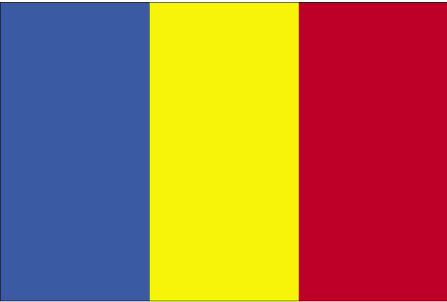
- 旗帜象征
- 三个相等的竖条纹,分别为蓝色(靠旗杆侧)、黄色和红色;曾经位于黄色条纹中央的国徽已被移除;现在与乍得的国旗相似,也类似于安道尔和摩尔多瓦的国旗
- 采纳日期
- 1989年12月27日
国歌
- 国歌歌词
- Desteapta-te, Romane! Desteapta-te, romane, din somnul cel de moarte, In care te-adancira barbarii de tirani! Acum ori niciodata croieste-ti alta soarte, La care sa se-nchine si cruzii tai dusmani! Acum ori niciodata sa dam dovezi in lume Ca-n aste mani mai curge un sange de roman, Si ca-n a noastre piepturi pastram cu fala-un nume Triumfator in lupte, un nume de Traian! Priviti, marete umbre, Mihai, Stefan, Corvine, Romana natiune, ai vostri stranepoti, Cu bratele armate, cu focul vostru-n vine, Viata-n libertate ori moarte! striga toti. Preoti, cu crucea-n frunte! caci oastea e crestina, Deviza-i libertate si scopul ei preasfant, Murim mai bine-n lupta, cu glorie deplina, Decat sa fim sclavi iarasi in vechiul nost' pamant!
- 国歌歌词(英文)
- Awaken Thee, Romanian! Awaken thee, Romanian, shake off the deadly slumber The scourge of inauspicious barbarian tyrannies And now or never to a bright horizon clamber That shall to shame put all your nocuous enemies. Its now or never to the world we readily proclaim In our veins throbs and ancestry of Roman And in our hearts for ever we glorify a name Resounding of battle, the name of gallant Trajan. Do look imperial shadows, Michael, Stephen, Corvinus At the Romanian nation, your mighty progeny With arms like steel and hearts of fire impetuous Its either free or dead, thats what they all decree. Priests, rise the cross, this Christian armys liberating The word is freedom, no less sacred is the end Wed rather die in battle, in elevated glory Than live again enslaved on our ancestral land.
其他国家象征
国徽
Put Description here... With all peoples the national coat of arms - the supreme heraldic sign - is of special importance. Its images evoke history, through it tradition remains alive, while its bearings awaken the national feeling. In most states’ coats of arms, the bearings are devoted to the specific national past and are commonly recognised by citizens. Such lofty symbols however are not established only by laws and decrees. They are equally the melting pot for the citizens’ ideas and aspirations, for their common thoughts. In Romania the preoccupation with a representative, synthetic coat of arms dates back to the 19th century. It led to the formation of a fine team of heraldry specialists rallying outstanding Romanian scientific figures. As the State Archives were set up and sigillography studies developed, the heraldry experts identified the coats of arms of districts, provinces, the heraldic bearings of the big landowners, a.o. After 1859 (when Wallachia and Moldavia united into one state) the question of a representative coat of arms arose. In 1863 the solution was found of joining the ancient, traditional symbols of Wallachia (the golden eagle with cross) and Moldavia (the auroch with a star between its horns). Later (1872), Romania’s heraldry commission proposed a synthetic coat of arms that combined the traditional symbols of all the Romanian provinces: Wallachia, Moldavia, Bukovina, Transylvania, Maramures, Crisana, Banat and Oltenia. The coat of arms was adopted by the Government of Romania and was in use until 1921 when, following the great Union of December 1, 1918, the new coat of arms of Greater Romania was devised, with the addition of the symbols instituted in 1872: the insignia of the House of Hohenzollern (a European royal house with origins in the early Middle Ages, which gave Romania four kings, the first of whom - Carol I, 1866-1914 - was the one that raised the country to the rank of a kingdom in 1881), the crown of Romania (made from the steel of a cannon captured at Pleven, during the 1877-1878 Independence War through which the country, by the valour of the Romanian soldiers, won its independence from the Ottoman Empire) and two face-to-face dolphins with their tails up, symbolising the Black Sea. The coat of arms of Greater Romania was replaced in 1947, when the Romanian People’s Republic was proclaimed under pressure from the Soviet occupation troops, with a decorative effigy symbolising the country’s riches guarded by ears of wheat and a rising sun as a background as well as a red star in the chief. Immediately after the 1989 Revolution, the idea came up of giving Romania a new, representative coat of arms. In fact, the very symbol of the Revolution was the flag with a hole in its middle wherefrom the communist coat of arms had been cut out. The heraldic commission set up to design a new coat of arms for Romania worked intensely, subjecting to Parliament two final designs which were then combined. What emerged is the current design adopted by the two Chambers of Romania’s Parliament in their joint session of September 10, 1992. Romania’s coat of arms has as a central element the golden eagle with cross. Traditionally, this eagle appears in the arms of the Arges county, the town of Pitesti and the town of Curtea de Arges. It stands for the “nest of the Basarabs,” the nucleus around which Wallachia, was organised, the province that determined the historical fate of the whole Romania. The eagle, being the symbol of Latinity and a heraldic bird of the first order, symbolises courage, determination, the soaring toward great heights, power, grandeur. It is to be found also in Transylvania’s coat of arms. The shield on which it is placed is azure, symbolising the sky. The eagle holds in its talons the insignia of sovereignty: a sceptre and a saber, the latter reminding of Moldavia’s ruler, Stephen the Great (1456-1504), also called “Christ’s athlete” whereas the sceptre reminds of Michael the Brave (1593-1601), the first unifier of the Romanian Countries. On the bird’s chest there is a quartered escutcheon with the symbols of the historical Romanian provinces (Wallachia, Moldavia, Transylvania, Banat and Crisana) as well as two dolphins reminding of the country’s Black Sea Coast. In the first quarter there is again Wallachia’s coat of arms on azure: an eagle or holding in its beak a golden Orthodox cross, accompanied by a golden sun on the right and a golden new moon on the left. In the second quarter there is Moldavia’s traditional coat of arms, gules: an auroch head sable with a mullet of or between its horns, a cinquefoil rose on the dexter and a waning crescent on the sinister, both argent. The third quarter features the traditional coat of arms of Banat and Oltenia, gules: over waves, a golden bridge with two arched openings (symbolising Roman emperor Trajan’s bridge over the Danube), wherefrom comes a golden lion holding a broadsword in its right forepaw. The fourth quarter shows the coat of arms of Transylvania with Maramures and Crisana: a shield parted by a narrow fesse, gules; in the chief, on azure, there is an eagle sable with golden beak coming out of the fesse, accompanied by a golden sun on the dexter and a crescent argent on the sinister; on the base, on or, there are seven crenellated towers, placed four and three. Also represented are the lands adjacent to the Black Sea, on azure: two dolphins affronts, head down.