
 English
 Español
 中文
中文 हिन्दी
 Français
政府与政治
爱沙尼亚的政府与政治
爱沙尼亚的政府结构、领导人、首都、军事和国家象征。
政府结构
宪法基础、权力分支、政党和领导层。
- 政府类型
- 议会共和制
- 行政区划
- 15个县(maakonnad,单数:maakond):哈尔尤县(塔林)、希乌县(卡德拉)、东维鲁县(约赫维)、耶尔瓦县(派德)、约吉瓦县(约吉瓦)、莱内县(哈普萨卢)、西维鲁县(拉克维里)、帕尔努县(帕尔努)、波尔瓦县(波尔瓦)、拉普拉县(拉普拉)、萨雷马县(库雷萨雷)、塔尔图县(塔尔图)、瓦尔加县(瓦尔加)、维尔扬迪县(维尔扬迪)、沃鲁县(沃鲁)
- 法律制度
- 以民法体系为基础;对立法行为无司法审查权
- 选举权
- 18岁及以上;爱沙尼亚所有公民享有普遍选举权
- 公民身份
- 出生公民资格:否 仅限血统公民资格:至少一位父母必须是爱沙尼亚公民 承认双重国籍:否 入籍居住要求:5年
- 行政部门
- 国家元首:总统阿拉尔·卡里斯(自2021年10月11日起) 政府首脑:总理克里斯滕·米哈尔(自2024年7月23日起) 内阁:由总理任命、议会批准的部长委员会 选举:总统由议会选举,任期五年;如果候选人在议会三轮投票后未能获得三分之二的票数,则由选举大会(由议会成员加地方政府成员组成)选举总统,在得票比例最高的两名候选人之间进行选择;上次选举于2021年8月31日举行(下次将于2026年举行);总理由总统提名,议会批准 选举结果:阿拉尔·卡里斯于2021年8月31日当选总统;他由议会多个政党联合提名,作为共识候选人在议会第一轮投票中获得所需的三分之二多数票而当选;卡里斯曾任国家审计署署长及塔尔图大学校长,于2021年10月11日正式就职,接替自2016年起任职的科尔斯滕·卡柳莱德
- 立法机构
- 一院制议会(国务议院,共101席;议员由全民普选产生,任期四年) 选举:上次于2023年3月5日举行(下次将于2027年3月举行) 选举结果:按政党得票率——爱沙尼亚改革党31.2%、爱沙尼亚保守人民党(EKRE)16.1%、爱沙尼亚中心党15.3%、爱沙尼亚2200党13.3%、社会民主党9.3%、祖国党(Isamaa)8.2%;按政党议席数——爱沙尼亚改革党37席、爱沙尼亚保守人民党17席、爱沙尼亚中心党16席、爱沙尼亚2200党14席、社会民主党9席、祖国党8席
- 司法部门
- 国家法院(主席由议会终身任命)
- 政治党派
- 爱沙尼亚中心党(Keskerakond)[主席:埃德加·萨维萨尔];爱沙尼亚人民联盟(Rahvaliit)[主席:维卢·赖尔扬];爱沙尼亚改革党(Reformierakond)[主席:安德鲁斯·安西普];爱沙尼亚联合俄罗斯人民党或EUVRP [主席:叶夫根尼·汤姆贝格];祖国联盟(Isamaaliit)[主席:托尼斯·卢卡斯];共和国党[主席:塔维·韦斯基马吉];社会民主党(原人民党温和派)[主席:伊瓦里·帕达尔];社会自由党(八名议员团体,前中心党成员)[主席:彼得·克赖茨贝格]
- 国家元首
- 总统托马斯·亨德里克·伊尔韦斯
- 政府首脑
- 总理安德鲁斯·安西普
- 柜子
- 由总理任命、议会批准的部长委员会
- 选举
- 总统由议会选举产生,任期五年(可连任一届);如果候选人在议会三轮投票中未能获得三分之二的票数,则由选举团(由议会成员及地方政府代表组成)选举总统,在获得最多票数的两名候选人之间进行选择;最后一次选举于2006年9月23日举行(下次选举将于2011年秋季举行);总理由总统提名并由议会批准
- 选举结果
- 按政党得票率 - 爱沙尼亚改革党31.2%,爱沙尼亚保守人民党(EKRE)16.1%,爱沙尼亚中间党15.3%,社会民主党9.3%,爱沙尼亚200党13.3%,祖国党(Isamaa)8.2%;按政党所获席位 - 爱沙尼亚改革党37席,爱沙尼亚保守人民党17席,爱沙尼亚中间党16席,爱沙尼亚200党14席,社会民主党9席,祖国党8席。上述结果反映了2023年3月议会(国会)选举的情况,此次选举中爱沙尼亚改革党取得决定性胜利,随后与爱沙尼亚200党及社会民主党组建了联合政府。
- 宪法
- 1992年6月28日通过
- 独立
- 1991年8月20日恢复独立(从苏联)
- 国家假日
- 独立日,2月24日(1918年);注——1918年2月24日是爱沙尼亚宣布从苏俄独立的日期;1991年8月20日是其宣布从苏联独立的日期
- 国际组织参与
- 国际清算银行、波罗的海国家理事会、欧洲委员会、欧大西洋伙伴关系委员会、欧洲复兴开发银行、欧盟(新成员)、粮农组织、国际原子能机构、国际复兴开发银行、国际民航组织、国际刑事法院、国际劳工联合会、国际红十字会及红新月会常设委员会、国际金融公司、国际救济委员会联合会、国际水文组织、国际劳工组织、国际货币基金组织、国际海事组织、国际刑警组织、国际奥委会、国际移民组织(观察员)、国际标准化组织(通讯成员)、国际电信联盟、美洲国家组织(观察员)、禁止化学武器组织、欧洲安全与合作组织、常设仲裁法院、和平伙伴关系计划、联合国、联合国贸易和发展会议、联合国教科文组织、联合国停战监督组织、万国邮联、世界海关组织、西欧联盟(副伙伴)、世界卫生组织、世界知识产权组织、世界气象组织、世界贸易组织
- 驻美外交代表机构
- 驻美国大使:尤里·卢伊克 大使馆:美国华盛顿哥伦比亚特区马萨诸塞大道西北2131号 电话:[1](202)588-0101 传真:[1](202)588-0108 领事馆(总):纽约
- 美国外交代表
- 驻爱沙尼亚大使:阿尔多娜·佐菲亚·沃斯 大使馆:爱沙尼亚塔林肯特曼街20号,邮编15099 邮寄地址:使用大使馆街道地址 电话:[372]668-8100 传真:[372]668-8134
首都
政府所在地和政治历史
- 首都
- 塔林
- 位置
- 北纬59°26',东经24°43'
- 时差
- UTC+2(标准时间期间比华盛顿特区早7小时)
- 历史
- 爱沙尼亚语名称普遍认为源自"Taani-linn"(原意为"丹麦城堡",现意为"丹麦城镇"),得名于丹麦人在该地区修建的一座要塞;也可能源自"tali-linn"("冬日城堡"或"冬日城镇")或"talu-linn"("家园城堡"或"家园城镇")
大使馆和外交代表机构
大使馆位置和联系方式
美国驻塔林大使馆 Kentmanni 20(邮政编码15099) 电话:372-668-8128(请参阅下方拨号说明) 紧急非工作时间电话:372-668-8169 传真:372-668-8267 电子邮件:ACSTallinn@state.gov 拨号说明:凡遇" "符号处,须先拨打国际长途所需的接入前缀。如您在美国境内,请先拨"011";如您从其他大多数国家拨打,请先拨"00"。因此,如您在美国,可拨011-372-668-8100接通大使馆总机。如您在爱沙尼亚境内拨打,则可省略国家代码(372)。
军事
分支机构、服务义务、支出和人力。
- 军事分支
- 爱沙尼亚国防军(Eesti Kaitsevägi):陆军(Maavägi)、海军(Merevägi)、空军(Õhuvägi)、国防联盟(Kaitseliit)
- 服务年限和义务
- 18至27岁须服义务兵役或政府服务,义务兵服役期为8至11个月(视教育程度而定);士官、预备役军官及专业技术人员服役期为11个月
国家象征
国旗、国歌及其他国家认同的象征
国旗
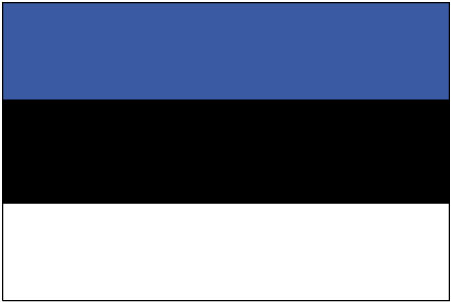
- 旗帜象征
- 1940年前的旗帜,由最高苏维埃于1990年5月恢复 - 三个相等的水平条纹,分别为蓝色(顶部)、黑色和白色
- 旗帜历史
- 在一首民谣中,蓝色代表天空,黑色代表土地,白色代表对自由的向往和对未来的希望。 另一种解释是蓝色代表相互信任和忠诚,黑色代表爱沙尼亚人传说中的祖先,即希罗多德《历史》中提到的身披黑色斗篷的民族,白色代表覆盖这个国家半年之久的雪。
- 采纳日期
- 1990年8月7日
国歌
- 国歌歌词
- MU ISAMAA MU ÕNN JA RÕÕM Mu isamaa, mu õnn ja rõõm, kui kaunis oled sa! Ei leia mina iial teal see suure, laia ilma peal, mis mul nii armas oleks ka, kui sa, mu isamaa! Sa oled mind ju sünnitand ja üles kasvatand; sind tänan mina alati ja jään sull truuiks surmani, mul kõige armsam oled sa, mu kallis isamaa! Su üle Jumal valvaku, mu armas isamaa! Ta olgu sinu kaitseja ja võtku rohkest õnnista, mis iial ette võtad sa, mu kallis isamaa!
- 国歌歌词(英文)
- Unofficial translation of the Estonian anthem by Jenny Wahl My native land, my joy, delight, How fair thou art and bright! And nowhere in the world all round Can ever such a place be found So well beloved as I love thee, My native country dear! My little cradle stood on thy soil, Whose blessings case my toil. With my last breath my thanks to thee, For true to death I´ll ever be, O worthy, most beloved and fine, Thou, dearest country mine! May God in Heaven thee defend, My best, my dearest land! May He be guard, may He be shield, For ever may He bless and wield O graciously all deeds of thine, Thou dearest country mine!
其他国家象征
国花
矢车菊
这是一种一年生植物,高度可达40-90厘米,具有灰绿色的分枝茎。叶片呈披针形,长1-4厘米。花朵最常见的是强烈的蓝色,生长在花头(头状花序)中,直径1.5-3厘米,周围是一圈较大的、展开的舌状花瓣,中央是一束管状花瓣。蓝色色素是原花青素,在玫瑰中呈红色。[1]
国树
oak
国鸟
barnswallow
Seal
coat of arms
The heraldic lions of the coat of arms are the most ancient of Estonia’s symbols. They have been used since the 13th century, when they served as the big coat of arms for the capital city, Tallinn. Tallinn got these slim blue lions from the King of Denmark, Waldemar the Second, as Denmark was the ruling power in Northern Estonia at that time. The name ”Tallinn” itself means ”Danish castle”. The large coat of arms Various other foreign powers came and went, but the three lions remained and became the coat of arms for most of Estonian territory. The State Assembly of the independent Republic of Estonia adopted the three lions officially by its resolution on 19 June 1925. The current large coat of arms is a golden shield charged with three blue lions with golden oak branches on both sides of the shield. The small coat of arms is identical except there are no oak branches.
Colors
coat of arms
While the coat of arms has its origin in the times of foreign rule in Estonia, the blue, black and white national colours are much younger and are closely connected to the Estonian people. They date back to the end of the 19th century. At that time, the Baltic states, Finland and the greater part of Poland were under Tsarist rule. The period is known in Estonia as the era of National Awakening. The colours were chosen by a group of young intellectuals in 1881. The flag was, at first, the symbol of the Estonian Students’ Society, but it quickly gained a much wider use. The symbolic meaning of the three colours has been explained in more than one way since that time. One popular explanation derives from a contemporary poem by Martin Lipp. The blue colour is explained as the vaulted blue sky above the native land. Black symbolises attachment to the soil of the homeland as well as the fate of Estonians — for centuries black with worries. White is connected with hard work and other more abstract human values. This explanation owes its popularity to the melody by composer Enn Vôrk, which made Martin Lipp’s poem a highly patriotic song, often ranked next to the national anthem. As in many other countries, there is also a historical metaphor for the Estonian national colours. The blue in this case represents ancient freedom, black symbolises lost independence, and white promises a brighter future. Visually, taken together, these three colours have a fresh, cool, Nordic feel, as none of the ”warm” colours is included. The same colour combination is used by no other national tricolor. The state flag By the end of the 19th century, the blue, black and white became widely accepted as a national Estonian flag. Therefore, it was natural to use these colours for the National Army’s insignia during the War of Independence. When the flag was hoisted to the top of the Tall Herman tower dominating the whole Tallinn, the tower itself gained a strong symbolic value for the Estonians. The flag flying there has always indicated the ruling power in the country. On 27 June 1922 the Estonian Parliament declared the blue-black-white the official state flag. After the Soviet occupation in June 1940, the blue-black-white flag, and, indeed, the mere combination of these colours, was banned. Many people were persecuted simply for keeping and hiding the flag or using the colours. But the colours were never forgotten and the struggle to bring the national colours back into use marked the beginning of a renewed struggle for independence in the late 1980s. They were an important weapon in the bloodless fight for the restoration of the independence of Estonia, which was finally won in August 1991.