
 English
 Español
 中文
中文 हिन्दी
 Français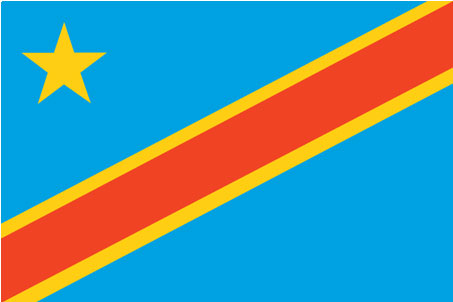
Democratic Republic of the Congo
Declare Your Relationship to Democratic Republic of the Congo
CountryReports Community
- Studying11
- From Democratic Republic of the Congo2
- Democratic Republic of the Congo heritage1
- Visited1
- Want to visit1
Customs and Culture
Customs and Culture
Cultural Attributes
There exists a general politeness and concern for the welfare of others. This politeness sometimes manifests itself as a gentle disposition and shyness with strangers, which outsiders occasionally interpret as reticence. Although they may seem shy, Zairians reciprocate open and sincere friendliness.
In general, Zairians are careful not to offend. Individualism is acceptable only if it does not conflict with a group's needs. Because schedules are not as important as people, appointments may run 30 to 60 minutes late.

Land of the Congo's Mighty Flow
Get More Customs and Culture
6 more cultural topics for members
Social Customs & Etiquette · Diet · Family · Dating Customs · Recreation · Student Life
Every country, every topic, all activities & recipes
✓ Instant access on this device · ✓ No subscription
Holidays
Independence Day
6/30Independence Day
Dates of Interest
- June 30th
How do people greet each other in the Democratic Republic of the Congo?
Handshakes are common between men, but in rural areas men usually do not shake hands with women. Though people may seem shy with strangers, they respond warmly to sincere friendliness.
Do
- Shake hands with other men when greeting
- Return open, sincere friendliness
Don’t
- Expect men to shake hands with women in rural areas
Good to know
- Politeness and concern for others' welfare are highly valued
- Initial shyness may be mistaken for reticence
What are the dining customs in the Democratic Republic of the Congo?
Meals are usually eaten with the fingers of the right hand only, with men and women eating from separate communal bowls. Hands are washed before and after each meal.
Do
- Eat with the fingers of your right hand only
- Wash your hands before and after meals
- Use continental style if utensils are provided
Good to know
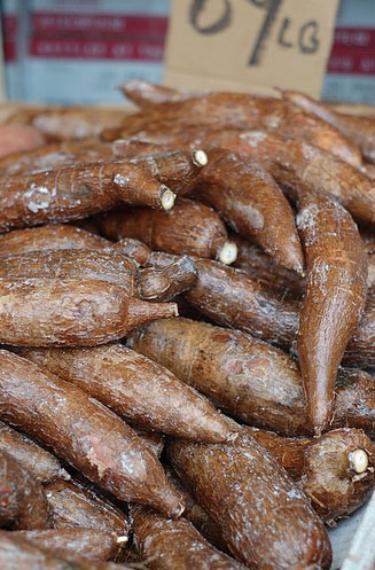
- Staple foods include cassava, rice, potatoes, bananas, yams, beans, corn, fish and peanuts
- Common fruits include mangoes, oranges, pawpaws and coconuts
- Men and women eat from separate communal bowls
What should I know about etiquette and punctuality in the Democratic Republic of the Congo?
People place great value on relationships and the welfare of the group, and are generally careful not to offend. Schedules matter less than people, so appointments may run 30 to 60 minutes late.
Do
- Be patient with timing
- Consider group needs over individualism
Good to know
- Appointments may run 30 to 60 minutes late
- Individualism is acceptable only if it doesn't conflict with group needs
How should I dress in the Democratic Republic of the Congo?
Western-style clothing is common in most urban areas, while many Congolese women wear a "pagne," a long dress made from a five-yard length of fabric.
Don’t
- Wear shorts or immodest attire as an adult
Good to know
- Western-style clothing is common in urban areas
What gestures are appropriate in the Democratic Republic of the Congo?
Pass objects with the right hand or both hands, never the left. Point and beckon with care to avoid rudeness.
Do
- Pass objects with the right hand or both hands
- Beckon by waving all fingers
Don’t
- Pass objects with the left hand
- Point with the index finger
How important is family in the Democratic Republic of the Congo?
The family is the most important focus in Congolese life, with emphasis on group goals and overall family welfare. Large extended families are the norm.
Good to know
- Family structure varies between ethnic groups
- Marriage is traditionally a family affair, at least partly arranged by parents
- Dating typically requires the boy's family to seek permission from the girl's family
What do people do for recreation in the Democratic Republic of the Congo?
Soccer is the national sport, and people also enjoy cards, chess, checkers and board games. Young people go out on Saturday nights to socialize and listen to music at outdoor pubs and clubs.
Good to know
- Mangual, a pit and stone game, is played by men in rural areas
- Saturday nights are popular for socializing and music
Last updated: 2026-07-12 · Sources: CountryReports
Photos of Democratic Republic of the Congo
Photos of Democratic Republic of the Congo


Travel and Tourism
Travel and Tourism
- Travel Alert Status
- Level 3: Reconsider Travel
- Currency
- 971.6
- Time Difference
- UTC+1 (6 hours ahead of Washington, DC, during Standard Time) Time zone note: the DRC has two time zones
- Airports
- 203
- Recommended Vaccinations
- How important is it to do your research about vaccinations? It might just save your life! Make yourself aware of the different types of vaccinations and which ones you may need to travel to your destination. Schedule an appointment with your doctor at least four to six weeks before you travel to ensure you receive all important shots. Be sure that you and your family are up to date on your routine vaccinations. Which vaccinations you need will depend on a number of factors including your destination, whether you will be spending time in rural areas, the season of the year you are traveling, your age, health status, and previous immunizations.
Read the full travel guide — health, safety, vaccinations, disease risk, sanitation, and transit details.
View full travel guideRecipes
Recipes
Liboké de Viande (Meat in Banana-Leaf)
Main Dish
Main Dish
Liboké de Viande (Meat in Banana-Leaf)
Main Dish
Muamba Nsusu (Congolese Chicken Soup)
Main Dish
Congolese Chicken with Peanuts
Main Dish
Liboké de Viande (Meat in Banana-Leaf)
Side Dish
Fufu (Yam-Based Thick Porridge)
Side Dish
Saka-Saka (Congolese Dish Made From Cassava Leaves)
Main Dish
PremiumLiboké de Viande (Meat in Banana-Leaf)
History
History
Historical Eras
Pre-Colonial Era
8000 BCE – 1885
The Congo basin was inhabited as early as 10,000 years ago, with Bantu-speaking peoples migrating from present-day Nigeria in the 7th and 8th centuries AD, establishing sophisticated societies including the Kingdom of Kongo. Portuguese navigator Diogo Cão made first European contact in 1482, initiating centuries of trade and devastating slave trafficking through Kongo intermediaries. Henry Morton Stanley's navigation of the Congo River in 1874–1877 opened the region to intensified European imperial ambitions.
Congo Free State
1885 – 1908
At the Berlin Conference of 1885, Belgian King Leopold II secured personal ownership of the Congo basin, establishing the Congo Free State as his private colonial venture. Leopold's regime enforced brutal rubber and ivory extraction quotas, using systematic violence, mutilation, and forced labor that resulted in millions of deaths. International outcry led by humanitarians such as E.D. Morel and Roger Casement ultimately compelled Leopold to relinquish control to the Belgian state.
Belgian Congo
1908 – 1960
The Belgian government annexed the Congo in 1908, introducing paternalistic colonial policies that prioritized economic extraction of copper, rubber, and diamonds while severely restricting Congolese political participation and education. Infrastructure and mission schools were developed, yet Africans were systematically excluded from higher administration and self-governance. Growing nationalist sentiment following World War II, combined with a series of riots beginning in 1959, pressured Belgium into granting independence on June 30, 1960.
Independence & Crisis
1960 – 1965
Independence immediately plunged the new Democratic Republic of the Congo into crisis: the army mutinied, Katanga province under Moïse Tshombe declared secession, and Prime Minister Patrice Lumumba was deposed, handed to Katangan authorities, and assassinated in 1961. UN peacekeeping forces intervened to contain the violence while Cold War powers competed for influence over the strategically vital country. Colonel Joseph-Désiré Mobutu seized power briefly in 1960 and definitively in 1965, ending the parliamentary period amid persistent rebellion.
Mobutu / Zaire
1965 – 1997
Lieutenant General Mobutu declared himself president in 1965, rapidly centralizing authority into a single-party kleptocratic state and renaming the country Zaire in 1971 as part of his 'authenticité' cultural nationalism campaign. Mobutu nationalized foreign-owned enterprises in 1973–1974, devastating the economy, and sustained his rule through patronage, repression, and Cold War support from Western powers. By the early 1990s, economic collapse and domestic protest forced nominal democratic reforms, but Rwanda's 1994 genocide destabilized eastern Zaire and enabled Laurent-Désiré Kabila's rebel coalition to topple Mobutu in 1997.
Congo Wars & Modern DRC
1997 – present
Laurent-Désiré Kabila renamed the country the Democratic Republic of the Congo and was himself assassinated in 2001, succeeded by his son Joseph Kabila who negotiated the 2003 Global and Inclusive Agreement ending the devastating Second Congo War, a conflict that drew in nine African nations and caused an estimated five million deaths. Subsequent decades were marked by persistent armed conflict in the eastern provinces, landmark elections in 2006 and 2018, and the historic peaceful transfer of power to Félix Tshisekedi. The DRC remains a major regional power burdened by vast mineral wealth, institutional fragility, and ongoing humanitarian crises.
Overview
The area known as the Democratic Republic of the Congo was populated as early as 10,000 years ago and settled in the 7th and 8th centuries A.D. by Bantus from present-day Nigeria. Discovered in 1482 by Portuguese navigator Diego Cao and later explored by English journalist Henry Morton Stanley, the area was officially colonized in 1885 as a personal possession of Belgian King Leopold II as the Congo Free State.
Every country, every topic, all activities & recipes
✓ Instant access on this device · ✓ No subscription
Timeline of Key Events
1482
Portuguese navigator Diogo Cao becomes the first European to visit the Congo.
Portuguese navigator Diogo Cao becomes the first European to visit the Congo. Portuguese set up ties with the king of Kongo.
1501 – 1700
Merchants engage in slave trade through Kongo intermediaries.
British, Dutch, Portuguese and French merchants engage in slave trade through Kongo intermediaries during the 16th and 17th centuries.
1501 – 1700
Slave trade through Kongo .
British, Dutch, Portuguese and French merchants engage in slave trade through Kongo intermediaries.
1870
Belgian King Leopold II sets up a private venture to colonize Kongo.
Belgian King Leopold II sets up a private venture to colonize Kongo.
1874 – 1877
British explorer Henry Stanley navigates Congo river to the Atlantic Ocean.
British explorer Henry Stanley navigates Congo river to the Atlantic Ocean.
1879 – 1887
Leopold commissions Stanley to establish the king’s authority in the Congo basin.
Leopold commissions Stanley to establish the king’s authority in the Congo basin.
1885
Congo Free State established under Leopold.
Congo Free State established under Leopold after being formally recognized by European powers at Conference of Berlin.
Read the full history profile — narrative overview, defining eras, and the complete timeline in one place.
View expanded historyInteresting Facts
Interesting Facts
Formerly the Belgian Congo, this territory was inhabited by ancient Negrito peoples (Pygmies), who were pushed into the mountains by Bantu and Nilotic invaders.
See every fact — trivia, oddities, and curious tidbits gathered from across the country.
View all interesting factsGeography and Environment
Geography and Environment
- Terrain
- vast central basin is a low-lying plateau; mountains in east
- Climate
- The Democratic Republic of the Congo straddles the equator in the heart of central Africa and shares a border with nine other countries: the Republic of the Congo, the Central African Republic, Sudan, Uganda, Rwanda, Burundi, Tanzania, Zambia, and Angola. Congo has access to the Atlantic Ocean on the west through a strip of territory that narrows to 13 miles wide at the coast. Its area includes the greater part of the Congo River Basin and covers 1,465,553 square miles. The Congo River is 2,900 miles long and is the second largest in the world in terms of area drained, flow, and navigable length. With its tributaries, the river provides Congo with about 9,000 miles of navigable waterways, and its force affords Congo 13% of the world’s hydroelectric power potential. With the country’s abundance of natural resources—which include copper, cobalt, zinc, industrial—and gem-quality diamonds, manganese, tin, crude oil, and gold—Congo is potentially one of the richest countries in the world. The geographical features of this giant African nation are handsome and varied. The huge Congo Basin, a low-lying, bowl-shaped plateau sloping toward the west, is covered by lush, tropical rain forests. Surrounding the basin are mountainous terraces on the west, plateaus merging into savannas to the south and southeast, and dense grasslands toward the northwest. The high picturesque Ruwenzori Mountains bound the basin to the east.
- Natural Hazards
- periodic droughts in south; Congo River floods (seasonal); in the east, in the Great Rift Valley, there are active volcanoes
- Current Environmental Issues
- poaching threatens wildlife populations; water pollution; deforestation; refugees responsible for significant deforestation, soil erosion, and wildlife poaching; mining of minerals (coltan - a mineral used in creating capacitors, diamonds, and gold) causing environmental damage
Read the full geography and environment profile — terrain, climate, natural resources, hazards, land use, and international agreements.
View full geographyPeople & Demographics
People & Demographics
Religion
Languages Spoken
French (official), Lingala (a lingua franca trade language), Kingwana (a dialect of Kiswahili or Swahili), Kikongo, Tshiluba
- French
Population
- Population
- 102,262,808
- Population in Major Urban Areas
- KINSHASA (capital) 8.798 million; Lubumbashi 1.556 million; Mbuji-Mayi 1.504 million; Kananga 888,000; Kisangani 820,000
- Nationality Noun
- Congolese (singular and plural)
- Ethnic Groups
- Over 200 African ethnic groups of which the majority are Bantu; the four largest tribes - Mongo, Luba, Kongo (all Bantu), and the Mangbetu-Azande (Hamitic) make up about 45% of the population
- Language Note
- Although French is the official language and is used in larger businesses and government, it is spoken by only about 10 percent of the population. Lingala is increasingly used as the national language. Regional languages are: Lingala, Kikongo, Tshiluba, and Swahili.
Education
- Literacy Definition
- age 15 and over can read and write French, Lingala, Kingwana, or Tshiluba
Health Information
- Major Infectious Diseases — degree of risk
- Very high
Life Expectancy
- Life Expectancy at Birth
- Life expectancy at birth in the Democratic Republic of the Congo remains among the lowest in the world, reflecting the country's ongoing challenges with poverty, conflict, disease, and limited access to healthcare infrastructure. As of the most recent estimates, the average life expectancy at birth stands at approximately 61 years overall, with women living slightly longer than men — roughly 62 to 63 years for females compared to about 59 to 60 years for males. These figures represent a gradual improvement over past decades, yet the DRC continues to face severe public health burdens that constrain further progress. Malaria remains one of the leading causes of death, particularly among children under five years of age. The country also bears one of the world's highest rates of maternal mortality, with many births occurring outside formal medical facilities due to geographic isolation and a severe shortage of trained healthcare workers. Infectious diseases including tuberculosis, cholera, and measles contribute significantly to mortality, while recurring outbreaks of Ebola in eastern regions have periodically disrupted healthcare delivery and drawn sustained international attention. Chronic malnutrition, which affects a substantial portion of the population — especially children — further undermines overall health outcomes and depresses life expectancy figures. Armed conflict in the eastern provinces has displaced millions of people and destroyed health infrastructure, leaving large populations without access to even basic medical care. The combination of displacement, food insecurity, and disrupted vaccination programs creates conditions in which preventable deaths remain widespread. The ongoing humanitarian crisis in North and South Kivu provinces has been particularly severe, compounding long-standing structural health challenges. Healthcare spending per capita in the DRC is extremely low, and the public health system relies heavily on international aid organizations to fill critical gaps in service delivery. The country continues to rank near the bottom globally on key health indicators, including child mortality and maternal health outcomes. Despite these difficulties, gradual improvements in child survival rates, vaccination coverage, and access to antiretroviral therapy for HIV-positive individuals have contributed to a modest upward trend in life expectancy observed over the past two decades. Continued investment in healthcare infrastructure, conflict resolution, and poverty reduction programs will be essential to achieving meaningful and sustained improvements in life expectancy for the Congolese population in the coming years.
- Infant Mortality Rate
- The Democratic Republic of the Congo has one of the highest infant mortality rates in the world, reflecting the country's deep-rooted challenges in public health infrastructure, access to medical care, and poverty. As of recent estimates, the infant mortality rate stands at approximately 59 to 65 deaths per 1,000 live births, meaning that roughly 6 out of every 100 infants born in the country do not survive to their first birthday. This figure is significantly higher than the global average of around 27 deaths per 1,000 live births. Several interconnected factors drive this persistently elevated rate. Malaria remains one of the leading killers of infants in the country, along with pneumonia, diarrheal diseases, and malnutrition. The DRC accounts for a disproportionately large share of global malaria deaths each year, and children under the age of five are particularly vulnerable. Neonatal causes — including complications during birth, prematurity, and infections in the first days of life — also contribute substantially to the toll. Access to skilled healthcare workers during delivery remains limited in many regions, particularly in rural and conflict-affected areas. A significant portion of births in the country take place outside of formal health facilities, increasing the risk of preventable complications for both mother and infant. Vaccination coverage, while improving in some provinces, remains inconsistent across the country's vast and difficult-to-reach terrain. Ongoing armed conflict in eastern provinces such as North Kivu and Ituri has displaced millions of people, disrupting health services and contributing to acute malnutrition and disease outbreaks, all of which compound infant mortality risks. Despite these challenges, there has been measurable progress over the past two decades. The infant mortality rate has declined from over 100 deaths per 1,000 live births recorded in the early 2000s, reflecting incremental gains through vaccination campaigns, community health worker programs, and international health initiatives. UNICEF and the World Health Organization continue to support programs targeting maternal and newborn health across the country, with the goal of further reducing preventable infant deaths.
Read the full people and society profile — demographics, health, education, religion, languages, and notable people.
View full people and societyGovernment & Politics
Government & Politics
Country Identity
- Country Name
- DemocraticRepublicoftheCongo
- Full Country Name
- Democratic Republic of the Congo
- Local - Long
- Republique Democratique du Congo
- Former Name
- Congo Free State, Belgian Congo, Congo/Leopoldville, Congo/Kinshasa, Zaire
Government Structure
- Executive Branch
- chief of state: President Felix TSHISEKEDI (since 24 January 2019); the president is both the chief of state and head of government head of government: President Felix TSHISEKEDI (since 24 January 2019); Prime Minister Jean-Michel SAMA LUKONDE resigned in May 2024 and was succeeded by Sylvestre ILUNGA ILUNKAMBA; note - the president appoints the prime minister cabinet: Council of Ministers appointed by the president elections: the president is elected by popular vote for a five-year term (eligible for a second term); election last held on 20 December 2023 (next to be held in December 2028); the prime minister is appointed by the president election results: Felix TSHISEKEDI reelected president in December 2023 with approximately 73% of the vote, defeating Martin FAYULU and other candidates in a broadly contested election; TSHISEKEDI had previously won the January 2019 election following the departure of Joseph KABILA, who had held the presidency since 2001 following the assassination of his father Laurent Desire KABILA note: Felix TSHISEKEDI, leader of the Union for Democracy and Social Progress (UDPS), took office in January 2019 in what was considered the Democratic Republic of the Congo's first peaceful transfer of power since independence; his reelection in 2023 was disputed by opposition candidates who cited irregularities, though he was inaugurated for a second term in January 2024
- Legislative Branch
- The Democratic Republic of the Congo has a bicameral Parliament (Parlement) consisting of two chambers. The upper chamber, the Senate, has 109 seats, with members indirectly elected by provincial assemblies to serve five-year terms. The lower chamber, the National Assembly, has 500 seats, with members elected by a combination of direct popular vote through party-list proportional representation and single-member constituencies, also serving five-year terms. Elections for the National Assembly are held on a regular cycle. The most recent general elections took place in December 2023, in which members were chosen by popular vote. The Senate was most recently constituted through indirect elections conducted by provincial assemblies in 2024. The transitional appointment system established in June 2003, under which National Assembly members were designated by factional leaders following the Inter-Congolese Dialogue, has long since been replaced by competitive multiparty elections held under the framework of the 2006 constitution, which formally established the current legislative structure.
- Judicial Branch
- Supreme Court or Cour Supreme
Capital City
- Capital Name
- Kinshasa
- Capital - geographic coordinate
- 4 19 S, 15 18 E
- Capital Time Difference
- UTC+1 (6 hours ahead of Washington, DC, during Standard Time) Time zone note: the DRC has two time zones
Founded as a trading post in 1881 and named Leopoldville in honor of King LEOPOLD II of the Belgians, who controlled the Congo Free State, the vast central African territory that became the Democratic Republic of the Congo in 1960; in 1966, Leopoldville was renamed Kinshasa, after a village of that name that once stood near the site
Military
Branches: Armed Forces of the Democratic Republic of the Congo (Forces d'Armees de la Republique Democratique du Congo, FARDC): Army, National Navy (La Marine Nationale), Congolese Air Force (Force Aerienne Congolaise, FAC)
Embassy / Diplomatic Mission
U.S. Embassy in the Democratic Republic of the Congo
310 Avenue de Aviateurs
Kinshasa
Telephone: 243-081-5560151 (dial 243 815 560 151 when calling from abroad)
Consular Section
Avenue Dumi, opposite the Ste. Anne Residence
Kinshasa
Emergency after-hours telephone: 243-081-556-0151 (dial 243 815 560 151 when calling from abroad)
Facsimile: 243-81-556-0169
Email: AEKinshasaConsular@state.gov
Read the full government profile — flag symbolism, national anthem, and other national symbols.
View full government detailsEconomy
Economy
The Democratic Republic of the Congo, a nation endowed with vast natural resource wealth including cobalt, copper, diamonds, gold, coltan, and significant hydroelectric potential, has an economy that has struggled to translate this abundance into widespread prosperity.
Snapshot
- Currency Name and Code
- Congolese francs (CDF)
- GDP — official exchange rate
- $7,328,000,000 (USD)
- GDP Real Growth Rate
- 6.6%
- GDP by Sector
- agriculture: 55% industry: 11% services: 34%
Every country, every topic, all activities & recipes
✓ Instant access on this device · ✓ No subscription
News & Weather
News & Weather
Current Weather
Latest News
Ebola death toll surpasses 4,000 as DR Congo struggles to suppress outbreak - Al Jazeera
Al Jazeera · 1d ago
Congo DR 0-2 Uganda (2 Oct, 2026) Final Score - ESPN
ESPN · 1d ago
Mourners bury DR Congo official killed after defending Ebola response - Al Jazeera
Al Jazeera · 2d ago
Erik Prince and Romanian mercenaries – how DRC’s Tshisekedi outsourced the war on M23 - The Africa Report
The Africa Report · 2d ago
DR Congo Ebola cases grow, deaths top 4,000 as officials struggle to ascertain numbers, trends - CIDRAP
CIDRAP · 1d ago
Ebola disease caused by Bundibugyo virus - Democratic Republic of the Congo - World Health Organization (WHO)
World Health Organization (WHO) · 8d ago
Ebola outbreak in Democratic Republic of the Congo now deadliest in country’s history - The Guardian
The Guardian · 47d ago
Ebola outbreak out of control in Democratic Republic of the Congo, WHO says: ‘It is spreading faster than our ability to contain it’ - EL PAÍS English
EL PAÍS English · 44d ago
News via Google News
Videos
Videos
2 curated YouTube videos.
Source: YouTube
Source: YouTube
Frequently Asked Questions
Frequently Asked Questions
What is the population of Democratic Republic of the Congo?
What is the capital of the Democratic Republic of the Congo?
Where is the Democratic Republic of the Congo located?
What countries border the Democratic Republic of the Congo?
What is the predominant religion in the Democratic Republic of the Congo?
What currency is used in the Democratic Republic of the Congo?
What languages are spoken in the Democratic Republic of the Congo?
What is the Democratic Republic of the Congo known for?
Last reviewed 2026