
 English
 Español
 中文
中文 हिन्दी
 Français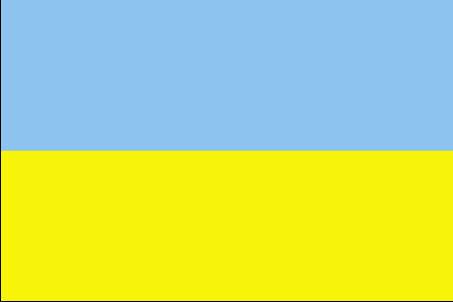
Ukraine
Ukrayina
Declare Your Relationship to Ukraine
CountryReports Community
- Studying3
- From Ukraine4
- Ukraine heritage2
- Visited2
- Want to visit1
Customs and Culture
Customs and Culture
Cultural Attributes
Neighborhood ties are strong, and friendship is valued highly. Ukrainians see themselves as a lively and happy people.
Embroidery: Embroidered clothing, particularly the vyshyvanka, is an important part of Ukrainian culture. Each region of the country has its own unique embroidery patterns and designs, and the clothing is often worn during celebrations and special occasions.
Folk music and dance: Ukraine has a rich tradition of folk music and dance, with each region having its own distinctive style. Folk ensembles perform at festivals and cultural events, and traditional dances such as the hopak are still popular today.
Orthodox Christianity: The majority of Ukrainians are members of the Ukrainian Orthodox Church, which plays an important role in the country's cultural and religious life. Many of the country's holidays and traditions are tied to the Orthodox Church calendar.
Cuisine: Ukrainian cuisine features hearty dishes such as borscht (a soup made with beets and meat), varenyky (dumplings filled with potatoes or cottage cheese), and holubtsi (stuffed cabbage rolls). These dishes reflect the country's agricultural roots and the use of simple, wholesome ingredients.
Hospitality: Ukrainians are known for their warmth and hospitality, and it is customary to offer guests food and drink when they visit. Visitors to Ukraine often comment on the generous and welcoming nature of the people.

Land of the Golden Grain and Boundless Song
Social Customs & Etiquette
Greetings
Close friends and family members usually kiss both cheeks and hug when meeting, and address each other by their first name. To show respect, one uses the first name followed by the father's given name.
Greetings are usually a wave of the hand and a verbal greeting. People shake hands in a formal meeting. Men may wait for the woman to extend her hand first. Titles are important in formal introductions.
Gestures
Speaking to an elder or person of higher status with hands in the pockets or arms folded is very disrespectful. Chewing gum or food while talking is not courteous. Men still open doors for women, and offer to carry heavy items, or to give up their seat on public transport. It is important to make eye contact occasionally when talking to another person. One nods the head to express approval or agreement. Pointing with the index finger is not polite.
Visiting
People prefer to receive advance notice when visiting. When relatives or friends visit, coffee or tea are frequently served with some light refreshments. An abundance of food is served to the invited dinner guest. Chocolate, sweets or toys may be given to children.
Personal Appearance
For weddings and other special events, Ukrainians may wear traditional outfits, such as a "vyshyvanka" which is an embroidered shirt that varies from region to region.
In the workplace, men wear suits and ties. Women wear skirts and dresses. Scarves, caps, and jumpers are also knitted for the long winter. Older people dress conservatively.
Diet
The staple foods in Ukraine are breads, dairy products, vegetables and starchy foods. Corn on the cob is popular in Ukraine, unusual for Europe. The most liked meats are pork and beef, but poultry, sausages and preserved meats are widely enjoyed. The most popular dishes in Ukraine are based on cereal grains and flour pastes, based on buckwheat, oats and millet. Common dishes include dumplings (varenyky), cabbage leaves stuffed with minced meat and rice (holubsti). Cooked or baked cereal is called kasha.
Chicken Kiev is an internationally known dish, and borsch is a common accompaniment. There are several variations according to region. Fresh produce is available in summer, but very expensive in the winter months. Preserves are common in winter.

Family
An average family is headed by a father and has two children. Both parents usually work outside the home, but child care is expensive and hard to find. For this reason, many elderly parents live with adult children to offer care for the children.
Women generally undertake household responsibilities. The elderly receive great respect and care. They often support their children into adulthood, and in return expect to be looked after when frail. Most urban families live in small apartments, many of which are privately owned due to recent housing programs.
Dating Customs
Couples commonly marry in their early twenties. A marriage needs to be performed in a public hall or 'wedding palace' to be legal. Many have a religious ceremony as well. In rural areas weddings are huge events lasting up to three days. In these events, a celebration is combined with the performance of traditional acts. For example, a highlight is when the bride must be 'stolen', with the 'thieves' demanding a ransom for her return.
Young people go out together to movies, dances, or bars. From April to October, they enjoy spending time at parks and engaging in outdoor activities.
Recreation
Soccer is the favorite sport. Ukrainians also enjoy volleyball, basketball, horse racing, and ping pong. Fishing, hiking, and mountaineering are popular activities for all ages. People take camping vacations in the Carpathian Mountains or travel to the Black Sea coast for the warm weather, swimming, and mineral springs.
Music is enjoyed in Ukraine and many people are members of a singing group or a folk dance group
Ukrainian folk dancing is colorful and energetic. Some of the dances, such as the "hopak" or the "arkan", require great strength and agility from the male dancers. Women perform many dances that celebrate the traditions of Ukrainian life. Chess is also a popular game with Ukrainians.
Student Life
A school day begins at 8 a.m. In cities, schools are typically 15-20 minutes away. Children wake up around 6 a.m. depending on how far from the school they live. Some children are woken up by their parents, while others wake up to an alarm, using mobile phones, computers, TVs, or clocks. After waking up, parents usually require children to make their bed, but many children do not follow this unwritten rule, leaving it unordered all day long. Many rural children are required to feed domestic animals before school. Breakfast of the urban child may consist of a standard porridge with fresh or canned vegetables, and a cup of tea with pancakes or biscuits. In the countryside, traditionally breakfast includes dairy products.
Rural children go to school either on foot or by bus, Many urban kids take the train. In the past schoolchildren went to school on school buses, but today only private schools have buses. Sometimes, parents take their children by car. In isolated cases, schools provide studying in two shifts (the first and second shifts). Students on the second shift are not required to be at school until 1 p.m. Most parents are not able to take their children to school for the second shift.
School buildings are usually three - four-story buildings. The rooms are quite spacious, built for 30 - 40 children per room. Additionally, there are small classrooms, specially constructed for specific groups of students (10-15 people). The classroom consists of a blackboard, desks, and a teacher’s desk. In some specialized classrooms, designated for a certain class, there are lockers for clothes; on the walls are hanging portraits of prominent academics, and writers, depending on the orientation class. For example, there is a periodic table hanging on the wall of the chemistry classroom (a kind of cheat sheet for school children). Each school has a gym, where students play traditional games such as basketball, volleyball, and football (soccer). In the hot season, children play football(soccer) in the street. There are computer classes in the schools, but because of the poor economic situation in Ukraine, the equipment is outdated. In some schools, there is a guard standing at the entrance. They only let in children that are studying in this school and they do not let them out until the classes are over. At recess, many children of the senior classes negotiate with the guard to run out for a smoke around the corner. Others are smoking at the toilet. If students are caught, they are punished and their parents are called to the school.
Holidays
Independence Day
8/24Independence Day
the date of 22 January (1918), the day Ukraine first declared its independence (from Soviet Russia), is now celebrated as Unity Day
Christmas
12/25Christmas
Rizdvo (Christmas) has been celebrated in the Ukraine since the tenth century when Prince Volodymyr accepted Christianity from the Byzantine Empire in the year 988. The Ukraine celebrates Rizdvo on January 7 of the Gregorian calendar. Preparations begin with a forty day fast from meat and milk. The fast combines the celebration of Christ’s forty day fast with pagan beliefs and harvest symbols by honoring livestock since no animals are slaughtered during this time. Prior to fasting comes the ritual of cleaning homes and property, the resolution of debts and the settlement of arguments and disputes all which must be completed before the days of fasting.
The Orthodox Church observes six feasts during the holy days prior to Christmas, The Feasts of the Presentation (December 4th) which commemorates the presentation of the Virgin Mary in the temple. St Catherine’s day (December 7th) where girls traditionally place cherry tree branches in water hoping they will bloom before New Year ’s Eve, a sign of good luck in the coming year. St Andres the Apostle’s day (December 17th) where girls seek predictions about future mates. St Nicholas Day (December 18th), On the eve of this day children put out plates or shoes to be filled with treats by Sviatyj Mykloaj (St Nicholas). Three gifts on this day include an article of clothing, a toy, and a gift of wonder. Traveling in the company of an angel and the Devil, St Nicholas visits young children to see if they are nice, and the Devil leaves switches for those children that are naughty. The Feast of the Immaculate Conception (December 21st) honors the Virgin Mary. The principal Christmas Celebration is the Sviata Vecheria (Christmas Eve and Holy Supper) observed on January 6th. The menu traditionally consists of twelve (12) meatless dishes symbolic of the 12 apostles and the 12 phases of the moon. The Christmas season ends with the Feast of Jordan (January 19th) which commemorates Christ’s baptism in the River Jordan.
Dates of Interest
- October 14th
Day of Ukrainian Cossacks - celebrated on October 14th, this holiday honors the history and traditions of Ukrainian Cossacks, who were an important part of Ukrainian society in the past.
How do people greet each other in Ukraine?
Greetings are usually a wave of the hand with a verbal greeting, while a handshake is used in formal meetings and titles matter in introductions. Close friends and family kiss both cheeks, hug, and use first names.
Do
- Shake hands in formal meetings
- Use titles in formal introductions
- To show respect, use a person's first name followed by their father's given name
Good to know
- Men may wait for a woman to extend her hand first
What are the dining and food customs in Ukraine?
Ukrainian cuisine is hearty and grain-based, featuring dishes like borscht, varenyky (dumplings), holubtsi (stuffed cabbage rolls), and internationally known Chicken Kiev. Staples include breads, dairy, vegetables, starchy foods, pork, and beef.
Good to know
- Corn on the cob is popular here, unusual for Europe
- Cooked or baked cereal is called kasha
- Fresh produce is available in summer but expensive in winter, when preserves are common
- Dishes vary by region
What should I know about hospitality and visiting etiquette in Ukraine?
Ukrainians are known for warmth and hospitality, and it is customary to offer guests food and drink. An abundance of food is served to dinner guests.
Do
- Give advance notice before visiting
- Expect coffee or tea with light refreshments when visiting friends or relatives
- Bring chocolate, sweets, or toys for children
How should I dress in Ukraine?
Workplace dress is formal: men wear suits and ties, women wear skirts and dresses, and older people dress conservatively. Traditional embroidered clothing like the vyshyvanka is worn for weddings and special events.
Good to know
- Scarves, caps, and jumpers are knitted for the long winter
- Vyshyvanka embroidery patterns vary by region
Which gestures and body language matter in Ukraine?
Show respect through posture and eye contact, especially with elders or people of higher status. Certain casual habits are considered rude.
Do
- Make eye contact occasionally when talking
- Nod your head to show approval or agreement
- Men open doors for women, carry heavy items, and give up seats on public transport
Don’t
- Speak to elders or superiors with hands in pockets or arms folded
- Chew gum or food while talking
- Point with your index finger
What is family life like in Ukraine?
An average family has a father at its head and two children, with both parents usually working while grandparents often help with childcare. The elderly receive great respect and care.
Good to know
- Many elderly parents live with adult children to help care for grandchildren
- Women generally undertake household responsibilities
- Most urban families live in small, often privately owned apartments
What do Ukrainians do for fun and recreation?
Soccer is the favorite sport, alongside volleyball, basketball, horse racing, and ping pong. People also enjoy fishing, hiking, mountaineering, chess, and folk music and dance.
Good to know
- Camping in the Carpathian Mountains and trips to the Black Sea coast are popular
- Many people join singing or folk dance groups
- Energetic folk dances like the hopak and arkan demand great strength and agility
Last updated: 2026-07-12 · Sources: CountryReports
Photos of Ukraine
Photos of Ukraine
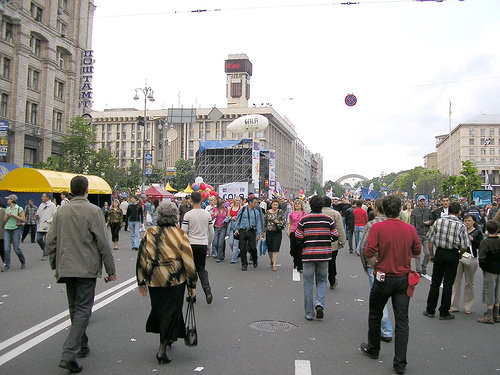
Festival at Independent Square, Kiev, Ukraine
Beverage store in Odesa, Ukraine
Naval ships docked at Sevastopol.
A church in Ukraine
Streetside shop in Odessa.
Old fortress in Krok, Ukraine
Submarines docked in Krok, Ukraine
Old symbols of the Soviet Union.
A womand sales flowers.
Babi Yar statue in Kieve, Ukraine
Arena shopping district, Kieve, Ukraine
Kyiv Pechersk Lavra, Kiev, Ukraine


Travel and Tourism
Travel and Tourism
- Travel Alert Status
- Level 4: Do Not Travel
- Currency
- hryvnia (UAH)
- Time Difference
- UTC+2 (7 hours ahead of Washington, DC during Standard Time)
- Climate
- The Ukraine climate is similar to the wheat-producing regions of Canada and is characterized by abundant precipitation and cloudy skies, especially in fall and winter. Snow can start as early as October and not end until April. The mean temperature in summer is 87°F (30°C) and in winter 16°F (-8°C). Although summers are short, the temperature can soar to the 90s. Mediterranean only on the southern Crimean coast; precipitation disproportionately distributed, highest in west and north, lesser in east and southeast; winters vary from cool along the Black Sea to cold farther inland; summers are warm across the greater part of the country, hot in the south.
- Airports
- 702
Read the full travel guide — health, safety, vaccinations, disease risk, sanitation, and transit details.
View full travel guideRecipes
Recipes
Ukrainian Cabbage Soup
Main Dish
Appetizer
Kutia -- Ukrainian Traditional
Main Dish
Breakfast Eggs
Main Dish
Plum Dumplings Made With Potato Dough
Main Dish
Holubtsi --Meat Wrapped in Cabbage Leaves
Main Dish
Ukrainian Sausage
Main Dish
Chicken in Cream with Dill
Main Dish
PremiumZrazy -- Beef Slices with Sour Cream and Mushrooms
Main Dish
PremiumSauerkraut with Pork
Main Dish
PremiumUkrainian Cabbage Soup
History
History
Historical Eras
Ancient & Nomadic Period
1000 BCE – 882
The steppe lands of modern Ukraine were successively inhabited by Cimmerians, Scythians, Sarmatians, and Goths, whose cultures were documented by Greek and Roman traders who established coastal city-states along the Black Sea. Slavic tribes migrated into central and eastern Ukraine by the sixth century A.D., laying the demographic foundation for later state formation. These peoples existed in complex interchange with nomadic empires and Mediterranean civilizations.
Kievan Rus
882 – 1362
Founded under the Varangian prince Oleg, Kievan Rus grew into the largest state in Europe by the 11th century, with Kyiv as its prosperous capital on major trade routes between Scandinavia and Byzantium. Prince Volodymyr's conversion to Byzantine Orthodox Christianity in 988 profoundly shaped the region's cultural and spiritual identity, and the Cyrillic alphabet spread through missionary influence. Internecine feudal conflict and the catastrophic Mongol sack of Kyiv in 1240 shattered the state, leaving its territories vulnerable to absorption by neighboring powers.
Lithuanian & Polish Rule
1362 – 1648
Most of Ukraine was absorbed into the Grand Duchy of Lithuania in the 14th century and subsequently came under the Polish-Lithuanian Commonwealth following the Union of Lublin in 1569. Under Polish rule, Ukrainian Orthodox culture faced increasing pressure from Catholic and Uniate religious policies, and the enserfment of the peasantry generated deep resentment. During this period Ukrainians consolidated a distinct national identity, and the Cossack warrior class emerged as its most potent symbol of resistance and freedom.
Cossack Hetmanate
1648 – 1781
Hetman Bohdan Khmelnytsky's 1648 uprising against Polish rule established the Cossack Hetmanate, an autonomous Ukrainian polity that represented the first modern expression of Ukrainian statehood. The 1654 Treaty of Pereyaslav aligned the Hetmanate with Muscovy, a fateful agreement whose terms were long disputed, and the 1667 Truce of Andrusovo formally partitioned Ukraine between Poland and Russia. Despite sustained Muscovite encroachment — including Peter I's destruction of the Cossack capital Baturyn and Ivan Mazepa's failed bid for independence after Poltava in 1709 — the Hetmanate maintained a degree of autonomy for over a century before Catherine II abolished it entirely.
Imperial Rule & National Awakening
1781 – 1917
Following the partitions of Poland and Catherine the Great's annexation of Crimea in 1783, virtually all Ukrainian ethnographic territory fell under either the Russian or Austro-Hungarian empires. Imperial Russia systematically suppressed Ukrainian language and culture, most notably through the 1863 Ems Decree banning Ukrainian-language publications, yet a powerful nationalist awakening emerged, championed by poet and artist Taras Shevchenko (1814–1861). The Holodomor, mass displacement, and centuries of colonial extraction fueled the drive for self-determination that exploded with the collapse of both empires in World War I.
Soviet Ukraine & Independence
1917 – present
Ukraine declared independence in 1918 under the Central Rada and President Mykhaylo Hrushevsky, but after three years of civil war was absorbed into the Soviet Union as the Ukrainian SSR in 1922. Stalin's forced collectivization produced the Holodomor famine of 1932–33, killing an estimated 3–7 million Ukrainians, and Nazi occupation from 1941 to 1944 brought further devastation including the massacre of over one million Jews at sites such as Babyn Yar. Ukraine declared independence on August 24, 1991 following the Soviet collapse; subsequent decades were marked by the Orange Revolution of 2004, the Euromaidan Revolution of 2014, Russia's annexation of Crimea, and Russia's full-scale invasion launched in February 2022.
Overview
Most of the territory of what is modern Ukraine was annexed by Poland and Lithuania in the 14th century, but during that time, Ukrainians began to conceive of themselves as a distinct people, a feeling that survived subsequent partitioning by greater powers over the next centuries. Ukrainian peasants who fled the Polish effort to force them into servitude came to be known as Cossacks and earned a reputation for their fierce martial spirit and love of freedom. In 1667, Ukraine was partitioned between Poland and Russia. In 1793, when Poland was partitioned, much of modern-day Ukraine was integrated into the Russian Empire.
The 19th century found the region largely agricultural, with a few cities and centers of trade and learning. The region was under the control of the Austro-Hungarian Empire in the extreme west and the Russian Empire elsewhere. Ukrainian writers and intellectuals were inspired by the nationalistic spirit stirring other European peoples existing under other imperial governments and were determined to revive Ukrainian linguistic and cultural traditions and reestablish a Ukrainian state. Taras Shevchenko (1814-1861), national hero of Ukraine, presented the intellectual maturity of the Ukrainian language and culture through his work as a poet and artist. Imperial Russia, however, imposed strict limits on attempts to elevate Ukrainian culture, even banning the use and study of the Ukrainian language.
When World War I and the Russian revolution shattered the Habsburg and Russian empires, Ukrainians declared independent statehood. In 1917 the Central Rada proclaimed Ukrainian autonomy and in 1918, following the Bolshevik seizure of power in Petrograd, the Ukrainian National Republic declared independence under President Mykhaylo Hrushevsky. After three years of conflict and civil war, however, the western part of Ukrainian territory was incorporated into Poland, while the larger, central and eastern regions were incorporated into the Soviet Union in 1922 as the Ukrainian Soviet Socialist Republic.
The Ukrainian national idea persevered during the twenties, but with Stalin’s rise to power and the campaign for collectivization, the Soviet leadership imposed a campaign of terror that ravaged the intellectual class. Stalin also created an artificial famine (called the Holodomor in Ukrainian) as part of his forced collectivization policies, which killed millions of previously independent peasants and others throughout the country. Estimates of deaths from the 1932-33 famine alone range from 3 million to 7 million.
When the Nazis invaded the Soviet Union in 1941, some Ukrainians, particularly in the west, welcomed what they saw as liberation from Communist rule, but this did not last as they quickly came to understand the nature of Nazi rule. Nazi brutality was directed principally against Ukraine’s Jews (of whom an estimated 1 million were killed), but also against many other Ukrainians. Babyn Yar in Kiev was the site of one of the most horrific Nazi massacres of Ukrainian Jews, ethnic Ukrainians, and many others. Kiev and other parts of the country were heavily damaged.
After the Nazi and Soviet invasions of Poland in 1939, the western Ukrainian regions were incorporated into the Soviet Union. Armed resistance against Soviet authority continued as late as the 1950s. During periods of relative liberalization--as under Nikita Khrushchev from 1955 to 1964 and during the period of "perestroika" under Mikhail Gorbachev -- Ukrainian communists pursued nationalist objectives. The 1986 explosion at the Chornobyl (Chernobyl in Russian) nuclear power plant, located in the Ukrainian SSR, and the Soviet Government’s initial efforts to conceal the extent of the catastrophe from its own people and the world, was a watershed for many Ukrainians in exposing the severe problems of the Soviet system. Ukraine became an independent state on August 24, 1991, and was a co-foun
Timeline of Key Events
911
Viking monarch Oleg of Kiev, Russia, signed a treaty with the Byzantines.
Viking monarch Oleg of Kiev, Russia, signed a treaty with the Byzantines.
988
Prince Vladimir of Kiev accepted Byzantine Orthodoxy.
Prince Vladimir of Kiev accepted Byzantine Orthodoxy. This is the traditional date for the beginning of Russian Christianity.
1068
Polovtsi army attack Kyiv state for the first time.
Polovtsi army attack Kyiv state for the first time.
1187
The word Ukraine (Ukrayina) first used to describe Kyiv and Halychyna lands.
The word Ukraine (Ukrayina) first used to describe Kyiv and Halychyna lands.
1475 – 1774
Crimea (Krym) under Turkish (Osman) Empire’s rule.
Crimea (Krym) under Turkish (Osman) Empire’s rule.
1490
First mentioning of cossacks (kozaks).
First mentioning of cossacks (kozaks).
1569
Crimea (Krym) under Turkish (Osman) Empire’s rule.
The Lublin Union was signed and direct rule over Lithuania was passed to Poland. Lithuania maintained certain ministers, laws, money and an army. The territories of Volinija, Kiev and Podolija were transferred to Polish rule.
Read the full history profile — narrative overview, defining eras, and the complete timeline in one place.
View expanded historyInteresting Facts
Interesting Facts
Ukraine has the world's fewest ratio of men with 53.7% being female.
The Ukrainian flag of blue and yellow symbolizes a field of yellow grain with a blue sky overhead.
With the recent independence of Ukraine from Russia, Ukraine is attempting to reintroduce Ukrainian words for Russian ones, as part of the country's activity to reclaim it's heritage. For example, what we know as Kiev is now called Kyiv.
During the Soviet period many retired Russian officers moved to Crimea not only because of its mild, healing seaside climate, but also for political reasons. The area was also a popular place for workers to take vacations. There is still a large number of Russians in Crimea, although the peninsula is an integral part of Ukraine.
Ukraine has an important aerospace industry. The largest airplane in the world was built in Ukraine, and a Ukrainian factory built rockets for the Soviet space program. Ukraine launched its first satellite in 1995.
There are many circus troupes in the Ukraine. Kyiv Circus School trains circus performers in acrobatics.
See every fact — trivia, oddities, and curious tidbits gathered from across the country.
View all interesting factsGeography and Environment
Geography and Environment
- Terrain
- most of Ukraine consists of fertile plains (steppes) and plateaus, mountains being found only in the west (the Carpathians), and in the Crimean Peninsula in the extreme south
- Climate
- The Ukraine climate is similar to the wheat-producing regions of Canada and is characterized by abundant precipitation and cloudy skies, especially in fall and winter. Snow can start as early as October and not end until April. The mean temperature in summer is 87°F (30°C) and in winter 16°F (-8°C). Although summers are short, the temperature can soar to the 90s. Mediterranean only on the southern Crimean coast; precipitation disproportionately distributed, highest in west and north, lesser in east and southeast; winters vary from cool along the Black Sea to cold farther inland; summers are warm across the greater part of the country, hot in the south.
- Natural Hazards
- NA
- Current Environmental Issues
- inadequate supplies of potable water; air and water pollution; deforestation; radiation contamination in the northeast from 1986 accident at Chornobyl' Nuclear Power Plant
Read the full geography and environment profile — terrain, climate, natural resources, hazards, land use, and international agreements.
View full geographyPeople & Demographics
People & Demographics
Religion
Languages Spoken
Ukrainian, Russian, Romanian, Polish, Hungarian
- Hungarian
- Polish
- Romanian
- Russian
- Ukrainian
Population
- Population
- 43,528,136
- Population in Major Urban Areas
- KYIV (capital) 2.829 million; Kharkiv 1.451 million; Dnipropetrovsk 994,000; Odesa 1.01 million; Donetsk 959,000; Zaporizhzhya 771,000
- Nationality Noun
- Ukrainian(s)
- Ethnic Groups
- Ukrainian 77.8%, Russian 17.3%, Belarusian 0.6%, Moldovan 0.5%, Crimean Tatar 0.5%, Bulgarian 0.4%, Hungarian 0.3%, Romanian 0.3%, Polish 0.3%, Jewish 0.2%, other 1.8%
- Language Note
- Ukrainian is the official language. Minorities including Hungarian, Polish and Romanian may speak their own languages. Ethnic minorities now have the legal right to use their own language in public and judicial matters.
Education
- Literacy Definition
- age 15 and over can read and write
School buildings are usually three - four-story buildings. The rooms are quite spacious, built for 30 - 40 children per room. Additionally, there are small classrooms, specially constructed for specific groups of students (10-15 people). The classroom consists of a blackboard, desks, and a teacher’s desk. In some specialized classrooms, designated for a certain class, there are lockers for clothes; on the walls are hanging portraits of prominent academics, and writers, depending on the orientation class. For example, there is a periodic table hanging on the wall of the chemistry classroom (a kind of cheat sheet for school children). Each school has a gym, where students play traditional games such as basketball, volleyball, and football (soccer). In the hot season, children play football(soccer) in the street. There are computer classes in the schools, but because of the poor economic situation in Ukraine, the equipment is outdated.
In some schools, there is a guard standing at the entrance. They only let in children that are studying in this school and they do not let them out until the classes are over.
At recess, many children of the senior classes negotiate with the guard to run out for a smoke around the corner. Others are smoking at the toilet. If students are caught, they are punished and their parents are called to the school.
Health Information
- Life Expectancy at Birth
- Life expectancy at birth in Ukraine stands at approximately 72 years overall, with notable differences between men and women. Ukrainian women can expect to live to around 77 years, while men have a significantly shorter life expectancy of roughly 67 years. This gap of approximately 10 years between the sexes is one of the largest such disparities in Europe and reflects long-standing public health challenges, including higher rates of cardiovascular disease, alcohol consumption, and occupational hazards among men. Ukraine's life expectancy figures have fluctuated considerably over recent decades. During the Soviet era, health outcomes were closely tied to state-managed healthcare infrastructure, which deteriorated sharply following independence in 1991. The economic instability of the 1990s contributed to a notable decline in life expectancy, particularly among working-age men. Recovery was gradual through the 2000s and into the 2010s, as healthcare access and living standards slowly improved. The full-scale Russian invasion that began in February 2022 has created severe and lasting pressures on public health across the country. The displacement of millions of people, widespread destruction of healthcare infrastructure, and the profound psychological toll of prolonged conflict are all contributing to a measurable decline in life expectancy. In conflict-affected regions, access to treatment for chronic conditions — including heart disease, which remains the leading cause of death in Ukraine — has been severely curtailed. Excess mortality resulting directly and indirectly from the war is expected to weigh heavily on national health statistics for years to come. Prior to the escalation of conflict, Ukraine had been working to modernize its healthcare system through reform initiatives aimed at shifting from a Soviet-era model toward a more decentralized, primary care-focused approach. These reforms showed early promise in improving preventive care access and reducing infant mortality, factors that contribute positively to overall life expectancy calculations. The war has significantly disrupted this reform momentum, straining both resources and institutional capacity. Compared to its European neighbors, Ukraine's life expectancy remains well below the EU average of approximately 81 years, reflecting the compounded effects of economic hardship, active armed conflict, and systemic healthcare challenges that continue to shape the country's public health landscape.
- Infant Mortality Rate
- Ukraine has made significant progress in reducing infant mortality over the past several decades, reflecting broader improvements in healthcare infrastructure, prenatal care, and public health policy. As of the most recent available data, Ukraine's infant mortality rate stands at approximately 6 to 7 deaths per 1,000 live births, a figure that represents a dramatic decline from the much higher rates recorded during the Soviet era and the turbulent years following independence in 1991. In the early 1990s, Ukraine's infant mortality rate was considerably higher, hovering around 14 to 18 deaths per 1,000 live births. The steady downward trend since then is attributed to expanded access to neonatal intensive care, improved training for obstetric and pediatric healthcare workers, greater availability of vaccinations, and increased awareness of maternal and infant nutrition. Despite this progress, Ukraine's infant mortality rate remains somewhat higher than the European Union average, which falls below 4 deaths per 1,000 live births for most member states. Regional disparities within Ukraine also exist, with rural and economically disadvantaged areas generally experiencing higher rates than urban centers such as Kyiv, Lviv, and Kharkiv, where hospital facilities and specialist care are more accessible. UNICEF and the World Health Organization have both highlighted the importance of continued investment in Ukraine's healthcare system to sustain and accelerate these gains. Key challenges include addressing neonatal causes of death such as premature birth complications, respiratory conditions, and congenital anomalies, which together account for a significant proportion of infant deaths in the country. The ongoing conflict that escalated in 2022 has introduced new and serious risks to maternal and infant health. Displacement of populations, disruption of healthcare services, and damage to medical infrastructure have created conditions that may place vulnerable newborns at greater risk, and international health organizations continue to monitor the situation closely. Overall, Ukraine's trajectory in reducing infant mortality reflects meaningful public health achievement, though sustained efforts and international support remain essential to protecting the health and survival of newborns in the country.
Life Expectancy
- Life Expectancy at Birth
- Life expectancy at birth in Ukraine stands at approximately 72 years overall, with notable differences between men and women. Ukrainian women can expect to live to around 77 years, while men have a significantly shorter life expectancy of roughly 67 years. This gap of approximately 10 years between the sexes is one of the largest such disparities in Europe and reflects long-standing public health challenges, including higher rates of cardiovascular disease, alcohol consumption, and occupational hazards among men. Ukraine's life expectancy figures have fluctuated considerably over recent decades. During the Soviet era, health outcomes were closely tied to state-managed healthcare infrastructure, which deteriorated sharply following independence in 1991. The economic instability of the 1990s contributed to a notable decline in life expectancy, particularly among working-age men. Recovery was gradual through the 2000s and into the 2010s, as healthcare access and living standards slowly improved. The full-scale Russian invasion that began in February 2022 has created severe and lasting pressures on public health across the country. The displacement of millions of people, widespread destruction of healthcare infrastructure, and the profound psychological toll of prolonged conflict are all contributing to a measurable decline in life expectancy. In conflict-affected regions, access to treatment for chronic conditions — including heart disease, which remains the leading cause of death in Ukraine — has been severely curtailed. Excess mortality resulting directly and indirectly from the war is expected to weigh heavily on national health statistics for years to come. Prior to the escalation of conflict, Ukraine had been working to modernize its healthcare system through reform initiatives aimed at shifting from a Soviet-era model toward a more decentralized, primary care-focused approach. These reforms showed early promise in improving preventive care access and reducing infant mortality, factors that contribute positively to overall life expectancy calculations. The war has significantly disrupted this reform momentum, straining both resources and institutional capacity. Compared to its European neighbors, Ukraine's life expectancy remains well below the EU average of approximately 81 years, reflecting the compounded effects of economic hardship, active armed conflict, and systemic healthcare challenges that continue to shape the country's public health landscape.
- Infant Mortality Rate
- Ukraine has made significant progress in reducing infant mortality over the past several decades, reflecting broader improvements in healthcare infrastructure, prenatal care, and public health policy. As of the most recent available data, Ukraine's infant mortality rate stands at approximately 6 to 7 deaths per 1,000 live births, a figure that represents a dramatic decline from the much higher rates recorded during the Soviet era and the turbulent years following independence in 1991. In the early 1990s, Ukraine's infant mortality rate was considerably higher, hovering around 14 to 18 deaths per 1,000 live births. The steady downward trend since then is attributed to expanded access to neonatal intensive care, improved training for obstetric and pediatric healthcare workers, greater availability of vaccinations, and increased awareness of maternal and infant nutrition. Despite this progress, Ukraine's infant mortality rate remains somewhat higher than the European Union average, which falls below 4 deaths per 1,000 live births for most member states. Regional disparities within Ukraine also exist, with rural and economically disadvantaged areas generally experiencing higher rates than urban centers such as Kyiv, Lviv, and Kharkiv, where hospital facilities and specialist care are more accessible. UNICEF and the World Health Organization have both highlighted the importance of continued investment in Ukraine's healthcare system to sustain and accelerate these gains. Key challenges include addressing neonatal causes of death such as premature birth complications, respiratory conditions, and congenital anomalies, which together account for a significant proportion of infant deaths in the country. The ongoing conflict that escalated in 2022 has introduced new and serious risks to maternal and infant health. Displacement of populations, disruption of healthcare services, and damage to medical infrastructure have created conditions that may place vulnerable newborns at greater risk, and international health organizations continue to monitor the situation closely. Overall, Ukraine's trajectory in reducing infant mortality reflects meaningful public health achievement, though sustained efforts and international support remain essential to protecting the health and survival of newborns in the country.
Read the full people and society profile — demographics, health, education, religion, languages, and notable people.
View full people and societyGovernment & Politics
Government & Politics
Country Identity
- Country Name
- Ukraine
- Local - Short
- Ukrayina
- Former Name
- Ukrainian National Republic, Ukrainian State, Ukrainian Soviet Socialist Republic
Government Structure
- Government Type
- republic
- Legal System
- based on civil law system; judicial review of legislative acts
- Executive Branch
- chief of state: President Volodymyr ZELENSKYY (since 20 May 2019) head of government: Prime Minister Denys SHMYHAL (since 4 March 2020) cabinet: Cabinet of Ministers nominated by the prime minister and approved by the Verkhovna Rada (parliament); the Minister of Foreign Affairs and Minister of Defense are nominated by the president note: there is also a National Security and Defense Council (NSDC), originally established in 1992; the NSDC is tasked with developing national security policy on domestic and international matters and advising the president; a Presidential Office supports the president by helping draft presidential decrees and providing broader policy guidance elections: president elected by popular vote for a five-year term (eligible for a second term); prime minister nominated by the parliamentary majority and confirmed by the Verkhovna Rada election results: Volodymyr ZELENSKYY elected president in the second round held on 21 April 2019; percent of vote - Volodymyr ZELENSKYY 73.2%, Petro POROSHENKO 24.5%; note - Zelenskyy, a former comedian and television personality, defeated the incumbent Petro POROSHENKO by a wide margin; presidential elections scheduled for March 2024 were suspended under martial law declared following Russia's full-scale invasion of Ukraine in February 2022
- Legislative Branch
- unicameral Supreme Council or Verkhovna Rada (450 seats; members are elected through a mixed electoral system, with half of the seats filled by proportional representation from party lists and half from single-member constituencies; members serve five-year terms) elections: last held on 21 July 2019 (next scheduled elections have been postponed due to the ongoing war with Russia, which began with the full-scale invasion in February 2022; martial law remains in effect and prohibits the holding of elections) election results: percent of vote by party in 2019 - Servant of the People 43.2%, Opposition Platform - For Life 13.1%, Fatherland 8.2%, European Solidarity 8.1%, Voice 5.8%, other 21.6%; seats by party - Servant of the People 254, Opposition Platform - For Life 43, Fatherland 26, European Solidarity 25, Voice 20, independent and other 82 note: the Verkhovna Rada has continued to function during the Russian invasion that began in February 2022, meeting under wartime conditions to pass emergency legislation and approve continued martial law extensions. The Opposition Platform - For Life, previously led by Viktor Medvedchuk, was banned in 2022 following his detention on treason charges, reducing the effective number of active parliamentary factions. Parliamentary elections that would otherwise have been due in 2024 remain suspended for the duration of martial law.
- Judicial Branch
- Supreme Court; Constitutional Court
- Suffrage
- 18 years of age; universal
- Constitution
- adopted 28 June 1996
- Independence
- 24 August 1991 (from the Soviet Union)
- National Holiday
- Independence Day, 24 August (1991); the date of 22 January (1918), the day Ukraine first declared its independence (from Soviet Russia), is now celebrated as Unity Day
Capital City
- Capital Name
- Kyiv (Kiev is the transliteration from Russian) note: pronounced KAY-yiv
- Capital - geographic coordinate
- 50 26 N, 30 31 E
- Capital Time Difference
- UTC+2 (7 hours ahead of Washington, DC during Standard Time)
the name is associated with that of Kyi, who along with his brothers Shchek and Khoryv, and their sister Lybid, are the legendary founders of the medieval city of Kyiv; Kyi being the eldest brother, the city was named after him
Military
Branches: Ground Forces, Naval Forces, Air Forces
Embassy / Diplomatic Mission
You need a valid passport to enter Ukraine. If you are a U.S. citizen, you do not need to have a Ukrainian visa as long as you will be in Ukraine for fewer than 90 days within a 180-day period for tourism. You need a visa or valid Ukrainian residency permit for all stays longer than 90 days. You cannot get a Ukrainian visa at the airport or at the border. If you need a visa, please get it in advance at a Ukrainian Embassy or Consulate. Contact information for Ukrainian embassies and consulates outside of the United States is available on the Ukrainian Ministry of Foreign Affairs website.
Check your visa carefully so that you know the validity period. You are responsible for knowing the rules for the type of visa you have. Sometimes U.S. citizens try to come to Ukraine before their visa allows. Remember, in Ukraine the date is written day-month-year. For example, a visa issued on 01/05/13 is good from May 1, 2013, NOT from January 5, 2013. If you come to Ukraine before your visa allows, you can be stopped at the border, not allowed to enter Ukraine, and required to return to your point of origin at your own expense. The U.S. Embassy in Kyiv cannot stop this from happening.
If you enter Ukraine without needing a visa (meaning you will be in Ukraine for fewer than 90 days within a 180-day period), you are automatically registered at the border for 90 days. Extensions of stay beyond 90 days are rarely authorized. To apply for an extension, talk to your local office of the Ukrainian State Department of Citizenship, Immigration, and Registration (officially VGIFRO, but still referred to almost universally by its old acronym, “OVIR”) at least three work days before your initial registration expires. Although three days is a minimum, it is in your interest to contact OVIR earlier. Most cities will have several OVIR offices. If you are given an extension, you will be allowed to stay in Ukraine until your new registration expires; however, if you leave Ukraine, you may have to wait 180 days to come back without a visa. If you do not get an extension, you must leave the country and cannot come back until 180 days after your initial entry into Ukraine.
If you enter Ukraine on a long-term (“D”) visa, you must apply with OVIR for a residency permit within 45 days from your entry date. Once you have the residency permit you can reside in Ukraine for as long as it remains valid. To enter and exit the country, you will need your un-expired residency permit and a valid passport. For more details regarding Ukrainian visas and registration procedures, please contact the nearest Embassy of Ukraine or consulate abroad, or the nearest OVIR office within Ukraine.
If you are going to visit Russia from Ukraine, remember you will also need a Russian visa. The Consular Section of the Russian Embassy in Ukraine is located at Prospekt Kutuzova 8, tel.: (380-44) 284-6816, fax: 284-7936, or at general@rucons.kiev.ua. For more details, review Country Specific Information for the Russian Federation. Please note that it currently takes at least two weeks for American citizens to receive Russian visas in Kyiv. The U.S. Embassy cannot intervene to expedite Russian visa issuance.
Ukrainian law requires visitors to have valid health insurance. More information on medical insurance is below.
Visit the Embassy of Ukraine’s website for the most current visa information. Also, see the Ukrainian Ministry of Foreign Affairs website.
Read the full government profile — flag symbolism, national anthem, and other national symbols.
View full government detailsEconomy
Economy
Ukraine, once the second-largest economy in the former Soviet Union after Russia, has undergone profound economic transformation since independence in 1991. Its fertile black soil makes it one of the world's leading agricultural producers, with Ukraine ranking among the top global exporters of grain, sunflower oil, and corn. Its diversified industrial base historically supplied heavy equipment, metallurgy products, and raw materials to other regions of the former USSR, and steel, machinery, and chemicals continue to be significant export sectors.
Throughout the 1990s, Ukraine struggled with the transition to a market economy. Output fell sharply, hyperinflation gripped the country in 1993, and structural reforms repeatedly stalled amid political resistance. The economy began to recover after 2000, posting several years of strong growth driven by exports and rising domestic demand, before being hit hard by the 2008–2009 global financial crisis.
The 2014 Revolution of Dignity, Russia's annexation of Crimea, and the outbreak of conflict in the Donbas region triggered another severe economic shock, with GDP contracting sharply and the hryvnia losing much of its value. Subsequent reforms, supported by the International Monetary Fund and the European Union, helped stabilize the macroeconomic environment, strengthen the banking sector, and modernize energy markets. An Association Agreement and Deep and Comprehensive Free Trade Area with the EU, which entered into force in 2017, reoriented Ukrainian trade westward and reduced dependence on Russia.
Russia's full-scale invasion in February 2022 devastated the Ukrainian economy. GDP contracted by roughly 29% in 2022 as ports were blockaded, infrastructure was destroyed, and millions of people were displaced. The economy returned to modest growth of about 5% in 2023 and continued to expand in 2024, supported by Western financial assistance, resilient agricultural exports through alternative Black Sea corridors, and a wartime industrial mobilization. However, sustained Russian attacks on energy infrastructure, labor shortages, and persistent budget deficits financed largely by international partners continue to weigh heavily on the outlook.
Ukraine's medium-term economic prospects depend on the trajectory of the war, the pace of reconstruction, progress on EU accession negotiations launched in 2024, and ongoing reforms in governance, anti-corruption, and judicial independence. Reconstruction needs have been estimated by the World Bank and partners at well over half a trillion dollars, making Ukraine the focus of one of the largest international recovery efforts in modern history.
Snapshot
- Currency Name and Code
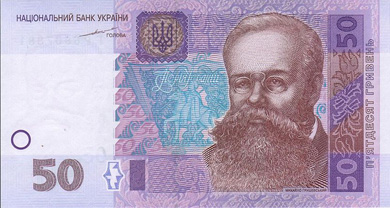
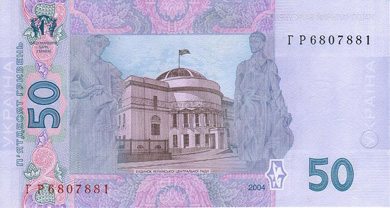
- Ukrainian Hryvnia (UAH)
- GDP — official exchange rate
- $75,140,000,000 (USD)
- GDP Real Growth Rate
- -29.1%
- Gini Index
- 29
Banknotes
Budget & Public Finance
- Fiscal Year
- calendar year
- Public Debt (% of GDP)
- 18%
- External Debt
- $33,930,000,000 (USD)
- Investment (% of GDP)
- 17.7%
- Economic Aid
- $637,700,000 (USD)
- Current Account Balance
- $2,240,000,000 (USD)
Labor, Industry & Trade
- Labor Force by Occupation
- industry 32%; agriculture 24%; services 44%
- Household Income — highest 10%
- 24.8%
- Industries
- coal, electric power, ferrous and nonferrous metals, machinery and transport equipment, chemicals, food processing (especially sugar)
- Agriculture Products
- grain, sugar beets, sunflower seeds, vegetables; beef, milk
- Export Commodities
- ferrous and nonferrous metals, fuel and petroleum products, chemicals, machinery and transport equipment, food products
- Export Partners
- Russia 17.8%, Turkey 6.9%, Italy 4.7%, Germany 4.2%
- Import Commodities
- energy, machinery and equipment, chemicals
- Import Partners
- Russia 37.6%, Turkmenistan 11.2%, Germany 9.9%
Energy
- Oil Production
- 68,000 bbl/day
- Oil Consumption
- 233,000 bbl/day
- Oil Reserves
- 395,000,000 bbl/day
- Natural Gas Production
- 20,700,000,000 cu m
- Natural Gas Consumption
- 26,200,000,000 cu m
- Natural Gas Imports
- 2,619,999,872 cu m
- Natural Gas Exports
- 0 cu m
- Natural Gas Reserves
- 1,104,400,000,000 cu m
Communications
- Telephone System
- general assessment: Ukraine's telecommunication development plan emphasizes improving domestic trunk lines, international connections, and the mobile-cellular system domestic: at independence in December 1991, Ukraine inherited a telephone system that was antiquated, inefficient, and in disrepair; more than 3.5 million applications for telephones could not be satisfied; telephone density is rising and the domestic trunk system is being improved; about one-third of Ukraine's networks are digital and a majority of regional centers now have digital switching stations; improvements in local networks and local exchanges continue to lag; the mobile-cellular telephone system's expansion has slowed, largely due to saturation of the market which has reached 125 mobile phones per 100 people international: country code - 380; 2 new domestic trunk lines are a part of the fiber-optic Trans-Asia-Europe (TAE) system and 3 Ukrainian links have been installed in the fiber-optic Trans-European Lines (TEL) project that connects 18 countries; additional international service is provided by the Italy-Turkey-Ukraine-Russia (ITUR) fiber-optic submarine cable and by an unknown number of earth stations in the Intelsat, Inmarsat, and Intersputnik satellite systems
- Internet Country Code
- .ua
News & Weather
News & Weather
Current Weather
Latest News
Russia hits Ukrainian train shortly after Boris Johnson and top European officials leave station - BBC
BBC · 1h ago
Russia Is Churning Out Smart, Cheap New Weapons Faster Than Ukraine or the U.S. - WSJ
WSJ · 3h ago
Trump tells Ukraine's Zelenskiy to stop hitting Russian diesel - Reuters
Reuters · 15h ago
Russia offers Rs 16 lakh per foreign soldier for Ukraine war: Report - The Times of India
The Times of India · 1h ago
Putin would rather keep killing than admit he’s lost. As a winter of misery looms in Ukraine, Nato must step in - The Guardian
The Guardian · 1d ago
8 killed in Russian strikes on Ukraine as Putin warns Europe against sending troops - AP News
AP News · 1d ago
Putin warns Europe against sending troops to Ukraine: "That means a war with Russia" - cbsnews.com
cbsnews.com · 1d ago
Russian Offensive Campaign Assessment, September 12, 2026 - Institute for the Study of War
Institute for the Study of War · 1d ago
News via Google News
Climate Overview
The Ukraine climate is similar to the wheat-producing regions of Canada and is characterized by abundant precipitation and cloudy skies, especially in fall and winter. Snow can start as early as October and not end until April. The mean temperature in summer is 87°F (30°C) and in winter 16°F (-8°C). Although summers are short, the temperature can soar to the 90s. Mediterranean only on the southern Crimean coast; precipitation disproportionately distributed, highest in west and north, lesser in east and southeast; winters vary from cool along the Black Sea to cold farther inland; summers are warm across the greater part of the country, hot in the south.
Videos
Videos
2 curated YouTube videos.
Source: YouTube
Source: YouTube
Frequently Asked Questions
Frequently Asked Questions
What is the population of Ukraine?
How do people greet each other in Ukraine?
What are the dining and food customs in Ukraine?
What should I know about hospitality and visiting etiquette in Ukraine?
How should I dress in Ukraine?
Which gestures and body language matter in Ukraine?
What is family life like in Ukraine?
What do Ukrainians do for fun and recreation?
What is the capital of Ukraine?
Where is Ukraine located?
What countries border Ukraine?
What religion is practiced in Ukraine?
What is the currency of Ukraine?
What language is spoken in Ukraine?
What is Ukraine known for?
Last reviewed 2026