
 English
 Español
 中文
中文 हिन्दी
 Français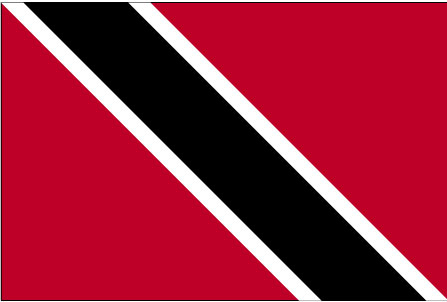
Trinidad and Tobago
Declare Your Relationship to Trinidad and Tobago
CountryReports Community
- Studying5
- From Trinidad and Tobago3
- Trinidad and Tobago heritage1
- Visited0
- Want to visit2
Customs and Culture
Customs and Culture
Cultural Attributes
Trinidad and Tobago is a vibrant country located in the southern Caribbean, known for its stunning beaches, rich cultural heritage, and diverse population. The unique cultural attributes of this country reflect the influence of its colonial history, as well as the blending of cultures from Africa, India, China, Europe, and other parts of the world. Here are some of the most unique cultural attributes in Trinidad and Tobago:
Carnival - One of the most famous cultural events in Trinidad and Tobago is Carnival. This festival is held annually in February or March and is a celebration of music, dance, and colorful costumes. Carnival originated as a pre-Lenten festival in Europe, but in Trinidad and Tobago, it has evolved into a unique expression of the country's culture.
Steelpan Music - The steelpan is a musical instrument that originated in Trinidad and Tobago in the early 20th century. It is made from a metal oil drum and produces a unique, percussive sound. Steelpan music is an integral part of Trinidadian culture and is often heard during Carnival and other festivals.
Limbo Dancing - Limbo is a dance that originated in Trinidad and Tobago and is characterized by its low, bending movements. The dance is often performed to the sound of steelpan music and is a popular feature of Carnival celebrations.
Divali - Divali is a Hindu festival that is celebrated in Trinidad and Tobago each year. It is a celebration of light over darkness and is marked by the lighting of diyas (oil lamps), the exchange of sweets, and the sharing of meals.
Chutney Music - Chutney music is a blend of Indian and Caribbean musical styles and is popular in Trinidad and Tobago. The music often features a mix of Hindi and English lyrics and is a favorite at weddings and other celebrations.
Cuisine - Trinidad and Tobago's cuisine is a reflection of its multicultural heritage, with influences from Africa, India, China, Europe, and the Caribbean. Some popular dishes include roti, doubles, callaloo, and pelau.
Folklore - Trinidad and Tobago is home to a rich tradition of folklore, including stories of jumbies (spirits), douens (ghostly children), and soucouyants (vampires). These stories have been passed down through generations and are an important part of the country's cultural identity.

Island of Infinite Rhythms
Social Customs & Etiquette
Greetings
Even though English is the official language, English is known as a Creole English and has words or phrases from African and other languages. For example, the plural form of you is allyu and the phrase ah wee means ours.
Gestures
As with any culture, there are certain gestures and actions that can be considered offensive or disrespectful. Here are some offensive gestures to avoid in Trinidad and Tobago:
Pointing - Pointing at someone or something with your index finger is considered impolite in Trinidad and Tobago. If you need to indicate something, it is better to use your whole hand.
Feet - It is considered disrespectful to point the soles of your feet at someone in Trinidad and Tobago. This is because feet are seen as the lowest part of the body and therefore, pointing them at someone is seen as demeaning.
Hand gestures - While hand gestures are often used in conversation in Trinidad and Tobago, there are some that can be considered offensive. For example, the "thumbs up" gesture is considered vulgar and should be avoided.
Touching someone's head - In Trinidad and Tobago, it is considered disrespectful to touch someone's head, especially if they are older than you. This is because the head is seen as the most sacred part of the body.
Blowing your nose in public - Blowing your nose in public is considered impolite in Trinidad and Tobago. If you need to blow your nose, it is best to do so in private.
Disrespecting elders - Elders are highly respected in Trinidad and Tobago, and it is considered very offensive to disrespect them in any way.
Disrespecting religious beliefs - Trinidad and Tobago is a diverse country with many different religions represented. It is important to respect the religious beliefs of others and to avoid making derogatory comments or gestures.
Personal Appearance
One of the most interesting aspects of Trinidad and Tobago is the personal appearance of its people, which reflects the unique blend of cultural influences that have shaped the country's history.
The people of Trinidad and Tobago come from a variety of ethnic backgrounds, including African, Indian, Chinese, and European. As a result, there is a rich mix of physical features and personal styles that can be observed throughout the country.
One of the most distinctive features of Trinidadian and Tobagonian personal appearance is their love of bright colors and bold patterns. This can be seen in the clothing worn by both men and women, as well as in the hairstyles and accessories that they choose. Brightly colored fabrics, such as madras, are a common choice for traditional outfits, which often feature elaborate patterns and embroidery.
Another important aspect of personal appearance in Trinidad and Tobago is the use of natural materials. This is particularly evident in the hairstyles worn by many people, which often feature intricate braiding and weaving using natural fibers such as hemp and sisal. These styles are not only practical and easy to maintain in the tropical climate, but they also reflect a connection to the natural world that is an important part of the country's cultural heritage.
In addition to their love of bright colors and natural materials, Trinidadian and Tobagonian personal appearance is also influenced by their religious beliefs. Many people in the country are followers of the Hindu, Muslim, or Christian faiths, and this is reflected in the clothing and accessories that they wear. For example, Muslim women often wear headscarves or hijabs, while Hindu women may wear saris or other traditional garments.
Diet
Many social gatherings are complemented with meals. While it is common to eat on the run in Trinidad, cooking substantial meals at home is important, especially on weekends. A typical Sunday dinner may include callaloo, a combination of spinach and crab. Other favorites are curried crab and coocoo, a cornmeal and okra pie.

Family
Extended families are important in general. Siblings and extended family members traditionally live close to each other. Family members, maintain regular contact and get together for religious holidays and other festivals. Children are highly valued and many families exercise strict discipline.
Dating Customs
When it comes to dating and romantic relationships, Trinidad and Tobago has its own unique traditions and customs that are worth exploring. Here are some of the dating traditions in Trinidad and Tobago:
Courting - In Trinidad and Tobago, courting is still a popular way to initiate romantic relationships. Courting involves a man expressing his interest in a woman, often through a series of thoughtful gestures like sending flowers or writing love letters.
Chaperones - It is not uncommon for a couple to have a chaperone on their first few dates in Trinidad and Tobago. This tradition is rooted in the country's strong Christian values and is seen as a way to ensure that the couple's behavior is appropriate.
Public displays of affection - While public displays of affection are generally accepted in Trinidad and Tobago, they are not as common as in some other cultures. Holding hands and hugging are common, but kissing in public is less common.
Family involvement - Family plays an important role in the dating traditions of Trinidad and Tobago. It is common for a couple to involve their families early on in the relationship and to seek their approval before moving forward.
Gender roles - Traditional gender roles still play a significant role in dating and relationships in Trinidad and Tobago. Men are often expected to take the lead in courting and to be the primary breadwinners in relationships, while women are expected to be homemakers and caretakers.
Religious differences - Trinidad and Tobago is a diverse country, with many different religions represented. This can sometimes lead to challenges when it comes to dating and relationships, as couples may come from different religious backgrounds.
Recreation
Trinidadians and Tobagonians have gained a reputation for enjoying life. “Fete” is their word for party, and the people have been known to create fetes even in the midst of crises. Cricket is a popular sport as well as soccer, netball, field hockey, and volleyball. Going to the beach and horse races are favorite recreational activities in Trinidad.
Holidays
Independence Day
8/31Independence Day
Dates of Interest
- August 31st
Emancipation Day - Celebrated on August 1st each year, Emancipation Day marks the abolition of slavery in Trinidad and Tobago in 1834.
How do people communicate and greet each other in Trinidad and Tobago?
English is the official language, but it is a Creole English incorporating words from African and other languages.
Good to know
- The plural form of 'you' is 'allyu'
- The phrase 'ah wee' means 'ours'
What are dining and food customs like in Trinidad and Tobago?
Many social gatherings include meals, and while eating on the run is common, cooking substantial home meals is important, especially on weekends.
Do
- Expect hearty Sunday dinners
- Try local favorites like callaloo (spinach and crab), curried crab, coocoo (cornmeal and okra pie), roti, doubles, and pelau
What etiquette should travelers follow in Trinidad and Tobago?
Respect for elders and religious beliefs is very important in this diverse society.
Do
- Respect the religious beliefs of others
- Show respect toward elders
Don’t
- Don't blow your nose in public
- Don't disrespect elders or make derogatory comments about religion
How should travelers dress in Trinidad and Tobago?
Personal style reflects a blend of cultural influences, with a love of bright colors, bold patterns, and natural materials.
Good to know
- Brightly colored fabrics like madras are common in traditional outfits
- Religious dress varies: Muslim women may wear headscarves or hijabs, Hindu women may wear saris
Which gestures should travelers avoid in Trinidad and Tobago?
Several common gestures are considered offensive or disrespectful.
Don’t
- Don't point at people or things with your index finger
- Don't point the soles of your feet at someone
- Avoid the 'thumbs up' gesture, which is considered vulgar
- Don't touch someone's head, especially someone older than you
Good to know
- Use your whole hand instead of pointing
What role does family play in Trinidad and Tobago?
Extended families are important, with relatives living close and staying in regular contact.
Good to know
- Families gather for religious holidays and festivals
- Children are highly valued and many families exercise strict discipline
- Family approval often matters in dating, and chaperones may accompany early dates
What do people do for fun in Trinidad and Tobago?
Trinidadians and Tobagonians are known for enjoying life and throwing 'fetes' (parties), even during hard times.
Good to know
- Cricket, soccer, netball, field hockey, and volleyball are popular sports
- Going to the beach and horse races are favorite activities
- Carnival, steelpan music, limbo dancing, Divali, and chutney music are key cultural highlights
Last updated: 2026-07-12 · Sources: CountryReports
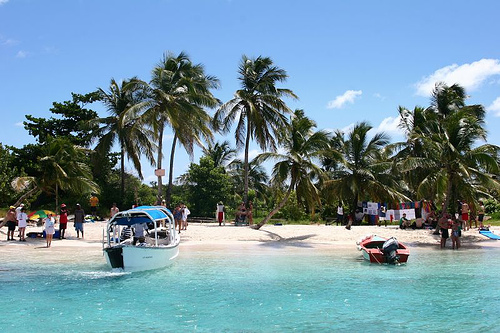
Photos of Trinidad and Tobago
Photos of Trinidad and Tobago


Travel and Tourism
Travel and Tourism
- Travel Alert Status
- Level 3: Reconsider Travel
- Currency
- Trinidad and Tobago dollar (TTD)
- Time Difference
- UTC-4 (1 hour ahead of Washington, DC during Standard Time)
- Airports
- 6
Read the full travel guide — health, safety, vaccinations, disease risk, sanitation, and transit details.
View full travel guideRecipes
Recipes
History
History
Historical Eras
Indigenous & Spanish Era
1498 – 1797
Christopher Columbus arrived in Trinidad in 1498, and Spain established colonial governance over the island, though settlement remained sparse for decades. The indigenous Arawak and Carib populations were largely decimated through disease, forced labor, and violent displacement. Trinidad gradually attracted French, free Black, and other non-Spanish settlers, while Tobago changed hands repeatedly among Dutch, French, and British forces.
British Colonial Period
1797 – 1889
A British naval expedition seized Trinidad from Spain in 1797, with formal cession confirmed under the Treaty of Amiens in 1802; France ceded Tobago to Britain in 1814. The colonial economy was built on sugar and cocoa plantations dependent on enslaved African labor until abolition in 1834, after which indentured workers were brought from India to sustain agricultural production. This wave of Indian indentureship profoundly shaped the ethnic and cultural fabric of Trinidad and Tobago.
Unified Crown Colony
1889 – 1945
Trinidad and Tobago were administratively merged into a single British crown colony in 1889, rationalizing governance across the two islands. The early twentieth century saw the emergence of a petroleum industry that began shifting the economy away from plantation agriculture. Labor unrest and growing calls for political representation intensified during the 1930s, laying the groundwork for future nationalist movements.
Road to Independence
1945 – 1962
Universal suffrage was instituted in 1945, dramatically expanding political participation. Eric Williams founded the People's National Movement in 1956, becoming the dominant nationalist figure, and Trinidad and Tobago briefly joined the British-sponsored West Indies Federation in 1958 before withdrawing as the federation collapsed under structural disagreements. Full independence was achieved on August 31, 1962, with Trinidad and Tobago joining the British Commonwealth.
Modern Nation
1962 – present
As an independent nation, Trinidad and Tobago leveraged substantial petroleum and natural gas reserves to become one of the most prosperous economies in the Caribbean. Political turbulence, including a state of emergency declared in 1970 amid Black Power demonstrations, tested the young democracy, but constitutional governance endured. The country has continued to develop its energy sector while diversifying into tourism, particularly in Tobago, and maintaining a vibrant multicultural society shaped by its Creole and East Indian heritage.
Overview
In 1958, the United Kingdom tried to establish an independent Federation of the West Indies comprising most of the former British West Indies. However, disagreement over the structure of the federation and Jamaica and Trinidad and Tobago’s withdrawal soon led to its collapse. Trinidad and Tobago achieved full independence in 1962 and joined the British Commonwealth.
Trinidad and Tobago’s people are mainly of African or East Indian descent. Virtually all speak English. Small percentages also speak Hindi, French patois, and several other dialects. Trinidad has two major folk traditions: Creole and East Indian. Creole is a mixture of African elements with Spanish, French, and English colonial culture. Trinidad’s East Indian culture came to the island with indentured servants brought to fill a labor shortage created by the emancipation of the African slaves in 1833. Most remained on the land, and they still dominate the agricultural sector, but many have become prominent in business and the professions. East Indians have retained much of their own way of life, including Hindu and Muslim religious festivals and practices.
Timeline of Key Events
1498
Christopher Columbus visits the islands.
Christopher Columbus visits the islands, naming Trinidad after the three peaks at its south-east corner and Tobago after a local type of tobacco pipe.
1498
Spain colonizes Trinidad, appointing a governor to rule it.
Spain colonizes Trinidad, appointing a governor to rule it.
1630
The Dutch settle on Tobago and plant sugar-cane.
The Dutch settle on Tobago and plant sugar-cane.
1781
The French capture Tobago from the Spanish, transforming it into a sugar-producing colony.
The French capture Tobago from the Spanish, transforming it into a sugar-producing colony.
1797
A British naval expedition captures Trinidad from Spain.
A British naval expedition captures Trinidad from Spain.
1802
Spain cedes Trinidad to Britain under the Treaty of Amiens.
Spain cedes Trinidad to Britain under the Treaty of Amiens.
1814
France cedes Tobago to Britain.
France cedes Tobago to Britain.
Read the full history profile — narrative overview, defining eras, and the complete timeline in one place.
View expanded historyInteresting Facts
Interesting Facts
Most Tobagonians are of African descent, while Trinidad is the most cosmopolitan society in the Caribbean. People of Asian, African and European descent, and a mixture of these, live together on this island.
T & T has what could be called the eighth wonder of the world, Pitch Lake near the town of La Brea. It has crude oil in it which reaches the earth's surface by seeping through a fault line in the sandstone 76 metres below ground. The pitch swirls slowly, swallowing objects and releasing them years later.
T & T achieved independence from Britain in 1962 and became a Republic in 1976.
Trinidad has one of the world's most multi-ethnic populations. Offspring of African and European parents are seen culturally as Black Trinidadians. Some mixed race people are called French Creoles although many families bear Spanish, Portuguese, Scottish and English names.
When the British explorer Sir Walter Raleigh was anchored in Trinidad in 1595, he used the asphalt from Pitch Lake to caulk his leaking ships.
Liming is part of Trinidad's recreational life. It means passing the time, not doing anything too purposeful, being with friends for the sake of relaxing. It takes place at the beach, on street corners, in bars and outside shops.
See every fact — trivia, oddities, and curious tidbits gathered from across the country.
View all interesting factsGeography and Environment
Geography and Environment
- Terrain
- mostly plains with some hills and low mountains
- Climate
- Both Trinidad and Tobago lie deep in the tropics but are cooled by the marine environment and the prevailing northeast trade winds. Because of its constant exposure to trade winds, Tobago is cooler than Trinidad. Rainfall is moderate to heavy with an annual average of 82.7 inches but is subject to considerable regional and year-to-year variations. Days are warm, but evening temperatures are cooler. The seasonal variation does not exceed 5°F. The mean year-round temperature for the country at 8 a.m. is about 77°F; at 2 p.m. it is about 86°F. Humidity averages about 86% at 8 a.m. and about 65% at 2 p.m. A dry season, more clearly defined than in most West Indian islands, lasts from January through mid-May; a short interruption of the rainy season also usually occurs in September. In most of the country no month is entirely dry, but during the rainy season the monthly precipitation is three to four times greater than in the dry season. Although the country lies slightly south of the hurricane track, violent local storms sometimes occur. In 1962, Hurricane Flora devastated Tobago, and tropical storm Alma crossed Trinidad in 1974. Both events are considered highly unusual.
- Natural Hazards
- outside usual path of hurricanes and other tropical storms
- Current Environmental Issues
- water pollution from agricultural chemicals, industrial wastes, and raw sewage; oil pollution of beaches; deforestation; soil erosion
Read the full geography and environment profile — terrain, climate, natural resources, hazards, land use, and international agreements.
View full geographyPeople & Demographics
People & Demographics
Religion
Languages Spoken
English (official), Hindi, French, Spanish, Chinese
- Chinese
- English
- French
- Hindi
- Spanish
Population
- Population
- 1,534,937
- Population in Major Urban Areas
- PORT-OF-SPAIN (capital) 66,000
- Nationality Noun
- Trinidadian(s), Tobagonian(s)
- Ethnic Groups
- East Indian (a local term - primarily immigrants from northern India) 40.3%, black 39.5%, mixed 18.4%, white 0.6%, Chinese and other 1.2%
Education
- Literacy Definition
- age 15 and over can read and write
Life Expectancy
- Life Expectancy at Birth
- Life expectancy at birth in Trinidad and Tobago stands at approximately 74 years overall, with women typically living longer than men. Female life expectancy averages around 76 to 77 years, while male life expectancy is closer to 71 to 72 years. These figures place Trinidad and Tobago in a relatively favorable position compared to many other Caribbean and Latin American nations, though they remain below the averages seen in high-income countries such as those in North America and Western Europe. Several factors influence life expectancy trends in the twin-island republic. The country's relatively developed healthcare infrastructure, including public hospitals, health centers, and specialist facilities, has contributed to improved survival rates over the decades. Trinidad and Tobago benefits from a higher per capita income compared to many neighboring nations, which supports greater access to medical services and nutrition. However, non-communicable diseases pose a significant ongoing challenge. Cardiovascular disease, diabetes, and hypertension are among the leading causes of death in the country and are strongly linked to lifestyle factors including diet, physical inactivity, and obesity rates, which are notably high in the population. These chronic conditions disproportionately affect men, contributing to the gender gap in life expectancy. Road traffic accidents and violent crime also have a measurable impact on mortality statistics, particularly among young men, which further depresses male life expectancy relative to female. Life expectancy in Trinidad and Tobago has improved considerably over the past several decades, rising from the low 60s in the 1960s to its current levels. This progress reflects advances in maternal and child health, improved sanitation, immunization programs, and better management of infectious diseases that were once major causes of premature death. It is worth noting that the COVID-19 pandemic caused a temporary setback in life expectancy gains during the early 2020s, a pattern observed across much of the Caribbean region, though gradual recovery has been recorded in subsequent years. Ongoing public health efforts, including national non-communicable disease prevention campaigns and expanded healthcare access, aim to continue pushing life expectancy upward in coming years. The country's ability to sustain and improve these gains will depend significantly on addressing chronic disease burdens, improving mental health and trauma care services, and reducing mortality from preventable causes.
- Infant Mortality Rate
- Trinidad and Tobago has made meaningful progress in reducing infant mortality over the past several decades, reflecting improvements in healthcare access, prenatal services, and public health infrastructure across the twin-island nation. As of the most recent available data, Trinidad and Tobago's infant mortality rate stands at approximately 17 to 19 deaths per 1,000 live births. While this figure represents a significant decline from rates recorded in earlier decades, it remains somewhat higher than the averages seen in high-income countries and among the more developed economies of the Caribbean, such as Cuba and Barbados. The leading causes of infant death in Trinidad and Tobago are largely consistent with regional patterns and include prematurity and low birth weight, neonatal infections, congenital abnormalities, and complications during delivery. Disparities in outcomes can sometimes be observed between urban centers like Port of Spain and more rural or underserved communities, where access to specialized neonatal care may be more limited. The government of Trinidad and Tobago funds a public healthcare system that provides maternity and neonatal services, including antenatal care programs aimed at monitoring high-risk pregnancies. The country benefits from a relatively high rate of skilled attendance at birth, with the vast majority of deliveries taking place in formal healthcare facilities under the care of trained medical personnel, which has contributed to the overall downward trend in infant deaths. UNICEF and the World Health Organization have both monitored infant health indicators in Trinidad and Tobago as part of broader regional and global child survival initiatives. Continued efforts focused on improving neonatal intensive care capacity, reducing teenage pregnancy rates, addressing non-communicable disease risks in mothers, and expanding community-based health education are considered essential to further lowering infant mortality in the country. Despite remaining challenges, the trajectory of infant health outcomes in Trinidad and Tobago reflects a sustained commitment to improving maternal and child health services over the long term.
Read the full people and society profile — demographics, health, education, religion, languages, and notable people.
View full people and societyGovernment & Politics
Government & Politics
Country Identity
- Country Name
- TrinidadandTobago
- Full Country Name
- Republic of Trinidad and Tobago
Government Structure
- Government Type
- parliamentary democracy
- Legal System
- based on English common law; judicial review of legislative acts in the Supreme Court; has not accepted compulsory ICJ jurisdiction
- Executive Branch
- chief of state: President Christine KANGALOO (since 20 March 2023) head of government: Prime Minister Keith ROWLEY (since 9 September 2015) cabinet: Cabinet appointed from among the members of Parliament elections: president elected by an electoral college, which consists of the members of the Senate and House of Representatives, for a five-year term; election last held 20 January 2023 (next to be held in 2028); the president usually appoints as prime minister the leader of the majority party in the House of Representatives election results: Christine KANGALOO elected president; she was the sole candidate nominated by the ruling People's National Movement and was elected unopposed by the electoral college
- Legislative Branch
- Bicameral Parliament consists of the Senate (31 seats; 16 members appointed by the ruling party, 9 by the President, 6 by the opposition party for a maximum term of five years) and the House of Representatives (41 seats; members are elected by popular vote to serve five-year terms). Elections: House of Representatives - last held on 10 August 2020 (next to be held by 2025). Election results: House of Representatives - percent of vote - PNM 52.6%, UNC 46.6%; seats by party - PNM 22, UNC 19. Note: Tobago has a unicameral Tobago House of Assembly with 15 members serving four-year terms; last election held 6 December 2021; seats by party - PDP 14, PNM 1.
- Judicial Branch
- Supreme Court of Judicature (comprised of the High Court of Justice and the Court of Appeals; the chief justice is appointed by the president after consultation with the prime minister and the leader of the opposition; other justices are appointed by the president on the advice of the Judicial and Legal Service Commission); High Court of Justice; Caribbean Court of Appeals member; Court of Appeals; the highest court of appeal is the Privy Council in London
- Suffrage
- 18 years of age; universal
- Constitution
- 1-Aug-76
- Independence
- 31 August 1962 (from UK)
- National Holiday
- Independence Day, 31 August (1962)
Capital City
- Capital Name
- Port of Spain
- Capital - geographic coordinate
- 10 39 N, 61 31 W
- Capital Time Difference
- UTC-4 (1 hour ahead of Washington, DC during Standard Time)
the name dates to the period of Spanish colonial rule (16th to late 18th centuries) when the city was referred to as "Puerto de Espana"; the name was anglicized following the British capture of Trinidad in 1797
Military
Branches: Trinidad and Tobago Defense Force (TTDF): Trinidad and Tobago Army, Coast Guard, Air Guard, Defense Force Reserves
Embassy / Diplomatic Mission
U.S. Embassy - Trinidad and Tobago
15 Queen’s Park West
Port of Spain, Trinidad and Tobago
Telephone: (868) 622-6371
Fax: (868) 822-5555
Read the full government profile — flag symbolism, national anthem, and other national symbols.
View full government detailsEconomy
Economy
Trinidad and Tobago is the Caribbean's leading producer of oil and natural gas, and the energy sector remains the cornerstone of its economy, accounting for the bulk of export earnings and government revenue. The country is a major global exporter of liquefied natural gas, ammonia, and methanol, and has cultivated a reputation as an attractive destination for foreign direct investment in energy and petrochemicals. Tourism plays a smaller role than in most other Caribbean nations, though Tobago in particular continues to develop its visitor economy.
After years of sluggish performance tied to declining natural gas production, the economy has shown signs of recovery, supported by firmer global energy prices, renewed upstream investment, and cross-border gas projects with Venezuela aimed at boosting feedstock supply. Inflation has eased from recent peaks, and the country maintains substantial foreign reserves and a sovereign wealth fund (the Heritage and Stabilisation Fund) that provide a buffer against commodity price volatility.
Key challenges include diversifying away from hydrocarbons, addressing foreign exchange shortages, modernizing the public sector, and curbing persistently high rates of violent crime, which the government has identified as a national security priority. Efforts to expand non-energy sectors such as manufacturing, financial services, and digital industries are ongoing but progress has been gradual.
Snapshot
- Currency Name and Code
- Trinidad and Tobago Dollar (TTD)
- GDP — official exchange rate
- $13,020,000,000 (USD)
- GDP Real Growth Rate
- 3.5%
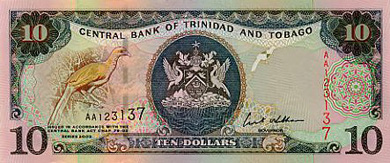
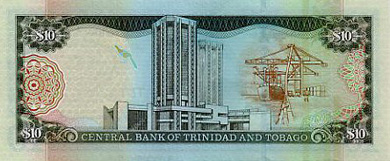
Banknotes
Budget & Public Finance
- Fiscal Year
- 1 October - 30 September
- Public Debt (% of GDP)
- 41.1%
- External Debt
- $2,986,000,000 (USD)
- Investment (% of GDP)
- 19%
- Economic Aid
- $24,000,000 (USD)
- Current Account Balance
- $3,270,000,000 (USD)
Labor, Industry & Trade
- Labor Force by Occupation
- construction and utilities 12.4%; manufacturing; mining; and quarrying 14%; agriculture 9.5%; services 64.1%
- Industries
- petroleum, chemicals, tourism, food processing, cement, beverage, cotton textiles
- Agriculture Products
- cocoa, sugarcane, rice, citrus, coffee, vegetables; poultry
- Export Commodities
- petroleum and petroleum products, chemicals, steel products, fertilizer, sugar, cocoa, coffee, citrus, flowers
- Export Partners
- US 54.4%, Jamaica 6.7%, France 4.2%
- Import Commodities
- machinery, transportation equipment, manufactured goods, food, live animals
- Import Partners
- US 35.8%, Venezuela 12.7%, Brazil 5.1%, Cote d'Ivoire 4.7%, UK 4.3%
Energy
- Oil Production
- 67,000 bbl/day
- Oil Consumption
- 80,000 bbl/day
- Oil Reserves
- 243,000,000 bbl/day
- Natural Gas Production
- 31,300,000,000 cu m
- Natural Gas Consumption
- 23,066,000,000 cu m
- Natural Gas Imports
- 0 cu m
- Natural Gas Exports
- 8,210,000,000 cu m
- Natural Gas Reserves
- 298,000,000,000 cu m
Communications
- Telephone System
- general assessment: excellent international service; good local service domestic: combined fixed-line and mobile-cellular teledensity roughly 170 telephones per 100 persons international: country code - 1-868; submarine cable systems provide connectivity to US and parts of the Caribbean and South America; satellite earth station - 1 Intelsat (Atlantic Ocean); tropospheric scatter to Barbados and Guyana
- Internet Country Code
- .tt
News & Weather
News & Weather
Current Weather
Latest News
Curaçao vs Trinidad and Tobago | Highlights - Concacaf | Official Website
Concacaf | Official Website · 2d ago
Trinidad and Tobago ends state of emergency amid pushback over mass arrests - Al Jazeera
Al Jazeera · 17d ago
Trinidad and Tobago to hold state-assisted funeral for Mighty Sparrow - Caribbean National Weekly
Caribbean National Weekly · 2d ago
Trinidad and Tobago declares state of emergency - Genocide Watch
Genocide Watch · 19d ago
I left the U.S. for Trinidad and Tobago: My family of 4 spends about $3,000 a month—and we've never been happier - CNBC
CNBC · 78d ago
Trinidad and Tobago vs Dominican Republic: Concacaf Nations League stats & head-to-head - BBC
BBC · 5d ago
Trinidad and Tobago ends long state of emergency as anger mounts over arrests - AP News
AP News · 17d ago
Trinidad and Tobago eyes offshore gaming hub status - NEXT.io
NEXT.io · 1d ago
News via Google News
Videos
Videos
1 curated YouTube videos.
Source: YouTube
Frequently Asked Questions
Frequently Asked Questions
What is the population of Trinidad and Tobago?
What is the capital of Trinidad and Tobago?
Where is Trinidad and Tobago located?
What are the ocean borders of Trinidad and Tobago?
What religion is practiced in Trinidad and Tobago?
What is the currency of Trinidad and Tobago?
What language is spoken in Trinidad and Tobago?
What is Trinidad and Tobago known for?
What is the geography of Trinidad and Tobago like?
Last reviewed 2026