
 English
 Español
 中文
中文 हिन्दी
 Français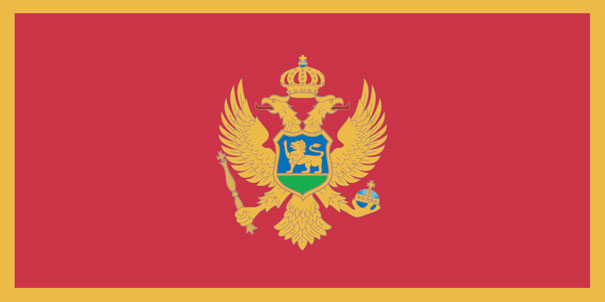
Montenegro
Crna Gora
Declare Your Relationship to Montenegro
CountryReports Community
- Studying3
- From Montenegro0
- Montenegro heritage0
- Visited1
- Want to visit2
Customs and Culture
Customs and Culture
Cultural Attributes
Montenegro's cultural identity is shaped by a complex layering of influences from Slavic, Byzantine, Ottoman, and Venetian traditions, reflecting the country's position at a historic crossroads between East and West. This small Adriatic nation has developed a culture that prizes family loyalty, hospitality toward guests, and a strong sense of local and regional pride. The concept of "?ojstvo i junaštvo" — roughly translated as humanity and heroism — is a deeply rooted ethical code originating from the Montenegrin tribal tradition. This ideal, which celebrates courage, honor, and moral integrity, continues to influence social values and national identity today. Orthodox Christianity plays a central role in Montenegrin cultural life, with the Serbian Orthodox Church and the Montenegrin Orthodox Church both maintaining a presence in the country. Religious feasts, saints' days known as "slava," and church festivals remain important community events. The historic Cetinje Monastery, founded in 1484, stands as a major spiritual and cultural landmark. Traditional music features the "gusle," a single-stringed instrument used to accompany epic oral poetry that recounts historical battles and legendary heroes. This tradition of epic verse is recognized as an important part of Balkan intangible cultural heritage. Folk dances such as the "oro," a circle dance performed at celebrations and festivals, remain widely practiced. Montenegrin cuisine reflects Mediterranean and Balkan influences, with smoked meats, aged cheeses like the local Njeguški pršut and sir, fresh seafood along the coast, and hearty mountain dishes in the interior. Food is closely tied to regional identity and is frequently central to family and community gatherings. The country has a notably strong literary and artistic heritage given its small size. Poet and Prince-Bishop Petar II Petrovi?-Njegoš, whose epic poem "The Mountain Wreath" (1847) is considered a masterpiece of South Slavic literature, remains a towering cultural figure. His mausoleum atop Mount Lov?en is a national pilgrimage site and a symbol of Montenegrin identity.

Land of the Black Mountain and Adriatic Shores
Get More Customs and Culture
2 more cultural topics for members
Social Customs & Etiquette · Dating Customs
Every country, every topic, all activities & recipes
✓ Instant access on this device · ✓ No subscription
Dates of Interest
- Untitled date
What is food like in Montenegro?
Montenegrin cuisine blends Mediterranean and Balkan influences, and food is central to family and community gatherings.
Good to know
- Try smoked meats and aged cheeses like Njeguški pršut and sir
- Look for fresh seafood along the coast
- Expect hearty mountain dishes in the interior
- Food is closely tied to regional identity
What social values matter in Montenegro?
Montenegrin culture prizes family loyalty, hospitality toward guests, and strong local and regional pride, shaped by an ethical code of courage, honor, and moral integrity.
Good to know
- Respect the deeply rooted ideal of 'čojstvo i junaštvo' (humanity and heroism)
- Orthodox Christianity plays a central role in cultural life
- Religious feasts and saints' days ('slava') are important community events
What cultural traditions can travelers experience in Montenegro?
Montenegro has a rich heritage of epic oral poetry, traditional music, folk dance, and celebrated literary figures.
Good to know
- Listen to the 'gusle', a single-stringed instrument accompanying epic oral poetry
- Watch the 'oro' circle dance performed at celebrations and festivals
- Visit the historic Cetinje Monastery, founded in 1484
- Visit the mausoleum of Petar II Petrović-Njegoš atop Mount Lovćen, a national pilgrimage site
Last updated: 2026-07-12 · Sources: CountryReports
Photos of Montenegro
Photos of Montenegro
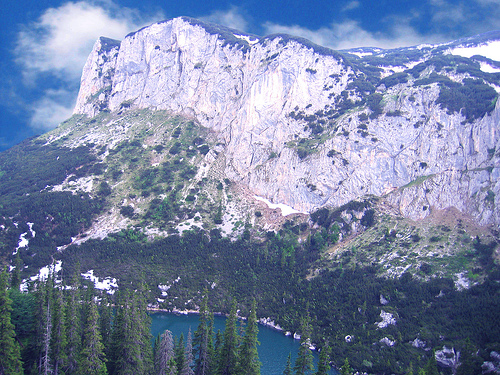
Red Ledge Peak, Durmito Mountain, Montenegro
Church in Budva, Montenegro
Streetside artist in Budva, Montenegro
Children Playing by a Water Faucet in Kotor
The city of Bar
Railway Station at the city of Bar
Port at Tivat
The Budva Riviera along the Adriatic Coast
The Budva Riviera along the Adriatic Coast
The Budva Riviera along the Adriatic Coast
Church of Our Lady of the Rock -- Persat
Persat


Travel and Tourism
Travel and Tourism
- Travel Alert Status
- Level 1: Exercise Normal Precautions
- Time Difference
- UTC+1 (6 hours ahead of Washington, DC, during Standard Time)
- Climate
- Mediterranean climate, hot dry summers and autumns and relatively cold winters with heavy snowfalls inland
- Airports
- 5
Read the full travel guide — health, safety, vaccinations, disease risk, sanitation, and transit details.
View full travel guideHistory
History
Historical Eras
Medieval Zeta
1040 – 1496
The medieval Slavic principality of Zeta — forerunner of Montenegro — emerged under the Vojislavljević and later Balšić and Crnojevići dynasties. The region maintained a distinct identity through shifting alliances with Byzantium, Serbia, Venice, and the Ottomans. The fall of Žabljak Crnojevića in 1496 effectively ended independent medieval rule as Ottoman pressure intensified.
Ottoman Era
1496 – 1798
Though nominally under Ottoman suzerainty, the mountainous core of Montenegro — governed by prince-bishops known as vladikas of the Petrović-Njegoš dynasty from 1696 — retained substantial de facto autonomy that larger Balkan territories did not enjoy. Persistent guerrilla resistance and the rugged terrain of the Black Mountain frustrated full Ottoman subjugation. This era forged a martial culture and fierce sense of separate identity that defined Montenegrin character.
Principality of Montenegro
1798 – 1878
International acknowledgment of Montenegro's independence as a principality grew through the late eighteenth and early nineteenth centuries, culminating in formal recognition at the Congress of Berlin in 1878. Prince-bishop Petar II Petrović-Njegoš, a celebrated poet and statesman, modernized administration and strengthened national consciousness in the mid-nineteenth century. The principality fought successive wars against the Ottomans, gradually expanding its territory.
Kingdom of Montenegro
1878 – 1918
Following Berlin recognition, Montenegro was elevated to a kingdom in 1910 under Nikola I Petrović-Njegoš, who pursued further territorial expansion through the Balkan Wars of 1912–13. During World War I Montenegro allied with the Entente powers but was occupied by Austro-Hungarian forces in 1916, sending King Nikola into exile in Italy. At the war's end, Serbian political maneuvering led to the forcible and contested annexation of Montenegro into the new Kingdom of Serbs, Croats and Slovenes in 1918.
Yugoslav Period
1918 – 1992
Absorbed into Yugoslavia against the will of many of its citizens — as demonstrated by the Christmas Uprising of January 1919 — Montenegro endured years of armed resistance before being fully integrated. During World War II it was occupied by Fascist Italy, becoming a key stronghold for Tito's communist Partisan movement. After 1945, the Socialist Federal Republic of Yugoslavia elevated Montenegro to the status of a constituent republic, granting it institutional recognition within the federation.
Independence & Modern State
1992 – present
Montenegro initially joined Serbia in the Federal Republic of Yugoslavia in 1992, but growing disillusionment with Slobodan Milošević's policies fostered a distinct independence movement through the late 1990s. Following the transitional Serbia and Montenegro union established by the 2003 Constitutional Charter, Montenegro held a referendum in May 2006 and declared full independence on June 3, 2006, adopting a new constitution in 2007 and pursuing NATO and EU integration thereafter.
Overview
Montenegro
Every country, every topic, all activities & recipes
✓ Instant access on this device · ✓ No subscription
Timeline of Key Events
1401 – 1800
Montenegro retains substantial measure of autonomy from Ottoman Empire.
Montenegro retains substantial measure of autonomy from Ottoman Empire.
1798
Montenegro acknowledged as independent principality.
Montenegro acknowledged as independent principality.
1918
Following first world war, Montenegro becomes part of Kingdom of Serbs, Croats and Slovenes.
Following first world war, Montenegro becomes part of Kingdom of Serbs, Croats and Slovenes.
1992
Montenegro joins Serbia in Federal Republic of Yugoslavia.
Montenegro joins Serbia in Federal Republic of Yugoslavia.
2000
Montenegrin leadership becomes increasingly independence-minded.
Montenegrin leadership becomes increasingly independence-minded.
2006
Montenegro declares independence.
Montenegro declares independence, Serbia responds by declaring itself the independent sovereign successor state to the Union of Serbia and Montenegro.
2007
Montenegro adopts new constitution.
Montenegro adopts new constitution.
Read the full history profile — narrative overview, defining eras, and the complete timeline in one place.
View expanded historyInteresting Facts
Interesting Facts
“Black Mountain”, after which Montenegro got its name, rises to 1749 meters of altitude.
Serbia and Montenegro seperated into two countries in June of 2006
See every fact — trivia, oddities, and curious tidbits gathered from across the country.
View all interesting factsGeography and Environment
Geography and Environment
- Terrain
- highly indented coastline with narrow coastal plain backed by rugged high limestone mountains and plateaus
- Climate
- Mediterranean climate, hot dry summers and autumns and relatively cold winters with heavy snowfalls inland
- Natural Hazards
- destructive earthquakes
- Current Environmental Issues
- pollution of coastal waters from sewage outlets, especially in tourist-related areas such as Kotor
Read the full geography and environment profile — terrain, climate, natural resources, hazards, land use, and international agreements.
View full geographyPeople & Demographics
People & Demographics
Religion
Languages Spoken
Serbian (Ijekavian dialect - official)
Population
- Population
- 620,879
- Population in Major Urban Areas
- PODGORICA (capital) 156,000
- Ethnic Groups
- Montenegrin 43%, Serbian 32%, Bosniak 8%, Albanian 5%, other (Muslims, Croats, Roma) 12%
Health Information
- Life Expectancy at Birth
- Life expectancy at birth in Montenegro stands at approximately 76 to 77 years overall, with women typically living longer than men — around 79 years for females compared to roughly 74 years for males. These figures place Montenegro broadly in line with many European Union candidate countries and reflect meaningful improvements in public health achieved over recent decades. Montenegro's life expectancy has risen considerably since the country declared independence in 2006, supported by ongoing investments in healthcare infrastructure and institutional reform. The country operates a public health system that provides universal coverage, and citizens have access to hospitals, clinics, and specialist care across the country, with the capital Podgorica serving as the main hub for advanced medical services. Several factors influence current life expectancy levels. Cardiovascular disease remains the leading cause of death in Montenegro, consistent with trends seen throughout the Western Balkans region. Smoking rates are notably high by European standards, contributing to elevated risks of heart disease, stroke, and respiratory conditions. Obesity and sedentary lifestyles are also recognized public health concerns that health authorities are actively working to address through awareness campaigns and policy initiatives. On the positive side, Montenegro's Mediterranean-influenced diet in coastal regions — rich in fish, olive oil, and fresh vegetables — supports healthier outcomes for portions of the population. Access to clean water and improved sanitation across most of the country also underpins baseline health standards. Montenegro has been engaged in aligning its healthcare policies with European Union standards as part of its EU accession process, and this has brought increased focus on preventive care, chronic disease management, and health education. These ongoing reforms are expected to contribute to further gradual improvements in life expectancy in the coming years. Compared to Western European nations, where life expectancy commonly reaches or exceeds 81 to 84 years, Montenegro still has room for improvement, but its overall trajectory remains positive. The World Bank classifies Montenegro as an upper-middle-income country, and its health outcomes broadly reflect that economic standing.
- Major Infectious Diseases — degree of risk
- intermediate
- Infant Mortality Rate
- Montenegro has achieved notably low infant mortality rates in recent decades, reflecting the country's significant investments in healthcare infrastructure and maternal and child health services since gaining independence in 2006. As of the most recent available data, Montenegro's infant mortality rate stands at approximately 3 to 4 deaths per 1,000 live births. This places the country well below the global average of around 28 deaths per 1,000 live births and is broadly comparable to many Western European nations, representing a strong public health achievement for a small Balkan state still navigating post-transition economic development. This figure marks a dramatic improvement from earlier periods. In the early 1990s, infant mortality in Montenegro was considerably higher, estimated at over 15 deaths per 1,000 live births. The sustained decline over the following three decades can be attributed to improved access to prenatal and postnatal care, better-trained medical personnel, expanded vaccination programs, and growing public health awareness among the population. Montenegro's healthcare system provides universal coverage, which ensures that the majority of births take place in clinical settings attended by skilled health professionals. The country has maintained high rates of immunization against preventable diseases such as diphtheria, polio, and measles, which historically contributed to infant deaths in the region. Urban and rural disparities in healthcare access do persist to some degree, with residents in remote mountainous areas occasionally facing greater distances to medical facilities. However, ongoing government initiatives and support from international health organizations have worked to reduce these gaps in recent years. Montenegro's infant mortality performance also correlates with its relatively high rate of exclusive breastfeeding promotion, maternal education levels, and sanitation infrastructure. The country's membership in various international health frameworks has further supported the adoption of evidence-based practices in neonatal and infant care. Overall, Montenegro's infant mortality rate serves as a positive indicator of the country's public health progress and its commitment to meeting internationally recognized child health standards.
Life Expectancy
- Life Expectancy at Birth
- Life expectancy at birth in Montenegro stands at approximately 76 to 77 years overall, with women typically living longer than men — around 79 years for females compared to roughly 74 years for males. These figures place Montenegro broadly in line with many European Union candidate countries and reflect meaningful improvements in public health achieved over recent decades. Montenegro's life expectancy has risen considerably since the country declared independence in 2006, supported by ongoing investments in healthcare infrastructure and institutional reform. The country operates a public health system that provides universal coverage, and citizens have access to hospitals, clinics, and specialist care across the country, with the capital Podgorica serving as the main hub for advanced medical services. Several factors influence current life expectancy levels. Cardiovascular disease remains the leading cause of death in Montenegro, consistent with trends seen throughout the Western Balkans region. Smoking rates are notably high by European standards, contributing to elevated risks of heart disease, stroke, and respiratory conditions. Obesity and sedentary lifestyles are also recognized public health concerns that health authorities are actively working to address through awareness campaigns and policy initiatives. On the positive side, Montenegro's Mediterranean-influenced diet in coastal regions — rich in fish, olive oil, and fresh vegetables — supports healthier outcomes for portions of the population. Access to clean water and improved sanitation across most of the country also underpins baseline health standards. Montenegro has been engaged in aligning its healthcare policies with European Union standards as part of its EU accession process, and this has brought increased focus on preventive care, chronic disease management, and health education. These ongoing reforms are expected to contribute to further gradual improvements in life expectancy in the coming years. Compared to Western European nations, where life expectancy commonly reaches or exceeds 81 to 84 years, Montenegro still has room for improvement, but its overall trajectory remains positive. The World Bank classifies Montenegro as an upper-middle-income country, and its health outcomes broadly reflect that economic standing.
- Infant Mortality Rate
- Montenegro has achieved notably low infant mortality rates in recent decades, reflecting the country's significant investments in healthcare infrastructure and maternal and child health services since gaining independence in 2006. As of the most recent available data, Montenegro's infant mortality rate stands at approximately 3 to 4 deaths per 1,000 live births. This places the country well below the global average of around 28 deaths per 1,000 live births and is broadly comparable to many Western European nations, representing a strong public health achievement for a small Balkan state still navigating post-transition economic development. This figure marks a dramatic improvement from earlier periods. In the early 1990s, infant mortality in Montenegro was considerably higher, estimated at over 15 deaths per 1,000 live births. The sustained decline over the following three decades can be attributed to improved access to prenatal and postnatal care, better-trained medical personnel, expanded vaccination programs, and growing public health awareness among the population. Montenegro's healthcare system provides universal coverage, which ensures that the majority of births take place in clinical settings attended by skilled health professionals. The country has maintained high rates of immunization against preventable diseases such as diphtheria, polio, and measles, which historically contributed to infant deaths in the region. Urban and rural disparities in healthcare access do persist to some degree, with residents in remote mountainous areas occasionally facing greater distances to medical facilities. However, ongoing government initiatives and support from international health organizations have worked to reduce these gaps in recent years. Montenegro's infant mortality performance also correlates with its relatively high rate of exclusive breastfeeding promotion, maternal education levels, and sanitation infrastructure. The country's membership in various international health frameworks has further supported the adoption of evidence-based practices in neonatal and infant care. Overall, Montenegro's infant mortality rate serves as a positive indicator of the country's public health progress and its commitment to meeting internationally recognized child health standards.
Read the full people and society profile — demographics, health, education, religion, languages, and notable people.
View full people and societyGovernment & Politics
Government & Politics
Country Identity
- Country Name
- Montenegro
- Full Country Name
- Republic of Montenegro
- Local - Long
- Republika Crna Gora
- Local - Short
- Crna Gora
- Former Name
- People's Republic of Montenegro, Socialist Republic of Montenegro
Government Structure
- Government Type
- Republic
- Legal System
- based on civil law system
- Executive Branch
- chief of state: President Jakov MILATOVIC (since 20 May 2023) head of government: Prime Minister Milojko SPAJIC (since 31 October 2023) cabinet: Ministers are nominated by the prime minister and approved by the Assembly of Montenegro elections: president elected by direct popular vote for a five-year term (eligible for a second term); election last held on 19 March and 2 April 2023 (next to be held in 2028); prime minister nominated by the president following legislative elections and must secure a majority in the Assembly election results: Jakov MILATOVIC elected president in the second round; Jakov MILATOVIC 58.9%, Milo DJUKANOVIC 41.1%
- Legislative Branch
- Unicameral Assembly (Skupština; 81 seats; members elected by direct popular vote using a proportional representation system to serve four-year terms) Elections: Last held on 11 June 2023 (next scheduled to be held in 2027) Election results: Percent of vote by party/coalition — Europe Now Movement (PES) 25.5%, For the Future of Montenegro (ZBCG) 23.2%, Europe Now 2 coalition 12.5%, Democrats/Civic Movement URA coalition 11.5%, Democratic Party of Socialists (DPS) 11.0%, Social Democrats (SD)/Liberal Party (LP) 4.8%, Bosniak Party/Croatian Civic Initiative/Albanian Alternative coalition 3.3%; seats by party/coalition — Europe Now Movement 24, For the Future of Montenegro 23, Europe Now 2 coalition 11, Democrats/Civic Movement URA coalition 9, Democratic Party of Socialists 8, Social Democrats/Liberal Party 4, minority and other parties 2
- Judicial Branch
- Constitutional Court (five judges with nine-year terms); Supreme Court (judges have life tenure)
- Suffrage
- 18 years of age; universal
- Constitution
- 12 October 1992 (was approved by the Assembly)
- Independence
- 3 June 2006 (from Serbia and Montenegro); note - a referendum on independence was held 21 May 2006
- National Holiday
- National Day, 13 July
Capital City
- Capital Name
- Podgorica; note - Cetinje retains the status of "Old Royal Capital"
- Capital - geographic coordinate
- 42 26 N, 19 16 E
- Capital Time Difference
- UTC+1 (6 hours ahead of Washington, DC, during Standard Time)
the name translates as "beneath Gorica"; the meaning of Gorica is "hillock"; the reference is to the small hill named Gorica that the city is built around
Military
Branches: Armed Forces of the Republic of Montenegro: Army of Montenegro (includes Montenegrin Navy (Mornarica Crne Gore, MCG)), Air Force
Embassy / Diplomatic Mission
U.S. Embassy Podgorica
Dzona Dzeksona 2
81000 Podgorica
Telephone: 382 20 410 500
E-mail: PodgoricaACS@state.gov
Read the full government profile — flag symbolism, national anthem, and other national symbols.
View full government detailsEconomy
Economy
Montenegro severed its economy from federal Yugoslav control and from Serbia during the Miloševi? era of the 1990s and continues to maintain its own central bank.
Snapshot
- Currency Name and Code
- Euro (EUR)
- GDP — official exchange rate
- $1,125,000,000 (USD)
- GDP Real Growth Rate
- 6.1%
Every country, every topic, all activities & recipes
✓ Instant access on this device · ✓ No subscription
News & Weather
News & Weather
Current Weather
Latest News
Maine and Montenegro – Then and Now - U.S. Embassy in Montenegro (.gov)
U.S. Embassy in Montenegro (.gov) · 6h ago
UNHCR Montenegro Fact Sheet, February 2026 - ReliefWeb
ReliefWeb · 6h ago
Montenegro Envisions a Future for Everyone - unsdg.un.org
unsdg.un.org · 1d ago
Online Knowledge Hub on Civic Space – Initial Needs Assessment - EEAS
EEAS · 9h ago
Croatia turns screws on Montenegro's EU membership bid - euractiv.com
euractiv.com · 1d ago
Montenegro Aims to Complete EU Negotiations In 2026 – Become a Member by 2028 - connectingregion.com
connectingregion.com · 9h ago
🇲🇪 Montenegro confirms Eurovision 2027 participation - That Eurovision Site
That Eurovision Site · 10h ago
KW enters Montenegro; Elliman, BHS add veteran agents - RealEstateNews.com
RealEstateNews.com · 1d ago
News via Google News
Climate Overview
Mediterranean climate, hot dry summers and autumns and relatively cold winters with heavy snowfalls inland
Videos
Videos
1 curated YouTube videos.
Source: YouTube
Frequently Asked Questions
Frequently Asked Questions
What is the population of Montenegro?
What is food like in Montenegro?
What social values matter in Montenegro?
What cultural traditions can travelers experience in Montenegro?
What is the capital of Montenegro?
Where is Montenegro located?
What countries border Montenegro?
What is the predominant religion in Montenegro?
What currency does Montenegro use?
What language is spoken in Montenegro?
What is Montenegro known for?
Last reviewed 2026