
 English
 Español
 中文
中文 हिन्दी
 Français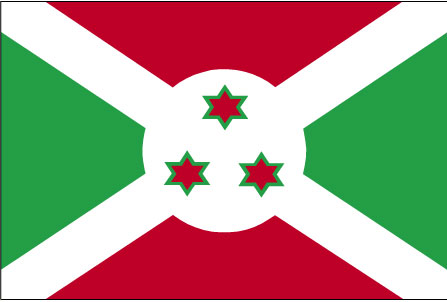
Burundi
Burundi
Declare Your Relationship to Burundi
CountryReports Community
- Studying4
- From Burundi1
- Burundi heritage2
- Visited2
- Want to visit2
Customs and Culture
Customs and Culture
Cultural Attributes
Burundians are sociable people who greet friends and relatives warmly. Handshaking is a common greeting as is hugging, kissing cheeks, and touching heads. Burundians maintain personal space between sexes.

Land of the Nile's Source
Get More Customs and Culture
6 more cultural topics for members
Social Customs & Etiquette · Diet · Family · Dating Customs · Recreation · Student Life
Every country, every topic, all activities & recipes
✓ Instant access on this device · ✓ No subscription
Holidays
Independence Day
7/1Independence Day
Dates of Interest
- July 1st
How do people greet each other in Burundi?
Burundians greet friends and relatives warmly, most commonly with a handshake using the right hand, and also with hugs, kissing cheeks and touching heads. Proverbs are also an important part of expression.
Do
- Shake hands with your right hand
- Greet friends of the same sex with a firm hug
- Greet close friends by touching cheeks three times
Good to know
- Burundians maintain personal space between the sexes
- Proverbs are used to make the listener think and are not explained by the speaker
What is food and dining like in Burundi?
Meals center on staples like beans (especially red kidney beans), rice, and ugali (a paste made from boiled cassava flour), with boiled foods generally preferred. Desserts and sweet foods are not part of the food culture.
Do
- Expect beans at nearly every meal
- Try ugali, plantains, sweet potatoes, cassava, peas and maize
- Enjoy snacks like groundnuts, sugarcane and fruit
Don’t
- Don't expect sweet dishes or desserts served with the meal
Good to know
- Urwarwa (homemade banana wine) may be served during special celebrations or with a meal
- Cattle owners regard cattle as a status symbol and are reluctant to slaughter them for meat
What social etiquette should I know in Burundi?
Burundians are very sociable and often visit one another without announcing it in advance.
Good to know
- Don't be surprised by unannounced visits from friends and relatives
How should I dress in Burundi?
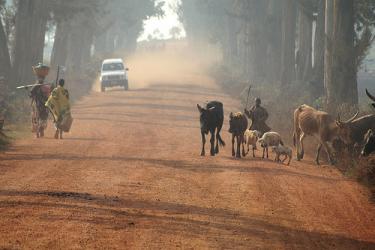
In rural areas, traditional pagnes (cloth wraparounds) are still worn and many people go without shoes, while urban dwellers wear western-style clothing.
Good to know
- Young people in cities wear jeans and tee shirts
- Male herders traditionally wear two pieces of cloth hanging to the knees with a cord at the waist
Which gestures matter in Burundi?
Pointing at someone with the index finger is considered rude; instead, point with an open hand, palm up.
Do
- Point with an open hand, palm up
- Call someone over by extending your arm palm-down and drawing your fingers toward your wrist
Don’t
- Don't point at people with your index finger
What is family life like in Burundi?
Most Burundians live in rural areas where children are highly valued and extended-family clans live together in an enclosed compound called a rugo. Caring for elderly relatives is considered a duty.
Good to know
- Boys are trained to follow their fathers as head of the family, and girls learn household duties
- Each clan typically inhabits a hill, avoiding valleys because of tsetse flies
- Marriage often requires parents' approval and payment of an inkwano (bride-price)
What do people do for fun in Burundi?
Soccer and basketball are growing in popularity, while storytelling is a favorite pastime, sometimes as an igitito (chant) telling of kings or gods.
Good to know
- Cattle herders enjoy kivivuga amazina, an improvised boastful poetry contest judged before an audience
- Children play games like gusimba ikibariko (jumping with a ball) and gukina amabuye (tossing and catching stones)
- Girls play a ball game called Horo
- Urubugu (mancala) is played with pebbles, seashells or seeds
Last updated: 2026-07-12 · Sources: CountryReports
Photos of Burundi
Photos of Burundi


Travel and Tourism
Travel and Tourism
- Travel Alert Status
- Level 3: Reconsider Travel
- Currency
- 1665
- Time Difference
- UTC+2 (7 hours ahead of Washington, DC, during Standard Time)
- Airports
- 8
- Recommended Vaccinations
- How important is it to do your research about vaccinations? It might just save your life! Make yourself aware of the different types of vaccinations and which ones you may need to travel to your destination. Schedule an appointment with your doctor at least four to six weeks before you travel to ensure you receive all important shots. Be sure that you and your family are up to date on your routine vaccinations. Which vaccinations you need will depend on a number of factors including your destination, whether you will be spending time in rural areas, the season of the year you are traveling, your age, health status, and previous immunizations.
Read the full travel guide — health, safety, vaccinations, disease risk, sanitation, and transit details.
View full travel guideRecipes
Recipes
History
History
Historical Eras
Kingdom of Burundi
1500 – 1899
From roughly the 16th century, Burundi functioned as a centralized kingdom under a mwami (king) supported by a ganwa princely aristocracy. Tutsi royalty consolidated power through the ubugabire patron-client system, binding Hutu farmers and herders to the crown through land tenure and tribute obligations. The kingdom maintained a sophisticated hierarchical order that persisted largely intact for over three centuries.
Colonial Period
1899 – 1962
Germany incorporated Burundi into German East Africa in 1899, followed by Belgian occupation during World War I in 1916. The League of Nations mandated the territory of Ruanda-Urundi to Belgium in 1923, and after World War II it became a UN Trust Territory under Belgian administration. Belgium governed through indirect rule, reinforcing Tutsi aristocratic dominance while suppressing multiethnic political movements, including the assassination of independence leader Prince Louis Rwagasore in 1961.
Independence & Monarchy
1962 – 1966
Burundi achieved full independence on July 1, 1962, under King Mwambutsa IV, who attempted a constitutional monarchy with Hutu-Tutsi parity in government. The 1965 assassination of the Hutu prime minister destabilized the fragile arrangement, triggering Hutu revolts and violent repression. Mwambutsa was deposed by his son Prince Ntare IV in 1966, who was himself overthrown within months by a military coup.
Military Rule
1966 – 1993
Captain Michel Micombero abolished the monarchy in 1966, inaugurating nearly three decades of Tutsi-dominated military governance. A catastrophic 1972 Hutu uprising and its brutal suppression killed an estimated 100,000–200,000 people. Successive coups brought Colonel Jean-Baptiste Bagaza to power in 1976 and Major Pierre Buyoya in 1987; Buyoya ultimately oversaw a democratic transition, promulgating a pluralist constitution in 1991 under international and domestic pressure.
Civil War & Transition
1993 – 2005
The 1993 election of Melchior Ndadaye, Burundi's first Hutu president, was swiftly followed by his assassination by Tutsi military factions, plunging the country into civil war that killed over 200,000 people. Successive presidents including Cyprien Ntaryamira died in the April 1994 plane crash that also killed Rwanda's president, deepening the crisis. The Arusha Peace Agreement of 2000 and a transitional government inaugurated in 2001 laid the groundwork for elections, though rebel holdouts prolonged instability.
Post-War Modern Era
2005 – present
The 2005 elections brought former rebel leader Pierre Nkurunziza to the presidency under a power-sharing constitution, marking Burundi's first broadly legitimate post-war government. Progress was undermined when Nkurunziza sought an unconstitutional third term in 2015, triggering protests, a failed coup, and renewed political violence that killed hundreds and displaced over 400,000. Burundi remains among the world's poorest nations, navigating fragile democratic institutions, ethnic tension, and ongoing human rights challenges.
Overview
In the 16th century, Burundi was a kingdom characterized by a hierarchical political authority and tributary economic exchange. A king (mwani) headed a princely aristocracy (ganwa) which owned most of the land and required a tribute, or tax, from local farmers and herders. In the mid-18th century, this Tutsi royalty consolidated authority over land, production, and distribution with the development of the ubugabire--a patron-client relationship in which the populace received royal protection in exchange for tribute and land tenure.
Every country, every topic, all activities & recipes
✓ Instant access on this device · ✓ No subscription
Timeline of Key Events
1400
The Hutu
The Hutu arrived, probably from the Congo River basin, and imposed their language and customs on the Twa, who are believed to be Burundi’s original inhabitants
1500
The Tutsi
The Tutsi, probably migrating from the north, established themselves as feudal rulers. Tutsi kings, or mwamis, became monarchs of distinct kingdoms in Burundi and Rwanda. Their rule was enforced by chiefs and subchiefs, who each ruled an umusozi, a fiefdom consisting of a single hill.
1858
The Tutsi
The British explorers Sir Richard Burton and John Hanning Speke are the first Europeans to visit Burundi.
1890
Count Gustav Aldolf von Götzen
Austrian explorer Oskar Baumann and German Count Gustav Adolf von Götzen arrive in the 1890s
1900
German East Africa
Burundi (then called Urundi) and Rwanda (then called Ruanda) are incorporated into German East Africa
1918
Territory of Ruanda-Urundi
After WWI, the area was mandated to Belgium by the League of Nations and became known as the Territory of Ruanda-Urundi.
1945
United Nations Trust Territory
After World War II, Urundi becames a United Nations (UN) trust territory.
Read the full history profile — narrative overview, defining eras, and the complete timeline in one place.
View expanded historyInteresting Facts
Interesting Facts
Burundi is known as “ The Heart of Africa” because of its shape and location within the continent.
The source of the Nile River, the longest river in the world, is in southern Burundi. Near the town of Rutana, a monument that marks the source of the White Nile is a Burundi tourist attraction.
The Twa people still live in the forests and mountains, hunting, fishing and gathering fruit, much as their ancestors did a thousand years ago. They are known for their fine pottery, which they sell or exchange for food and other goods.
Hospitality was once very important in Burundi. In the past, when people went on a journey, they would stop when they were tired or when night fell at any home. They could be sure of a welcome and a night's lodging. Today, because of the civil war, people are afraid to trust strangers and even their neighbours.
2 more facts for members
Every country, every topic, all activities & recipes
✓ Instant access on this device · ✓ No subscription
Geography and Environment
Geography and Environment
- Terrain
- hilly and mountainous, dropping to a plateau in east, some plains
- Climate
- Though less than 5°F south of the Equator, the entire country has a pleasant climate. equatorial; high plateau with considerable altitude variation (772 m to 2,670 m above sea level); average annual temperature varies with altitude from 23 to 17 degrees centigrade but is generally moderate as the average altitude is about 1,700 m; average Bujumbura, on the northeastern shore of Lake Tanganyika, averages 73°F. Daytime temperatures are in the mid to upper 80s: In the highlands, temperatures are cooler, in the 60s and 70s, arid at night, an occasional frost occurs. The short rains occur from October to December, the long rains from February to May. During the dry seasons, a haze obscures, otherwise spectacular views of the Mitumba mountains of Eastern Zaire, and the air becomes dusty. During the rainy season, the temperatures cool slightly. Rainfall is only occasionally torrential and comes in brief, intense showers, rather than steady downpours. More violent weather, including hailstorms, occurs chiefly in the highlands. Rainfall averages 30 inches in Bujumbura and 47 inches in the uplands.
- Natural Hazards
- flooding, landslides, drought
- Current Environmental Issues
- soil erosion as a result of overgrazing and the expansion of agriculture into marginal lands; deforestation (little forested land remains because of uncontrolled cutting of trees for fuel); habitat loss threatens wildlife populations
Read the full geography and environment profile — terrain, climate, natural resources, hazards, land use, and international agreements.
View full geographyPeople & Demographics
People & Demographics
Religion
Languages Spoken
Kirundi (official), French (official), Swahili (along Lake Tanganyika and in the Bujumbura area)
- French
- Kirundi
- Swahili
Population
- Population
- 13,247,084
- Population in Major Urban Areas
- BUJUMBURA (capital) 605,000
- Nationality Noun
- Burundian(s)
- Ethnic Groups
- Hutu (Bantu) 85%, Tutsi (Hamitic) 14%, Twa (Pygmy) 1%, Europeans 3,000, South Asians 2,000
Education
- Literacy Definition
- Age 15 and over can read and write
Health Information
- Major Infectious Diseases — degree of risk
- Very high
Life Expectancy
- Life Expectancy at Birth
- Life expectancy at birth in Burundi remains among the lowest in the world, reflecting the country's ongoing challenges with poverty, disease, malnutrition, and limited access to healthcare infrastructure. As of the most recent estimates, the average life expectancy at birth in Burundi is approximately 62 to 63 years overall, with women typically outliving men by several years — women averaging around 64 to 65 years compared to men at roughly 60 to 61 years. These figures represent a notable improvement over past decades. In the early 1990s, life expectancy in Burundi hovered near 50 years, and conflict, disease outbreaks, and food insecurity pushed it even lower during the country's prolonged civil war, which lasted from 1993 to 2005. The gradual increase since then reflects improvements in child survival rates, expanded vaccination programs, and greater international humanitarian investment in the country's health sector. Despite this progress, Burundi continues to face serious public health challenges that suppress life expectancy. Malaria remains a leading cause of illness and death, particularly among children under five. HIV/AIDS, tuberculosis, and chronic malnutrition are also significant contributors to premature mortality. Access to clean water and proper sanitation remains limited in many rural areas, increasing vulnerability to waterborne diseases. The infant mortality rate remains elevated, at roughly 38 to 43 deaths per 1,000 live births, and this weighs heavily on overall life expectancy calculations. Maternal mortality is also a persistent concern, with many women giving birth without access to skilled medical personnel or adequate facilities. Burundi has one of the highest rates of child stunting in sub-Saharan Africa, a consequence of widespread food insecurity that further undermines long-term population health outcomes. Burundi's healthcare system remains severely underfunded, with very few physicians per capita and limited hospital infrastructure, particularly outside the capital, Bujumbura. The country continues to rely significantly on international aid organizations and NGOs to help deliver basic health services to its population. While trends are moving in a broadly positive direction, meaningful and sustained improvements in life expectancy will depend on continued investment in healthcare access, food security, education, and stable governance across the country.
- Infant Mortality Rate
- Burundi has one of the highest infant mortality rates in the world, reflecting the severe health and development challenges the country continues to face. The infant mortality rate in Burundi stands at approximately 38 to 42 deaths per 1,000 live births, meaning that roughly four out of every hundred children born in the country do not survive to their first birthday. While this figure represents a significant improvement from previous decades — when the rate exceeded 100 deaths per 1,000 live births in the early 1990s — it remains far above global averages and well above the Sub-Saharan African regional average. The primary causes of infant mortality in Burundi include malaria, pneumonia, diarrheal diseases, neonatal complications, and malnutrition. Malaria alone accounts for a substantial proportion of under-five deaths in the country, particularly in rural and low-lying areas where transmission rates are highest. Neonatal conditions, such as birth asphyxia, infections, and premature birth complications, are also major contributors, often linked to limited access to skilled birth attendants and emergency obstetric care. Burundi's healthcare infrastructure remains strained. The country has a low density of physicians and nurses relative to its population, and many health facilities lack adequate medical supplies, clean water, and electricity. Rural communities face especially significant barriers to care, including long distances to health centers, poor road conditions, and financial constraints. Malnutrition plays a compounding role in infant deaths. Burundi consistently ranks among the most food-insecure nations in the world, and chronic undernutrition weakens immune systems, making infants far more vulnerable to infectious diseases that might otherwise be survivable. Efforts by the Burundian government alongside international partners, including UNICEF and the World Health Organization, have focused on expanding vaccination coverage, promoting breastfeeding, distributing insecticide-treated bed nets, and training community health workers. These interventions have contributed to the measurable decline in infant mortality over recent decades, though progress remains uneven and fragile given ongoing economic hardship and limited institutional capacity.
Read the full people and society profile — demographics, health, education, religion, languages, and notable people.
View full people and societyGovernment & Politics
Government & Politics
Country Identity
- Country Name
- Burundi
- Full Country Name
- Republic of Burundi
- Local - Long
- Republika y'u Burundi
- Local - Short
- Burundi
- Former Name
- Urundi
Government Structure
- Government Type
- republic
- Legal System
- based on German and Belgian civil codes and customary law; has not accepted compulsory ICJ jurisdiction
- Executive Branch
- chief of state: President Evariste NDAYISHIMIYE (since 18 June 2020); note - NDAYISHIMIYE won the May 2020 presidential election following the death of longtime President Pierre NKURUNZIZA, who died on 8 June 2020 before the official transfer of power head of government: President Evariste NDAYISHIMIYE (since 18 June 2020); First Vice President Prosper BAZOMBANZA (since 24 June 2020); Second Vice President Joseph BUTORE (since 24 June 2020) cabinet: Council of Ministers appointed by the president elections: the president is elected by popular vote to a seven-year term, renewable once; vice presidents nominated by the president and endorsed by parliament; the 2018 revised constitution extended the presidential term from five to seven years and reset term limits, allowing the incumbent to serve two additional terms under the new rules election results: Evariste NDAYISHIMIYE was elected president in the May 20, 2020 election with approximately 68% of the vote, defeating his closest rival Agathon RWASA of the CNL party, who received approximately 24% of the vote
- Legislative Branch
- Burundi's bicameral Parliament (Parlement) consists of a National Assembly (Assemblée Nationale) and a Senate. The National Assembly has a minimum of 100 seats, with representation quotas mandating 60% Hutu and 40% Tutsi membership, and at least 30% of seats reserved for women. Additional seats may be appointed by the National Independent Electoral Commission to ensure ethnic balance, including representation for the Twa minority. Members are elected by popular vote to serve five-year terms. The Senate consists of 43 seats, with 36 members chosen by indirect vote through electoral colleges in each province, serving five-year terms. Additional seats are reserved for former heads of state and appointed members representing ethnic minorities, including the Twa community. Elections: National Assembly — last held on 20 May 2020; Senate — last held on 20 July 2020. Election results: National Assembly — percent of vote by party: CNDD-FDD 71.9%, CNL 23.3%, UPRONA 2.5%, others 2.3%; seats by party — CNDD-FDD 86, CNL 32, UPRONA 2, other/appointed 5. Senate — seats by party: CNDD-FDD 34, CNL 2, UPRONA 0, with remaining seats assigned to ethnic group representatives and former heads of state.
- Judicial Branch
- Supreme Court or Cour Supreme; Constitutional Court; Courts of Appeal (there are three in separate locations); Tribunals of First Instance (17 at the province level and 123 small local tribunals)
- Suffrage
- NA years of age; universal adult
- Constitution
- 13 March 1992; provided for establishment of a plural political system; supplanted on 6 June 1998 by a Transitional Constitution which enlarged the National Assembly and created two vice presidents
- Independence
- 1 July 1962 (from UN trusteeship under Belgian administration)
- National Holiday
- Independence Day, 1 July (1962)
Capital City
- Capital Name
- Gitega (political capital), Bujumbura (commercial capital); note - in January 2019, the Burundian parliament voted to make Gitega the political capital of the country while Bujumbura would remain its economic capital; as of 2023, the government's move to Gitega remains incomplete
- Capital - geographic coordinate
- 3 25 S, 29 55 E
- Capital Time Difference
- UTC+2 (7 hours ahead of Washington, DC, during Standard Time)
the naming origins for both Gitega and Bujumbura are obscure; Bujumbura's name prior to independence in 1962 was Usumbura
Military
Branches: National Defense Forces (Forces de Defense Nationale, FDN): Army (includes maritime wing, Air Wing), National Gendarmerie
Embassy / Diplomatic Mission
U.S. Embassy Bujumbura
Avenue des Etats-Unis
Telephone: 257 22 20 7000
Emergency after-hours telephone: 257 79 938 841
Facsimile: 257 22 24 3467
Read the full government profile — flag symbolism, national anthem, and other national symbols.
View full government detailsEconomy
Economy
Burundi is a landlocked, resource-poor country with an underdeveloped manufacturing sector and one of the lowest GDP per capita figures in the world. The economy is predominantly agricultural, with around 80% of the population dependent on subsistence farming.
Snapshot
- Currency Name and Code
- Burundi francs (BIF)
- GDP — official exchange rate
- $730,000,000 (USD)
- GDP Real Growth Rate
- 4%
- Gini Index
- 33.3
Every country, every topic, all activities & recipes
✓ Instant access on this device · ✓ No subscription
News & Weather
News & Weather
Current Weather
Latest News
Burundi: Formators meet for a seminar on Artificial Intelligence - vaticannews.va
vaticannews.va · 1d ago
"I didn’t expect anyone to want to speak to me” - Burundi runner Egide Ntakarutimana embraces attention while thriving under pressure - olympics.com
olympics.com · 1d ago
Uganda and Burundi military officials visit Israel to discuss Gaza troop deployment - AP News
AP News · 26d ago
Rising Stars head coach makes honest admission after Burundi defeat in Afcon qualifiers - Capital FM Africa
Capital FM Africa · 6h ago
Burundi: The Human Rights Council should further extend the Special Rapporteur’s mandate - Global Centre for the Responsibility to Protect
Global Centre for the Responsibility to Protect · 25d ago
Kenya offers amnesty for migrants after Burundians rush to leave - Al Jazeera
Al Jazeera · 10d ago
Ajax's Thilo Kehrer using his success to help Burundi's children - espn.com
espn.com · 7d ago
Burundi book semi-final place as Sudan make strong start in TotalEnergies CAF U-20 AFCON CECAFA Qualifier - cafonline.com
cafonline.com · 14h ago
News via Google News
Videos
Videos
2 curated YouTube videos.
Source: YouTube
Source: YouTube
Frequently Asked Questions
Frequently Asked Questions
What is the population of Burundi?
What is the capital of Burundi?
Where is Burundi located?
What countries border Burundi?
What religion is practiced in Burundi?
What is the currency of Burundi?
What languages are spoken in Burundi?
What is Burundi known for?
Last reviewed 2026