
 English
 Español
 中文
中文 हिन्दी
 Français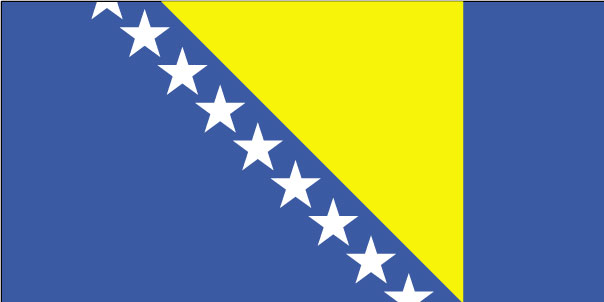
Bosnia and Herzegovina
Bosna i Hercegovina
Declare Your Relationship to Bosnia and Herzegovina
CountryReports Community
- Studying14
- From Bosnia and Herzegovina4
- Bosnia and Herzegovina heritage3
- Visited3
- Want to visit5
Quick Look Factsheet
A multi-page overview of Bosnia and Herzegovina.
Bosnia and Herzegovina FactsheetCustoms and Culture
Customs and Culture
Cultural Attributes
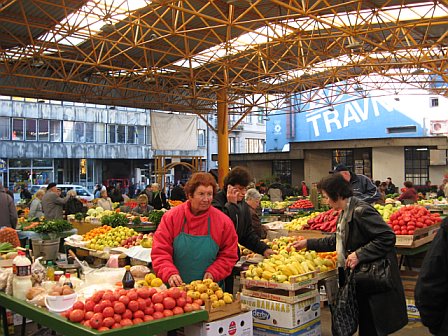
Bosnians are regarded as friendly, warm, and outgoing. They enjoy merak (a relaxed pace of life). Each major group emphasizes different traits. For example, Bosnian Serbs consider themselves proud and heroic, Bosnia Croats emphasize their courteous behavior, and Bosniacs consider themselves as having warm personal relationships. Ceif means to act spontaneously for enjoyment.

Hearts at the Crossroads of Empires
Get More Customs and Culture
6 more cultural topics for members
Social Customs & Etiquette · Diet · Family · Dating Customs · Recreation · Student Life
Every country, every topic, all activities & recipes
✓ Instant access on this device · ✓ No subscription
Holidays
National Day
11/25Independence
Christmas
12/25Christmas
Traditional greetings used by the locals are Sretan Bozic, pronounced ‘re-than boh-shic’ and Hristos se rodi, pronounced ‘ris-tos se- ro-di.’
The country observes Christmas on January 7. The Bosnians observe the holiday on this date as they still follow the Julian calendar.
Santa Claus is called ‘Djeda Mraz,’ pronounced ‘jeh-da m-raz’ which means Grandfather Frost. The tradition of gift giving is popularly associated with Santa Claus and children are always on their best behavior during this time.
Christmas starts three Sundays before Christmas Eve. These Sundays are known as Detinjci, Materice, and Ocevi. Each Sunday represent a celebration and dedication to children, mothers and fathers, respectively.
The rituals and ceremonies of the holiday season focus on the family. The holiday is also filled with Serbian traditions. Christmas Eve during daylight is called Badnji dan, after Sunset it is called Badnje vece.
The Christmas traditions and holidays usually end after the Julian calendar celebration of New Year. This date is known among locals as Little Christmas.
Christmas trees in Bosnia and Herzegovina are put up in every home. Gorgeous wooden figurines, dolls and pine cones made to look like snowmen decorate their trees. Christmas trees are also adorned with lights, balls and other ornaments. Gifts are placed under the tree and are opened on Christmas Day. Gifts consist of goodies, toys, clothes and treats.
During the Christmas season it has been a custom for children to go from house to house after Christmas Eve dinner and sing carols. This custom is called korindanje. The children who form the choir are called korindasi. In line with tradition, children would knock on the neighbor’s door and ask permission to sing. Once allowed, they sing the Troparion of the Nativity:
Troparion of the Nativity
"Thy nativity, O Christ our God, has shown to the world the light of wisdom; for by it, those who worshipped the stars were taught by a star to adore Thee the Sun of Righteousness, and to know Thee, the Orient from on high. O Lord, glory to Thee."
After the Christmas carol, neighbors give them gifts which consist of money, walnuts, prunes, or apples.
Another tradition during Christmas is for an elderly woman member of the family to stick a knife into the main house door from the inside as a means protection against evil curses, witches and demons. As an alternative protection, the woman hangs a hawthorn stale with a wreath of garlic on it. It has also been a tradition in some areas for the men to stay by the ognjiste all night to keep the fires burning to prevent curses and evil from coming in.
Orthodox Church masses are held in honor of the Christ Child who is to be their Savior. During the Sarma (Christmas dinner) a sumptuous feast is prepared with dishes which include roast pork, turkey stuffed with cabbage, spinach pie, beets, mayonnaise and pita, Sojikolac chocolate nut cookies and cake with white frosting.
A tradition during dinner is for the head of household to say the Lord’s Prayer followed by ‘the peace of God among us, Christ is born.’ After which, they hold a cesnica together which they rotate counterclockwise while singing the Troparion of the Nativity.
Cesnica is Christmas bread which is shared for dinner. Hidden inside the loaf is a piece of coin and to whom the coin goes also goes good luck for the coming year. Each member of the family is given a piece whether or not he or she is not present. A piece for a guest who may arrive is also set aside.
Dates of Interest
- January 7th
Traditional greetings used by the locals are Sretan Bozic, pronounced 're-than boh-shic' and Hristos se rodi, pronounced 'is-tos se- ro-di.' The country observes Christmas on January 7th due to the fact the country still follows the Julian calendar. Santa Claus is called 'Djeda Mraz,' pronounced 'jeh-da m-raz' which means Grandfather Frost. The tradition of gift giving is popularly associated with Santa Claus and children are always on their best behavior during this time. Christmas starts three Sundays before Christmas Eve. These Sundays are known as Detinjci, Materice, and Ocevi. Each Sunday represents a celebration and dedication to children, mothers, and fathers, respectively. The rituals and ceremonies of the holiday season focus on the family. The holiday is also filled with Serbian traditions.
How do people greet each other in Bosnia and Herzegovina?
Bosnians usually greet with a handshake, and friends add cheek kisses. Younger people greet older people first.
Do
- Shake hands when meeting
- Have younger people greet older people first and offer them their seats on public transport
- Kiss once on each cheek with Bosnian Croat friends, three times with Bosnian Serb friends
Good to know
- Say "Do vidjenja" when parting, or the informal "Vidimo Se"
What are dining customs like in Bosnia and Herzegovina?
Meals center on pies and are eaten continental-style with the fork in the left hand and knife in the right. The day starts with strong black coffee, with breakfast mid-morning, lunch mid-afternoon, and supper around 8 PM.
Do
- Eat with the fork in the left hand and knife in the right
- Keep hands above the table and elbows off it
- Decline more than once when extra food is offered, as hosts serve more than can be eaten
Don’t
- Don't speak with your mouth full
Good to know
- Traditionally, especially in rural areas, pies are eaten with the hands
- Devout Muslims do not eat pork, while other Bosnians enjoy it
- Try local dishes like burek (meat pie), zeljanica (spinach and cheese pie), baklava, and tufahija; rakija is found everywhere
What should I know about visiting a home in Bosnia and Herzegovina?
Family and friends love to visit, often dropping by without notice and sitting for hours over coffee. First-time visitors are almost obliged to bring a gift.
Do
- Bring a gift such as flowers, coffee, wine, or chocolates
- Take off your shoes before entering a home
- Give flowers in odd numbers
- Maintain eye contact in conversation and especially when toasting
Don’t
- Don't give flowers in even numbers, which are strictly for funerals
- Don't beckon with the index finger or shout in public
Good to know
- Hosts serve coffee at the beginning and end of a visit
- Gifts are usually not opened in the guest's presence
- Meze (pies, dried meats, cheese, and salads) is offered for arranged visits
How should I dress in Bosnia and Herzegovina?
Most people wear Western-style clothing, and urban residents pay special attention to their appearance and to labels or brand names.
Good to know
- Natural fibers are preferred over synthetic
- Some rural people combine traditional dress with Western clothing; berets and head scarves are traditional
- Religious Bosniac women wear long skirts and full head scarves
What gestures should I be aware of in Bosnia and Herzegovina?
Eye contact is normal in daily conversation and is important when toasting. Some gestures are considered rude.
Do
- Wave to friends in the street
- Offer older persons a seat on the bus
- Maintain eye contact when raising glasses for a toast
Don’t
- Don't beckon with the index finger
- Don't shout in public
What is family life like in Bosnia and Herzegovina?
Rural households often include grandparents, parents, and two or more children, with the grandfather or father in a dominant role, while urban families are smaller with less grandparent involvement.
Good to know
- In urban families, both spouses usually work and share decision-making
- Parents often support children into adulthood, and children are expected to care for elderly parents
What do people do for recreation in Bosnia and Herzegovina?
Bosnia and Herzegovina is known for winter sports, with excellent ski slopes made popular after the 1984 Winter Olympics in Sarajevo.
Good to know
- Ski at the popular slopes near Sarajevo
- In warmer weather, fish and raft in the rivers and hike in the mountains
Last updated: 2026-07-12 · Sources: CountryReports
Photos of Bosnia and Herzegovina
Photos of Bosnia and Herzegovina


Travel and Tourism
Travel and Tourism
- Travel Alert Status
- Level 2: Exercise Increased Caution
- Currency
- 1.806
- Time Difference
- UTC+1 (6 hours ahead of Washington, DC, during Standard Time)
- Airports
- 27
- Recommended Vaccinations
- How important is it to do your research about vaccinations? It might just save your life! Make yourself aware of the different types of vaccinations and which ones you may need to travel to your destination. Schedule an appointment with your doctor at least four to six weeks before you travel to ensure you receive all important shots. Be sure that you and your family are up to date on your routine vaccinations. Which vaccinations you need will depend on a number of factors including your destination, whether you will be spending time in rural areas, the season of the year you are traveling, your age, health status, and previous immunizations.
Read the full travel guide — health, safety, vaccinations, disease risk, sanitation, and transit details.
View full travel guideRecipes
Recipes
History
History
Historical Eras
Medieval Bosnia
600 – 1463
Slavs settled the Bosnian region in the 7th century, with Serbia and Croatia later dividing influence before Hungary exercised control in the 11th and 12th centuries. Around 1200, the medieval Kingdom of Bosnia emerged as an independent polity, developing its own distinct Bosnian Church alongside Catholic and Orthodox communities. The kingdom endured for over two centuries until Ottoman Turkish forces conquered Bosnia in 1463.
Ottoman Rule
1463 – 1878
Under four centuries of Ottoman governance, Bosnia was administered as an imperial province and experienced profound demographic and cultural transformation. Large numbers of Bosnians converted from Christianity to Islam, laying the foundation for the Bosniak Muslim identity that persists today. Ottoman rule left an enduring architectural, religious, and cultural imprint visible across Sarajevo and other cities.
Austro-Hungarian Era
1878 – 1918
The Congress of Berlin transferred Bosnia and Herzegovina to Austro-Hungarian administration in 1878, and Austria formally annexed the territory in 1908, inflaming South Slav nationalist sentiment. On June 28, 1914, Bosnian Serb student Gavrilo Princip assassinated Archduke Franz Ferdinand in Sarajevo, igniting the chain of events that led to World War I. The collapse of Austria-Hungary in 1918 ended this era and folded Bosnia into the newly formed Kingdom of Serbs, Croats, and Slovenes.
Yugoslav Period
1918 – 1992
Bosnia became part of the interwar Yugoslav kingdom and, during World War II, was subjected to brutal occupation under the Nazi-allied Croatian Ustaše regime, which perpetrated mass atrocities against Serbs, Jews, and Roma. The postwar Communist Federal Republic of Yugoslavia under Josip Broz Tito reconstituted Bosnia and Herzegovina as a constituent republic with its medieval boundaries. Yugoslavia's fragmentation accelerated after 1986 under Slobodan Milošević's Serb nationalism, ultimately pushing Bosnia toward independence.
Independence & War
1992 – 1995
Bosnia declared independence on April 5, 1992, following a referendum boycotted by ethnic Serbs, and received international recognition days later. Bosnian Serb forces, backed by Serbia, launched an armed campaign to partition the country along ethnic lines, initiating a brutal three-year war marked by the siege of Sarajevo and the Srebrenica genocide. The conflict ended with the Dayton Peace Agreement, initialed on November 21, 1995, which established the current two-entity governmental structure.
Post-Dayton Era
1995 – present
The Dayton Agreement created a complex governing framework dividing Bosnia and Herzegovina into the Bosniak-Croat Federation and the Republika Srpska, overseen by international institutions including the Office of the High Representative. The country has pursued EU and NATO integration while grappling with entrenched ethnic divisions, economic underdevelopment, and institutional dysfunction rooted in the Dayton structure itself. Reconciliation and state-building remain ongoing challenges as Bosnia seeks a stable place within the Euro-Atlantic community.
Overview
The three main ethnic groups in present-day Bosnia and Herzegovina are Bosniak, Serb, and Croat, and languages are Bosnian, Serbian, and Croatian (formerly "Serbo-Croatian"). Nationalities are Bosniak (Muslim), Bosnian Serb, and Bosnian Croat. Religions include Islam, Serb Orthodoxy, Roman Catholicism, Judaism, some Protestant sects, and some others.
Every country, every topic, all activities & recipes
✓ Instant access on this device · ✓ No subscription
Timeline of Key Events
601 – 700
Slavs settled the Bosnian region in the 7th century.
Slavs settled the Bosnian region in the 7th century.
801 – 900
The nations of Serbia and Croatia split control of Bosnia.
The nations of Serbia and Croatia split control of Bosnia.
1001 – 1200
In the 11th & 12th century the nation of Hungary controlled Bosnia.
In the 11th & 12th century the nation of Hungary controlled Bosnia.
1463
The Ottomans conquered Bosnia.
The Ottomans conquered Bosnia.
1878 – 1918
Bosnia came under the rule of the Austrian-Hungarian Empire.
Bosnia came under the rule of the Austrian-Hungarian Empire. A representative from Vienna governed the area.
1908
Austria annexed Bosnia and Herzegovina.
Austria annexed Bosnia and Herzegovina.
1914
A Bosnian Serb student assassinates the Austrian archduke Franz Ferdinand in Sarajevo.
A Bosnian Serb student, Gavrilo Princip, assassinates the Austrian archduke Franz Ferdinand in Sarajevo. This precipitates World War I.
Read the full history profile — narrative overview, defining eras, and the complete timeline in one place.
View expanded historyInteresting Facts
Interesting Facts
Bosnia Herzegovina has the world's highest unemployment rate with over 75%.
Bosnia Herzegovina has the world's lowest birth rate with 54.5 per 1,000 people.
The name Sarajevo comes from the Turkish word saraj, meaning palace. The city is the most Arabic in Europe, with cathedrals churches and synagogues alongside mosques and the central Bascarsija or Turkish bazaar.
The jugo is a distinct wind that brings rain to various parts of the country.
2 more facts for members
Every country, every topic, all activities & recipes
✓ Instant access on this device · ✓ No subscription
Geography and Environment
Geography and Environment
- Terrain
- mountains and valleys
- Climate
- Bosnia and Herzegovina has scenic, snowy winters, and a rainy season in the early summer. Summers are warm in the mountain valleys, but cool at higher elevations. The far northern part of the country has somewhat colder winters and warmer summers. The average January temperature in Sarajevo is 30°F. The average July temperature is 66°F.
- Natural Hazards
- destructive earthquakes
- Current Environmental Issues
- air pollution from metallurgical plants; sites for disposing of urban waste are limited; water shortages and destruction of infrastructure because of the 1992-95 civil strife; deforestation
Read the full geography and environment profile — terrain, climate, natural resources, hazards, land use, and international agreements.
View full geographyPeople & Demographics
People & Demographics
Religion
Languages Spoken
Bosnian, Croatian, Serbian
- Bosnian
- Croatian
- Serbian
- Serbo-Croatian
Population
- Population
- 3,210,847
- Population in Major Urban Areas
- SARAJEVO (capital) 389,000
- Nationality Noun
- Bosnian(s), Herzegovinian(s)
- Ethnic Groups
- Serb 37.1%, Bosniak 48%, Croat 14.3%, other 0.6% (2000)
- Language Note
- The official language is Bosnian, a Slavic language that used to be known as Serbo-Croatian. According to ethnic and political affiliation, Bosnians may speak Serbian, Croatian or Bosnian. At school, both Cyrillic and Latin scripts are taught, which are used in the Federation and Serb Republic.
Education
- Literacy Definition
- NA
Life Expectancy
- Life Expectancy at Birth
- Life expectancy at birth in Bosnia and Herzegovina stands at approximately 77–78 years overall, with women living notably longer than men. Female life expectancy is around 79–80 years, while male life expectancy is closer to 74–75 years. These figures place Bosnia and Herzegovina broadly in line with other countries in the Western Balkans region, though still somewhat below the average for European Union member states. Life expectancy in the country has improved considerably over the past several decades, reflecting advances in healthcare access, nutrition, and living standards. However, progress has been uneven, and certain persistent health challenges continue to affect longevity. Cardiovascular disease remains the leading cause of death in Bosnia and Herzegovina, accounting for a significant proportion of all mortality. Cancer and respiratory illnesses also represent major contributors to premature death in the population. Lifestyle factors play a notable role in shaping health outcomes. Tobacco use remains relatively high compared to Western European norms, and rates of physical inactivity and poor diet contribute to the prevalence of non-communicable diseases. These patterns help explain the gap in life expectancy between Bosnia and Herzegovina and higher-income European countries where preventive healthcare culture is more established. The country's complex political structure — divided between two main administrative entities, the Federation of Bosnia and Herzegovina and Republika Srpska — creates challenges for delivering consistent, coordinated healthcare services across the population. Rural communities in particular may face reduced access to specialized medical care, which can influence health outcomes in those areas. Bosnia and Herzegovina underwent severe disruption during the 1992–1995 war, which had profound short- and long-term effects on population health, infrastructure, and the healthcare system. The subsequent recovery and reconstruction process has been gradual, and the health system continues to evolve in terms of capacity and quality of care. Ongoing emigration, particularly among younger and working-age populations, has added further pressure to the country's healthcare workforce and public health capacity. Despite these challenges, life expectancy trends have generally moved in a positive direction since the post-war period, and continued investments in public health, preventive medicine, and healthcare infrastructure are expected to support further improvements in the coming decades.
- Infant Mortality Rate
- Bosnia and Herzegovina has made significant progress in reducing infant mortality over the past few decades, reflecting improvements in healthcare infrastructure, prenatal care, and public health services following the upheaval of the 1990s conflict. As of recent World Bank data, the infant mortality rate in Bosnia and Herzegovina stands at approximately 4 to 5 deaths per 1,000 live births. This figure places the country well below the global average and broadly in line with other upper-middle-income nations in the Western Balkans region. For context, the global average infant mortality rate remains considerably higher, at roughly 27 to 28 deaths per 1,000 live births, underscoring the relative progress Bosnia and Herzegovina has achieved. The decline in infant mortality over recent decades has been substantial. In the early 1990s, rates were significantly higher, and the war period (1992–1995) caused severe disruptions to medical services that temporarily worsened health outcomes for newborns and young children. Post-war reconstruction, international humanitarian support, and gradual integration of health system reforms helped reverse these trends. Key drivers of the country's improved infant mortality outcomes include increased access to skilled birth attendants, better availability of neonatal care, vaccination programs, and improved maternal health monitoring. UNICEF and other international organizations have played a role in supporting child health initiatives in the country, particularly in rural and underserved communities where access to healthcare can still be uneven compared to urban centers like Sarajevo. Disparities do exist between the country's administrative entities — the Federation of Bosnia and Herzegovina and Republika Srpska — as well as between urban and rural populations. Poorer and more isolated communities tend to have less consistent access to quality prenatal and postnatal care, which can contribute to higher localized rates. Overall, the infant mortality trend in Bosnia and Herzegovina is one of steady, measurable improvement, and the country continues to work toward aligning its health outcomes with those of European Union member states.
Read the full people and society profile — demographics, health, education, religion, languages, and notable people.
View full people and societyGovernment & Politics
Government & Politics
Country Identity
- Country Name
- BosniaandHerzegovina
- Full Country Name
- Bosnia and Herzegovina
- Local - Short
- Bosna i Hercegovina
Government Structure
- Government Type
- emerging federal democratic republic
- Legal System
- based on civil law system
- Executive Branch
- chief of state: The presidency of Bosnia and Herzegovina consists of three members — one Bosniak, one Croat, and one Serb — who collectively serve as the chief of state. As of the most recent term, the tripartite presidency includes Denis BECIROVIC (Bosniak), Zeljka CVIJANOVIC (Serb), and Zeljko KOMSIC (Croat), elected in October 2022. The chairmanship rotates among the three members every eight months; Denis BECIROVIC assumed the first chairmanship of the current term. head of government: Chairman of the Council of Ministers Borjana KRISTO (since February 2023) cabinet: Council of Ministers nominated by the council chairman and approved by the Parliamentary Assembly elections: The three members of the presidency (one Bosniak, one Croat, one Serb) are elected by popular vote for a four-year term; the chairmanship rotates among the three members every eight months; the most recent general election was held on 2 October 2022; the Chairman of the Council of Ministers is appointed by the presidency and confirmed by the House of Representatives election results: In the October 2022 elections, Denis BECIROVIC received the most votes among Bosniak candidates, Zeljko KOMSIC won the Croat seat, and Zeljka CVIJANOVIC secured the Serb seat; BECIROVIC assumed the initial chairmanship of the presidency note: President of the Federation of Bosnia and Herzegovina: Lidiia BRADARA (since 2023); President of Republika Srpska: Milorad DODIK (since January 2023), who also serves concurrently as the Serb member of the state-level presidency
- Legislative Branch
- Bicameral Parliamentary Assembly or Skupstina consists of the national House of Representatives or Predstavnicki Dom (42 seats - elected by proportional representation, 28 seats allocated from the Federation of Bosnia and Herzegovina and 14 seats from the Republika Srpska; members elected by popular vote to serve four-year terms); and the House of Peoples or Dom Naroda (15 seats - 5 Bosniak, 5 Croat, 5 Serb; members elected by the Bosniak/Croat Federation's House of Representatives and the Republika Srpska's National Assembly to serve four-year terms); note - Bosnia's election law specifies four-year terms for the state and first-order administrative division entity legislatures. Elections: national House of Representatives - elections last held on 2 October 2022 (next to be held in 2026); House of Peoples - last constituted in 2023 (next to be constituted in 2027). Election results: national House of Representatives - seats by party/coalition following the 2022 elections: SDA 9, HDZ-BH 6, SDS 5, SNSD 6, SDP 5, NiP 3, NS 2, other 6; House of Peoples - seats by party/coalition: SDA 3, HDZ-BH 2, SDS 1, SNSD 2, SDP 1, other 6. Note: the Bosniak/Croat Federation has a bicameral legislature that consists of a House of Representatives (98 seats; members elected by popular vote to serve four-year terms); elections last held 2 October 2022 (next to be held in October 2026); seats by party/coalition - SDA 28, HDZ-BH 16, SDP 13, NiP 11, other 30; and a House of Peoples (80 seats - 17 Bosniak, 17 Croat, 17 Serb, and others); last constituted in 2023. The Republika Srpska has a National Assembly (83 seats; members elected by popular vote to serve four-year terms); elections last held 2 October 2022 (next to be held in the fall of 2026); seats by party/coalition - SNSD 27, PDP 9, SDS 8, SDA 5, DNS 4, SP 4, NDP 3, other 23. A 28-member Republika Srpska Council of Peoples is established within the Republika Srpska National Assembly, including eight Croats, eight Bosniaks, eight Serbs, and four members of the smaller communities, serving as a mechanism to protect the vital interests of the constituent peoples.
- Judicial Branch
- BH Constitutional Court (consists of nine members: four members are selected by the Bosniak/Croat Federation's House of Representatives, two members by the Republika Srpska's National Assembly, and three non-Bosnian members by the president of the European Court of Human Rights); BH State Court (consists of nine judges and three divisions - Administrative, Appellate and Criminal - having jurisdiction over cases related to state-level law and appellate jurisdiction over cases initiated in the entities); note - a War Crimes Chamber opened in March 2005 note: the entities each have a Supreme Court; each entity also has a number of lower courts; there are 10 cantonal courts in the Federation, plus a number of municipal courts; the Republika Srpska has five municipal courts
- Suffrage
- 16 years of age, if employed; 18 years of age, universal
- Constitution
- the Dayton Agreement, signed 14 December 1995, included a new constitution now in force; note - each of the entities also has its own constitution
- Independence
- 1 March 1992 (from Yugoslavia; referendum for independence was completed 1 March 1992; independence was declared 3 March 1992)
- National Holiday
- National Day, 25 November (1943)
Capital City
- Capital Name
- Sarajevo
- Capital - geographic coordinate
- 43 52 N, 18 25 E
- Capital Time Difference
- UTC+1 (6 hours ahead of Washington, DC, during Standard Time)
the name derives from the Turkish noun saray, meaning "palace" or "mansion," and the term ova, signifying "plain(s)," to give a meaning of "palace plains" or "the plains about the palace"
Military
Branches: Armed Forces of Bosnia and Herzegovina (AFBiH): Army of Bosnia and Herzegovina, Air and Air Defense Forces of Bosnia and Herzegovina (Zrakoplovstvo i Protuzracna Obrana, ZPO)
Embassy / Diplomatic Mission
U.S. Embassy Sarajevo
1 Robert C. Frasure Street
71000 Sarajevo
Telephone: (387) 33 704 000
Emergency after-hours telephone: (387) 33 704 000. If after dialing you receive a recorded message, press “0” and ask for the embassy duty officer.
Facsimile: (387) 33 221 837
E-mail: rws@state.gov
Read the full government profile — flag symbolism, national anthem, and other national symbols.
View full government detailsEconomy
Economy
Bosnia and Herzegovina remains one of the poorer countries in Europe, a legacy rooted in its position as one of the least developed republics of the former Yugoslav federation.
Snapshot
- Currency Name and Code
- Konvertibilna markas (BAM)
- GDP — official exchange rate
- $8,495,000,000 (USD)
- GDP Real Growth Rate
- 2.5%
- Gini Index
- 26.2
Every country, every topic, all activities & recipes
✓ Instant access on this device · ✓ No subscription
News & Weather
News & Weather
Current Weather
Latest News
OPINION: Bosnia Deserves Better Than Permanent Probation - Kyiv Post
Kyiv Post · 1h ago
In Bosnia and Herzegovina, children with Down syndrome are using a video game to safely navigate the internet - Global Voices
Global Voices · 1d ago
5 questions (and expert answers) about Bosnia and Herzegovina’s election - Atlantic Council
Atlantic Council · 24d ago
Bosnia and Herzegovina is still shaped by ethnic divisions, separatism, EU ambitions - DW.com
DW.com · 22d ago
Bosnia’s political future looks increasingly like its past - Al Jazeera
Al Jazeera · 17d ago
USMNT vs. Bosnia and Herzegovina: Opponent Profile, Recent Form & History - US Soccer
US Soccer · 118d ago
Ethnic division and polarization to dominate electoral campaign in Bosnia and Herzegovina - European Western Balkans
European Western Balkans · 51d ago
Bosnian elections 2026: How Dodik won without running - EPC, European Policy Centre
EPC, European Policy Centre · 13d ago
News via Google News
Videos
Videos
1 curated YouTube videos.
Source: YouTube
Frequently Asked Questions
Frequently Asked Questions
What is the population of Bosnia and Herzegovina?
What is the capital of Bosnia and Herzegovina?
Where is Bosnia and Herzegovina located?
What countries border Bosnia and Herzegovina?
What are the main religions practiced in Bosnia and Herzegovina?
What currency is used in Bosnia and Herzegovina?
What languages are spoken in Bosnia and Herzegovina?
What is the geography of Bosnia and Herzegovina like?
What is Bosnia and Herzegovina known for?
Last reviewed 2026