
 English
 Español
 中文
中文 हिन्दी
 Français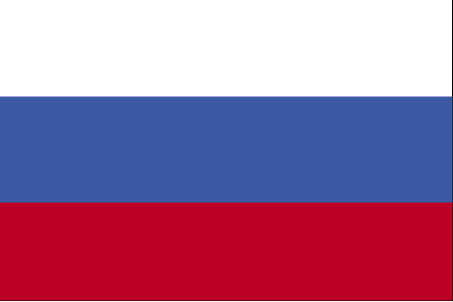
Russia
Rossiya
Declare Your Relationship to Russia
CountryReports Community
- Studying16
- From Russia5
- Russia heritage6
- Visited5
- Want to visit5
Customs and Culture
Customs and Culture
Cultural Attributes
Much has been said about the purported fatalism and inertia of the Russian people. This is not born out of the achievements of Russian history. The eastward expansion of Russia over the centuries was much more widespread than a government-driven scheme, which is evidence of a vibrant and energetic nation.
Achievements in Russian literature, art, music, and architecture bear witness to the talent and initiative of the Russian people. The Russian Orthodox church has had a moral influence on the attitudes of the Russian people for a thousand years. The attempt to destroy this moral culture has weakened the national will and tried to replace it with communism. After this, confusion and chaos set in, both politically and socially.
Many Russians are frustrated with the rapid changes, reflected in high prices, violent and rampant crime, unemployment and a reduced quality of life. Many Russians believe that Russia's 'soul' is different and that Russia needs to take a different course considering its unique historical and spiritual heritage.

Land of the Deep Lake and Onion Domes
Get More Customs and Culture
6 more cultural topics for members
Social Customs & Etiquette · Diet · Family · Dating Customs · Recreation · Student Life
Every country, every topic, all activities & recipes
✓ Instant access on this device · ✓ No subscription
Holidays
Russia Day
6/12Independence Day
Birthd ate - Vaslav Njinsky
3/12Birthday
Birth date - Vaslav Nijinsky, Russian ballet dancer, was born March 12, 1890.
Birth date - Sergei Vasilyevich Rachmaninov
4/1Birthday
Birth date - Sergei Vasilyevich Rachmaninov, Russian composer and pianist, was born in Oneg, Russia on April 1, 1873.
Birth date - Pyotr (Peter) Ilyich Tchaikovsky
5/7Birthday
Birth date - Pyotr (Peter) Ilyich Tchaikovsky, Russian composer, was born in Votkinsk, Russia on May 5, 1840.
Birth date - Israel Baline (Irving Berlin)
5/11Birthday
Birth date - Irving Berlin, songwriter and lyricist of over 1,000 songs, including God Bless America and White Christmas, was born in Temum, Russia on May 11, 1888.
First Russian woman in space
6/16History
Valentina Tereshkova, Russian cosmonaut, becomes the first woman in space.
Birth date - Igor Fedorovich Stravinsky
6/17Birthday
Birth date - Igor Fedorovich Stravinsky, Russian-born American composer, was born in Oranienbaum, Russia on June 17, 1882.
Sputnik is launched
10/4History
Oct. 4, 1822 - Sputnik is launched by the Soviet Union, marking the beginning of the space age.
Christmas
12/25Christmas
Russia celebrated Christmas for about 1000 years beginning in the 9th century. However with the rise of Communism during the 1900’s religious holidays were replaced with secular holidays and the Christmas Season was replaced with the Winter Festival.
Since the collapse of the Soviet Union, the traditional Christian Christmas has been incorporated into the Winter holiday season, which begins on December 24th and extends through New Year’s Day, with New Year’s Day celebrations dominating the holidays. The Children’s festival in the Kremlin and other parties are popular as well as Grandfather Frost and the Snow Maiden. Gift exchanges may occur at Christmas or on New Year’s Day. Holiday dinners include borscht, blini (small pancakes served with sour cream, caviar, and smoked salmon), fish, baba, kissel, and piroshki (turnovers stuffed with meat, fish, chicken, eggs, and vegetables).
Dates of Interest
- February 23rd
Originally a military holiday honoring veterans and active servicemen, now also celebrates men in general with gifts and recognition.
How do people greet each other in Russia?
Russians shake hands firmly, and friends and family may kiss on the cheek.
Do
- Shake hands firmly when meeting
- As a man, always offer your hand
- Use given name plus patronymic for an older or respected person
- Use surnames in formal greetings
Don’t
- Don't refuse to offer your hand as a man—it's considered impolite
Good to know
- Some women prefer not to shake hands
What are dining customs like in Russia?
Eating with a fork in the left hand and knife in the right is standard, though many use only a fork, and common foods include borsch, pirozhki, and blini with black caviar.
Do
- Keep your hands above the table
- Try borsch, pirozhki, and blini with caviar
Good to know
- Pork, sausage, chicken, and cheeses are popular
- Russians prefer tea to coffee
- Russians drink far more vodka than wine
What should I know about visiting a Russian home?
Russians have special rituals for greeting guests, and greeting is done inside rather than in the doorway.
Do
- Come inside before being greeted
- If offered bread and salt, break off a piece, dip it in salt, and eat it
Don’t
- Don't greet or be greeted while standing in the doorway—it's considered bad luck
Good to know
- Important guests may be offered bread and salt on an embroidered towel held by the host's youngest daughter
How should I dress in Russia?
Russian clothing styles are essentially the same as in Europe, with younger people following the latest trends and older people dressing more conservatively.
Good to know
- Men and women wear fur hats to keep warm in the cold winters
- Traditional costumes are seen during cultural performances
Are there gestures to avoid in Russia?
Some common gestures are considered impolite in Russia.
Don’t
- Don't point with your index finger
- Don't talk with your arms folded
- Don't talk with your hands in your pockets
What is family life like in Russia?
Both husband and wife usually work, but women are generally expected to handle housekeeping and childcare, and grandmothers (babushkas) play a vital role in holding families together.
Good to know
- Young couples often live with parents due to housing shortages
- Babushkas often live with and help their children by cooking, cleaning, and childcare
- Most couples have only one child, so children are treasured
- Few families own a car; most use trams and trolleybuses
What do Russians do for recreation?
Organized sports are central to daily life, with soccer as the leading sport and ice skating among the most important competitive sports.
Good to know
- Outdoor ice skating on frozen ponds is popular for all ages
- Chess is popular, with open-air games in parks in summer
- Many city dwellers spend summer weekends at a dacha country retreat
- The weekly steam bath is a regular custom in city and countryside
Last updated: 2026-07-12 · Sources: CountryReports
Photos of Russia
Photos of Russia


Travel and Tourism
Travel and Tourism
- Travel Alert Status
- Level 4: Do Not Travel
- Currency
- Russian ruble (RUB)
- Time Difference
- UTC+3 (8 hours ahead of Washington, DC, during Standard Time) time zone note: Russia has 11 time zones, the largest number of contiguous time zones of any country in the world; in 2014, two time zones were added and DST dropped
- Climate
- Climate ranges from steppes in the south through humid continental in much of European Russia, subarctic in Siberia to tundra climate in the polar north; winters vary from excellent along the Black Sea coast to frigid in Siberia. In Moscow, Snow begins in October and continues periodically through April, although snowfall in May is not unusual. Annual rainfall averages 21 inches, with the heaviest rains falling between May and October. Prevailing winds are southerly and southwesterly. Due to Moscow's northern location, daylight varies from 7 hours in December to 17 1/2 hours in June. The average temperature in June and July is 66°F, but the summer temperatures frequently reach the low 90s. In the winter, the temperature may fall to minus 40°F, but the average December and January temperature is 14°F. Though Moscow's winter air is usually dry, the wind chill factor makes the temperature feel much colder. The climate in St. Petersburg is milder than in Moscow but is damp and misty. Average temperatures are 64°F in July and 17°F in January. St. Petersburg is famous for its "white nights," which occur in June when the sun shines for nearly 19 hours and sunset only brings semidarkness. The climate in Vladivostok is milder than in many other Russian cities due to its location on the Pacific Ocean. Winter temperatures range between -68°F and 25°F.
- Airports
- 1218
Read the full travel guide — health, safety, vaccinations, disease risk, sanitation, and transit details.
View full travel guideRecipes
Recipes
Shchi
Soup
Main Dish
(Russian sausage)
Main Dish
Voryonoye Miaso Po-Russki (Boiled Beef Russian-Style)
Main Dish
Golubtsy (Fresh cabbage leaves eaten with tomato sauce and eaten with sour cream)
Main Dish
Pelmeni (Pasta Dish)
Main Dish
Babka (Potato Casserole)
Main Dish
Kroucheniki (Beef Meat Dish)
Main Dish
PremiumShchi
Side Dish
Premium(Beet Salad)
Side Dish
PremiumKasha (Buckwheat Casserole)
History
History
Historical Eras
Kievan Rus
862 – 1240
The Rurik Dynasty established the first East Slavic state centered on Kiev, with Prince Oleg unifying the region around 880. Prince Vladimir's conversion to Orthodox Christianity in 988 defined the cultural and religious identity of the Russian people for centuries. The state fragmented into competing principalities and was ultimately shattered by the Mongol invasions of 1237–1240.
Mongol Rule & Muscovy
1240 – 1547
The Golden Horde's dominion over Russian principalities lasted over two centuries, extracting tribute and reshaping political culture. The Grand Duchy of Muscovy gradually emerged as the dominant Russian power, with Dmitriy Donskoy's victory at Kulikovo in 1380 marking the first major defeat of Mongol forces. Ivan III finally ended Mongol suzerainty in 1480 and consolidated Russian lands under Muscovite rule.
Tsarist Empire
1547 – 1917
Ivan IV (the Terrible) became the first Tsar in 1547, launching an era of imperial expansion and autocratic rule that endured through the Romanov Dynasty, founded in 1613. Peter the Great and Catherine the Great transformed Russia into a major European power through Westernization, territorial conquest, and cultural reform. The empire ultimately collapsed under the strain of World War I, revolutionary unrest, and the abdication of Nicholas II in February 1917.
Soviet Era
1917 – 1991
The Bolshevik Revolution of October 1917 brought Vladimir Lenin and the Communist Party to power, establishing the USSR in 1922. Stalin's brutal consolidation of power (1928–1953) collectivized agriculture, industrialized the economy, and cost tens of millions of lives through purges and famine, yet the Soviet Union emerged from World War II as a global superpower. Decades of Cold War competition with the West ended when Mikhail Gorbachev's reforms of glasnost and perestroika inadvertently accelerated the dissolution of the USSR in December 1991.
Russian Federation
1991 – present
Boris Yeltsin led the newly independent Russian Federation through a turbulent transition toward market economics and democratic governance, marked by constitutional crisis, the Chechen Wars, and severe economic hardship. Vladimir Putin's rise to power in 2000 brought political stabilization alongside increasing authoritarianism and a reassertion of Russian geopolitical ambitions. Russia's annexation of Crimea in 2014 and full-scale invasion of Ukraine in 2022 fundamentally reoriented its relationship with the West and reshaped the post-Cold War international order.
Overview
RUSSIA IS THE LARGEST of the fifteen geopolitical entities that emerged in 1991 from the Soviet Union. Covering more than 17 million square kilometers in Europe and Asia, Russia succeeded the Soviet Union as the largest country in the world. As was the case in the Soviet and tsarist eras, the center of Russia’s population and economic activity is the European sector, which occupies about one-quarter of the country’s territory. Vast tracts of land in Asian Russia are virtually unoccupied.
Every country, every topic, all activities & recipes
✓ Instant access on this device · ✓ No subscription
Timeline of Key Events
860 – 1598
Rurik Dynasty
Rurik, a Varangian, according to earliest chronicle of Kievan Rus’, rules Novgorod and founds Rurik Dynasty. The death in 1598 of Tsar Feodor I ended the rule of the Rurik dynasty.
880
Prince Oleg, a Varangian, first historically verified ruler of Kievan Rus’.
Prince Oleg, a Varangian, first historically verified ruler of Kievan Rus’.
911
Prince Oleg concludes treaty with Byzantine Empire favorable to Kievan Rus’.
Prince Oleg, after attacking Constantinople, concludes treaty with Byzantine Empire favorable to Kievan Rus’.
944
Prince Igor’ compelled by Constantinople to sign treaty adverse to Kievan Rus’
Prince Igor’ compelled by Constantinople to sign treaty adverse to Kievan Rus’
955
Princess Olga, while regent of Kievan Rus’, converts to Christianity.
Princess Olga, while regent of Kievan Rus’, converts to Christianity.
971
Prince Svyatoslav makes peace with Byzantine Empire.
Prince Svyatoslav makes peace with Byzantine Empire.
988
Prince Vladimir converts Kievan Rus’ to Christianity.
Prince Vladimir converts Kievan Rus’ to Christianity.
Read the full history profile — narrative overview, defining eras, and the complete timeline in one place.
View expanded historyInteresting Facts
Interesting Facts
When a child loses a tooth they put their tooth in a mouse hole in the ground.
Lake Baikal is the world's oldest and deepest lake. It was formed about 25 million years ago. In one spot it is 5,134 feet deep.
The famous St. Basil’s Cathedral was commissioned by Ivan the Terrible and built on the edge of Red Square between 1555 and 1561.
Russia has one of the busiest subway systems in the world carrying over 3.18 billion passengers per year.
2 more facts for members
Every country, every topic, all activities & recipes
✓ Instant access on this device · ✓ No subscription
Geography and Environment
Geography and Environment
- Terrain
- broad plain with low hills west of Urals; vast coniferous forest and tundra in Siberia; uplands and mountains along southern border regions
- Climate
- Climate ranges from steppes in the south through humid continental in much of European Russia; subarctic in Siberia to tundra climate in the polar north; winters vary from cool along Black Sea coast to frigid in Siberia; In Moscow Snow begins in October and continues periodically through April, although snowfall in May is not unusual. Annual rainfall averages 21 inches, with the heaviest rains falling between May and October. Prevailing winds are southerly and southwesterly. Due to Moscow's northern location, daylight varies from 7 hours in December to 17‑1/2 hours in June. The average temperature in June and July is 66 °F, but the summer temperatures frequently reach the low 90s. In the winter the temperature may fall to minus 40 °F, but the average December and January temperature is 14 °F. Though Moscow's winter air usually is dry, the wind chill factor makes the temperature feel much colder. The climate in St. Petersburg is milder than in Moscow but is damp and misty. Average temperatures are 64 °F in July and 17 °F in January. St. Petersburg is famous for its "white nights" which occur in June when the sun shines for nearly 19 hours and sunset only brings semidarkness. The climate in Vladivostok is milder than in many other Russian cities due to its location on the Pacific Ocean. Winter temperatures range between -68 °F and 25 °F.
- Natural Hazards
- permafrost over much of Siberia is a major impediment to development; volcanic activity in the Kuril Islands; volcanoes and earthquakes on the Kamchatka Peninsula; spring floods and summer/autumn forest fires throughout Siberia and parts of European Russia
- Current Environmental Issues
- air pollution from heavy industry, emissions of coal-fired electric plants, and transportation in major cities; industrial, municipal, and agricultural pollution of inland waterways and seacoasts; deforestation; soil erosion; soil contamination from improper application of agricultural chemicals; scattered areas of sometimes intense radioactive contamination; groundwater contamination from toxic waste; urban solid waste management; abandoned stocks of obsolete pesticides
Read the full geography and environment profile — terrain, climate, natural resources, hazards, land use, and international agreements.
View full geographyPeople & Demographics
People & Demographics
Languages Spoken
Russian (official), many minority languages
- Russian
- Kazakh
Population
- Population
- 144,820,423
- Population: Male/Female
- male: 65,496,805 female: 75,324,005
- Population Distribution
- population is heavily concentrated in the westernmost fifth of the country extending from the Baltic Sea, south to the Caspian Sea, and eastward parallel to the Kazakh border; elsewhere, sizeable pockets are isolated and generally found in the south
- Urban Population
- urban population: 75.3% of total population rate of urbanization: 0.11% annual rate of change (2020-25 est.)
- Population in Major Urban Areas
- 12.680 million MOSCOW (capital), 5.561 million Saint Petersburg, 1.695 million Novosibirsk, 1.528 million Yekaterinburg, 1.292 million Kazan, 1.251 million Nizhniy Novgorod
- Nationality Noun
- noun: Russian(s) adjective: Russian
- Ethnic Groups
- Russian 77.7%, Tatar 3.7%, Ukrainian 1.4%, Bashkir 1.1%, Chuvash 1%, Chechen 1%, other 10.2%, unspecified 3.9%
- Language Note
- Russian (official) 85.7%, Tatar 3.2%, Chechen 1%, other 10.1%; note - data represent native language spoken
Education
- Literacy Definition
- age 15 and over can read and write
Classroom learning is often based on oral recitation and testing, although written tests are also frequently used. In part because of the highly oral nature of much of the instruction, classes are often kept to about 20 students. However, recent research into innovative teaching methods is leading teachers to be more open in how they teach. For example, small groups of students in a classroom may be encouraged to study together in class to help each other learn; rather than relying on the teacher to provide information, the students focus more on understanding how and why things work instead of just memorizing facts.
The Russian government is working diligently to revise and update the educational system in the country. One way that seems to be working is to change the pay rates for teachers, especially for elementary schools. Since 2006, bonuses and incentives for quality teaching, in addition to an increase in base salary, have made being an elementary school teacher a perfect position as they often earn more than university professors. As a result, many of those professors are leaving universities and returning to public schools. The elementary schools benefit from getting superb, well-educated teachers, and the teachers help by getting paid better. And above all, the children benefit from an improved education.
The Russian school system has long been an essential part of the culture. Some school buildings are pretty old, whereas some are more modern with high tech teaching tools. In general, the facilities are adequate and well-maintained.
The wearing of school uniforms was done away with in the 1990s. Officials decided students should wear whatever they needed to stay warm during the long, cold Russian winters. It is not unusual for students to wear fur coats.
Health Information
- Life Expectancy at Birth
- Total population: 73.4 years Male: 68.5 years Female: 78.3 years Russia's life expectancy figures reflect a persistent and significant gap between male and female longevity. This disparity is among the largest in the world and is largely attributed to elevated rates of cardiovascular disease, alcohol consumption, and occupational hazards disproportionately affecting men. Life expectancy across the country dipped noticeably during the COVID-19 pandemic but has shown gradual recovery in recent years.
- Major Infectious Diseases — degree of risk
- degree of risk: intermediate food or waterborne diseases: bacterial diarrhea vectorborne diseases: Crimean-Congo hemorrhagic fever, tickborne encephalitis
- Alcohol consumption per capita
- total: 7.29 liters of pure alcohol beer: 3.04 liters of pure alcohol wine: 0.97 liters of pure alcohol spirits: 3.16 liters of pure alcohol other alcohols: 0.12 liters of pure alcohol
- Tobacco Use
- total: 26.8% male: 40.8% female: 12.8%
- Child Marriage
- women married by age 15: 0.3% women married by age 18: 6.2%
- Infant Mortality Rate
- total: 4.6 deaths/1,000 live births male: 5.1 deaths/1,000 live births female: 4.1 deaths/1,000 live births
Life Expectancy
- Life Expectancy at Birth
- Total population: 73.4 years Male: 68.5 years Female: 78.3 years Russia's life expectancy figures reflect a persistent and significant gap between male and female longevity. This disparity is among the largest in the world and is largely attributed to elevated rates of cardiovascular disease, alcohol consumption, and occupational hazards disproportionately affecting men. Life expectancy across the country dipped noticeably during the COVID-19 pandemic but has shown gradual recovery in recent years.
- Median Age
- total: 41.9 years male: 39.4 years female: 44.5 years
- Age Structure
- 0-14 years: 16.5% (male 11,956,284/female 11,313,829) 15-64 years: 65.7% (male 45,007,073/female 47,518,221) 65 years and over: 17.8% (male 8,533,448/female 16,491,955)
- Infant Mortality Rate
- total: 4.6 deaths/1,000 live births male: 5.1 deaths/1,000 live births female: 4.1 deaths/1,000 live births
Read the full people and society profile — demographics, health, education, religion, languages, and notable people.
View full people and societyGovernment & Politics
Government & Politics
Country Identity
- Country Name
- Russia
- Full Country Name
- Russian Federation
- Local - Long
- Rossiyskaya Federatsiya
- Local - Short
- Rossiya
- Former Name
- Russian Empire, Russian Soviet Federative Socialist Republic
Government Structure
- Government Type
- federation
- Legal System
- based on civil law system; judicial review of legislative acts
- Executive Branch
- chief of state: President Vladimir Vladimirovich PUTIN (acting president 31 December 1999 to 7 May 2000; president 7 May 2000 to 7 May 2008; prime minister 8 May 2008 to 7 May 2012; president since 7 May 2012) head of government: Premier (Prime Minister) Mikhail Vladimirovich MISHUSTIN (since 16 January 2020); First Deputy Prime Minister Denis Valentinovich MANTUROV (since 28 February 2024); Deputy Prime Ministers Tatyana Alekseyevna GOLIKOVA, Aleksandr Valeryevich NOVAK, Marat Shakirzyanovich KHUSNULLIN, Dmitriy Nikolayevich CHERNYSHENKO, Vitaly Gennadyevich SAVELYEV, and others cabinet: The Government, composed of the prime minister, deputy prime ministers, and federal ministers; all are appointed by the president, with the prime minister confirmed by the State Duma note: a Presidential Administration provides staff and policy support to the president, drafts presidential decrees, and coordinates policy among government agencies; a Security Council also reports directly to the president and plays a significant role in shaping national security and foreign policy elections: president elected by popular vote for a six-year term (term length extended from four years by constitutional amendment in 2008); most recent election held 15-17 March 2024 (next to be held in 2030); there is no vice president — if the president is unable to perform duties due to death, incapacitation, impeachment, or resignation, the prime minister serves as acting president until a new election is held within three months; the prime minister is appointed by the president and confirmed by the State Duma election results: Vladimir Vladimirovich PUTIN reelected president in the March 2024 election; percent of vote — Vladimir Vladimirovich PUTIN 87.3%, Nikolay KHARITONOV 4.3%, Vladislav DAVANKOV 3.9%, Leonid SLUTSKY 3.2%
- Legislative Branch
- Bicameral Federal Assembly or Federalnoye Sobraniye consists of the Federation Council or Sovet Federatsii (170 seats; members appointed by the executive and legislative branches of each of Russia's 85 federal subjects, including oblasts, krays, republics, autonomous okrugs and oblasts, and the federal cities of Moscow and Saint Petersburg; life senators may also be appointed by the President, up to 30 in total; members serve terms concurrent with those of the appointing regional officials) and the State Duma or Gosudarstvennaya Duma (450 seats; members elected by a mixed system combining proportional representation from party lists and single-member district contests; parties must clear a 5% vote threshold to receive proportional seats; members serve five-year terms). Elections: State Duma - last held 17-19 September 2021 (next to be held in September 2026). Election results: State Duma - percent of vote received by parties clearing the 5% threshold - United Russia 49.8%, Communist Party of the Russian Federation (CPRF) 18.9%, Liberal Democratic Party of Russia (LDPR) 7.6%, A Just Russia - For Truth 7.5%, New People 5.3%; seats by party - United Russia 324, CPRF 57, LDPR 21, A Just Russia - For Truth 27, New People 13, other 8.
- Judicial Branch
- Constitutional Court; Supreme Court; Supreme Arbitration Court; judges for all courts are appointed for life by the Federation Council on the recommendation of the president
- Suffrage
- 18 years of age; universal
- Constitution
- adopted 12 December 1993
- Independence
- 24 August 1991 (from Soviet Union)
- National Holiday
- Russia Day, 12 June (1990)
Capital City
- Capital Name
- Moscow
- Capital - geographic coordinate
- 55 45 N, 37 36 E
- Capital Time Difference
- UTC+3 (8 hours ahead of Washington, DC, during Standard Time) time zone note: Russia has 11 time zones, the largest number of contiguous time zones of any country in the world; in 2014, two time zones were added and DST dropped
named after the Moskva River; the origin of the river's name is obscure but may derive from the appellation "Mustajoki" given to the river by the Finno-Ugric people who originally inhabited the area and whose meaning may have been "dark" or "turbid"
Military
Branches: Ground Troops (Sukhoputnyye Voyskia, SV), Navy (Voyenno-Morskoy Flot, VMF), Air Forces (Voyenno-Vozdushniye Sily, VVS); Airborne Troops (Vozdushno-Desantnyye Voyska, VDV), Missile Troops of Strategic Purpose (Raketnyye Voyska Strategicheskogo Naznacheniya, RVSN) referred to commonly as Strategic Rocket Forces, and Aerospace Defense Troops (Voyska Vozdushno-Kosmicheskoy Oborony or Voyska VKO) are independent "combat arms," not subordinate to any of the three branches; Russian Ground Troops include the following combat arms: motorized-rifle troops, tank troops, missile and artillery troops, air defense of the Ground Troops
Embassy / Diplomatic Mission
St. Petersburg
15 Ulitsa Furshtadtskaya, St. Petersburg 191028
Tel: (7) (812) 331-2600
Fax: (7) (812) 331-2646
After-hours emergencies: (7) (812) 331-2600
Email: StPetersburgACS@state.gov
Vladivostok
32 Ulitsa Pushkinskaya, Vladivostok 690001
Tel: (7) (4232) 30-00-70
Fax: (7) (4232) 30-00-91
After-hours emergencies: (7) (4232) 71 00 67
Email: vladcons@state.gov
Yekaterinburg
Ulitsa Gogolya 15a, 4th floor, Yekaterinburg 620151
Tel: (7) (343) 379-3001
Fax: (7) (343) 379-4515
After-hours emergencies: (7) 8 902 84 16653
Email: consulyekat@state.gov
Read the full government profile — flag symbolism, national anthem, and other national symbols.
View full government detailsEconomy
Economy
Russia's economy has undergone significant transformation over the past two decades, evolving from post-Soviet recovery to becoming one of the world's largest economies, though it now faces unprecedented challenges following its 2022 invasion of Ukraine.
Snapshot
- Currency Name and Code
- Russian Ruble (RUR or RUB)
- GDP — official exchange rate
- $740,700,000,000 (USD)
- GDP Real Growth Rate
- 3.6%
- Gini Index
- 40
Every country, every topic, all activities & recipes
✓ Instant access on this device · ✓ No subscription
News & Weather
News & Weather
Current Weather
Latest News
Zelensky says he expects war to continue into winter after talks with US envoys - BBC
BBC · 16h ago
Kyiv air raid alerts at record high as Russia launches round-the-clock strikes - BBC
BBC · 6h ago
Russian region delays public sector pay raises after ‘unforeseen expenses’ on military recruitment bonuses - Meduza
Meduza · 1h ago
Russian Offensive Campaign Assessment, September 6, 2026 - Institute for the Study of War
Institute for the Study of War · 12h ago
Russia and North Korea open first road bridge across their shared border - The Guardian
The Guardian · 3h ago
North Korea and Russia open their first road bridge, a symbol of expanding ties, TASS reports - reuters.com
reuters.com · 5h ago
Russia, North Korea Finish First Road Bridge Link As Ties Deepen - Bloomberg.com
Bloomberg.com · 3h ago
At least 11 killed after avalanche hits climbers in Russia’s North Caucasus - CNN
CNN · 4h ago
News via Google News
Climate Overview
Climate ranges from steppes in the south through humid continental in much of European Russia, subarctic in Siberia to tundra climate in the polar north; winters vary from excellent along the Black Sea coast to frigid in Siberia.
In Moscow, Snow begins in October and continues periodically through April, although snowfall in May is not unusual. Annual rainfall averages 21 inches, with the heaviest rains falling between May and October. Prevailing winds are southerly and southwesterly. Due to Moscow's northern location, daylight varies from 7 hours in December to 17 1/2 hours in June. The average temperature in June and July is 66°F, but the summer temperatures frequently reach the low 90s. In the winter, the temperature may fall to minus 40°F, but the average December and January temperature is 14°F. Though Moscow's winter air is usually dry, the wind chill factor makes the temperature feel much colder.
The climate in St. Petersburg is milder than in Moscow but is damp and misty. Average temperatures are 64°F in July and 17°F in January. St. Petersburg is famous for its "white nights," which occur in June when the sun shines for nearly 19 hours and sunset only brings semidarkness.
The climate in Vladivostok is milder than in many other Russian cities due to its location on the Pacific Ocean. Winter temperatures range between -68°F and 25°F.
Videos
Videos
2 curated YouTube videos.
Source: YouTube
Source: YouTube
Frequently Asked Questions
Frequently Asked Questions
What is the population of Russia?
How do people greet each other in Russia?
What are dining customs like in Russia?
What should I know about visiting a Russian home?
How should I dress in Russia?
Are there gestures to avoid in Russia?
What is family life like in Russia?
What do Russians do for recreation?
What is the capital of Russia?
Where is Russia located?
What countries border Russia?
What is the currency of Russia?
What language is spoken in Russia?
What is the role of religion in Russia?
What is Russia known for?
What are some distinctive cultural traditions of Russia?
Last reviewed 2026